PDP unhappy with Fubara over plan to implement peace pact initiated by Tinubu - Newstrends
Connect with us

News

PDP unhappy with Fubara over plan to implement peace pact initiated by Tinubu

Published

on

Wike, Fubara and Tinubu

PDP unhappy with Fubara over plan to implement peace pact initiated by Tinubu

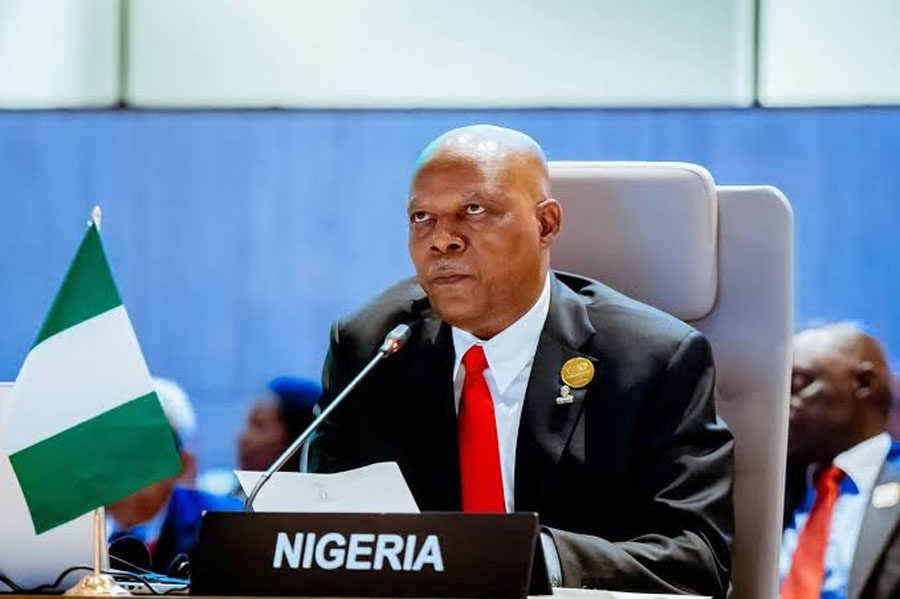
The political feud between Fubara and his predecessor has been a matter of serious concern as both parties heat the political temperature in Rivers State.

The conflict led to the burning and subsequent demolition of the Rivers State House of Assembly, following the defection of 27 members of the assembly from the PDP to the All Progressives Congress (APC).

In a bid to quell the crisis, President Tinubu on Monday, December 18, 2023, had a meeting with Fubara, Wike and political stakeholders from Rivers State in Abuja.

At the end of the meeting, the governor and his predecessor agreed to settle their rift after signing a document containing an eight-point resolution.

However, since Fubara attended the meeting and signed the agreement, some PDP members and stakeholders in Rivers State have been urging the governor to ignore the peace pact and focus on governance.

But in a statewide broadcast on Monday, December 25, 2023, Fubara vowed to implement the peace agreement, saying it’s not as bad as his supporters portray it.

READ ALSO:

In his speech, Fubara said the peace agreement is not a death sentence, adding that the pact was a ploy to ensure lasting peace and stability in Rivers State.

The governor also thanked President Tinubu for his intervention, saying the move demonstrated the President’s love for the people of his state.

Reacting to the governor’s defence of the agreement, the Deputy National Youth Leader, Timothy Osadolor said the issue the governor involved himself in is bigger than him and the President.

In an interview with ThePunch, Osadolor urged Fubara to know his limit, adding that the matter is a constitutional one.

He said, “The question of the seats of the defected lawmakers being vacant is a clear constitutional issue, not at the wishes and discretion of President Tinubu or any other person. It is a clear constitutional matter.

“Also, the PDP constitutionally owns the votes, so I don’t see how Governor Fubara will tell the PDP that because he met with the President in Aso Rock, the PDP should not take charge of its votes. As we speak the PDP is in court, the votes belong to the PDP, not to Fubara or the Villa.

“The one within the governor’s purview is to pay salaries and allowances of the lawmakers to the date their seats become vacant. I am sure the governor knows his limit.”

Another member of the PDP National Executive Council and former National Secretary of the party, Senator Ibrahim Tsauri said Fubara’s move to implement the peace pact won’t be in the interest of the PDP.

READ ALSO:

He believes the governor will be in trouble whether he implements the agreement or not.

“As a complete gentleman, he went there and signed the agreement, even though without the consent of the party. So implementation will be made by him and not by the party. But certainly, it won’t be in the interest of the party.

“The PDP will not allow itself to be dragged into that trap, but he failed to consult the party. If he implements it, he is in trouble, if he doesn’t, is in trouble. Implementation of the agreement is like jumping into awaiting problems. And if he fails to implement it, he is going to enter the Federal government’s trouble. So, either way, is trouble for him,” he said.

Also, in a statement on Monday, a former PDP National Chairman, Uche Secondus, argued that the peace agreement initiated by the President gave an unconstitutional advantage to the APC.

He, therefore, called on Nigerians to prevail on President Tinubu to act in the interest of Rivers State to ensure a genuine and unbiased reconciliation of the political crisis in the state.

PDP unhappy with Fubara over plan to implement peace pact initiated by Tinubu

Loading

News

Nigerian researcher develops AI system to transform marine conservation, fisheries management

Published

on

Nigerian researcher develops AI system to transform marine conservation, fisheries management


A Nigerian researcher, Dolapo Salim Olatoye, is attracting international attention with his groundbreaking work that combines Artificial Intelligence (AI) and ecology to develop smart monitoring systems capable of transforming marine conservation, fisheries management and biodiversity protection in Nigeria and across West Africa.

Olatoye, currently pursuing a fully funded PhD at the University of Pisa, Italy, said his research focused on developing computer vision and remote-sensing technologies that could enable scientists to automatically monitor marine ecosystems using underwater cameras, satellite imagery and sensor data.

His research, which forms part of two European Union Horizon-funded projects, comes at a time when governments and technology companies worldwide are increasingly deploying AI to tackle environmental degradation and biodiversity loss.

According to him, the systems he is developing use advanced object-detection and ensemble computer vision models to identify marine species automatically, making ecological monitoring faster, more accurate and scalable than traditional manual survey methods.

He noted that while many ecological AI tools are designed by computer scientists with little biological field experience, his approach bridges both disciplines through years of practical fisheries and marine fieldwork in Nigeria and Italy, alongside hands-on expertise in deep-learning engineering.

“I build the detection models myself and deploy them as working software rather than research demonstrations,” Olatoye explained, adding that the goal is to create practical tools that close the gap between field science and engineering.

The researcher began his academic journey at the Federal University Oye-Ekiti, where he studied Fisheries and Aquaculture and graduated as the best student in his department during the 2018/2019 academic session.

His outstanding academic performance earned him a fully funded Master’s scholarship at the University of Salento, Italy, where he graduated with a perfect score before securing another fully funded doctoral scholarship at the University of Pisa, one of Italy’s leading research institutions.

Beyond Europe, Olatoye believes his work holds enormous promise for Nigeria.

With an 853-kilometre coastline along the Gulf of Guinea and some of West Africa’s richest marine resources, Nigeria still meets only about 30 per cent of its annual fish demand through local production.

Experts believe improved scientific monitoring of marine ecosystems could significantly strengthen fisheries management, support conservation efforts and enhance food security.

Nigeria is also among eight Gulf of Guinea nations that signed the Yaoundé Declaration, committing to the sustainable management of ocean resources. The Federal Government has equally identified agriculture as a priority sector under its National Artificial Intelligence Strategy, creating opportunities for AI-driven solutions in fisheries and environmental management.

Olatoye said the technologies being developed for marine ecosystem monitoring align closely with these national priorities and could eventually be adapted for use by Nigerian fisheries and conservation agencies.

His work also reflects a growing global movement where leading technology companies are investing heavily in AI-powered biodiversity monitoring.

Google Research has developed SpeciesNet, an AI platform that has processed more than one billion wildlife images and audio recordings from 11 countries to identify animal species automatically.

Similarly, Microsoft’s AI for Good Lab recently unveiled Project SPARROW, a solar-powered bioacoustic monitoring system designed to track biodiversity in real time.

According to Olatoye, these initiatives demonstrate that AI is no longer being used merely to automate data collection but to revolutionise how scientists understand and protect ecosystems.

As part of his commitment to open science, Olatoye is also developing EcoQuad, a software platform emerging from his research.

The tool has already been adopted as instructional material for teaching at the University of Pisa and is designed to be openly accessible, allowing researchers and institutions to adapt it to local needs.

He expressed the hope that Nigerian and West African scientists would not have to depend entirely on imported technologies but would instead develop and customise world-class AI tools locally.

“My ambition is to build open, reproducible monitoring systems that meet the same standards as those developed by leading research groups in the United States, the United Kingdom and Canada,” he said.

He added that by making such tools accessible, researchers across Africa would be better positioned to participate fully in the global scientific community while addressing local environmental and food security challenges through home-grown innovation.

Loading

Continue Reading

News

Kalu denies ₦1bn church budget claim, says actual allocation is ₦780m

Published

on

Kalu denies ₦1bn church budget claim, says actual allocation is ₦780m
Deputy Speaker of the House of Representatives, Benjamin Kalu

Kalu denies ₦1bn church budget claim, says actual allocation is ₦780m

The Deputy Speaker of the House of Representatives, Benjamin Kalu, has dismissed reports that his office allocated N1 billion in the 2026 budget for the procurement of musical instruments for churches in Bende Federal Constituency, Abia State.

In a statement issued on Wednesday by his Chief Press Secretary, Levinus Nwabughiogu, Kalu stated that the actual allocation is N780 million.

According to the deputy speaker, the reports misrepresented both the amount allocated and the purpose of the intervention.

He said that the budget provision, after Value Added Tax and other statutory deductions, stands at N780 million and is intended to support a youth re-orientation and social support programme to be implemented through faith-based organisations.

The Deputy Speaker of the House of Representatives, Benjamin Kalu, has dismissed reports that his office allocated N1 billion in the 2026 budget for the procurement of musical instruments for churches in Bende Federal Constituency, Abia State.

In a statement issued on Wednesday by his Chief Press Secretary, Levinus Nwabughiogu, Kalu stated that the actual allocation is N780 million.

READ ALSO:

According to the deputy speaker, the reports misrepresented both the amount allocated and the purpose of the intervention.

He said that the budget provision, after Value Added Tax and other statutory deductions, stands at N780 million and is intended to support a youth re-orientation and social support programme to be implemented through faith-based organisations.

“Bende has 13 federal political/electoral wards and over 200 churches. The first phase of this support targets 130 of these churches, averaging about 10 churches per ward, which amounts to approximately N5 million to N6 million per church,” he said.

The deputy speaker said the intervention was aimed at strengthening existing youth engagement platforms run by churches to promote moral values and discourage social vices.

“This intervention is not about instruments alone. It is about leveraging trusted community value-sustaining structures to reorient our youths, promote unity and sustain moral instruction across the constituency,” he said.

Kalu added that the 2026 budget had not yet been implemented and that beneficiary churches would be notified after the procurement process was completed.

He also disclosed that his office had initiated a corrigendum to correct what it described as a technical error in the procurement description before implementation.

The deputy speaker urged the public and the media to disregard reports suggesting that N1 billion had been allocated solely for musical instruments, saying the intervention was part of a broader effort to promote youth development and community values.

Kalu denies ₦1bn church budget claim, says actual allocation is ₦780m

Loading

Continue Reading

News

NACOMYO urges greater Muslim youth participation in politics at Lagos summit

Published

on

NACOMYO urges greater Muslim youth participation in politics at Lagos summit

NACOMYO urges greater Muslim youth participation in politics at Lagos summit

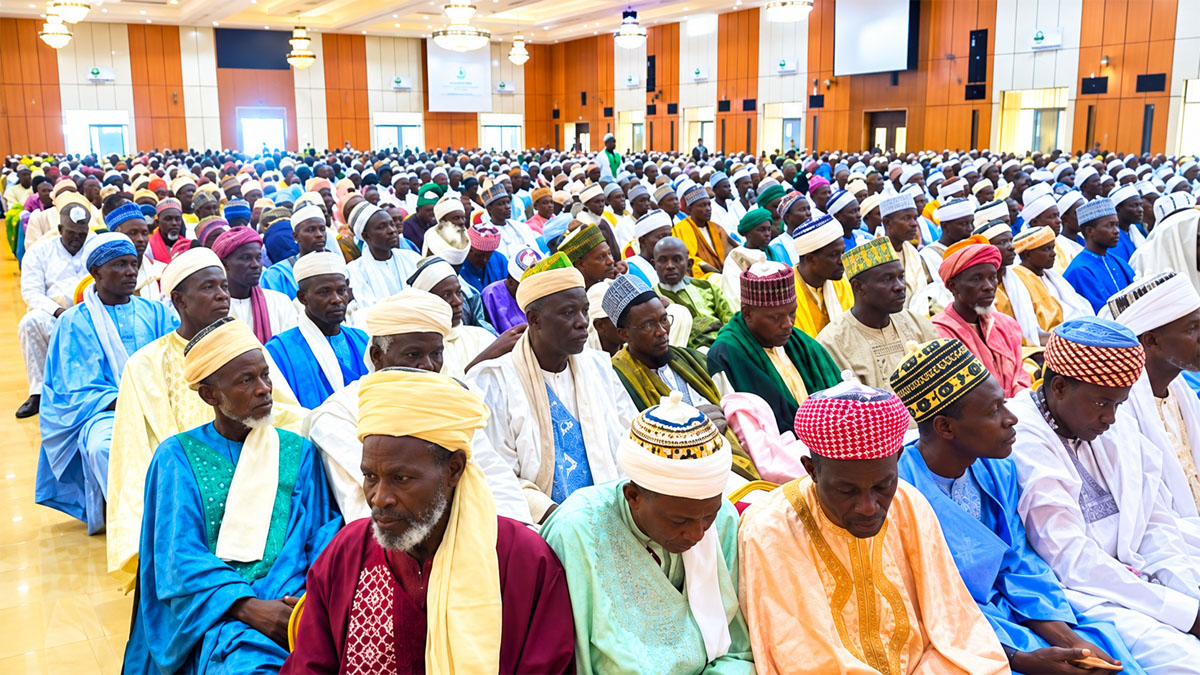
The National Council of Muslim Youth Organizations (NACOMYO), Lagos State Chapter, has called for increased participation of Muslim youths in politics and governance as part of efforts to strengthen inclusive leadership and contribute to the development of Lagos State and Nigeria.

The call was made during the Muslim Youth Political Summit 2026, held on Saturday at the Multipurpose Hall of the Alausa Secretariat Community Central Mosque in Ikeja, Lagos.

The summit, themed “Strategic Partnership for Progress: Muslim Youth and the Lagos Development Agenda,” brought together government officials, Muslim leaders, youth groups and other stakeholders to discuss strategies for expanding the role of Muslim youths in public service and leadership.

Speaking at the event, the State Coordinator of NACOMYO Lagos, Engr. Isiaka Salami, said the summit was organised to foster dialogue, strategic partnerships and collaboration between Muslim youths and government.

He explained that the initiative was aimed at preparing young Muslims for leadership roles while commending the growing inclusion of youths in governance. Salami also appreciated the support of the Muslim Community of Lagos State and offered prayers for the late Alhaji Tijani Gbajabiamila, the Olori Ratibi of Lagos.

Delivering the keynote address on behalf of Hon. Rasaq Olushola Ajala, the immediate past Chairman of Odi-Olowo Local Council Development Area (LCDA), Mr. Akeem Alao urged Muslim youths to actively participate in politics and public service.

READ ALSO:

He stressed that competence, integrity and leadership capacity remain essential qualities for young people seeking to contribute meaningfully to governance and national development.

Alao also encouraged eligible youths to take advantage of the ongoing Independent National Electoral Commission (INEC) Permanent Voter Card (PVC) registration exercise ahead of future elections.

Also speaking, the Public Relations Officer of the Muslim Community of Lagos State, Alhaji Jubril Folami, commended NACOMYO for its sustained commitment to youth development and advocacy.

He described Muslim youths as agents of positive change and recalled the organisation’s role in defending the interests of Muslims during campaigns against the proposed return of public schools to missionary ownership.

During a panel discussion, the President of the Muslim Community of Lagos State, Alhaji (Barr.) Muhammad Oyinlomo Danmole, called for strategic political participation and stronger engagement between Muslim organisations and government.

He advocated the establishment of leadership training institutions to prepare Muslim youths for future leadership positions and emphasised the importance of grassroots mobilisation in nation-building.

Responding to questions on opportunities for Muslim youths, Alhaji Muritadoh Balogun urged young Muslims to participate actively in politics while drawing inspiration from the exemplary leadership of Prophet Muhammad (SAW).

He identified education, knowledge acquisition and community service as key foundations for effective leadership and called for increased Muslim representation in government institutions.

Also speaking during the panel session, Alhaja Dhikrat Matesun-Oshodi said Muslim women were ready to contribute meaningfully to governance.

She encouraged Muslim youths to embrace self-development, transparency, accountability, patience and teamwork, describing good character and empowerment as essential qualities for effective leadership.

The Senior Special Assistant to the Lagos State Governor on Wealth Creation and Employment, Ambassador (Comrade) Tijani Saheed Oluwadare (Seedorf), highlighted the state government’s commitment to youth inclusion, skills development and economic empowerment.

He urged participants to take advantage of government initiatives and become actively involved in politics to strengthen youth participation in policymaking and governance.

The summit attracted a large number of Muslim youths from across Lagos State, including representatives of organisations such as NASFAT, Ansar-Ud-Deen Society, Muslim Students’ Society of Nigeria (MSSN) Lagos, ASGAT, QUAREEB and other youth-focused political groups.

Participants resolved to strengthen collaboration between Muslim organisations and government, agreeing that leadership development, strategic partnerships and active political participation are critical to ensuring that Muslim youths contribute meaningfully to the Lagos Development Agenda and Nigeria’s overall development.

NACOMYO urges greater Muslim youth participation in politics at Lagos summit

Loading

Continue Reading

Trending