
metro
Ponzi schemes promoters in Nigeria now face 10 years jail
Ponzi schemes promoters in Nigeria now face 10 years jail
The Securities and Exchange Commission, SEC, has warned that promoters and operators of any Ponzi Scheme in the country risk a penalty of not less than N20 million or imprisonment to a term of 10 years or both, upon conviction as prescribed by the provisions of the newly signed Investments and Securities Act 2025.
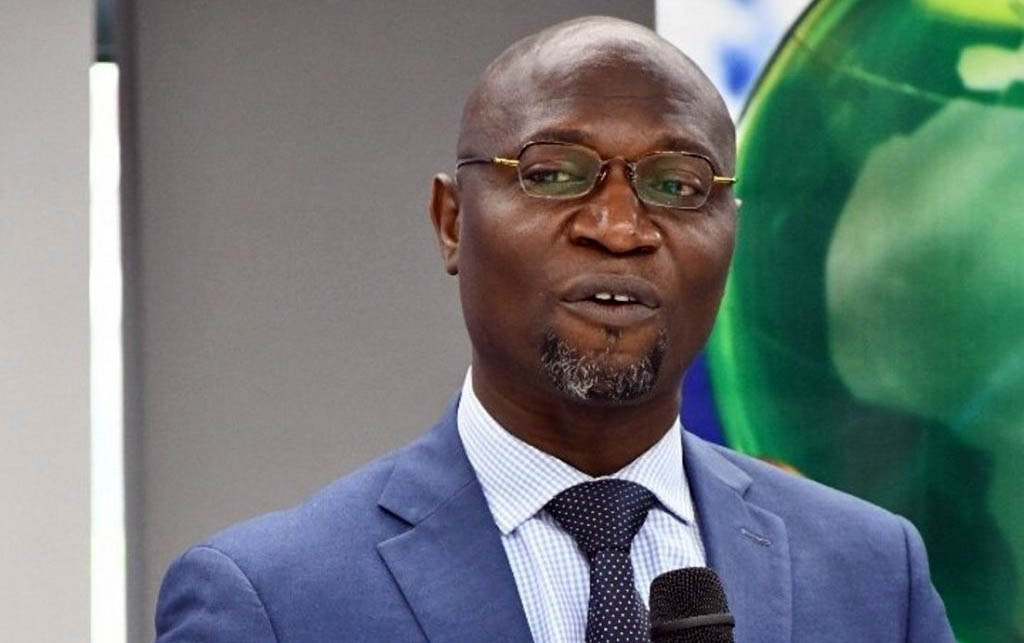
The SEC’s Director-General, Dr. Emomotimi Agama who stated this in Abuja, said the goal of the new legislation is to strengthen the legal framework governing Nigeria’s capital market, better protect investors, and introduce reforms that will promote market integrity, transparency, and sustainable growth.
He explained that previously, the SEC lacked the legal power to prosecute Ponzi scheme operators, which made it difficult to bring offenders to justice.
However, under the new law, those convicted of operating Ponzi schemes face a jail term of 10 years or more. “With the new law, they now face a 10-year jail term and beyond,” he said.
He further explained that the Act stipulates a minimum fine of N10 million for anyone operating a Ponzi scheme in Nigeria.
READ ALSO:
- Kogi LG imposes curfew ahead of Natasha’s homecoming event
- Durbar ban: Sanusi drives in vehicle to pay Sallah homage
- Tribunal fixes date to deliver judgment on Edo guber election
“So, N10 million is not the entire penalty or the entire money that will be charged or sanctioned to any suspecting or any accused capital market or non-capital market operator. It is just part of the penalties and or the sanctions that will be meted against such persons,” Agama explained.
The SEC Director-General also said that sanctions will include “disgorgement,” meaning that any profits or gains obtained from defrauding Nigerians will be recovered adding “It is not about the quantum of the fraud, it is about sanctions that would deter people from even getting into it”.
Also, Agama said the new ISA has also provided the SEC with the power to be able to obtain and request telephone conversations and all other conversations that are required to Prosecute Ponzi operators.
“We recognize that a lot of Nigerians have fallen prey to these sponsor schemes and the reason why that is the case is because there were no sanctions. You know enough to deter them from doing this so what this Act has done is to introduce measures for Ponzi scheme operators and intending Ponzi scheme operators not to be able to do this again against the wish and will of Nigerians.
“Protecting the investors in Nigeria is a cardinal responsibility of the SEC and this law has provided the SEC with stronger powers to be able to do that. This law has also been able to provide the SEC with the power to be able to search phones and get phone records for people who are interested in dealing with Nigerians or interested in duping Nigerians. We are able to get these records and quickly provide enforcement actions for the people that are involved so for us it is limitless,” he added.
Ponzi schemes promoters in Nigeria now face 10 years jail









metro
Human Rights Lawyer Says Amupitan’s INEC ‘Failed Woefully’ in FCT Election
Human Rights Lawyer Says Amupitan’s INEC ‘Failed Woefully’ in FCT Election
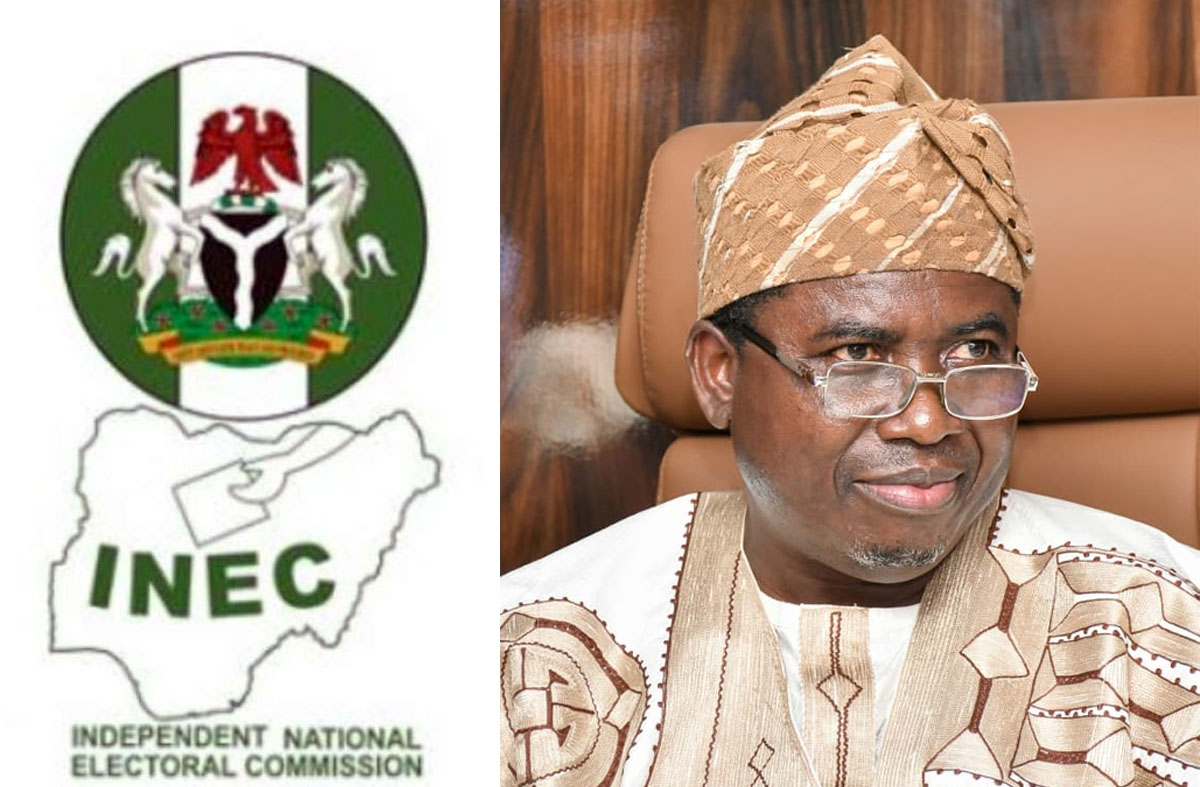
Human rights lawyer and former Chidi Odinkalu, has expressed strong doubts about the ability of the Independent National Electoral Commission (INEC) under Chairman Joash Amupitan to conduct credible 2027 general elections. Speaking on Politics Today on Channels Television, Odinkalu criticised the commission’s handling of the recent Federal Capital Territory (FCT) area council elections, declaring that “INEC failed.” He said, “Amupitan’s INEC failed woefully. On this evidence, nobody can trust Joash Amupitan to organise credible elections in 2027. It is not about the law; it is about the failure of will and the failure of electoral administration.”
Odinkalu pointed to poor logistics, including late deployment of election materials and personnel, as well as voter reassignment without adequate notice of polling unit changes on election day. He argued that these administrative lapses risked disenfranchising voters and undermined public confidence in the electoral process. He urged INEC officials to either adequately prepare for their responsibilities or step aside for “more capable hands.” Odinkalu also rejected arguments that it might be too early to assess Amupitan, noting that the chairman previously oversaw a governorship election in Anambra State, which provides a measure of his track record.
READ ALSO:
- CBN Mops Up $190 Million to Slow Rapid Naira Appreciation
- FCT Poll: Falana Queries Wike’s Power to Declare Public Holiday
- Iran Threatens ‘Ferocious’ Retaliation as Trump Weighs Military Action
“The commission must acknowledge its shortcomings, apologise to Nigerians, and take personal responsibility for lapses,” Odinkalu said. “Nigerians are not asking for perfection, but they want to see sincerity and concrete steps toward improvement.” Political analysts say Odinkalu’s remarks reflect broader concerns about INEC’s credibility and readiness to conduct nationwide elections. Parties such as the Peoples Democratic Party (PDP) highlighted issues with pre-election curfews, logistics, and voter management, while civil society groups like the Human Rights Writers Association of Nigeria (HURIWA) criticised the FCT minister and INEC for actions that may have undermined the polls.
INEC, for its part, defended its operations, highlighting voter registration technology, election officer training, and electronic result transmission as evidence of improved procedures. Nevertheless, critics maintain that the commission must address systemic gaps to restore confidence ahead of 2027. With Nigeria’s 2027 elections approaching, Odinkalu’s comments underscore the urgent need for INEC to enhance transparency, improve voter communication, and strengthen election logistics. Observers stress that rebuilding trust in the electoral system is essential for national stability and the credibility of future elections.
Human Rights Lawyer Says Amupitan’s INEC ‘Failed Woefully’ in FCT Election
metro
FCT Poll: Falana Queries Wike’s Power to Declare Public Holiday

FCT Poll: Falana Queries Wike’s Power to Declare Public Holiday
Human rights lawyer and Senior Advocate of Nigeria, Femi Falana, has challenged the Minister of the Federal Capital Territory, Nyesom Wike, to publicly cite any law empowering him to declare a public holiday or impose movement restrictions during the recently concluded FCT area council election.
Falana insisted that the minister acted outside the law, arguing that the authority to declare public holidays in Nigeria does not reside with the FCT minister. According to him, only the President, the Minister of Interior, and state governors are legally authorised to announce federal or state holidays.
The senior lawyer criticised the declaration of a work-free day ahead of the election, saying it amounted to an abuse of executive power and a dangerous precedent capable of undermining constitutional governance.
Wike had earlier defended his decision, claiming he acted with the consent of the President after receiving a security report suggesting that some individuals planned to transport troublemakers into the Federal Capital Territory to disrupt the polls. He also cautioned Falana against commenting on every national issue without verifying facts.
READ ALSO:
However, Falana, in a statement issued on Monday, dismissed the minister’s justification, stressing that even the President lacks the constitutional power to issue directives concerning the conduct of elections.
“The minister’s defence that the President authorised him to order the restriction of movement is illegal, as the President has no power whatsoever to direct how elections are conducted in Nigeria,” Falana said.
He referenced Section 160(1) of the Constitution, which guarantees the independence of the Independent National Electoral Commission (INEC), noting that the commission’s powers to regulate elections are not subject to presidential or ministerial control.
Falana further questioned Wike’s conduct on election day, pointing out that the minister is not a registered voter in the FCT and should therefore have strictly complied with the restriction order he announced.
“I challenge the FCT Minister to refer to any law that empowers him to declare a public holiday or restrict the movement of citizens during the Area Council election,” Falana said.
“Assuming, without conceding, that the President authorised movement restriction, did that authorisation include declaring a public holiday? Did the minister himself comply with the restriction order? Did it permit him to move around or interfere with electoral officers?”
The dispute has reignited national debate over ministerial powers in the FCT, election-day movement restrictions, and the need to protect INEC’s independence from executive interference.
Legal observers say the controversy highlights the importance of strict adherence to constitutional provisions to preserve public confidence in Nigeria’s electoral process.
FCT Poll: Falana Queries Wike’s Power to Declare Public Holiday
metro
Fare Hike Hits Lagos BRT Riders

Fare Hike Hits Lagos BRT Riders
The Lagos State Government has approved a 13 per cent increase in fares across all Bus Reform Initiative (BRI) schemes, covering Bus Rapid Transit (BRT) corridors and standard bus routes.
The Lagos Metropolitan Area Transport Authority (LAMATA) announced the decision in a statement on Monday, stating that Governor Babajide Sanwo-Olu granted approval following appeals from regulated public transport operators over the rising cost of operations.
According to the agency, the new fare structure will take effect from Monday, March 2, 2026.
LAMATA explained that the adjustment was necessary to sustain public transport services amid mounting economic pressures.
The review, it noted, aligns with the state’s previously approved annual fare review framework.
“The urgency of the review is underscored by persistent inflationary trends, with Nigeria’s inflation rate closing 2025 at 15.2 per cent, according to data from the National Bureau of Statistics,” the statement signed by LAMATA’s Head of Corporate Communications, Kolawole Ojelabi, said.
The agency disclosed that Bus Operating Companies (BOCs) have been grappling with escalating operational expenses, including higher costs of vehicle maintenance, spare parts, fuel, and staff salaries — particularly following the implementation of the new national minimum wage.
It added that operators are also investing in newer, cleaner and more fuel-efficient buses to improve passenger comfort and promote environmental sustainability.
While acknowledging the burden on commuters, the state government reaffirmed its commitment to striking a balance between affordability and the need to maintain safe, reliable and efficient public transportation across Lagos.

-

 Business2 days ago
Dangote Opens Refinery Investment to Nigerians With Public Share Sale Plans
-

 Education2 days ago
UTME: JAMB Clarifies Position on Hijab During Biometric Capture
-
 Politics2 days ago
Tinubu Hails Wike as APC Dominates 2026 FCT Area Council Elections
-

 Entertainment2 days ago
Regina Daniels Takes Delivery of ₦150m 2026 GAC Trumpchi M8 SUV
-
 Politics3 days ago
ADC Defeats APC to Win First Polling Unit in FCT Area Council Election
-

 Politics2 days ago
FCT Council polls: APC Wins Four Chairmanship Seats as PDP Takes Gwagwalada
-

 News2 days ago
Yoruba Muslim Group Dismisses Viral Ramadan Date Claim, Reaffirms Sultan of Sokoto’s Authority
-

 Politics2 days ago
Opposition Weakens as Another Governor Eyes APC Move