

News
Russia/Ukraine war: FG plans new trade policy with former USSR nations

The Federal Government has said following the war between Russia and Ukraine, it is working on a new trade policy with countries in the former Union of Soviet Socialist Republics (USSR) with whom it shares important mutual trade relations.
Minister of Industry, Trade and Investments, Niyi Adebayo, disclosed this, yesterday, at the weekly inter-ministerial press briefing organised by the Presidential Communications Team at the Presidential Villa, Abuja.
He said the trade department of his ministry had been mandated to analyse the crisis in the region as its concerns trade relations with Nigeria and come up with a report.
“Once that report is ready, I will present it to the president, after presenting to the president, I will come here to brief you about it,” he said.
A recent report relying on data from the National Bureau of Statistics (NBS) warned of the impact of the war on Nigeria as it showed that since 2019, Nigeria has received a total of $84.3million in capital imports from Russia.
The country also imported N144billion ($346.2million) worth of durum wheat in 2020 and N123.9billion ($297.8million) worth of durum wheat between January – September 2021 from Russia.
It also imports different types of seafood such as mackerel, herrings and blue whiting from Russia.
READ ALSO:
- APC Crisis: Buni makes U-turn, endorses ‘all’ actions undertaken by Bello
- Adamawa ‘chemists’ inject man to death, steal motorcycle
- Hold your institution responsible for your admission letter,JAMB tells students
According to the NBS data, Nigeria similarly imported milk worth N721.5m ($1.7m) from Ukraine in 2021.
Adebayo, who made presentations on the Presidential Sugar Backward Integration Program (BIP) said Nigeria targets self-sufficiency in sugar production in the next 10 years, even as it plans to begin the export of the commodity.
He said about five per cent of sugar consumed in Nigeria was produced locally.
“We believe with the programmes that we have in place that within the next 10 years, we will be 100 per cent self-sufficient in sugar, and not only that, we’ll be able to export sugar produced in Nigeria,” he said.
Adebayo, also spoke on ports decongestion in Nigeria, saying new ports would soon come on board to ease the pressure on Apapa and Tincan ports in Lagos.
“On the development of ports, I pointed out earlier that yes, apart from Apapa and Tincan; we have a new port of Lekki coming up. I know that there are plans for a new port to come up in Badagry.Calabar port is a problem; apparently there is a court case on that one at the moment with regards to a subcontract for the dredging of that as well. As we all know, Port Harcourt and Onne are operating, and the government is looking at improving the road network to that port so that it can ease the congestion of Lagos,” he said.
On clearing challenges importers grapple with at the seaports and how such challenges are stifling ease of doing business in Nigeria, the minister said plans are underway to keep the ports open for 24 hours, seven days a week.
SUN








News
BREAKING: NLC Shuts Down Abuja Indefinitely Over FCT Teachers’ Promotion Dispute

BREAKING: NLC Shuts Down Abuja Indefinitely Over FCT Teachers’ Promotion Dispute
The Federal Capital Territory was thrown into an indefinite industrial crisis on Wednesday as the Nigeria Labour Congress, NLC, ordered workers across Abuja to withdraw their services over unresolved disputes surrounding the promotion and career progression of teachers.
The strike, which took effect on Wednesday, October 7, 2026, followed the expiration of a seven-day ultimatum issued to the Federal Capital Territory Administration, FCTA, after months of disagreements over teachers’ welfare, promotion procedures and the treatment of senior education officials.
The NLC FCT Council said it was compelled to resort to industrial action after rejecting the response of the FCTA to its demands, describing the administration’s position as “ambiguous, dismissive and totally unacceptable.”
The directive, issued in a communique signed by the NLC FCT Council Chairman, Comrade Knabayi S. Adalo, directed the congress’s affiliate unions to mobilise their members for the indefinite action until the outstanding issues are resolved.
At the heart of the dispute is the controversial “vacancy clause”, which makes the promotion of teachers subject to the availability of vacant positions.
The labour movement argues that the condition has resulted in career stagnation for qualified teachers who have met the requirements for advancement but are unable to move to the next cadre because of the absence of vacancies.
The NLC maintains that teachers, recruited specifically to teach under the FCT Universal Basic Education Board and FCT Secondary Education Board, should not be subjected to a promotion arrangement designed for core civil servants or pool officers.
The dispute has been building for months. In September, the NLC gave the FCTA a seven-day ultimatum to resolve the grievances, following earlier protests by teachers over the vacancy requirement and concerns surrounding the 2025 promotion examination.
Among the union’s demands is the removal of the vacancy requirement from the promotion process for teachers. It is also demanding that teachers who were eligible for promotion in 2025 but were unable to take the examination be allowed to sit for the exercise before or alongside the 2026 candidates.
The NLC is further demanding the reversal of redeployment and demotion letters issued to some directors in the education sector, citing the Harmonised Retirement Age for Teachers in Nigeria Act, 2022.
The union has also called for changes involving the management of the FCT education agencies, including the FCT Universal Basic Education Board and FCT Secondary Education Board.
The FCTA, however, has previously defended its administrative decisions, saying its policies on promotion, redeployment and other personnel matters are guided by existing civil service regulations and ongoing reforms in the education sector.
An FCTA official also defended the redeployment of senior education administrators, citing relevant federal guidelines.
The labour dispute has also exposed divisions within the organised labour movement in the territory. The Academic Staff Union of Secondary Schools, ASUSS, FCT Chapter, an affiliate of the Trade Union Congress, has reportedly distanced itself from the strike, maintaining that the FCTA has the authority to deploy personnel and that promotion should take account of established vacancies and available resources.
With the NLC now declaring the action indefinite, the dispute threatens to disrupt schools, government offices and other public services across the nation’s capital.
The union has urged parents, residents, civil society organisations and other stakeholders to press the FCTA to resolve the issues, insisting that the industrial action will continue until its demands are satisfactorily addressed.
The NLC’s latest position is unequivocal: without a resolution of what it considers the fundamental grievances affecting teachers, the strike will continue indefinitely.
News
20 Years After Father’s Death in Air Crash, NAF Officer Loses Husband in Another Crash
20 Years After Father’s Death in Air Crash, NAF Officer Loses Husband in Another Crash
A Nigerian Air Force family has been hit by another devastating tragedy, 20 years after the reported death of a senior officer in a military aircraft crash in Benue State.
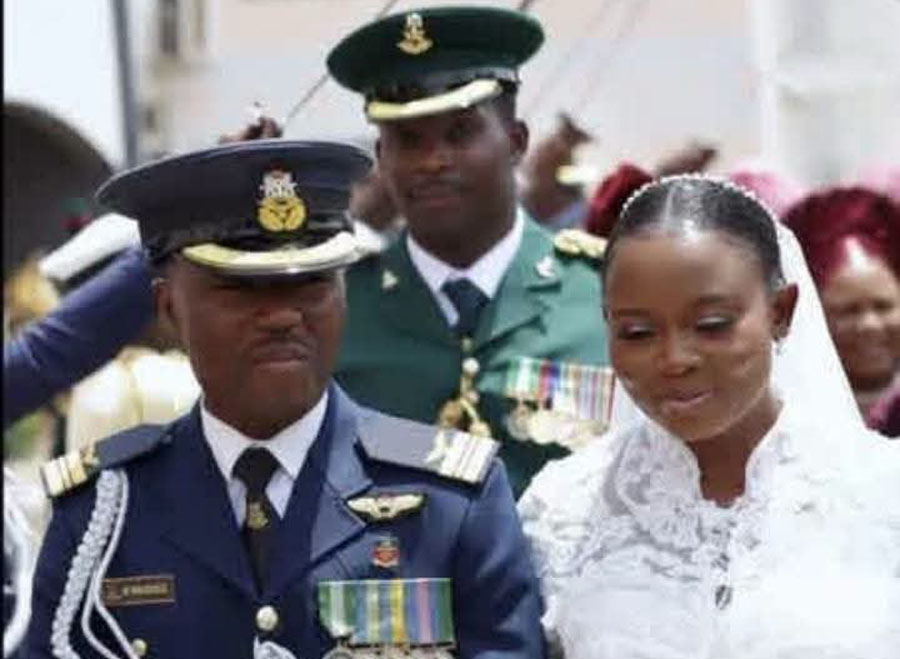
Flight Lieutenant Damilola Adekunle is reportedly the daughter of the late Wing Commander E. O. Adekunle, who was among the Nigerian military personnel killed in an aircraft crash in Benue State in 2006.
The incident occurred on September 17, 2006, when a Nigerian Air Force Dornier 228 aircraft crashed in the Oko area of Vandeikya Local Government Area of Benue State.
The aircraft was carrying senior military officers reportedly travelling towards Cross River State. Thirteen military personnel were killed in the crash, including Wing Commander Adekunle, who was reported to have been serving as co-pilot.
Twenty years later, tragedy has reportedly struck the family again.
According to reports following the latest Nigerian Air Force aircraft crash, Flight Lieutenant Adekunle recently married Squadron Leader Ahamefule Aham Man-Ugwueje.
The marriage reportedly took place on September 19, 2026.
Barely three weeks later, Man-Ugwueje was among the Nigerian Air Force personnel killed in the crash involving NAF 931 at Igbokoda in Ondo State on October 5, 2026.
READ ALSO:
- Ondo High Chief Shot Dead During Colleague’s Burial, One Arrested
- ‘We Are Ignorant, We Don’t Read’ — NAFDAC DG Raises Food Safety Concerns
- 2027: Obi Makes U-Turn, Vows to Restore Fuel Subsidy If Elected
The Nigerian Air Force has identified Man-Ugwueje among the personnel who lost their lives in the incident. He was reportedly serving as the aircraft’s co-pilot.
The reported connection between Flight Lieutenant Adekunle and the late Wing Commander Adekunle has given the tragedy an especially painful dimension.
If the family relationship reported in accounts of the incident is confirmed, it would mean that Adekunle lost her father in a Nigerian Air Force aircraft crash in 2006 and, two decades later, lost her newly married husband, also a Nigerian Air Force pilot, in another crash.
The timing is particularly poignant, as Man-Ugwueje reportedly died just 16 days after his marriage to Flight Lieutenant Adekunle.
The latest crash has claimed the lives of several Nigerian Air Force personnel whose identities have been officially released by the Service, prompting condolences from across the country and renewed attention to the risks associated with military aviation.
For the family of Flight Lieutenant Adekunle, however, the tragedy carries a deeply personal history.
Twenty years after the loss of a father in a military aircraft accident, she is reportedly facing the loss of her husband in another.
While the Nigerian Air Force has officially identified the personnel who died in the latest crash, details of the reported family relationship between Flight Lieutenant Adekunle and the late Wing Commander Adekunle are being reported with caution pending independent confirmation.
The fallen officers will be remembered for their service to the nation.
Newstrends extends its condolences to the families, colleagues and loved ones of all the Nigerian Air Force personnel who lost their lives in the crash.
20 Years After Father’s Death in Air Crash, NAF Officer Loses Husband in Another Crash
News
Pastor Apologises to Wife, Women Over Past Affairs, Steps Back From Ministry

Pastor Apologises to Wife, Women Over Past Affairs, Steps Back From Ministry
Apostle Sam Adegoke, a newlywed pastor of Elijah Generation Church, Akure, Ondo State, has stepped back from public ministry after apologising over past sexual relationships and allegations surrounding his conduct with women.
Adegoke announced his decision in a statement, saying he had chosen to withdraw from public ministry and social media to reflect on his actions, seek counsel and take steps towards making amends.
The pastor acknowledged that he had been involved in sexual relationships with women before his marriage, describing his conduct as wrong and expressing regret over the consequences of his actions.
He said the fact that the relationships occurred before his marriage did not excuse his behaviour, adding that he was seeking spiritual guidance as well as pastoral and professional counselling.
Adegoke also apologised to the women involved, as well as his wife, family, church members, colleagues and others who had placed their trust in him as a spiritual leader.
He said stepping back from public ministry was necessary to allow him to confront his past, make appropriate changes and demonstrate genuine repentance through his actions.
READ ALSO:
- Troops Take Down Zamfara Bandit Kingpins Baban Love, Mai Zamani, Three Others
- FG Gives N250m To Families Of 37 Miners Who Died In NSCDC Custody
- Tompolo’s PBAT Movement Suspends Campaign Over Ondo Military Crash
The pastor further said he was willing to remain under appropriate spiritual, pastoral and professional accountability during the process.
His decision followed the emergence of leaked WhatsApp conversations in which several women allegedly accused him of having sexual relationships with female church members over several years.
Some of the allegations reportedly concerned relationships that allegedly occurred shortly before his wedding. Adegoke admitted to past sexual relationships but did not publicly address every allegation contained in the leaked conversations.
The women also reportedly raised concerns about the welfare of female members of the church and alleged that some women had left the congregation over the pastor’s conduct.
Adegoke, however, said his immediate focus was on accepting responsibility for his past actions and undergoing the process he considered necessary for genuine change.
He appealed for prayers and said he wanted to approach the situation with humility, integrity and accountability, while making amends where appropriate.
The controversy has drawn significant attention because of its timing, coming shortly after the pastor’s marriage and amid renewed scrutiny of the allegations concerning his past relationships.
The pastor and his wife have reportedly disabled comments on their respective Instagram accounts following the development.
Pastor Apologises to Wife, Women Over Past Affairs, Steps Back From Ministry
-

 metro2 days ago
Tragedy Strikes FMC: Medical Director Loses Two Daughters—A Doctor and a Pharmacist—Within 48 Hours
-

 metro2 days ago
Transporters Urge IGP Disu to Arrest Illegal Highway Tax Collectors
-

 metro2 days ago
Army, DSS, Amotekun Kill ISWAP Commander Planning Attacks in Southern Nigeria
-

 Politics2 days ago
2027: Soludo Govt Accuses Peter Obi Of Plot To Destroy APGA
-
 metro2 days ago
Kidnappers torture abducted corps members, slash ransom to N100m
-
 News2 days ago
BREAKING: Many Feared Dead as Helicopter Crashes in Ondo Community
-

 metro3 days ago
Ojudu Reveals How Tinubu, He Narrowly Escaped Death In Third Mainland Bridge Crash
-

 metro2 days ago
Grand Chief Imam of Oyoland Urges Rabitah 1964 to Regulate ‘Yorubaland’ Islamic Titles