
News
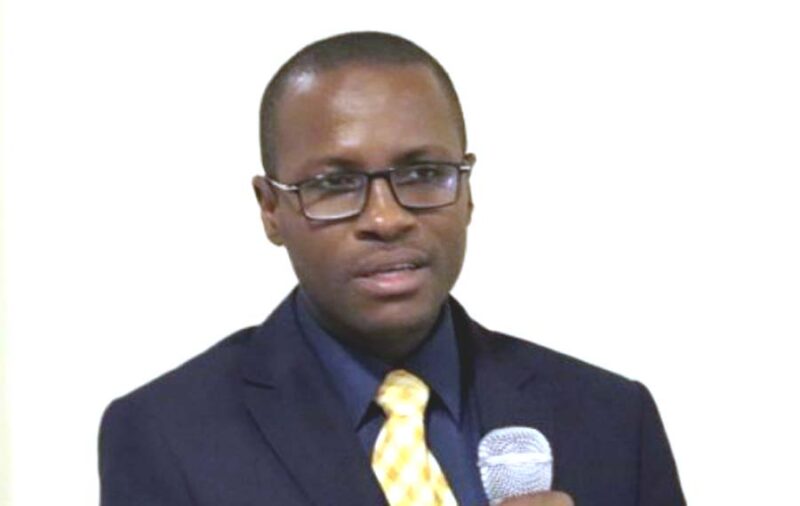
Senate confirms Musa Aliyu as ICPC chairman
Senate confirms Musa Aliyu as ICPC chairman
The Senate, on Thursday confirmed, the nomination of Musa Aliyu for appointment as chairman of the Independent Corrupt Practices and Other Related Offenses Commission (ICPC).
The Senate also confirmed the appointments of Gadji Dantata and Saka Sulieman as members of the Federal Judicial Service Commission (FJSC).
Deputy Senate President, Barau Jibrin announced confirmation of Aliyu and the two members of the FJSC after they were cleared by a voice vote by senators at the plenary.
Aliyu, a lawyer and former Attorney-General of Jigawa State was screened at the Committee of the Whole.
During the screening, the ICPC chairman-designate told the senators that he is a Senior Advocate of Nigeria (SAN) designate.
He said that he had his primary education between 1983 and 1989 before enrolling to Government College, Bauchi, in 1990 for his secondary school education.
He explained that he obtained his secondary school leaving certificate in 1995 and proceeded to Bayero University, Kano to study Law in 1998.
He said he graduated from Bayero University’s faculty of Law in 2003 and enrolled for his law school in 2004 before he started practicing as a lawyer.
READ ALSO:
-
JUST IN : Court awards N8bn damages to Kanu, says IPOB’s proscription illegal
-
S’Court Judgement: Emulate Jonathan, congratulate Tinubu – Ohanaeze tells Atiku, Peter Obi
-
Your job is secured, Tinubu tells aide after Supreme Court victory [VIDEO]
Aliyu also told the senators that he is the Chairman of Human Right and Rule of Law Association and that he also belonged to many human rights and anti-corruption organisations.
Meanwhile, Mrs Dantata and Mr Sulieman who appeared before the senate for confirmation as members of the federal judicial service also narrated their achievements in the private and public sectors.
Mrs Dantata, a professor, said she hailed from Kano State.
She told the senators that she obtained her Bachelor’s degree, Masters of Arts and PhD from Bayero University, Kano.
Mrs Dantata noted that she had attended many conferences and was involved in humanitarian and academic activities across the country.
She said she’s a mother of five children.
The Deputy Senate President however directed that Mrs Dantata ‘take a bow and go’ in order to “ensure gender sensitivity” in the screening process.
On his part, Mr Suleiman, the second member of the federal judicial service commission nominee said he hailed from Ifelodun Local Government area of Kwara State.
He said he attended Kwara State College of Technology now Kwara State Polytechnic.
He also said he enrolled into University of Lagos in 1981 where he obtained his Bachelor’s degree.
None of the senators asked Mr Suleiman questions relating to his position as a member of the judicial commission before he was directed to step out of the Senate chamber.
Senate confirms Musa Aliyu as ICPC chairman






News
Yoruba Muslim Group Dismisses Viral Ramadan Date Claim, Reaffirms Sultan of Sokoto’s Authority
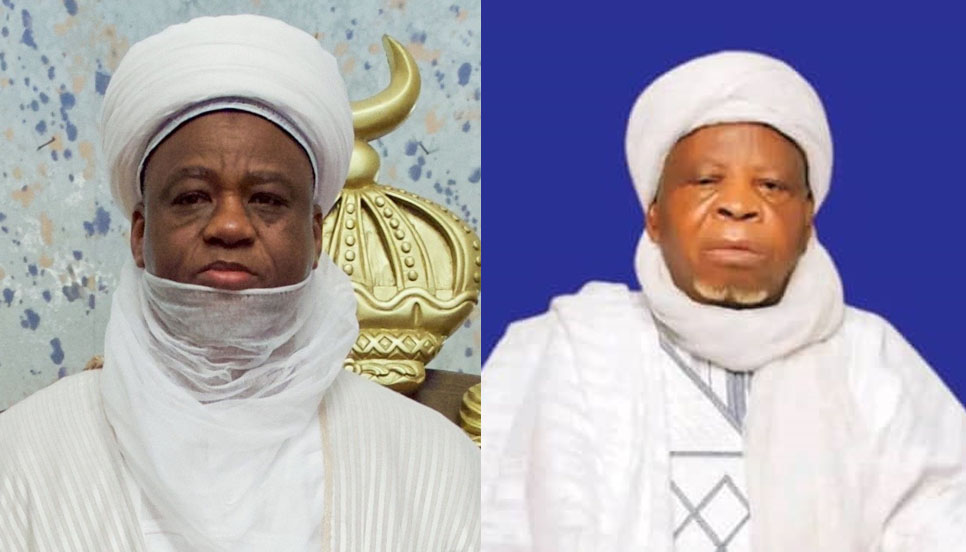
Yoruba Muslim Group Dismisses Viral Ramadan Date Claim, Reaffirms Sultan of Sokoto’s Authority
A Yoruba Muslim group, Concerned Indigenous Yoruba Muslims, has dismissed as false, misleading, and divisive a viral social media report alleging that the Chief Imam of Ibadanland and the League of Imams in Yorubaland rejected the authority of the Sultan of Sokoto in determining the commencement of Ramadan in South-West Nigeria.
The report, which circulated online ahead of Ramadan 1447AH, claimed that Yoruba Muslim leaders had resolved to disengage from the Sultan’s traditional role of announcing moon sighting for the fasting period and instead align with indigenous religious structures. The group, however, said the claim was entirely fabricated and designed to sow discord within the Muslim community.
In a statement issued on Saturday, February 21, 2026 — the fourth day of Ramadan, and signed by public affairs analyst Nasrudeen Abbas, the group said the comments attributed to the Chief Imam of Ibadan, reportedly over 90 years old, could not have emanated from him. It described the publication as a calculated attempt to create unnecessary religious tension and misrepresent the position of Yoruba Muslims.
The group reaffirmed that Islamic affairs in Nigeria operate under established leadership structures, particularly the Nigerian Supreme Council for Islamic Affairs (NSCIA), which is headed by the Sultan of Sokoto, Muhammad Sa’ad Abubakar, as President-General. It explained that the NSCIA structure includes the President of the Muslim Ummah of South West Nigeria (MUSWEN) as Deputy President-General (South), the Shehu of Borno as Deputy President-General (North), alongside other national officers.
READ ALSO:
- FCT Council polls: APC Wins Four Chairmanship Seats as PDP Takes Gwagwalada
- Dangote Opens Refinery Investment to Nigerians With Public Share Sale Plans
- SERAP Urges Tinubu to Repeal ‘Unlawful’ Mass Surveillance Regulations
According to the group, any attempt to distance Yoruba Muslims from this nationally recognised structure threatens the unity of the Muslim Ummah in Nigeria and contradicts Islamic principles that emphasise cohesion, collective leadership, and obedience to constituted authority.
The group also faulted claims that the Sultan’s position is merely a traditional title limited to Sokoto State. It stressed that the Sultan’s authority in Islamic matters is rooted in scholarship and the historical caliphate system, noting that emirs in Northern Nigeria often combine traditional authority with religious leadership. As an example, it cited Muhammadu Sanusi II, who regularly delivers Friday sermons and performs Islamic rites.
It further explained that in Yorubaland, traditional rulers generally do not head religious affairs, except in rare cases. The group referenced the late Awujale of Ijebu Land, who once served as President-General of the Ogun State Muslim Council, stressing that such roles remain exceptions rather than the norm.
The statement also recalled the position of the late Kazeem Yayi Akorede, former President-General of the League of Imams and Alfas in the South West. According to the group, Sheikh Akorede initially questioned the Sultan’s leadership role but later accepted it after clarifications that the position was based on Islamic scholarship and caliphate leadership, not mere traditional kingship. It added that until his death, he consistently aligned with the Sultan’s announcements on the commencement and termination of Ramadan.
Describing the viral publication as unethical, the group criticised claims that Yoruba Muslims are not religiously bound to the Sultan’s authority and that religious leadership should go beyond duties such as moon sighting announcements. It alleged that such narratives were politically motivated and aimed at advancing a separatist agenda under the guise of religious autonomy.
The group warned that politicising religious matters could undermine religious harmony and national unity, urging those behind the report to desist from actions capable of creating discord among Muslims across the country. It concluded by stressing that the unity of the Muslim Ummah in Nigeria remains paramount and must not be compromised by what it described as sectarian or politically engineered narratives.
Yoruba Muslim Group Dismisses Viral Ramadan Date Claim, Reaffirms Sultan of Sokoto’s Authority
News
NNPC CEO Ojulari Receives Prestigious Energy Institute Fellowship in London
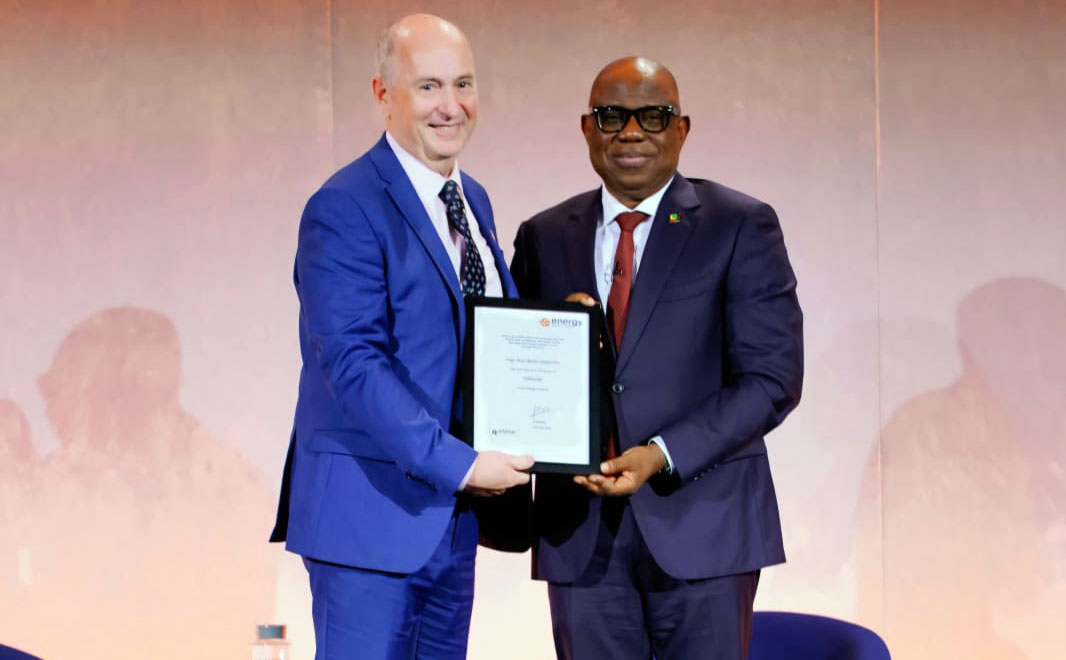
NNPC CEO Ojulari Receives Prestigious Energy Institute Fellowship in London
The Nigerian National Petroleum Company Limited (NNPC Ltd.) has earned international acclaim as its Group Chief Executive Officer, Engr. Bashir Bayo Ojulari, has been conferred with the Fellowship of the Energy Institute (FEI), United Kingdom — one of the highest honours in the global energy industry.
The Fellowship recognises senior energy leaders who have demonstrated sustained, high-impact contributions to the advancement of the energy sector. It was formally conferred on Ojulari during International Energy Week (IEW) in London, a leading platform for energy policy, finance, and industry leadership. (punchng.com)
The honour was presented by Andy Brown, President of the Energy Institute, who praised Ojulari’s transformative leadership of NNPC Ltd., highlighting his role in strengthening governance, embedding a performance-driven culture, and repositioning the company for long-term value creation.
Under his stewardship, NNPC Ltd. has implemented investor-focused reforms, enhanced operational excellence, and expanded strategic global partnerships, all contributing to increased confidence in Nigeria’s energy sector. The recognition reinforces NNPC’s ongoing transformation into a commercially driven, globally competitive, and transparent energy company.
READ ALSO:
- FCT Polls: CSO Situation Room Flags Late Voting, Vote Buying, Logistical Challenges
- ADC Defeats APC to Win First Polling Unit in FCT Area Council Election
- Trump Moves to Indefinitely Suspend Work Permits for Asylum Seekers
Significance for Nigeria and Africa
Experts note that the FEI Fellowship is not only a personal achievement for Ojulari but also a major institutional endorsement of NNPC Ltd.’s reform agenda. Being recognised at International Energy Week, which convenes policymakers, financiers, regulators, and industry leaders, positions the company at the centre of critical global energy discussions on sustainability, energy transition, and capital formation.
The award also signals growing international confidence in NNPC Ltd. and highlights Nigeria’s strategic role in Africa’s energy security and global energy transition ambitions. (vanguardngr.com)
Ojulari’s Leadership Achievements
Since assuming office, Engr. Ojulari has overseen multiple strategic reforms at NNPC Ltd., including:
- Driving governance and operational reforms to boost accountability.
- Expanding strategic partnerships and investor-focused initiatives.
- Enhancing execution efficiency across the company’s subsidiaries.
- Positioning NNPC Ltd. as a credible, investment-ready energy enterprise.
These efforts have not only improved the company’s profitability and performance but also strengthened Nigeria’s energy security and market competitiveness. (punchng.com)
Ojulari described the Fellowship as a reflection of collective effort within NNPC and reiterated his commitment to sustainable value creation, global best practices, and energy sector innovation.
NNPC CEO Ojulari Receives Prestigious Energy Institute Fellowship in London
News
FCT Polls: CSO Situation Room Flags Late Voting, Vote Buying, Logistical Challenges
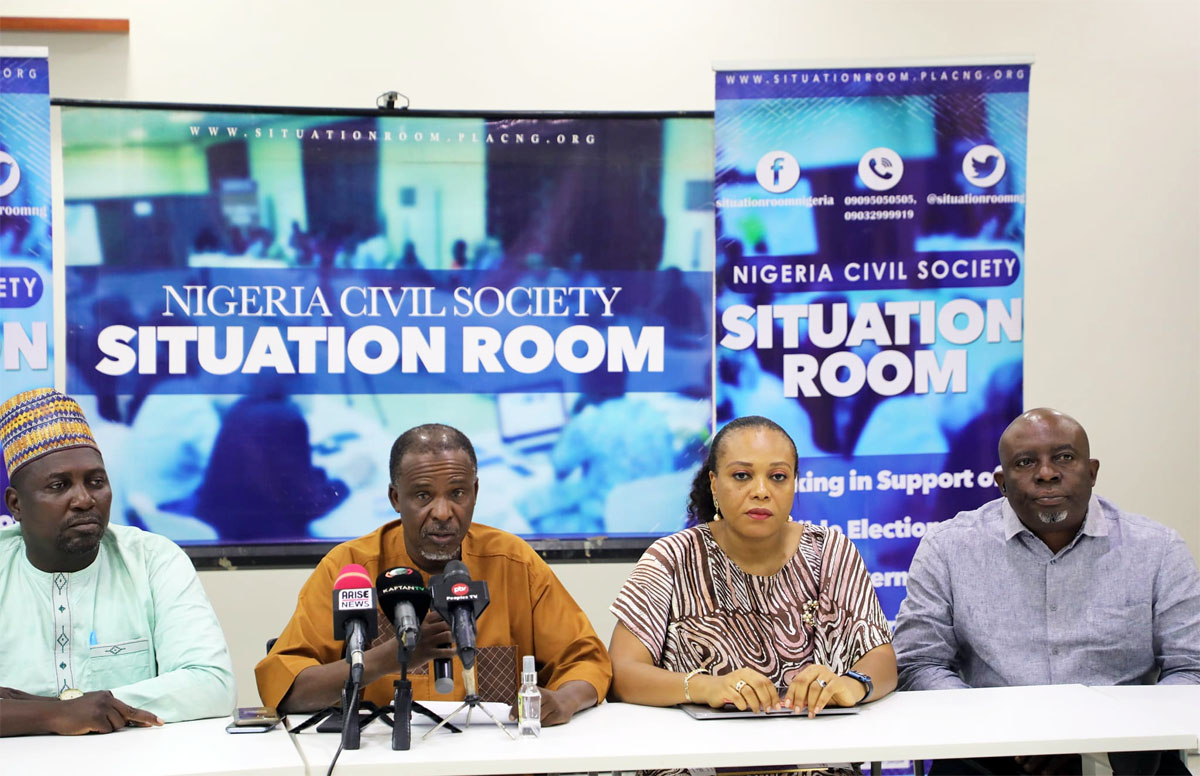
FCT Polls: CSO Situation Room Flags Late Voting, Vote Buying, Logistical Challenges
The Nigeria Civil Society Situation Room has raised concerns over multiple irregularities in the ongoing Federal Capital Territory (FCT) Area Council Elections, citing late polling unit openings, reports of vote buying, and logistical challenges that could affect voter participation.
According to the Situation Room, a coalition of over 70 civil society organisations advocating for credible elections in Nigeria, many polling units opened late, with an average start time of 9:15 a.m., well after the official 8:30 a.m. schedule. Observers also noted low voter turnout in several areas, particularly in AMAC, although queues began forming later in Kuje, Kwali, Gwagwalada, and Abaji Area Councils.
Vote Buying Observed
The coalition reported instances of vote buying, with voters allegedly offered up to ₦10,000 in exchange for ballots in units such as PU008, PU056, PU057, and PU058 in Gidan Mangoro Ward, AMAC. While some of the transactions were open, others were conducted discreetly.
The Situation Room warned that such electoral malpractice undermines the integrity of the election and called on electoral officials, political parties, and security agencies to intervene and prevent further incidents.
READ ALSO:
- ADC Defeats APC to Win First Polling Unit in FCT Area Council Election
- Trump Moves to Indefinitely Suspend Work Permits for Asylum Seekers
- Peller Escapes Generator Fire at Lagos Home, Recalls Earlier Lekki–Epe Scare
Logistical and Accessibility Issues
Observers noted that some voters struggled to locate their polling units after last-minute changes communicated by INEC via text messages. The Bimodal Voter Accreditation System (BVAS) generally performed efficiently, with a one-minute average accreditation time, though malfunctions were reported in a few units including Gwako Town Primary Schools II & IV and PU143, Gwagwalada.
The Situation Room also highlighted accessibility challenges for voters with disabilities, noting that braille ballot guides, magnifying glasses, and other assistive materials were largely absent, even in designated disability communities such as Karimajiji and PU052, Wuse.
Security and Election Conduct
Security personnel, including officers from the Nigeria Police, Civil Defence, Immigration Service, and Fire Service, were present in significant numbers and generally maintained order and professionalism.
Isolated incidents of intimidation and harassment were reported in locations such as Grade 1 Area Court, Rubochi (Kuje); Naharati Sabo School II, Rimba/Ebagi; and PU3, UNG Liman/UNGWAR LIMAN 1, Abaji Central, but security agents swiftly resolved these situations.
Call for Calm and Integrity
The Situation Room commended the INEC FCT Help Desk for promptly addressing reported issues and called on all stakeholders to maintain calm, resist vote buying, and ensure that the will of the people is respected as the polls continue and results are collated.
The report was jointly signed by Mma Odi and Celestine Odo, co-conveners of the coalition.
FCT Polls: CSO Situation Room Flags Late Voting, Vote Buying, Logistical Challenges

-

 Business15 hours ago
Dangote Opens Refinery Investment to Nigerians With Public Share Sale Plans
-

 Politics2 days ago
Peter Obi Launches ‘Village Boys Movement’ to Rival Tinubu’s City Boys Ahead of 2027
-

 Education1 day ago
UTME: JAMB Clarifies Position on Hijab During Biometric Capture
-

 News3 days ago
Police to Arrest TikToker Mirabel After She Recants False Rape Claim
-

 International3 days ago
Epstein, Ex-Israeli PM Named in Alleged Profiteering From Boko Haram Crisis
-
 Politics9 hours ago
Tinubu Hails Wike as APC Dominates 2026 FCT Area Council Elections
-

 Education2 days ago
Ogun Gov Rewards Nigeria’s Best Primary School Teacher with Car, Bungalow
-

 Entertainment2 days ago
Tacha Condemns False Rape Allegations After Mirabel Admits Fabrication