

News
Sokoto govt sympathises with 318 victims of Kara market fire
Sokoto State Government has pledged to provide emergency assistance to victims a fire incident at Kara Market in the state in which 318 shops were razed.
The state governor, Aminu Waziri Tambuwal, gave the promise shortly after he visited the scene of the fire.
Tambuwal, who was represented by his deputy, Alhaji Mannir Daniya, also promised to allow the traders to continue with their business activities in the market pending the overhaul of the market.
Goods and property worth hundreds of millions of naira were consumed by the fire that razed the popular Kara Market in Sokoto on Tuesday and brought the fortunes of the traders and homeowners into ruins.
Some of the major items of trade in the popular market are grains, onions, agricultural inputs, kolanut, wheat, generators and spare parts.
According to an eyewitness, the fire was ignited by an electrical spark at a shop opposite Kofar Kade Gate.
The witness said that some of the traders were able to salvage some of their wares before the fire swept through the market, while others put up a strong fight with looters who took advantage of the incident to loot wares, cash and other valuables of the victims.
Some traders said the fire incident was caused by the restoration of power supply in the early hours of the day.
They said an electric spark was the genesis of the fire incident.
Secretary of the Kolanut Traders Association, Mr. Shina Abula, said the fire which has left the traders devastated as it caused tremendous damage to market stalls, started midnight on Tuesday.
Director General of the State Fire Service, Alhaji Muhammad Shehu, who confirmed the incident said, however, that no life was lost.
Shehu said the service would investigate the alleged sudden restoration of electricity to ascertain the immediate and remote causes of the inferno.







News
Anambra Govt Demands Unreserved Apology From Peter Obi Over Debt Claims
Anambra Govt Demands Unreserved Apology From Peter Obi Over Debt Claims
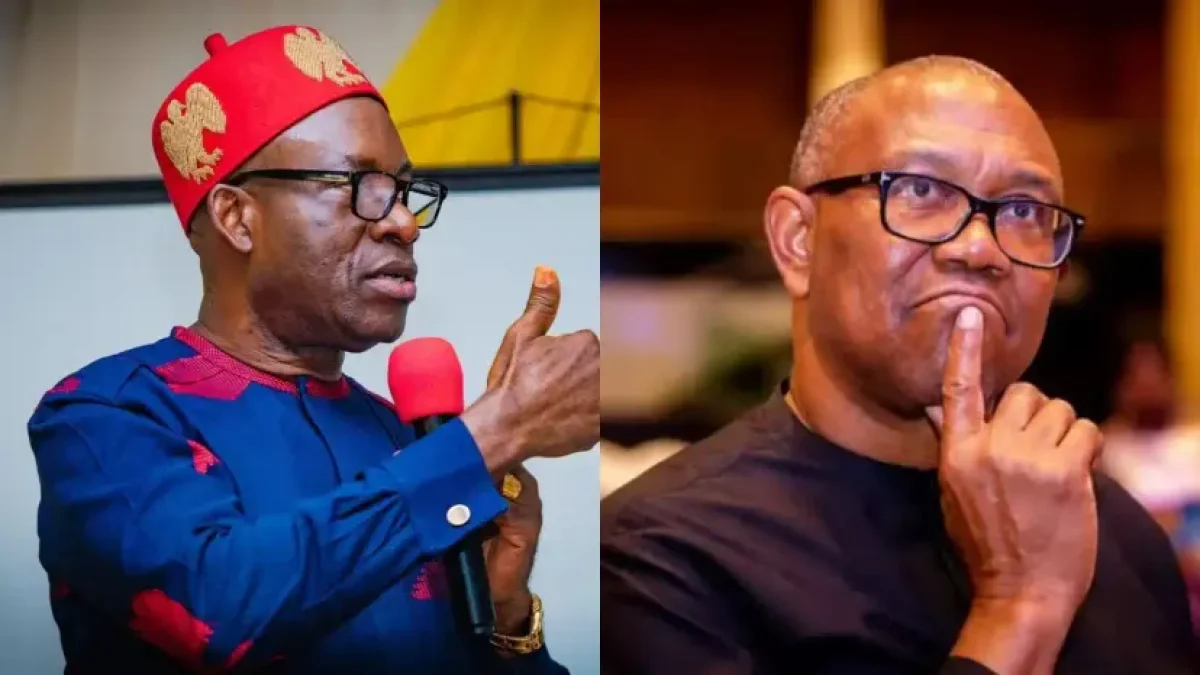
The Anambra State Government has demanded an “unreserved apology” from former Governor Peter Obi over his claims that he left the state without outstanding debts, unpaid salaries, pensions or other financial liabilities when he handed over power in March 2014.
The demand was contained in a statement issued on Saturday, September 26, 2026, by the state Commissioner for Information and Value Reorientation, Dr Law Mefor, following Obi’s appearance on Arise TV on September 24.
The renewed disagreement centres on the financial position of Anambra at the end of Obi’s eight-year tenure and whether loans, salary arrears, pension obligations and other liabilities attributed to his administration remained outstanding after his departure.
Obi has maintained that he left office without owing salaries, pensions, gratuities or contractors whose projects had been completed, certified and verified. He has also disputed the state government’s characterisation of certain World Bank-related facilities as debts personally incurred by his administration.
However, Mefor, in the latest statement titled “Peter Obi’s Debts and Lies: More Questions Than Answers,” said the former governor’s recent interview did not adequately address documents and records presented by the state government.
READ ALSO:
- Five Arrested Near US-Used RAF Fairford in UK Terror Probe
- Kano Upgrades Five PHCs to General Hospitals, Begins Assessment
- Iran Claims Capture of Second US Underwater Drone in Strait of Hormuz
According to the commissioner, the state government’s position is that Obi’s administration contracted eight IDA/World Bank-related facilities which continued to have repayment obligations after he left office.
The government had previously identified facilities including the Malaria Control Booster Project, Third National Fadama Development Project, Health System Development Project II, State Education Programme Investment Project, Community and Social Development Project, Nigeria Erosion and Watershed Management Project and Value Chain Development Project. The state said the outstanding balance on the facilities stood at about N127.4 billion as of June 30, 2026, when converted at the official exchange rate.
Mefor argued that the fact that the facilities were obtained through international development institutions did not mean they were grants, insisting that the state was still responsible for repayment and servicing obligations.
The commissioner also rejected the argument that the value of assets or funds allegedly left behind by Obi could be used to erase the existence of liabilities.
He said a government’s financial position must take account of both assets and liabilities, arguing that the existence of savings or investments did not automatically mean there were no outstanding obligations.
The Anambra government further alleged that liabilities involving workers and pensioners remained after Obi’s administration left office.
Mefor specifically cited workers of the Anambra State Water Corporation, claiming that more than 700 employees had outstanding salary, pension and gratuity issues which subsequently became the subject of legal proceedings.
According to the commissioner, an arbitration process and a later National Industrial Court judgment established liabilities involving the workers, while the current administration entered into an out-of-court settlement in February 2024.
The government said the settlement was valued at N1.56 billion and that about N1.2 billion had so far been paid, with the remaining tranche expected to be settled.
Mefor also referred to pension arrears involving primary school teachers, alleging that 16 months of arrears had been certified during Obi’s administration, but that only five months were paid at the time.
These claims remain part of the dispute between the former governor and the current state administration and have been presented by the government as evidence that financial obligations remained when Obi left office.
Another major point of contention is Obi’s claim that he left more than N2.13 billion in an ecological fund account before handing over power.
The former governor had identified a First Bank account in support of his claim. But the Anambra State Government said it obtained records from the bank which, according to the government, did not support Obi’s description of the account.
Mefor said the account number cited by Obi was actually an Internally Generated Revenue Consolidated Account belonging to the Anambra State Government and not an ecological fund account.
The commissioner further claimed that a First Bank letter dated September 16, 2026, indicated that the account did not have N2.13 billion as its balance on March 17, 2014, nor did it record such an amount as an inflow during the period examined by the bank.
The government consequently challenged Obi to explain where the N2.13 billion he said he left behind was kept if it was not contained in the account he identified.
The ecological fund dispute is significant because Obi had cited the money as part of the financial resources he said were available to his successor after he left office.
The former governor has, however, continued to reject the broader allegation that he left Anambra with outstanding debts, maintaining that his administration settled inherited obligations and left substantial financial resources and investments.
In his September 24 Arise TV appearance, Obi reportedly maintained that his administration did not borrow money or issue bonds on behalf of Anambra State and said he left office without owing salaries, gratuities, pensions or contractors whose work had been completed and verified.
The dispute has also revived an earlier challenge attributed to Obi, in which he said he would withdraw from the 2027 presidential race if anyone could establish that he left salary, pension or other debts behind after leaving office.
The Anambra government said it considered the challenge to have placed the issue of Obi’s financial record firmly in the public domain.
Mefor therefore urged the former governor to acknowledge what the government described as documentary evidence and apologise to the people of Anambra State and Nigerians.
“As a responsible government and committed to ethical governance and politics, we remain ready to provide information that advances public interest,” Mefor said in the statement.
“For H.E. Peter Obi, it is a matter of word, character and integrity.”
The commissioner concluded by calling on Obi to “tender an unreserved apology” and move on from the controversy.
The latest exchange represents another escalation in the long-running disagreement between Obi and the administration of Governor Chukwuma Soludo over the financial records and legacy of the former governor’s administration.
While the Anambra government has cited debt records, bank documents and court-related liabilities in support of its position, Obi has rejected the allegations. The competing claims mean that the underlying financial records, including the relevant loan agreements, audited accounts, handover documents, bank statements and court records, remain central to independently determining the full financial position of the state as of March 17, 2014.
Anambra Govt Demands Unreserved Apology From Peter Obi Over Debt Claims
News
Kano Upgrades Five PHCs to General Hospitals, Begins Assessment

Kano Upgrades Five PHCs to General Hospitals, Begins Assessment
The Kano State Government has approved the upgrade of five Primary Healthcare Centres (PHCs) to General Hospitals as part of efforts to expand access to secondary healthcare services across the state.
The affected facilities are the PHCs in Garun Malam, Kumbotso, Ghari, Garko and Kachako.
The decision is aimed at bringing more comprehensive healthcare services closer to residents, particularly communities that currently rely on existing general and specialist hospitals for secondary medical care.
Following the approval, the Kano State Hospitals Management Board (HMB) has commenced arrangements for the immediate takeover and assessment of the five facilities.
The Executive Secretary of the Board, Dr Mansur Mudi Nagoda, has constituted a team to inspect the facilities and conduct a comprehensive assessment of their existing infrastructure, human resources, medical equipment and other requirements needed for their conversion to General Hospitals.
The team is expected to identify gaps at each facility and determine the additional resources required for the smooth commencement of operations. Its findings and recommendations will be submitted to the state government for further action.
READ ALSO:
- Iran Claims Capture of Second US Underwater Drone in Strait of Hormuz
- Kubwa Explosion: Vehicle Crashes Into Gas Outlet, Damages Nine Shops
- Newlywed Arrested After Allegedly Excreting 72 Cocaine Wraps at Enugu Airport
The government said the upgrade of the five PHCs is expected to improve access to secondary healthcare in the affected local government areas, reduce pressure on existing general and specialist hospitals, strengthen referral pathways and improve healthcare delivery at the grassroots.
The Kano Commissioner for Health, Dr Abubakar Labaran Yusuf, and the HMB Executive Secretary welcomed the approval, describing it as part of ongoing efforts to reposition the state’s healthcare system.
They said the expansion would help residents gain access to timely, affordable and quality healthcare services closer to their communities.
The latest approval comes amid wider investments in Kano healthcare infrastructure. At its 41st meeting on September 24, 2026, the Kano State Executive Council approved ₦2.609 billion for the rehabilitation and upgrading of healthcare facilities across the state.
The approvals included the upgrade of Kibiya and Albasu PHCs to General Hospitals, with ₦521.948 million and ₦679.375 million allocated respectively for the two projects.
Other approved health projects include the renovation of Karaye Emirate Specialist Hospital, rehabilitation of Shekar Barde PHC in Kumbotso and the upgrade of Yakasai Zumunta Clinic and Maternity to provide 24-hour services.
The latest development therefore forms part of a broader effort by the Kano government to expand healthcare infrastructure and increase the availability of secondary medical services across the state.
For residents of Garun Malam, Kumbotso, Ghari, Garko and Kachako, the next stage will involve assessing the facilities and providing the personnel, equipment and infrastructure required for them to operate effectively as General Hospitals.
The state government has not announced a specific completion date for the transition, with the timeline expected to depend on the outcome of the facility assessments and subsequent implementation measures.
Kano Upgrades Five PHCs to General Hospitals, Begins Assessment
News
Tinubu to Nigerians: We Are Correcting Past Mistakes, Give Us More Time
Tinubu to Nigerians: We Are Correcting Past Mistakes, Give Us More Time
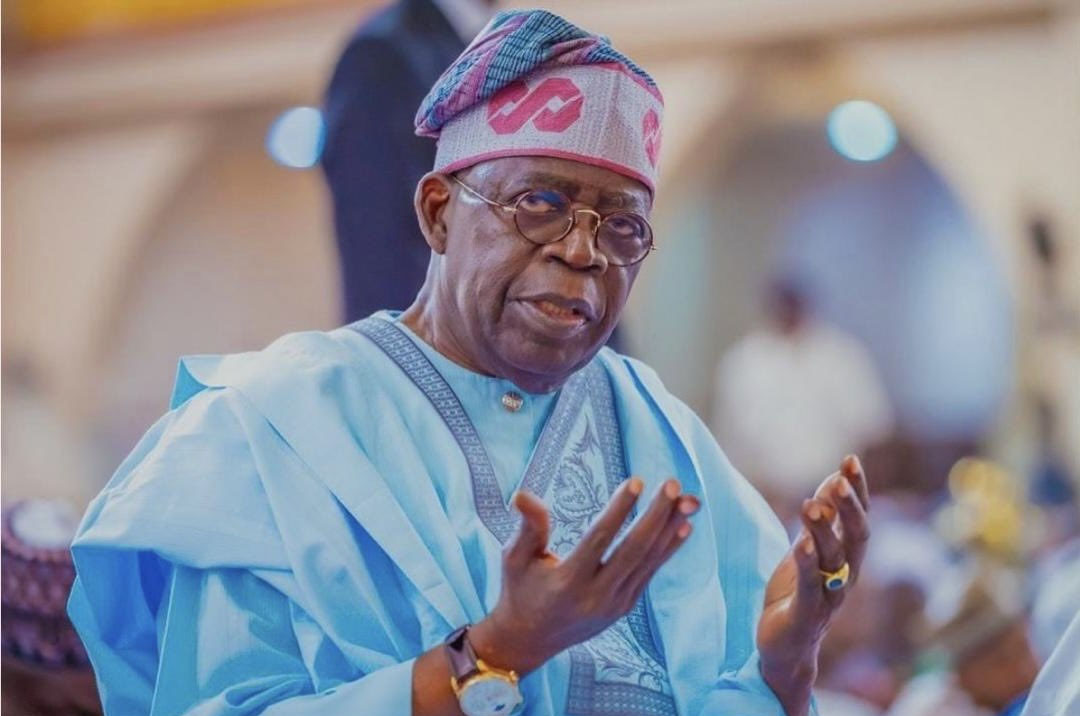
President Bola Ahmed Tinubu has appealed to Nigerians to give his administration more time to complete its economic reforms, assuring citizens that the difficult phase of stabilising the economy is giving way to a new focus on growth, production and shared prosperity.
Tinubu made the appeal through the Speaker of the House of Representatives, Tajudeen Abbas, who represented him at a special Juma’at prayer at the National Mosque in Abuja as part of activities marking Nigeria’s 66th Independence Anniversary.
The President urged Nigerians not to lose hope in the country’s recovery, saying the government was working to correct what it described as longstanding structural and fiscal problems inherited from previous administrations.
Abbas conveyed Tinubu’s message that Nigerians had made significant sacrifices and should continue to give the administration the opportunity to complete its reform programme.
The President said Nigeria was on the right path, adding that there was light at the end of the tunnel and that peace and development were returning to the country.
The appeal comes more than three years after Tinubu introduced some of his administration’s most significant economic measures, including the removal of the petrol subsidy and changes to the foreign-exchange system.
The reforms have also included changes to the tax system, efforts to improve government revenue, measures to attract investment and programmes aimed at expanding domestic production.
The Federal Government has argued that the measures were necessary to address longstanding fiscal and economic distortions, although they have also been accompanied by significant adjustments in the cost of living.
Minister of Information and National Orientation Mohammed Idris said Nigeria was moving from the difficult phase of reform and stabilisation towards growth, production and shared prosperity.
READ ALSO:
- Fake Agency Scandal: Gbajabiamila Says He Never Betrayed Tinubu’s Trust
- Deputy Director’s Death: NLC Shuts Delta Secretariat, Begins Indefinite Strike
- 2027: NDC State Chairmen Reject Obi-Kwankwaso Movement’s Parallel Structures
Idris cited official economic data showing that Nigeria’s real GDP grew by 4.43 per cent in the second quarter of 2026, compared with 4.23 per cent in the corresponding period of 2025.
He also pointed to improvements in foreign reserves, domestic refining capacity, investment and productive activity as indicators the government considers evidence of progress.
The minister further highlighted Nigeria’s removal from the Financial Action Task Force (FATF) Grey List and its return to the JP Morgan Emerging Markets Bond Index after 11 years.
According to the Federal Government, the next phase of the reform programme is focused on ensuring that improvements in economic indicators translate into tangible benefits for households, including jobs, higher incomes, access to education and credit, lower costs and wider economic opportunities.
Secretary to the Government of the Federation George Akume said the government’s task was now to consolidate the gains from the reforms and ensure that ordinary Nigerians benefited from the resulting economic opportunities.
He said the Federal Government was mobilising revenue, improving public finances and implementing programmes covering infrastructure, agriculture, education, healthcare and social protection, while stressing the need to protect vulnerable Nigerians.
The government has also continued to defend the removal of the petrol subsidy, arguing that the policy freed resources that could be redirected towards development and public services.
Tinubu, in his third-anniversary address in May, said the country had faced substantial fiscal pressures, unsustainable fuel subsidies, exchange-rate distortions and declining revenues when his administration took office.
He acknowledged that the reforms had imposed sacrifices on families, workers and businesses but argued that the decisions were necessary to prevent deeper fiscal and economic problems.
The President also cited progress in infrastructure, oil and gas, domestic refining, agriculture, education, housing, healthcare and telecommunications.
According to Tinubu, more than 2,700 kilometres of highways and major roads were under construction, reconstruction or rehabilitation, while rail projects were also being advanced.
He further highlighted increased domestic refining capacity and said the government was working to reduce dependence on imported petroleum products and conserve foreign exchange.
On education, Tinubu said the Nigerian Education Loan Fund (NELFUND) had provided more than 1.5 million students with access to higher education, while the government had also expanded consumer credit and housing initiatives.
The President said the administration’s next priority was to ensure that the benefits of the reforms were felt more directly in the daily lives of Nigerians.
The government has particularly emphasised food production, transportation costs and employment as areas where economic improvements should become more visible.
The Federal Government has also promoted compressed natural gas and electric vehicles as part of its efforts to reduce transportation costs and lessen dependence on petrol.
In agriculture, Minister of Agriculture and Food Security Abubakar Kyari said improved access to farmland in previously affected areas, alongside government support for fertiliser and improved seeds, was contributing to increased production.
However, the government has acknowledged that significant challenges remain.
Idris said the country had not completely resolved its security challenges, although he said the government had increased investment in equipment, intelligence, personnel and inter-agency coordination.
The reform programme also continues to attract public debate because of its impact on household finances, with Nigerians still dealing with the effects of food prices, transportation costs and other living expenses.
The administration’s stated objective is therefore to move beyond macroeconomic stabilisation and ensure that improvements in GDP growth, public finances, investment and production translate into better living standards.
Tinubu’s latest appeal for patience comes as Nigeria prepares to mark 66 years of independence, with the Federal Government using the anniversary to highlight both the country’s challenges and its reform agenda.
The theme of the government’s anniversary programme is “From Reforms to Stability: Consolidating Nigeria’s Renewed Hope for Shared Prosperity.”
The anniversary programme includes the Juma’at service, a church service, an Independence Day public lecture and a nationwide broadcast by President Tinubu on October 1.
As the administration moves into the next phase of its programme, Tinubu is asking Nigerians to remain patient while the government works to translate its stated economic gains into greater prosperity, employment, lower costs and improved opportunities.
The extent to which those reforms produce measurable improvements in the daily lives of Nigerians is expected to remain a central issue as the country moves towards the next phase of the administration’s economic programme.
Tinubu to Nigerians: We Are Correcting Past Mistakes, Give Us More Time
-

 News2 days ago
Anambra Releases ₦473m Salary Arrears Document as Obi’s Debt Claim Sparks Fresh Dispute
-
 News2 days ago
Keyamo: ₦70,000 Minimum Wage No Longer Enough as Cost of Living Soars
-
 metro2 days ago
EFCC Chairman Raises Alarm Over Alleged Theft of Nigeria’s Public Funds
-

 Sports2 days ago
AFCON 2027 Qualifier: Nigeria Fight Back to Beat Madagascar 2-1 in Uyo
-
 Politics2 days ago
2027: Otti Explains Why He Supports Tinubu Despite Remaining in Labour Party
-
 metro2 days ago
Umahi Announces First Niger Bridge Reopening Next Week, Orders Tinubu Pictures
-

 Entertainment2 days ago
Jetour Takes Adventure Beyond the Road, Brings Solar-powered Borehole to Ibeju-Lekki community
-

 metro2 days ago
Lagos Police Seal Fake Alcohol Factory, Arrest 48-Year-Old Man