
News
Tinubu finalises new cabinet list, bars lobbyists from UK residence
Tinubu finalises new cabinet list, bars lobbyists from UK residence
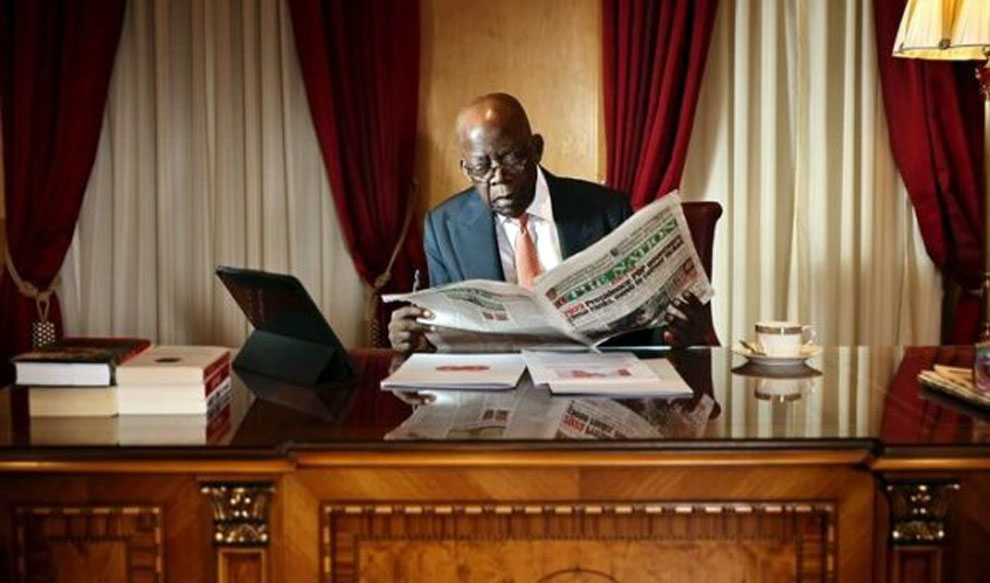
There are strong indications that President Bola Tinubu has finalised the names and roles of those who will form his revamped cabinet, PUNCH reported Saturday.
According to multiple sources within the Presidency, Tinubu has completed the list of ministers set to be retained or removed and was expected to release it on Thursday night, just a day after arriving in the United Kingdom for his two-week annual leave.
Amid growing economic challenges and the widespread protests that occurred in August, the President has been under increasing pressure, both from within his party, the All Progressives Congress, and external forces, to dismiss underperforming ministers.
Despite repeatedly issuing warnings regarding underperformance, the president’s cabinet has remained largely intact, with the notable exception of the suspension of the Minister of Humanitarian Affairs and Poverty Alleviation, Dr. Betta Edu, in January 2024.
During a three-day retreat for cabinet members and presidential aides in November, Tinubu introduced a Central Delivery Coordination Unit, overseen by his Special Adviser on Policy Coordination, Hadiza Bala-Usman. This unit was tasked with evaluating the performance of ministers and other top officials.
The President made it clear that these performance assessments would determine who would stay or leave the cabinet.
READ ALSO:
- Farooq Kperogi: Tinubu dramatizes hollowness of Nigeria’s “independence”
- Obey court order on Rivers LG poll, PDP tells Fubara
- Israeli airstrike cuts off road linking Lebanon, Syria
“If you are performing, nothing to fear. If you miss the objective, we’ll review it. If no performance, you leave us. No one is an island and the buck stops on my desk,” Tinubu told the attendees.
Nearly a year after the president’s cabinet was inaugurated in August 2023, reports suggested that a reshuffle was forthcoming, although officials remained unclear about the exact timing.
It was revealed that the changes would go beyond a simple swapping of portfolios. Certain ministries, such as the Ministry of Humanitarian Affairs, were expected to be scrapped, while other portfolios would likely be merged or split.
Speaking under anonymity, officials disclosed that while the list was initially slated for release on Thursday, the President decided to “sleep on it” for a bit longer.
“We are just waiting for the go-ahead. All I know is that we are expecting him to send the new names of those he wants to drop and those he wants to appoint,” one source shared.
Another official added, “I’m surprised the list did not come out yesterday. That list is nearly finalized.”
Reports suggesting that lobbyists were crowding Tinubu’s residence in the UK were also dismissed by officials. “That’s not true. Even if they know where he is, access is restricted. He’s resting, and no one can just walk in to see him like that,” one source clarified.
On September 25, 2024, the Presidency confirmed that a cabinet reshuffle was imminent, based on performance data gathered by the Central Delivery Coordination Unit.
Tinubu’s working leave in the UK commenced on October 2 and is scheduled to end on October 16.
Tinubu finalises new cabinet list, bars lobbyists from UK residence
Punch














News
NNPC CEO Ojulari Receives Prestigious Energy Institute Fellowship in London

NNPC CEO Ojulari Receives Prestigious Energy Institute Fellowship in London
The Nigerian National Petroleum Company Limited (NNPC Ltd.) has earned international acclaim as its Group Chief Executive Officer, Engr. Bashir Bayo Ojulari, has been conferred with the Fellowship of the Energy Institute (FEI), United Kingdom — one of the highest honours in the global energy industry.
The Fellowship recognises senior energy leaders who have demonstrated sustained, high-impact contributions to the advancement of the energy sector. It was formally conferred on Ojulari during International Energy Week (IEW) in London, a leading platform for energy policy, finance, and industry leadership. (punchng.com)
The honour was presented by Andy Brown, President of the Energy Institute, who praised Ojulari’s transformative leadership of NNPC Ltd., highlighting his role in strengthening governance, embedding a performance-driven culture, and repositioning the company for long-term value creation.
Under his stewardship, NNPC Ltd. has implemented investor-focused reforms, enhanced operational excellence, and expanded strategic global partnerships, all contributing to increased confidence in Nigeria’s energy sector. The recognition reinforces NNPC’s ongoing transformation into a commercially driven, globally competitive, and transparent energy company.
READ ALSO:
- FCT Polls: CSO Situation Room Flags Late Voting, Vote Buying, Logistical Challenges
- ADC Defeats APC to Win First Polling Unit in FCT Area Council Election
- Trump Moves to Indefinitely Suspend Work Permits for Asylum Seekers
Significance for Nigeria and Africa
Experts note that the FEI Fellowship is not only a personal achievement for Ojulari but also a major institutional endorsement of NNPC Ltd.’s reform agenda. Being recognised at International Energy Week, which convenes policymakers, financiers, regulators, and industry leaders, positions the company at the centre of critical global energy discussions on sustainability, energy transition, and capital formation.
The award also signals growing international confidence in NNPC Ltd. and highlights Nigeria’s strategic role in Africa’s energy security and global energy transition ambitions. (vanguardngr.com)
Ojulari’s Leadership Achievements
Since assuming office, Engr. Ojulari has overseen multiple strategic reforms at NNPC Ltd., including:
- Driving governance and operational reforms to boost accountability.
- Expanding strategic partnerships and investor-focused initiatives.
- Enhancing execution efficiency across the company’s subsidiaries.
- Positioning NNPC Ltd. as a credible, investment-ready energy enterprise.
These efforts have not only improved the company’s profitability and performance but also strengthened Nigeria’s energy security and market competitiveness. (punchng.com)
Ojulari described the Fellowship as a reflection of collective effort within NNPC and reiterated his commitment to sustainable value creation, global best practices, and energy sector innovation.
NNPC CEO Ojulari Receives Prestigious Energy Institute Fellowship in London
News
FCT Polls: CSO Situation Room Flags Late Voting, Vote Buying, Logistical Challenges
FCT Polls: CSO Situation Room Flags Late Voting, Vote Buying, Logistical Challenges
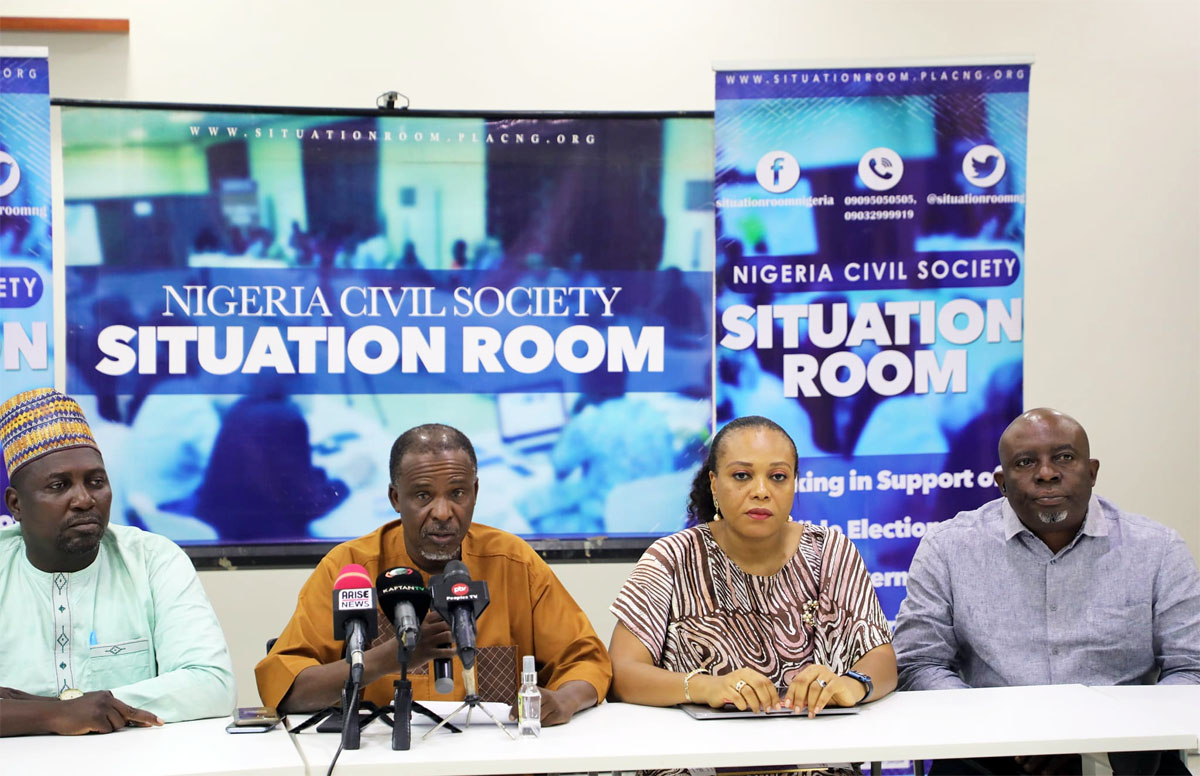
The Nigeria Civil Society Situation Room has raised concerns over multiple irregularities in the ongoing Federal Capital Territory (FCT) Area Council Elections, citing late polling unit openings, reports of vote buying, and logistical challenges that could affect voter participation.
According to the Situation Room, a coalition of over 70 civil society organisations advocating for credible elections in Nigeria, many polling units opened late, with an average start time of 9:15 a.m., well after the official 8:30 a.m. schedule. Observers also noted low voter turnout in several areas, particularly in AMAC, although queues began forming later in Kuje, Kwali, Gwagwalada, and Abaji Area Councils.
Vote Buying Observed
The coalition reported instances of vote buying, with voters allegedly offered up to ₦10,000 in exchange for ballots in units such as PU008, PU056, PU057, and PU058 in Gidan Mangoro Ward, AMAC. While some of the transactions were open, others were conducted discreetly.
The Situation Room warned that such electoral malpractice undermines the integrity of the election and called on electoral officials, political parties, and security agencies to intervene and prevent further incidents.
READ ALSO:
- ADC Defeats APC to Win First Polling Unit in FCT Area Council Election
- Trump Moves to Indefinitely Suspend Work Permits for Asylum Seekers
- Peller Escapes Generator Fire at Lagos Home, Recalls Earlier Lekki–Epe Scare
Logistical and Accessibility Issues
Observers noted that some voters struggled to locate their polling units after last-minute changes communicated by INEC via text messages. The Bimodal Voter Accreditation System (BVAS) generally performed efficiently, with a one-minute average accreditation time, though malfunctions were reported in a few units including Gwako Town Primary Schools II & IV and PU143, Gwagwalada.
The Situation Room also highlighted accessibility challenges for voters with disabilities, noting that braille ballot guides, magnifying glasses, and other assistive materials were largely absent, even in designated disability communities such as Karimajiji and PU052, Wuse.
Security and Election Conduct
Security personnel, including officers from the Nigeria Police, Civil Defence, Immigration Service, and Fire Service, were present in significant numbers and generally maintained order and professionalism.
Isolated incidents of intimidation and harassment were reported in locations such as Grade 1 Area Court, Rubochi (Kuje); Naharati Sabo School II, Rimba/Ebagi; and PU3, UNG Liman/UNGWAR LIMAN 1, Abaji Central, but security agents swiftly resolved these situations.
Call for Calm and Integrity
The Situation Room commended the INEC FCT Help Desk for promptly addressing reported issues and called on all stakeholders to maintain calm, resist vote buying, and ensure that the will of the people is respected as the polls continue and results are collated.
The report was jointly signed by Mma Odi and Celestine Odo, co-conveners of the coalition.
FCT Polls: CSO Situation Room Flags Late Voting, Vote Buying, Logistical Challenges
News
Trump Moves to Indefinitely Suspend Work Permits for Asylum Seekers
Trump Moves to Indefinitely Suspend Work Permits for Asylum Seekers
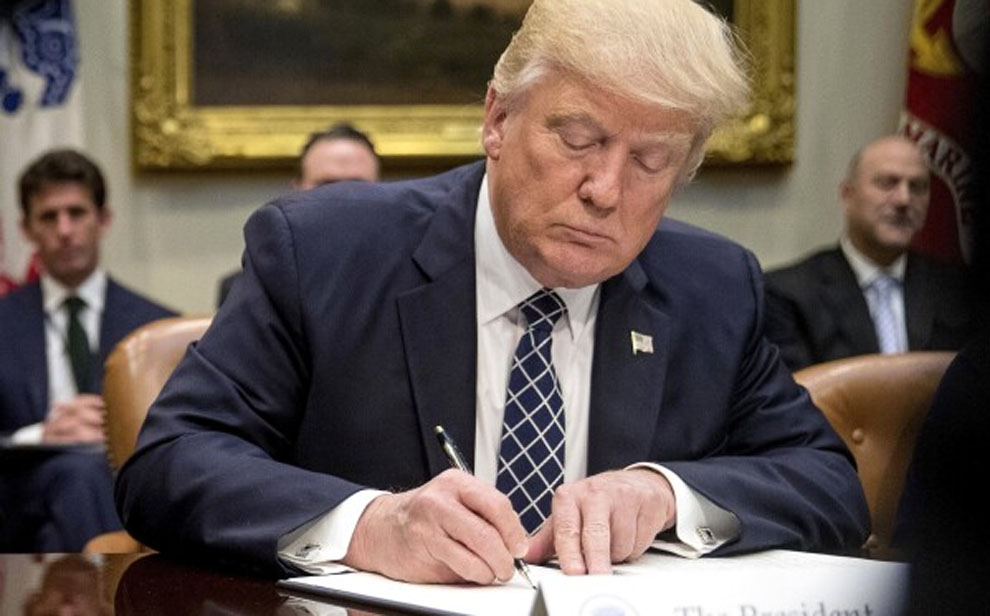
United States President, Donald Trump, has introduced a sweeping immigration proposal that could halt the issuance and renewal of work permits for asylum seekers for many years, marking what analysts describe as one of the most consequential shifts in U.S. asylum employment policy in decades.
The proposed rule, released on Friday by the U.S. Department of Homeland Security (DHS), seeks to suspend new employment authorisation for asylum applicants until the average processing time for designated asylum cases falls to 180 days or fewer.
According to DHS data, the asylum case backlog now exceeds 1.4 million applications, with the department projecting that meeting the 180-day benchmark could take between 14 and 173 years under current conditions—effectively creating an indefinite suspension of asylum work permits.
Despite the bleak projections, DHS said administrative restructuring, staffing increases, and efficiency-focused reforms could eventually reduce processing delays. However, officials acknowledged that significant improvements would take time.
READ ALSO:
- Peller Escapes Generator Fire at Lagos Home, Recalls Earlier Lekki–Epe Scare
- Abuja Church Expels Newly Married Woman Over Refusal to Consummate Marriage
- Pastor Sentenced to Death by Hanging for Murdering Landlord in Akwa Ibom
In a statement accompanying the proposal, DHS said the rule, if finalised, “would reduce incentives for frivolous, fraudulent, or otherwise meritless asylum claims.” The department stressed that work authorisation is not an entitlement, but a discretionary benefit granted by the DHS secretary.
If implemented, the policy would generally bar migrants who entered the United States unlawfully from receiving new work permits or renewing existing ones while their asylum claims remain pending.
Limited exemptions would apply only to individuals who alerted U.S. border officials within 48 hours of arrival that they feared persecution, torture, or faced another urgent humanitarian threat.
The proposal forms part of a broader immigration clampdown under President Trump, who returned to office in 2025 after campaigning on stricter border enforcement and tougher asylum standards.
Throughout his campaign and early months back in office, Trump portrayed immigrants and asylum seekers as economic and security burdens, claims that critics argue are not supported by crime or labour market data.
Immigrant advocacy groups, civil rights organisations, and some Democratic lawmakers have criticised the proposal, warning that denying work permits could push asylum seekers into poverty, increase dependence on charities, and drive people into undocumented employment.
Legal experts also expect significant court challenges, arguing that the rule could weaken long-standing U.S. and international asylum protections and undermine due-process guarantees.
The proposal will undergo a 60-day public comment period once it is formally published in the Federal Register on Monday. The regulatory process could extend for months or even years, with the final outcome uncertain amid anticipated legal battles.
Until then, existing regulations governing asylum seeker work permits in the United States remain in force.
Trump Moves to Indefinitely Suspend Work Permits for Asylum Seekers

-

 Politics2 days ago
Peter Obi Launches ‘Village Boys Movement’ to Rival Tinubu’s City Boys Ahead of 2027
-

 International3 days ago
Canada Opens New Express Entry Draw for Nigerian Workers, Others
-

 News2 days ago
Police to Arrest TikToker Mirabel After She Recants False Rape Claim
-

 Education14 hours ago
UTME: JAMB Clarifies Position on Hijab During Biometric Capture
-

 International2 days ago
Epstein, Ex-Israeli PM Named in Alleged Profiteering From Boko Haram Crisis
-

 metro3 days ago
Osun Awards 55.6km Iwo–Osogbo–Ibadan Road Project to Three Contractors
-

 metro3 days ago
Ondo Monarch Killed as Bandits Strike Akure North
-

 Politics3 days ago
Updated: Rivers Senator Mpigi Barinada dies at 64