

News
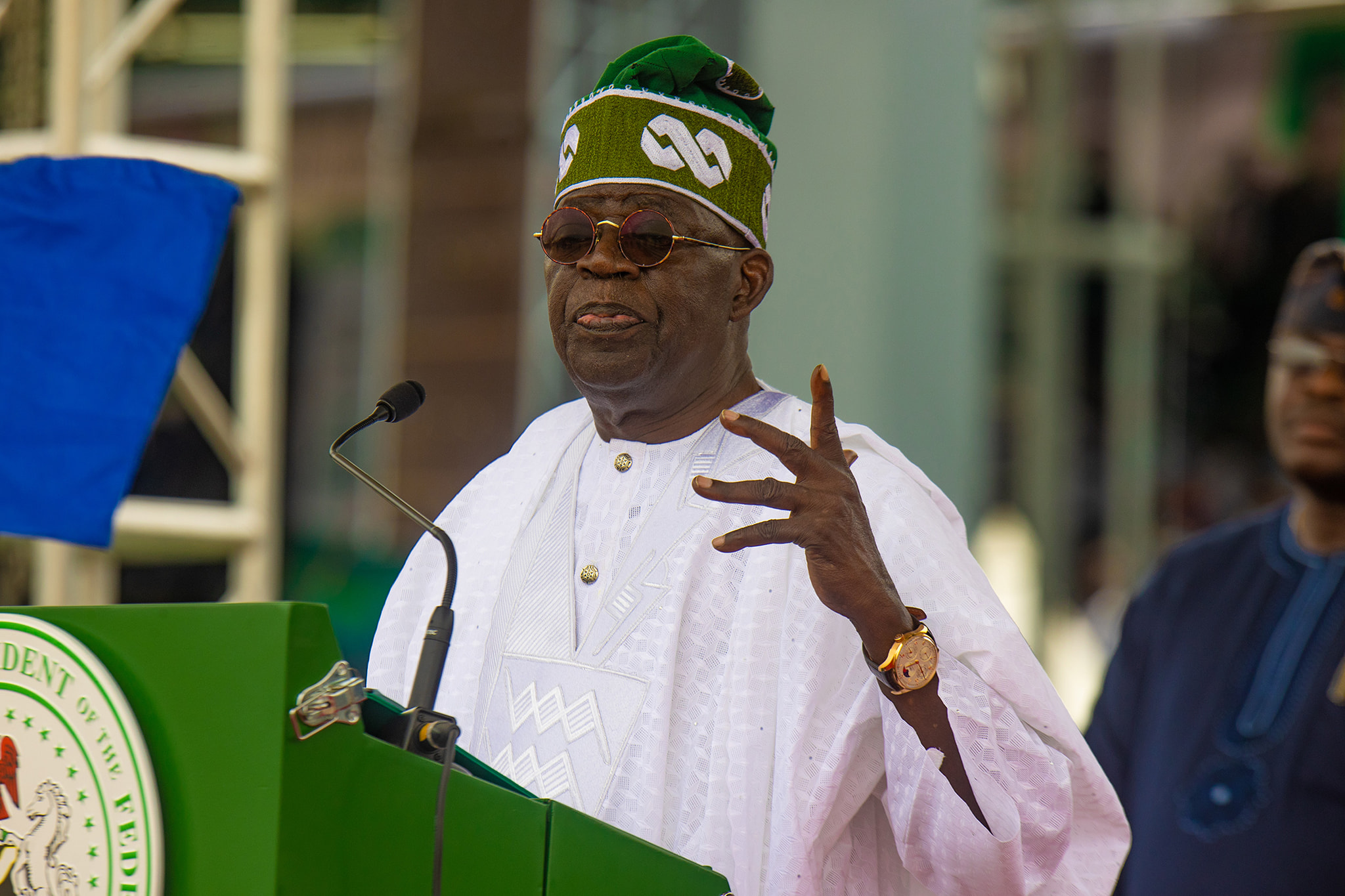
Tinubu speaks on how funds saved from subsidy is being used
Tinubu speaks on how funds saved from subsidy is being used
President Bola Ahmed Tinubu said on Monday that the government was channelling funds saved from the removal of fuel subsidy into the provision of critical infrastructure across the country.
He said this at the opening of a National Conference on Public Accounts and Fiscal Governance, organised by the Public Accounts Committees (PACS) of the Senate and House of Representatives in Abuja.
The event had as its theme “Fiscal Governance in Nigeria: Charting a New Course for Transparency and Sustainable Development.”
Tinubu said the funds were also being channelled into social safety nets and targeted economic reforms aimed at rebuilding public trust and promoting inclusive development.
Represented by the Minister of State for Finance, Dr. Doris Nkiruka Uzoka-Anite, he said the removal of the subsidy, though painful, was necessary to free up fiscal space and redirect national resources to sectors that benefit the broader population.
“In 2022 alone, Nigeria spent over 4 trillion naira on fuel subsidies, more than we allocated to capital expenditure. This was not only physically unsustainable, but it was also unjust. A subsidy that disproportionately benefited the affluent, encouraged smuggling, and bred inefficiency was neither equitable nor strategic.
“Since its removal, we have redirected those funds into targeted interventions, expanding our social safety nets, improving public transportation, and financing critical infrastructure projects. Most importantly, we have strengthened our fiscal buffers, making Nigeria more resilient to external shocks,” he said.
The President described fiscal governance as “the lifeblood of national development,” stressing that without transparency, accountability, and sound management of public resources, no nation can prosper, regardless of its natural wealth.
“For far too long, Nigeria’s economy has been burdened by structural inefficiencies, fiscal leakages, and an overreliance on oil revenues. But we are not here today to dwell on the challenges of the past. We are here to chart a new course,” he said.
Highlighting other key reforms, he pointed to the newly assented tax reform laws, which he said will simplify compliance, expand the tax base, digitise collections, and harmonise multiple taxes to ease doing business in Nigeria.
“These reforms are designed to widen the tax base by integrating the informal sector, simplify compliance for small and medium-sized enterprises, digitise revenue collection to reduce human interference and eliminate leakages, and harmonise multiple taxes to make doing business easier in Nigeria,” he said.
READ ALSO:
- Police speak on viral video of woman giving her child alcohol
- Davido, Zlatan celebrate Black Axe cultist group in viral post
- Two police officers gunned down during patrol in Imo
Describing the new tax system as “a governance imperative,” Tinubu noted that Nigeria is laying the foundation for a self-sustaining economy that gradually moves away from dependence on oil revenues to a more diverse and inclusive revenue base.
The President also emphasised economic diversification as a top policy objective, naming agriculture, manufacturing, digital services, renewable energy, mining, and the creative economy as focal sectors receiving targeted investments and reforms.
He referenced new initiatives like the National Credit Guarantee Company, which aims to support local production, empower SMEs, and boost non-oil exports.
“These efforts go beyond mere economic metrics. They are creating jobs, fostering innovation, building economic resilience, and strengthening our national security and long-term stability,” Tinubu stated.
On monetary policy, Tinubu acknowledged the Central Bank’s efforts in stabilising the naira, taming inflation, and coordinating effectively with fiscal authorities.
“There is better coordination now between the fiscal and monetary sides, and we are determined to reduce inflationary pressures by addressing structural bottlenecks, particularly in food supply chains.”
The President affirmed that transparency and accountability are non-negotiable, citing steps taken to digitise public finance systems through platforms such as the Integrated Payroll and Personnel Information System (IPPIS), the Government Integrated Financial Management Information System (GIFMIS), and the Open Treasury Portal.
“These platforms ensure that public funds are traceable, public officers are accountable, and the Nigerian people are empowered with information. We must move from opacity to openness, from suspicion to confidence,” he declared.
Tinubu called on the National Assembly, especially the Public Accounts Committees, to uphold their constitutional duty with “integrity, courage, and independence.”
“Oversight is not a political tool. It is a patriotic duty. Every project must be guided by value for money, and every budget must reflect the new priorities of our people,” he said.
The President also underscored the role of citizens, the media, civil society, and the judiciary in institutionalising good governance.
“Nigerians must be empowered to ask questions, scrutinise public accounts, and demand accountability. Good governance is a shared responsibility,” he said.
READ ALSO:
- Rain destroys 100 houses in Kebbi, many injured
- Rashidi Ladoja: 10 things to know about incoming Olubadan of Ibadan
- Israel attempted to assassinate me – Iran President
Speaker of the House of Representatives, Rt. Hon. Abbas Tajudeen raised alarm over Nigeria’s unresolved fiscal infractions, revealing that over ₦300 billion in public funds flagged by audit reports remain unrecovered.
Speaker Abbas, who was represented by House Leader Julius Ihonbvere, who described the situation as unacceptable, warned that fiscal responsibility cannot thrive where audit queries are routinely ignored without consequence.
“We have advocated for the timely implementation of audit recommendations and increased collaboration with anti-corruption bodies to ensure that those found wanting are held to account. In addition, we have advocated for mandatory compliance and sanctions for audit infractions, closing long-standing loopholes that allow MDAs to disregard audit queries with impunity,” he said.
He added that the House has moved from passive review to active enforcement, stressing the importance of holding Ministries, Departments and Agencies (MDAs) accountable.
“Fiscal responsibility cannot thrive in the absence of consequences for mismanagement,” Abbas stated.
The Speaker expressed concern that Nigeria’s public finance architecture is often weakened by non-compliance and delayed enforcement of audit recommendations.
To address this, he noted that the House has “worked on refining the PAC process to reduce delays in considering Auditor-General reports, while developing a structured follow-up mechanism to track compliance by MDAs.”
Beyond enforcement, the Speaker called for innovation and the deployment of technology in audit and accounting processes.
“The House is fully committed to supporting the integration of technology into public sector audit and accounting processes. We have championed the digitisation of audit and financial reports, promoted the use of real-time expenditure tracking tools, and encouraged MDAs to adopt automated audit software,” he said.
Speaker Abbas noted that the 10th House of Representatives has made fiscal oversight a legislative priority and has deliberately elevated financial accountability “from mere procedural obligations to an active, results-driven process.”
According to him, the legislative arm has engaged in expanded committee work, direct interface with the Office of the Auditor-General, and follow-up on past audit findings.
“We have begun to institutionalise a culture where public fund management is not only monitored but measured against actual impact. This includes the timely review of Auditor-General’s reports to ensure swift legislative action and follow-up,” he added.
He emphasised that true transparency is not about elite bureaucratic processes but about empowering citizens.
“Fiscal transparency should no longer be confined to elite circles of technocrats and auditors; it must become a democratic right that empowers citizens to participate in shaping public policy.
“That is why the 10th House has prioritised the simplification and public accessibility of audit reports, making it easier for everyday Nigerians to engage meaningfully with government financial disclosures,” the Speaker added.
Abbas revealed that the House has organised public presentations and debates for every appropriation bill.
“The essence of inclusive budgeting policy is to ensure that the people whose mandate we hold have the opportunity to make input into the appropriation process, just like any other public hearing on our legislative processes in lawmaking,” he said.
He also called for nationwide standardisation of audit mechanisms to ensure that no tier of government is left behind.
“The House of Representatives strongly supports a harmonised approach to fiscal accountability, one where audit methodologies, enforcement mechanisms, and compliance cultures are not fragmented, but standardised and mutually reinforcing,” he said.
The Speaker stressed the importance of involving state actors.
READ ALSO:
- ADC woos PDP, APC members in Ondo
- Igbos won’t trade Nnamdi Kanu’s freedom for your re-election – Ohanaeze tells Tinubu
- NNPC sells petrol at N910 in Abuja, Kaduna, Kano
“It is therefore imperative that the State Houses of Assembly, Auditors-General, Commissioners of Finance, and PAC Chairpersons from across the country are made to be part of a conference of this nature,” he said.
He also emphasised the need for continuous performance monitoring and evaluation beyond budget passage.
“Over the last two years, the 10th House has expanded its post-budget engagements, introducing performance reviews, on-site inspections, and sectoral audits that assess the real-world translation of appropriated funds,” he said.
President of the Senate and Chairman of the National Assembly, Senator Godswill Akpabio, urged the Public Accounts Committees (PACs) of the National Assembly to assert their constitutional powers in enforcing transparency and accountability in government, warning against the growing trend of non-compliance with legislative summons.
Represented by Senator Abdul Ningi, Akpabio emphasised that Nigeria’s progress is inseparable from effective fiscal oversight, which is the central mandate of the PACs.
“The Public Accounts Committees are not just legislative creations; they are constitutional bodies empowered by Sections 80, 81, and 88 of the Constitution to act as watchdogs of public funds. They have the power to summon any individual, public or private, to account for the use of government resources,” he said.
Akpabio lamented the lack of responsiveness by some agencies and individuals to invitations from the legislature, describing it as an affront to democracy and the rule of law.
“Refusal to honour legislative invitations, especially from the PACs, is unacceptable. This trend must be stopped. Heads of agencies, including the Head of Service and others, must recognise the authority vested in the legislature by the 1999 Constitution as amended,” he stressed.
The Senate President said that without transparency, fiscal discipline, and integrity, no nation can achieve true development. He challenged the PACs to rise to their constitutional mandate and reassert their relevance in national governance.
“It is your duty to track how revenues are collected, stored, appropriated, and implemented. Without accountability, there will be no prosperity. Without discipline, there will be no development,” he added.
Akpabio also drew attention to the challenges the legislature faces in executing oversight functions, particularly when dealing with complex institutions like the Central Bank of Nigeria (CBN), the Nigerian National Petroleum Company Limited (NNPC), and the Federal Inland Revenue Service (FIRS).
He called for greater support and capacity building to enable lawmakers to carry out their duties effectively.
READ ALSO:
- Super Falcons begin WAFCON campaign with 3-0 win over Tunisia
- Police arrest man in Anambra with human breast
- I will run for president in 2027, not Atiku’s running mate – Peter Obi
“The legislature is being incapacitated in many ways. We need expertise and tools, especially digital technologies, to carry out oversight over 250 million Nigerians. The task is enormous but must be done,” he said.
He praised the PACs for organising the conference and encouraged delegates to use it as a platform for practical solutions.
“This conference should go beyond theory. Let it equip our lawmakers with the capacity, knowledge, and strategy to engage in effective fiscal oversight. Let it also signal to all public officials that impunity and opacity will no longer be tolerated.”
Akpabio reaffirmed the commitment of the National Assembly leadership to supporting the PACs, saying, “There is an understanding between you and the leadership of both chambers of the National Assembly. We are counting on you to deliver.”
Chairman of the Senate Public Accounts Committee (SPAC), Senator Ahmed Wadada, called on Nigeria’s public institutions and leadership across sectors to recommit to a new era of fiscal integrity and responsible governance.
He said the era of fiscal recklessness must end.
Senator Wadada described fiscal governance as “the moral backbone of public service,” asserting that it is the determining factor, “whether government revenue becomes national prosperity or a lost opportunity.”
“As Chairman of the Senate Public Accounts Committee (SPAC), I consider it both a duty and a privilege to open this timely and vital discourse, one that sits at the heart of Nigeria’s economic stability, institutional integrity, and social transformation,” he said.
Against the backdrop of growing global economic uncertainty and declining domestic revenues, Wadada stressed the urgency of “reimagining Nigeria’s fiscal framework,” warning that public trust in government can only be rebuilt through transparency and measurable service delivery.
“The vision before us is clear: To establish a culture of fiscal discipline anchored on transparency, accountability, and citizen-focused service delivery,” he declared.
Wadada expressed regret over past fiscal missteps, including poorly monitored budgets and untracked funds.
“We have seen budgets passed without adequate oversight. We have witnessed funds released without measurable outcomes. And we have, too often, overlooked the voices of citizens in matters that directly affect their livelihoods,” he said.
He challenged all stakeholders, across the legislature, executive, civil society, and the private sector, to view public funds not as privileges, but as a “sacred trust.”
“We must uphold fiscal integrity not as a slogan, but as a standard. We must treat public funds not as a privilege, but as a sacred trust. And we must ensure every Naira counts, for education, health, infrastructure, security, and the future of generations unborn,” Wadada urged.
Referencing a recent audit report from the Office of the Auditor-General of the Federation, the Senator acknowledged lingering gaps in financial reporting and accountability among government agencies.
He said these gaps reinforce the need to strengthen Nigeria’s public financial management systems through stronger oversight and reforms.
“These observations serve as an important reminder of the need to continuously strengthen our public financial management systems. In this regard, the Public Accounts Committee of the Senate has intensified its oversight functions, initiated inclusive public hearings, and deepened engagement with key stakeholders, all aimed at fostering a culture of transparency, accountability, and responsible governance,” he said.
Senator Wadada affirmed that the 10th Senate, under the leadership of Senate President Godswill Akpabio, remains fully committed to open budgeting and prudent spending, and is working to review outdated fiscal legislation.
“We are building institutional synergy across arms of government to ensure that fiscal recklessness becomes a thing of the past,” he said.
He acknowledged the contribution of Nigeria’s international partners, especially in promoting anti-corruption frameworks and fiscal transparency.
“Your support has been critical in promoting transparency, budget reform, and anti-corruption mechanisms. We are eager to deepen those collaborations in the spirit of mutual accountability and shared global progress,” he said.
Wadada also emphasised Nigeria’s responsibility not only to its citizens but also to global standards.
“Nigeria must not only meet domestic expectations, it must fulfill international benchmarks in public finance, debt management, and open governance,” he said.
Chairman of the House of Representatives Public Accounts Committee (PAC), Hon. Bamidele Salam, called for a complete recalibration of Nigeria’s fiscal governance systems, urging all public officials to move beyond lip service and ensure that public funds are truly used for the public good.
Salam stressed that the conference must go beyond discussions to deliver concrete, measurable outcomes that will impact the lives of citizens.
“Making public funds work for the public good is a mantra we must not only proclaim but must be seen to internalise and practice in all we do as public servants,” he said.
Salam described the gathering as a “significant milestone in our collective pursuit of transparency, accountability, and sustainable development in Nigeria.”
He noted that the quality of fiscal governance has a direct impact on the country’s future.
“We recognise that our nation’s progress is inextricably linked to the effectiveness of our fiscal governance systems.
“It is our collective responsibility to ensure that public resources are managed in a lawful, transparent, prudent, judicious, accountable, and efficient manner,” he said.
The lawmaker identified critical areas of reform that the conference will address, including “budget and procurement transparency, financial accountability, regulatory and legislative oversight, public engagement, and the role of the media and civil society in deepening accountability as well as promoting good governance.”
According to Salam, Nigeria’s fiscal future is under pressure from dwindling revenues, an exploding population, surging youth unemployment, and decades-long infrastructural deficits.
These challenges, he argued, make it urgent to “combat the ills of corruption, impunity and abuse of due process in public sector financial management.”
Salam acknowledged some of the ongoing fiscal reforms under President Bola Ahmed Tinubu’s administration through the Renewed Hope Agenda, but said more work needs to be done in strengthening financial reporting, auditing institutions, and aligning governance with the constitutional mandate.
“In the last two years of my stewardship as the Chair of this constitutional committee in the House of Representatives, I have seen the need, more than ever before, to address fundamental issues around the timeliness and quality of our financial reporting systems, the integrity of our budgeting and procurement process, the capacity of our supreme audit institution, and the successful implementation of our shared vision as contained in Chapter 2 of the 1999 Constitution as amended,” he stated.
He emphasised that as Africa’s biggest economy and the most populous Black nation, Nigeria must assume a leadership role on the continent’s economic emancipation by improving its public finance architecture and global transparency rankings.
“There is no way we can achieve this if we do not make concerted, conscious efforts to recalibrate our fiscal responsibility systems and improve on our global transparency index,” he said.
President of the African Organisation of Public Accounts Committees (AFROPAC), Hon. Medard Lubega Sseggona, commended Nigeria for taking continental leadership in promoting fiscal transparency and sustainable public finance management, declaring that the country now stands as a strategic anchor in Africa’s accountability architecture.
“This forum is a clear demonstration of Nigeria’s commitment to strengthening public financial management and enhancing transparency in championing sustainable development. It speaks directly to the collective challenges we face across the continent in our shared aspirations.”
He lauded the Nigerian National Assembly for refocusing attention on accountability.
“Public Accounts Committees must now sit at the centre of the survival and credibility of our democracies. Our people demand transparency. They demand that public accounts serve the public good. And as parliamentarians, we must rise to that occasion—not just with words, but through robust action and institutional reform,” he said.
He noted that Nigeria’s choice to host the forthcoming West African Association of Public Accounts Committees (WAPAC) Conference later this year underscores its growing importance as a continental standard-bearer in fiscal oversight.
“We now see Nigeria as a strategic partner and anchor in this mission, especially as we prepare for the upcoming WAPAC Conference, which Nigeria will graciously host,” he said.
Hon. Sseggona urged Nigeria and other African nations to confront a recurring governance gap: the disconnect between intention and implementation.
“For Nigeria, the challenge is not a lack of vision or policy. It is often the gap between intention and implementation. This forum presents a unique opportunity to bridge that gap,” he said.
To that end, he laid out four strategic pillars necessary to achieve genuine fiscal accountability and inclusive growth.
They are Open Budgeting and Real-Time Public Access, Strengthening Auditor Independence, Capacity Building, and Embracing Innovation.
He said digital tools such as procurement blockchain for contract management and digital audit assistants can revolutionise how we track variance and verify public expenditure.
“In public accounts, we are often referred to as post-mortem committees. But yours is a strategic institution. By ensuring fiscal transparency today, you safeguard sustainable development for tomorrow.”
He encouraged Nigerian legislators to remain “courageous in your duties, collaborative in your approach, and relentless in your pursuit of the public good.”
The Head of the Civil Service of the Federation, Mrs. Didi Esther Walson-Jack, affirmed the Civil Service’s full support for Nigeria’s ongoing fiscal reforms, describing the National Conference on Public Accounts and Fiscal Governance as a critical step toward strengthening accountability and service delivery across government institutions.
Walson-Jack said the event comes at a moment when transparency, fiscal discipline, and good governance are more urgent than ever.
Tinubu speaks on how funds saved from subsidy is being used
THE NATION





News
Anambra Debt Row: Presidency Challenges Peter Obi as State Releases N127.4bn Loan Records
Anambra Debt Row: Presidency Challenges Peter Obi as State Releases N127.4bn Loan Records
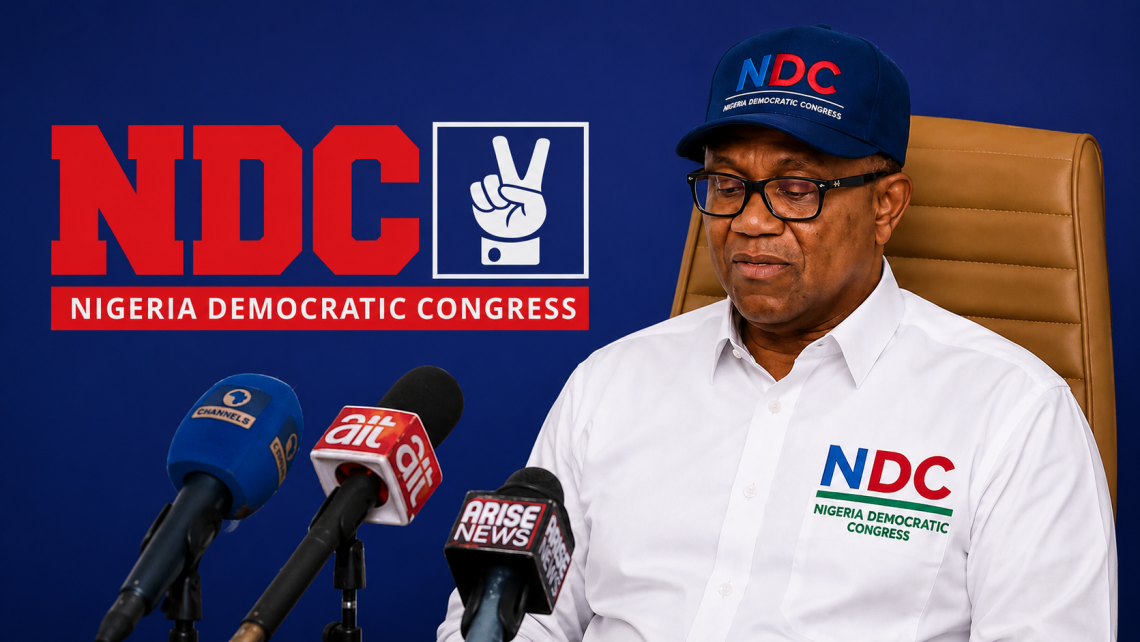
The controversy over the financial record of former Anambra State Governor Peter Obi has intensified after the Anambra State Government released details of eight external loans it said were contracted during his tenure, prompting a fresh challenge from the Presidency.
The dispute centres on whether Obi left Anambra State with outstanding financial obligations when he handed over power to Willie Obiano on March 17, 2014, with the former governor maintaining that his administration cleared the liabilities for which it was responsible.
The latest figures released by the state government put the total external loans contracted during Obi’s administration at $123.77 million, with $92.35 million still outstanding as of June 30, 2026. The state valued the outstanding balance at approximately ₦127.4 billion using the applicable official exchange rate.
The figures were contained in a statement by the Anambra State Commissioner for Information and Value Reorientation, Law Mefor, following Obi’s rejection of claims that his administration left behind unpaid debts, salaries, pensions, gratuities and other liabilities.
The state government said the eight external borrowings were associated with projects covering malaria control, healthcare, education, erosion management, community development and agricultural value-chain development. It also said the current administration continues to make payments towards servicing the loans.
The breakdown released by the state showed that the loans included the Malaria Control Booster Project, the Third National Fadama Development Project, the Health System Development Project II, the State Education Programme Investment Project, the Community and Social Development Project, the Nigeria Erosion and Watershed Management Project and the Value Chain Development Project.
READ ALSO:
- South African Woman Jailed 25 Years for Smuggling 5.75kg Heroin into Nigeria
- Adunni Ade Reveals Christian Fans Unfollowed Her After Publicly Identifying as Muslim
- Jetour Set to Storm Abuja Show with Rugged Luxury T2
The state said the largest outstanding balances were associated with the State Education Programme Investment Project and the Nigeria Erosion and Watershed Management Project, which together accounted for a substantial portion of the reported balance.
The Anambra Government has stressed that its position is not that borrowing by a government is inherently improper. Rather, it said the issue was the identification of financial obligations incurred during previous administrations and the extent to which such obligations remained outstanding and were subsequently serviced by later governments.
The state has also challenged Obi’s account of an alleged ₦2.13 billion ecological fund which he said was available when he left office.
Obi had maintained that the money was released shortly before the end of his tenure for the Oko/Umuchiana erosion project and was deliberately left untouched because it was tied to the project. He also said his administration left more than ₦75 billion in savings and investments.
The Anambra Government, however, disputed the former governor’s description of the account. Mefor said a certified statement from First Bank showed that the account identified by Obi was an Internally Generated Revenue Consolidated Account, and that the records did not contain an inflow or balance corresponding to the ₦2.13 billion ecological fund claimed by the former governor.
The state government also raised issues concerning salary arrears, pensions and gratuities.
Mefor alleged that workers of the former Water Corporation had outstanding salary claims dating back to the period of Obi’s administration and that the current government had been dealing with the obligations through instalment payments.
The state further said Obi’s administration had verified 16 months of salary arrears owed to primary school teachers but paid only five months before leaving office. It said the present administration had subsequently paid about ₦22 billion in inherited gratuity arrears owed to retired state and local government workers and teachers.
Obi has rejected those allegations.
The former governor said his administration cleared more than ₦35 billion in historical gratuities and arrears and handed over the state without outstanding salary, pension or gratuity obligations.
He has also maintained that there were no unpaid liabilities to contractors for projects that had been properly executed and certified before his departure from office. Obi challenged the Anambra Government to provide evidence to support its allegations and said he would withdraw from the 2027 presidential race if it could establish that he left the state with the liabilities being attributed to him.
As the controversy deepened, the Obidient Movement released a copy of what it described as Obi’s 2014 financial handover report.
The document, dated March 17, 2014, reportedly summarised Anambra’s financial position at the end of Obi’s tenure. According to reports on the document, it listed ₦27 billion in local investments, $156 million in foreign-currency investments valued at about ₦26.5 billion, and ₦28.166 billion in certified state and ministry, department and agency balances.
The three figures were reported to total about ₦91.666 billion. After an estimated liability of ₦5 billion was deducted, the document arrived at a reported net balance of ₦86.666 billion.
The release of the handover document has added another layer to the dispute because the document describes the state’s financial position at the point of handover in 2014, while the current Anambra Government is highlighting loans that originated during Obi’s tenure but remained outstanding years after he left office.
The two positions therefore address different aspects of the state’s finances: Obi’s camp is relying on the financial position recorded at handover, while the state government is pointing to the subsequent outstanding balances on external loans and other obligations it says were inherited.
The Presidency has now entered the dispute.
Bayo Onanuga, Special Adviser to President Bola Ahmed Tinubu on Information and Strategy, said the Anambra Government had presented figures and records challenging Obi’s claim that he left the state without outstanding liabilities.
Onanuga asked whether Obi would honour his earlier statement about withdrawing from the 2027 presidential race if evidence emerged contradicting his account of Anambra’s finances.
The Presidency’s intervention has turned the dispute into a broader political issue ahead of the 2027 presidential election, in which Obi is the Nigeria Democratic Congress (NDC) presidential candidate.
Obi’s camp has, however, maintained that the matter should be resolved through documentary evidence rather than political exchanges. His representatives have continued to point to the 2014 handover document and his administration’s account of the financial position it left behind.
At the centre of the controversy is an important distinction between the original amount borrowed and the amount currently outstanding. The Anambra Government says the eight loans totalled $123.77 million when contracted, while $92.35 million remained outstanding as of June 30, 2026. The approximately ₦127.4 billion figure is therefore the reported naira value of the outstanding balance as of that date, not the original amount borrowed.
The dispute remains unresolved publicly, with the Anambra State Government maintaining that it has released records showing outstanding obligations linked to the period of Obi’s administration, while Obi maintains that he handed over the state without the unpaid liabilities alleged against him.
Further clarification will depend on how the underlying loan agreements, debt-servicing records, handover documents and other financial records are interpreted and reconciled.
Anambra Debt Row: Presidency Challenges Peter Obi as State Releases N127.4bn Loan Records
News
FG Targets 95% NIN Coverage by December 2026
FG Targets 95% NIN Coverage by December 2026
The Federal Government is targeting 95 per cent National Identification Number (NIN) coverage nationwide by December 2026 as it expands Nigeria’s digital identity system.
President Bola Tinubu announced the target during the 2026 National Identity Day celebration in Abuja, where he was represented by Chief of Staff Femi Gbajabiamila.
The President said NIN enrolment had risen to about 142 million, up from more than 80 million recorded when his administration came into office.
To reach the new target, the government plans to expand registration through ward-level enrolment, mobile registration initiatives and licensed agents. Reports from the event said free enrolment is being extended to all 8,809 wards across the country.
Identity System for Digital Economy
Tinubu said the government wants to build an identity infrastructure that can support Nigeria’s growing digital economy.
He said a secure national identity could make it easier to access services while supporting areas such as digital banking, healthcare, transportation and government programmes.
The President also said the expansion must go hand in hand with safeguards for citizens’ privacy and dignity.
Beyond enrolment numbers, he said the government was working towards a more connected digital public system, including electronic health records, e-transport services and a more coordinated national data architecture.
The NIMC’s ongoing expansion therefore aims not only to register more Nigerians and legal residents, but also to make the identity system a key part of how people access digital and public services.
FG Targets 95% NIN Coverage by December 2026
News
OAU Investigates Death of Final-Year Student as Police Begin Probe
OAU Investigates Death of Final-Year Student as Police Begin Probe
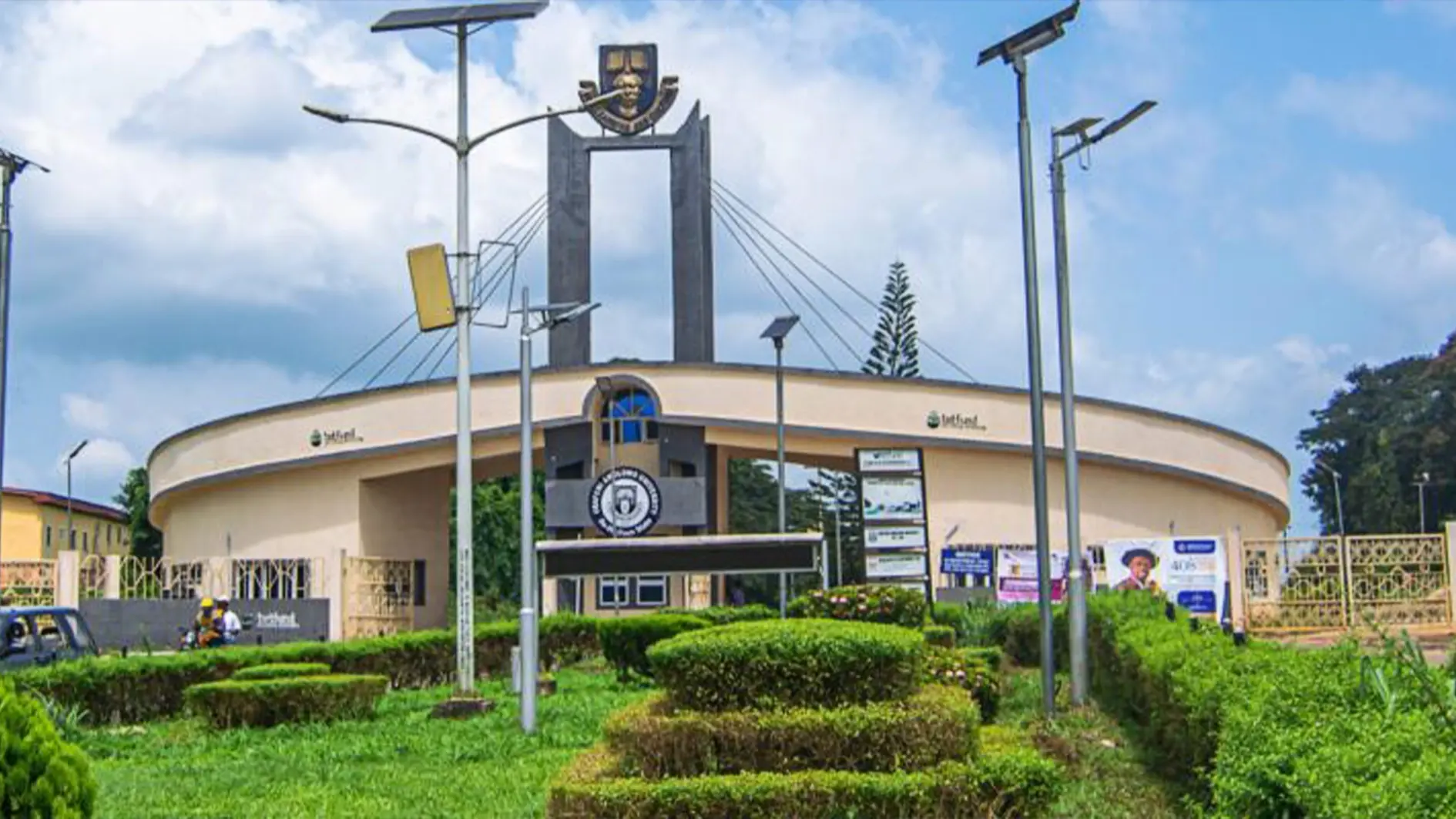
Obafemi Awolowo University (OAU), Ile-Ife, Osun State, is investigating the death of a final-year student of the institution.
The student, Oluwole Oluwosegun, was studying Materials Science and Engineering at the university.
According to the university’s Public Relations Officer, Olarewaju Abiodun, the incident occurred on Tuesday afternoon at the student’s off-campus residence around the Damico area of Ooni Layout, Ile-Ife.
After receiving the report, the university’s Quick Response and Security (QRS) Team went to the location. The team also contacted the Nigeria Police, after which officers from the ‘A’ Division in Moore, Ile-Ife, joined them at the scene.
The university later took the student to its Health Centre, where a medical doctor confirmed his death.
READ ALSO:
- 57-Year-Old Man Arrested Over Sexual Abuse of Stepdaughter in Edo
- US-Based Nigerian Lawyers Disbarred: Full List of Fraud, Theft and Misconduct Cases
- Katsina Police Rescue Two Kidnapped Women, Arrest Suspected Kidnappers
Police Begin Investigation
Following the incident, university authorities handed relevant information and items recovered from the scene to the police to support their investigation.
The police have since begun inquiries into the circumstances surrounding the student’s death.
Meanwhile, the university said it had informed the appropriate student affairs authorities to provide necessary follow-up, particularly regarding the welfare and emotional support of students affected by the incident.
Vice-Chancellor Professor Simeon Bamire also expressed condolences to the student’s family, friends, classmates and colleagues.
The university further encouraged students facing severe emotional distress, relationship difficulties, financial pressure or other personal challenges to seek help from trusted people and available university support services.
Professor Bamire reaffirmed the institution’s commitment to the welfare of its students and staff, stressing that no student should feel they must face overwhelming difficulties alone.
OAU Investigates Death of Final-Year Student as Police Begin Probe
-
 Politics3 days ago
2027: Northern Lecturers Back Tinubu, ASUU Disowns Endorsement
-

 metro3 days ago
Police Arrest Mother Over Alleged Brutal Abuse of 7-Year-Old Girl in Anambra
-

 Sports2 days ago
‘I Was Never the Chosen One’ — Dembele Responds to Mbappe
-

 International1 day ago
Islamic Council Condemns Attempted Attack on Holy City of Mecca
-
 News1 day ago
Keep Politics Out of My Office — Ogbomoso Grand Chief Imam Warns Politicians, Bloggers
-

 metro2 days ago
Lagos Power Outage: Ikeja Electric Blames TCN as Businesses, Homes Groan
-

 Education2 days ago
JAMB Moves 2027 UTME Time — Here’s What Candidates Need To Know
-
 Politics2 days ago
2027: APC Governors Reject Wike’s Rainbow Coalition, Insist on Party Loyalty