

International
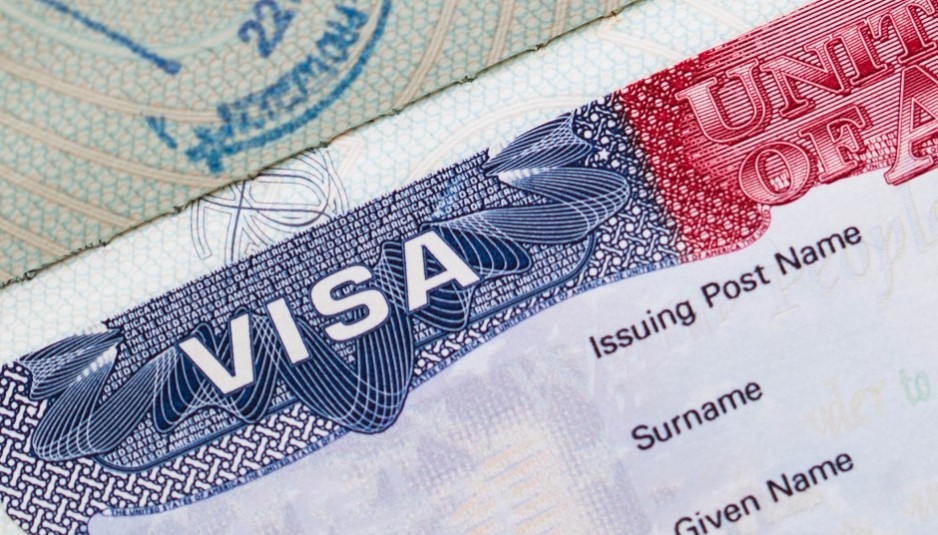
US Slashes African Visa Centres from 50 to 20 in Major Immigration Crackdown
US Slashes African Visa Centres from 50 to 20 in Major Immigration Crackdown
Washington D.C. – Thousands of Africans applying for US visas are expected to face higher travel costs and longer processing times after the United States announced it will consolidate its visa services across the continent, slashing the number of diplomatic missions handling visa applications from nearly 50 to just 20 designated hubs . The directive, approved by Secretary of State Marco Rubio and detailed in an internal State Department memorandum obtained by the Associated Press, is part of the Trump administration’s broader effort to tighten immigration controls, strengthen security screening for both immigrant and non-immigrant visa applicants, and crack down on individuals who overstay temporary visas . The changes are expected to take effect in June 2026, according to three U.S. officials who spoke on condition of anonymity .
Under the restructuring plan, full visa-processing services will only be available at 20 strategic locations across Africa. Embassies and consulates in non-hub countries will remain operational but will have their services significantly scaled back. These missions will primarily handle U.S. citizen services, including passport renewals, emergency consular assistance, diplomatic visas, and select cases deemed to be in the U.S. national interest . U.S. diplomats, including consular chiefs, were informed of the changes during a conference call on Friday, May 29, 2026 . One official who was on the call told the Associated Press that the directive represents a major shift in how the United States will engage with African visa applicants moving forward .
The 20 designated visa-processing hubs are: Abidjan, Côte d’Ivoire; Accra, Ghana; Addis Ababa, Ethiopia; Cape Town, South Africa; Dakar, Senegal; Dar es Salaam, Tanzania; Djibouti, Djibouti; Johannesburg, South Africa; Kampala, Uganda; Kigali, Rwanda; Kinshasa, Democratic Republic of Congo; Lagos, Nigeria; Lomé, Togo; Luanda, Angola; Malabo, Equatorial Guinea; Monrovia, Liberia; Nairobi, Kenya; Port Louis, Mauritius; Praia, Cape Verde; and Yaoundé, Cameroon . Each of these hubs will maintain full visa-processing capabilities, including interview scheduling, document submission, and visa issuance for tourists, students, business travellers, and immigrants .
READ ALSO:
- Babachir’s Claims Against Atiku, ADC Could Threaten Political Stability — Bwala Warns
- Bandit Leader Seeks Exchange Deal for Release of Retired General Rabe Abubakar
- Eight Dead, 10 Wounded as Gunmen Attack Birthday Celebration in Plateau
The consolidation will create seismic travel disruptions across the continent, with applicants from non-hub countries now required to travel across borders — sometimes through multiple countries — to reach one of the 20 approved centres for visa interviews and document submission . For example, a visa applicant in Togo may now have to travel to Accra, Ghana, or Abidjan, Côte d’Ivoire — both designated hubs . Someone in Zambia or Zimbabwe could be required to travel to Johannesburg, South Africa — a journey that involves crossing multiple borders and incurring significant transportation and accommodation expenses . In West Africa, Abidjan will serve as the primary visa hub for applicants from neighboring countries such as Burkina Faso, Mali, and Niger . While the city’s infrastructure is well-established, experts predict that increased demand could lead to appointment backlogs and accommodation shortages .
One of the most significant changes affects Nigeria, Africa’s most populous nation. While Lagos made the list of 20 hubs, the country’s capital, Abuja, has lost its visa-processing status. Nigerians seeking U.S. visas will now be required to travel to Lagos — a journey that poses logistical and financial challenges for applicants from northern regions who previously accessed visa services in Abuja . In East Africa, Nairobi, Kenya, has emerged as the dominant regional hub, alongside Kampala, Uganda; Kigali, Rwanda; Dar es Salaam, Tanzania; and Addis Ababa, Ethiopia . Diplomatic observers note that Nairobi has increasingly become East Africa’s diplomatic and consular hub, mirroring trends among other Western governments that have scaled back services elsewhere in the region . Southern African applicants from countries including Namibia, Botswana, Zimbabwe, and Mozambique will now need to travel to either Cape Town or Johannesburg in South Africa. Johannesburg, as the primary economic centre of the region, is expected to see the highest volumes of visa applicants .
The visa-processing reduction is the latest in a series of immigration measures introduced under the Trump administration. Previous actions have included travel bans affecting several African and Asian countries, a requirement for some visa applicants to post a bond of up to $15,000, staff reductions at U.S. embassies and consulates worldwide, suspension of immigrant visa processing from dozens of countries over public assistance concerns, and health-related restrictions following recent Ebola outbreak declarations . These measures have collectively made it more difficult and expensive for African citizens to obtain U.S. visas, and the latest consolidation is expected to exacerbate these challenges .
READ ALSO:
- Gunmen Kill Two Police Officers in Anambra as CP Orders Massive Manhunt
- Five Police Officers Remanded Over Alleged Killing of Musician
- Retiring Civil Servants Must Stay on Duty Until Exit Date, FG Rules
Despite the reduction in visa-processing locations, U.S. embassies and consulates in affected countries will continue to operate for American citizens. These services include passport renewals for U.S. citizens, emergency consular assistance, diplomatic visa cases, and applications considered to be in the United States’ national interest . However, routine visa processing for tourists, students, business travellers, and immigrants will no longer be available at these locations .
The State Department did not directly address the specific details of the internal memo but provided a statement to multiple news outlets . “The Department is constantly evaluating its overseas operations in order to deploy taxpayer resources in a way that advances America’s priorities as efficiently and effectively as possible,” the statement read. “This includes a visa process that maintains rigorous standards of security screening and vetting and aligns resources and operational capacity with America’s national interests” .
African diplomats and immigration consultants have expressed concern that the policy could slow legitimate travel and weaken trade ties between the United States and Africa . Critics argue that the centralisation of visa services may disproportionately affect applicants from poorer and more remote regions who can least afford the added travel costs. “The move, which forms part of a broader effort to restrict immigration by limiting visa issuance and tightening controls on overstays, will concentrate resources at larger posts and reduce staffing at smaller ones,” according to analysis from The Kenya Times .
Experts predict that the increased concentration of visa applicants at the 20 hubs could lead to bottlenecks, particularly during peak travel seasons or for high-demand visa categories such as student and employment-based visas. Travelers may need to plan months in advance, account for transit logistics, and prepare for higher overall costs . The consolidation follows years of strained consular operations in Africa, where visa processing has faced backlogs due to staffing shortages, the COVID-19 pandemic, and security concerns at some posts. By centralising services, the State Department aims to manage workloads more efficiently while advancing the administration’s goal of lower overall immigration levels .
For thousands of Africans planning to travel to the United States for tourism, education, business, or family visits, the shake-up means that securing a visa will now require an additional journey — often across international borders — before the journey itself . Key considerations for applicants include increased travel costs for flights, ground transportation, and accommodation at hub locations; extended processing times due to higher demand concentrated at fewer centres; potential appointment backlogs during peak seasons; and additional documentation requirements for border crossings between African countries .
As of June 2026, no exact implementation date has been announced beyond the June target window. Embassies in non-hub countries are expected to update their websites and notify applicants in the coming days . The State Department has not released a detailed implementation timeline for phasing out visa services at the affected missions. The long-term impact of this consolidation on U.S.-Africa relations remains to be seen. While the administration maintains that streamlined operations will allow for stronger security screening without reducing core diplomatic functions, critics warn that the move could discourage legitimate travel and investment between the United States and Africa . Regional governments may need to coordinate transportation, accommodation, and local support to assist their citizens in accessing these hubs. The development underscores the evolving nature of U.S. diplomatic and immigration policies in Africa and their far-reaching effects on international mobility .
Applicants are advised to monitor the websites of their local U.S. embassies for updated information on visa services and to plan accordingly for potential travel to designated hub locations. Experts recommend scheduling appointments well in advance and budgeting for additional travel and accommodation expenses when applying for U.S. visas from African countries.
US Slashes African Visa Centres from 50 to 20 in Major Immigration Crackdown











International
US strikes Iranian rocket launchers on Larak Island as war enters sixth month

US strikes Iranian rocket launchers on Larak Island as war enters sixth month
CENTCOM confirms “limited and precise” strikes on IRGC targets as Iran warns of retaliation and diplomatic efforts stall
The United States conducted military strikes against Iranian targets on Sunday, August 30, marking its first direct attacks on Iran since late July. US forces targeted two rocket launchers on Iran’s Larak Island, located in the Strait of Hormuz off the coast of Bandar Abbas. According to a US Central Command (CENTCOM) spokesman, the strikes were carried out after Islamic Revolutionary Guard Corps (IRGC) forces were observed preparing to launch rockets equipped with sea mines into the strategic waterway. The US described the operation as “limited and precise,” aimed at neutralizing an “imminent threat” to civilian mariners and commercial shipping in the strait. Navy Captain Tim Hawkins, a CENTCOM spokesman, confirmed that the strikes came shortly after the US completed clearing sea mines from the strait’s international shipping routes last week. “US forces are monitoring the area closely and remain prepared to protect the free flow of commerce through this essential waterway,” he said.
The strikes occurred as the US-Iran war reached its six-month mark on Friday, August 28. President Donald Trump, who had initially promised Americans that the conflict would be a “little excursion” lasting only weeks, now finds himself presiding over a prolonged war that has cost the United States more than $37.5 billion. Despite the president’s early assurances, the conflict has dragged on with no clear end in sight, and the administration has shifted its focus from military strikes to “economic warfare” against Tehran. White House Press Secretary Karoline Leavitt described the new strategy as “Operation Economic Outcast,” aimed at destroying Iran’s economy through expanded secondary sanctions. The administration has emphasised that it is “not in a hurry” to bring Iran back to the negotiating table, preferring to maintain maximum pressure on the Iranian regime.
READ ALSO:
- Dangote Defends Petrol Price Hikes as Pump Prices Near N1,400 Amid Crude Cost Controversy
- Sokoto bandit attack: Eight farmers killed, five injured in alleged reprisal
- Nigerian Army X account hit in second military cyber breach in two weeks
Iran’s state media reported that the US attack killed and wounded several soldiers and civilians on Larak Island, though the exact numbers remain unconfirmed. Iranian news agency Tasnim reported at least two deaths and two injuries. The IRGC condemned the strikes as “aggression and crime,” vowing that the “invaders will certainly be punished.” Iranian officials have warned that the attack will be met with a “response and punishment” from Tehran. The IRGC has a history of retaliatory strikes, and regional observers are bracing for potential Iranian responses targeting US assets or allies in the region.
Despite months of mediation efforts spearheaded by Pakistan, Qatar, and Oman, diplomatic progress has remained elusive. While a ceasefire was agreed in April and a 14-point memorandum of understanding toward a final peace deal was signed in June, no agreement has been forthcoming. Iran and Oman have discussed a “phased framework” for a temporary navigational corridor through the Strait of Hormuz, but Tehran has made it clear that the waterway will not be reopened unless the US ends the war. Iranian Deputy Foreign Minister Kazem Gharibabadi warned that no military vessels will be allowed to pass through the strait, calling US claims of mine-clearing “propaganda deception.” The strait, through which approximately one-fifth of the world’s oil and liquefied natural gas normally passes, has remained largely blocked since July, disrupting global energy markets and contributing to rising fuel prices worldwide.
On the six-month anniversary of the conflict, US Senator Jack Reed (D-RI), the top Democrat on the Senate Armed Services Committee, issued a scathing statement criticising President Trump’s handling of the war. In his statement, Reed said, “President Trump has entangled the United States in a foreign policy failure of historic consequence. When he unilaterally launched this war, Trump promised he would destroy Iran’s nuclear program, eliminate its missile and drone arsenal, dismantle its defence industrial base, wipe out its proxy networks, and topple the regime in a matter of weeks. Six months later, not a single objective has been achieved. Indeed, he has weakened our position in the Middle East and the world significantly.” Reed also noted that 18 US servicemembers have lost their lives and more than 700 have been wounded in the conflict, while gas prices and everyday costs remain dramatically higher than before the war. He warned that the US has “burned through a dangerous share of our munitions inventory,” leaving the Pacific without an aircraft carrier for the first time in decades.
The path forward remains uncertain as the conflict enters its seventh month. Iran continues to demand that the US end the war, lift its naval blockade, and resolve the situation in Yemen before any reopening of the Strait of Hormuz can occur. Meanwhile, the Trump administration appears determined to maintain economic pressure on Tehran, even as concerns grow over US military readiness and the sustainability of the prolonged campaign. Efforts to revive diplomatic negotiations continue, with Pakistan’s Prime Minister Shehbaz Sharif and Qatar’s Emir pushing for a return to the Islamabad MoU framework. However, with both sides locked in a cycle of strikes and counter-strikes, a lasting peace remains as distant as ever. The international community continues to watch closely, hoping for a breakthrough that would end the conflict and restore stability to the region and global energy markets.
US strikes Iranian rocket launchers on Larak Island as war enters sixth month
International
US Court Sentences Nigerian to 8 Years in Prison Over $7.5m Charity Fraud

US Court Sentences Nigerian to 8 Years in Prison Over $7.5m Charity Fraud
Olusegun Adejorin convicted of wire fraud, aggravated identity theft for sophisticated business email compromise scheme targeting two charitable organisations
A United States federal court has sentenced a 32-year-old Nigerian national, Olusegun Adejorin, to eight years in prison for orchestrating a sophisticated business email compromise scheme that defrauded two charitable organisations of more than $7.5 million. The sentence, handed down on August 28, 2026, by U.S. District Judge Theodore Chuang, also includes three years of supervised release following his prison term.
Adejorin was extradited from Ghana to the United States by the Federal Bureau of Investigation (FBI) in August 2024 to face prosecution. Following a six-day trial in December 2025, a federal jury found him guilty on all charges, including wire fraud, aggravated identity theft, and unauthorised access to a protected computer to obtain information. The sentence was announced by Kelly O. Hayes, U.S. Attorney for the District of Maryland, alongside Jimmy Paul, Special Agent in Charge of the FBI Baltimore Field Office.
According to evidence presented at trial, Adejorin carried out the fraud scheme between June and August 2020, targeting two charitable organisations—one based in Maryland and another in New York. The Maryland-based organisation provided investment services to other organisations, while the New York-based charity ultimately lost more than $7.5 million through the fraudulent transactions.
READ ALSO:
- DSS moves to halt Sowore’s cybercrime trial until after 2027 election
- Kogi Abduction: Kidnappers Demand ₦20m Ransom for Each NYSC Member
- Deadly Ikola clash: Lagos demolishes shanties beneath high-tension lines
Prosecutors said Adejorin gained unauthorised access to employees’ email accounts and used the compromised accounts to impersonate staff and facilitate financial transfers. As part of the scheme, he registered spoofed domain names resembling those belonging to employees of the New York charity and used them to send requests to the Maryland organisation seeking withdrawals of funds belonging to the New York charity. He also fraudulently obtained access to email accounts of the Maryland organisation’s employees and used them to send messages falsely confirming the withdrawal requests.
The fraudulent communications ultimately led to more than $7.5 million being transferred from the Maryland organisation into bank accounts that were not associated with the intended recipient. Investigators also revealed that Adejorin had purchased a credential harvesting tool designed to steal email login credentials and had concealed fraudulent emails from a legitimate employee by moving them to an inconspicuous location within the employee’s mailbox. This sophisticated approach allowed the scheme to remain undetected for a significant period while the fraudulent transactions were processed.
The U.S. Attorney’s Office credited the FBI Baltimore Field Office with investigating the case and acknowledged the assistance of several Ghanaian agencies in locating and extraditing Adejorin. Among the Ghanaian authorities involved were the Office of the Attorney General and Ministry of Justice, the Economic and Organised Crime Office (EOCO), Ghana Immigration Service, Ghana Police Service–INTERPOL, and the National Intelligence Bureau. The FBI Legal Attaché in Accra also assisted with the investigation, and the U.S. Department of Justice’s Office of International Affairs worked with Ghanaian authorities to secure Adejorin’s extradition. Assistant U.S. Attorneys Joshua Rosenthal and Darren Gardner prosecuted the case.
The conviction highlights the use of compromised email accounts, impersonation and spoofed internet domains in business email compromise schemes—a form of fraud that can be used to divert large sums of money through seemingly legitimate financial instructions. Business email compromise has become one of the most financially damaging forms of cybercrime, with the FBI’s Internet Crime Complaint Center (IC3) reporting losses exceeding $2.9 billion in 2023 alone. The case is part of Operation Take Back America, a nationwide DOJ initiative focused on immigration enforcement, organised crime, and violent crime.
US Court Sentences Nigerian to 8 Years in Prison Over $7.5m Charity Fraud
International
Nepal flood death toll rises to 734 as 2,498 people remain missing
Nepal flood death toll rises to 734 as 2,498 people remain missing
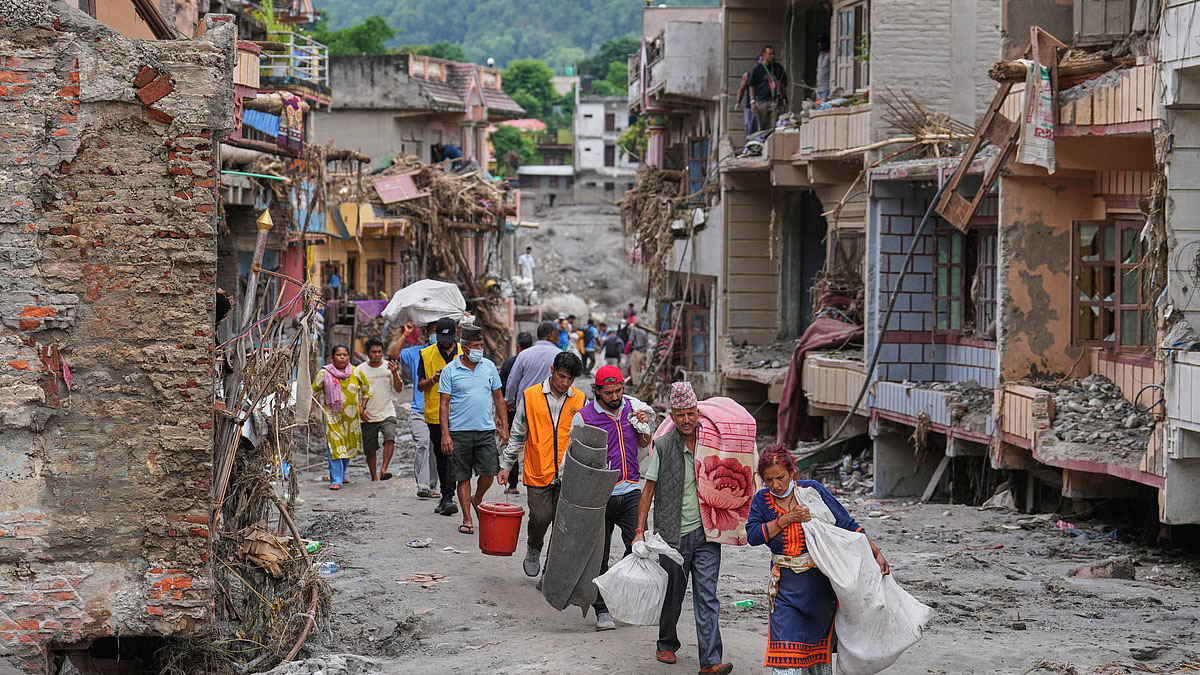
The death toll from devastating floods in Nepal has risen to 734, while another 2,498 people remain missing, according to the country’s disaster management authorities.
The latest figures were released as emergency responders continued search-and-rescue operations across several parts of Nepal affected by severe flooding, landslides and powerful torrents of water and debris.
The Nepal flood disaster has caused widespread destruction, damaging homes, roads, bridges and other critical infrastructure and leaving several communities difficult to access.
Authorities said Rasuwa, Nuwakot, Dhading and Chitwan are among the areas severely affected by the disaster.
Rescue teams have been working in difficult conditions as heavy rainfall, rising river levels and unstable terrain continue to create additional risks for emergency personnel and people living in vulnerable areas.
Officials have also raised concerns about further flooding following renewed increases in water levels in the Bhotekoshi River, urging people in at-risk communities to remain alert and follow evacuation instructions.
The disaster has been particularly challenging because of the mountainous terrain. Landslides have blocked roads and destroyed bridges, limiting access to some affected communities and making it harder for rescuers to reach people who may still be trapped or stranded.
In several locations, floodwaters have carried large quantities of mud, rocks and other debris through populated areas, destroying buildings and sweeping away vehicles and other property.
Rescue teams have been using helicopters and other emergency resources to reach isolated communities, evacuate residents and deliver essential supplies to areas where road access has been disrupted.
READ ALSO:
- Meta Ends Free WhatsApp Business Replies, Introduces Per-Message Fees
- Tinubu Joins US Court Battle to Block Release of FBI, DEA Records
- Petrol price heads towards N1,500 per litre despite falling crude oil prices
Search operations are also continuing at sites where people are believed to have been trapped following the flooding and landslides.
One of the major areas of concern is the Trishuli 3A hydroelectric project, where workers are believed to have been trapped inside tunnels following the disaster. Emergency teams have been attempting to reach the affected areas despite the difficult conditions.
The floods have also had consequences beyond Nepal, with neighbouring Tibet reporting deaths and missing people following a major landslide and flooding in the Himalayan region.
The scale of the disaster has raised concerns about the vulnerability of communities living in mountainous areas, where heavy rainfall, landslides, glacial activity and rapidly rising rivers can combine to produce sudden and destructive flooding.
The continuing rainfall is adding to those concerns, with authorities monitoring rivers, unstable slopes and other areas considered vulnerable to additional landslides or flash floods.
Emergency agencies have deployed security personnel, rescue workers and other responders to assist affected communities. Helicopters are also being used where necessary to evacuate people from locations cut off by damaged roads and bridges.
The humanitarian response is focused on finding missing people, recovering victims, evacuating residents from dangerous areas and providing food, water, shelter and medical assistance to survivors.
The large number of people still reported missing has heightened fears that the death toll could increase as rescue teams gain access to areas that remain difficult to reach.
Families across affected communities are also waiting for information about relatives whose whereabouts remain unknown.
The disaster has left thousands of people facing the loss of homes, livelihoods and essential infrastructure, while authorities continue to assess the full extent of the damage.
The Nepal floods have therefore developed into a major humanitarian emergency, with rescue and relief operations expected to continue as authorities work to reach isolated communities and reduce the risk of further loss of life.
Officials have urged residents in flood- and landslide-prone areas to remain vigilant, avoid dangerous waterways and move to safer locations when instructed as weather conditions and river levels continue to be monitored.
Nepal flood death toll rises to 734 as 2,498 people remain missing
-

 metro3 days ago
Police Bust Organ Harvesting Syndicate in Nasarawa: Two Doctors, Two Others Arrested
-

 metro1 day ago
Kogi Abduction: Kidnappers Demand ₦20m Ransom for Each NYSC Member
-

 metro2 days ago
Anambra Police Arrest 28-Year-Old Suspected Drug Dealer, Recover ₦5.8m Illicit Consignment
-

 metro1 day ago
Igboho, Iru Èkùn: Act Now Before Parallel Authority Emerges — Agunbiade
-

 metro1 day ago
Deadly Ikola clash: Lagos demolishes shanties beneath high-tension lines
-

 metro2 days ago
Two Masquerades Arrested After Allegedly Attacking Residents in Nsukka
-

 metro2 days ago
IMAX Lekki Attack: Two Dead as Machete-Wielding Man Storms Cinema in Lagos
-

 metro3 days ago
My love for my wife affected my work, earnings — Husband begs court to save marriage