

International
US to ban all Russian oil imports, reports say

Joe Biden has decided to ban Russian oil imports to America in a dramatic ratcheting up of the economic squeeze on Vladimir Putin’s regime, according to reports from the US.
The move follows pleas by Ukrainian President Volodymyr Zelensky to US and Western officials to cut off the imports, which had been a glaring omission in the massive sanctions put in place on Russia over the invasion of Ukraine.
Energy exports have kept a steady influx of cash flowing to Russia despite otherwise severe restrictions on its financial sector.
The US president was set to announce the move as soon as Tuesday, one source told the Associated Press.
Other media outlets had similar reports.
The White House said Mr Biden would speak Tuesday morning to announce “actions to continue to hold Russia accountable for its unprovoked and unjustified war on Ukraine.”
The Kremlin has threatened to retaliate by cutting off gas supplies to Europe and other countries in the West, though this would deliver a major blow to the Russian economy.
It comes after Russia threatened to cut off gas supplies to the West by closing the Nord Stream 1 Pipeline via Germany.
READ ALSO:
- Court remands 2 men for allegedly defiling a minor
- Just in: Court sacks Governor Umahi, deputy over defection from PDP
- Reps to reconsider three bills affecting women
- My brother’s widow and I were offered N120m for settlement – Slain OAU student’s sibling
Alexander Novak, Russia’s deputy prime minister, warned his Government could “impose an embargo” on gas supplies in retaliation for economic sanctions.
Germany last month confirmed it would ban the expensive Nord Stream 2 Gas pipeline in response to Russia’s invasion of Ukraine. The war has claimed the lives of over 1,000 civilians since February 24, according to the United Nations, with the true toll likely to be much higher.
Speaking to state media on Monday, Mr Novak claimed that Russia has “every right” to take a “matching decision” and “impose an embargo on gas pumping through the Nord Stream 1 gas pipeline”.
However, he stressed that a decision on whether to do so had not yet been taken and the pipeline is currently operating “at full capacity”.
His warning comes as the US pushes western allies to consider a ban on Russian oil imports.
US secretary of state Antony Blinken said earlier Washington was in “very active discussions” with countries in Europe over banning imports of Russian oil. Two White House officials briefed the Reuters news agency that President Biden was willing to move ahead without its European partners.
Energy minister Lord Callanan warned that a ban on Russian gas and oil imports was under “urgent review” as part of sanctions against the Kremlin.
The move would severely damage the Russian economy, which has already been devastated by sanctions.
Mr Novak said a “rejection of Russian oil would lead to catastrophic consequences for the global market”, adding that the price of oil could rise to more than $300 a barrel.
Brent crude was at its highest price since 2008 on Monday after touching $139 per barrel, with the rise likely to put a further squeeze on households.
According to data from Eurostat, around a quarter of the European Union’s oil imports and around 46 per cent of its gas came from Russia in the first part of last year.
The UK is less reliant on Russia for both but prices here largely mirror those in Europe.
German Chancellor Olaf Scholz has publicly argued that western allies should put “sustainable” pressure on Russia while minimising the impact on households.
“All our steps are designed to hit Russia hard, and be sustainable over the long term,” he said in a statement.
“At the moment, Europe’s supply of energy for heat generation, mobility, power supply and industry cannot be secured in any other way.”
Evening Standard










International
Pentagon Confirms 153 Civilians Killed in US Military Operations in 2025
Pentagon Confirms 153 Civilians Killed in US Military Operations in 2025
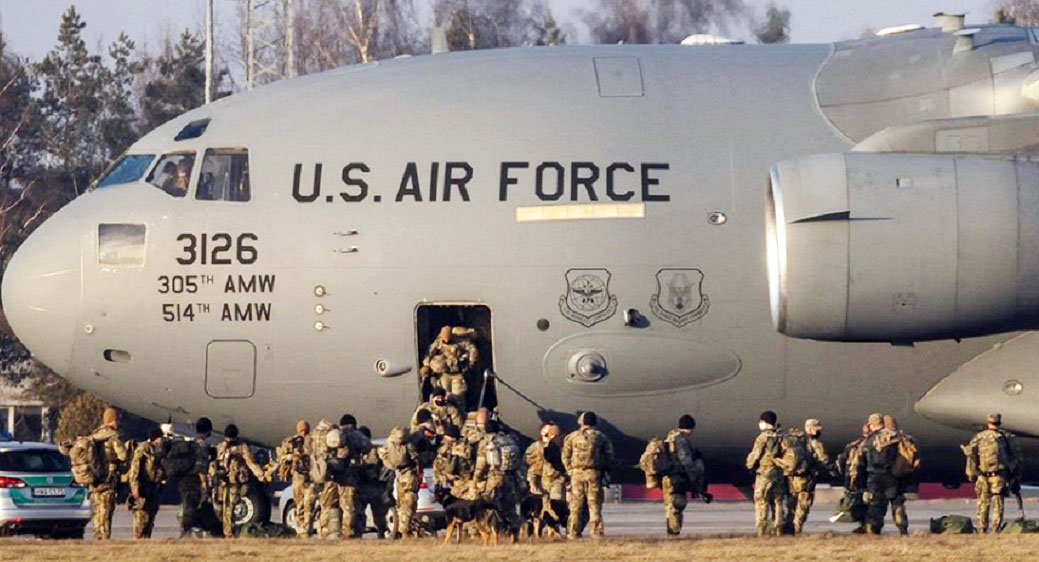
A Pentagon assessment submitted to Congress has formally acknowledged that US military operations killed 153 civilians and wounded 243 others in 2025, a sharp increase from the previous year. All documented casualties were linked to three strikes in Yemen during Operation Rough Rider, the US campaign against Iran-backed Houthi rebels.
The Pentagon has formally acknowledged that US military operations in 2025 killed 153 civilians and wounded 243 others, according to a report submitted to Congress on August 10, 2026. The figures represent a dramatic increase from 2024, when the Pentagon assessed that two civilians were killed and two were injured by US military operations. The report was submitted to the Senate Armed Services Committee as required by Section 1057 of the 2018 National Defense Authorization Act.
The report found that all civilian deaths and injuries recorded in 2025 resulted from three US strikes in Yemen in April 2025. The US Central Command assessed that the three strikes “more likely than not” resulted in civilian harm. The strikes were part of Operation Rough Rider, the US military campaign against Yemen’s Iran-backed Houthi militia group, aimed at preventing attacks on commercial shipping in the Red Sea.
READ ALSO:
- Osun guber: Adeyanju petitions US, UK, Canada to sanction Fadahunsi over ‘kill accord’ comment
- Troops Neutralize Suspected Armed Herder, Recover AK-47 in Benue Community Attack
- Sowore Vows to Restore Petrol Subsidy If Elected President in 2027
According to the Pentagon assessment, the three deadly strikes occurred at specific locations across Yemen in April 2025. On April 6, a US strike hit a residence near the Yemeni capital, Sanaa, killing five civilians and injuring 25. The April 17 attack targeted Ras Isa Port, where the Pentagon assessed that 80 civilians were killed and 171 injured. Human Rights Watch had separately reported a comparable death toll and raised concerns about the attack’s potential violation of international humanitarian law, noting that port workers were among those killed. A third strike near Saada on April 28 killed between 47 and 68 civilians and injured 68, according to the assessment. Amnesty International’s investigation into the migrant detention centre said the attack killed and injured “dozens” of African migrants and should be probed as a war crime.
The military relied on US intelligence, imagery, and public reporting rather than conducting site visits or interviews to make the assessment. As of February 2026, the US Central Command was still assessing 15 other incidents in Yemen following reports received through non-governmental organisations.
The Pentagon assessment stands in contrast to significantly higher estimates from independent monitoring groups. Airwars, an organisation tracking civilian harm in conflicts, reported that at least 258 civilians may have been killed in Operation Rough Rider. The Yemen Data Project documented at least 238 civilian deaths, including 24 children, and 467 injuries across 339 strikes during the campaign. Officials who spoke to The Intercept on condition of anonymity described the 153 figure as “lowball numbers,” with one calling the report “a fucking joke” and a “total whitewash”.
The report notably does not include casualties from US strikes on vessels in the Caribbean Sea and Eastern Pacific Ocean, which the Trump administration has carried out against what it describes as “narco-terrorists”. As of February 1, 2026, the US Southern Command assessed that “there were no incidents in which civilian casualties more likely than not resulted from US military operations in the USSOUTHCOM area of responsibility in 2025”. However, independent tallies indicate US military strikes on such vessels have killed more than 200 people since September 2025. Human Rights Watch and Amnesty International consider such strikes unlawful extrajudicial killings, and the American Civil Liberties Union has cast the administration’s assertions against those targeted as “unsubstantiated, fear-mongering claims”.
The disclosure comes as the Pentagon prosecutes a broader military operation against Iran that began in February 2026, and follows significant cuts to civilian harm mitigation programmes. Defence Secretary Pete Hegseth reportedly overruled top military officials, including then-Central Command chief Erik Kurilla and Joint Chiefs Chair Gen. C.Q. Brown, who pushed against slashing the Civilian Protection Center of Excellence and similar initiatives. Hegseth instead reduced personnel working on civilian harm issues from approximately 200 to fewer than 40, with Central Command’s civilian harm team slashed from 10 personnel to just one. The administration’s 2026 budget proposed the “disestablishment” of the Civilian Protection Center of Excellence, reducing personnel funding by over $2 million and mission support funding by more than $9.5 million, amounting to roughly a 90 per cent reduction in personnel since March 2025. Congress has since launched investigations into the cuts, with lawmakers accusing the Pentagon of gutting a congressionally mandated effort to reduce civilian harm despite a legal requirement to maintain it. A May 2026 Inspector General report found that the Department of Defense may have violated federal law by defunding and blocking civilian protection efforts.
Pentagon Confirms 153 Civilians Killed in US Military Operations in 2025
International
US, Iran Nearing Peace Agreement, Pakistan Defence Minister

US, Iran Nearing Peace Agreement, Pakistan Defence Minister
International
University Student Stabbed to Death Over Alleged £3,000 Debt, Fake Rolex

University Student Stabbed to Death Over Alleged £3,000 Debt, Fake Rolex
A De Montfort University student was fatally stabbed in the heart while on the phone to his girlfriend after a falling out with a friend over an alleged £3,000 debt and a fake Rolex watch, a murder trial has heard. Khaleed Oladipo, 20, was walking home from his girlfriend’s flat in Leicester on February 3 when he was attacked by Harper Dennis, 18, a first-year student at the University of Leicester, prosecutors told Leicester Crown Court. The two had been friends through online gaming and were part of a Snapchat group, but their relationship soured over money.
Oladipo was on the phone with his girlfriend when he was stabbed five times in the chest, with one wound penetrating his heart. His girlfriend heard him say, “Why did you come up and stab me?” before he asked her to call an ambulance. The stabbing was captured on a passing car’s dashcam, which showed the two men engage in a “short struggle” before falling to the ground. A witness recalled seeing “a snowstorm of feathers” from their puffer jackets during the attack. Prosecutors said the defendant’s arm movement was “consistent with the stab wounds inflicted to the left hand side of Khaleed’s chest.” The attack lasted “in reality, seconds,” according to prosecutor Jane Osborne KC. Oladipo collapsed and never regained consciousness. A post-mortem examination found he had suffered six wounds, five to the chest, with the fatal stab wound being 13cm deep. He was pronounced dead just over an hour later at Leicester Royal Infirmary.
READ ALSO:
- ‘Don’t Let My Sick Daughter Die in Nigeria’ — Nigerian US Army Woman Begs Trump
- Death Toll Rises to 132 as 7.4-Magnitude Earthquake Devastates Western Colombia
- How Enugu Abduction Led to Recovery of 4 AK-47 Rifles, 133 Ammunition – Army
The court heard that Dennis perceived Oladipo owed him £3,000. The dispute was fueled by an incident involving a fake Rolex watch that Oladipo had given Dennis to sell. Oladipo had allegedly advised Dennis not to go to certain jewellers because the watch was counterfeit. When Dennis attempted to sell it at a jeweller’s in Hatton Garden, London, he was “laughed at” and left “embarrassed and angry.” Messages between the two showed the deteriorating relationship, with Dennis sending a Snapchat message on Boxing Day saying he would “dedicate his life to making sure you suffer for what you did.” On Christmas Day 2025, Dennis allegedly made two anonymous threatening phone calls to Oladipo’s girlfriend, saying Oladipo was “a bad guy” who owed £3,000, and intimating he would come to her if the money was not paid. Financial records showed a final transfer of 60p from Oladipo to Dennis on Christmas Day with the reference “5999 to go.”
Dennis was arrested at his accommodation later that evening. Police seized his mobile phone, but he refused to provide the PIN code. A search of his flat found four knives, including a Kombat Tactical knife with serration. He had also given a flatmate a black bin bag containing the clothing he was seen wearing in CCTV footage at the time of the attack. Dennis, who denies murder, claims he acted in self-defence. He is also charged with possession of a bladed article and failing to provide the PIN for his phone. The trial, expected to last three weeks, continues.
University Student Stabbed to Death Over Alleged £3,000 Debt, Fake Rolex
-

 Sports2 days ago
After Cameroon Heartbreak, Falcons Battle Banyana Thursday for World Cup Lifeline
-

 Business2 days ago
Xenophobia: MTN, Stanbic IBTC, other South African firms face pressure in Nigeria
-

 Politics2 days ago
Aregbesola: I’ve never slept with another woman since marriage
-

 metro2 days ago
“I Begged for Years” – Nigerian Man Says Wife Never Forgave Him Over Social Media Incident
-

 metro2 days ago
ISWAP Executes Four Shura Council Members Amid Deepening Leadership Crisis
-

 News3 days ago
Italy-Based Businessman Excretes 98 Wraps of Cocaine at Enugu Airport
-

 News2 days ago
Nigeria Immigration Deploys Passport Intervention Team to UK to Clear Application Backlog
-

 Education2 days ago
Nigerian Mother Gifts Son a Live Goat After Polytechnic Graduation