

News
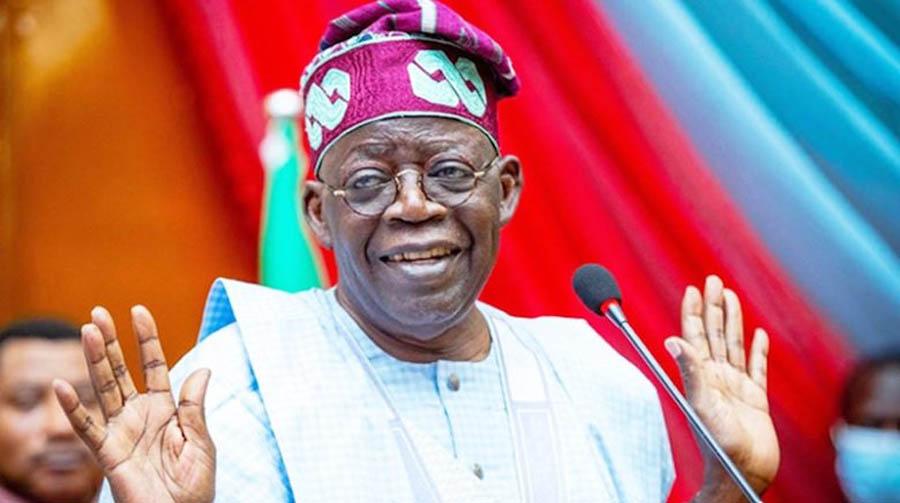
Yoruba Council rallies support for Tinubu’s energy reforms, seeks end to fuel imports
Yoruba Council rallies support for Tinubu’s energy reforms, seeks end to fuel imports
The Yoruba Council Worldwide (Igbimo Apapo Yoruba L’Agbaye) has declared full support for President Bola Ahmed Tinubu’s ongoing efforts to end Nigeria’s dependence on imported petroleum products, describing the practice as a “grave threat” to national energy security and economic stability.
In a joint statement with the Nigeria Coalition Group (NCG) and several allied civil society organisations, the Council — led by its President, Aare Oladotun Hassan, Esq. — announced plans to hold a National Day of Solidarity Rally on Wednesday, November 12, in Lagos, in support of the administration’s reforms in the oil and gas sector.
The coalition urged President Tinubu to urgently address the persistent disputes within the industry, warning that entrenched interests and policy inconsistencies were undermining the government’s Renewed Hope Agenda and stalling the nation’s march toward energy self-sufficiency.
“We strongly call for the immediate suspension of the issuance of petroleum importation licences, as certain oil interests are working assiduously to sabotage local refining and frustrate Nigeria’s energy independence,” Hassan said.
The group also raised alarm over what it described as “malicious narratives” being propagated by powerful figures within the petroleum sector, accusing them of obstructing much-needed reforms and attempting to derail national progress.
READ ALSO:
- Tinubu approves new Federal University of Science and Technology for Lagos
- Northern groups reject Trump’s threat to sanction supporters of Sharia law in Nigeria
- ISWAP, Boko Haram renew violent clashes in fierce battle for control of Lake Chad region
While commending President Tinubu’s commitment to industrial revival, the Yoruba Council warned that continued issuance of fuel import licences through the Nigerian Midstream and Downstream Petroleum Regulatory Authority (NMDPRA) and the Nigerian National Petroleum Company Limited (NNPCL) contravenes Section 317 of the Petroleum Industry Act (PIA) and poses serious risks to Nigeria’s energy future.
The coalition demanded a comprehensive forensic audit of oil unions, multinational operators, and regulatory agencies, with particular attention to cases of alleged sabotage, financial irregularities, and collusion.
“We urge the President to order a thorough investigation into the finances and activities of unions, multinationals, and regulatory bodies in the petroleum sector,” the statement read.
To boost local refining, the Council proposed the adoption of a Crude Exploration Nationalisation Policy Synergy Scheme, designed to increase crude supply to domestic refineries, protect indigenous investors, and create more jobs for Nigerian youths.
“We propose that crude oil supply to local refineries be increased by at least 100 percent to guarantee steady operations and promote energy sufficiency,” it added.
The coalition further called for higher trade tariffs — or an outright ban — on imported petroleum products, arguing that protective measures were necessary to strengthen Nigeria’s refining sector and align national policy with global best practices.
Condemning recent threats of industrial action in the oil and gas industry, the group described any disruption to crude or gas supply as “economic sabotage” capable of worsening fuel scarcity and destabilising the economy.
The coalition also lauded private-sector investments in local fuel distribution and infrastructure expansion, calling them patriotic efforts that align with Nigeria’s long-term energy goals.
“We are aware of several attempts by vested interests to frustrate the government’s stabilisation efforts; hence our call for prompt investigation by relevant security and financial intelligence agencies,” the Yoruba Council stated.
The Council urged Nigerians to participate actively in next week’s solidarity rally to reaffirm national unity and demonstrate support for President Tinubu’s reform-driven agenda toward achieving energy independence.
Yoruba Council rallies support for Tinubu’s energy reforms, seeks end to fuel imports







News
Adeyanju Faults Okpebholo’s Governance, Commends Edo Anti-Kidnapping Efforts

Adeyanju Faults Okpebholo’s Governance, Commends Edo Anti-Kidnapping Efforts
Human rights lawyer and public affairs commentator Deji Adeyanju has criticised the governance record of Edo State Governor Monday Okpebholo, while commending his administration’s efforts to tackle kidnapping and violent crime in the state.
Adeyanju made the remarks in a statement on Wednesday, September 30, 2026, in which he acknowledged what he described as the governor’s firm position against insecurity in Edo State.
The lawyer said he had consistently criticised Okpebholo’s administration and remained opposed to what he described as the governor’s “failed governance style”.
However, he said the administration deserved recognition for specific measures taken against kidnapping, particularly the identification and prosecution of suspected kidnappers and the demolition of properties and hideouts allegedly linked to criminal activities.
According to Adeyanju, the measures send a strong message that kidnapping and other violent crimes would not be tolerated in Edo.
He urged Okpebholo to intensify the campaign against criminal groups by combining enforcement with stronger preventive security measures across the state.
READ ALSO:
- Israeli Actor, Flight Instructor Among Two Killed In California Plane Crash
- Flood Cuts Off Part of Agbarho-Ughelli Road, Strands Commuters in Delta
- Dangote Draws Battle Lines as Fuel Import Fight Heads Back to Court
Adeyanju specifically called for greater use of community policing, saying security structures should be strengthened at the ward and local government levels.
He said stronger community-based security networks would enable residents to provide timely intelligence to security agencies and help prevent kidnappings before they occur.
The lawyer also urged the governor to strengthen the state’s wider security architecture and sustain pressure on suspected criminals.
His comments come against the backdrop of continuing kidnapping concerns in Edo State, which has experienced a number of abduction incidents along major roads and in communities.
In June, Okpebholo condemned a kidnapping incident around the Vegetable Market area of Airport Road in Benin City and directed the state Commissioner of Police to commence an investigation aimed at rescuing victims and arresting those responsible.
The governor said at the time that his administration would not tolerate activities that threatened public safety and security and urged residents to remain vigilant and report suspicious movements to security agencies.
Edo has also introduced measures aimed at strengthening local security responses, including support for vigilante operations and other community-level interventions.
Adeyanju’s latest comments present a mixed assessment of the Okpebholo administration: he maintained his criticism of the governor’s broader governance record but acknowledged the steps taken against kidnapping and criminal activities.
He said the security measures should be sustained and expanded through stronger intelligence gathering and community participation to address the threat before attacks occur.
Adeyanju Faults Okpebholo’s Governance, Commends Edo Anti-Kidnapping Efforts
News
Independence Day: No Going Back on Fuel Subsidy Removal – FG
The Federal Government has ruled out any return to the fuel subsidy regime, saying the removal of the policy remains a key part of its economic reforms.
Secretary to the Government of the Federation, George Akume, stated this at the 66th Independence Day lecture in Abuja, where he defended the economic measures introduced by the administration of President Bola Ahmed Tinubu.
Akume said the government had taken difficult decisions, including the removal of petrol subsidy, foreign exchange reforms and changes to the fiscal system, to address longstanding weaknesses in the Nigerian economy.
He said the government would not return to what he described as the “ruinous petroleum subsidy regime of the past”.
The SGF argued that the reforms were beginning to produce measurable results, citing economic growth recorded in 2026.
He said Nigeria’s economy grew by 4.2 per cent in the first half of 2026, compared with 3.9 per cent during the corresponding period of the previous year, while other indicators were also showing improvement.
Akume, however, acknowledged that economic growth must translate into better living conditions, higher incomes and more employment opportunities for Nigerians.
The government has increasingly promoted Compressed Natural Gas (CNG) as an alternative to petrol following the removal of subsidy.
Akume said more than 120,000 vehicles had been converted to CNG, with more than 400 conversion centres and about 90 CNG fuelling stations established across the country.
He said the expansion of CNG was helping to reduce transportation costs and provide Nigerians with cheaper alternatives to petrol-powered transport.
READ ALSO:
- Israeli Actor, Flight Instructor Among Two Killed In California Plane Crash
- Flood Cuts Off Part of Agbarho-Ughelli Road, Strands Commuters in Delta
- Dangote Draws Battle Lines as Fuel Import Fight Heads Back to Court
The government also highlighted investments in infrastructure, agriculture, electricity, healthcare and education as part of its strategy to cushion the effects of economic reforms and strengthen long-term growth.
Akume cited projects including the Lagos-Calabar Coastal Highway, Abuja-Kano Highway and East-West Road, alongside railway and port development.
On agriculture, he disclosed that the World Bank had approved a $500 million credit facility for the Nigeria Sustainable Agricultural Value-Chains for Growth project.
The initiative is expected to support smallholder farmers, strengthen agricultural value chains and improve food and nutrition security.
Minister of Information and National Orientation, Mohammed Idris, also defended the government’s economic direction at the lecture, saying the economy recorded 4.43 per cent growth in the second quarter of 2026.
Idris acknowledged the difficulties caused by the reforms but said the government was working to address structural problems that had affected the economy for years.
The debate over petrol subsidy removal has remained a major political and economic issue ahead of the 2027 general election.
Opposition politicians have proposed different approaches to the subsidy policy. Former Vice President and African Democratic Congress (ADC) presidential candidate Atiku Abubakar has advocated a form of subsidy intervention, while Nigeria Democratic Congress (NDC) presidential candidate Peter Obi has also spoken about restoring subsidy under certain conditions.
The Tinubu administration, however, has maintained that the subsidy regime will not be restored.
President Tinubu, in his October 1 Independence Day address, defended the reforms and said the government’s priority was to reduce the cost of living by lowering production and transportation costs and expanding investment in agriculture, infrastructure and other productive sectors.
The Federal Government’s latest position therefore reinforces its commitment to keeping the petrol subsidy removal in place while pursuing alternatives such as CNG, domestic refining, increased energy production and broader economic reforms.
Independence Day: No Going Back on Fuel Subsidy Removal – FG
News
Court remands alleged ‘fake PFIPC DG’ Adeyemi in Kuje over forgery
Court remands alleged ‘fake PFIPC DG’ Adeyemi in Kuje over forgery
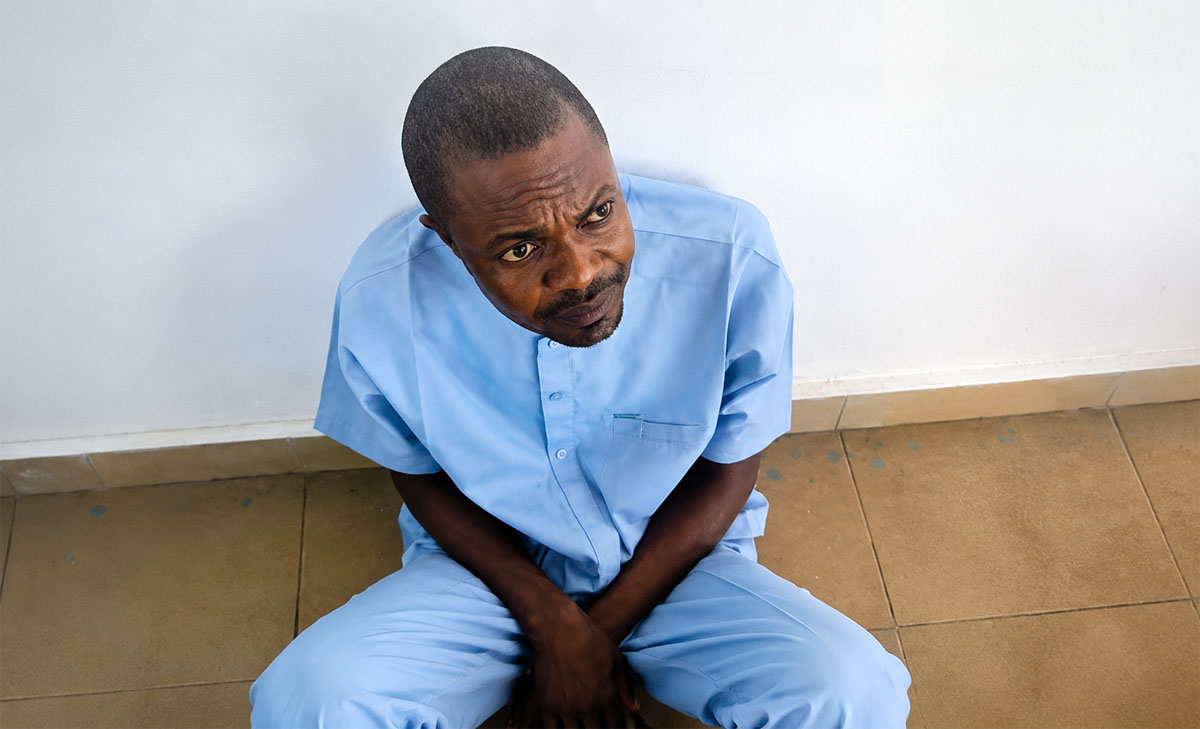
A Federal High Court sitting in Abuja has ordered the remand of Adeniyi Adeyemi Matthew, who allegedly presented himself as the Director-General of the Presidential Foreign Intervention Promotion Council, PFIPC, at the Kuje Correctional Centre over alleged forgery.
Justice Muhammed Umar reportedly made the order on Wednesday after Adeyemi was arraigned on an eight-count charge bordering on alleged forgery.
Adeyemi pleaded not guilty to the charges.
The court also fixed October 12, 2026, for the hearing of his bail application and directed that the case be given accelerated hearing.
One of the allegations against Adeyemi relates to the alleged forgery of presidential letterhead paper on March 8, 2024.
He was also accused of allegedly forging a request for collaboration with the Ministry of the Area Councils, as well as documents requesting land allocation and office accommodation across the 36 states of the federation.
The documents were allegedly presented as having emanated from the State House in Abuja.
The case is connected to the controversy surrounding the purported Presidential Foreign Intervention Promotion Council, an organisation the Federal Government has said was never established as a government agency.
The Presidency had earlier disowned the organisation and warned members of the public and foreign missions against dealing with Adeyemi on the basis of his alleged claim to have been appointed by the Presidency.
The government subsequently said investigations had established that the purported agency was fictitious and alleged that Adeyemi used forged appointment letters and other government documents to present himself as a presidential appointee.
The authorities further alleged that documents associated with the purported organisation were used to seek official recognition and diplomatic assistance.
The controversy also attracted the attention of the House of Representatives, which investigated the activities of the organisation and the circumstances surrounding Adeyemi’s alleged appointment.
During the investigation, lawmakers were told that the appointment letter allegedly presented by Adeyemi had been confirmed to be fake by relevant government authorities.
The case has also raised questions over how the purported organisation was able to operate and obtain correspondence with some government institutions before the Presidency publicly disowned it.
Adeyemi, however, has denied the allegations against him and previously made counter-allegations concerning the circumstances surrounding his purported appointment. He has also questioned references to the PFIPC in government documents.
Those claims remain part of the wider controversy and have yet to be determined by the court.
With the latest order, Adeyemi will remain at the Kuje Correctional Centre pending further proceedings.
His bail application is expected to come up on October 12, 2026.
The allegations against him remain unproven until determined by the court.
Court remands alleged ‘fake PFIPC DG’ Adeyemi in Kuje over forgery
-

 metro2 days ago
Osogbo Food Bonanza Turns Nightmare as Discount Vendor Vanishes With Customers’ Millions
-

 metro3 days ago
24 Hours in Darkness: Iju Ishaga Residents, Businesses Count Losses as Ikeja Electric Fails to Restore Power
-
 Education2 days ago
FG Releases 2026–2028 Approved Textbooks, Introduces QR Codes for Tracking
-

 News3 days ago
Agbede Mourns Baba Alado, Says Mushin Has Lost Pillar of Peace
-

 metro2 days ago
Hamzat Clarifies Lagos Traffic ‘Lifestyle’ Remark After Backlash
-

 Sports2 days ago
Nigeria XI vs Guinea-Bissau: Awoniyi, Lookman, Adams Lead Super Eagles Attack
-
 News2 days ago
Breaking: Tinubu Ends Extended European Vacation, Departs Paris for Nigeria
-

 metro1 day ago
$2.1m Land Suit: Court Orders Wike’s Son to Produce American Passport