

metro
Court stops FRSC from penalising drivers with faded number plates

Court stops FRSC from penalising drivers with faded number plates
The Federal High Court in Lagos has declared that the Federal Road Safety Corps (FRSC) lacks the constitutional authority to arrest or penalize drivers for using vehicles with faded number plates.
Justice Akintayo Aluko delivered the judgment in a suit marked FHC/L/CS/253/2024, filed by Chinwike Chamberlain Ezebube, who challenged the FRSC’s actions.
In his suit, the plaintiff asked the court to determine the following questions “Whether, pursuant to Sections 5(g) and 10(3)(f) of the Federal Road Safety Commission Act of 2007, the FRSC, as the sole designer and producer of vehicle number plates in Nigeria, is not entirely responsible for the quality and durability of the vehicle number plates it produces.
“Whether the FRSC, being the sole designer and producer of vehicle number plates, is liable for any defects or poor quality resulting in the fading or peeling of the vehicle number plates.
“Whether the FRSC, as the sole designer and producer of vehicle number plates in Nigeria, has the right to penalize or threaten to penalize the plaintiff or other Nigerians for the fading or poor condition of the vehicle number plates it produces.
“Whether the FRSC can make it an offense and impose penalties on the plaintiff or others for driving vehicles with faded number plates due to the poor quality of production by the FRSC.
READ ALSO:
- Farooq Kperogi: Emir Sanusi’s quid pro quo for his friends turned fiends
- 6 Lakurawa terrorists, 5 soldiers killed in Sokoto during gunfire exchange
- Rowdy session at National Assembly as legislators fight during IGP budget defence
“Whether the FRSC is obligated to replace faded number plates at no cost to the plaintiff or other Nigerians, particularly when the fading is due to poor manufacturing by the FRSC.
Besides, the plaintiff sought for an order restraining the FRSC from declaring it an offense for the plaintiff to drive with a faded number plate.
“An order prohibiting the FRSC from imposing any fine or penalty on the plaintiff for driving with a faded vehicle number plate.
“An order mandating the FRSC to replace the plaintiff’s faded vehicle number plate, LSD905EQ, or any other faded plates on his vehicle(s) at no extra cost, upon payment of the initial plate issuance fee and any other relief the court deems appropriate.
In response, the FRSC, through its lawyer, B.O. Nnamani, filed a counter-affidavit and requested the court to dismiss the plaintiff’s suit with punitive costs.
After reviewing the case, including all filed documents and cited authorities, Justice Aluko ruled in favour of the plaintiff, addressing each of the questions posed.
The judge held that while the FRSC cannot criminalise the use of faded vehicle number plates, the plaintiff has the responsibility to approach the FRSC for a replacement of his faded number plate upon payment of the appropriate fees.
Justice Aluko concluded that the FRSC does not have the authority to criminalise the use of faded number plates.
Additionally, the FRSC cannot impose fines on the plaintiff or impound his vehicle on these grounds without an order from a court of competent jurisdiction.
The court in its final judgement made the following orders
“An order restraining the FRSC from declaring it an offense to drive with a faded vehicle number plate.
“An order prohibiting the FRSC from imposing fines or penalties on the plaintiff for driving with a faded vehicle number plate.
“An order directing the plaintiff to approach the FRSC for the replacement of his faded vehicle number plate, LSD905EQ, with the FRSC replacing it upon payment of the necessary fee.”
Court stops FRSC from penalising drivers with faded number plates










metro
UCH CMD: After Decades Without Muslim, Agunbiade Demands Fair Chance

UCH CMD: After Decades Without Muslim, Agunbiade Demands Fair Chance
‘Let Merit, Not Religion, Decide Next Appointment’
IBADAN — A Muslim stakeholder, Mallam Ibrahim Agunbiade, has called for a transparent and merit-driven process in the appointment of the next Chief Medical Director (CMD) of the University College Hospital (UCH), Ibadan, saying a qualified Muslim candidate should be given a fair chance to lead the institution.
Agunbiade, in a statement on Monday, argued that the leadership history of the premier teaching hospital showed that Muslims had not occupied the position of Chief Medical Director for decades.
He said the situation deserved serious consideration as the process for selecting a successor to the incumbent CMD, Prof. Jesse Abiodun Otegbayo, gets underway.
According to him, Otegbayo, who became CMD in 2019, was reappointed for a second term in 2023.
Agunbiade said the succession of UCH chief executives had included Prof. E. O. Akande (1978–1984), Prof. A. O. K. Johnson (1984–1985), Prof. B. O. Osuntokun (1986–1990), Prof. O. O. Ajayi (1990–1998), Prof. M. O. Olatawura (1998–2003), Prof. A. O. Ilesanmi (2003–2011), Prof. T. O. Alonge (2011–2019) and Otegbayo.
He stressed that his intervention was not intended to question the professional records or achievements of the past CMDs.
Rather, he said, the issue was whether a qualified Muslim professional should continue to be excluded from the highest executive position at the institution.
“How long should a qualified section of the institution’s community wait before it sees one of its own given a genuine opportunity to lead?”
Agunbiade said the question was particularly important because UCH was a federal teaching hospital with a national mandate, serving Nigerians irrespective of religion, ethnicity or background.
‘Not Asking For Religious Favour’
The stakeholder rejected the suggestion that his position amounted to a demand for religious preference.
READ ALSO:
- Troops Take Down Zamfara Bandit Kingpins Baban Love, Mai Zamani, Three Others
- FG Gives N250m To Families Of 37 Miners Who Died In NSCDC Custody
- Tompolo’s PBAT Movement Suspends Campaign Over Ondo Military Crash
He said his argument was that merit and representation should work together, rather than treating them as opposing principles.
“The demand, therefore, is not that UCH should appoint a Muslim because he is Muslim,” he said.
“The demand is that if a Muslim candidate is professionally qualified, experienced, competent and suitable, his religion must not become an invisible barrier to his appointment.”
He noted that the advertised position carried stringent requirements, including medical registration, post-qualification experience, specialist fellowship, consultancy experience, integrity and administrative competence.
According to him, once a candidate meets the professional requirements and emerges as the best person through a credible selection process, religion should not disqualify the candidate.
‘Muslim CMD Will Serve All Nigerians’
Agunbiade also dismissed the notion that appointing a Muslim as CMD would change the character of UCH.
He said the successful candidate would remain the head of a federal institution responsible for providing healthcare to Nigerians of all faiths.
“A Muslim CMD will not turn UCH into a Muslim hospital. He will remain the Chief Medical Director of a federal institution serving every Nigerian who walks through its doors,” he said.
He argued that religious identity should not be an obstacle to professional service.
“Just as a Christian CMD can serve Muslim patients without difficulty, a Muslim CMD can serve Christian patients with the same professionalism,” he added.
‘Let Credentials Decide’
Agunbiade urged the authorities to ensure that all qualified candidates are subjected to the same standards during the selection process.
He called for candidates’ academic and professional credentials, experience, integrity, administrative competence and vision to be carefully assessed.
“Let every qualified candidate compete. Let credentials be examined. Let professional experience be assessed. Let integrity and vision determine the outcome,” he said.
He also referred to wider concerns about religious representation in the leadership of institutions linked to UCH and the University of Ibadan, saying the issue had generated concerns among Muslim stakeholders.
He, however, warned against turning the matter into a religious confrontation.
“This is not a call for religious confrontation. It is not an attack on Christians. It is not a rejection of merit. It is a call for inclusion within merit,” he said.
Agunbiade maintained that if a Muslim candidate emerged as the strongest candidate through a transparent and credible process, his faith should not count against him.
He said giving a qualified Muslim a genuine opportunity after decades without a Muslim CMD would send a powerful message about inclusion and equal opportunity in Nigeria’s public institutions.
According to him, UCH belongs to all Nigerians, and its leadership selection should reflect that principle.
UCH CMD: After Decades Without Muslim, Agunbiade Demands Fair Chance
metro
Troops Take Down Zamfara Bandit Kingpins Baban Love, Mai Zamani, Three Others
Troops Take Down Zamfara Bandit Kingpins Baban Love, Mai Zamani, Three Others
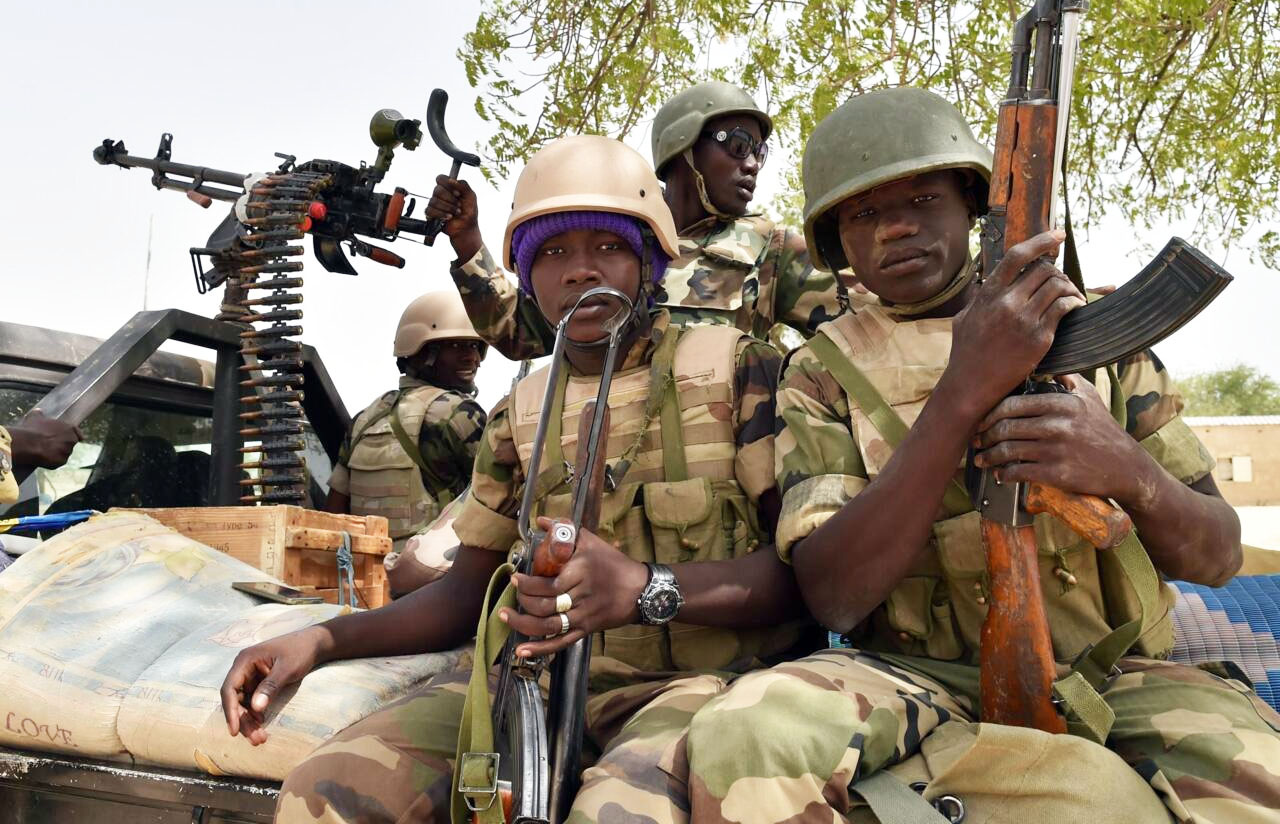
Troops of Operation FANSAN YANMA have killed at least five suspected bandits, including two notorious figures identified as Baban Love and Mai Zamani, during a gun battle in Tsafe Local Government Area of Zamfara State.
The operation reportedly took place in the western axis of Tsafe LGA, where armed groups have maintained a presence and carried out attacks on communities and travellers.
Security sources said Baban Love, who was reportedly operating around Gunja, mobilised members of his gang before they encountered the troops, leading to a fierce exchange of gunfire.
The troops eventually overpowered the armed group, killing at least five suspected bandits, according to reports on the operation.
Mai Zamani was also identified among those killed. He was reportedly the younger brother of Idi Mai Randa, another suspected bandit kingpin who was killed about five months ago.
READ ALSO:
- FG Gives N250m To Families Of 37 Miners Who Died In NSCDC Custody
- Tompolo’s PBAT Movement Suspends Campaign Over Ondo Military Crash
- FULL LIST: NAF Releases Names Of 25 Victims Killed In Ondo Crash
Residents of Kwarin Ganuwa were said to have celebrated the reported deaths of the two bandit leaders, while vehicles belonging to the group were reportedly recovered after the encounter.
Security sources said efforts were ongoing to identify the other suspected bandits killed during the operation and assess the weapons and other items recovered from the scene.
The latest operation is part of intensified military operations in Zamfara State aimed at disrupting the activities of armed groups and restricting their movement across the state’s forests and communities.
Zamfara has continued to experience attacks and abductions despite sustained military operations. Governor Dauda Lawal said on Monday that the state government was working to improve security response time, particularly in areas such as Tsafe, where notorious bandit leader Ado Alero and his gang have been active.
The governor said poor road access in some areas had affected the ability of security personnel to respond quickly to attacks, while the government was also deploying technology, including drones, to improve surveillance.
The military has yet to publicly release a detailed official statement on the reported killing of Baban Love, Mai Zamani and the other suspected bandits.
Troops Take Down Zamfara Bandit Kingpins Baban Love, Mai Zamani, Three Others
metro
FG Gives N250m To Families Of 37 Miners Who Died In NSCDC Custody
FG Donates N250m To Families Of 37 Miners Who Died In NSCDC Custody
The Federal Government has donated N250 million to the families of 37 suspected illegal miners who died while in the custody of the Nigeria Security and Civil Defence Corps (NSCDC) in Niger State.
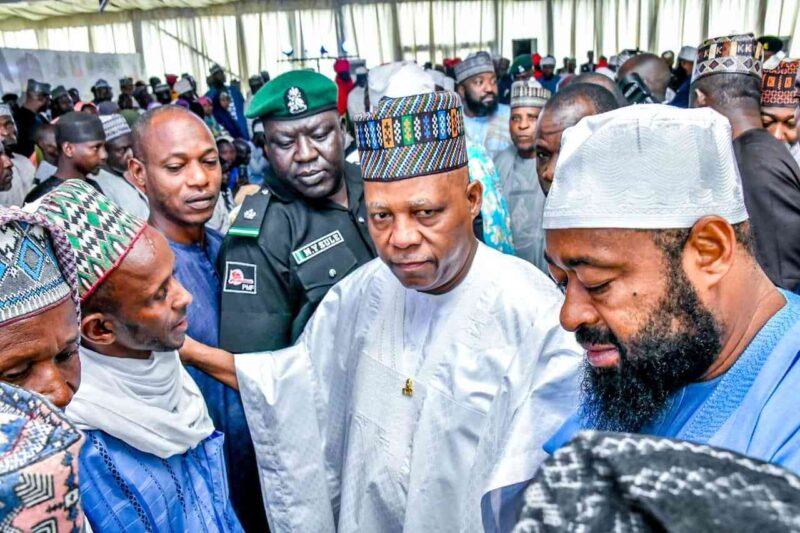
Vice President Kashim Shettima announced the financial support on Monday during a condolence visit to Minna, where he conveyed President Bola Ahmed Tinubu’s sympathies to the bereaved families, the Niger State Government and the people of the state.
The 37 men died after they were arrested during an NSCDC operation against suspected illegal mining in Minna earlier in September. The circumstances surrounding their deaths remain under investigation.
Shettima said the Federal Government was determined to establish what happened and ensure that anyone found culpable was held accountable in accordance with the law.
He said the deaths of citizens while in government custody raised serious questions that could not be ignored, stressing that every person deprived of liberty remained entitled to the protection of the state.
“The death of 37 young men in the custody of the Nigeria Security and Civil Defence Corps calls for initial questions,” Shettima said, adding that grief alone could not answer the questions being asked by the victims’ families.
READ ALSO:
- Former NADECO Leader Ralph Obioha Dies At 80
- Imo NYSC Abduction: CUPP Faults Security Strategy, INC Seeks Vigilantes’ Role In Rescue
- Three Dead, Eight Injured As Gunmen Strike Plateau Communities
The Vice President assured the families that the Federal Government would get to the root of the tragedy and provide answers on the circumstances that led to the deaths.
He also urged Nigerians not to politicise the incident or use it to demonise Niger State Governor Umaru Bago, noting that the NSCDC is a Federal Government agency.
The Federal Government had earlier constituted a 10-member independent investigative committee to establish the identities of the deceased, investigate their arrest and detention, determine the cause and manner of death through medical and forensic examinations, and establish whether negligence, misconduct or other breaches of duty occurred.
Several NSCDC officers, including the Niger State Commandant, were also suspended pending the outcome of the investigation.
The committee, inaugurated by the Minister of Interior, Olubunmi Tunji-Ojo, was given two weeks to complete its assignment and recommend appropriate action, including compensation where applicable.
Meanwhile, the Niger State Government has reportedly put the overall death toll connected to the incident at 38, with one additional person said to have been killed by gunfire during the unrest that followed the deaths. The 37 victims covered by the Federal Government’s N250 million support were those who died in NSCDC custody.
Governor Bago thanked the Federal Government for the intervention and said the state government would continue to cooperate with the investigative committee.
He also announced additional financial support for the affected families, while calling for stronger regulation of the mining sector and the creation of safer and lawful economic opportunities for young people.
The cause of the 37 miners’ deaths has not been conclusively established. The ongoing investigation is expected to determine what happened to the detainees and whether any individuals or institutions should be held responsible.
The Federal Government said the families deserve both justice and answers over the deaths.
FG Gives N250m To Families Of 37 Miners Who Died In NSCDC Custody
-

 metro2 days ago
‘I Thought I Was Dead’ — Hairstylist’s Daring Escape From Kidnappers After Benin-Ore Ambush
-

 metro3 days ago
Tension as Kidnappers Threaten to Kill Abducted Oyo Corps Members
-

 metro23 hours ago
Tragedy Strikes FMC: Medical Director Loses Two Daughters—A Doctor and a Pharmacist—Within 48 Hours
-

 International3 days ago
Nigerian-Born Ex-Professor Jailed 78 Months Over $1.3m US Student Aid Fraud
-

 metro1 day ago
Transporters Urge IGP Disu to Arrest Illegal Highway Tax Collectors
-

 metro2 days ago
Court Restricts Osun Accounts Over $13.9m Arbitration Award
-

 Politics1 day ago
2027: Soludo Govt Accuses Peter Obi Of Plot To Destroy APGA
-

 Entertainment2 days ago
“Sometimes, I Wonder Why I Married My Husband” — Omotola