

metro
Amotekun intercepts 114 forest intruders in Ondo

Amotekun intercepts 114 forest intruders in Ondo
The Amotekun security outfit has sent back at least 114 individuals, mostly from the northern part of the country in Ondo State. The security network accused them of illegally entering the state’s forests.
Adetunji Adeleye, the State Commander of Amotekun, while addressing the media on Sunday, confirmed that the individuals who were being transported in two trucks were bound for distribution across the state’s forest areas, including the Ore and Ofosu regions.
Adeleye explained that, over the past few weeks, security agencies had been engaged in intense operations to curb the infiltration of foreign individuals into the forests of Ondo State.
He further stated that the state governor had issued a directive to evacuate all individuals who could not justify a legitimate reason for being in the state’s deep forests.
These individuals, Adeleye said, would be sent back to their places of origin.
READ ALSO:
- Ogun independent power plant ready in 8 weeks – Abiodun
- Airtel increases data plan prices, gives details
- Osimhen’s two headers power Galatasaray to victory
“I want to make it clear that several weapons were recovered from them. These were locally made firearms that they used to carry out various criminal activities. Their modus operandi is to hide in the forests, launch attacks, and then retreat back into the woods,” Adeleye said .
“The group of over a hundred individuals was loaded into two trucks, intending to be scattered across the state’s forest belt, from the Ore area to Ofosu and beyond. We conducted a thorough profiling and found that, except for three of them, none knew where they were headed. They were simply sent into the forests, awaiting further instructions from their handlers.”
The Amotekun commander added that while Nigeria guarantees freedom of movement, it must be done with a legitimate purpose. He also said that the state governor had ordered their return to their places of origin.
Adeleye displayed some of the locally made weapons seized from the group during the operation.
In response to the development, the leader of the Hausa community in Ondo State, Bala Umaru, expressed gratitude to the government for prioritising the safety of residents and ensuring the safe return of the individuals to their home state.
The individuals have since been sent back to their respective locations across the country.
Amotekun intercepts 114 forest intruders in Ondo










metro
Ondo Tragedy: 3 Siblings, Including Twins, Found Dead Near River on Family Farm

Ondo Tragedy: 3 Siblings, Including Twins, Found Dead Near River on Family Farm
A routine trip to a family farm in Akure, Ondo State, has ended in unimaginable tragedy after three siblings—including a set of 11-year-old twins—were found dead near the bank of a small river on the property, plunging their community into mourning.
The deceased children have been identified as 11-year-old twins Joshua Jonah and Jacob Jonah, and their five-year-old younger sister, Blessing Jonah. The devastating discovery was made on Saturday, September 5, 2026, less than 24 hours after the children were reported missing from their father’s farm located around the Owena Army Barracks area on the outskirts of Akure, the Ondo State capital.
According to family sources, the three children had accompanied their father, Samuel Jonah, to the farm on Friday, September 4, 2026. At some point, they reportedly left the farm ahead of their father to return home. However, when Samuel later returned home and could not find them, he immediately raised the alarm, prompting an extensive search by family members and neighbours around the farm, bushes, and adjoining paths. The search ended in sorrow on Saturday morning when the bodies of the three siblings were discovered near the bank of a small river within the farm.
READ ALSO:
- Three killed, 20 injured in Ife-Ilesa Expressway crash
- Kano Political Earthquake: Kwankwaso Loyalists Dump NDC, Defect to APC in Major 2027 Blow
- Uba Sani’s aide defends Musa, urges critics to respond with facts
The tragic incident has thrown the Jonah family’s residence at Oke Ogba, Akure, into deep grief. When journalists visited the family home, the compound was filled with grieving relatives, friends and neighbours offering condolences, while the atmosphere remained tense and sorrowful as many struggled to come to terms with the loss of three young children from the same household in a single incident. One neighbour was quoted as saying, “It is too painful. Twins and their little sister. All gone together.”
The Ondo State Police Command confirmed the tragic incident. The command’s spokesman, DSP Jimoh Abayomi, stated that the children had gone to the farm with their father before their disappearance was discovered upon his return home. He added that a search operation was subsequently conducted, leading to the discovery of their bodies near the riverbank within the farm. “The Command is documenting the incident and investigation is ongoing to ascertain what led to their death,” Abayomi said. He confirmed that the bodies had since been released to their father, Samuel Jonah, for burial.
The police spokesperson also used the opportunity to advise parents and guardians to exercise greater vigilance over children, particularly when they are near rivers, streams, ponds, and other potentially dangerous bodies of water. He expressed the command’s condolences to the bereaved family and assured the public that the investigation would continue until the exact circumstances surrounding the deaths are established.
As of press time, the police had yet to establish the circumstances surrounding the children’s deaths. While the family prepares for their burial, the community continues to await answers over the tragedy that claimed three young lives from the same household. The incident has also renewed concerns in Akure over child safety on farms and around water bodies.
Ondo Tragedy: 3 Siblings, Including Twins, Found Dead Near River on Family Farm
metro
Three killed, 20 injured in Ife-Ilesa Expressway crash
Three killed, 20 injured in Ife-Ilesa Expressway crash
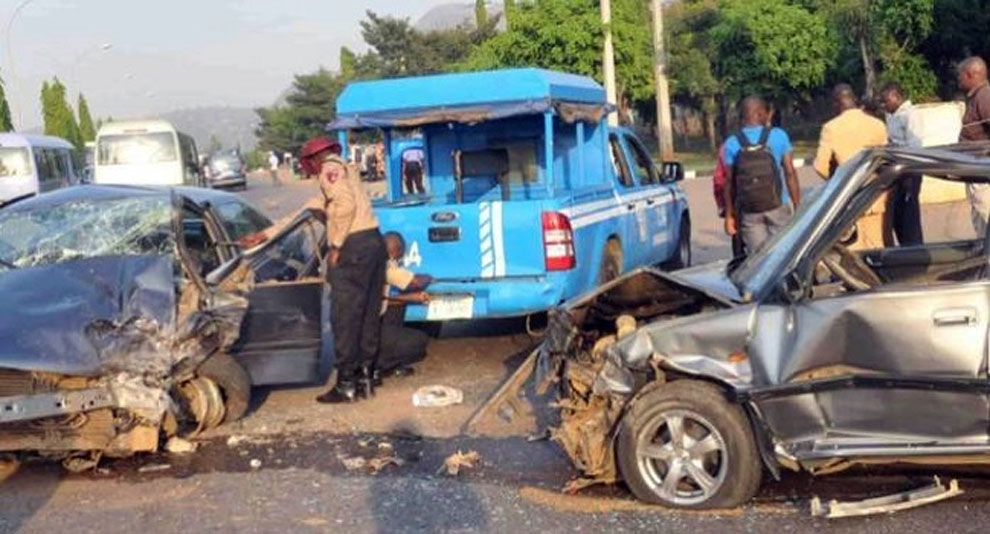
Three people have been killed and 20 others injured in a road crash in Osun State involving a Toyota Hiace bus and a Volkswagen Golf car.
The fatal accident occurred on Saturday at Tonkere town, along the Ife-Ilesa Expressway, according to the Osun State Sector Command of the Federal Road Safety Corps (FRSC).
The Osun Sector Commander, Sunday Adebayo, disclosed the casualties in a statement issued in Osogbo, saying preliminary findings indicated that speeding and dangerous driving contributed to the crash.
Adebayo said a total of 23 people were involved in the accident, comprising 11 females, nine males and three children — two boys and one girl.
He said the three people who died were two females and one male, while the remaining 20 victims sustained varying degrees of injuries.
“Three people died. We have about 20 others who were injured in the accident.
“The accident happened due to speeding and dangerous driving,” Adebayo said.
READ ALSO:
- Kano Political Earthquake: Kwankwaso Loyalists Dump NDC, Defect to APC in Major 2027 Blow
- Uba Sani’s aide defends Musa, urges critics to respond with facts
- Heavy Security in Rivers as Wike, Amaechi Hold Rival Events Amid Political Tension
Following reports of the crash, FRSC patrol teams from Ile-Ife and Ilesa were deployed to the scene to carry out rescue operations and manage the aftermath.
The injured victims were evacuated to hospitals for medical attention, although the FRSC did not immediately disclose the names of the medical facilities where they were treated.
The crash occurred along one of the major routes connecting Ile-Ife and Ilesa, a busy corridor frequently used by commercial and private motorists travelling through Osun State.
The FRSC commander urged motorists to exercise greater caution while driving, particularly on highways where excessive speed can significantly increase the severity of crashes.
Adebayo said driving at a safer speed gives motorists more time to react to unexpected situations and can reduce the severity of injuries when collisions occur.
He also appealed to motorists to recognise their responsibility towards other road users, stressing that road safety is a shared responsibility.
According to him, the FRSC will continue its public enlightenment campaigns and road safety initiatives across Osun State as part of efforts to reduce road crashes and prevent avoidable deaths.
The command urged drivers to avoid speeding, dangerous driving and other behaviours capable of putting passengers and other road users at risk.
The Osun road crash is the latest fatal accident to raise concerns about road safety on major highways in the state, with authorities continuing to call for greater compliance with traffic regulations and safer driving practices.
Three killed, 20 injured in Ife-Ilesa Expressway crash
metro
Uba Sani’s aide defends Musa, urges critics to respond with facts
Uba Sani’s aide defends Musa, urges critics to respond with facts
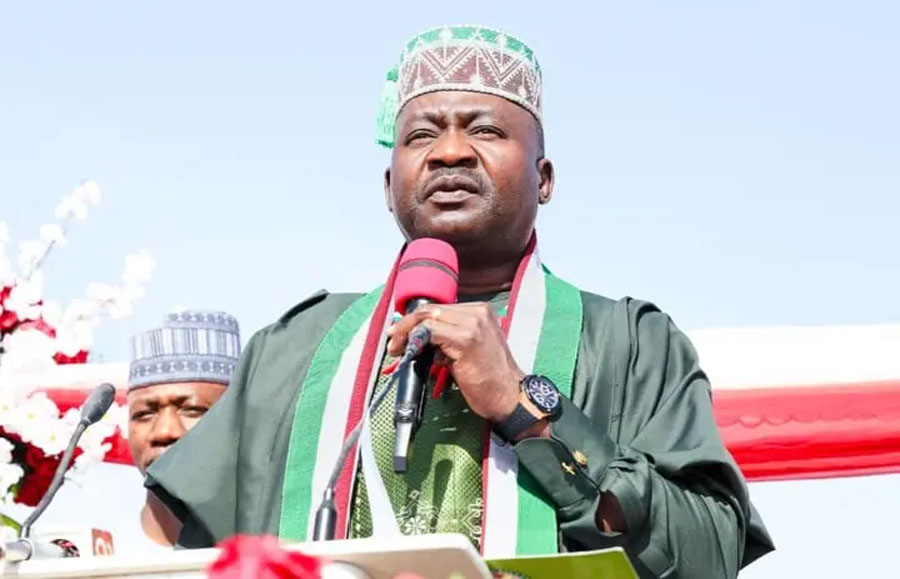
The Senior Special Adviser to Kaduna State Governor Uba Sani on Public Affairs, Victor Mathew Bobai, has defended Minister of Defence Christopher Musa over his recent comments concerning former Kaduna State Governor Nasir El-Rufai, urging critics to challenge the minister with facts rather than resort to personal attacks.
Bobai said it was unfair to interpret Musa’s remarks during a recent Channels Television interview as a politically motivated or personal attack on the former governor.
The governor’s aide made the statement amid controversy surrounding Musa’s assessment of events in Kaduna State during El-Rufai’s administration.
During the interview, Musa criticised aspects of El-Rufai’s eight-year administration, alleging that some of the former governor’s policies and actions contributed to divisions between communities in Kaduna.
The Defence Minister also spoke about grievances in parts of Southern Kaduna, including killings recorded during the period, and said some residents remained unhappy over how the situation was handled.
Musa further praised Governor Uba Sani for what he described as efforts to promote greater unity and improve relations among communities across the state.
Despite his criticism of the former governor, Musa said he did not regard El-Rufai as an enemy, describing him instead as “misguided.”
Reacting to the controversy, Bobai argued that Musa’s comments should be understood as part of public discourse and should not be interpreted as an official military position or directive.
“We must distinguish between an official directive and a political opinion. General Musa did not issue a military order, announce a defence policy or instruct the Armed Forces to support any political party.
READ ALSO:
- Heavy Security in Rivers as Wike, Amaechi Hold Rival Events Amid Political Tension
- Wizkid Mocks Davido’s Family Wealth: “Rich and Empty” — Afrobeats Feud Escalates
- Lagos-Ibadan Expressway: FG begins Kara Bridge repairs Tuesday, deploys traffic agencies
“He participated in a public conversation and expressed his assessment of the political environment,” Bobai said.
The aide acknowledged the responsibilities attached to Musa’s position as Minister of Defence, but argued that holding a senior public office does not prevent an official from participating in discussions on issues of national importance.
He urged those who disagreed with Musa’s assessment to focus on the substance of his claims and provide evidence to counter them.
“Challenge General Musa’s facts if you disagree with them. Produce evidence. Correct him where necessary. But don’t replace argument with insults,” Bobai said.
Bobai also highlighted Musa’s military career, noting that he served in several command positions before becoming Chief of Defence Staff and later Minister of Defence.
“This is a man whose professional life was built around the Nigerian flag before any political party became relevant to his present position,” he said.
The governor’s aide further urged journalists, political commentators and other stakeholders to examine the public record when assessing the claims made during the interview.
He specifically called for scrutiny of El-Rufai’s speeches, interviews and public statements, alongside Musa’s comments, saying the issues raised had been subjects of public debate in Kaduna for several years.
Bobai also cautioned media organisations against presenting allegations or disputed political claims as established facts without supporting evidence or an authoritative finding.
The controversy followed Musa’s remarks about the political and security situation in Kaduna under El-Rufai, who governed the state between 2015 and 2023.
Musa alleged that Kaduna became deeply divided during the former governor’s tenure and referred to tensions between northern and southern parts of the state.
READ ALSO:
- APC rally: Suspected thugs attack journalists, smash Radio Nigeria vehicle in Kano
- Jetour Takes Rely R8 Premium Pickup to Abuja in Major FCT Debut
- Trump’s Peace Envoys Arrive in Moscow as Russia Bombs Ukraine Airports Overnight
He also claimed that some residents of Southern Kaduna faced insecurity and restrictions during the period, while others moved away from certain areas because of the tension.
The minister maintained that his comments were not driven by his Kaduna background but by his concern about national unity and the need for political leaders to bring Nigerians together.
Musa also called for political leadership that would reduce ethnic and religious divisions rather than exploit them for political advantage.
However, some of the claims made during the interview remain allegations and should not be treated as established facts without supporting evidence or findings from relevant authorities.
Bobai said defending the Defence Minister did not require attacking those who disagreed with him, stressing that evidence should form the basis of any response.
“Defending General Musa does not require attacking his critics. Our strongest defence is evidence, his record of service and the truth,” he said.
The intervention by Uba Sani’s aide comes as political debate intensifies around the legacy of the former Kaduna governor and the direction of the state ahead of the 2027 general elections.
Bobai called for continued public debate on contentious issues affecting Kaduna State and Nigeria, but urged political actors, journalists and members of the public to engage one another through evidence-based arguments, responsible journalism and respect for the rule of law.
Uba Sani’s aide defends Musa, urges critics to respond with facts
-
 metro2 days ago
20-year-old arrested over alleged gang-rape of 19-year-old woman in Ogun
-
 metro2 days ago
Presidency breaks silence on Tinubu’s US FOIA case, denies criminal trial
-
 metro2 days ago
Oyo kidnap rescue: Five security personnel, four civilians killed — DSS DG
-

 News2 days ago
NAF recruitment 2026: Step-by-step guide to applying for BMTC 47/2026
-

 Business23 hours ago
BREAKING: OPay Warns Customers Against Viral Shutdown Message, Threatens Legal Action
-
 Education2 days ago
LASU: Mother allegedly assaults daughter’s roommate, student rushed to LASUTH with eye injury
-
 metro3 days ago
Exposed: Atiku’s $1.2m-a-Year Adviser Once Jailed in US
-

 metro2 days ago
NBA controversy: VDM apologises to security agencies over ‘unknown gunmen’ remarks