

Africa
ECOWAS orders junta to restore constitutional rule in Guinea-Bissau

ECOWAS orders junta to restore constitutional rule in Guinea-Bissau
West African leaders have strongly condemned the military takeover in Guinea-Bissau, ordering an immediate return to constitutional governance and suspending the country from all ECOWAS decision-making bodies.
At an emergency virtual summit on Thursday, chaired by Sierra Leone’s President Julius Maada Bio, Heads of State and Government from across the region warned that the November 26 coup posed a grave threat to Guinea-Bissau’s fragile democracy. The crisis erupted just days after the November 23 national elections, prompting fears of a derailed democratic process.
The meeting featured presidents of Nigeria, Ghana, Liberia, Senegal, Cabo Verde, and Sierra Leone, alongside Côte d’Ivoire’s vice president and senior representatives from Benin, Togo, and The Gambia. Officials from the African Union, the United Nations regional office, and Guinea-Bissau’s foreign ministry also participated.
ECOWAS Commission President Omar Touray presented a detailed report on the deteriorating political situation, noting disruptions to the electoral process. Leaders commended Guinea-Bissau’s citizens for their “resilience and commitment to democracy” despite the unrest.
The Mediation and Security Council condemned “in the strongest terms” the coup d’état, insisting on the unconditional restoration of constitutional order. It rejected any arrangement that would legitimize the “illegal abortion of the democratic process.”
READ ALSO:
- El-Rufai joins ADC after dramatic exit from APC
- Video: Jonathan safely evacuated as military coup unfolds in Guinea-Bissau
- Tinubu sets up high-level delegation to engage Trump administration on Nigeria’s security crisis
- Why the U.S. May Need Peace More Than Nigeria | By Reno Omokri
ECOWAS demanded the immediate release of detained officials, including President Umaro Sissoco Embalo and senior electoral officers. Coup leaders were warned they would be held “individually and collectively responsible” for the safety of citizens and detainees.
Leaders further urged the junta to allow the National Electoral Commission to resume and complete the delayed announcement of results from the 2025 Guinea-Bissau election, stressing respect for the will of the people. Safe passage for ECOWAS and international observers was also mandated.
A high-level ECOWAS mission led by the regional chair, with the presidents of Togo, Cabo Verde, and Senegal, is expected in Bissau to engage directly with coup leaders.
The bloc also instructed the country’s armed forces to “return to barracks” and reaffirmed that the ECOWAS Stabilisation Support Mission in Guinea-Bissau would continue protecting national institutions. It warned that sanctions, as provided for in ECOWAS protocols, remain an option.
The African Union and European Union issued separate statements condemning the military takeover and calling for the swift restoration of civilian rule.
Tensions have remained high following the detention of President Embalo, who was later evacuated to Dakar. The military has named army chief of staff, General Horta N’Tam, as head of a proposed one-year transition—an arrangement ECOWAS rejects.
Residents in Bissau reported heavy military presence and widespread shutdowns on Thursday as markets and public facilities remained closed.
Guinea-Bissau, which has endured multiple coups since independence in 1974, now faces yet another test of stability as regional and international pressure mounts for a return to democratic governance.
ECOWAS Orders junta to restore constitutional rule in Guinea-Bissau






Africa
M23 Rebels Impose Ebola Movement Restrictions as DRC Conflict Complicates Outbreak Response

M23 Rebels Impose Ebola Movement Restrictions as DRC Conflict Complicates Outbreak Response
The AFC/M23 rebel alliance in eastern Democratic Republic of Congo has announced a one-month suspension of shared taxis and passenger boats on key routes linking rebel-held areas to government-controlled zones, following the detection of two Ebola cases in travelers from government territory. The restrictions, set to take effect Saturday, reflect the growing challenge of containing what health officials describe as the fastest-spreading Ebola outbreak on record in a region already devastated by armed conflict, mass displacement, and acute hunger. The Bundibugyo strain of Ebola, which has no approved vaccine or specific treatment, has now infected over 5,000 people in Congo, according to government data released this week.
Under the new measures announced Wednesday by rebel authorities, shared taxis operating on the Goma-Kirumba road will be suspended for one month, and passenger pirogue boats on certain routes across Lake Edward will also be halted. However, taxi-buses will continue operating subject to health and safety controls, and goods trucks will remain permitted to transport cargo. The decision came after two travelers from Lubero, a government-held town, tested positive for Ebola upon arriving in a village under M23 control, according to a member of the rebel authorities’ response team.
The Ebola outbreak, declared on May 15, has unfolded in one of the world’s most volatile regions. The Bundibugyo virus, first identified in Uganda in 2007, has an estimated fatality rate of 30% to 50%. By June, confirmed cases had reached 1,003 in Congo and 19 in neighboring Uganda. WHO Director-General Tedros Adhanom Ghebreyesus has warned that eastern DRC faces a “catastrophic collision of disease and conflict,” with insecurity, attacks on health facilities, and population movements making it “nearly impossible” to trace contacts and isolate cases. “We cannot build community trust or isolate the sick while bombs are falling,” Tedros said.
READ ALSO:
- ‘Show Me the Law’: Lawyer Questions FG’s Reluctance to Defend Kanu’s Conviction
- Hold Oborevwori Responsible If I’m Attacked, Killed During Campaigns, Omo-Agege Says
- Ecuador Intelligence Chief, 5 Americans Killed in Kenya Helicopter Crash
Health experts identify three major obstacles to controlling the outbreak in eastern DRC. First, neighboring countries have pursued unilateral responses, including border and airport closures, which go against WHO recommendations and encourage informal crossings that spread the virus. Cross-border communities link the DRC to Uganda, Rwanda, and Burundi through a web of formal and informal crossing points, making monitoring and regulating movement extremely difficult. Second, misinformation and beliefs that Ebola was introduced for financial gain have fueled attacks on health facilities and resistance to response teams, with isolation wards burned and medical workers violently attacked in some cases. This distrust is rooted in a history of violence and government absence; a priest in Ituri told AFP that “there is no trust between the people and the army,” as the government is largely absent from rural areas. In 2025 alone, at least 309 incidents of violence against or obstruction of health care were documented in eastern DRC. Third, active fighting involving the Congolese army, M23, and various militias has created multiple frontlines and areas of contested control, severely constraining humanitarian access as armed actors restrict the movement of civilians and aid workers. The humanitarian crisis compounds the health emergency, with nearly 10 million people across Ituri, North Kivu, South Kivu, and Tanganyika facing acute hunger, and people weakened by hunger are far more vulnerable to infections.
The M23 has used the Ebola outbreak to demonstrate its capacity to govern in the large territories it controls, including the cities of Goma and Bukavu. The group has set up an Ebola task force, established treatment centers, and produced public awareness campaigns. The rebels declared their territory Ebola-free in late June after a 21-day monitoring period without new cases, having recorded only four cases in rebel-held areas—one in Goma and three near Bukavu—which analysts say provided a limited test of their capabilities. “AFC/M23 is keen to demonstrate its capacity to function as a state and manage a public health crisis better than the Congolese government,” said Reagan Miviri of the Kinshasa-based Ebuteli research institute. “But with only four cases recorded, it has been a limited test so far.” The rebels’ response has been coordinated through health administrations operating separately from the central government, with support from Rwanda, which has supplied medicine, specialists, and materials, though the United Nations and Western governments accuse Rwanda of backing the M23, a claim Kigali denies.
For civilians caught in the crossfire, the crisis has created a nightmare of overlapping threats. More than 70,000 people now live virtually under siege in the Plaine Savo displacement camp in Ituri, where Doctors Without Borders treats around 60 cases of sexual violence each week. Women like Antoinette, a mother of eight, told AFP she no longer dares to collect water or firewood outside the camp, fearing rape or death from militiamen or Congolese soldiers. Health services are stretched to breaking point; “We don’t have an ambulance, we don’t have transport, not even a bike,” said Aime Lojunga, a doctor whose clinic was displaced with the population to Plaine Savo.
WHO has appealed for an immediate ceasefire to allow humanitarian and medical teams safe access to affected communities. “Stopping this Ebola transmission depends entirely on humanitarian access,” Tedros said. The Africa Centres for Disease Control and Prevention has declared the outbreak an African public health emergency, and WHO has designated it a Public Health Emergency of International Concern. Congolese health officials have limited visibility into what is happening in rebel territory beyond basic infection numbers that cannot be independently verified. Dieudonné Kazadi, director of Congo’s National Institute of Public Health, told The New York Times, “I can’t give you the situation in the territories occupied by M23 because I don’t have access.”
M23 Rebels Impose Ebola Movement Restrictions as DRC Conflict Complicates Outbreak Response
Africa
Tinubu Urges ECOWAS to Condemn Afrophobic Attacks in South Africa
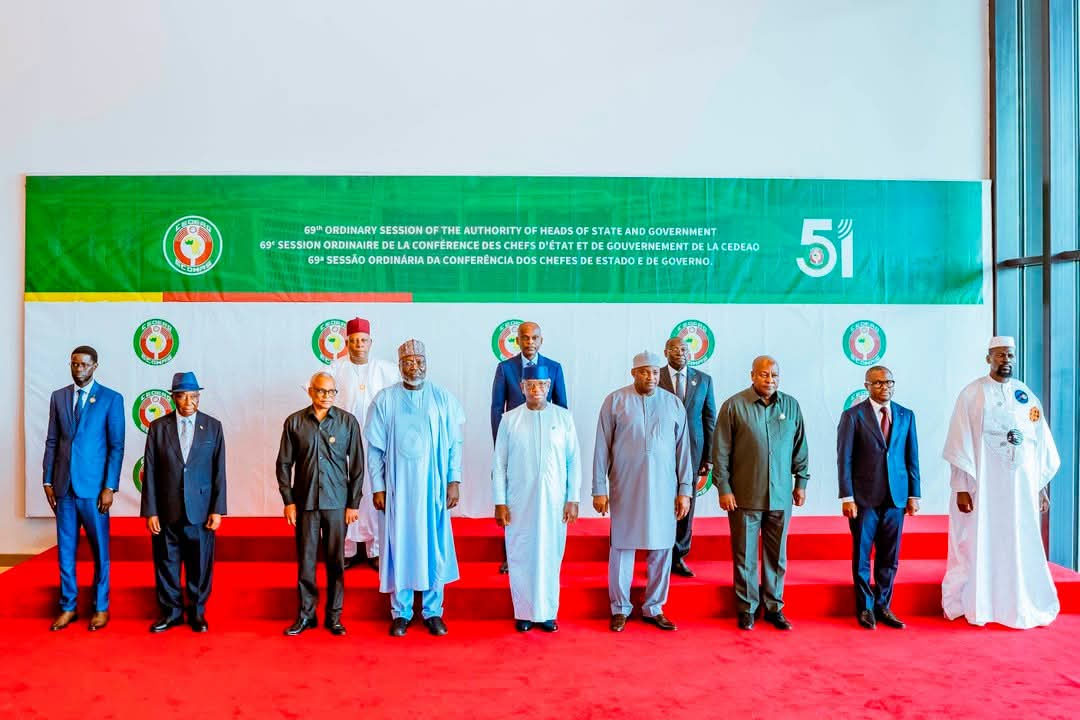
Tinubu Urges ECOWAS to Condemn Afrophobic Attacks in South Africa
President Bola Tinubu has called on the Economic Community of West African States (ECOWAS) to present a united front against Afrophobic attacks in South Africa, urging the regional bloc to escalate the matter to the African Union and reminding South Africa of the sacrifices made by other African nations during its liberation struggle.
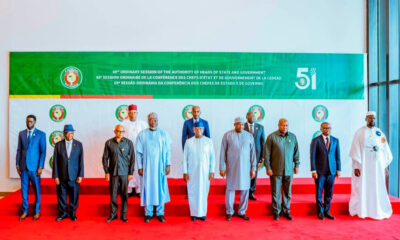
President Tinubu, represented by Vice President Kashim Shettima, made the appeal during the 69th Ordinary Session of the ECOWAS Authority of Heads of State and Government held on Sunday in Lungi, Sierra Leone. The summit, hosted by Sierra Leone’s President Julius Maada Bio, brought together regional leaders to deliberate on political, economic, and security issues affecting West Africa. The gathering provided a platform for leaders to address pressing concerns, including the rising wave of xenophobic violence targeting African migrants in South Africa, which has drawn widespread condemnation across the continent.
The President condemned, in the strongest terms, the recent attacks on Nigerian citizens and other Africans in the Republic of South Africa. “As already stated by His Excellency, the President of Ghana, ECOWAS should present a united voice in this condemnation,” Tinubu said through Vice President Shettima. He further urged the regional body to table the matter before the next session of the Authority of Heads of State and Government of the African Union, saying this would “send a clear message that this type of intolerance is totally unacceptable under any guise.” Tinubu reminded South Africa that the freedom it currently enjoys was the result of the sacrifices and liberation efforts of African countries, including Nigeria, which played a significant role in the anti-apartheid struggle. He disclosed that the Nigerian Government had already evacuated over 1,490 of its citizens from harm’s way in seven batches and was prepared to engage further on the matter. The evacuations, which began in June following the outbreak of violence, were completed with the arrival of 305 returnees in Lagos on July 15, bringing the total number of evacuees to 1,490. The attacks have strained diplomatic relations between Nigeria and South Africa, with Nigeria’s Minister of Foreign Affairs, Bianca Odumegwu-Ojukwu, previously hinting that Nigeria could consider retaliatory measures.
READ ALSO:
- Boko Haram Abducts Pastor’s Wife, Three Children in Borno
- 139 Million Nigerians in Poverty Despite Three Years of Tinubu’s Reforms – World Bank
- APC Chieftain Tells Atiku to Quit 2027 Race, Citing His Past Stance on Zoning
Beyond the security concerns, Tinubu reaffirmed Nigeria’s commitment to the principles enshrined in the ECOWAS Protocol on Democracy and Good Governance and other regional frameworks. He also assured that Nigeria remained committed to the setting up of the Counter Terrorism Force and the strengthening of the ECOWAS Standby Force “with a view to enhancing counter-terrorism cooperation, intelligence sharing, joint security operations, and preventive diplomacy to safeguard peace and stability across our region.” President Tinubu further warned against the temptation to tamper with constitutional term limits, stating that “the most effective tool against unconstitutional changes of government and mass protests that is capable of undermining good order is for us to enthrone good governance that delivers more tangible benefits to our citizens.” The President also declared Nigeria’s support for the newly developed ECOWAS Compact for the Future of Regional Integration, describing it as a framework that would strengthen cooperation among member states. He said the compact reflects the region’s commitment to rebuilding public trust in institutions and ensuring that regional integration remains relevant despite emerging geopolitical challenges.
Earlier, President Julius Maada Bio and the Chairman of ECOWAS explained that the summit was organised to reflect on where ECOWAS has come from and where the community must go next. Bio stated that West Africa must enter a new era with confidence, strategic clarity, and stronger determination to shape its own destiny, noting that “dependency narrows the very freedom that challenging partnership is meant to strengthen.” The President of the ECOWAS Commission, Omar Touray, reiterated the resolve of the regional body to strengthen governance and accountability across institutions and deepen policy coordination among member states. He said the commission had reintroduced democratic governance and electoral support mechanisms while strengthening regional responses to security and humanitarian challenges.
A major highlight of the summit was the signing of the Inter-Governmental Agreement for the African Atlantic Gas Pipeline project by the authority. The pipeline, estimated to cost $25 billion, is designed to transport up to 30 billion cubic metres of natural gas annually from Nigeria through 13 West African countries to Morocco, connecting to the European gas network. A dedicated ceremony will subsequently be held in Morocco, during which Morocco and Mauritania will jointly sign the agreement in the presence of Nigeria’s president. United Nations Deputy Secretary-General, Amina Mohammed, also addressed the summit, stressing that the international body has an obligation to support the region in combating terrorism and all forms of crime against humanity. “The United Nations Security Council must clearly hear the voice of Africa and stand behind the solutions that Africa offers,” she said, underscoring the importance of African-led solutions to the continent’s challenges.
Tinubu Urges ECOWAS to Condemn Afrophobic Attacks in South Africa
Africa
16 soldiers killed as terrorists attack military base in Niger Republic
16 soldiers killed as terrorists attack military base in Niger Republic
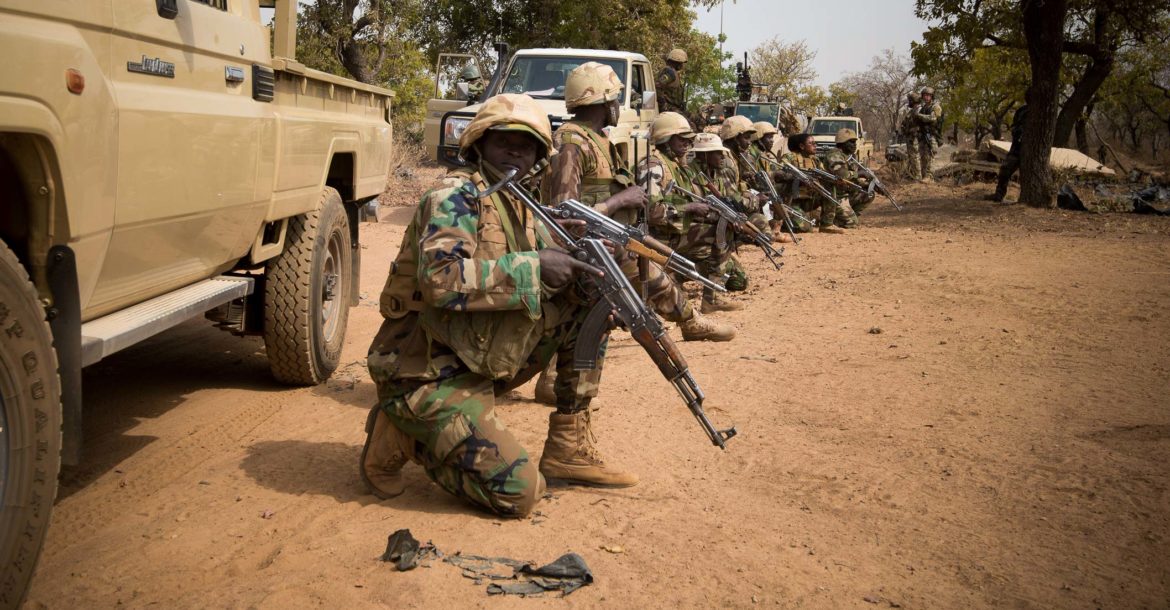
At least 16 soldiers have been killed and 23 others injured following a deadly terrorist attack on a military deployment in western Niger Republic, underscoring the persistent security crisis facing the Sahel nation despite ongoing military operations against armed extremist groups.
The attack occurred on Friday in the Téra area of Tillabéri Region, a volatile zone near the borders with Mali and Burkina Faso that has witnessed repeated assaults by militant groups linked to Al-Qaeda and the Islamic State.
According to information released by Niger’s state authorities, heavily armed assailants launched an attack on troops stationed in the area, triggering an intense gun battle that resulted in significant casualties among government forces.
Military officials said 16 soldiers lost their lives, while 23 personnel sustained injuries, including nine reported to be in critical condition. Authorities also stated that 15 suspected terrorists were killed during the confrontation.
Following the attack, security forces launched extensive clearance operations across the surrounding communities to track down fleeing attackers, recover weapons and restore security in the affected area.
Officials said military patrols and aerial surveillance have been intensified as part of efforts to prevent further attacks and reassure residents living in border communities that have repeatedly come under threat from extremist groups.
The Tillabéri Region remains one of the most dangerous parts of Niger due to its location within the Liptako-Gourma tri-border area, where militants affiliated with Jama’at Nusrat al-Islam wal-Muslimin (JNIM) and the Islamic State Sahel Province (ISSP) have carried out numerous attacks against security forces and civilians.
READ ALSO:
- Choirmaster Jailed 25 Years for Raping Teenager During Deliverance in Anambra
- New York Mayor Says He Is Exploring Possible Arrest of Netanyahu During UN Visit
- He Was Not Like That Before — Father Says 2-Year-Old Changed After Kidnapping
For more than a decade, Niger Republic has battled a growing insurgency fuelled by jihadist groups operating across the wider Sahel, with violence spreading across remote border regions despite regional and international counterterrorism efforts.
The security situation has remained a major challenge since the country’s military seized power in July 2023, promising to restore stability and strengthen national security. However, attacks on military positions and civilian communities have continued, raising concerns over the effectiveness of ongoing counterterrorism operations.
The latest assault comes amid broader instability across the Sahel, where neighbouring Mali, Burkina Faso and Niger continue to face coordinated attacks by armed extremist groups despite increased military cooperation under the Alliance of Sahel States (AES).
Security analysts warn that militant groups have continued to exploit porous borders, difficult terrain and weak state presence to launch cross-border attacks, recruit fighters and expand their operational networks across the region.
Humanitarian organisations have also expressed concern that the prolonged insecurity has displaced thousands of people, disrupted farming activities and worsened food insecurity in several communities across western Niger.
Authorities have assured citizens that military operations will continue until those responsible for the latest attack are neutralised, while investigations into the incident remain ongoing.
The latest attack highlights the continuing security challenges confronting Niger Republic and the wider Sahel, where governments are under increasing pressure to contain extremist violence and restore lasting peace.
16 soldiers killed as terrorists attack military base in Niger Republic
-

 metro3 days ago
History in Makkah: Nigerian Teen Wins Prestigious Qur’anic Contest, Breaks 46-Year Gender Barrier
-

 News3 days ago
Delta Governor Reveals ₦503,000 Monthly Salary, Says Permanent Secretaries Earn ₦900,000
-
 Auto3 days ago
Dangote deploys technology to curb truck crashes, improve road safety
-
 metro15 hours ago
Lagos Police arrest five suspected telecom vandals, recover truckload of iron rods
-
 News3 days ago
Atiku’s Fuel Subsidy Plan Unrealistic, Destructive, Says Presidency
-

 Sports3 days ago
Okocha Ignites Fresh GOAT Debate: Nigerian Legend Says Messi Is ‘Art,’ Ronaldo Is ‘Goalscorer Like Haaland’
-
 Politics3 days ago
2027: Senator Saliu Mustapha quits APC after losing Kwara governorship ticket
-
 Politics2 days ago
Donald Duke Recounts How IBB Warned Obasanjo About Atiku: ‘This One Cannot Rule Nigeria’