

Business
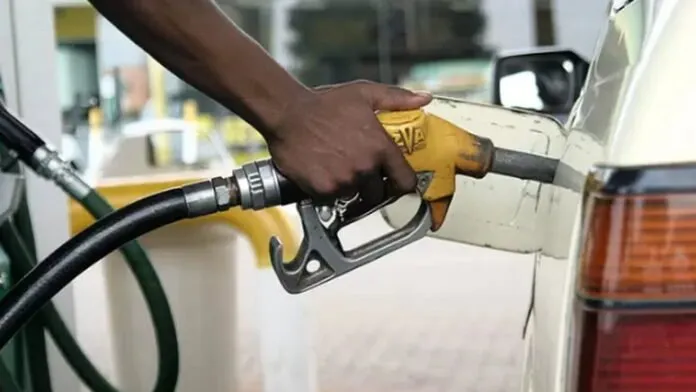
Nigeria’s Daily Petrol Consumption Surges Despite N1,370 Per Litre Price
Nigeria’s Daily Petrol Consumption Surges Despite N1,370 Per Litre Price
Nigeria’s daily consumption of Premium Motor Spirit (PMS), popularly known as petrol, increased by 10.78 per cent in April 2026 despite higher pump prices across the country, according to new data released by the Nigerian Midstream and Downstream Petroleum Regulatory Authority (NMDPRA).
The report showed that Nigeria’s petrol consumption rose to 52.4 million litres per day in April, up from 47.3 million litres recorded in March.
The increase came amid another sharp rise in the retail price of petrol following the deregulation of the downstream petroleum sector. Average petrol prices in Nigeria climbed to about N1,370 per litre in April from N1,180 per litre in March, representing a 13.8 per cent increase within one month.
Despite the surge in pump prices, fuel demand remained strong, highlighting the continued dependence of millions of Nigerians on petrol for transportation, electricity generation and business operations amid persistent power supply challenges.
According to the NMDPRA, combined fuel supply from the Dangote Refinery and imported petrol also rose by 10.7 per cent to 44.4 million litres per day in April, compared to 40.1 million litres supplied daily in March.
A breakdown of the figures revealed that supply from the 650,000 barrels-per-day Dangote Refinery increased significantly by 19 per cent to 40.7 million litres per day in April from 34.2 million litres in March.
READ ALSO:
- Domestic Dispute Turns Tragic as Woman Sets Co-Wife, Two Children Ablaze in Kano
- VIDEO: Catholic Priest, Tansian University Lecturer Allegedly Caught With Student in Classroom
- 2027: Atiku Camp Warns Opposition Against Zoning Presidency to South
At the same time, petrol imports into Nigeria dropped sharply by 37.3 per cent to 3.7 million litres daily from 5.9 million litres recorded in March, reflecting the growing role of local refining in meeting domestic fuel demand.
Industry analysts say the latest figures underscore the increasing dominance of the Dangote Refinery in Nigeria’s downstream oil sector as the country gradually reduces dependence on imported fuel.
The NMDPRA further disclosed that the Dangote Refinery achieved an average capacity utilisation rate of 99.12 per cent in April, while the government-owned refineries in Port Harcourt, Warri and Kaduna remained inactive during the period.
The report also showed a major decline in imported crude oil, which fell by 95.65 per cent to 0.41 million barrels in April from 9.43 million barrels recorded in March.
Meanwhile, crude oil supply from Nigerian upstream operators to local refineries rose by 56 per cent to 17.99 million barrels in April compared to 11.48 million barrels supplied in March.
The development comes as the Federal Government intensifies efforts to boost local refining capacity, reduce pressure on foreign exchange and strengthen energy security.
In a related development, figures released by the Nigerian Upstream Petroleum Regulatory Commission (NUPRC) showed that Nigeria’s crude oil production increased slightly to 1.663 million barrels per day in April 2026 from 1.546 million barrels per day recorded in March, including condensates.
However, the country still failed to consistently meet its crude oil production quota approved by the Organization of the Petroleum Exporting Countries (OPEC).
According to the NUPRC, average daily crude oil production stood at about 1.4 million barrels per day in April, while total production including condensates hovered around 1.6 million barrels per day.
The Federal Government has continued to target crude oil production of two million barrels per day in order to improve revenue generation, boost foreign exchange earnings and support implementation of the 2026 budget.
Energy experts believe that increased output from the Dangote Refinery could help stabilise fuel supply, reduce import dependence and position Nigeria as a major exporter of refined petroleum products in Africa.
Nigeria’s Daily Petrol Consumption Surges Despite N1,370 Per Litre Price





Aviation
Keyamo Issues One-Week Ultimatum to Airlines Over Debt Repayment Plans
Keyamo Issues One-Week Ultimatum to Airlines Over Debt Repayment Plans
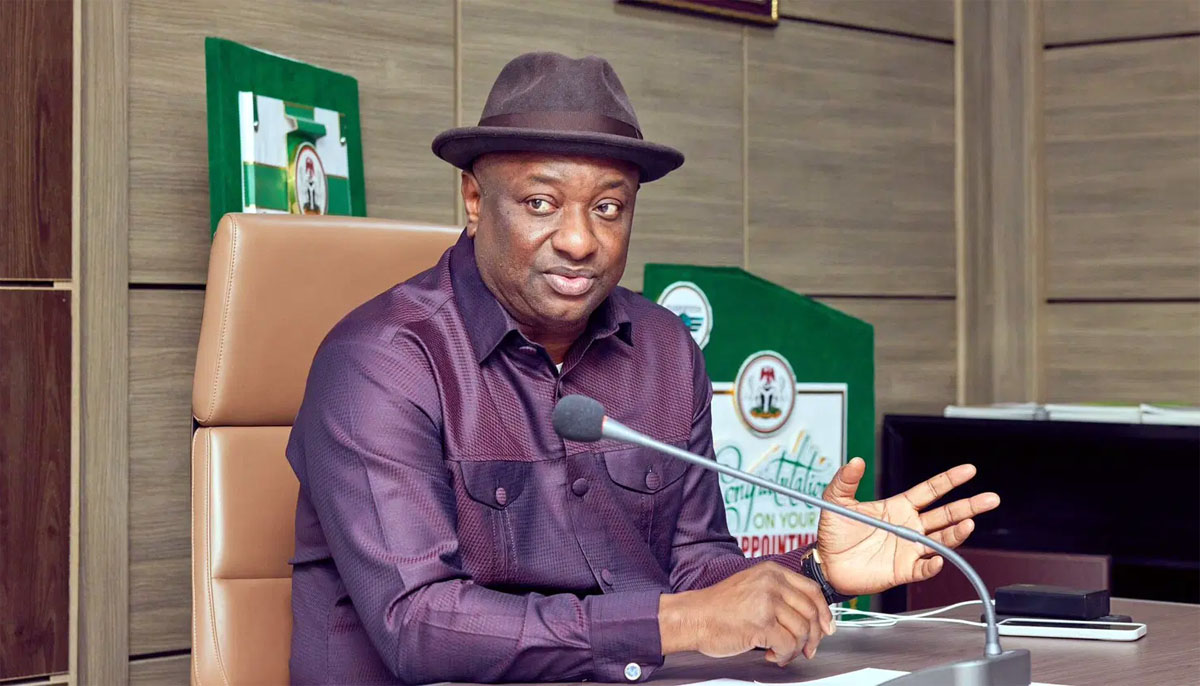
The Minister of Aviation and Aerospace Development, Festus Keyamo, has given airlines operating in Nigeria one week to agree on realistic repayment plans with aviation agencies over their outstanding financial obligations. This directive was part of resolutions reached at an emergency stakeholders’ meeting convened by Keyamo on Thursday, August 13, 2026, to address the recent industrial dispute between aviation sector unions and some airlines. The meeting followed the temporary suspension of industrial action by aviation unions on Tuesday, August 11, 2026, which disrupted operations at some airports across the country, causing widespread concern among passengers and stakeholders. The emergency meeting was attended by representatives of airlines, aviation sector unions, and heads of aviation agencies, including the Nigeria Civil Aviation Authority (NCAA), the Federal Airports Authority of Nigeria (FAAN), and the Nigerian Airspace Management Agency (NAMA). The Minister emphasized that the era of impunity in the aviation sector is over and that airlines must take responsibility for their financial obligations while working with the government to resolve outstanding debts amicably.
According to a statement signed by the Permanent Secretary, Ministry of Aviation and Aerospace Development, Mahmud Adam Kambari, the NCAA and other aviation agencies were directed to obtain payment schedules from airlines, taking into consideration their operating costs and prevailing economic realities. The statement emphasized that the Directors of Finance and Accounts of all aviation agencies were to meet individually with the affected airlines and agree on realistic repayment plans within one week. The resolution is aimed at addressing financial obligations owed by airlines to aviation agencies while preventing the disputes from escalating into further industrial action and disruption of air travel. The Minister stressed that the repayment plans must be realistic and achievable, as the government is not interested in empty promises but in concrete actions that will restore financial sanity to the sector. Airlines that fail to comply within the stipulated timeframe would face drastic actions, including the possible grounding of aircraft and suspension of operating licenses.
READ ALSO:
- [ICYMI] How Nigerian Medical Doctor Was Promoted to Captain in US Army
- JAMB Aggregate Score 2026/2027: How Nigerian Universities Calculate Your Admission Chances
- Davido Halts London Concert, Threatens to Walk Off Stage Over Fan’s Disrespect to Staff
The emergency meeting was convened in response to a growing industrial dispute between aviation sector unions and some airlines. The unions had threatened industrial action over issues including the unionisation of airline workers and the alleged refusal of some airlines to allow their employees to join trade unions. The dispute escalated to the point where aviation unions temporarily suspended industrial action on Tuesday, August 11, 2026, which had disrupted flight operations at some Nigerian airports, causing significant inconvenience to passengers and raising concerns about the stability of the aviation sector. The disruption had heightened fears over possible widespread cancellations and delays, prompting the Minister to intervene swiftly to prevent a full-blown crisis that could have paralyzed air travel across the country.
The stakeholders also reached an agreement on the contentious issue of unionisation among airline workers. The Minister affirmed the right of workers to decide whether or not to belong to trade unions, stressing that such decisions should be made directly by the workers rather than through airline management. Consequently, the NCAA was directed to ensure that aviation unions have direct access to workers of all airlines solely for the purpose of distributing union forms to enable employees to indicate whether they wish to unionise. The ministry warned that any airline that prevents the unions from having such direct access would face sanctions from the NCAA, including possible fines or suspension of operating licenses. This resolution represents a significant victory for workers’ rights in the aviation sector and ensures that employees can exercise their freedom of association without interference from employers.
The stakeholders further resolved that another meeting would be convened in one month to review progress made in implementing the resolutions and assess the state of the aviation sector. The statement described the resolutions as collective decisions of all parties at the meeting, emphasizing the collaborative approach taken to resolve the disputes. The Minister, while assuring stakeholders of the Federal Government’s commitment to a safe and viable aviation sector, reiterated President Bola Tinubu’s commitment to maintaining a safe, efficient, peaceful, and sustainable aviation industry. This commitment aligns with the broader agenda of the current administration to reform critical sectors of the economy and ensure the welfare of workers and the public. The Minister also noted that the government would continue to engage with stakeholders to address other challenges facing the industry, including infrastructure decay, multiple taxation, and the high cost of aviation fuel.
The latest intervention comes after the aviation unions temporarily suspended their industrial action following the disruption of flight operations at some airports on Tuesday. The dispute had heightened concerns over possible disruptions to air travel and the financial pressures facing airlines operating in the country. Airlines now have until August 20, 2026, to agree on repayment plans with aviation agencies. The Ministry has set up a task force to review the submissions and ensure compliance. Airlines that fail to meet the deadline or fail to reach acceptable repayment agreements will face sanctions, which could include suspension of operating licenses, grounding of aircraft, prohibition from accessing government facilities, and legal action to recover outstanding debts. The Ministry has also directed the NCAA to ensure that aviation unions have direct access to airline workers to distribute unionisation forms, and any airline found obstructing this process will face sanctions. This development marks a significant step in the Minister’s broader efforts to reform the aviation sector, improve financial accountability, and ensure that airlines operate within the framework of the law.
Keyamo Issues One-Week Ultimatum to Airlines Over Debt Repayment Plans
Auto
Omoda, Jaecoo Shake Global Auto Market, Hit One Million Sales in Three Years

Omoda, Jaecoo Shake Global Auto Market, Hit One Million Sales in Three Years
Chinese automotive brands Omoda and Jaecoo are rapidly reshaping the global automobile industry, posting remarkable sales growth and displacing long-established competitors in key markets barely three years after their debut.
Owned by Chinese auto giant Chery, the sister brands have emerged as two of the world’s fastest-growing vehicle marques, recording more than one million cumulative sales across 64 countries by April 2026 while making significant inroads into mature markets traditionally dominated by legacy manufacturers.
Their most striking success has come in the United Kingdom, one of Europe’s most competitive and brand-conscious automotive markets. After entering the UK in 2024, the brands recorded 48,087 new vehicle registrations in 2025, accounting for 2.38 per cent of the market.
The performance placed Omoda and Jaecoo ahead of several long-established manufacturers that have spent decades building customer loyalty in the country.
Driving much of the momentum is the Jaecoo 7 SUV, which finished 2025 as the UK’s fourth most popular retail vehicle before going on to become the country’s best-selling new car in March 2026. It has also ranked as the UK’s third best-selling new car so far in 2026.
Within just 19 months of launching in Britain, the two brands had surpassed 80,000 cumulative vehicle sales, underlining their rapid acceptance among consumers.
Their success extends well beyond the UK.
In Europe, Omoda and Jaecoo sold more than 340,000 vehicles in less than two years by June 2026, earning recognition from industry observers as the continent’s fastest-growing automotive brands.
Australia has witnessed a similar trend. Barely a year after their launch in May 2025, the brands crossed the 10,000-unit sales mark, while the Jaecoo J5 emerged as the country’s best-selling small electric SUV in May 2026.
The brands have also recorded notable achievements in Asia and South America. In Thailand, the Jaecoo J5 topped the country’s electric vehicle sales rankings for six consecutive months, while in Brazil, the Jaecoo 7 Hybrid was named the country’s “Hybrid of the Year.”
Industry analysts attribute the brands’ rapid rise to a combination of striking design, advanced technology, generous standard features and competitive pricing that offers consumers strong value compared with many established rivals.
Safety credentials have also strengthened consumer confidence. Both the Jaecoo 7 and the Omoda 5 have earned five-star ratings from Euro NCAP, Europe’s independent vehicle safety assessment authority, helping to reassure buyers who may be unfamiliar with the brands.
Although many traditional manufacturers still enjoy stronger heritage and decades of brand recognition, industry observers say buying decisions are increasingly being driven by value, technology, design and safety rather than brand familiarity alone.
That shift has created opportunities for newer entrants such as Omoda and Jaecoo, whose rapid global expansion suggests that the automotive landscape is undergoing a significant transformation.
For emerging markets such as Nigeria, where Chinese automobile brands are steadily gaining acceptance, the performance of Omoda and Jaecoo offers another indication of the growing influence of Chinese manufacturers in the global automotive industry.

Business
Xenophobia: MTN, Stanbic IBTC, other South African firms face pressure in Nigeria
Xenophobia: MTN, Stanbic IBTC, other South African firms face pressure in Nigeria
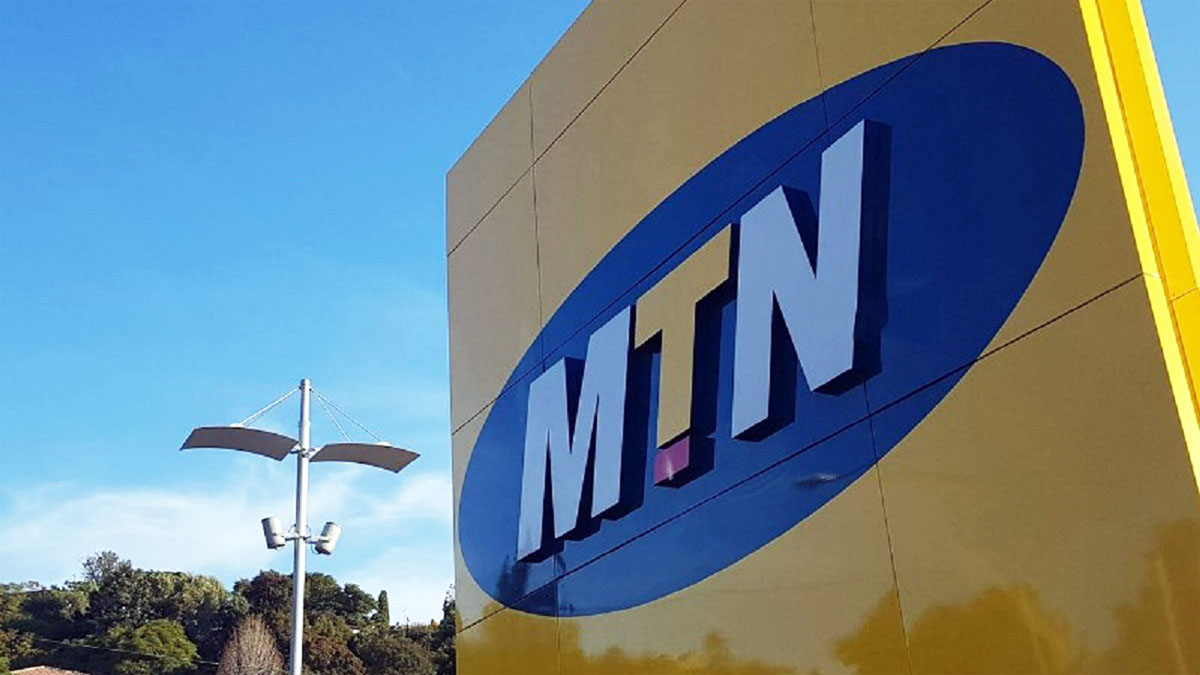
South African companies with identifiable business interests estimated at about N20.43 trillion in Nigeria are facing growing uncertainty as pressure mounts on the Federal Government to take stronger action over renewed xenophobic attacks against Nigerians in South Africa.
The renewed violence has triggered calls for economic retaliation, with lawmakers, student groups and other stakeholders urging the government to consider measures against South African businesses operating in Nigeria.
The calls followed reports of attacks on foreign nationals, killings, looting of businesses and the displacement of Nigerians in different parts of South Africa.
The Federal Government has so far focused largely on diplomatic engagement and measures to protect Nigerians in the country, including the evacuation of 1,490 Nigerians from South Africa in five phases between June 10 and July 15.
Nigeria has also continued to press South African authorities to strengthen protection for Nigerians and other foreign nationals and ensure that those responsible for attacks are brought to justice.
The latest dispute has, however, renewed scrutiny of the extensive South African investments in Nigeria, which span telecommunications, banking, insurance, retail, hospitality, logistics, aviation, manufacturing and property-related businesses.
The estimated N20.43tn figure is based largely on publicly available market capitalisation, asset and property valuations of major South African-linked businesses operating in Nigeria. It should not be interpreted as the precise value of South Africa’s foreign direct investment stock in Nigeria.
Calls for retaliation
Pressure for economic retaliation intensified after South African authorities ruled out compensation for Nigerians who abandoned businesses and properties during the latest wave of xenophobic violence.
Senator Adams Oshiomhole called on the Federal Government to consider appropriating profits made by South African companies operating in Nigeria if South Africa failed to compensate Nigerian victims.
Oshiomhole argued that Nigerian authorities should explore stronger economic measures to protect the interests of citizens affected by xenophobic attacks.
READ ALSO:
- Osun APC Rally Shooting: Police Release Environment Commissioner on Bail
- After Cameroon Heartbreak, Falcons Battle Banyana Thursday for World Cup Lifeline
- Biden condition deteriorates as cancer spreads to bones
The proposal, however, has not become government policy, while the Senate subsequently rejected the idea of using profits from South African companies in Nigeria to compensate victims.
The National Association of Nigerian Students (NANS) has also threatened protests against major South African-linked businesses, including MTN and MultiChoice, in response to the attacks on Nigerians.
The growing calls have raised concerns about whether the diplomatic dispute could eventually spill into Nigeria’s business environment.
Nigerians killed in South Africa
The renewed violence has also resulted in deaths.
Among those killed were Amaramiro Emmanuel and Ekpenyong Andrew, who died in separate incidents in April.
Two other Nigerians, Emeka Iroegbu and Musa Joe, were reported killed in separate incidents on June 28.
By late July, reports indicated that at least four Nigerians had been killed during the latest wave of violence, while Nigerian officials said many more Nigerians had suffered harassment, intimidation, property losses and other forms of abuse.
The Nigerian government subsequently intensified its response, including the voluntary evacuation programme that returned 1,490 Nigerians from South Africa.
The evacuation was coordinated through the Ministry of Foreign Affairs, the Nigerian High Commission in Pretoria, the Nigerians in Diaspora Commission and other government agencies.
South African businesses in Nigeria
South Africa’s commercial presence in Nigeria extends well beyond the brands most familiar to consumers.
The most prominent South African-linked companies listed on the Nigerian Exchange are MTN Nigeria Communications Plc and Stanbic IBTC Holdings Plc.
MTN Nigeria is one of the largest companies on the Nigerian Exchange by market value, while Stanbic IBTC is a major player in Nigeria’s banking and financial services industry.
Other South African-linked interests in Nigeria include Rand Merchant Bank, Sanlam, Alexander Forbes, Broll Property Group, Metrofile, PEP, Mr Price, Pick n Pay, Nampak and businesses associated with the hospitality, aviation and manufacturing sectors.
Some companies commonly described as South African businesses have, however, undergone ownership changes over the years.
For instance, Protea Hotels, which has South African origins, is now part of Marriott International’s global hotel network. Some Nigerian operations also involve local investment partners.
This makes it necessary to distinguish between companies with South African origins, companies controlled by South African parent groups and businesses that still have substantial South African ownership.
How the N20.43tn figure was calculated
The estimated N20.43tn value of South African-linked interests in Nigeria is largely derived from the market values and publicly available asset information of major companies.
MTN Nigeria and Stanbic IBTC account for the bulk of the figure when their respective market capitalisations are considered.
However, market capitalisation should not be treated as the amount of money invested by a foreign parent company.
Both MTN Nigeria and Stanbic IBTC are publicly listed Nigerian companies with shares held by Nigerian and international investors.
Consequently, any action targeted at the companies could affect not only South African interests but also Nigerian shareholders, pension funds, employees, customers, suppliers and government revenues.
Nigeria maintains diplomatic pressure
Despite the growing calls for retaliation, the Federal Government has continued to pursue diplomatic channels.
South African International Relations and Cooperation Minister Ronald Lamola visited Abuja as President Cyril Ramaphosa’s special envoy amid efforts to ease tensions between the two countries.
The discussions focused on the safety of Nigerians and other foreign nationals in South Africa, migration issues and the broader state of Nigeria-South Africa relations.
Nigeria has maintained that South Africa must do more to prevent xenophobic attacks and protect Nigerians legally resident in the country.
South Africa, for its part, has reiterated its opposition to xenophobia, racism and discrimination while insisting that criminality should not be associated with nationality.
The dispute has also generated concerns over compensation for Nigerians who lost businesses and property while fleeing the violence.
South African authorities have rejected calls for government compensation, arguing that the state cannot compensate individuals for private property abandoned during the unrest.
Economic stakes for both countries
Any decision by Nigeria to retaliate against South African companies could have consequences for both countries.
MTN Nigeria, for example, provides telecommunications services to millions of Nigerians and employs thousands of people directly and indirectly through its wider supply chain.
Stanbic IBTC also has a significant presence in Nigeria’s banking, investment and financial services sectors.
Any disruption to their operations could therefore affect consumers, workers, shareholders, suppliers and government tax revenues.
South Africa also has significant economic interests in Nigeria, making the relationship important to businesses in both countries.
The situation has consequently placed the Federal Government in a difficult position: responding firmly to xenophobic attacks against Nigerians while avoiding measures that could undermine jobs, investments and economic stability at home.
For now, Nigeria appears to be relying on diplomatic pressure, consular intervention and the protection of affected citizens rather than imposing broad economic sanctions.
But as calls for retaliation continue to grow, the future of South African investments in Nigeria could become a major factor in the increasingly tense relationship between Africa’s two largest economies.
Xenophobia: MTN, Stanbic IBTC, other South African firms face pressure in Nigeria
-

 Education3 days ago
Nigerian Young Academy, LASU to Host 16th International Conference on Convergent Research
-
 News3 days ago
Trump smuggled out of Turkey in catering truck over Iran threat
-

 International24 hours ago
Iran Had Detailed Intel on Trump’s Location Before Secret Turkey Escape
-
 News2 days ago
Tinubu Vows to Secure Nigeria, Declares Unity Non-Negotiable Amid Worsening Insecurity
-

 News24 hours ago
FG to Attach 300 NYSC Corps Members to CNG Workshops for Skills Training
-

 metro2 days ago
Nigeria Needs Competent, Ethical Young Leaders, Says HAVEK Leadership Academy
-

 Auto3 days ago
Omoda, Jaecoo Shake Global Auto Market, Hit One Million Sales in Three Years
-
 metro19 hours ago
Seven Miners Killed in Plateau Mining Pit Collapse, Renewing Urgent Calls for Safety Reform