

Politics
BREAKING: Court nullifies Edo PDP gov primary
BREAKING: Court nullifies Edo PDP gov primary
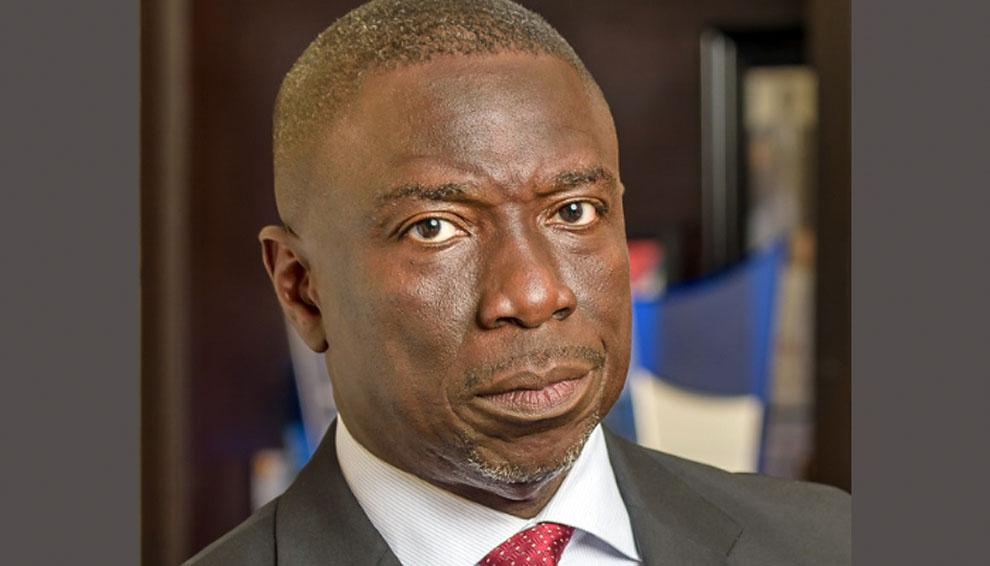
A Federal High Court Abuja, on Thursday, invalidated the Peoples Democratic Party (PDP) primary election that produced Asue Ighodalo as party’s candidate in the forthcoming governorship election in Edo.
Justice Inyang Ekwo, in a judgment, held that the PDP’s primary held on Feb. 22 failed to comply with the provisions of the Electoral Act, 2022; the guidelines for the conduct of the poll amd the party’s constitution.
Justice Ekwo, who said that the Exhibit PDP 1 tendered by the party was bereft of evidence, held that the plaintiffs, through the exhibits tendered, were able to establish their case against the defendants
The judge said that from the exhibit presented by the PDP, he found that the returning officers who prepared the result sheets only sat down in a place to manufacture the outcome.of the poll.
He said the exclusion of the 381 delegates, including the plaintiffs, were against the provisions of the law.
Justice Ekwo held that, though INEC, the 1st defendant, filed a memorandum of appearance in the suit, it was unfortunate that the commission did not file any process in the case.
READ ALSO:
- Ibadan politician Adeojo demands N58m from Wasiu Ayinde over breach of contract
- JAMB exposes 3,000 fake graduates
- Bandits kill Kaduna judge son, demand N300m to free father, other children
According to the judge, the 1st defendant counsel only said it will be bound by the decision of the court.
“I found that the case of the plaintiffs succeed on merit,” he said.
The News Agency of Nigeria (NAN) reports that three aggrieved ad-hoc delegates, on behalf of the 378 others, had sued the Independent National Electoral Commission (INEC), the PDP, its national secretary and the vice chairman, south south as 1st to 4th defendants respectively.
In the suit marked: FHC/ABJ/CS/165/2024 dated Feb. 7 but filed Feb 8, the plaintiffs sought for two orders
These include an order for the defendants or their agents not to act but to show cause why the reliefs of the plaintiffs in their originating summons should not be granted with regard to the plan of the 2nd, 3rd and 4th defendants to exclude them and 378 other delegates, whose names and election results are contained in “Exhibits BID 8A to 8L,” from participating in the primaries.of Feb. 22 in Edo.
The plaintiffs, which include Hon Kelvin Mohammed, Mr Gabriel Okoduwa and Mr Ederaho Osagie, on behalf of others in 12 local government areas and 127 wards, averred that it would be in the interest of justice for their reliefs to be granted.
NAN reports that the 381 delegates are those loyal to Philip Shaibu, the impeached deputy governor.
BREAKING: Court nullifies Edo PDP gov primary
(NAN)






Politics
Oshiomhole Challenges Obi to Bible Oath Over Private Jet Controversy
Oshiomhole Challenges Obi to Bible Oath Over Private Jet Controversy
Former Edo Governor insists he witnessed Obi’s private jet use, calls for religious test to settle dispute
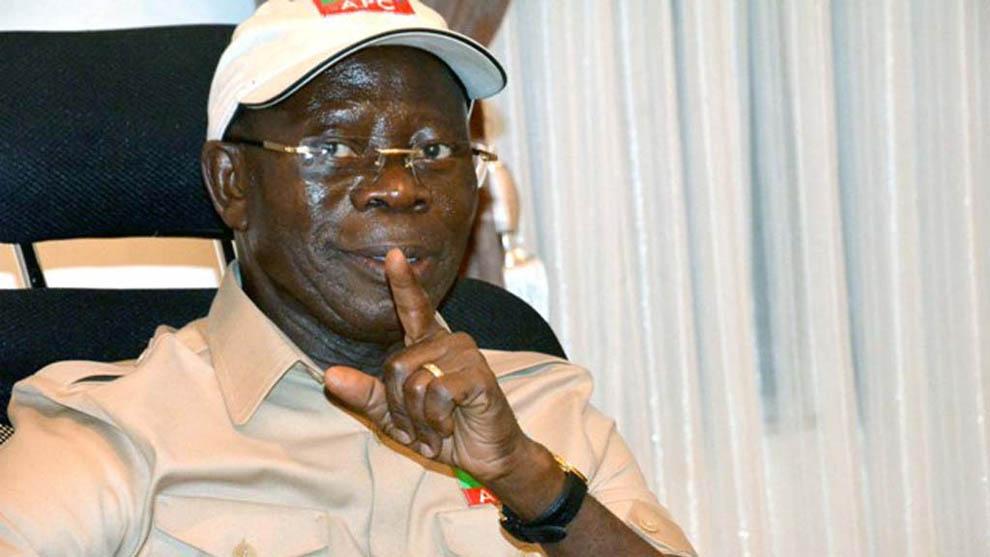
BENIN CITY — A fresh political controversy has erupted following claims by former Edo State Governor, Senator Adams Oshiomhole, that Labour Party presidential candidate Peter Obi frequently uses private jets despite public claims to the contrary.
Speaking in a recent interview on SYMFONI TV, Oshiomhole challenged Obi to a public oath-taking, proposing that both men place their hands on a Bible to settle the dispute.
“Obi is a Christian; I’m a Christian. Please bring a priest, bring your Bible, and I’ll put my hand on it, and let Obi put his hand on it,” Oshiomhole said, emphasizing their shared faith as the basis for the challenge.
The former governor alleged that he personally encountered Obi at the Executive Jet Wing in Lagos on at least two occasions. According to him, on one instance Obi was alone, while on another he was accompanied by his wife. Oshiomhole further claimed that he himself had flown a private jet from Benin and landed at the same time as Obi.
The remarks come amid a broader political exchange regarding Obi’s travel arrangements, which have been a subject of public debate. Obi’s media adviser, Dr. Valentine Obienyem, has since disputed Oshiomhole’s claims, pointing to a long history between the two politicians, including instances where Oshiomhole had previously praised Obi and invited him to campaign in Edo State.
The proposal for a Bible oath has sparked mixed reactions among political observers, with some describing it as an unusual but telling escalation of the ongoing verbal duel between the two prominent figures.
As of press time, neither Peter Obi nor his media team had responded directly to the specific challenge issued by Oshiomhole.
Oshiomhole Challenges Obi to Bible Oath Over Private Jet Controversy
Politics
Obi Positioning for SGF Role Under Atiku’s ADC Ticket – Sowore
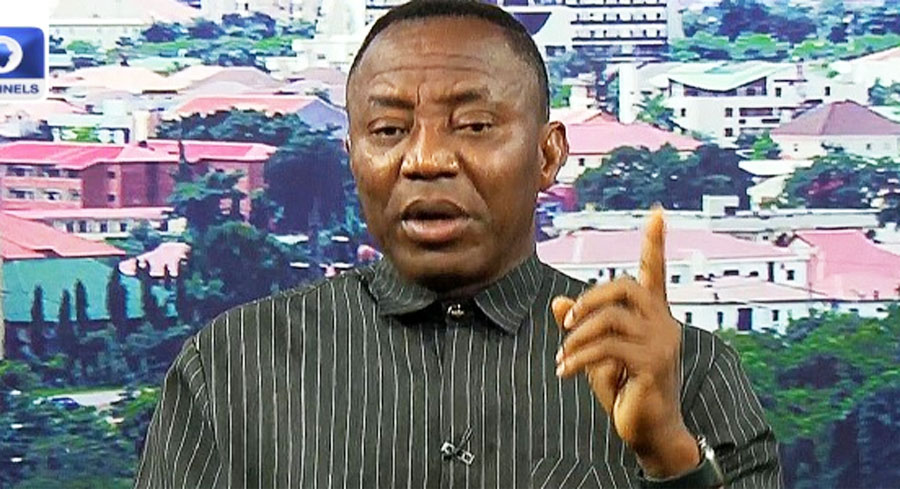
Obi Positioning for SGF Role Under Atiku’s ADC Ticket – Sowore
LAGOS — The political landscape ahead of the upcoming general elections was thrown into fresh turmoil yesterday following explosive allegations by the African Action Congress (AAC) presidential candidate, Omoyele Sowore, who claims that his Nigeria Democratic Congress (NDC) counterpart, Peter Obi, is secretly working to install Atiku Abubakar as president. In a statement made available to journalists, Sowore alleged that Obi is not genuinely pursuing the presidency but is instead positioning himself for the position of Secretary to the Government of the Federation (SGF) in an Atiku-led administration.
According to Sowore, the former Anambra State governor has been surreptitiously directing his teeming supporters to work for the African Democratic Congress (ADC) presidential candidate, Atiku Abubakar, rather than campaigning for his own party. “Obi is positioning himself to become Atiku’s SGF,” Sowore stated bluntly. “He is secretly directing his supporters to work for the ADC presidential candidate, Atiku. This is a betrayal of the movement that trusts him.” The allegation suggests a complex political realignment where the NDC and ADC are allegedly operating in a synergistic, if covert, manner. Sowore’s claims imply that the Obi movement is being used as a vehicle to siphon votes and energy toward Atiku’s bid, with the promise of a high-ranking position in the cabinet as the reward.
READ ALSO:
- How Bandits Demand ₦300m Ransom for Abducted Kaduna Couple, Baby in Viral Video
- 2027 Elections: Atiku Demands Names of INEC Ballot Printers, Questions Secret Contracts
- ₦8.7bn Erosion-Control Budget Gap Raises Questions as Anambra Gullies Expand
The accusation, if proven, could have significant implications for the opposition’s unity. Sowore, a vocal activist and former presidential candidate, has historically positioned himself as a critic of the political establishment, often accusing major party candidates of engaging in backroom deals that undermine the will of the electorate. The claim that Obi is eyeing the SGF role—typically the highest administrative office in the presidency—suggests that he may not be confident in winning the top seat, or that a consensus power-sharing arrangement has been struck behind closed doors.
The statement, however, raises questions about the current state of party coalitions. The article identifies Obi as the “NDC presidential candidate” and Atiku as the “ADC presidential candidate,” party labels that differ from their traditional political affiliations (Labour Party and PDP, respectively). This suggests a major realignment of political platforms in this election cycle. Neither the Obi campaign nor the Atiku campaign has issued an official response to Sowore’s allegations at the time of filing this report.
The news has sparked immediate debate on social media, with supporters of both camps expressing confusion and anger. Sowore’s supporters have praised him for “exposing the truth,” while Obi’s loyalists have dismissed the claims as a desperate attempt to remain relevant in a crowded political space. Political analysts suggest that if Sowore’s claims hold any weight, it could lead to a massive voter apathy among the youth demographic that has largely backed Obi’s previous bids.
As the election date approaches, the political arithmetic appears to be shifting rapidly, with accusations of secret pacts and strategic positioning becoming the order of the day. Sowore has vowed to continue exposing what he describes as the “unholy alliances” shaping the future of the nation.
Obi Positioning for SGF Role Under Atiku’s ADC Ticket – Sowore
Politics
Okonkwo Alleges Return of Subsidy, Accuses NNPC of Plotting Trillions in ‘Lost Profit’

Okonkwo Alleges Return of Subsidy, Accuses NNPC of Plotting Trillions in ‘Lost Profit’
Says FG’s 30-Day Fuel Discount Not Sourced from Dangote
The spokesman for the African Democratic Congress (ADC) presidential campaign, Kenneth Okonkwo, has raised an alarm over the Federal Government’s new 30-day fuel discount policy, describing it as a deceptive return to the previously abolished fuel subsidy regime.
In an interview with Channels TV on Sunday, October 11, 2026, Okonkwo criticized the policy for failing to source petroleum products from the Dangote Refinery. He argued that the Nigerian National Petroleum Company Limited (NNPC) is poised to claim trillions of naira in alleged lost profits as a result of the scheme.
Okonkwo, a political commentator, stated that because the NNPC is not producing domestic refined fuel, the discount is essentially an “import-related subsidy” that benefits foreign refineries and shipping operations rather than local ones.
“The NNPC is not taking from Dangote at all, but they’ll claim trillions in lost profit,” Okonkwo said. “Since NNPC isn’t producing domestic refined fuel, this discount is essentially an import-related subsidy benefiting foreign refineries and shipping operations instead of local ones.”
He warned that the return to a subsidy system opens the door to financial fraud, particularly through the inflation of consumption figures.
“You could report 70 million liters when only 15 million liters were used,” he cautioned, noting the risk of opaque accounting in the sector.
As an alternative, Okonkwo advocated for supplying crude oil directly to the Dangote Refinery for domestic processing to reduce import costs. He stated that domestic refining is a central pillar of the ADC’s economic proposal.
The ADC chieftain’s comments come amid ongoing debate over the Federal Government’s new fuel price mechanism. The government, through Finance Minister Taiwo Oyedele, has maintained that the 30-day discount is a “NNPC margin cut” and not a subsidy.
Under the arrangement, NNPC Retail is expected to forgo its profit margin on petrol rather than using public funds to stabilize prices. However, Okonkwo contends that this still constitutes a subsidy, as it artificially reduces consumer costs while masking the true financial burden on the state oil company.
Okonkwo Alleges Return of Subsidy, Accuses NNPC of Plotting Trillions in ‘Lost Profit’
-
 Health3 days ago
NAFDAC Raises Alarm Over Toxic Pesticides in Beans, Seizes ₦800m Banned Chemicals
-

 metro2 days ago
Tension in Kano as Phone Traders Confront Chinese Sellers Over Cheaper Phones
-

 metro2 days ago
Police Launch Manhunt After Fresh Attacks, Kidnappings Rock Four Nigerian States
-

 Business2 days ago
NNPC Petrol Discount: Motorists Must Download App to Save ₦66 Per Litre
-

 metro2 days ago
EFCC Wins ₦132m Money Laundering Case as Court Orders Forfeiture of Lagos Properties
-

 Entertainment2 days ago
‘My Wife Fed Actresses I Was Dating Despite Knowing About Our Affairs’ – Yinka Quadri
-

 Politics2 days ago
INEC Raises Alarm Over Fake APC Result Naming Okorocha, Seeks DSS, Police Probe
-

 metro3 days ago
Mary Ugwoma’s Death: Husband Denies Abuse, Cites Brain Haemorrhage Report