

metro
$65m fraud: Ex-CEO of Federal Mortgage Bank gets N100m bail

$65m fraud: Ex-CEO of Federal Mortgage Bank gets N100m bail
The Federal High Court in Abuja has granted N100 million bail to a former Chief Executive Officer of the Federal Mortgage Bank of Nigeria (FMBN), Mr. Gimba Kumo Yau, who is accused of allegedly awarding a $65,000,000 real estate contract to an allegedly incompetent firm, Good Earth Power Nigeria Limited, in 2012.
Justice James Omotosho granted N100 million bail each to Yau and co-defendants Bola Ogunsola and Mr. Tarry Rufus on Wednesday, in the matter filed by the Independent Corrupt Practices and Other Related Offences Commission‘s (ICPC) lawyer, Dr. Osuobeni Ekoi Akponimisingha, in the charge sheet marked FHC/ABJ/CR/333/24.
Good Earth Power Nigeria Limited and T. Brend Fortunes Limited were also joined as defendants, having been sued for their alleged contravention of the Public Enterprises Regulatory Commission Act and Section 19 of the Money Laundering (Prevention and Prohibition) Act, 2022.
READ ALSO:
- TETFund stops fresh foreign scholarships for varsity lecturers, others
- VIDEO: Fire guts Radio Nigeria Lagos office
- Tinubu appoints Jami’u Abiola as Senior Special Assistant
Facts of the case
- In ICPC’s five-count charge, the anti-graft agency accused Yau of making payment to Good Earth Power Nigeria Limited in the sum of N3,785,000,000.00 out of the total contract sum of $65,000,000 for the development of 962 units of residential housing in Kubwa, Abuja, named “Goodluck Jonathan Legacy City,” contrary to accepted practice.
- The ICPC maintained that the former bank CEO allegedly contributed to his organization’s failure at the time by approving $65,000,000 to a firm that could not carry out and complete the real estate project.
- The allegations stated that Mr. Gimba Kumo Yau and Bola Ogunsola, in their roles as chief executive officer and executive director of the bank in August 2012, had secured a loan of N14 billion from Ecobank Nigeria PLC on behalf of the bank.
- This loan was said to be earmarked for the development and completion of 962 residential housing units in Kubwa, Abuja, named “Goodluck Jonathan Legacy City,” within 18 months.
- ICPC further alleged that Mr. Gimba Kumo Yau, as the bank’s CEO, awarded the $65 million contract despite knowing that the company lacked the capacity to carry out the contract.
- ICPC added that the project remains incomplete as of today, thereby amounting to “economic adversity” for the bank and in violation of Section 68(1) of the Public Enterprise Regulatory Commission Act, CAP P39, Laws of the Federation, 2004.
- The other defendants were accused of giving and receiving $3,550,000.00 of the contract sum in cash in contravention of the Money Laundering Act.
- When the charges were read out to the defendants in open court, they had pleaded not guilty.
- Subsequently, their legal team applied for bail.
What transpired in court
- The defendants had argued that bail is at the discretion of the court and that the applicants are entitled to bail, being presumed innocent under the law.
- They also assured that their clients would not jump bail when granted bail, as one of the defendant’s counsel also submitted that the charge against his client is not one punishable by death.
- On the part of the ICPC counsel, he did not oppose the applications for bail.
- Ruling on the bail applications on Wednesday, Omotosho held that bail is premised on the presumption of innocence, which an accused person enjoys until he is declared guilty by the court.
- He also said that bail is at the discretion of the court.
- Subsequently, he granted N100 million bail to each of the defendants with two sureties in like sum.
- He ruled that each of the sureties must be owners of property worth N100 million and that they must swear to an affidavit of means and show evidence of tax payment for the past three years.
“The sureties and defendants shall submit their recent passport photographs and certified bank statements.
“The Defendants shall submit their international passports to the registrar of this court,” the judge said.
- He also ordered that the registrar of the court shall verify these documents and issue a report while the defendants are remanded pending the perfection of the bail conditions.
$65m fraud: Ex-CEO of Federal Mortgage Bank gets N100m bail












metro
Jailbreak Saga: Guard Bagged 2.5 Years for Helping 10 Inmates Escape Through Toilet Hole
Jailbreak Saga: Guard Bagged 2.5 Years for Helping 10 Inmates Escape Through Toilet Hole
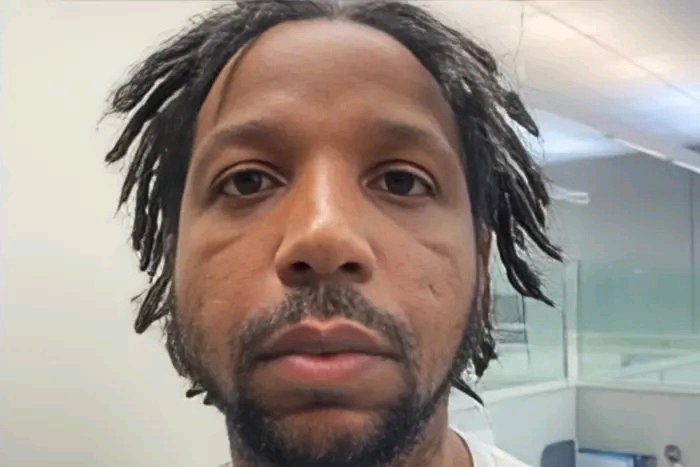
A former jail worker in New Orleans, Sterling Williams, has been sentenced to two and a half years in prison for his role in a daring jailbreak that saw ten inmates escape through a hole behind a toilet.
The shocking incident, which occurred in May 2025, left authorities red-faced after the fleeing inmates left behind a mocking note that simply read: “Too Easy.”
According to reports, Williams, who was entrusted with supervising the facility, compromised security protocols to facilitate the escape. Investigators revealed that the inmates managed to breach the wall behind a toilet fixture, crawling to freedom through the opening.
The jailbreak sparked a massive manhunt across the city, though all ten inmates were eventually recaptured. Williams’ sentencing brings a close to a case that exposed significant security lapses within the Orleans Parish facility.
Prosecutors argued that Williams abused his position of trust, endangering public safety. The court agreed, handing down the 30-month sentence this week.
The Orleans Parish Sheriff’s Office has since stated that stricter security measures and structural inspections have been implemented to prevent future breaches.
Jailbreak Saga: Guard Bagged 2.5 Years for Helping 10 Inmates Escape Through Toilet Hole
metro
Five Arraigned Over Kidnapping of 20 Prospective NYSC Members in Imo

Five Arraigned Over Kidnapping of 20 Prospective NYSC Members in Imo
The Department of State Services (DSS) has arraigned five suspects before the Imo State High Court over the kidnapping of 20 prospective National Youth Service Corps (NYSC) members and four other individuals in two separate abduction cases that jolted the nation earlier this month.
The three prime suspects linked to the corps members’ abduction—Usman Aliyu (25), also known as Chonge; Babangida Aliyu (21); and Mohammed Ali (23), alias Smallie Pepper—were brought before the Oru Judicial Division of the High Court in Mgbidi on Tuesday. They face charges of conspiracy, hostage-taking, and unlawful possession of firearms. According to the charge sheet presented by the DSS, the trio and other suspects still at large allegedly abducted the prospective corps members on October 1, 2026, along the Owerri–Mgbidi–Onitsha Expressway. The victims were travelling from Ibadan, Oyo State, to their orientation camps in Abia and Akwa Ibom states when their vehicles were intercepted.
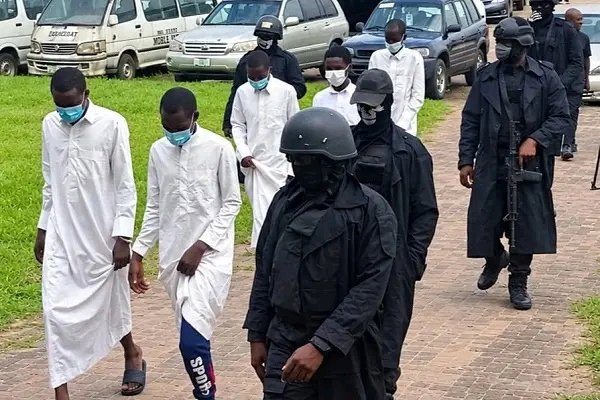
Prosecutors told the court that the defendants demanded a staggering ₦950 million ransom for the release of the 20 captives. It was further alleged that the suspects actually collected ₦48 million and an undisclosed amount in United States dollars before the victims regained their freedom. The DSS also accused the defendants of unlawfully possessing three AK-47 rifles, four magazines, a pistol, and 81 rounds of live ammunition. All five defendants pleaded not guilty to the charges when they were read to them. Following their plea, the trial judge, Justice Emeka Orafu, ordered that they be remanded at the DSS facility pending further proceedings. The case has been adjourned for hearing on various dates in late October.
In a related development, two other suspects—Aminu Haliru (27) and Tange Ibrahim (20), also known as Jijji—were arraigned in connection with the abduction of four individuals around Owerri and Mgbidi on October 4. The prosecution alleged that the pair and others at large collected ₦8 million for the release of those victims. They were also charged with illegal possession of an AK-47 rifle and a pump-action gun, with ₦1.8 million reportedly recovered from them.
The abduction of the 20 prospective corps members occurred in the early hours of October 1 along the busy Owerri-Onitsha road near Umunoha in the Mbaitoli Local Government Area of Imo State. The incident sparked widespread outrage and concern over the safety of young Nigerians travelling for national service. Following the abduction, security agencies launched a coordinated search-and-rescue operation. The Imo State Police Command had disclosed that its operatives located the kidnappers’ hideout using drone surveillance but faced difficulties accessing the camp after discovering it had been planted with improvised explosive devices (IEDs). Additional equipment, including bulldozers and armoured personnel carriers, was subsequently deployed. The victims were eventually released on October 7, exactly one week after their abduction. They were subsequently taken to the DSS hospital in Owerri for medical attention and debriefing.
While security agencies maintained that the victims were rescued through a joint operation involving the DSS, military, and police, the circumstances of their release have remained a subject of controversy. Some parents of the rescued corps members had earlier told journalists that they paid millions of naira in ransom to secure their children’s freedom, contradicting the official rescue narrative. Reports indicated that some families paid between ₦3 million and ₦6 million, with payments allegedly made in Ibadan and subsequently converted to dollars for delivery in Imo State. The Human Rights Writers Association of Nigeria (HURIWA) had called for transparency, questioning whether the victims were genuinely rescued by security forces or released after ransom negotiations. The Imo State Government, however, distanced itself from the ransom claims. The arraignment of the suspects marks a significant step in the investigation, as security agencies continue efforts to apprehend other members of the kidnapping gang who reportedly fled with gunshot wounds during the intelligence-led operations that led to the arrests in Port Harcourt and Aba between October 10 and 14.
Five Arraigned Over Kidnapping of 20 Prospective NYSC Members in Imo
metro
Ebola: Ogun Tracks 111 Travellers as FAAN Tightens Airport Surveillance
Ebola: Ogun Tracks 111 Travellers as FAAN Tightens Airport Surveillance
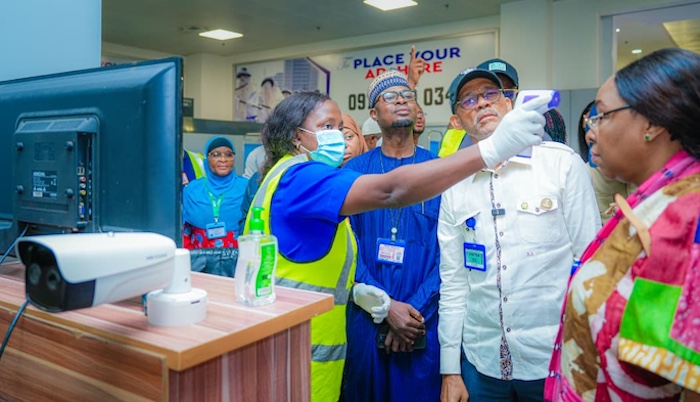
The Ogun State Government has stepped up surveillance and emergency preparedness, while the Federal Airports Authority of Nigeria has intensified health monitoring across airport operations following the confirmation of an Ebola Virus Disease case in the Federal Capital Territory.
Ogun said it had identified and monitored 111 persons of interest linked to travel from high-risk countries, while assuring residents that no Ebola case had been recorded in the state as of October 21, 2026.
The parallel measures by the state government and FAAN underscore growing efforts to strengthen surveillance, improve early detection and prevent the spread of the potentially deadly disease following the reported case in Abuja.
Ogun State Commissioner for Health, Dr Tomi Coker, disclosed the state’s response in a statement on Wednesday, saying the government had been on heightened alert since Ebola was declared in the Democratic Republic of the Congo in March 2026.
According to her, the 111 persons identified for monitoring had completed the required surveillance period and were subsequently discharged from follow-up.
Coker said the state’s Public Health Emergency Operations Centre was coordinating preparedness and response activities to ensure the prompt identification, reporting and management of suspected cases.
She added that the government had strengthened the capacity of Disease Surveillance and Notification Officers, port health officers, health educators, clinicians and community informants through training on appropriate response procedures.
Relevant national guidelines and protocols had also been adapted and deployed, while public sensitisation and infection prevention and control measures in healthcare facilities were being intensified.
The commissioner urged residents to remain vigilant, observe preventive measures and avoid panic or spreading unverified information.
She explained that Ebola is a serious viral disease capable of causing severe illness and death, with early symptoms that may resemble those of other common illnesses.
The symptoms include fever, severe weakness, fatigue, headache, muscle pain, sore throat, vomiting, diarrhoea and abdominal pain. Unexplained bleeding or bruising may also occur in some cases.
According to Coker, symptoms can develop between two and 21 days after exposure. However, she cautioned that experiencing these symptoms does not automatically mean a person has Ebola, stressing the importance of prompt professional medical assessment, particularly where there has been possible exposure or travel to a high-risk area.
She said the virus spreads through direct contact with the blood or body fluids of an infected person who has developed symptoms, the body of someone who has died from the disease, or materials contaminated with such fluids.
Meanwhile, FAAN said it had heightened health surveillance across airport operations in response to the confirmed case in Abuja.
In a statement issued on Tuesday by its Director of Public Affairs and Consumer Protection, Henry Agbebire, the authority said it was working with the Nigeria Centre for Disease Control and Prevention, Port Health Services, the Nigerian Civil Aviation Authority and other relevant agencies to support ongoing containment efforts.
FAAN noted that the early identification of the case and the commencement of contact tracing highlighted the importance of effective surveillance, established public health protocols and inter-agency collaboration in responding to potential health threats.
The authority said it would maintain heightened vigilance across airport operations and continue to coordinate with public health authorities to implement additional guidance and measures considered necessary to protect passengers, airport personnel and the wider public.
It also urged passengers, airport users, airlines and other stakeholders to remain calm, vigilant and cooperative with health officials.
Both the Ogun government and FAAN advised the public to rely on verified information from official health authorities and avoid circulating unconfirmed reports.
The developments highlight the importance of coordinated surveillance, timely reporting and public cooperation in containing potential outbreaks, particularly at points of entry and in communities with links to international travel.
-

 News2 days ago
FG Challenges World Bank’s 124% Debt-to-Revenue Warning, Cites Rising Income
-

 metro22 hours ago
Army Major, Soldiers Killed in ISWAP Ambush in Yobe State
-

 metro3 days ago
NAFDAC Probes Corps Member’s Death at Enugu Camp as Fake Drug Claims Emerge
-

 Politics3 days ago
Buhari Feared Tinubu Presidency, Resisted Pressure to Back Him – Baba-Ahmed Claims
-

 metro22 hours ago
Breaking: Afenifere Leader Pa Fasoranti Dies at 100
-

 metro2 days ago
Ogun House Fire Horror: Husband Arrested After Wife Dies Following Domestic Dispute
-

 Entertainment2 days ago
Nollywood Mourns as Actress, Beauty Queen Tenia Abraham Dies at 32
-

 News2 days ago
NLC, Falana Mobilise Nigerians Against Petrol Price Hike, Mount Pressure on Tinubu Govt