

metro
300 captives: ACF, Middle Belt, Borno Stakeholders Demand Oyo-Style Rescue (Updated)
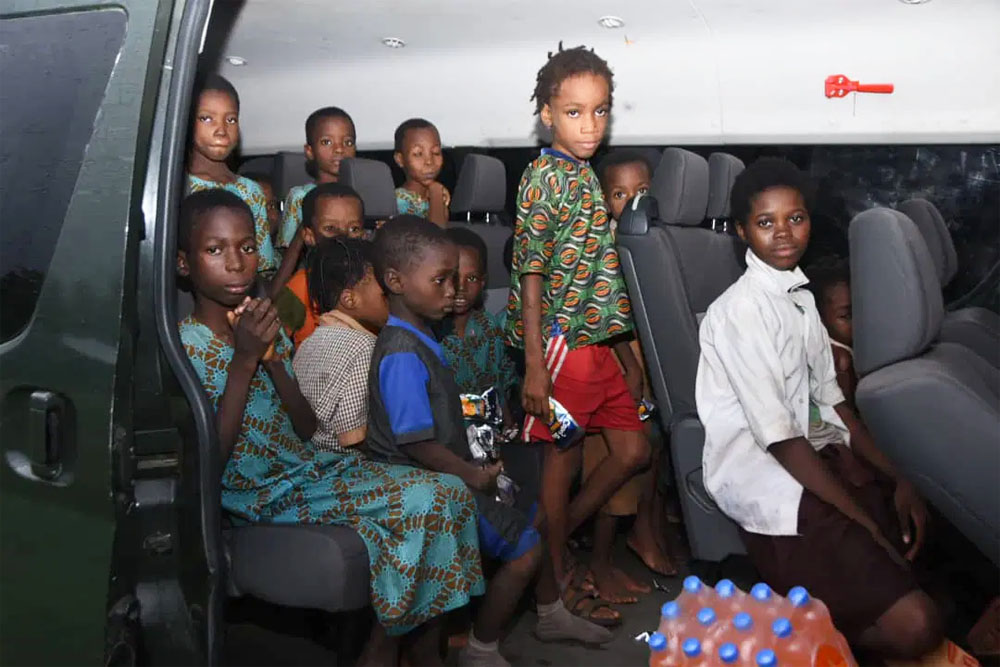
300 captives: ACF, Middle Belt, Borno Stakeholders Demand Oyo-Style Rescue
- Kwara victims spend 166 days in captivity
Fresh outrage is mounting across the North over what stakeholders have described as the Federal Government’s uneven response to mass abductions, with nearly 300 Nigerians, including women and children, still languishing in terrorists’ enclaves months after their abduction. On Saturday, the Arewa Consultative Forum (ACF) , the Middle Belt Forum (MBF) , northern leaders, stakeholders in Borno and prominent Nigerians questioned why the Federal Government had yet to demonstrate the same urgency, commitment and coordinated security response that secured the release of abducted pupils and teachers from Oriire Local Government Area in Oyo State. They urged the Federal Government to rescue hundreds of other Nigerians, including schoolchildren, women and community members, who remain in the custody of ISWAP, Boko Haram and armed bandits across Borno, Kaduna, Kwara and other parts of the North. They insisted that every Nigerian life carries equal value, stressing that no child, woman or community should receive preferential attention because of geography, ethnicity, religion or political considerations.
A Sunday Tribune investigation revealed that the growing concern is fuelled by the prolonged captivity of 176 residents of Kwara State who were abducted by terrorists on February 3. As of today (Sunday), the victims have spent 166 days in captivity, with stakeholders warning that every passing day exposes the captives to worsening health conditions, psychological trauma, abuse and other life-threatening dangers. The investigation also showed that aside from the 176 victims from Kwara, scores of other Nigerians abducted in separate attacks across Borno, Kaduna and Zamfara states are still being held by terrorists, pushing the number of those believed to be in captivity to nearly 300.
The Arewa Consultative Forum (ACF) called on the Federal Government to use the same tactics it used in rescuing the Oyo kidnapped schoolchildren on schoolchildren being held by ISWAP and other terrorist groups in the region. Speaking in an interview on Saturday, the National Publicity Secretary of ACF, Professor Tukur Muhammad-Baba, noted that while the forum is happy the Oyo schoolchildren have been released, they believe that nobody should spend a day in the hands of kidnappers. Going further, he expressed surprise that the same rescue has not been done for schoolchildren under the control of terrorists in Borno, Kwara, Zamfara, and other places in the region, especially the one in Borno in particular, where the schoolchildren and teachers were abducted at about the same time as the one in Oyo. He acknowledged that while the ACF does not have full evidence to conclude that government is biased, it is their duty to point out to government that they need a lot of sensitivity. If this rescue represents a new approach in the fight against terrorism, then we welcome it, but we plead that the same be extended to all people, and indeed to kidnapped citizens in the hands of terrorists, as soon as possible in the region.
READ ALSO:
- Presidency, Peter Obi clash over alleged political strategy ahead of 2027
- England Thrash France 6-4 in Record-Breaking World Cup Bronze Medal Thriller
- US launches fresh airstrikes on Iran after deadly attack kills American troops in Jordan
Similarly, the Northern Elders Forum (NEF) urged President Bola Tinubu to launch similar operations to free hundreds of other schoolchildren, women and other Nigerians still being held by terrorists across the country. The National Publicity Secretary of the Northern Elders Forum, Prof Abubakar Jiddere, criticised the Federal Government’s handling of insecurity, saying the successful rescue of the abducted Oyo schoolchildren and teachers should not obscure what he described as the government’s failure to prevent such kidnappings in the first place. The forum urged the Federal Government to deploy the same level of urgency and operational commitment that secured the release of the Oyo victims towards rescuing schoolchildren and others still being held by kidnappers, including those abducted in Borno State. Additionally, a member of the Northern Elders Forum, Abubakar Yusuf, called on the Federal Government, the Defence Headquarters, and the Ministry of Defence to adopt a non-kinetic approach to secure the release of children abducted by suspected insurgents in Borno State, cautioning against the use of force in the rescue operation as it could endanger the lives of the victims.
Stakeholders in Borno called on government to intensify efforts to secure the release of students abducted by Boko Haram/ISWAP insurgents, expressing fresh concern over their continued captivity and urging stronger measures to protect schools across the state. The renewed appeal came during a stakeholders’ engagement on the Safe Schools Programme following confirmation that students abducted from Government Day Secondary School, Lassa, and Mussa Secondary School, along with one teacher, remain in the custody of the insurgents. Speaking at the meeting, the Commissioner for Education, Science, Technology and Innovation, Lawan Abba Wakilbe, said the Borno State Government had not relented in its efforts to ensure the safe return of the victims, stating that they are doing everything within their capacity to see that the abducted students are reunited with their families. While acknowledging the military’s sustained operations against insurgents, Wakilbe commended the armed forces for their sacrifices and appealed for greater efforts to secure the release of the remaining captives. The Executive Director of the Zenith of the Girl Child and Women Initiative Support (ZEGCAWIS), Kabu, described insecurity as one of the greatest threats confronting education in the North-East, noting that many communities had become increasingly vulnerable to attacks, and emphasized that every child regardless of where they come from, deserves equal protection. The Executive Director of the Centre for Advocacy, Transparency and Accountability Initiative (CATAI), Sadia Abubakar Mu’azu, called for stronger collaboration among government, security agencies, civil society organisations and development partners to improve school safety across the state, insisting that no child should be left behind in captivity.
At the centre of the growing criticism is the abduction of 42 pupils from Government Day Secondary School, Mussa, in Askira/Uba Local Government Area of Borno State, who were kidnapped during a Boko Haram attack on the same day as the Oyo schoolchildren. Among those abducted were toddlers as young as two years old, with the school complex housing a nursery, primary and secondary school, leaving families devastated as many of the children have yet to regain their freedom. Residents of Borno State have lashed out at the federal government over what they called prolonged silence on the abduction of these 42 students, as the school was temporarily shut by the state government and the remaining students relocated after the attack, but weeks later families and residents say they’ve heard no concrete update from the federal government under President Bola Tinubu. The residents accused the Tinubu administration of neglect, arguing that the lack of communication is heightening fear and disrupting learning in already vulnerable areas.
The chairman of the Network of Civil Society Organisations in Borno State, Abubakar Suleiman, said the federal government is not fair to the victims of both incidents, noting that the Federal Government visited Oyo State with a high-powered delegation including the National Security Adviser, Minister of Defence, Chief of Staff to the President among others with a helicopter, and landed at the local government where the abduction took place, while in the case of Borno, around 416 people were kidnapped in Ngoshe on the 3rd of May, and there has not been any FG intervention.
A prominent political analyst in Borno State, Abubakar Kareto, also echoed similar sentiment, noting that both abductions are heartbreaking reminders that rural schools remain highly vulnerable soft targets, and that a visible and unsettling imbalance exists in how the federal government responded to these two attacks, with the Oyo incident receiving a rapid, high-profile response while the Borno abduction has mostly received standard rhetorical condemnations.
READ ALSO:
- Iran war fuels child malnutrition crisis in Nigeria as poverty worsens
- ABC Transport Launches Major Fleet Renewal, Takes Delivery of 2026 Luxury Coaches
- NRC, Police Intensify Crackdown on Railway Vandals as Opeifa Pushes for Tougher Asset Protection
The forum further recalled that terrorists also attacked Government Day Secondary School, Lassa, in the same Askira/Uba Local Government Area on June 29, 2026, while students were writing their secondary school examinations.
According to the Borno State Commissioner for Education, Science, Technology and Innovation, Lawan Abba Wakilbe, 36 students – 25 girls and 11 boys – and one staff member were abducted during the attack, with at least one teacher killed. The Borno State Government has confirmed receiving a proof-of-life video showing some of the abducted students from Lassa, and Commissioner Wakilbe noted that the recent attacks marked a worrying return to mass school abductions in the state since the Chibok abduction in 2014.
Following the devastating ISWAP raid on the Borno State school, tension escalated sharply in the Lassa community. The attack occurred at approximately 9:00 a.m. on a busy local market day, a strategic timing chosen by the insurgents to exploit the heavy civilian foot traffic.
According to eyewitness accounts, the ISWAP terrorists infiltrated the Lassa community riding motorcycles, deliberately disguised in fake military fatigues and specialized forest guard uniforms to deceive local security perimeters. The highly coordinated assault was launched while students were sitting for their National Examinations Council (NECO) biology examinations. While rapid intervention by Operation Hadin Kai military troops successfully resulted in the rescue of 10 abducted students, a community-led compilation of school registers confirms that 36 children remain entirely unaccounted for.
The profound psychological toll of the abduction rapidly morphed into intense civic outrage when a high-level Borno State Government delegation arrived in Lassa led by the Commissioner for Education, Science, and Technology, Abba Wakilbe, intending to officially commiserate with the devastated families and assess the structural damage to the school.
But the official visit quickly devolved into a chaotic confrontation as enraged youths and desperate relatives of the 36 missing students vehemently rejected the delegation’s formal address, chanting, “We don’t want any talk, just go and bring back our children.”
The Human Rights Writers Association of Nigeria (HURIWA) has condemned the terrorist attack on Government Day Secondary School, Lassa, describing it as a damning indictment of Nigeria’s failing security architecture.
The attack, which occurred during the conduct of the National Examinations Council (NECO) Senior School Certificate Examination, reportedly left a teacher dead, another injured, and an unspecified number of students abducted by armed assailants. Reacting to the incident, HURIWA, through its National Coordinator, Emmanuel Onwubiko, said the latest assault was not merely another security breach but a tragic reminder that terrorists, insurgents, bandits and other non-state actors continue to operate with alarming audacity despite repeated assurances by government officials that insecurity is being brought under control.
The group questioned the effectiveness of the Federal Government’s current security strategy, asking President Bola Tinubu to urgently overhaul the nation’s security architecture and warning that repeated attacks on schools threaten to reverse decades of progress in educational advancement.
The association expressed particular concern that the attack occurred in Borno State, where government authorities have repeatedly claimed significant progress in the fight against insurgency.
The Kwara State abduction has become a focal point of the growing outrage. Youths in Kaiama Local Government Area of Kwara State staged a protest at the council secretariat, demanding urgent action over the continued captivity of 176 women and children abducted from Woro community.
The protest, led by the Kaiama Youths Advocacy Group, followed the circulation of a viral video showing some of the abductees, including women and children, pleading for rescue, a development that has heightened tension and outrage across the area. Addressing journalists during the demonstration, the group condemned what it described as a failure of authorities to ensure the safety of citizens, warning that the prolonged captivity of the victims reflects deep cracks in the security system.
The group said the abduction of such a large number of vulnerable residents signified a major security lapse, expressing concern over what it termed delayed response and lack of transparency from relevant authorities.
In a further escalation, terrorists issued a fresh threat to execute dozens of the abducted women and children if their demands are not met.
The assailants, believed to be members of Boko Haram, reportedly passed the warning through some of the abducted victims after a Jumu’ah prayer session.
The traditional ruler of the community, Salihu Bio, confirmed the development, explaining that one of the victims was allowed to speak with her relatives and used the opportunity to relay the terrorists’ message, stating that after the Jumu’ah prayer on Friday, the terrorists said the government was not taking the matter seriously and that if nothing was done within one week, they would begin to take drastic actions.
Another source within the community painted a more troubling picture, stating that the Boko Haram fighters complained that they were spending money and resources to feed the abductees and that nothing was coming out of it, threatening that if nothing was agreed upon within one week, they would start marrying off some of the girls and kill those they consider liabilities.
The Kwara State chapter of the Nigeria Democratic Congress has called on Governor AbdulRahman AbdulRazaq to take urgent and decisive action to secure the release of the 176 women and children, describing the prolonged captivity as a humanitarian tragedy.
READ ALSO:
- MURIC backs FRSC bill to ban preaching, hawking in commercial buses
- China unveils 5,000 AI training opportunities for developing countries at WAIC 2026
- Christian Council opposes ₦50,000 fine for bus preaching, seeks Tinubu’s intervention
Stakeholders in Nigeria’s North Central also accused the Federal Government of applying double standards in its response to mass abductions, condemning what they described as its continued silence over dozens of schoolchildren abducted in Borno State on the same day pupils and teachers were kidnapped in Oyo State.
They argued that while the Oyo victims were rescued through coordinated security efforts, scores of children and other victims in the North have remained in captivity for months without a similar level of urgency from authorities.
The criticism gathered momentum after the Middle Belt Forum (MBF) , in a statement signed by its National Publicity Secretary, Comrade Luka Biniyat, lamented that while the entire country rightly rallied behind the Oyo victims, the children of Mussa had suffered in near silence, with the disparity in attention leaving affected families questioning whether some Nigerian lives were considered more valuable than others.
The forum further cited the April 6, 2026 attack on three churches in Ariko Village, Kachia Local Government Area of Kaduna State, where armed bandits killed seven worshippers and abducted 37 others, mostly women and children, and according to the Forum, one of the abducted women gave birth in captivity, while some victims are believed to have died from the harsh conditions under which they have been held.
Following the attack, the Inspector-General of Police ordered the immediate deployment of senior operational personnel to Kaduna State, and seven kidnapped victims were rescued. “Since the first reports of that horrific incident, the nation appears to have moved on, leaving the victims and their grieving families to suffer alone. It is as if these children have been forgotten simply because they come from what appears to be a neglected part of Nigeria,” the Forum said.
The MBF maintained that the victims in Mussa, Lassa and Ariko remain in captivity while their families continue to endure unimaginable pain with little reassurance from those constitutionally charged with protecting them.
Echoing similar concerns, a northern elder and political stakeholder from Niger State, Alhaji Danladi Umar Abdulhameed, said the Federal Government must show equal commitment to rescuing all kidnapping victims regardless of where they were abducted, insisting that no Nigerian should be treated as a second-class citizen.
However, a former Assistant Director-General of the Department of State Services, Mohammed Ngoshe, has explained why the intelligence-driven operation that secured the rescue of abducted pupils and teachers in Oyo State cannot be replicated in every kidnapping case.
Ngoshe argued that the circumstances surrounding the Oriire abduction differed from those in other parts of the country, stating that every case and every security operation has its own dynamics.
He noted that the political aspect and other considerations that weighed on the minds of the terrorists to go into Oriire are not the same considerations given to the issue in Gwoza, where a lot of people are still in captivity.
Ngoshe claimed the security agencies isolated the kidnappers in the Oyo case, cutting off access to food, weapons and informants before surrounding their location, and they saw that they had no option other than to surrender.
He urged Nigerians to support security agencies with patience and cooperation, stating that security operations cannot be conducted in the open.
Professor Kamilu Fage of the Department of Political Science, Bayero University, Kano (BUK), urged the Federal Government to adopt the same strategy it used to secure the release of abducted schoolchildren in Oyo State.
Speaking on the country’s growing insecurity, Fage said the approach employed in Oyo had yielded results and should be replicated wherever schoolchildren are abducted, arguing that since what they used in Oyo State produced results, that is what they should be doing rather than anything different.
The MBF has also urged the Nigerian Union of Teachers to demonstrate that its concern for the safety of teachers and schoolchildren is national in scope by extending the same solidarity to the victims in Southern Borno.
The forum appealed to civil society organisations, human rights groups, religious leaders, the media, development partners and the international community not to allow the innocent victims to disappear from public consciousness, saying that every Nigerian child held hostage by enemies of society deserves to be remembered.
As of the latest reports, a total of 78 students remain in captivity following separate abductions in different parts of Borno State.
With nearly 300 Nigerians still held in terrorists’ enclaves across the North, stakeholders insist that every Nigerian life carries equal value, stressing that no child, woman or community should receive preferential attention because of geography, ethnicity, religion or political considerations.
300 captives: ACF, Middle Belt, Borno Stakeholders Demand Oyo-Style Rescue







metro
SERAP Sues INEC Over ₦126bn Electoral Funds, Demands Full Accountability
SERAP Sues INEC Over ₦126bn Electoral Funds, Demands Full Accountability
The Socio-Economic Rights and Accountability Project (SERAP) has sued the Independent National Electoral Commission (INEC) over its alleged failure to account for more than ₦126.46 billion allocated for electoral operations, asking the Federal High Court in Abuja to compel the commission to disclose how the public funds were spent.
The lawsuit, filed last week and marked FHC/ABJ/CS/2507/2026, followed findings attributed to the Auditor-General of the Federation’s 2023 audited report, published on August 7, 2026. The reported irregularities relate mainly to transactions carried out in 2022, with some extending into 2023.
SERAP is seeking a court order compelling INEC to provide a detailed financial and documentary account of the funds, including the amounts released and paid, the beneficiaries, the contractors involved and the beneficial owners of the companies that received the payments.
The organisation also wants the commission to provide evidence that the goods and services covered by the transactions were delivered, explain how the electoral materials were used and disclose their present location and condition.
According to SERAP, the money was intended for the procurement of ballot boxes, electoral devices, sensitive election materials, result sheets, vehicles and accreditation equipment, as well as audit services, consultancy, digital archiving and other electoral operations.
The organisation said the Auditor-General’s report raised concerns about several transactions, including more than ₦112.15 billion allegedly paid for ballot boxes, electoral devices and other materials without competitive bidding or a Certificate of No Objection from the Bureau of Public Procurement (BPP).
READ ALSO:
- Akpabio Under Fire as Senators Move to Secure His Return as Senate President in 2027
- Lamine Yamal Shines as Barcelona Thrash Real Betis 5-2
- Tinubu Scraps Recruitment Waiver Requirement for Federal Universities
SERAP said the audit findings indicated that there was no evidence that the items had been procured. It also cited concerns that contracts were awarded to companies whose competence, experience, operational capacity, addresses and factory locations were reportedly unknown.
The Auditor-General reportedly raised the possibility that the funds had been diverted and recommended their recovery. However, the allegations remain subject to verification and do not, by themselves, establish that the entire amount was stolen.
Another transaction highlighted by SERAP involved approximately ₦1.06 billion allegedly paid for Toyota Prado TXL 2021-model vehicles without the required advertisement, competitive bidding, bid evaluation or procurement clearance.
The organisation also cited more than ₦3.13 billion allegedly paid to four contractors for ballot guides, sensitive materials and result sheets before the contracts were awarded. According to SERAP, the audit raised questions about the transactions and the possibility that the money had been diverted.
A further ₦9.24 billion was reportedly paid under 22 contracts covering similar goods and services. SERAP said the Auditor-General questioned whether the contracts had been split to circumvent procurement rules and whether payments had been made for items that were not supplied.
Other transactions cited in the lawsuit included ₦129.37 million paid to 19 accounting firms for financial audit services without sufficient supporting evidence, more than ₦504 million for accreditation devices under questioned procurement arrangements, and about ₦235.1 million paid to contractors for sleeping mats and digital archiving.
SERAP wants INEC to provide documentary and physical evidence showing that the electoral materials covered by the disputed payments were actually procured. It is also asking the court to compel the commission to identify the contractors, suppliers, consultants and public officials who authorised or processed the transactions.
The organisation further wants INEC to ensure that electoral equipment and other public assets covered by the audit findings are not disposed of, transferred, destroyed or written off in ways that could frustrate investigations, transparency or the recovery of public funds.
SERAP argued that Nigerians have a right to know how money appropriated for elections was managed, particularly as the country prepares for the 2027 general elections.
It maintained that transparency in electoral spending is necessary to protect public confidence in INEC and ensure that funds allocated for credible elections are used for their intended purposes.
The organisation cited provisions of the 1999 Constitution, as amended, national anti-corruption laws and Nigeria’s obligations under the United Nations Convention against Corruption in support of its demand for accountability.
The suit was filed on SERAP’s behalf by lawyers Kolawole Oluwadare, Kehinde Oyewumi and Andrew Nwankwo.
No hearing date had been announced as of Sunday, October 18, 2026.
The case follows an earlier demand by SERAP in September, when the organisation gave INEC seven days to explain the expenditure and called for investigations into transactions flagged by the Auditor-General.
The latest legal action seeks to compel the electoral commission to provide the requested information through a court order.
SERAP Sues INEC Over ₦126bn Electoral Funds, Demands Full Accountability
metro
Borno Highway Blast: Soldiers Killed as Military Vehicle Hits Landmine
Borno Highway Blast: Soldiers Killed as Military Vehicle Hits Landmine
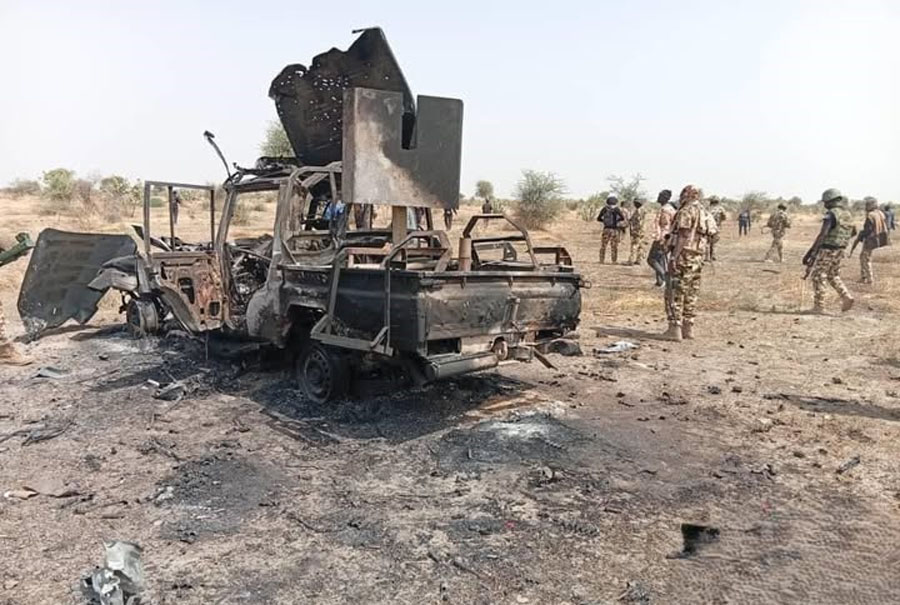
At least eight Nigerian soldiers have been killed after a military patrol vehicle struck a landmine along a highway in Borno State, north-east Nigeria.
The incident occurred on Saturday in Kinuba village, about 25 kilometres from Gamboru, near Nigeria’s border with Cameroon, according to defence sources cited by AFP.
The soldiers were reportedly travelling along the highway while inspecting members of an anti-insurgency militia involved in clearing thick vegetation beside the road when their vehicle ran over the explosive.
The blast killed all eight soldiers aboard the vehicle, while a militia member supervising the vegetation-clearing operation sustained shrapnel injuries.
READ ALSO:
- Kano: Soldiers Kill Two Kidnappers, Rescue Victim, Recover ₦10m
- Oyo Baby Trafficking Scandal: Mother, Doctor Arrested Over Alleged ₦2m Sale of Infant
- Nairobi Mother Says Husband Abandoned Her During Childbirth, Paid Dowry for Another Woman
A member of the militia, Ibrahim Liman, said the explosive had been planted on the dusty road and detonated remotely.
The attack was blamed on the Islamic State West Africa Province (ISWAP), an armed group that operates in the region and has repeatedly targeted security personnel and civilians.
The highway attack came amid renewed violence in Borno, where insurgents have continued to target military formations and patrols despite ongoing counter-insurgency operations.
The incident also occurred on the day the Chief of Army Staff, Lieutenant General Waidi Shaibu, visited Maiduguri, the state capital, following a separate attack on a military base that reportedly killed 15 soldiers and five members of the Civilian Joint Task Force.
ISWAP and its rival, Boko Haram, have increasingly used improvised explosive devices and landmines against military convoys and other road users in the North-East.
The latest incident underscores the continuing security risks along major highways in Borno, where thick vegetation can provide cover for insurgents to plant explosives and launch attacks on passing vehicles.
Borno Highway Blast: Soldiers Killed as Military Vehicle Hits Landmine
metro
Okonjo-Iweala: My Mother Was Kidnapped After I Uncovered $2.4bn Subsidy Fraud
Okonjo-Iweala: My Mother Was Kidnapped After I Uncovered $2.4bn Subsidy Fraud
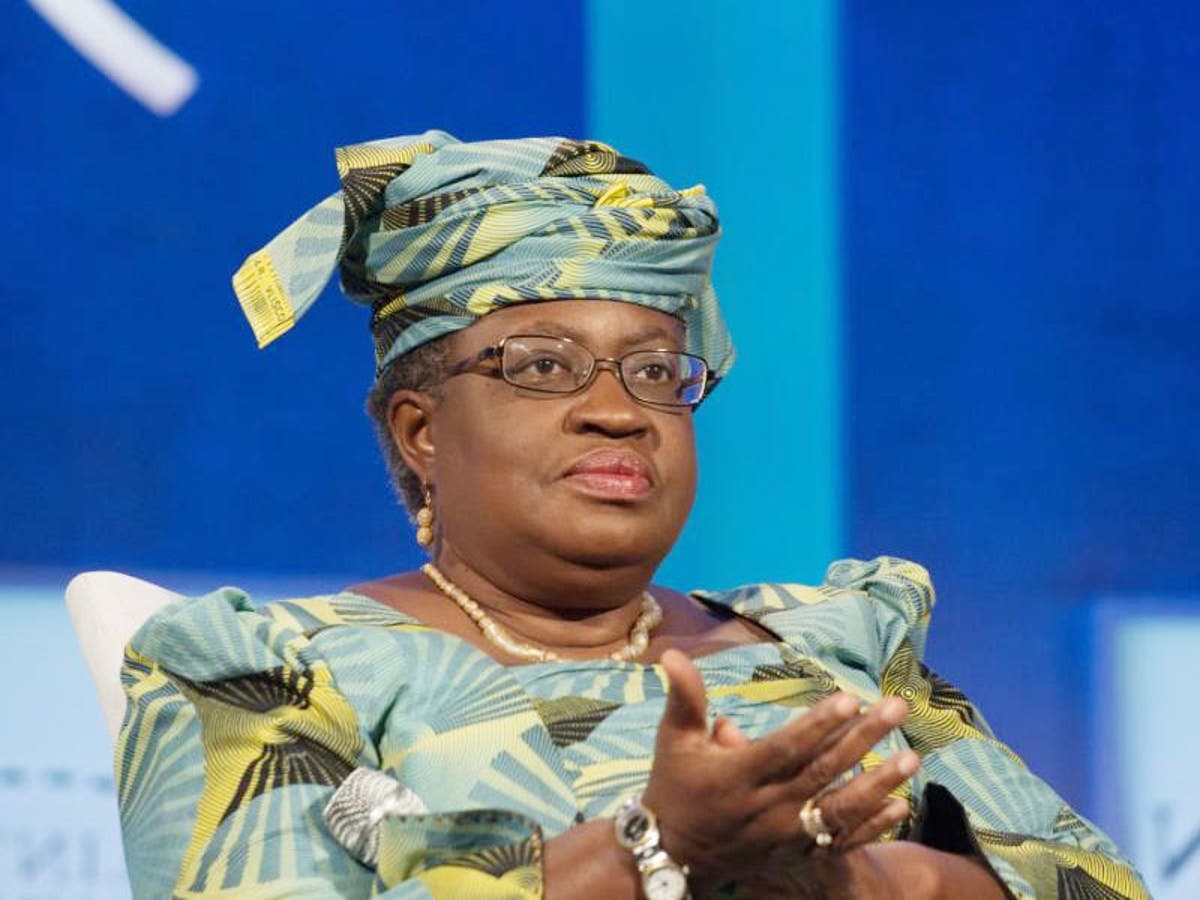
Ngozi Okonjo-Iweala, Director-General of the World Trade Organisation (WTO), has recounted how her efforts to expose an alleged $2.4 billion fuel subsidy fraud in Nigeria were followed by threats and the kidnapping of her mother in 2012.
Okonjo-Iweala, who was Nigeria’s finance minister under former President Goodluck Jonathan, said the kidnappers demanded that she resign from office and leave the country before her mother, Kamene Okonjo, would be released.
She said the abduction, which occurred in December 2012, subjected her family to five days of anguish and forced her to confront a painful choice between her public responsibilities and her mother’s safety.
According to her account, the crisis followed an investigation into suspicious claims submitted under Nigeria’s fuel subsidy programme. The investigation reportedly uncovered about $2.4 billion in fraudulent claims, prompting the government to withhold payments on the disputed transactions.
Okonjo-Iweala said she had raised concerns about the figures with the president and requested an audit of the accounts. After approval was granted, the review uncovered what she described as substantial fraud.
READ ALSO:
- Kano: Soldiers Kill Two Kidnappers, Rescue Victim, Recover ₦10m
- Oyo Baby Trafficking Scandal: Mother, Doctor Arrested Over Alleged ₦2m Sale of Infant
- Nairobi Mother Says Husband Abandoned Her During Childbirth, Paid Dowry for Another Woman
The former minister said the refusal to pay the disputed claims was followed by threats against her, before her mother was abducted from her home in Ogwashi-Uku, Delta State.
The kidnappers reportedly sought to pressure her into abandoning her position in government, making her resignation a condition for her mother’s release.
Okonjo-Iweala said the experience was devastating, admitting that she considered leaving office because her mother’s life was more important to her than her position.
She recalled that her father, the late Professor Chukwuka Okonjo, encouraged her not to surrender to blackmail and urged her to continue her work.
Her mother eventually escaped after spending five days in captivity, bringing the ordeal to an end.
The incident exposed the personal risks associated with efforts to investigate alleged financial abuses in Nigeria’s petroleum subsidy system, which had long been dogged by questions over payments to fuel importers and the verification of claims.
Okonjo-Iweala later became the first woman and first African to lead the WTO, taking office as Director-General in March 2021.
Okonjo-Iweala: My Mother Was Kidnapped After I Uncovered $2.4bn Subsidy Fraud
-

 metro3 days ago
₦130m Toyota Tundra Wrecked: Lagos Dealer Questions Police Over Suspect’s Release
-
 News3 days ago
₦200m Fake Alcohol Packaging Uncovered as NAFDAC Raids Aba Market
-

 metro2 days ago
Suspended Archbishop Ibezim Drags Anglican Primate to Court, Challenges Six-Month Leave
-

 Sports2 days ago
Real Madrid Demand Tebas’ Exit After Explosive Nazi Propaganda Row
-

 Entertainment2 days ago
ToluwaniSings’ Final Hours: Aide Reveals Desperate Search Across 8 Hospitals
-
 Education3 days ago
Nigerian Universities Producing Certificate Holders, Not Problem-Solvers, Says Ojuolape
-
 Politics2 days ago
2027: Kwankwaso Signals Fuel Subsidy Comeback as NDC Vows to Crash Petrol Prices
-

 metro2 days ago
Imodi-Ijebu Muslim Community Bets on 20 Chiefs to Drive Education, Economic Growth