

Health
CNN’s Christiane Amanpour diagnosed with ovarian cancer
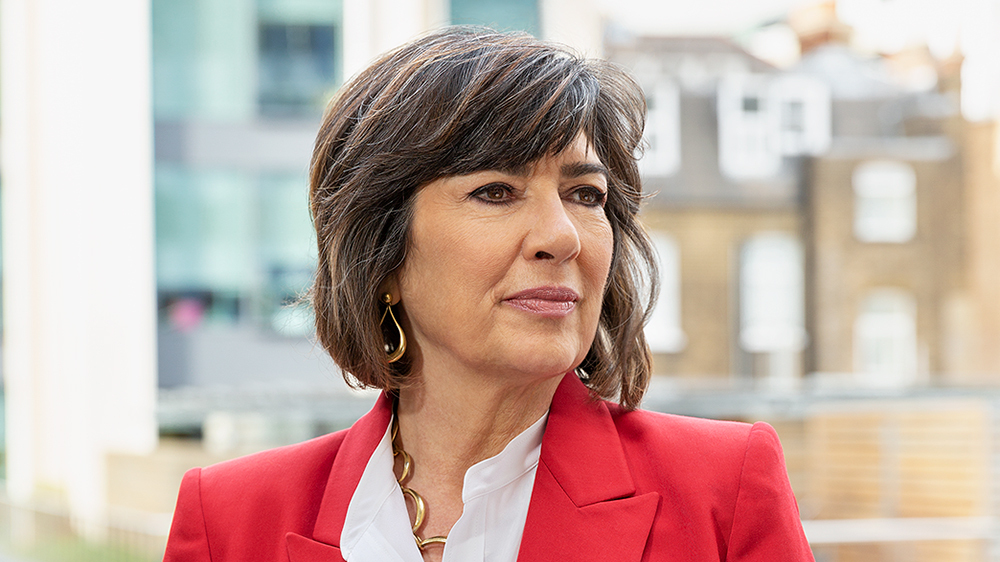
Veteran Cable News Network (CNN) reporter, Christiane Amanpour, is undergoing a round of chemotherapy after being diagnosed with ovarian cancer.
In a message to viewers, Amanpour said the past four weeks, during which she had not appeared on CNN’s international outlets, had been “a roller coaster” for her and announced her diagnosis.
“During that time, like millions of women around the world, I have been diagnosed with ovarian cancer,” she said, adding, “I’ve had successful major surgery to remove it and I’m now undergoing several months of chemotherapy for the very best possible long-term prognosis.”
Amanpour, who is based in London, said she was grateful to have health insurance through work and “incredible doctors in a country underpinned by of course the brilliant NHS.”
“I’m telling you this in the interest of transparency,” she said. “But in truth really mostly as a shout out to early diagnosis. To urge women to educate themselves on this disease to get all the regular screenings and scans that you can, to always listen to your body, and of course, to ensure your legitimate medical concerns are not dismissed or diminished.”
Amanpour hosts the network’s flagship international affairs programme. She has worked for the network since 1983.
Amanpour, 63, has been a longtime news figure at CNN, almost from its launch in the early 1980s.
She worked there from 1983 to 2010, then left for a brief stint at ABC News, where she anchored This Week.
She returned to CNN in 2012. Bianna Golodryga has filled in for Amanpour on her CNN International show as she went through surgery and treatments.












Health
FG strengthens emergency response, releases medical hotlines for Nigerians
FG strengthens emergency response, releases medical hotlines for Nigerians
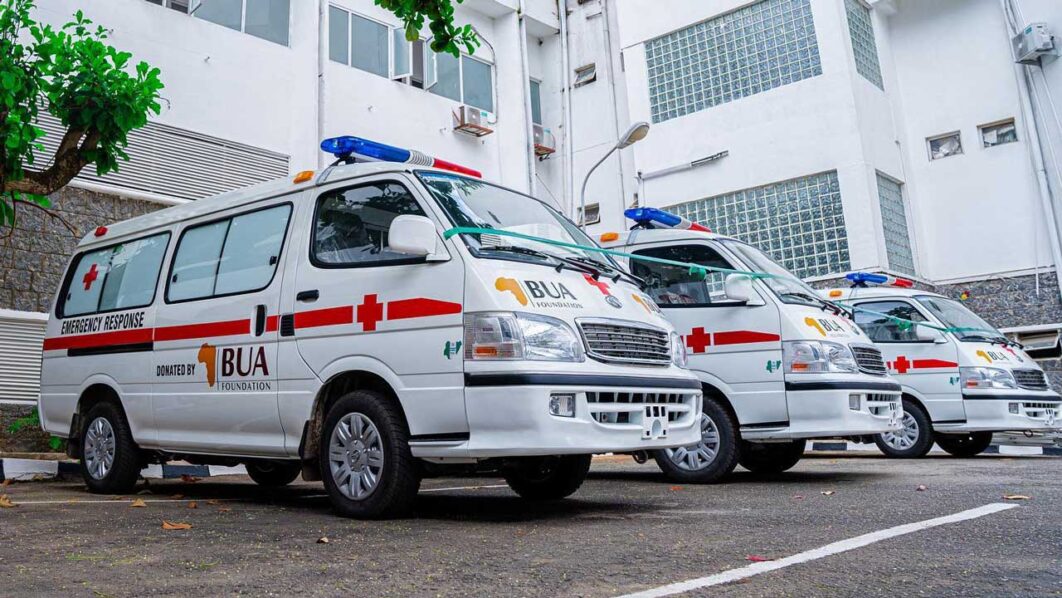
The Federal Government has urged Nigerians to dial 112 whenever they face a medical emergency requiring urgent attention, as it released a list of emergency medical call centre numbers covering states across the country and the Federal Capital Territory (FCT).
The National Emergency Medical Service and Ambulance System (NEMSAS) said the toll-free 112 emergency number serves as a central access point for emergency medical assistance, while several states have additional dedicated numbers to facilitate faster responses.
NEMSAS said its emergency response system is designed to provide rapid intervention, professional medical care and life-saving services, with emergency responders available around the clock.
The agency released emergency contact numbers covering 35 states and the FCT, although it listed the emergency call centres in Benue and Imo as not operational.
Under the emergency contact arrangements, residents of Abia can call 112 or 08000000800, while those in Adamawa can use 112, 1755 or 07011111443.
In Akwa Ibom, the listed numbers are 112, 08000022322 and 08000022422, while residents of Anambra can call 112, 5111 or 08002200008.
Residents of Bauchi can dial 112 or 07038636433, while Bayelsa residents can use 112 or 08002200223. NEMSAS listed Borno as 112 or 08000000033, while Cross River has 112 as its listed emergency number.
For Delta, the listed contacts are 112, 07041008130 and 07041008131, while residents of Ebonyi can call 112, 08086446891 or 08086445736.
READ ALSO:
- Atiku Vows to Restore Fuel Subsidy If Elected in 2027
- M23 Rebels Impose Ebola Movement Restrictions as DRC Conflict Complicates Outbreak Response
- ‘Show Me the Law’: Lawyer Questions FG’s Reluctance to Defend Kanu’s Conviction
In Edo, residents can use 112, 739 or 09037999871, while Ekiti lists 112, 08000606606, 0811111122, 0811111133, 0811111144 and 0811111155.
Residents of Enugu can call 112, 09074996090 or 07066466429, while Gombe lists 112 or 07033825646. Jigawa has 112 as its listed emergency number, while Kaduna residents can call 112 or 08064111599.
For Kano, the listed emergency contacts are 112, 09019999920 and 09049999914. Katsina and Kebbi each have 112 listed as their emergency number.
Residents of Kogi can dial 112, while Kwara residents can call 112, 09062010001 or 09062010002.
In Lagos, the listed emergency numbers are 112 and 767, while Nasarawa residents can use 112 or 08144911269.
Residents of Niger State can call 112, 08022422953 or 08155577513, while those in Osun can use 112, 08111110532 or 08111110561.
For Ogun, the listed numbers are 112 and 08112000033, while Ondo residents can call 112 or 08055300300.
Residents of Oyo can dial 112 or 615, while Plateau lists 112 or 09136982496.
In Rivers, residents can call 112, 09040222281, 09040222283 or 09040222285, while Sokoto residents can use 112, 07045963318 or 07071765080.
For Taraba, the listed emergency contacts are 112, 07041122777 and 07041100777, while Yobe residents can call 112, 09169981792 or 08000090009.
Zamfara has 112 as its listed emergency number, while residents of the FCT can call 112, 09157892931 or 09157892932.
The release is part of ongoing efforts by the Federal Government to strengthen emergency medical services in Nigeria, improve ambulance response and reduce delays in transporting patients to appropriate healthcare facilities.
NEMSAS has previously disclosed that emergency medical service structures have been established across the 36 states and the FCT, although the level of operational readiness differs from one state to another.
The agency has also identified challenges affecting the nationwide use of 112, including connectivity problems and inadequate public awareness. It has called for stronger collaboration with telecommunications providers to improve access to the emergency line.
To complement the national number, NEMSAS has therefore encouraged states to maintain dedicated emergency call centres and provide alternative contacts for residents.
The Federal Government is also pursuing a digital emergency dispatch platform designed to connect emergency callers, ambulance operators and healthcare facilities. The system is expected to support faster dispatch, patient tracking, referrals and coordination between emergency responders and treatment centres.
NEMSAS has expanded the deployment of emergency response assets, including ambulances and other vehicles designed to reach communities that may be difficult to access with conventional emergency vehicles.
The agency’s Rural Emergency Service and Maternal Transport (RESMAT) programme is also aimed at improving access to emergency transportation for pregnant women, newborns and other residents in underserved communities.
NEMSAS has called for greater public awareness of emergency services and urged Nigerians not to delay seeking help when confronted with life-threatening situations.
The agency advised residents to save 112 and their relevant state emergency numbers on their mobile phones so they can quickly request assistance when needed.
NEMSAS stressed that its emergency medical response service operates 24 hours a day, seven days a week, and that prompt access to professional emergency care can be critical in saving lives.
FG strengthens emergency response, releases medical hotlines for Nigerians
Health
Stage 4 Cancer: Understanding Ogogo’s Diagnosis and Treatment Options
Health
Tinubu approves 25 new cancer treatment machines, FG begins wider cancer-care expansion

Tinubu approves 25 new cancer treatment machines, FG begins wider cancer-care expansion
President Bola Ahmed Tinubu has approved the procurement of 25 additional linear accelerators between 2027 and 2029 as part of the Federal Government’s efforts to expand cancer treatment capacity and strengthen cancer control in Nigeria.
The Minister of State for Health and Social Welfare, Dr Iziaq Salako, disclosed this on Tuesday in Abuja during a meeting of the National Cancer Control Plan (NCCP) Technical Working Group and Global Advisory Council.
Salako said the approval was part of a three-year plan to increase access to radiotherapy and other specialised cancer services across the country.
“Recently, President Bola Tinubu approved that between 2027 and 2029, the country should procure an additional 25 linear accelerators. We are executing a three-year plan to achieve this,” the minister said.
Linear accelerators, commonly known as LINACs, are machines used in radiotherapy to deliver high-energy radiation to cancer cells while limiting damage to surrounding healthy tissue. Their availability is critical to the treatment of many cancer patients requiring radiation therapy.
The planned procurement comes under the Federal Government’s National Cancer Control Plan 2026–2030, which seeks to reduce cancer incidence, illness and deaths while improving access to prevention, early detection, diagnosis, treatment and supportive care.
Salako said Nigeria continued to face a significant cancer burden, with many patients presenting at health facilities when their diseases had already reached advanced stages.
He identified inadequate infrastructure, shortages of skilled healthcare workers and limited funding among the challenges affecting cancer treatment and care in the country.
READ ALSO:
- Soso Soberekon Offers Peter Okoye N500m to Fight Twin Brother Paul in Boxing Match
- University Student Stabbed to Death Over Alleged £3,000 Debt, Fake Rolex
- ‘Don’t Let My Sick Daughter Die in Nigeria’ — Nigerian US Army Woman Begs Trump
The minister said the government was therefore pursuing a comprehensive cancer-control strategy that places equal emphasis on prevention, early detection, treatment, research, workforce development and partnerships.
Prevention, he said, remains a major priority of the administration.
Salako noted that President Tinubu had approved the inclusion of Human Papillomavirus (HPV) vaccination in Nigeria’s routine immunisation programme.
“The President particularly continues to emphasise prioritising prevention. That is why one of the very first things he did was to approve that routinely, HPV vaccination should be part of our immunisation schedule,” he said.
HPV vaccination is an important public-health intervention because persistent infection with certain HPV types can cause cervical cancer and other cancers.
Salako added that the Federal Government was also working to strengthen hepatitis vaccination, expand cervical cancer screening and integrate screening services into primary healthcare facilities across the country.
“Prevention is better and cheaper than cure,” he said.
Beyond prevention, the government is also expanding specialised treatment infrastructure.
Salako disclosed that construction of six Cancer Centres of Excellence had commenced, with three already completed and work progressing on the remaining centres.
The centres are expected to improve access to specialised oncology services across Nigeria’s six geopolitical zones and reduce the pressure on existing cancer-treatment facilities.
The minister also inaugurated the Blood Cancer Consortium following the donation of equipment and other resources aimed at strengthening pathology laboratories and improving the diagnosis and management of blood cancers.
The President of the Nigerian Cancer Society, Prof. Abidemi Omonisi, commended the Federal Government for adopting a more coordinated approach to tackling cancer.
READ ALSO:
- Death Toll Rises to 132 as 7.4-Magnitude Earthquake Devastates Western Colombia
- How Enugu Abduction Led to Recovery of 4 AK-47 Rifles, 133 Ammunition – Army
- ‘I Acted Out of Patriotism’ — Army Colonel Ma’aji Breaks Silence, Explains Why He Plotted Coup Against Tinubu
Omonisi identified fragmented interventions among government agencies, development partners, researchers and other stakeholders as one of the challenges that had affected previous cancer-control efforts.
He said the NCCP Technical Working Group was helping to address the problem by bringing together government institutions, researchers, clinicians, development partners, cancer organisations, patients and other stakeholders under a common national framework.
According to him, stronger international partnerships and greater engagement with Nigerians in the diaspora could improve cancer research, technology transfer, workforce development and access to advanced cancer-care services.
Earlier, the Chair of the NCCP Technical Working Group, Prof. Folakemi Odedina, said the group had moved from planning to implementation.
She said the initiative had united government institutions, academics, patients, advocates, survivors, industry players and international partners around a common national cancer-control agenda.
Odedina said work was progressing across several areas, including cancer prevention, early detection, treatment, survivorship, palliative care, research, clinical trials, workforce development and digital health.
She added that the Global Advisory Council was providing expertise in cancer prevention and treatment, genomics, implementation science, workforce development, data management and artificial intelligence.
Odedina said efforts were also underway to strengthen Nigeria’s oncology clinical trials ecosystem and improve patients’ access to innovative treatment options.
“We intend to produce trained people, stronger institutions in Nigeria, better research, expanded clinical trials, improved technologies, greater access to care, and ultimately better outcomes for Nigerian cancer patients,” she said.
She, however, stressed that expanding medical treatment alone would not guarantee better outcomes if patients could not afford other costs associated with cancer care.
According to her, patients may also require support for transportation, nutrition and accommodation during treatment, particularly when specialised services are unavailable close to their communities.
Also speaking, Prof. Taofeek Owonikoko, Global Advisory Council Director at the University of Maryland Greenebaum Cancer Centre, said the partnership would strengthen coordination between Nigerian institutions and international cancer organisations.
He said the framework would help ensure that international interventions were aligned with Nigeria’s national priorities rather than operating independently.
Owonikoko described the ambition of achieving a cancer-free Nigeria by 2030 as a long-term goal that would require sustained investment in healthcare systems, research, infrastructure and treatment strategies.
“I’m very convinced that the 2030 cancer-free Nigeria is not going to be a slogan.
“While we may not make Nigeria cancer-free in 2030, I think we would have created the tools, the platform and the strategies that will ensure that we eventually become cancer-free,” he said.
Dr Lewis Roberts of Mayo Clinic Comprehensive Cancer Centre called for increased attention to liver, pancreatic and biliary tract cancers across Africa.
“Liver cancer is one of the major causes of cancer deaths in Africa. Across the continent, it’s the number three cause of death from cancer,” Roberts said.
He advocated stronger screening programmes, improved identification and treatment of viral hepatitis cases and wider vaccination coverage to reduce the incidence of liver cancer.
The Federal Government’s broader cancer strategy also places emphasis on research, cancer surveillance, data collection, digital health and the development of a specialised workforce capable of providing modern oncology services.
The NCCP 2026–2030 is designed to bring together federal and state governments, healthcare professionals, researchers, patients, survivors, civil society organisations, development partners and international institutions in a coordinated national response to cancer.
The government’s planned procurement of 25 additional linear accelerators, construction of six Cancer Centres of Excellence, expansion of screening programmes and strengthening of pathology and research facilities are therefore part of a wider attempt to improve Nigeria’s cancer-care system.
However, stakeholders say sustained funding, reliable infrastructure, adequate staffing and affordable access to treatment will remain essential if the new investments are to translate into better outcomes for people living with cancer.
The meeting reviewed progress under the National Cancer Control Plan and examined further strategies for strengthening coordinated action on cancer prevention, early detection, diagnosis, treatment, research and survivorship care across Nigeria.
Tinubu approves 25 new cancer treatment machines, FG begins wider cancer-care expansion
-

 metro3 days ago
History in Makkah: Nigerian Teen Wins Prestigious Qur’anic Contest, Breaks 46-Year Gender Barrier
-

 News3 days ago
Delta Governor Reveals ₦503,000 Monthly Salary, Says Permanent Secretaries Earn ₦900,000
-
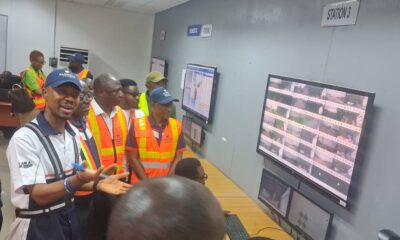
 Auto3 days ago
Dangote deploys technology to curb truck crashes, improve road safety
-
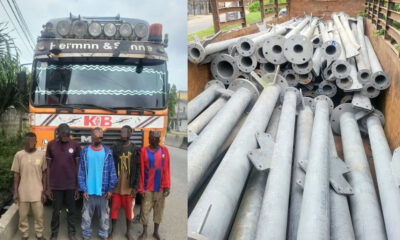
 metro19 hours ago
Lagos Police arrest five suspected telecom vandals, recover truckload of iron rods
-
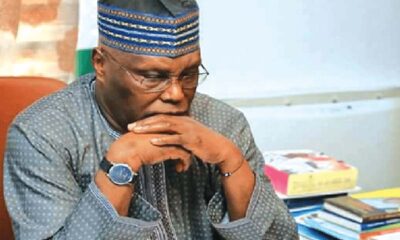
 News3 days ago
Atiku’s Fuel Subsidy Plan Unrealistic, Destructive, Says Presidency
-

 Sports3 days ago
Okocha Ignites Fresh GOAT Debate: Nigerian Legend Says Messi Is ‘Art,’ Ronaldo Is ‘Goalscorer Like Haaland’
-
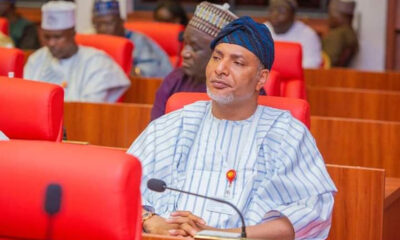
 Politics3 days ago
2027: Senator Saliu Mustapha quits APC after losing Kwara governorship ticket
-
 Politics3 days ago
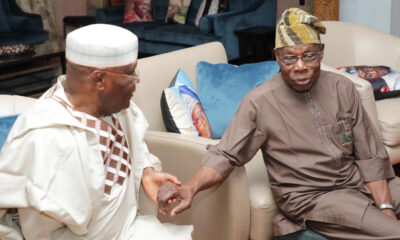
Donald Duke Recounts How IBB Warned Obasanjo About Atiku: ‘This One Cannot Rule Nigeria’