
Politics
Court dismisses LP suit, declares only INEC can determine mode of transmitting election results
A Federal High Court in Abuja has ruled that it is only the Independent National Electoral Commission (INEC) that is empowered by law to determine the mode of collating and transmitting election results.
Justice Emeka Nwite, in a judgment, also held that it is only INEC that has the prerogative to direct how Polling Unit Presiding Officer should transfer election results, including the total number of accredited voters and results of the ballot.
Before dismissing the suit, Justice Nwite held that the collating and transferring election results manually in the 2023 general elections is in line with the relevant provisions of the Electoral Act, 2022.
The judgment was on a suit marked: FHC/ABJ/CS/1454/2022 filed by the Labour Party (LP), with INEC as the only defendant.
LP had prayed the court to declare that INEC has no power to choose manual method other than the electronic method provided for by the relevant provisions the Electoral Act, 2022.
The Labour Party urged the court to issue an order directing INEC to comply with the Electoral Act, 2022 on electronic transmission of result in the forthcoming general election.
READ ALSO:
- Six drug traffickers jailed 156 years in Lagos, Ogun
- Grandmother sets son, wife, two grandchildren ablaze in Ondo
- It’s easier to design hypercar than small car – VW boss
The judge said: “From the argument of the learned plaintiff’s counsel, I am of the humble opinion that the bone of contention or the sections that seeks for interpretation are actually sections 50(2) 60(5) and 62(2) of the Electoral Act, 2922.
“Section 47(2) as cited by the learned counsel to the plaintiff only deals with accreditation of voters using a Smart Card Reader, but not collation or transmission of result as postulated by the learned counsel,” the judge held.
Justice Nwite said that Section 60(5) of the Electoral Act, 2022 provides for the transfer of election result, including the total number of the accredited voters from the polling unit.
He noted that Section 62(2) of the same Act provides for compilation, maintenance and continuous update of the register of election result as distinct database for all polling units’ results as collated in all elections conducted by the commission.
“The said Section 62(2) has mandated that such register of election results shall be kept in an electronic format by the commission at its national headquarters.
“Now a close reading of Section 50(2) of the Act has provided for voting and and transmission of result to be done in accordance wit the procedure to be determined by the commission.
“This is to say that the commission is at liberty to prescribe or choose the manner in which election results shall be transmitted.
“In same ambit, Section 60(5) empowered the Polling Unit Presiding Officer to transfer the election results, including the total number of accredited voters and results of the ballot in a manner to be prescribed by the commission.
READ ALSO:
- Okocha praises Osimhen, advises him to play for Premier League
- CBN jacks up interest rate to 18 per cent
- Alleged Boko Haram negotiator Mamu arraigned, sent to DSS custody
“This is also to say the commission is again at liberty to prescribe to the Polling Units’ Presiding Officer the manner in which to collate and transfer the election results as well as the accredited number of voters in an election under the Act.”
“In view of the foregoing, can the act of the defendant (INEC) in collating and transferring election results manually in the forthcoming 2023 general elections be said to be contrary to the relevant provisions of the Electoral Act, 2022?
“The answer can only be in the negative as there is no where in the above cited sections where the commission or any of its Agents is mandated to only use an electronic means in collating or transferring of election result.
“If any, the commission is only mandated to collate and transfer election results and number of accredited voters in a way or manner deemed fit by it.
“In view of the above, I am finding that, by the provisions of Sections 50(2) and 60(5) of the Electoral Act, 2022 the correct interpretation of the said statutes is that the defendant (INEC) is at liberty to prescribe the manner in which election results could be transmitted and I so hold.
“Consequently this matter is hereby dismissed,” Justice Nwite said.
INEC declared Bola Ahmed Tinubu as the winner of the February 25 presidential election, after he defeated Atiku Abubakar of the PDP and Peter Obi of the Labour Party.











Politics
ADC, Three Political Parties Face Deregistration as Abuja Court Adjourns Case

ADC, Three Political Parties Face Deregistration as Abuja Court Adjourns Case
The Federal High Court Abuja has adjourned ruling in a high-stakes suit seeking the deregistration of political parties including the African Democratic Congress (ADC), Accord Party, Zenith Labour Party (ZLP) and Action Alliance (AA) over alleged non-compliance with constitutional provisions.
Justice Peter Lifu fixed March 24, 2026, to rule on a pending joinder application and other motions in the suit marked FHC/ABJ/CS/2637/25.
The case was instituted by the Incorporated Trustees of the National Forum of Former Legislators against the Independent National Electoral Commission (INEC), the Attorney-General of the Federation (AGF), and the affected political parties.
The plaintiffs are asking the court to interpret provisions of Section 225(a) of the 1999 Constitution (as amended) and Section 75(4) of the Electoral Act 2022, arguing that INEC is constitutionally obligated to deregister parties that fail to meet minimum electoral performance thresholds.
According to court documents, a political party risks deregistration if it fails to secure at least 25% of votes in one state in a presidential election or win at least one elective seat at any level of government. The plaintiffs contend that the continued recognition of the affected parties allegedly breaches constitutional requirements and could undermine electoral integrity, particularly ahead of the 2027 general elections. They are therefore seeking declaratory orders compelling the enforcement of INEC deregistration powers, as well as mandatory and perpetual injunctions restraining INEC from recognising the parties pending compliance.
READ ALSO:
- Israeli Settlers Torch, Deface West Bank Mosque During Ramadan
- Iranian Army Helicopter Crashes Into Market, Four Killed
- Mother of Three Dies by Suicide After Fiance’s Family Rejects Marriage in Ijebu-Ode
Originally, the suit targeted only the African Democratic Congress (ADC). However, it was later amended to include the Accord Party, Zenith Labour Party, and Action Alliance, prompting the need for a joinder application currently before the court.
At Tuesday’s proceedings, a representation dispute emerged within Action Alliance, as two separate lawyers — Ibrahim Yakubu and Bello Lukman — claimed valid letters of instruction to represent the party. Justice Lifu directed both counsel to reconcile their positions, warning that the court would “do the needful” if the issue remained unresolved.
Counsel to the Accord Party, Musibau Adetunbi (SAN), also applied for leave to file a further counter-affidavit, arguing that critical facts were omitted in earlier filings and needed to be addressed in response to the amended originating summons. However, counsel to the plaintiff, Yakubu Abdullahi Ruba (SAN), opposed the move, describing the application as incompetent and unnecessary since no new facts were introduced.
Other defence lawyers, including S.E. Aruwa (SAN), sought an extension of time to regularise their court processes and filed motions challenging the court’s jurisdiction to entertain the suit. After hearing arguments, Justice Lifu granted the applications for extension of time and deemed the plaintiff’s reply on points of law as properly filed.
The upcoming ruling is expected to significantly shape Nigeria’s political landscape. If the court compels INEC to enforce deregistration, it may reduce the number of parties eligible to contest in 2027. Legal observers say the decision could clarify the scope of constitutional provisions on political party registration, the extent of INEC’s enforcement powers, and the judiciary’s role in electoral oversight under the Electoral Act 2022.
ADC, Three Political Parties Face Deregistration as Abuja Court Adjourns Case
Politics
ADC Leadership Clash: Oyegun Bars Owie from Caucus Meeting in Edo

ADC Leadership Clash: Oyegun Bars Owie from Caucus Meeting in Edo
A power struggle has erupted within the African Democratic Congress (ADC) as two top leaders – John Odigie Oyegun and Roland Owie – clashed over who holds the legitimate authority to convene a party caucus meeting in Edo State.
The confrontation occurred on Monday at Oyegun’s Government Reserved Area (GRA) residence, where he barred Owie and his supporters from attending the meeting. Eyewitnesses reported that suspected thugs blocked Owie’s camp at the gate, preventing entry and escalating tensions.
In response to the standoff, police officers were deployed to maintain order and prevent violence, though efforts to obtain official comments from either faction were unsuccessful as of press time.
READ ALSO:
- U.S. Court Orders ICE to Release Nigerian Detained Since 2012
- Anambra Govt Shuts NASPA Market Over Sit‑At‑Home Defiance
- 2027: Bashir Ahmad Rules Out Kwankwaso as Peter Obi’s Running Mate
Political analysts say the incident underscores internal friction within the ADC, which is seeking to consolidate power ahead of the 2027 general elections. The caucus meeting was intended to discuss strategic plans and organisational matters for the party’s Edo State chapter, but the leadership dispute threatened to disrupt proceedings.
Observers warn that factionalism and leadership tussles could undermine the party’s unity and strategy as it positions itself as a strong opposition force following the defection of several high-profile politicians, including supporters of Peter Obi, into the ADC last year.
The clash highlights the challenges faced by emerging opposition parties in managing internal governance, authority disputes, and cohesion, particularly as Nigeria prepares for the next round of elections.
ADC Leadership Clash: Oyegun Bars Owie from Caucus Meeting in Edo
Politics
2027: Bashir Ahmad Rules Out Kwankwaso as Peter Obi’s Running Mate
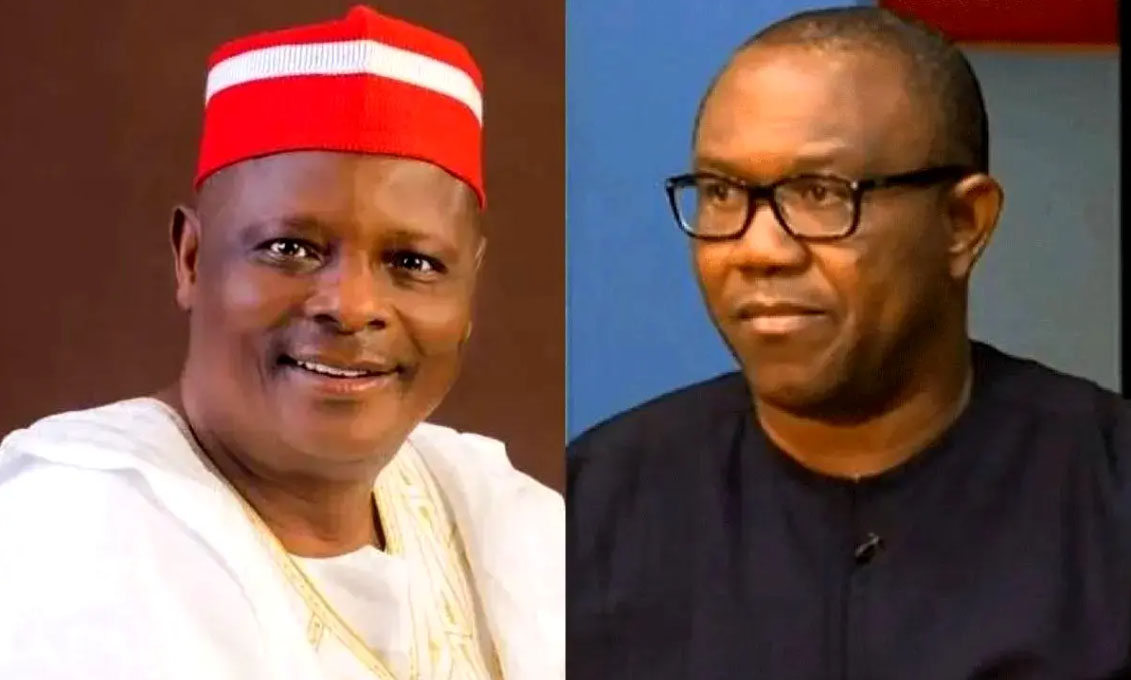
2027: Bashir Ahmad Rules Out Kwankwaso as Peter Obi’s Running Mate
Former aide to ex-President Muhammadu Buhari, Bashir Ahmad, has dismissed speculation that ex-Kano Governor Rabiu Kwankwaso could serve as vice presidential candidate to ex-Anambra Governor Peter Obi in the 2027 presidential election.
Ahmad made the remark in a post on X on Monday, emphasizing that expectations of a Kwankwaso-Obi joint ticket are politically unrealistic.
Some supporters of the 2023 presidential candidates have been advocating for a joint ticket in 2027, claiming it could present a strong opposition alliance. In February, pro-Kwankwaso groups led by Abba Sadauki Gwale argued that a collaboration between Obi and Kwankwaso could be a “chance to rescue the nation from its current challenges.”
Earlier, on February 12, Dr. Alex Chukwuemeka Obiechina, a former governorship candidate in Enugu State, said that a Kwankwaso-Obi alliance would pose a significant threat to the ruling All Progressives Congress (APC) in 2027.
READ ALSO:
- EFCC Nabs 20, Seizes ₦17m Over Vote Buying in FCT Elections
- El-Rufai Sues ICPC for ₦1bn Over Alleged Illegal Raid on Abuja Residence
- Relief for Dispatch Riders as FCTA Suspends Permit Levy Enforcement
Reacting to these calls, Ahmad stressed that Kwankwaso is unlikely to accept a deputy role, noting that the senator:
- Commands a long-standing political structure
- Possesses a well-defined political base
- Leads a consistent and active political movement
He added that if such a partnership were ever to occur, the only politically viable arrangement would be for Obi to serve as deputy to Kwankwaso, not the other way around.
Ahmad’s statement underscores the complex dynamics of coalition-building in Nigerian politics, where party structures, regional influence, and historical political networks play decisive roles in determining electoral alliances. Analysts note that the discussion reflects early positioning and strategic calculations ahead of the 2027 elections, as parties and politicians seek broad national appeal while balancing zoning and regional considerations.
2027: Bashir Ahmad Rules Out Kwankwaso as Peter Obi’s Running Mate

-

 Business2 days ago
Dangote Opens Refinery Investment to Nigerians With Public Share Sale Plans
-

 Education3 days ago
UTME: JAMB Clarifies Position on Hijab During Biometric Capture
-

 News3 hours ago
BREAKING: IGP Kayode Egbetokun Steps Down as Tinubu Names Tunji Disu as New Police Chief
-
 Politics2 days ago
Tinubu Hails Wike as APC Dominates 2026 FCT Area Council Elections
-

 Entertainment2 days ago
Regina Daniels Takes Delivery of ₦150m 2026 GAC Trumpchi M8 SUV
-

 Politics2 days ago
FCT Council polls: APC Wins Four Chairmanship Seats as PDP Takes Gwagwalada
-
 News2 days ago
Yoruba Muslim Group Dismisses Viral Ramadan Date Claim, Reaffirms Sultan of Sokoto’s Authority
-

 Politics2 days ago
Opposition Weakens as Another Governor Eyes APC Move