

News
FULL SPEECH: Buhari addresses world leaders at UN general assembly

President Muhammadu Buhari on Wednesday delivered a speech at United Nations General Assembly (UNGA77).
He spoke on climate change, the Russia-Ukraine war and the need for credible elections, calling on world leaders to remain committed towards ensuring sustainable development.
Below is the full speech.
Mr. President,
Heads of State and Government,
Mr. Secretary-General,
Distinguished delegates,
Ladies and gentlemen,
Mr. President,
On behalf of the Government and people of Nigeria, I congratulate you on your well-deserved election as President of the 77th Session of this August Assembly. I assure you of the full support and cooperation of the Nigerian delegation during your tenure.
I commend your predecessor, H.E. Abdullah Shahid, for the many remarkable achievements of the General Assembly under his leadership during these challenging times.
May I also congratulate the Secretary-General, Mr. Antonio Guterres on his ceaseless and untiring efforts to promote peace, security and development, very much in line with his exalted role.
Mr. President, the first time I could have addressed this August Assembly was in 1984, when I was the Military Head of State of the Federal Republic of Nigeria. Thirty-one years later, I had the great privilege to personally address the Assembly in 2015, as the democratically elected President of my country. As I approach the end of my second and final four-year term, I am reminded of how much has changed in Nigeria, in Africa, and in the world, and yet, how some challenges remain.
We are now more severely tested by these enduring and new global challenges, paramount among which are conflicts increasingly being driven by non-state actors, proliferation of small arms and light weapons, terrorism, violent extremism, malignant use of technology, climate change, irregular migration, and disparities in opportunities for improved standards of living.
Despite the challenging international environment, the United Nations has proved that it can be strong when the will of its members is harnessed for positive collective action. The guiding principles of this extraordinary institution is the promotion of peace and security, development and human rights. Latest in a chain of events challenging these principles is the Ukraine conflict which has already created strains that are perhaps unprecedented for a generation.
Such a conflict will have adverse consequences for us all, hindering our capacity to work together to resolve conflicts elsewhere, especially in Africa, the Middle-East and Asia. Indeed, the ongoing war in Ukraine is making it more difficult to tackle the perennial issues that feature each year in the deliberations of this Assembly, such as nuclear disarmament, the right of the Rohingya refugees to return to their homes in Myanmar, and the Palestinians’ legitimate aspirations for statehood and reduction of inequalities within and amongst nations.
The danger of escalation of the war in Ukraine further justifies Nigeria’s resolute calls for a nuclear-free world and a universal Arms Trade Treaty, which are also necessary measures to prevent global human disasters. In this regards we must find quick means to reach consensus on the Nuclear Non-proliferation Treaty with related commitments by nuclear weapon states.
I remain firmly convinced that the challenges that have come so sharply into focus in recent years and months emphasise the call by Nigeria and many other Member-States for the reform of the Security Council and other UN Agencies. We need more effective and representative structures to meet today’s demands that have since outgrown a system designed for the very different world that prevailed at its foundation in 1945. Change is long overdue.
Mr. President, this is the first meeting we are having here in New York without the restrictions that characterised the last three years. The COVID-19 pandemic ripped across national borders like a toxic whirlwind, leaving in its wake a legacy of pain and loss.
Happily, we also witnessed an incredible level of innovation and creativity from those who devised treatments and vaccines. These laudable achievements were underpinned by partnerships and international cooperation. We have also seen the bravery, care, and endurance of health professionals at every corner of the globe.
I am happy to note that in Nigeria, our healthcare agencies were able to form effective local management and engaged international partnerships with multinational initiatives like COVAX and private groups like the Bill and Melinda Gates Foundation. These efforts helped mitigate the impact of the pandemic and we were mercifully spared the images of overwhelmed hospitals, overworked healthcare personnel and high mortality which sadly we saw elsewhere.
With COVID-19, we saw very clearly how states tried to meet the challenge of a threat that could not be contained within national borders. The results were mixed; but at its best, cooperation among stakeholders was outstanding. It facilitated solutions that saved countless lives and eased the huge burden of human suffering.
That same theme of unilateralism and the promotion of national interest competing with the common cause in the face of an existential threat has been our recurring experience in recent times. In every address I have delivered to this august Assembly, I have dwelt on the issue of climate change, especially as it fuels conflicts and complicates food security.
Climate change reduces opportunity and prosperity which, in Africa, Latin America and some parts of Asia also contribute to transnational organised crimes.
As part of Nigeria’s efforts at achieving our Global Net-zero aspiration, the current Administration last year adopted a National Climate Change Strategy that aims to deliver climate change mitigation in a sustainable manner.
The measures we took at the national level also require climate justice. Africa and other developing nations produce only a small proportion of greenhouse gas emissions, compared to industrial economies. Yet, we are the hardest hit by the consequences of climate change as we see in the sustained droughts in Somalia and floods of unprecedented severity in Pakistan.
These and other climate-related occurrences are now sadly becoming widely commonplace in the developing world. We are, in effect, literally paying the price for policies that others pursue. This needs to change.
At the COP26 in Glasgow last year, I did say that Nigeria was not asking for permission to make the same mistakes that others have made in creating the climate emergency.
Fortunately, we now know what we can do to mitigate the effects of the climate crisis and the related energy challenge. As a first step, we must all commit to releasing the financing and the technology to create a stable and affordable framework for energy transition.
Development Financial Institutions must prioritise de-risking energy projects to improve access of renewable projects to credit facilities. There should be no countries “left behind” in this equation.
Rocketing energy costs worldwide are, in part, the product of conflict and supply disruptions to Europe and the Americas. Yet, we are all paying the price. It is, therefore, our expectation that this UNGA 77 and the upcoming COP27 will help galvanise the political will required to drive action towards the fulfilment of the various existing climate change initiatives.
Another feature of the last decade has been the growing partnership between states and the increasingly influential non-state actors. There was a time when the most important event at this Assembly was the speech by the world’s most powerful leaders. Now a Tweet or Instagram post by an influencer on social or environmental issues may have greater impact.
Technology offers us nearly limitless opportunities and sometimes runs ahead of the imagination of regulators and legislators. At its best, social media helps strengthen the foundations of our society and our common values. At its worst, it is a corrosive digital version of the mob, bristling with intolerance and division.
When I began my tenure as President in 2015, distinctions were drawn between the experience of poorer countries and those apparently better able to manage the avalanche of unfiltered information. Nigeria has had many unsavoury experiences with hate speech and divisive disinformation. Increasingly, we also see that many countries face the same challenge. Clearly, data also know no borders.
In confronting these challenges, we must also come together to defend freedom of speech, while upholding other values that we cherish. We must continue to work for a common standard that balances rights with responsibilities to keep the most vulnerable from harm and help strengthen and enrich communities.
Efforts to protect communities from the scourge of disinformation and misinformation must also be matched with efforts to reduce inequalities and restore hope to our poorer and most vulnerable of our communities as a means to stem the many socio-economic conflict drivers with which we are faced.
In spite of our efforts, humanitarian crises will continue to ravage some of our communities. Nigeria, therefore, implores our global partners to do more to complement our endeavours.
Indeed, the multifaceted challenges facing most developing countries have placed a debilitating chokehold on their fiscal space. This equally calls for the need to address the burden of unsustainable external debt by a global commitment to the expansion and extension of the Debt Service Suspension Initiative to countries facing fiscal and liquidity challenges as well as outright cancellation for countries facing the most severe challenges.
Mr. President, Your Excellencies, Distinguished Delegates,
Democracy is an idea that crosses time and borders. Certainly, democracy does have its limitations. The wheels of democracy turn slowly. It can demand compromises that dilute decisions. Sometimes, it bends too much to special interests that exercise influence, not always for the general good, in a manner disproportionate to their numbers. But it has been my experience that a democratic culture provides a Government with the legitimacy it needs to deliver positive change.
In Nigeria, not only have we worked to strengthen our democracy, but we have supported it and promoted the Rule of Law in our sub-region. In The Gambia, we helped guarantee the first democratic transition since independence. In Guinea-Bissau we stood by the democratically elected Government when it faced mutiny. And in the Republic of Chad, following the tragic death of its President, the late Idris Deby Itno in the battle field, we joined forces with its other neighbours and international partners to stabilise the country and encourage the peaceful transition to democracy, a process which is ongoing.
We believe in the sanctity of constitutional term limits and we have steadfastly adhered to it in Nigeria. We have seen the corrosive impact on values when leaders elsewhere seek to change the rules to stay on in power. Indeed, we now are preparing for general elections in Nigeria next February. At the 78th UNGA, there will be a new face at this podium speaking for Nigeria.
Ours is a vast country strengthened by its diversity and its common values of hard work, enduring faith and a sense of community. We have invested heavily to strengthen our framework for free and fair elections. I thank our partners for all the support that they have provided our election institutions.
As President, I have set the goal that one of the enduring legacies I would like to leave is to entrench a process of free, fair and transparent and credible elections through which Nigerians elect leaders of their choice.
Mr. President,
The multiple challenges that face us are truly interconnected and urgent, and your choice of this Session’s theme, “A watershed moment: Transformative solutions to interlocking challenges”, is apt. In keeping with our obligations as Member States of this noble Organisation, we all must do our utmost to work with you toward resolving them. In this regard, I reiterate my Delegation’s full and resolute cooperation.
Let me convey my final reflection from this famous podium. We live in extraordinary times with interdependent challenges but enormous opportunities. The pace of change can seem bewildering, with sometimes a palpable and unsettling sense of uncertainty about our future. But if my years in public service have taught me anything, it is that we must keep faith with those values that endure. These include, but are not limited to such values as justice, honour, integrity, ceaseless endeavour, and partnership within and between nations.
Our strongest moments have always been when we remain true to the basic principles of tolerance, community, and abiding commitment to peace and goodwill towards all.
I thank you all.







News
Oyinlola Denies Adeleke’s Car Gift Claim: “Osun Govt Gave Me the Car, Not You”
Oyinlola Denies Adeleke’s Car Gift Claim: “Osun Govt Gave Me the Car, Not You”
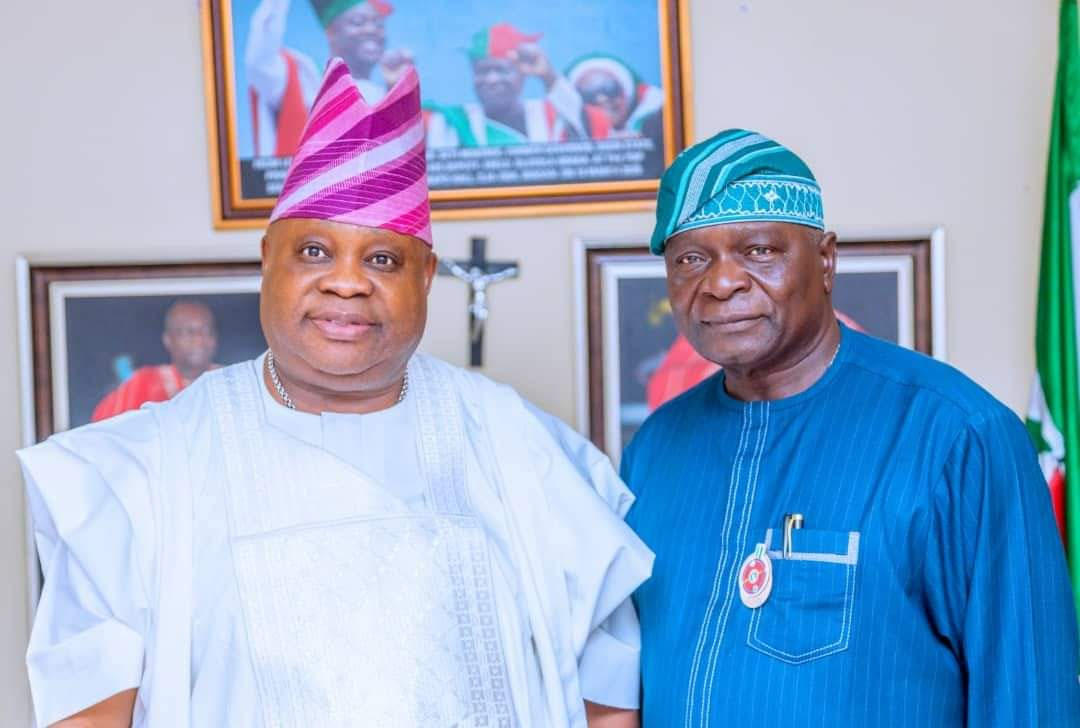
Former Osun State Governor Olagunsoye Oyinlola has dismissed Governor Ademola Adeleke’s claim that he received a vehicle from him before endorsing the All Progressives Congress (APC) governorship candidate, Bola Oyebamiji, ahead of the August 15 election. Oyinlola said the claim was false, maintaining that the vehicle was provided by the Osun State Government as part of benefits legally approved for former governors. The former governor made the clarification during an interview on Channels Television’s Politics Today while reacting to Adeleke’s assertion that he gave him a car, describing the governor’s claim as untrue and expressing disappointment at what he called a misrepresentation of facts. “That is far from the truth and it is a bad development that a governor will continue to tell lies,” Oyinlola said, emphasizing that the vehicle was not a personal gift but a statutory entitlement.
Explaining his position, Oyinlola said a law enacted by the Osun State House of Assembly provides certain entitlements for former governors, including the replacement of official vehicles every four years. He maintained that the vehicle in question was issued under that legal provision and should not be regarded as a personal gift from the governor. “It wasn’t Ademola that gave me vehicle. It was the Osun State Government; it is a law of the state enacted by the House of Assembly,” he said, clarifying that the vehicle was provided through the state’s official channels and not through the governor’s personal resources. This explanation underscores the former governor’s insistence that Adeleke’s claim misrepresents the nature of the transaction and the legal framework governing benefits for former governors in Osun State.
READ ALSO:
- Tinubu Rejects Blame Game, Vows to Revive Refineries with Profitability Focus
- Scores of Terrorists Killed, 60 Arrested in Nationwide Military Operations
- Navy Rescues 22 Sea Robbery Victims, Recovers Hijacked Boat in Akwa Ibom
Oyinlola further noted that having left office 16 years ago, he remained entitled to several vehicle replacements that accrued during that period. He explained that the law provides for the replacement of official vehicles allocated to former governors every four years, and having been out of office for 16 years, he argued that he was still entitled to three more vehicles under the provision. “I’ve been out of Osun State government since the last 16 years. If you aggregate it, it means the state is still having to give up three vehicles,” he stated, suggesting that the vehicle he received was just one of several to which he is legally entitled. The former governor also said the legislation covers other benefits available to former occupants of the office, including security arrangements and support staff, such as police personnel, cooks, and drivers, all of which are part of the statutory benefits package for former governors under the law.
The former governor rejected Adeleke’s suggestion that he had approached him because he could not afford or did not own a vehicle. “By the grace of God, I had started buying cars since I was 21. When I was going to the Government House, I went with my entire convoy. So, how will he paint it as if I went to beg? It is a very sad development. He should say it the way it is, and that it is a law, it is my entitlement and he still owes me three more vehicles,” he said, challenging the governor to present the facts accurately rather than misrepresenting the situation. Oyinlola’s response reflects his frustration with what he perceives as an attempt to diminish his standing by suggesting he was dependent on the governor’s goodwill for a vehicle.
The vehicle controversy has emerged amid a broader political disagreement between the two figures ahead of Saturday’s governorship election, in which Adeleke is seeking re-election. Oyinlola, a chieftain of the Peoples Democratic Party (PDP), recently endorsed the APC governorship candidate, Bola Oyebamiji, a decision that has further strained his relationship with Adeleke. Explaining his decision, Oyinlola cited Adeleke’s decision to defect from the PDP to Accord without consultation and what he described as the concentration of major government projects in Adeleke’s hometown of Ede, among other concerns. He revealed that he had held discussions with Adeleke and his brother on four alternative political platforms amid the crisis within the PDP, with Oyinlola advocating for Accord. However, he said he was surprised to learn through social media that Adeleke had resigned from the PDP and joined Accord without further consultation, a move that Oyinlola described as dismissive and disrespectful. These political tensions have now spilled over into public view, with the vehicle claim becoming a point of contention between the two political figures.
Oyinlola Denies Adeleke’s Car Gift Claim: “Osun Govt Gave Me the Car, Not You”
News
Tinubu Rejects Blame Game, Vows to Revive Refineries with Profitability Focus
Tinubu Rejects Blame Game, Vows to Revive Refineries with Profitability Focus
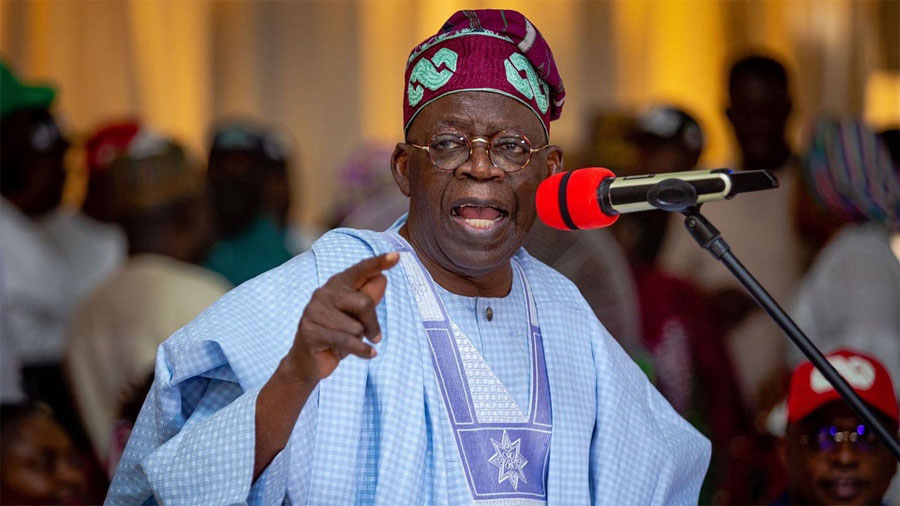
President Bola Ahmed Tinubu has firmly rejected engaging in a blame game over Nigeria’s long-moribund state-owned refineries, instead vowing to take full responsibility for reviving them and ensuring they operate profitably rather than merely producing smoke and flames without economic value. The President gave this assurance on Thursday, August 13, 2026, while receiving the leadership of the Nigeria Union of Petroleum and Natural Gas Workers (NUPENG), led by its National President, Mr. Sulaimon Oladiti, at the Presidential Villa in Abuja. The meeting, which was also attended by the Minister of Information and National Orientation, Mohammed Idris, provided a platform for the union to express its concerns about the state of the nation’s refineries and other pressing issues affecting the petroleum sector.
President Tinubu acknowledged the union’s concerns about the prolonged delays in reviving the refineries and declared that the Port Harcourt, Warri, and Kaduna refineries would indeed return to operation. He cautioned that mere visible activity would not be considered success, stating emphatically that “the refineries that you mentioned are going to come back to work. We’re just building a very firm reset and structural reworking of the economics of it. Ordinary flame and smoke of a refinery doesn’t mean it’s working, until it’s profitable and yields the value for which it is built.” This statement underscores the President’s determination to move beyond the symbolic restarting of the refineries to ensuring their long-term commercial viability and contribution to the national economy.
READ ALSO:
- Scores of Terrorists Killed, 60 Arrested in Nationwide Military Operations
- Navy Rescues 22 Sea Robbery Victims, Recovers Hijacked Boat in Akwa Ibom
- Keyamo Issues One-Week Ultimatum to Airlines Over Debt Repayment Plans
The President’s stance reflects a significant shift from merely attempting to restart the facilities to ensuring their long-term commercial viability. This comes after years of government spending on rehabilitation projects that failed to deliver sustained production. Under the previous administration, about $2.9 billion was approved for the rehabilitation of the refineries, yet the facilities barely produced refined products before being shut down again. The Nigerian National Petroleum Company Limited (NNPC) has since signed a Memorandum of Understanding with Chinese companies for a potential Technical Equity Partnership to support the completion and operation of the Port Harcourt and Warri refineries, signaling a new approach to addressing the challenges facing these critical national assets.
Acknowledging the history of failed interventions, Tinubu said his administration has accepted the assets and liabilities inherited from previous governments and would not waste time looking backward. He declared, “I’m not a man who will look back and blame everyone, because I’ve accepted the assets and liabilities of my predecessors. No matter what happened in the past years, it’s my responsibility now as President to fix it and make it work for the greatest common good of our population. I take responsibility for that, and I’m going to do it.” This statement reflects the President’s commitment to taking ownership of the challenges facing the nation’s refineries and his determination to find lasting solutions that will benefit all Nigerians.
The meeting also addressed other important issues affecting the petroleum sector and the broader economy. Tinubu urged truck owners who have converted their vehicles to Compressed Natural Gas (CNG) to pass on the cost savings to commuters rather than pocketing the full benefit themselves. He expressed concern that “whatever benefit that is coming from CNG is going into the pocket of truck owners, it’s not spreading as fast as I would like it, but it should spread.” The President also linked the government’s ability to fund major infrastructure projects to the economic reforms his administration has pursued since 2023, citing the Lagos-Ibadan, Abuja-Kaduna, Abuja-Kano, and Sokoto-Badagry road corridors among investments aimed at stimulating economic activities and improving public safety. Tinubu also promised to review constitutional issues surrounding the implementation of local government autonomy and appealed to stakeholders for understanding.
Earlier in the meeting, the NUPENG President, Salimon Oladiti, commended Tinubu’s decision to remove the fuel subsidy as courageous, saying it had freed resources for infrastructure development and other critical sectors. He also urged the President to sustain efforts to revive the country’s refineries, noting that functional facilities would strengthen Nigeria’s energy security, reduce dependence on imported petroleum products, and create more opportunities for Nigerian workers. Oladiti appealed for the rehabilitation of the Nigerian Pipelines and Storage Company (NPSC) depots, recommending they be handed over to private investors to manage under an equity arrangement. He also raised concerns about the casualisation of workers in the upstream sector, describing it as an “unhealthy trend” that NUPENG and its sister union, PENGASSAN, had been trying to correct with little success, and urged the President to use his good offices to stop the practice.
The NUPENG leadership later decorated President Tinubu as the Grand Patron of the union, a symbolic gesture of their confidence in his leadership and commitment to the welfare of petroleum workers. The Minister of Information and National Orientation, Mohammed Idris, said NUPENG‘s recognition of the administration’s efforts had helped reduce friction between organised labour and the government, describing it as uncommon for a major labour union to publicly acknowledge government reforms. Tinubu also pledged greater involvement of NUPENG in implementing the Presidential Initiative on CNG, ensuring that the union plays a key role in the transition to cleaner energy sources.
Tinubu Rejects Blame Game, Vows to Revive Refineries with Profitability Focus
News
State police bill: Gbajabiamila-led panel extends deadline for public input
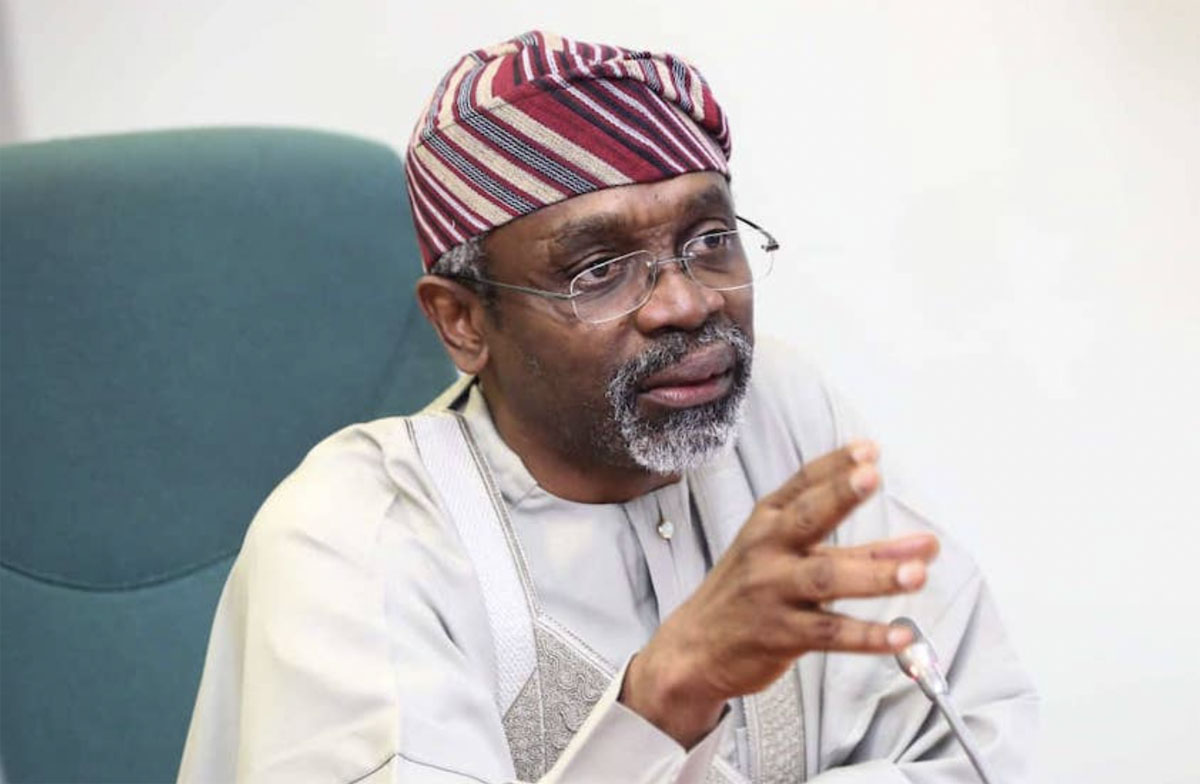
State police bill: Gbajabiamila-led panel extends deadline for public input
ABUJA — The Presidential Working Group on the National Policing Bill has extended the deadline for the submission of memoranda and position papers on the proposed legislation to Friday, August 21, 2026.
The submissions must be made by 5 p.m. West Africa Time (WAT) through the official National Policing Bill portal.
The extension was announced on Thursday in a statement issued by the Chief of Staff to President Bola Tinubu and Chairman of the Presidential Working Group, Rt. Hon. Femi Gbajabiamila.
Gbajabiamila said the additional time would enable stakeholders to prepare more detailed submissions and allow interested individuals, institutions and organisations to make well-considered contributions to the proposed legislation.
He said the Working Group remained committed to broad consultation and would consider informed contributions from Nigerians and relevant stakeholders as it develops the National Policing Bill.
The proposed legislation is expected to establish the operational, administrative, institutional and funding framework for an effective policing system capable of responding to Nigeria’s changing security needs.
It is also expected to provide safeguards for police accountability, professionalism and the protection of citizens’ rights.
“Given the significance of the proposed reform to the future of policing and internal security in Nigeria, the Working Group considers it important that stakeholders are afforded more opportunity to make substantive and technically sound contributions to the process,” the statement said.
READ ALSO:
- Davido Halts London Concert, Threatens to Walk Off Stage Over Fan’s Disrespect to Staff
- 29-Year Kwankwaso Ally Who Swore on Qur’an Defects to APC
- ICPC Uncovers Official Who Enrolled 14 Family Members on Govt Payroll, Another Collected 13 Salaries
The panel specifically encouraged legal practitioners, civil society organisations, security-sector professionals, state governments, professional bodies, academics, experts and other interested members of the public to use the extended period to submit their views.
“All submissions must be made on or before 5:00 p.m. WAT on Friday, August 21, 2026, exclusively through the official National Policing Bill portal, nationalpolicingbill.com,” the statement added.
The extension comes as the Federal Government advances plans for a new national policing framework, including the proposed establishment of state police.
The reform has gained renewed attention amid persistent security challenges across Nigeria, including kidnapping, banditry, terrorism, communal violence and other forms of criminality.
Supporters of state police argue that a more decentralised policing structure could strengthen community intelligence, improve response times and enable security agencies to better understand local security threats.
However, concerns have also been raised over the possibility of political interference and abuse of state-controlled police structures. These concerns have made accountability, oversight and safeguards against political interference important elements of the proposed reform.
The Working Group said its assignment would require careful consideration of several issues, including sustainable funding, command and control structures, recruitment and training standards, operational jurisdiction, inter-agency coordination and accountability mechanisms.
The group will also consider safeguards against political interference and abuse to ensure that the proposed policing framework protects citizens while allowing security agencies to operate effectively.
The development of the National Policing Bill is linked to the ongoing constitutional process for the establishment of state police in Nigeria. The proposed reform seeks to create a legal framework that would allow policing responsibilities to be more effectively shared between federal and state authorities.
President Bola Tinubu had earlier inaugurated the Presidential Working Group to develop an implementation-ready draft of the bill for onward legislative consideration.
The Working Group brings together representatives from the Federal Government, state governments, the security sector and the legal profession, reflecting the broad institutional implications of the proposed state police system.
The Presidency has said the proposed framework is expected to address issues such as minimum policing standards, state readiness, federal-state coordination, accountability, human rights protection and sustainable financing.
These issues are considered critical to ensuring that a decentralised policing system does not create significant disparities in policing standards or weaken national security coordination.
The Working Group said the issues under consideration underscore the need for extensive stakeholder engagement to develop a policing framework that is effective, accountable, sustainable and responsive to the security needs of communities across Nigeria.
“At the conclusion of its assignment, the Presidential Working Group will present a final, implementation-ready draft of the National Policing Bill for onward legislative processing,” the statement said.
The panel thanked stakeholders who had already submitted memoranda and encouraged others intending to participate in the process to take advantage of the extended deadline.
With the new timeline, all memoranda and position papers must be submitted by 5 p.m. on Friday, August 21, 2026.
The submissions are expected to help shape the final draft of the legislation before it proceeds to the next stage of the legislative process.
State police bill: Gbajabiamila-led panel extends deadline for public input
-
 Education3 days ago
Nigerian Young Academy, LASU to Host 16th International Conference on Convergent Research
-
 News3 days ago
Trump smuggled out of Turkey in catering truck over Iran threat
-
 News2 days ago
Tinubu Vows to Secure Nigeria, Declares Unity Non-Negotiable Amid Worsening Insecurity
-
 News23 hours ago
FG to Attach 300 NYSC Corps Members to CNG Workshops for Skills Training
-
 International23 hours ago
Iran Had Detailed Intel on Trump’s Location Before Secret Turkey Escape
-

 metro2 days ago
Nigeria Needs Competent, Ethical Young Leaders, Says HAVEK Leadership Academy
-

 Auto3 days ago
Omoda, Jaecoo Shake Global Auto Market, Hit One Million Sales in Three Years
-
 metro19 hours ago
Seven Miners Killed in Plateau Mining Pit Collapse, Renewing Urgent Calls for Safety Reform