
News
How Kwara can tackle insecurity, by AbdulRazaq
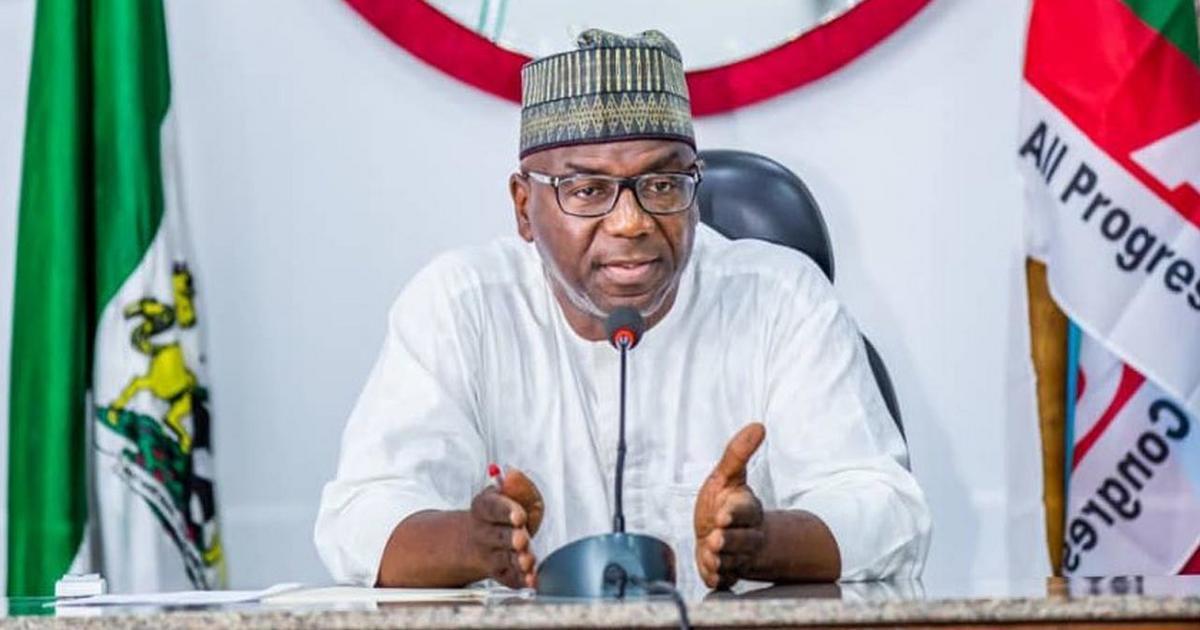
Kwara State Governor AbdulRahman AbdulRazaq has called for increased presence of policemen and other security officials in the state to fortify the state and enhance its socio-economic development.
“Our challenges are enormous. Being a relatively safe state, security agencies tend to be comfortable with Kwara and that explains why they often take out forces from Kwara to bolster security elsewhere. For example, the Army has taken out most of their men to Northeast and we are making efforts to get them back. For the police, our need requirement is about 8,000-10,000 men but we have only about 3,000 now. Many officers of the two mobile squadrons here have been moved out. I am saying this because we definitely need more men on ground here,” AbdulRazaq said when he received the Inspector General of Police Usman Alkali Baba at the presidential lodge in Ilorin.
“The recent ban on grazing by Southern Governors and some security issues in our neighbouring states have resulted in influx of internally displaced persons to Kwara. In many parts of some of our villages, the communities are outnumbered by those that are coming in. This is a state of harmony and people are welcome but this (influx) is clearly overstretching the manpower of the Nigeria Police which is the primary agency for internal security. From Kwara North to Kwara South, it is an enormous task for them, so we definitely need and seek more hands.”
AbdulRazaq also called for improved collaboration among security agencies to sustain relative peace in the state, with the traditional rulers equally playing vital roles in strengthening security architecture.
“There is no chance for criminalities in the state because of the nature of security architecture in the state. We also involve and encourage our traditional rulers to work with the security agencies by providing actionable intelligence for use,” he said.
“We thank the Police authorities for the Police School in Ballah and the Intelligence School in Share. In fact, we had to put a transformer there few months ago to make sure we get the place working. But we are saddened by the relocation of Police Public Relations School that was here in Ilorin before. We hope you will look into that again and return it.”
AbdulRazaq praised the police and other security agencies for making the state relatively safe for economic activities.
“We appreciate your efforts for keeping this state safe. Now we have peace and people are coming to live in Kwara State. Now we have four airlines coming to the state and the economy of the state is booming, hotels are often filled and rent (in houses) are going up,” the Governor said.
“This points to better security, and I commend the security agencies for what they do to keep us safe. Now, people see Kwara as a safe haven and they are coming here to settle. The security issue is kept to the barest minimum by the police and other security agencies.”
Inspector General of Police Usman Alkali Baba, for his part, said he was in Kwara to meet with officers and men of the Nigeria Police in Kwara command and inspect the Nigeria Police Intelligence School which is under construction in Share, Ifelodun local government area.
“I am here on a one-day visit to appreciate and give words of encouragement to our officers and men in Kwara, as well as tell them what my administration has come to do,” he said.
“The government of President Muhammadu Buhari is doing its best efforts to meet our needs. The police reform is also being pursued. Our pension, which is one of the bane of retired police officers, is also being looked at. We have one of our most important institutions in Kwara which is our intelligence school which ought to have taken up since in Share (Ifelodun local government). My mission is to get it take off immediately.”
Alkali said his administration is adopting intelligence gathering and ICT to check crimes and criminalities in the country.
“I have a mission and vision of policing through intelligence and proactive means of policing. Policing is key, ICT is key and training is key. With the three, you can sit down and police the whole state,” he said.
“It is our intention to do manpower development in the art of intelligence gathering so that we will be able to police the country not manually but through e-policing. We can do a lot with proactive policing instead of being reactive. We are asking for more support from your administration to ensure that the school take off.
“We are ready and willing under this administration to make the condition of service more conducive for our officers and men to better serve the people.
The IGP was accompanied on the visit by AIG Zone 8, Ede Ayuba;
AIG Intelligence Abu Sanni; Kwara CP Tuesday Assayomo; and Force Public Relations Officer Frank Mba.


News
U.S. Court Orders ICE to Release Nigerian Detained Since 2012

U.S. Court Orders ICE to Release Nigerian Detained Since 2012
A U.S. District Court in Minnesota has ordered U.S. Immigration and Customs Enforcement (ICE) to release Michael Opeoluwa Egbele, a Nigerian national who entered the United States illegally in 2003 and had been held under immigration detention since his arrest in 2012. The court ruled that his detention was unlawful due to prolonged enforcement delays and lack of proper legal notice.
Senior U.S. District Judge John M. Gerrard delivered the ruling on February 18, 2026, giving ICE until February 20 to free Egbele and file a status report confirming his release. The judge highlighted that ICE had no legal grounds to hold him, noting the unique circumstances of his long-standing supervision arrangement.
Egbele’s legal troubles began in 2012 after his arrest on a drug-related offence, which triggered deportation proceedings. At the time, he applied for asylum and requested that his removal be withheld, but his claim was denied, and he was issued a final deportation order in July 2012. However, ICE did not enforce the removal, and Egbele did not appeal.
Instead, he was released on supervision in December 2012, under which he was required to report regularly to ICE. This arrangement continued for more than a decade until January 2026, when ICE detained him during a routine check-in.
READ ALSO:
- Anambra Govt Shuts NASPA Market Over Sit‑At‑Home Defiance
- 2027: Bashir Ahmad Rules Out Kwankwaso as Peter Obi’s Running Mate
- EFCC Nabs 20, Seizes ₦17m Over Vote Buying in FCT Elections
Egbele argued in court that he was never notified of any revocation of his pre-existing order of supervision and was not given a legal explanation for his detention. ICE claimed the supervision was revoked partly because Egbele failed to obtain a travel document to Nigeria, as required under his supervision.
Following his arrest, Egbele was unable to contact his wife, a U.S. citizen, or his lawyer for several days. He was initially held at an ICE facility in Montana and later transferred to a detention center in New Mexico, with his location undisclosed for days.
The federal government argued that the Minnesota court lacked jurisdiction because Egbele was held outside the state, but the judge rejected this, stating that ICE could not unilaterally terminate a decades-long supervisory arrangement without due process. The court emphasized that Egbele’s right to proper notice and legal protections had been violated.
Judge Gerrard ordered that Egbele be released immediately under the conditions of his original supervision and directed ICE to file a compliance report by February 20, 2026.
Legal experts say the ruling highlights broader concerns about long-term immigration detention, due process rights, and the enforcement of removal orders in the U.S., particularly when individuals have established long-term ties or arrangements with immigration authorities.
U.S. Court Orders ICE to Release Nigerian Detained Since 2012
News
Nigeria Wins $6.2 Million Arbitration Against UK Tech Firm

Nigeria Wins $6.2 Million Arbitration Against UK Tech Firm
Nigeria has scored a landmark legal victory, securing $6.2 million in an international arbitration against UK-based technology firm European Dynamics UK Ltd over a disputed national electronic government procurement (e-GP) contract. The ruling reinforces Nigeria’s commitment to performance-based government contracts and protecting public resources.
The arbitration decision, delivered on February 3, 2026, by sole arbitrator Funmi Roberts at the International Centre for Arbitration and Mediation, dismissed all claims by the UK contractor. The award is final and not subject to appeal, according to the Attorney-General of the Federation, Lateef Fagbemi, SAN.
The dispute originated from a Bureau of Public Procurement (BPP) contract to design, develop, and implement a national e-procurement platform, supported by the World Bank to enhance transparency and efficiency in federal procurement.
READ ALSO:
- US Adds 19 More Nigerians to ‘Worst of the Worst’ Deportation List
- Gunmen Storm Gbugbu in Kwara, Residents Flee as Panic Spreads
- FG to Launch Monthly Revenue Transparency Dashboards to Improve Fiscal Accountability
European Dynamics had claimed over $6.2 million, including:
- $2.4 million for alleged milestone completions
- $3 million in general damages
- $800,000 in settlement costs
However, the tribunal ruled the claims lacked merit, citing deficiencies during User Acceptance Testing (UAT) such as functional gaps and performance errors, which the contractor was required to fix at no additional cost.
The BPP insisted payments must be strictly tied to verified deliverables, rejecting earlier efforts at an out-of-court settlement. The tribunal upheld this stance, emphasizing that software development and customization contracts are performance-based and must meet technical and statutory standards before payments are made.
Nigeria’s legal team, led by Johnson & Wilner LLP with Basil Udotai heading the arbitration, achieved what the BPP Director-General, Adebowale Adedokun, described as a historic victory. European Dynamics had previously won arbitration cases in other African countries but lost against Nigeria, signaling a shift in how government procurement disputes are handled.
Attorney-General Fagbemi stated that this ruling sends a clear message that Nigeria will no longer be taken for granted, demonstrating strengthened legal and technical capacity in managing complex international contracts. Experts suggest the outcome will influence future e-procurement reforms to ensure compliance, accountability, and efficient management of public contracts.
Nigeria Wins $6.2 Million Arbitration Against UK Tech Firm
News
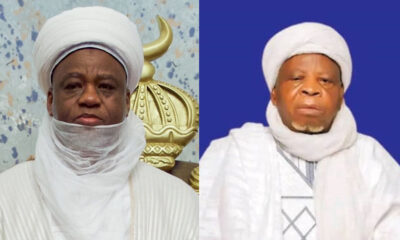
Yoruba Muslim Group Dismisses Viral Ramadan Date Claim, Reaffirms Sultan of Sokoto’s Authority
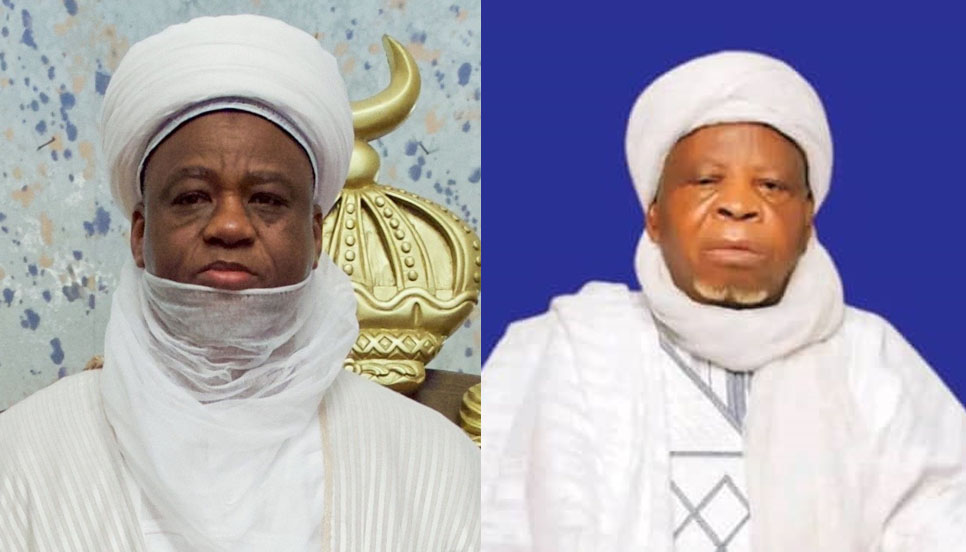
Yoruba Muslim Group Dismisses Viral Ramadan Date Claim, Reaffirms Sultan of Sokoto’s Authority
A Yoruba Muslim group, Concerned Indigenous Yoruba Muslims, has dismissed as false, misleading, and divisive a viral social media report alleging that the Chief Imam of Ibadanland and the League of Imams in Yorubaland rejected the authority of the Sultan of Sokoto in determining the commencement of Ramadan in South-West Nigeria.
The report, which circulated online ahead of Ramadan 1447AH, claimed that Yoruba Muslim leaders had resolved to disengage from the Sultan’s traditional role of announcing moon sighting for the fasting period and instead align with indigenous religious structures. The group, however, said the claim was entirely fabricated and designed to sow discord within the Muslim community.
In a statement issued on Saturday, February 21, 2026 — the fourth day of Ramadan, and signed by public affairs analyst Nasrudeen Abbas, the group said the comments attributed to the Chief Imam of Ibadan, reportedly over 90 years old, could not have emanated from him. It described the publication as a calculated attempt to create unnecessary religious tension and misrepresent the position of Yoruba Muslims.
The group reaffirmed that Islamic affairs in Nigeria operate under established leadership structures, particularly the Nigerian Supreme Council for Islamic Affairs (NSCIA), which is headed by the Sultan of Sokoto, Muhammad Sa’ad Abubakar, as President-General. It explained that the NSCIA structure includes the President of the Muslim Ummah of South West Nigeria (MUSWEN) as Deputy President-General (South), the Shehu of Borno as Deputy President-General (North), alongside other national officers.
READ ALSO:
- FCT Council polls: APC Wins Four Chairmanship Seats as PDP Takes Gwagwalada
- Dangote Opens Refinery Investment to Nigerians With Public Share Sale Plans
- SERAP Urges Tinubu to Repeal ‘Unlawful’ Mass Surveillance Regulations
According to the group, any attempt to distance Yoruba Muslims from this nationally recognised structure threatens the unity of the Muslim Ummah in Nigeria and contradicts Islamic principles that emphasise cohesion, collective leadership, and obedience to constituted authority.
The group also faulted claims that the Sultan’s position is merely a traditional title limited to Sokoto State. It stressed that the Sultan’s authority in Islamic matters is rooted in scholarship and the historical caliphate system, noting that emirs in Northern Nigeria often combine traditional authority with religious leadership. As an example, it cited Muhammadu Sanusi II, who regularly delivers Friday sermons and performs Islamic rites.
It further explained that in Yorubaland, traditional rulers generally do not head religious affairs, except in rare cases. The group referenced the late Awujale of Ijebu Land, who once served as President-General of the Ogun State Muslim Council, stressing that such roles remain exceptions rather than the norm.
The statement also recalled the position of the late Kazeem Yayi Akorede, former President-General of the League of Imams and Alfas in the South West. According to the group, Sheikh Akorede initially questioned the Sultan’s leadership role but later accepted it after clarifications that the position was based on Islamic scholarship and caliphate leadership, not mere traditional kingship. It added that until his death, he consistently aligned with the Sultan’s announcements on the commencement and termination of Ramadan.
Describing the viral publication as unethical, the group criticised claims that Yoruba Muslims are not religiously bound to the Sultan’s authority and that religious leadership should go beyond duties such as moon sighting announcements. It alleged that such narratives were politically motivated and aimed at advancing a separatist agenda under the guise of religious autonomy.
The group warned that politicising religious matters could undermine religious harmony and national unity, urging those behind the report to desist from actions capable of creating discord among Muslims across the country. It concluded by stressing that the unity of the Muslim Ummah in Nigeria remains paramount and must not be compromised by what it described as sectarian or politically engineered narratives.
Yoruba Muslim Group Dismisses Viral Ramadan Date Claim, Reaffirms Sultan of Sokoto’s Authority

-

 Business2 days ago
Dangote Opens Refinery Investment to Nigerians With Public Share Sale Plans
-

 Education2 days ago
UTME: JAMB Clarifies Position on Hijab During Biometric Capture
-
 Politics1 day ago
Tinubu Hails Wike as APC Dominates 2026 FCT Area Council Elections
-

 Entertainment1 day ago
Regina Daniels Takes Delivery of ₦150m 2026 GAC Trumpchi M8 SUV
-
 Politics2 days ago
ADC Defeats APC to Win First Polling Unit in FCT Area Council Election
-

 Politics1 day ago
FCT Council polls: APC Wins Four Chairmanship Seats as PDP Takes Gwagwalada
-

 Politics2 days ago
Opposition Weakens as Another Governor Eyes APC Move
-
 News1 day ago
Yoruba Muslim Group Dismisses Viral Ramadan Date Claim, Reaffirms Sultan of Sokoto’s Authority