
Auto
Kia shines at Lagos Auto Fair with trending K5, Sorento

Kia’s new and trending models, K5 and Sorento, are some of the brand’s vehicles that have lit up the 15th edition of the Lagos Motor Fair currently holding at the Federal Palace Hotel, Victoria Island.
Kia Nigeria says its presence at the fair has revealed the wealth of research and development that has gone into the brand’s products, which aims to attract a trendsetting audience.
It says this is shown in the display of the brand’s alluring models including the Kia K5 and Kia Sorento, allowing visitors to interact, engage and immerse themselves in the Kia’s latest innovative technologies and top-of-the-segment vehicles.
A statement by the auto firm says Kia Nigeria debuted its made-in-Nigeria all-new 2021 Kia Sorento at the fair.
Also at the fair is Kia’s global best-selling sedan, K5, which combines a striking new design with a driver-focused interior, cutting-edge technologies, and all-new powertrain options – illustrating the premium qualities that the Kia brand now offers Nigerian customers.
“The all-new K5 is the ideal model for the exuberant, tech-savvy individuals, as it can help achieve a lifestyle cantered around personal freedom and mobility, says Marketing Manager of Kia Nigeria, Olawale Jimoh.
He adds, “The all-new K5 is well placed to establish itself as a fresh force within the premium sedan market, highlighted by its slick, sporty look, class-transcending space, robust powertrain, and diverse, cutting-edge technologies.”
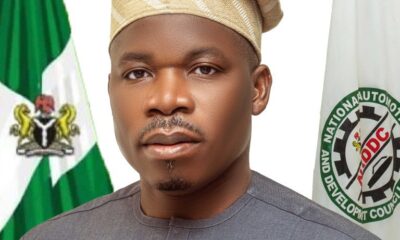
Director-General of the National Automotive Design and Development Council, Mr Jelani Aliyu, who was at the opening ceremony of the Lagos Auto Fair, is reported as expressing his awe at the “slick design” of the premium sedan.
He also lauds Kia’s alluring design of the roomy, high-tech interior, sharp handling, and fresh new look characterized by sculpted bodywork and the premium model’s bold lines.
Kia says the K5 also boasts a suite of advanced safety, connectivity and infotainment technologies, placing it among the most high-tech and comprehensively equipped cars in its class.
Kia notes that the all-new K5 is defined by distinctive exterior elements, such as the long hood and glittering horizontal chrome lines on the front bumper, and sensuous shoulder lines pressed into the sides.
It also sports a wide “Tiger Nose” grille, intricately designed full LED headlights, premium crystal-cut alloy wheelbase, as well as a chrome-enmeshed rear bumper, all of which accentuate the SUV’s dynamic appearance.
The fourth generation of the all-new 2021 Sorento features a head-turning design, more off-road capability, and proven safety technology.
With a bold new name representing Kia’s engineering and consumer confidence, the K5 is said to set a new standard among midsize sedans with its revolutionary design and powerful turbocharged engine line-up.
The interior of the all-new Sorento is made of high-quality materials evoking the feel of a stylish, futuristic “cockpit” characterized by taut, smooth surfaces.
Equipped with a range of technologies to maximize convenience, connectivity, and ease of use, the bold design of the cabin incorporates a touchscreen infotainment system.
The Kia Sorento makes its first public appearance at the auto fair, impressing the attendees with a purposeful SUV stance, raised body, and a powerful all-wheel-drive system.
Its rugged looks are said to be matched by true ‘go-anywhere capability. A rugged and robust large SUV, the all-new 2021 Sorento hints at how the Kia has adapted its latest designs and features for the large off-road SUV segment.
Kia says through its presence at the Lagos Auto Fair, it is demonstrating its technology vision of the future.










Auto
Mikano, Autochek Set to Roll Out Virtual Showroom, Expand Auto Finance
Mikano, Autochek Set to Roll Out Virtual Showroom, Expand Auto Finance
Mikano Motors and Autochek Africa are to launch a virtual showroom and expand digital auto financing options in Nigeria, signalling a fresh shift in how vehicles are bought and financed in the country.
The partnership, set for formal unveiling on February 27, 2026, at Mikano Motors’ Victoria Island showroom in Lagos, will see the creation of a dedicated Mikano Motors Virtual Showroom on Autochek’s marketplace.
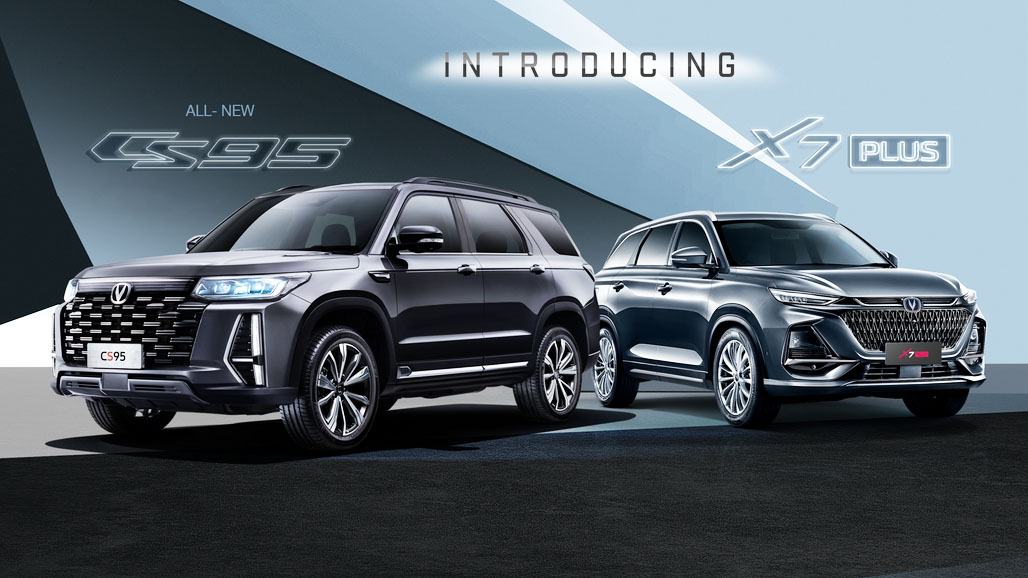
Through the platform, customers can browse Mikano’s vehicle lineup — including Changan, Maxus and other brands in its portfolio — compare models, and access tailored financing options without leaving the digital space.
Buyers will also be able to explore structured auto loans, flexible payment plans and receive quicker credit assessments within a single ecosystem.
The move effectively migrates critical stages of the car-buying journey online, reducing the delays traditionally associated with financing approvals and documentation.
READ ALSO:
- BREAKING: IGP Kayode Egbetokun Steps Down as Tinubu Names Tunji Disu as New Police Chief
- Osun Police Launch Investigation into Alleged Student Shooting in Osogbo
- U.S. Congress Submits Report to Trump on Alleged Christian Persecution in Nigeria
Group Executive Director of Mikano, Joelle Haykal, said the initiative aligns with the company’s commitment to enhancing customer experience.
“Our goal is not just to sell vehicles, but to simplify ownership,” she said, noting that integrating financing into the buying process gives customers more flexibility and control.
Autochek, a technology-driven automotive marketplace operating across Africa, leverages data analytics to power credit decisions and financial services designed to lower the barriers to vehicle ownership.
By embedding financing directly into vehicle listings, the platform aims to streamline transactions and improve transparency.
Industry analysts say the collaboration reflects a broader trend of digital transformation sweeping across Nigeria’s automotive sector, as dealers and financiers adapt to evolving consumer expectations.
For Mikano Motors, a subsidiary of Mikano International, the deal expands its market reach through digital channels. For Autochek, it strengthens its presence in Nigeria’s new vehicle segment.
Together, both firms are betting on a hybrid retail model that blends physical showrooms with seamless digital access — redefining the path to car ownership in Nigeria.
Auto
MOMAN, ALCMAN Partner BKG to Drive Nigeria’s Shift from Auto Imports to Industrial Production
MOMAN, ALCMAN Partner BKG to Drive Nigeria’s Shift from Auto Imports to Industrial Production
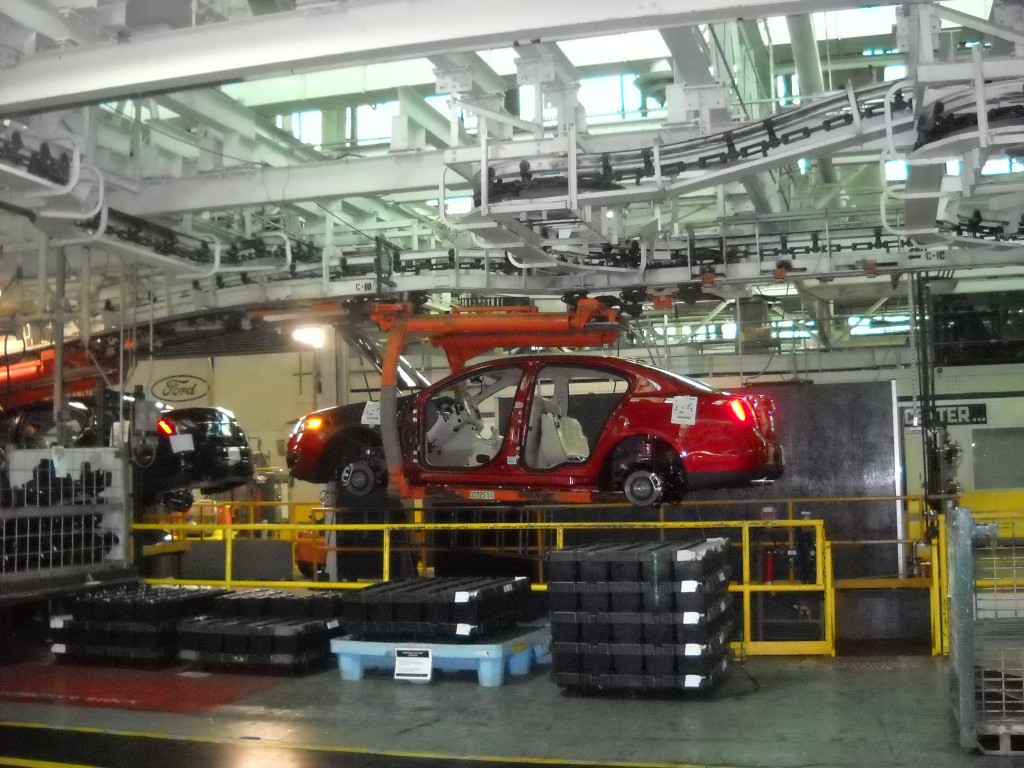
In what industry stakeholders view as a decisive move toward industrial rebirth, BKG Exhibitions Limited has entered into a strategic partnership with the Motorcycle Manufacturers Association of Nigeria (MOMAN) and the Automotive Local Content Manufacturers Association of Nigeria (ALCMAN) to accelerate local automotive manufacturing and reduce the country’s heavy reliance on imports.
The alliance, formalised in Lagos, signals a coordinated private-sector effort to reposition Nigeria’s automotive ecosystem from an import-dependent market to a production-driven industrial base capable of delivering value addition, technology transfer, and large-scale employment.
For decades, Nigeria’s automotive sector has been dominated by the importation of fully built vehicles and, more recently, the assembly of semi-knocked-down (SKD) and completely knocked-down (CKD) kits.
While these models generated commercial activity, stakeholders argue they failed to build deep industrial capacity or strengthen indigenous engineering expertise.
The new partnership seeks to change that narrative by transforming trade exhibitions into structured industrial platforms that connect manufacturers with policymakers, institutional buyers, investors, and international technical partners.
A senior executive at BKG Exhibitions said the collaboration represents a deliberate shift in strategy.
“Exhibitions must go beyond passive marketplaces. They must become engines of economic transformation where Nigerian manufacturers secure contracts, attract capital, and demonstrate production competence,” he said, noting that Nigeria already possesses strong demand but lacks a coordinated ecosystem to convert that demand into domestic output.
“Nigeria remains one of Africa’s largest mobility markets, driven by rapid urbanisation, a growing youth population, and expanding last-mile logistics services.
“Motorcycles and tricycles play a critical role in urban transport, agriculture distribution, and the fast-growing delivery economy.
“However, a substantial portion of these vehicles and their components are imported, placing pressure on foreign exchange and limiting domestic industrial growth.”
MOMAN President Rev. Lambert Ekewuba emphasized that strengthening local production would go beyond import substitution.
“When we manufacture locally, we create jobs, retain capital, and build the technical foundation for advanced automotive engineering,” he said.
ALCMAN Chairman, Chief Anselm Ilekuba, stressed the importance of developing a resilient components ecosystem, describing it as the backbone of any successful automotive industry.
“No country becomes an automotive powerhouse without first nurturing strong supplier networks. Nigeria must empower small and medium-scale enterprises producing metal parts, plastics, electrical systems, and other inputs,” he said.
Under the alliance, future exhibitions will feature dedicated pavilions showcasing Nigerian-made components and vehicles, offering manufacturers direct access to government agencies, transport operators, and regional distributors.
Analysts believe such curated exposure could gradually shift procurement patterns toward locally produced alternatives.
Beyond the domestic market, the partnership aims to position Nigeria as a manufacturing hub serving West and Central Africa, leveraging opportunities under the African Continental Free Trade Area (AfCFTA).
Industry leaders say expanding export capacity will depend on strengthening standards, financing mechanisms, and technical capability.
The alliance also plans coordinated advocacy for policies that support localisation, including improved access to financing, reduced duties on industrial machinery, technical training aligned with modern production systems, and procurement frameworks favouring locally manufactured goods.
Economists argue that a revitalised automotive manufacturing base could stimulate growth across steel, petrochemicals, logistics, warehousing, and tooling industries, reinforcing the sector’s role as a catalyst for broader industrialisation.
Coming at a time when Nigeria is intensifying efforts to diversify its economy away from oil dependence, stakeholders say the success of this alliance could mark a turning point — shifting the country from being one of Africa’s largest automotive consumption markets to an emerging centre of production, innovation, and regional trade.
Auto
Appeal Court Ruling on VIO Limited to Abuja, Not Lagos — LASG

Appeal Court Ruling on VIO Limited to Abuja, Not Lagos — LASG
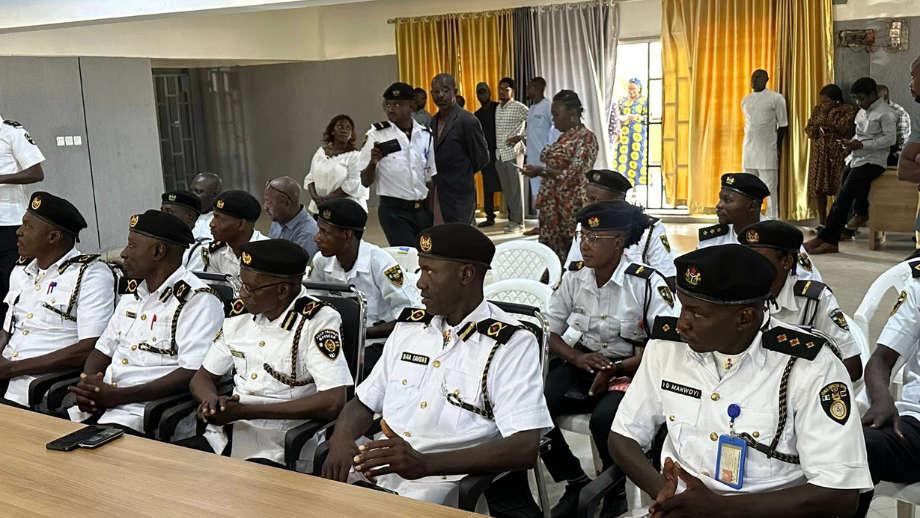
The Lagos State Government has dismissed widespread claims that a recent Court of Appeal judgment has stripped Vehicle Inspection Officers (VIOs) of their powers across Nigeria, insisting that the ruling applies strictly to the Federal Capital Territory (FCT).
The clarification follows public reactions to a decision of the Court of Appeal, Abuja Division, which upheld an earlier ruling of the Federal High Court restraining Vehicle Inspection Officers and the Directorate of Road Traffic Services in the FCT from stopping motorists, impounding vehicles, or imposing fines.
The judgment triggered viral interpretations suggesting that VIO operations had been outlawed nationwide.
However, Lagos State Attorney-General and Commissioner for Justice, Lawal Pedro, SAN, described such interpretations as legally inaccurate and misleading.
Basis of the Court Decision
According to Pedro, both the Federal High Court and the Court of Appeal premised their decisions on the absence of statutory authority empowering VIO officials in the FCT to stop, impound, confiscate vehicles, or impose fines on motorists.
READ ALSO:
- Terror in Lagos Traffic: Cutlass Gang Unleashes Mayhem on Mile 12–Ketu Road
- FG Drags El-Rufai to Court Over Alleged NSA Phone Interception
- Mystery in Lekki: Police Probe Death of Two Nollywood Crew Found Lifeless in Parked Car
“It is important to understand that the Honourable Judge of the Federal High Court and Justices of the Court of Appeal premised their decision on absence of statutory power conferred on the Respondents to stop, impound or confiscate vehicles and/or impose fines on motorists on roads in FCT Abuja,” he stated.
He noted that the courts did not declare vehicle inspection enforcement unconstitutional in Nigeria, but rather ruled specifically on the legal framework governing the FCT authorities involved in the suit.
Why Lagos Is Different
The Lagos government stressed that Nigeria’s federal structure allows states to legislate on residual matters such as road traffic management and vehicle inspection.
Pedro explained that Lagos operates under the Lagos State Transport Sector Reform Law, which expressly establishes and empowers the Vehicle Inspection Service (VIS).
Section 12(1) of the law authorises the VIS to:
Inspect and regulate the roadworthiness of vehicles
Conduct pre-registration inspections
Issue Road Worthiness Certificates
Collaborate with other relevant agencies to enforce traffic laws
In addition, Section 23(1) provides for penalties against offenders, subject to adjudication before mobile or magistrate courts, ensuring judicial oversight.
Not of Nationwide Effect
While acknowledging that the appellate decision is binding within the FCT, the Lagos government emphasised that it does not have automatic nationwide application.
“The judgment, though binding, is not of general application or of nationwide effect in Nigeria,” the ministry stated.
The state government stressed that VIS officers in Lagos remain legally empowered to carry out enforcement duties under extant state laws.
Wider Implications
The controversy underscores ongoing debates over traffic enforcement powers in Nigeria, particularly the constitutional boundaries between federal and state authorities.
Legal analysts note that unless the Supreme Court delivers a broader pronouncement on the issue, enforcement powers will continue to depend largely on the specific statutory framework establishing such agencies in each jurisdiction.
For now, Lagos authorities insist that vehicle inspection and traffic enforcement operations in the state remain valid and legally grounded.
Appeal Court Ruling on VIO Limited to Abuja, Not Lagos — LASG

-

 Business2 days ago
Dangote Opens Refinery Investment to Nigerians With Public Share Sale Plans
-

 Education3 days ago
UTME: JAMB Clarifies Position on Hijab During Biometric Capture
-
 Politics2 days ago
Tinubu Hails Wike as APC Dominates 2026 FCT Area Council Elections
-

 Entertainment2 days ago
Regina Daniels Takes Delivery of ₦150m 2026 GAC Trumpchi M8 SUV
-
 Politics3 days ago
ADC Defeats APC to Win First Polling Unit in FCT Area Council Election
-

 Politics2 days ago
FCT Council polls: APC Wins Four Chairmanship Seats as PDP Takes Gwagwalada
-

 News2 days ago
Yoruba Muslim Group Dismisses Viral Ramadan Date Claim, Reaffirms Sultan of Sokoto’s Authority
-

 Politics2 days ago
Opposition Weakens as Another Governor Eyes APC Move