

Education
Nigerian students may pay N2m as new visa fee for Australia

Nigerian students may pay N2m as new visa fee for Australia
Nigerians planning to study in Australia may need to brace for a major hike in visa application fees, as the Australian government considers raising the student visa cost from AUD$1,600 to AUD$2,000 approximately N2,054,480 at current exchange rates.
This proposed increase comes less than a year after the last fee hike in July 2024, which saw student visa charges soar by 125% from AUD$710 to AUD$1,600. Now, both major political parties in Australia are reportedly backing another increase, as the country gears up for its federal election on May 3.
The potential rise is expected to further impact international students, particularly from developing countries like Nigeria, where foreign exchange rates and economic challenges already pose significant hurdles.
Opposition leader Peter Dutton has floated a plan that would push the fee even higher, proposing AUD$5,000 for international students applying to Australia’s prestigious Group of Eight (Go8) universities, and AUD$2,500 for applicants to other institutions.
If implemented, these new visa fees could make Australia the most expensive destination globally for student visa applicants.
READ ALSO:
- Sheikh Umar appointed new president of Shari’ah council
- Arsenal fail fans at Emirates, lose 0-1 to PSG in crucial Champion League semi
- How Nigeria’s mobile money is driving era of AI prosperity
The policy is projected to generate AUD$760 million over four years from international students worldwide.
Industry groups and education stakeholders have sharply criticized the proposals. English Australia, the peak body representing English language colleges for international students, noted that Australia’s current AUD$1,600 fee is already twice the rate charged in the UK, four times the US, and almost ten times higher than Canada.
Critics warn that the proposed increases will financially burden international students, potentially damaging Australia’s standing in the competitive global education market.
Phil Honeywood, CEO of the International Education Association of Australia (IEAA), has also voiced concern, saying short-term courses have been particularly hard-hit. He supports a discounted visa fee structure for such courses to help revive enrolments.
However, Education Minister Kay Gallagher defended the increase, calling it a “sensible measure” that reflects the premium value of an Australian education.
With the federal election looming, student visa policy has become a hot-button issue. While the Labour Party promises a balanced approach that includes stakeholder dialogue and fiscal responsibility, the Coalition’s more aggressive fee hike proposals may reshape the future of international education in Australia.
Nigerian students may pay N2m as new visa fee for Australia
(Vanguard)











Education
ASUU Crisis Deepens: Lagos Universities Join UNIBEN, Taraba on Indefinite Strike
ASUU Crisis Deepens: Lagos Universities Join UNIBEN, Taraba on Indefinite Strike
The Academic Staff Union of Universities (ASUU) has not declared a nationwide indefinite strike. However, the union’s national leadership has issued a fresh threat to resume its suspended national strike without notice, while at least three university branches are currently on indefinite strike over unresolved welfare disputes with state governments.
The confusion stems from a wave of branch-level industrial actions that began in early September 2026, combined with an emergency National Executive Council (NEC) resolution warning that a nationwide shutdown could be activated “within the shortest time possible” if governments fail to honour the 2025 Federal Government-ASUU agreement.
The ASUU branches at the three Lagos State-owned universities declared a total, comprehensive, and indefinite strike on September 15, 2026, after the state government allowed a 14-day ultimatum to lapse without initiating dialogue. The unions’ principal demand is the full domestication and implementation of the December 2025 ASUU-FGN agreement, including the Consolidated Academic Tools Allowance (CATA) and critical welfare protections for both active and retired academic staff. The strike has the full backing of the ASUU national leadership, and the union stated it will not be suspended until the state government signs, domesticates, and implements the applicable provisions of the agreement in full.
READ ALSO:
- Lagos Power Outage: Ikeja Electric Blames TCN as Businesses, Homes Groan
- US Court Blocks Trump Visa Rule Limiting Stay of Foreign Students, Journalists
- Sokoto Shuts Mosque After Cleric Stabbing, Names Ulamas Probe Panel
The UNIBEN ASUU branch is continuing its indefinite strike, which began on September 9, 2026, over the alleged underpayment of August 2026 salaries. A congress held on September 11 resolved that the strike would continue because the university administration failed to provide clear details of what was paid, what was outstanding, and when it would be paid. University management insists the Federal Government paid August salaries in full, and that the payment in question was CATA, not salary.
ASUU at Taraba State University resumed an indefinite strike following the state government’s failure to implement an agreement reached on January 17, 2025. On September 14, the branch issued a final 14-day ultimatum to the Taraba State Government, which will expire on September 28, 2026, if outstanding provisions are not addressed. The union had previously suspended a planned strike in August to allow the university’s combined convocation ceremonies to proceed.
The UNIZIK ASUU branch suspended its indefinite strike on September 11, 2026, after the university management paid the complete August 2026 salary. The strike had been declared on September 7 over the non-payment of full August salaries. The branch directed all members to resume academic and administrative duties immediately.
At the national level, ASUU has threatened to reactivate its suspended nationwide strike if the Federal Government and state governments fail to urgently resolve outstanding issues. This decision followed an emergency NEC meeting held at the University of Abuja on September 5, 2026. ASUU President, Prof. Christopher Piwuna, stated that unless immediate and concrete steps are taken, the union “will not accept any blame for calling out its members on a nationwide strike action within the shortest time possible”. The unresolved issues include three-and-a-half months of withheld salaries from the seven-and-a-half months withheld under the previous administration, unremitted third-party deductions (pension contributions, cooperative funds, and ASUU check-off dues) allegedly withheld for several months, breaches of university laws and autonomy, and the worsening conditions of the academic profession.
ASUU commended governors who had commenced implementation of the 2025 agreement, singling out Abia State Governor Alex Otti for praise, noting he publicly announced full adoption and apologised for bureaucratic delays. The union also listed Bauchi, Ekiti, Ogun, Benue, Yobe, Adamawa, Kebbi, Katsina, and Borno as states where implementation had commenced. It noted pledges to begin in Kano, Edo, Plateau, Taraba, Gombe, and Bayelsa in September or October 2026.
Former Vice President Atiku Abubakar challenged President Bola Tinubu to account for savings from petrol subsidy removal, arguing that the renewed university crisis exposed a contradiction in the government’s reform claims. Atiku said Nigerians had endured unprecedented cost-of-living increases while public universities remained underfunded and lecturers were again threatening to strike.
ASUU Crisis Deepens: Lagos Universities Join UNIBEN, Taraba on Indefinite Strike
Education
JAMB Moves 2027 UTME Time — Here’s What Candidates Need To Know
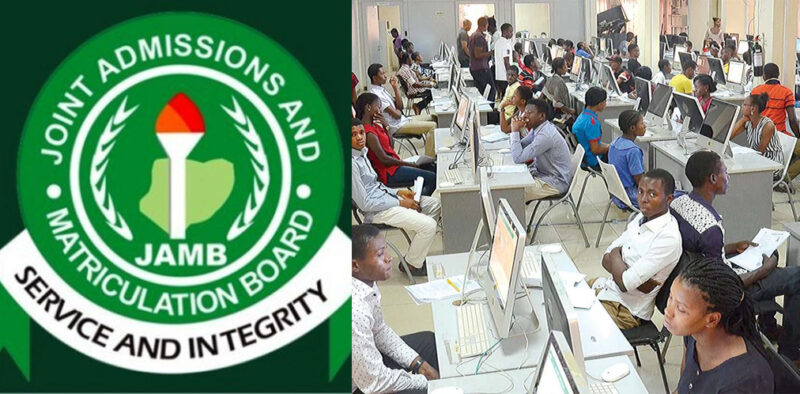
JAMB Moves 2027 UTME Time — Here’s What Candidates Need To Know
The Joint Admissions and Matriculation Board (JAMB) has adjusted the schedule for the first session of the 2027 Unified Tertiary Matriculation Examination (UTME), moving the arrival time for candidates from 6:30am to 7:30am.
Under the revised arrangement, candidates taking part in the first session will be expected to arrive at their designated Computer-Based Test (CBT) centres by 7:30am, while the examination will commence at 8:30am and end at 10:30am.
JAMB said the adjustment was introduced in response to concerns over the safety and convenience of UTME candidates, particularly those who travel long distances to their assigned examination centres.
The Board said the earlier 6:30am arrival requirement could force some candidates to embark on their journeys before dawn, exposing them to avoidable transportation and security risks.
The decision to move the arrival time was reached during JAMB’s 2026 Management and Information Technology Retreat, held in Ikot Ekpene, Akwa Ibom State, from September 6 to 11.
READ ALSO:
- No Lives Lost as Responders Contain Dual Fire Outbreaks Across Lagos
- ‘I Was Never the Chosen One’ — Dembele Responds to Mbappe
- Plateau Attacks: Gunmen Kill Passengers, 13 Dead Across Three LGAs
The retreat brought together JAMB management, state coordinators, heads of outstation offices and other relevant officials to review the Board’s operations and consider measures for improving the conduct of future examinations.
According to the Board, concerns had been raised about the safety implications of requiring candidates to report at examination centres as early as 6:30am, especially where candidates have to travel considerable distances.
JAMB said the one-hour adjustment would allow candidates more time to travel to their centres during daylight and could also reduce the pressure associated with early-morning transportation.
The Board also indicated that the adjustment could help reduce UTME absenteeism, as some candidates who encounter transportation difficulties or live far from their assigned centres may find it easier to arrive under the revised arrangement.
The new 7:30am reporting time applies to the first UTME session, with the examination itself scheduled to begin at 8:30am.
JAMB said other sessions would continue according to the examination schedule to be released as part of the preparations for the 2027 exercise.
The latest decision is part of broader efforts by the examination body to improve the safety, efficiency and overall experience of candidates sitting the annual university entrance examination.
JAMB has increasingly placed emphasis on the need to make its examination processes more efficient while addressing logistical challenges associated with the movement of millions of candidates across the country.
The 2027 UTME is expected to involve candidates from across Nigeria and other countries where Nigerian candidates are permitted to sit for the examination.
The adjustment will be particularly significant for candidates who are assigned to CBT centres outside their immediate communities, as the later arrival time gives them an additional hour to complete their journeys before reporting for accreditation and other pre-examination procedures.
Candidates are, however, expected to follow the specific instructions contained in their examination slips and other official communications from JAMB once the full examination schedule is released.
The Board is expected to provide further information on 2027 UTME registration, examination dates, registration centres, approved CBT centres, candidate requirements and session allocations as preparations progress.
Prospective candidates have also been advised to rely on official JAMB announcements and avoid unverified schedules circulated on social media or other unofficial platforms.
The latest change does not mean that candidates should arrive late at their assigned centres. Those scheduled for the first session will still be expected to report by 7:30am to allow sufficient time for verification and other procedures before the examination begins at 8:30am.
JAMB’s decision is therefore expected to provide some relief to candidates and families concerned about the risks associated with very early-morning travel, while helping the Board maintain an orderly start to the 2027 UTME.
JAMB Moves 2027 UTME Time — Here’s What Candidates Need To Know
Education
King’s College Concession: 115 Unity Colleges Shut as Education Workers Defy FG
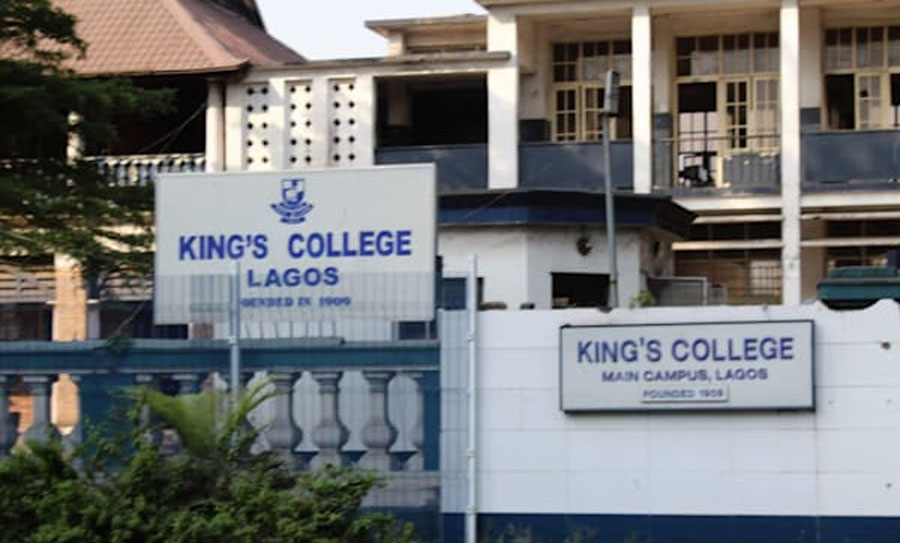
King’s College Concession: 115 Unity Colleges Shut as Education Workers Defy FG
The controversy over the Federal Government’s concession of King’s College, Lagos, to its Old Boys’ Association has escalated into a nationwide education crisis, with workers shutting down the Federal Ministry of Education and keeping 115 Federal Unity Colleges closed despite the government’s directive for students to resume the 2026/2027 academic session.
The development has created uncertainty for thousands of students and parents as the new school year begins, with the Association of Senior Civil Servants of Nigeria (ASCSN) and the Joint Congress of Unions of the Federal Ministry of Education insisting that their boycott of activities in the affected schools will continue until the government suspends the concession.
The workers have rejected the proposed transfer of management of King’s College to the King’s College Old Boys’ Association (KCOBA), arguing that the arrangement could undermine the public character of the historic institution and set a precedent for similar concessions involving other Federal Unity Colleges.
The unions had earlier directed that students should not resume in the Federal Unity Colleges, despite the Federal Ministry of Education announcing September 14 as the resumption date for the new academic session.
On Monday, the workers maintained their position, with reports indicating that the affected schools remained shut as the government’s reopening directive came into effect.
The dispute follows the Federal Ministry of Education’s decision to concession King’s College to KCOBA under a 35-year Public-Private Partnership arrangement.
A ministry circular issued in early September stated that the processes leading to the concession had been concluded and directed the school to commence arrangements for an immediate handover.
READ ALSO:
- Petrol Price Hits N1,450/Litre as Middle East Crisis Pushes Oil Above $108
- Police Arrest Herbal Drink Producer as Ondo Death Toll Hits 29
- Troops Arrest Six Kidnap Suspects in Adamawa as Boko Haram, ISWAP Fighter Surrenders in Borno
A Transition Committee was also constituted to oversee the transfer of management, with the process expected to be completed within six months.
One of the most contentious aspects of the arrangement is the ministry’s directive that Federal Government funding for King’s College from the Federation Account would stop after the transition period.
The ministry also asked the school management to provide information on staff who wished to remain within the Federal Civil Service Commission, raising concerns among workers over their employment status and possible redeployment.
The workers have described the development as unacceptable, arguing that the government should retain responsibility for funding and managing public secondary schools rather than transferring such responsibilities to private or alumni organisations.
The unions have also accused the ministry of disregarding an earlier committee that was expected to examine the infrastructure and management challenges facing King’s College and other Federal Unity Colleges and recommend solutions.
They have demanded that the government suspend or reverse the concession and engage the unions in meaningful discussions before proceeding with any management transfer.
The Nigeria Union of Teachers (NUT), Federal Wing, has also backed the suspension of resumption in the Federal Unity Colleges, adding further weight to the workers’ opposition.
The disagreement has also attracted resistance from parents and other stakeholders. The King’s College Parent-Teacher Association has expressed concerns about the future of the school under the concession and the possible implications for affordability and access.
Parents have particularly questioned whether the withdrawal of government funding could eventually result in increased financial obligations for families.
The government, however, has rejected claims that King’s College is being sold or privatised.
Education Minister Tunji Alausa has said the Federal Government retains legal ownership of the 117-year-old institution and will continue to exercise its regulatory, monitoring, inspection and enforcement responsibilities.
According to the government, the concession only transfers responsibility for financing, rehabilitating, modernising, operating and maintaining the school to KCOBA.
The government has also argued that the arrangement is intended to attract investment and management expertise needed to improve the institution’s infrastructure while preserving its public ownership and national identity.
The proposed development programme reportedly includes new classrooms, laboratories and hostels, as well as improvements to learning resources, sports facilities and digital infrastructure.
The government’s clarification has, however, failed to resolve the dispute with the unions, who remain concerned that the concession could become a model for transferring other public schools to private interests.
The workers have warned that if the government proceeds with the King’s College arrangement, similar concessions could eventually be proposed for other Federal Government Colleges, Federal Government Boys’ Colleges, Federal Government Girls’ Colleges and Federal Technical Colleges.
The controversy has therefore moved beyond the future of one historic Lagos school to a wider debate about the management and financing of public education in Nigeria.
Supporters of the concession model argue that partnerships with old students’ associations and private-sector organisations could provide additional funding and management capacity for schools facing infrastructure deficits.
Opponents, however, maintain that such partnerships should complement government funding rather than replace it, particularly where public schools serve students from diverse economic backgrounds.
The timing of the dispute has made the situation more difficult for families, as the disagreement coincides with the scheduled reopening of schools across the country.
While the Federal Government has maintained that students should resume and assured parents that adequate arrangements were in place, education workers have insisted that the Federal Unity Colleges shutdown remains in force.
In some locations, parents and students who arrived for resumption reportedly found school gates closed, leaving families uncertain about when academic activities would begin.
The conflicting directives have also raised concerns about disruption to the academic calendar if the dispute continues for an extended period.
The Federal Unity Colleges form an important part of Nigeria’s secondary education system, with schools located across the country and designed, among other objectives, to promote national integration by bringing students from different states and backgrounds together.
The current dispute could therefore have implications beyond the immediate disagreement over King’s College if it leads to prolonged closure of the schools.
The workers have made clear that they want the government to address the concession before allowing normal academic activities to resume.
For the Federal Government, the challenge is to defend a policy it says is designed to rehabilitate and modernise a historic public institution while addressing concerns from workers, parents and other education stakeholders.
The immediate standoff leaves the King’s College concession at the centre of a growing confrontation between the government and education unions.
Unless both sides reach an agreement, thousands of students in the 115 Federal Unity Colleges could remain out of school, further delaying the start of the 2026/2027 academic session and intensifying calls for dialogue over the future of Nigeria’s federal secondary schools.
King’s College Concession: 115 Unity Colleges Shut as Education Workers Defy FG
-
 News3 days ago
SERAP Threatens Legal Action Over ₦126bn INEC Electoral Funds
-
 Politics3 days ago
Five Islamic Clerics Abducted After Tinubu Re-Election Prayer At Yari’s Zamfara Residence
-
 Opinion3 days ago
‘Tinubu Will Win Again in 2027’ — Charismatic Bishops’ Secretary
-
 Politics1 day ago
2027: Northern Lecturers Back Tinubu, ASUU Disowns Endorsement
-

 metro3 days ago
Mother ‘sold daughter’s abuse videos for $300’: Nigeria child pornography case shocks nation
-

 Sports3 days ago
‘Unacceptable’ — Arteta Furious Over Sunderland Penalty in Arsenal Win
-

 News3 days ago
Petrol Subsidy: Presidency Rejects Atiku’s Plan, Says No Going Back
-

 International3 days ago
US Blockade Tightens As CENTCOM Redirects 100 Commercial Ships From Iranian Ports