

Business
Oil spill: Supreme Court backs Ogoni N17bn judgment against Shell
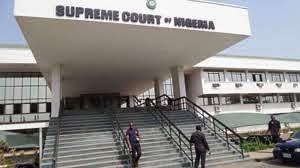
The Supreme Court on Friday threw out an application by Shell Petroleum Development Company asking for a revisit of a 2019 judgment that compelled it to pay N17bn to some Ogoni communities in Rivers State affected by an oil spill from the company in 1970.
A five-man panel led by Justice Olabode Rhodes-Vivour unanimously dismissed the company’s application for a review of the judgment after upholding the preliminary objection filed by the communities’ legal team.
Justice Centus Nweze prepared Friday’s lead ruling but it was read by another Justice of the apex court, Justice Chukwudumebi Oseji, who is not a member of the five-man panel.
The apex court had in the case which had lasted about 31 years from when it started at the High Court, issued the N17bn order in favour of Ejama-Ebubu in Tai Eleme Local Government Area of Rivers State, represented by Chief Isaac Agbara and nine others.
The communities’ lead lawyer, Lucius Igwe, said on Friday that the judgment sum with the accrued interests for the 32 years period stood at about N182bn.
Shell’s legal team led by Chief Wole Olanipekun (SAN) had Lateef Fagbemi (SAN), a former Attorney-General of the Federation and Minister of Justice, Chief Kanu Agabi (SAN), Dr Wale Babalakin (SAN), and Wale Akoni (SAN).
At the September 22, 2020 hearing leading to the Supreme Court’s ruling delivered on Friday, Nwosu had urged the apex court not to only dismiss the application, but to also make an order against all the senior lawyers in Shell’s legal team as “deterrence” for the filing of the judgment review application which he alleged was aimed at ridiculing the integrity and finality of the decisions of the apex court.







Auto
Carloha Opens Wider Access to Chery Q as Smart EV Enters Nigeria’s Mainstream

Carloha Opens Wider Access to Chery Q as Smart EV Enters Nigeria’s Mainstream
Carloha Nigeria is taking the Chery Q to motorists across the country, widening access to an electric vehicle designed to combine affordability, practicality, intelligent technology and zero-emission motoring.
The move by the official franchise holder, assembler and authorised distributor of Chery vehicles in Nigeria is expected to give more Nigerian motorists an opportunity to experience the Chinese automaker’s latest generation of smart electric mobility.
Built around Chery’s global “Quest for Joy” philosophy, the Chery Q blends distinctive styling with intelligent technology, advanced safety features and efficient electric performance, while drawing inspiration from the heritage of the iconic Chery QQ family.
Carloha said the model is targeted at a broad spectrum of motorists, including young professionals, growing families, first-time electric vehicle buyers and urban commuters looking for a cleaner, smarter and more connected driving experience.
The Chery Q also brings a strong design proposition to the compact EV segment. Its award-winning exterior, recognised with both the Red Dot Design Award and iF Design Award, features expressive geometric styling, rounded LED lighting and a contemporary two-tone interior.
Despite its compact dimensions, the vehicle has been engineered to maximise interior space, achieving an 85 per cent space-efficiency ratio.
Measuring 4,195mm in length with a 2,700mm wheelbase, the Chery Q offers substantial passenger room while retaining the manoeuvrability expected of an urban vehicle.
Its practicality is further enhanced by luggage capacity that expands from 375 litres to 1,450 litres, alongside a 70-litre front trunk and 38 smart storage compartments.
According to the company, the combination makes the Chery Q suitable for a wide range of everyday applications, from city commuting and shopping to family outings and weekend journeys.
Beyond its styling and practicality, the electric vehicle has been developed around a rear-engine, rear-wheel-drive architecture, supported by independent suspension and balanced weight distribution to enhance handling and stability.
The model also features Electric Power Steering and a One-Box Brake-by-Wire system designed to provide smoother braking response, improved driving precision and greater control, while supporting regenerative energy recovery.
A key attraction for potential EV buyers is the Chery Q’s claimed driving range. The vehicle offers an estimated 420-kilometre NEDC range, giving users greater flexibility for daily commuting and longer journeys between charging sessions.
Charging downtime is also reduced through its fast-charging capability, with the battery able to move from 30 per cent to 80 per cent in about 16.5 minutes, according to the manufacturer.
With the nationwide rollout, Carloha is positioning the Chery Q as part of the growing transition towards cleaner and smarter mobility in Nigeria, as interest in electric vehicles continues to expand.
The company’s wider strategy of assembling and distributing Chery vehicles locally also places the Q within its broader effort to make the brand’s technology and vehicle range more accessible to Nigerian motorists.
Business
NNPCL Slashes Petrol Pump Price to N1,405 in Abuja, Dangote Refinery Cuts Gantry Rate
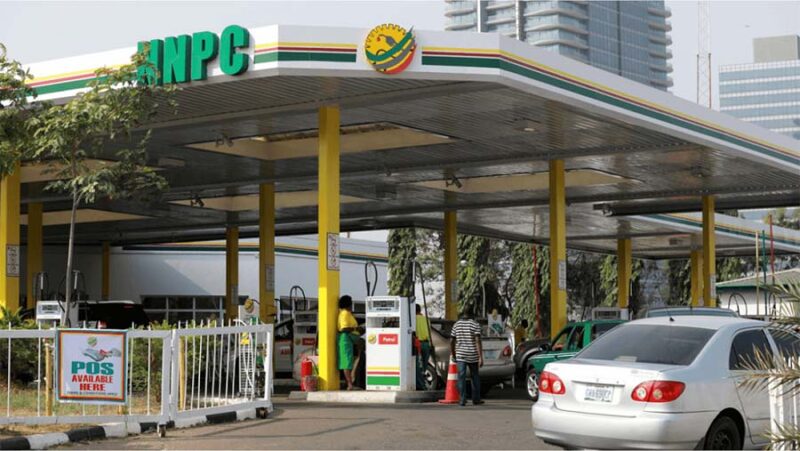
NNPCL Slashes Petrol Pump Price to N1,405 in Abuja, Dangote Refinery Cuts Gantry Rate
Abuja — The Nigerian National Petroleum Company Limited (NNPCL) has announced a reduction in the pump price of Premium Motor Spirit (PMS), commonly known as petrol, at its retail outlets in the Federal Capital Territory (FCT), Abuja.
A market survey conducted on Sunday revealed that NNPCL filling stations in key areas such as Gwarimpa and Kubwa have adjusted their prices downward to N1,405 per litre, a reduction from the previous rate of N1,430 per litre.
However, the survey indicated a slight variation in pricing across different NNPCL outlets within the capital city. While the Gwarimpa and Kubwa stations are selling at N1,405, other outlets located along the Kubwa Expressway, Air Junction, as well as those in Wuse Zones 4 and 5, are offering the product at a lower rate of N1,395 per litre.
The latest price adjustment by the national oil company follows a significant reduction in the gantry price of petrol by the Dangote Refinery. Reports indicate that the refinery recently slashed its gantry price by N25, bringing the rate down to N1,325 per litre.
The reduction in pump prices is expected to bring slight relief to motorists and commuters in Abuja, who have had to grapple with high transportation costs fueled by elevated fuel prices in recent months.
Industry observers note that the ongoing price adjustments reflect the dynamics of the deregulated downstream sector, where market forces and refinery gate prices influence retail costs. It remains to be seen if other major marketers and independent oil marketers will follow suit with similar price reductions in the coming days.
Motorists in Abuja have welcomed the development, expressing hope that the downward trend in fuel prices will be sustained across the country and ultimately lead to a reduction in the overall cost of living.
NNPCL Slashes Petrol Pump Price to N1,405 in Abuja, Dangote Refinery Cuts Gantry Rate
Railway
Rail-Port-Industry Link Critical to Cutting Logistics Costs – NRC
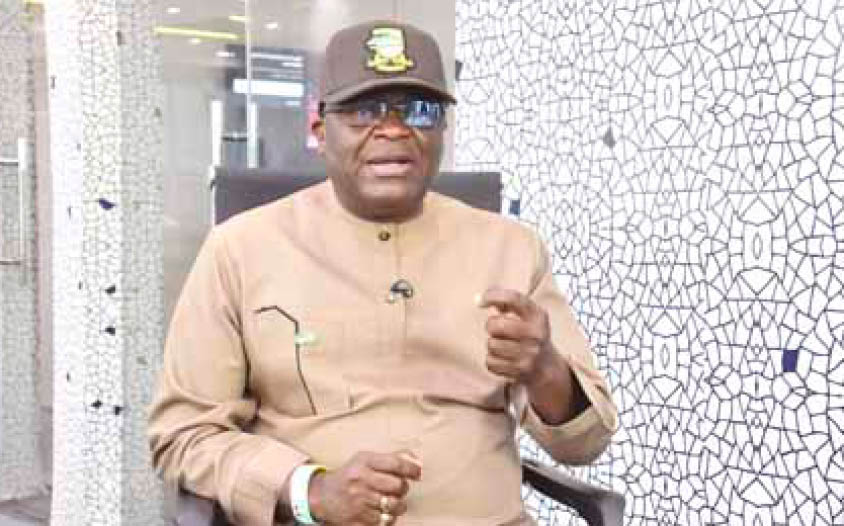
Rail-Port-Industry Link Critical to Cutting Logistics Costs – NRC
The Nigerian Railway Corporation has said Nigeria must urgently integrate its rail network with seaports, inland dry ports and industrial centres to cut logistics costs, ease pressure on the highways and make the movement of goods across the country more efficient.
The NRC said a seamless connection between rail lines, ports and major production centres would strengthen the movement of agricultural produce, containers, petroleum products and other bulk cargoes, while reducing the cost and time involved in transporting goods from ports to markets and industries.
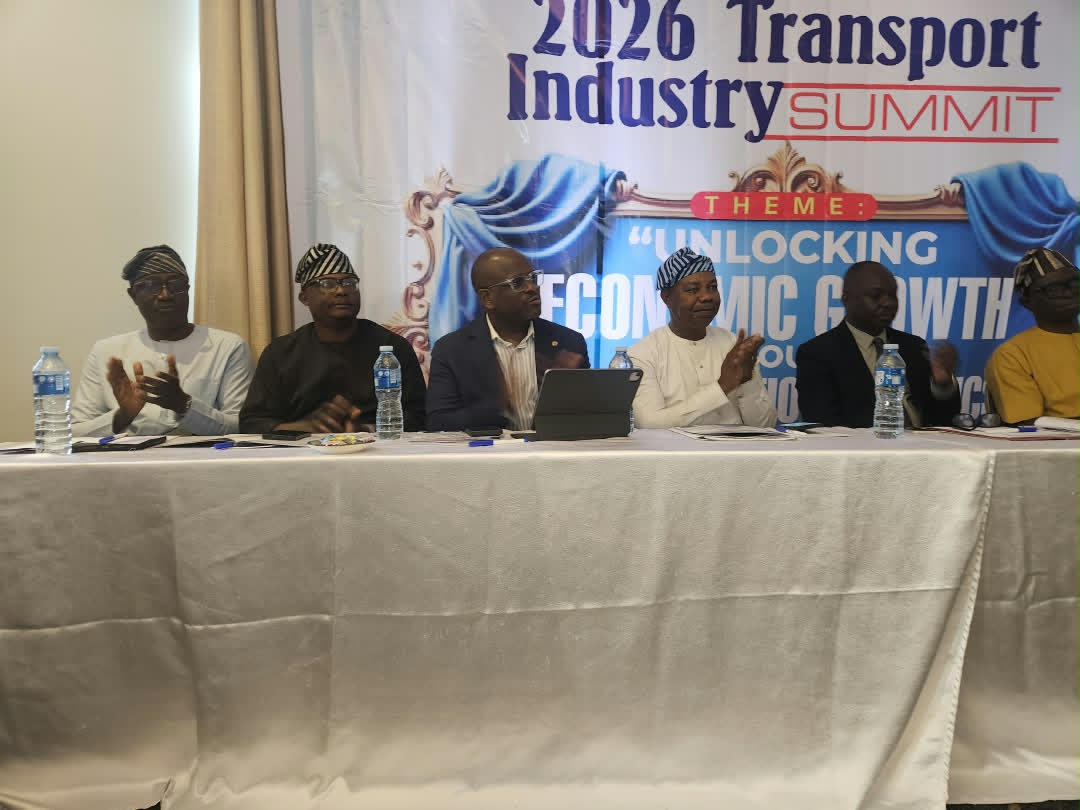
The Managing Director/Chief Executive Officer of the NRC, Dr Kayode Opeifa, stated this on Thursday in Lagos in a speech delivered on his behalf at the Transport Correspondents Association of Nigeria conference, stressing that rail, road, maritime, inland waterways and aviation must work as an integrated transportation system if Nigeria is to unlock the full economic benefits of its logistics sector.
The NRC boss also revealed that the corporation had opened the door wider for private investors to participate in the development of freight terminals, logistics hubs, rolling stock and other critical infrastructure as part of efforts to transform Nigeria’s rail system into a major engine of economic growth.
He said stronger private-sector participation was imperative because government alone could not provide the massive investment required to build an efficient and interconnected transportation system capable of lowering logistics costs and boosting economic activities.
Opeifa said Nigeria could no longer afford to develop its transportation modes in isolation, stressing the need to connect rail with seaports, inland dry ports, industrial centres and major economic corridors.
He said such integration would enable rail to play a greater role in moving bulk cargo across the country, while reducing the pressure currently placed on the highways.
According to him, rail has the capacity to move large volumes of passengers and freight over long distances and should therefore become a critical component of Nigeria’s logistics architecture.
He said, “At the Nigerian Railway Corporation, our focus is therefore not only on passenger transportation but also on strengthening freight operations and creating greater connectivity between rail lines, seaports, inland dry ports, industrial centres and major economic corridors.”
The NRC MD identified agricultural produce, petroleum products, containers and other commodities as some of the major categories of cargo that could benefit from a more efficient rail freight system.
He said an effective multimodal transportation network involving rail, road, maritime, inland waterways and aviation would reduce the cost of doing business, improve access to markets and strengthen Nigeria’s competitiveness.
Opeifa also called for a regulatory framework capable of attracting private capital into the transportation sector, particularly in rolling stock, freight terminals, logistics hubs and related infrastructure.
“The future of Nigeria’s transportation sector must also be driven by stronger partnerships. Government alone cannot provide all the infrastructure and investment required,” he said.
The NRC’s position comes amid growing concerns over the high cost of logistics and the burden placed on Nigerian businesses by inefficient movement of goods from ports to markets and production centres.
Opeifa said transportation infrastructure should be viewed not simply as public assets but as critical economic infrastructure capable of stimulating industrial production, trade and employment.
He, however, warned that vandalism and encroachment remained major threats to railway investments, stressing the need for stronger collaboration among government agencies, security organisations, host communities and passengers to protect railway tracks, bridges, signalling systems and other infrastructure.
He said the protection of rail infrastructure must become a collective responsibility if the country was to derive the full economic benefits of ongoing investments in the sector.
The NRC chief executive also stressed the need to make transportation affordable and accessible, noting that improved mobility would provide Nigerians with greater access to jobs, markets, education and economic opportunities.
Opeifa reaffirmed the NRC’s commitment to the Federal Government’s vision of developing a modern, integrated and efficient transportation system capable of supporting the country’s economic aspirations.
He commended TCAN for providing a platform for policymakers, operators, investors, professionals and the media to deliberate on the challenges and opportunities in Nigeria’s transportation sector.
He said sustained investment, innovation, collaboration and effective policy implementation remained essential to building a logistics system capable of unlocking Nigeria’s economic potential.
-

 News3 days ago
Keyamo: ₦70,000 Minimum Wage No Longer Enough as Cost of Living Soars
-

 Sports3 days ago
AFCON 2027 Qualifier: Nigeria Fight Back to Beat Madagascar 2-1 in Uyo
-

 metro3 days ago
Viral Anti-Obi Video: Lagos Police Move Against Inspector Osumah Frank
-

 Entertainment3 days ago
Jetour Takes Adventure Beyond the Road, Brings Solar-powered Borehole to Ibeju-Lekki community
-
 News1 day ago
Fake Agency Scandal: Gbajabiamila Says He Never Betrayed Tinubu’s Trust
-
 metro2 days ago
$155m Left Behind, $750m Liabilities: Anambra Govt Opens Fresh Obi Files
-

 metro3 days ago
Ogun Man Arrested Over Alleged Killing of Neighbour After ‘Rough Play’ With Child
-

 Politics2 days ago
2027: Fayemi Denies Galadima’s Claim He Is Coordinating Opposition Group Against Tinubu
You must be logged in to post a comment Login