

Politics
Peter Obi’s cross-carpeting destroying LP, political career, says Labour party
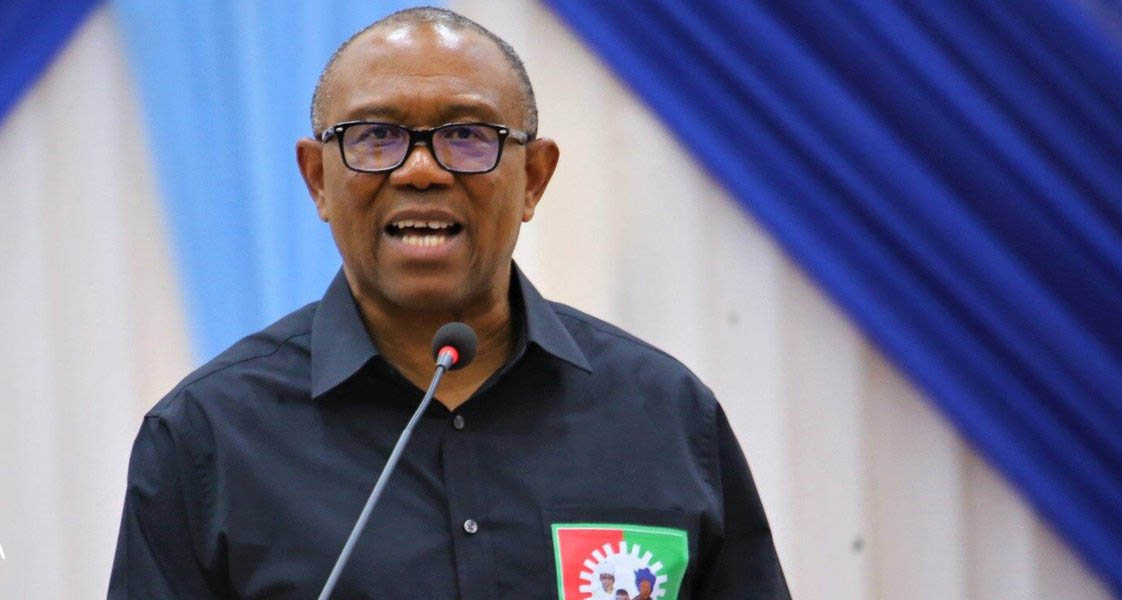
Peter Obi’s cross-carpeting destroying LP, political career, says Labour party
The Lagos State chapter of the Labour Party has accused its former presidential candidate, Peter Obi, of destabilising the party through what it described as his “serial inconsistency” and “political pretence,” warning that his recent actions could finally wreck both his political career and the party’s relevance ahead of the 2027 elections.
In a strongly worded statement titled “Reflections on the Labour Party’s Challenges: A Call for Peter Obi to Pause and Ponder,” the Lagos LP chairperson, Dayo Ekong, said Mr Obi’s political inconsistency has alienated key allies and exposed the limits of his influence, especially following a string of election losses where his endorsements failed to deliver victory.
“Peter Obi’s influence in the Nigerian polity appears to be waning, as Nigerians grow increasingly tired and wary of what some perceive as inconsistent antics and political manoeuvring,” Mrs Ekong said. “His interventions, once seen as principled, now risk being viewed as disruptive and self-serving, alienating allies and diminishing his appeal.”
She cited the party’s losses in the 2023 Imo governorship poll and the 2024 Edo governorship election, despite Mr Obi’s heavy involvement, as evidence that the former Anambra governor’s political touch has faded.
She said in Edo, Labour Party’s candidate, Olumide Akpata, “lost woefully to the APC’s Monday Okpebholo, securing only a fraction of the votes despite Mr Obi’s rallies and endorsements in Benin and beyond,” adding that a similar fate befell Senator Athan Achonu in Imo State, where, despite Mr Obi’s active campaign, incumbent Governor Hope Uzodimma of the APC coasted to a landslide victory.
READ ALSO:
- How terrorists killed 50 in my constituency – Lawmaker
- Anambra govt sacks eight vigilantes who assaulted NYSC corps member
- How man killed 5-year-old cousin after parents failed to pay ransom – Police
The Lagos chair said the defeats showed that Mr Obi’s support “no longer guarantees electoral success.”
The most damning case, she argued, was Mr Obi’s dramatic switch in this year’s Anambra by-elections, where he dumped the Labour Party candidate to endorse Justina Azuka of the African Democratic Congress (ADC). “Just before the polls, Obi abandoned the Labour Party candidate and endorsed Justina Azuka of ADC, even donning an ADC-branded cap during campaigns for the Onitsha North 1 State Constituency seat,” Mrs Ekong recalled.
ADC eventually polled just 1,909 votes, while APGA—the party Mr Obi once belonged to before defecting to PDP and later Labour Party—won with 7,774 votes. The result, Mrs Ekong said, mocked Mr Obi’s diminishing clout, even in his home state.
Mr Obi’s latest manoeuvres mirror his longstanding pattern of party-hopping and political cross-carpeting. Once a self-proclaimed loyalist of the All Progressives Grand Alliance (APGA), Mr Obi vowed never to abandon the platform but later defected to the Peoples Democratic Party (PDP), and subsequently to the Labour Party in 2022. Now, his open flirtation with ADC has reinforced claims of his political instability.
Mrs Ekong warned that such “LP today, ADC tomorrow” behaviour was confusing supporters and eroding the party’s credibility.
Mrs Ekong urged Mr Obi to retreat and reassess his path before further damaging the party and his career. “A wise politician like Peter Obi, known for his prudence and vision, has suddenly lost so much appeal—even in his backyard,” she warned. “He should honestly ask himself: does he still enjoy the grace and public trust that fuelled his 2023 surge?”
She likened Mr Obi’s trajectory to that of Nyesom Wike, who was widely chastised for his PDP-to-APC intrigues, insisting that Nigerians are equally noting Mr Obi’s “LP/ADC antics” and may punish him at the ballot in 2027.
The Lagos LP chair concluded that the party “remains committed to equity, justice, and progress for all Nigerians,” but stressed that only leaders who place collective interests above personal ambition can rescue the party from collapse.
Peter Obi’s cross-carpeting destroying LP, political career, says Labour party










Politics
Ogun 2027: YPP, BOOT Reject Suit Withdrawal Against Adeola

Ogun 2027: YPP, BOOT Reject Suit Withdrawal Against Adeola
The Young Progressives Party (YPP) and BOOT Party in Ogun State have rejected claims that they withdrew their respective legal challenges against the All Progressives Congress (APC) governorship candidate, Senator Solomon Olamilekan Adeola, popularly known as Yayi.
The parties said their court actions challenging aspects of Adeola’s eligibility to contest the 2027 Ogun State governorship election remain valid and that neither party authorised any withdrawal.
The controversy followed the decision by New Nigeria Peoples Party (NNPP) governorship candidate Akinbola Rotham to withdraw a separate suit he filed against Adeola.
Rotham withdrew Suit No. FHC/AB/CS/135/2026, which was filed at the Federal High Court in Abeokuta, saying his decision was motivated by the broader interest of Ogun West and the longstanding aspiration of the senatorial district to produce the next governor of the state.
Rotham and Adeola are both from Ogun West Senatorial District, which has never produced a governor of the state since its creation.
The NNPP candidate said the Ogun West agenda should take precedence over individual political interests and that withdrawing his case would contribute to unity within the district.
However, the YPP and BOOT Party said Rotham’s decision should not be interpreted as a withdrawal of their own cases.
READ ALSO:
- “Sometimes, I Wonder Why I Married My Husband” — Omotola
- State Police Bill Faces Hurdle as Only Four States Approve
- Benue Boat Accident: One Dead, Eight Missing as Mourners’ Boat Capsizes
The parties’ state chairmen, Adeyemi Solomon Oluwaseyunmi of YPP and Akerele Abiodun John of BOOT, said they did not authorise or sign any document discontinuing their legal actions.
They also rejected suggestions that they had been consulted over any purported withdrawal.
The parties were reacting to claims attributed to Kayode Odunaro, media adviser to Adeola, that major court cases challenging the APC candidate’s 2027 governorship bid had been discontinued by the litigants.
YPP and BOOT described the claim as misleading and maintained that their positions on the legal proceedings remain unchanged.
The opposition parties said their actions were aimed at allowing the courts to determine questions surrounding Adeola’s eligibility, constitutional requirements and state-of-origin claims.
The legal controversy includes questions about Adeola’s claim of being an indigene of Pahayi in Ilaro, Yewa South Local Government Area of Ogun State.
Adeola, who currently represents Ogun West Senatorial District in the National Assembly, emerged as the APC candidate for the 2027 governorship election after winning the party’s nomination process.
The senator has maintained his eligibility and right to contest the election.
Rotham’s withdrawal of his individual suit does not automatically terminate other cases filed by separate political parties or individuals, meaning the legal questions raised by YPP and BOOT remain subject to the decisions of the courts.
The opposition parties have therefore urged political actors to rely on official court records rather than public statements when determining the status of the various cases.
The development comes as political activities intensify ahead of the 2027 Ogun governorship election, with the issue of an Ogun West governor becoming a major theme in the emerging campaign.
While Rotham has opted to withdraw his case in support of a broader Ogun West political agenda, YPP and BOOT insist that their own legal challenges should proceed independently.
The conflicting positions mean that the withdrawal of one suit has not brought an end to the wider legal controversy surrounding Adeola’s 2027 governorship candidacy.
Ogun 2027: YPP, BOOT Reject Suit Withdrawal Against Adeola
Politics
Wike to Amaechi: What Did You Bring to Rivers After 24 Years in Power?

Wike to Amaechi: What Did You Bring to Rivers After 24 Years in Power?
Minister of the Federal Capital Territory, Nyesom Wike, has challenged former Rivers State Governor Rotimi Amaechi to identify the projects and political empowerment he attracted to Evo Kingdom and Rivers State during his 24 years in senior public office.
Wike made the remarks on Friday, October 2, 2026, during an interactive session with leaders and stakeholders of Evo Kingdom in Obio-Akpor Local Government Area of Rivers State.
Amaechi served as Speaker of the Rivers State House of Assembly for eight years, governor of the state for eight years and Minister of Transportation for eight years.
Wike questioned what he described as Amaechi’s record of development and political empowerment, challenging stakeholders to identify tangible projects he said the former governor attracted to the area during his time in office.
“Someone was Speaker of the House of Assembly for eight years, Governor for eight years, and Minister for eight years—that is 24 years in top leadership positions,” Wike said.
He asked the people of Evo Kingdom and Rivers State to identify what Amaechi attracted to the area during those years, adding that he could list projects he personally attracted to the state while serving as Minister of State for Education.
READ ALSO:
- Electric Spark Suspected as Fire Destroys 21 Shops at Abuja’s Kugbo Market
- Ebonyi Widow Alleges Death Threats, Ostracisation Over Late Husband’s Property
- Police Arrest Woman Seen Threatening Officer With Knife Over Cannabis Arrest
Wike also criticised what he described as a leadership style in which political office holders fail to develop successors or empower others to take over from them.
He said leadership should involve human capacity development, creating opportunities for others and building structures that can survive after a leader leaves office.
The FCT minister said his own political ambition was no longer centred on returning to positions he had previously occupied.
“I can’t be a governor again. I’ve been a minister two times. I cannot be chairman of council again. So I am happy. I don’t have anything to lose,” he said.
Wike also said political leaders should leave behind people capable of sustaining whatever structures or achievements they established while in office.
According to him, leadership becomes fragile when everything is built around one individual and collapses after that person leaves the political scene.
The minister further recalled his administration’s restructuring of the traditional institution in Rivers State, saying it gave Evo Kingdom representation on the Rivers State Council of Traditional Rulers.
The latest comments are part of the continuing political exchanges between Wike and Amaechi, who served as governor of Rivers State from 2007 to 2015, with Wike succeeding him in office.
Amaechi, who is now the African Democratic Congress (ADC) vice-presidential candidate, has also recently criticised the administration of President Bola Ahmed Tinubu over its record of infrastructure delivery and the impact of economic policies on Nigerians. (Channels Television)
Wike, meanwhile, has continued to publicly support President Tinubu and has been mobilising political stakeholders in Rivers State ahead of the 2027 general elections. During his latest engagement with the Evo Kingdom stakeholders, he also urged political actors to work together in the interest of the state.
The claims made by Wike about Amaechi’s record of projects and empowerment represent his assessment of his political rival and are part of an ongoing political dispute between the two former Rivers governors.
Wike to Amaechi: What Did You Bring to Rivers After 24 Years in Power?
Politics
2027: Oshiomhole Dares Opposition Over ₦500 Petrol Promise, Says APC Will Take Argument to Nigerians
2027: Oshiomhole Dares Opposition Over ₦500 Petrol Promise, Says APC Will Take Argument to Nigerians
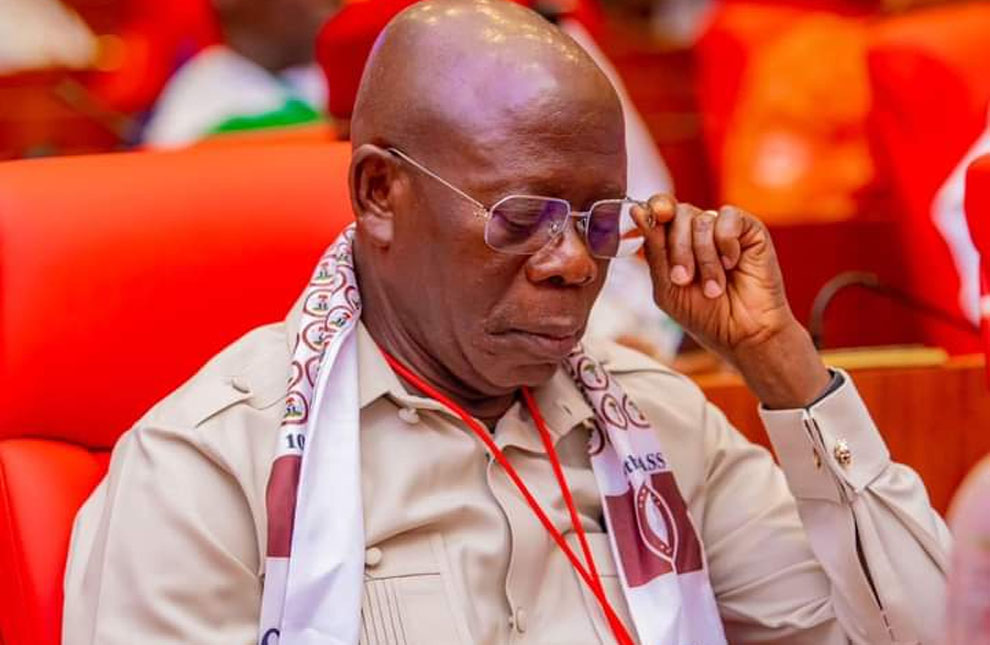
Abuja — Former National Chairman of the All Progressives Congress (APC) and Senator representing Edo North, Adams Oshiomhole, has declared that he is unbothered by opposition promises to crash the pump price of Premium Motor Spirit (PMS) to ₦500 per litre, stating that the ruling party will take the debate directly to the Nigerian people.
Oshiomhole made the assertion during a recent political engagement, according to a report monitored by Newstrends.ng on Friday. The former Edo State governor was responding to recent campaign pledges by opposition figures who have proposed a “Fuel Affordability Plan” aimed at leveraging local refining capacity to bring down the cost of petrol.
“I’m not worried about the promise to sell petrol at ₦500; we’ll take the argument to Nigerians,” Oshiomhole stated, signaling the APC’s readiness to defend its downstream sector policies ahead of the 2027 general elections.
READ ALSO:
- Tinubu Unpopular, Yet 2027 Re-election Still Possible — The Economist
- Less Than Four Months After Wedding, Jarvis Threatens Peller With Lawsuit Over Second-Wife Plan
- 2027: Oshiomhole Dares Opposition Over ₦500 Petrol Promise, Says APC Will Take Argument to Nigerians
The APC chieftain, known for his combative political style, questioned the consistency of the opposition’s stance on fuel subsidies. He reminded Nigerians that key opposition figures, including former Vice President Atiku Abubakar, had previously championed the removal of fuel subsidies during their time in office, arguing that their sudden conversion to affordable pump prices was politically motivated rather than economically sound.
Oshiomhole’s comments underscore the ruling party’s strategy to frame the 2027 election as a choice between what it describes as the “realistic economic reforms” of the President Bola Tinubu administration and what it calls the “populist rhetoric” of the opposition.
While the opposition maintains that its ₦500 per litre proposal is a well-thought-out plan to support local refining and not a return to the old corrupt subsidy regime, Oshiomhole insists that the APC will meet them at the grassroots level to dissect the feasibility of such promises.
Political observers note that the debate over fuel prices remains a highly emotive issue in Nigeria, given its direct impact on transportation, food prices, and the overall cost of living. As the 2027 election cycle gathers momentum, Oshiomhole’s remarks signal that the APC intends to go on the offensive, using the fuel subsidy debate as a key battleground to challenge the opposition’s credibility with the electorate.
2027: Oshiomhole Dares Opposition Over ₦500 Petrol Promise, Says APC Will Take Argument to Nigerians
-
 metro3 days ago
Workers to Begin Nationwide Warning Strike Over Petrol Price, Wage Award
-
 metro3 days ago
[UPDATED] Imo Highway Attack: 10 Rescued after Gunmen Abducted NYSC Prospective Members
-
 Politics3 days ago
2027: Amaechi Recalls How APC Defeated PDP, Orders ADC Mobilisation
-

 Entertainment2 days ago
Phyna Knocks Out Nkechi Blessing in Fourth Round, Wins ₦50m, New Car
-
 Business3 days ago
Dangote Sets 40-Month Deadline for $16bn East Africa Refinery in Kenya
-
 News3 days ago
Independence Day: Tinubu Unveils Plan to Cut Living Costs, Expand Jobs
-
 metro2 days ago
2027 Hajj: Nigeria Secures 10,000 Extra Slots, Allocation Hits 60,000
-

 metro21 hours ago
NYSC Kidnap: Abductors Demand N950m for 19 Prospective Corps Members in Imo