

International
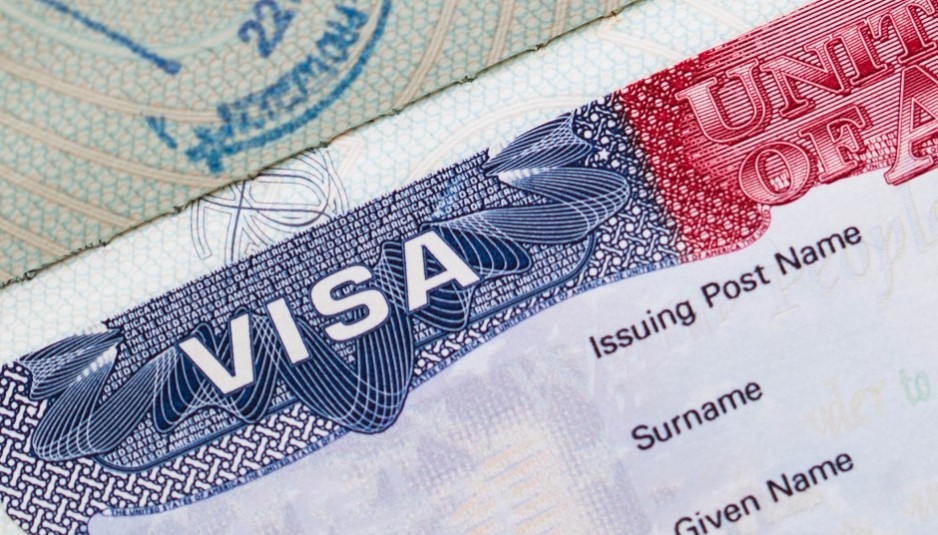
US reduces visa renewal window from 48 to 12 months
US reduces visa renewal window from 48 to 12 months
The United States has changed its non-immigrant visa renewal process, reducing the eligibility period from 48 months to 12 months.
This change, as stated, will affect many foreign nationals, especially those with H-1B, H-4, B1, and F1 visas.
It will likely increase pressure on visa holders to renew their documentation more quickly than before.
The update, outlined by TravelBiz, eliminates the 48-month renewal window previously introduced as a temporary measure during the COVID-19 pandemic. With the new rule in effect, applicants must now renew their visas within a 12-month period after expiration.
Updated eligibility criteria for visa renewals
Reports inform that under the revised policy, applicants must ensure that their U.S. visa is either still valid or expired within the last 12 months. To qualify for the renewal process, applicants must meet several conditions:
- The previous visa must be in the same category as the one being renewed.
- The applicant’s most recent visa must have been issued after their 14th birthday.
- The visa cannot have been lost, stolen, canceled, or revoked.
- Applicants must not have had any visa refusals after their most recent issuance.
Additionally, specific criteria apply to holders of J visas. These applicants must provide a valid DS-2019 form for certain exchange visitor programs.
READ ALSO:
- 30 injured after car drives into crowd in Munich
- TikTok returns to US app stores weeks after Trump delays ban
- FG worries over 400,000 Nigerian refugees stranded in Cameroon, Niger, Chad
Impact of shortened renewal window
The reduced 12-month window for visa renewals is expected to create challenges for many visa holders. With less time to renew, applicants will have to plan their renewals more quickly.
- This, as reported, has led to an increase in applicants seeking in-person interviews, as opposed to utilizing the Dropbox process. As demand for interviews grows, securing an appointment may become more competitive.
- Moreover, this change is expected to further burden the already crowded Dropbox system. Many eligible applicants who would have previously used the mail-in renewal process may now need to attend an in-person interview due to the shortened window.
Calculating the 12-month period and additional delays
Applicants are informed that they must calculate their eligibility for visa renewal from the expiration date of their last visa. The renewal application must be received at the U.S. embassy or consulate within 12 months of the visa’s expiration.
- Any delays in submission could make applicants ineligible for the expedited renewal process, requiring them to undergo a standard interview.
- In addition to the policy change, recent reports indicate that the U.S. State Department is cutting staff at embassies worldwide, which could further delay visa processing.
This reduction in staff may lead to longer wait times for visa approvals and increased scrutiny in the processing of applications.
What visa holders should do now
To process through these new regulations, applicants are encouraged to act quickly. Visa holders should plan their renewals ahead of time and regularly check for available appointment slots. Given the high demand for interviews, securing an appointment early is crucial. It is also important for applicants to stay informed by visiting the U.S. embassy or consulate websites and consulting with immigration experts for guidance.
Visa holders should also be aware that delays in processing and longer wait times may affect travel and employment plans. The latest policy changes emphasize the need for applicants to remain proactive and well-informed to avoid complications during the renewal process.
US reduces visa renewal window from 48 to 12 months











International
Trump Downplays Report of Chinese Satellite Help to Iran

US President Donald Trump has played down a report alleging that Chinese entities supplied Iran with satellite imagery of a US military base in Jordan before and after a deadly Iranian missile strike.
The report, published by The Wall Street Journal, said US officials had linked high-resolution satellite imagery provided by Chinese entities to Iran’s July 17 attack on Muwaffaq Salti Air Base, where three American soldiers were killed and four others injured.
Trump, however, appeared to dismiss the significance of the allegation while speaking to reporters aboard Air Force One on Sunday.
“When they say that China spies on us, I say you’re right, and we spy on them too,” he said, adding that the two countries essentially engage in similar intelligence activities.
The report has not established that Beijing directly authorised or participated in the alleged transfer. US officials cited by the Journal did not identify the Chinese entities involved, while Chinese officials reportedly rejected the allegation and asked Washington to provide evidence.
The development comes as Washington and Beijing prepare for a potentially sensitive meeting between Trump and Chinese President Xi Jinping, expected to take place at the White House on September 24.
The US has previously accused Chinese companies of assisting Iran’s military capabilities. Washington sanctioned three China-based satellite firms in May over alleged support for Iran’s military operations.
Despite the latest dispute, Trump struck a conciliatory tone when discussing Xi, saying the Chinese leader had “behaved reasonably well” and that the US had done the same.
Trump’s response leaves the satellite imagery allegations unresolved, with Beijing denying involvement and Washington yet to publicly identify the companies allegedly involved.
International
Boris Johnson Caught in Russian Drone Strike Scare Near Poland Border
Boris Johnson Caught in Russian Drone Strike Scare Near Poland Border
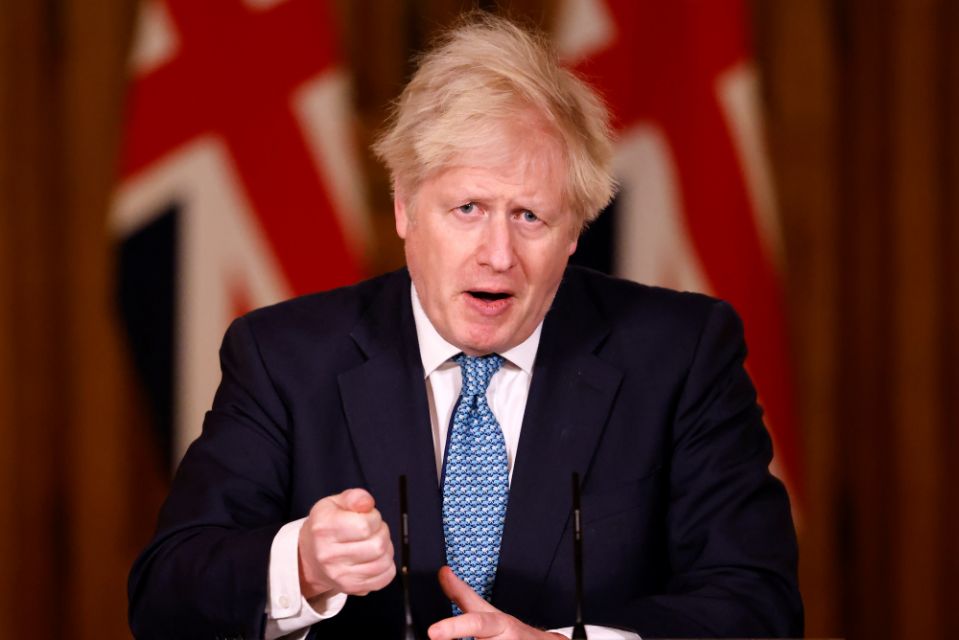
Former British Prime Minister Boris Johnson was caught up in a major security scare involving a Russian drone attack after a passenger train was struck near Ukraine’s border with Poland, shortly after a diplomatic train carrying him and other European officials had passed through the area.
The incident occurred on Sunday, September 13, 2026, near Yahodyn in Ukraine’s Volyn region, about two kilometres from the Polish border.
Johnson was travelling from Kyiv after attending the Yalta European Strategy conference, where he joined other international political and security figures for discussions on the Russia-Ukraine war and European security.
He was aboard a diplomatic train carrying several prominent European figures, including former Swedish Prime Minister Carl Bildt, as the delegation travelled towards Poland.
The train reportedly passed through the Yahodyn area shortly before a Russian drone struck the locomotive of another passenger train.
The incident triggered heightened security measures in the area, although reports indicate that Johnson was not evacuated from the train and was not injured.
Ukraine’s state railway operator said the diplomatic train had departed the station earlier than scheduled because of security concerns.
A separate passenger train was subsequently targeted by a Russian drone near Yahodyn.
Railway officials said the drone was detected before the strike, allowing emergency procedures to be activated. The drone eventually hit the locomotive, but no casualties were reported.
The railway operator said there was a possibility that the diplomatic train carrying Johnson and other senior officials could have been the intended target. However, Ukrainian authorities have not conclusively established that the delegation was specifically targeted.
Another high-profile passenger in the area was former CIA Director David Petraeus, who was reportedly travelling separately and was also at Yahodyn around the time of the incident.
READ ALSO:
- South Africa: Two Women Arrested Over Alleged Rape, Kidnap of E-Hailing Driver
- Four-Storey Building Collapses in Enugu, Workers Trapped Inside
- 27-Year Wait Ends as Construction Begins on New Dutse Emir’s Palace
The attack has attracted international attention because of its proximity to Poland, which is a member of NATO and shares a long border with Ukraine.
The strike occurred only about two kilometres from Polish territory, raising fresh concerns over the potential for Russia’s war against Ukraine to create security risks along NATO’s eastern flank.
Polish authorities heightened their monitoring of the border area following the attack but there was no immediate indication that the Russian drone entered Polish airspace.
The incident came as Russia launched another major wave of drone and missile attacks across Ukraine.
Ukrainian authorities reported hundreds of drones being used during the overnight assault, with several regions targeted.
The western part of Ukraine has increasingly become a target of Russian long-range attacks despite being located far from the main battlefield.
The country’s railway network has also remained a key target because of its importance in transporting civilians, military equipment, humanitarian supplies and international officials.
Ukraine has repeatedly accused Russia of deliberately targeting civilian infrastructure, while Moscow maintains that its attacks are directed at military and strategic facilities.
The latest strike also underscored the dangers faced by foreign politicians and diplomats travelling inside Ukraine.
Johnson has remained one of the strongest Western supporters of Ukraine since Russia launched its full-scale invasion in February 2022.
During his time as British prime minister, he developed close relations with Ukrainian President Volodymyr Zelenskyy and strongly backed Western military and financial assistance to Kyiv.
Since leaving office, Johnson has continued to advocate greater military support for Ukraine and has repeatedly called for stronger measures against Russia.
Following the latest attacks, he renewed calls for increased air-defence assistance for Ukraine, arguing that Kyiv needs additional capabilities to protect its cities and critical infrastructure from Russian drones and missiles.
The incident also comes amid growing debate over the use of frozen Russian assets to support Ukraine’s defence and reconstruction.
Western governments have frozen hundreds of billions of dollars’ worth of Russian central bank assets since the invasion, although questions remain over the legal and financial implications of using the funds directly.
The security scare near Yahodyn is particularly significant because the area is an important transport corridor linking Ukraine with Poland and the wider European Union.
The railway route is regularly used by foreign delegations travelling to and from Kyiv, making it strategically important for Ukraine’s diplomatic engagement with Europe.
The latest attack has therefore raised concerns about the safety of the route as Russian strikes increasingly reach western Ukrainian infrastructure.
Despite the seriousness of the incident, Johnson was not reported to have been injured, and there was no indication that other members of the diplomatic delegation were harmed.
The circumstances surrounding the drone strike, including whether the diplomatic train was deliberately targeted, remain under investigation.
The incident nevertheless provides another indication of how the Russia-Ukraine conflict continues to pose security challenges well beyond the immediate front lines, particularly in areas close to NATO territory.
Boris Johnson Caught in Russian Drone Strike Scare Near Poland Border
International
Houthis Launch Fresh Missile, Drone Strikes on Saudi Arabia
Houthis Launch Fresh Missile, Drone Strikes on Saudi Arabia
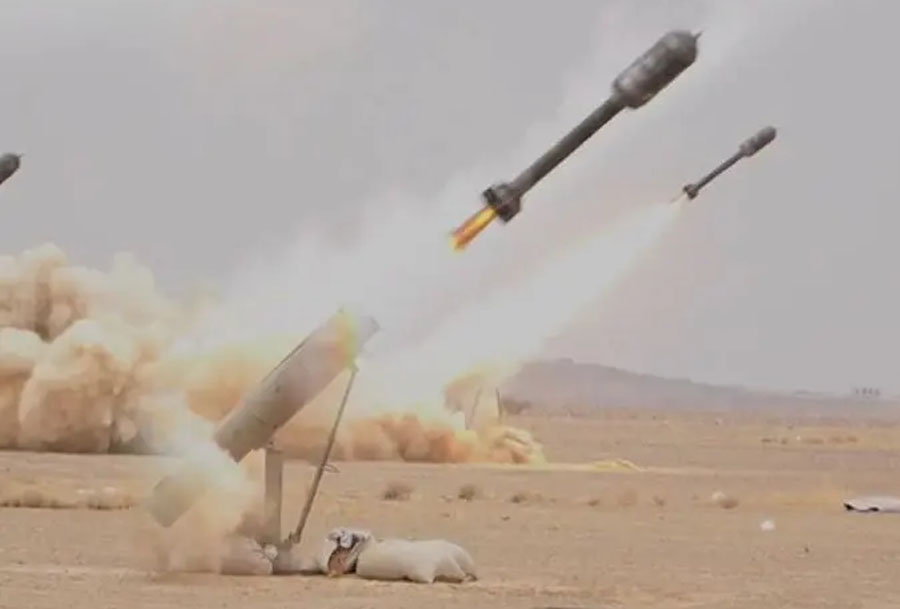
Yemen’s Iran-aligned Houthi movement has launched a fresh missile and drone attack on Saudi Arabia, further escalating tensions as the group expands its military presence along Yemen’s Red Sea coast and moves closer to the strategically important Bab el-Mandeb Strait.
The Houthis said on Sunday that they had fired ballistic missiles and drones at the Sharurah military base in southern Saudi Arabia, claiming the attack targeted weapons depots and command-and-control facilities.
Houthi military spokesman Yahya Saree said the group used a large barrage of missiles and drones in the operation and claimed that the weapons struck their intended targets.
He described the attack as a response to continuing Saudi military operations against Houthi-controlled areas of Yemen and warned that further strikes deeper inside Saudi Arabia could follow if those operations continued. Saudi authorities had not immediately confirmed the Houthi claim concerning the Sharurah military base. (Anadolu Ajansı)
The latest claim came shortly after Saudi authorities reported that a projectile had landed in Al-Tuwal governorate in the Jazan region, injuring two people and damaging a mosque and other property.
Saudi Civil Defence said emergency teams responded to the incident and dealt with the damage caused by the projectile. The Jazan attack adds to a series of recent strikes on southern Saudi Arabia as the confrontation between the kingdom and the Houthis intensifies. (Al Jazeera)
The renewed attacks follow a much larger wave of Houthi missile and drone strikes on Saudi territory earlier in the week.
Saudi authorities said at least 73 people were injured in those attacks, which affected cities and economic facilities in the kingdom’s south, including Abha, Khamis Mushait, Jazan and Najran.
The attacks also disrupted operations at some Saudi energy facilities, with fires reported at several sites. The developments have raised fresh concerns about the security of the world’s largest oil exporter at a time when regional energy supplies are already under severe pressure. (Reuters)
READ ALSO:
- Why I Gave Peter Obi My Vehicle During Benue Visit — Ortom
- Sanders Urges Trump, Xi to Halt AI Race, Ban Superintelligence
- DSS warns Osun churches, mosques, markets over alleged terrorist attack plot ahead of 2027
The latest escalation is occurring against the backdrop of a major Houthi offensive inside Yemen.
Houthi forces have rapidly advanced along the country’s Red Sea coast, capturing the strategically important port city of Mocha and moving towards the Bab el-Mandeb Strait.
Reuters reported that Houthi forces had also reached Perim Island, also known as Mayyun, in the Bab el-Mandeb, after Saudi-backed Yemeni government forces withdrew from the island. Houthi forces were also reported to have taken the mainland coastal town of Dhubab, which faces Perim. (Reuters)
The development is strategically significant because the Bab el-Mandeb Strait is one of the world’s most important maritime chokepoints.
The waterway connects the Red Sea with the Gulf of Aden and provides a major route for commercial vessels travelling between Asia, Europe and the Middle East.
Any sustained Houthi control or disruption of the waterway could therefore affect international shipping, energy supplies and global trade.
The threat is particularly serious because the Strait of Hormuz, on the opposite side of the Arabian Peninsula, is already severely disrupted by the wider conflict involving Iran and the United States.
The simultaneous pressure on both maritime corridors could create major challenges for global energy markets.
Reuters reported that the Houthi advance has already increased concerns over Saudi oil exports, while oil prices have risen sharply amid fears that the conflict could disrupt additional supply routes. (Reuters)
Saudi Arabia has increasingly relied on routes through the Red Sea to export crude after disruption around the Strait of Hormuz.
That makes the Houthi advance towards the Bab el-Mandeb particularly sensitive for Riyadh.
The Houthis have indicated that their maritime restrictions are focused on vessels linked to Saudi Arabia, while the group’s growing military presence around the strait has raised wider concerns about freedom of navigation.
The United Nations has warned that the developments in Yemen represent a potentially more dangerous phase of the conflict.
UN Special Envoy for Yemen Hans Grundberg told the Security Council that the Houthi advance towards the Bab el-Mandeb was creating serious concerns over navigation and the broader security situation.
READ ALSO:
- ‘Tinubu Will Win Again in 2027’ — Charismatic Bishops’ Secretary
- Fake miracles, bogus grants: How clerics allegedly fleece Nigerians of millions
- ‘Unacceptable’ — Arteta Furious Over Sunderland Penalty in Arsenal Win
The Houthi movement has defended its operations as acts of self-defence and said its attacks would stop if attacks against Yemen ended.
Saudi Arabia, however, has accused the Houthis of deliberately targeting civilian and economic infrastructure and has vowed to protect its territory and vital national assets.
The current escalation is particularly significant because Saudi Arabia and the Houthis had largely avoided direct large-scale cross-border attacks following the 2022 UN-brokered truce.
That period of relative calm helped reduce violence along the Saudi-Yemeni border, although a comprehensive political settlement to Yemen’s war was never reached.
The latest fighting threatens to undo that progress.
The conflict also has a wider regional dimension because the Houthis are closely aligned with Iran, while Saudi Arabia remains a key US partner in the Gulf.
The United States has accused the Houthis of acting as an Iranian proxy, while Tehran has called for dialogue and rejected the idea that the Yemen conflict can be resolved through military action.
US President Donald Trump has meanwhile said the Houthis had contacted his administration and indicated that they wanted to avoid direct US involvement in Yemen. Trump has also spoken with Saudi Crown Prince Mohammed bin Salman amid the worsening regional crisis. (Reuters)
The latest Houthi advances have placed Washington in a difficult strategic position.
According to Reuters, the group’s growing presence around the Bab el-Mandeb could threaten another major international shipping route while US military resources are already stretched by the wider conflict with Iran. (Reuters)
For Saudi Arabia, the immediate challenge is preventing further missile and drone attacks on populated areas, military installations and energy infrastructure.
The kingdom has increased security measures around vulnerable locations and has repeatedly warned that it will defend its territory and strategic assets.
For international markets, however, the biggest concern is the possible impact on oil supplies and global shipping.
The Bab el-Mandeb is a crucial route for ships travelling through the Red Sea towards the Suez Canal. A prolonged disruption could force vessels to take longer routes around Africa, increasing fuel consumption, freight costs, insurance premiums and delivery times.
The latest developments are therefore being closely watched by shipping companies, energy traders and governments around the world.
The Houthi military advance along Yemen’s Red Sea coast has also displaced civilians and deepened concerns over the country’s already severe humanitarian crisis.
The renewed fighting threatens to create further displacement and make the delivery of humanitarian assistance more difficult.
For Saudi Arabia, the attacks represent the most serious direct Houthi threat in years.
For the wider region, the combination of Houthi attacks on Saudi Arabia, the group’s advance towards the Bab el-Mandeb, and continuing instability around the Strait of Hormuz could create a new and more dangerous phase of the Middle East conflict.
The immediate situation remains fluid, with the Houthis threatening further attacks while Saudi Arabia maintains its right to respond.
The latest missile and drone strikes therefore mark more than another exchange between Saudi Arabia and the Houthis. They are part of a rapidly expanding regional crisis with potential consequences for Middle East security, oil prices, maritime trade and global energy supplies.
Houthis Launch Fresh Missile, Drone Strikes on Saudi Arabia
-

 metro2 days ago
Woman disguises as Muslim woman in Niqab to steal in Ado-Ekiti market, video sparks outrage
-

 metro2 days ago
Ondo Herbal Drink Tragedy: Survivor Vows Never to Drink Again as Death Toll Tops 30
-

 metro2 days ago
Sokoto Cleric Stabbed Twice in Neck After Juma’at Prayer, Attacker Killed
-

 Business2 days ago
Dangote: ₦525 Refinery Shares Could Rise to ₦10,000
-

 Africa3 days ago
Murder of Nigerian Bishop in South Africa Sparks Outcry Over Unsolved Killings
-

 News3 days ago
AI on the Roads: LASTMA Turns to China to Fix Lagos Traffic
-

 metro2 days ago
MURIC fires back at Peter Obi: Forget Sallah ceremony, free Nigerian Muslims
-

 Community3 days ago
Kaduna Traditional Rulers Set for 100% Pay Rise as Zazzau Emir Backs Proposal