

metro
$1bn military helicopters: US trainers to spend two years in Nigeria, security experts hail move

The United States Government has said the implementation of its proposed sale of 12 AH-1Z Cobra attack helicopters to Nigeria will require the deployment of three of its representatives or those of the contractors to reside in the country for two years for the purposes of training and logistics.
The US Defence Security Cooperation Agency, on Thursday, said in a statement on its website titled, ‘Nigeria – AH-1Z Attack Helicopter Related FMS Acquisitions’, that the notice of the potential sale was required by law and that Congress had been notified of the possible transaction.
It said the State Department had “made a determination approving a possible foreign military sale to the Government of Nigeria of AH-1Z attack helicopter related FMS acquisitions and related equipment for an estimated cost of $997m.”
The statement named the principal contractors as Bell Helicopter, Textron, Fort Worth, TX; and General Electric Company, Lynn, MA, saying the proposed sale would better equip Nigeria to contribute to shared security objectives, promote regional stability and build interoperability with the US and other western partners.
The United States Government has said the implementation of its proposed sale of 12 AH-1Z Cobra attack helicopters to Nigeria will require the deployment of three of its representatives or those of the contractors to reside in the country for two years for the purposes of training and logistics.
The US Defence Security Cooperation Agency, on Thursday, said in a statement on its website titled, ‘Nigeria – AH-1Z Attack Helicopter Related FMS Acquisitions’, that the notice of the potential sale was required by law and that Congress had been notified of the possible transaction.
It said the State Department had “made a determination approving a possible foreign military sale to the Government of Nigeria of AH-1Z attack helicopter related FMS acquisitions and related equipment for an estimated cost of $997m.”
READ ALSO:
- Ogun landlord held for allegedly molesting teenage twin brothers
- Russia hits Kyiv missile factory after flagship sunk
- FG moves for abducted train passengers release, opens talks with abductors
The statement named the principal contractors as Bell Helicopter, Textron, Fort Worth, TX; and General Electric Company, Lynn, MA, saying the proposed sale would better equip Nigeria to contribute to shared security objectives, promote regional stability and build interoperability with the US and other western partners.
Meanwhile, the statement pointed out that the cost of the equipment could eventually reduce, depending on certain variables, adding, “The description and dollar value is for the highest estimated quantity and dollar value based on initial requirements. Actual dollar value will be lower depending on final requirements, budget authority, and signed sales agreement(s), if and when concluded.”
Security experts hail move
Some security experts, who spoke with Saturday PUNCH on Friday, hailed the proposed acquisition, saying it could be a game-changer in the onslaught against terrorists. They said it would also enhance the capability of the military to deal decisively with the bandits-turned-terrorists, especially since the authorities appeared unwilling to deploy the Super Tucano jets against them.
According to the Defense Security Cooperation Agency, the sale includes the Bell-made Cobras; 28 General Electric-made T700-401C engines (24 installed, four spares); 2,000 Advanced Precision Kill Weapon System used to convert unguided missiles into precision-guided missiles; M197 20mm machine gun; Night Vision Cueing Display; commercial variant GPS with Standard Positioning Service; communication equipment; electronic warfare systems; AN/AVS-9 Aviator’s Night Vision Imaging System and targeting and navigation systems. It also includes $25m for institutional and technical assistance to the Nigerian Armed Forces.
Reports had indicated that the US State Department approved the sale of military hardware to Nigeria after lawmakers lifted their objections over human rights concerns.
An intelligence and security risk management consultant, Kabir Adamu, noted that the nature of the threat elements in Nigeria required air capability that was ideal for urban warfare and precision-style interdiction attacks.
“These two requirements can be met by combat helicopters. This is in addition to meeting the requirement for rapid response as part of a light force capability that all modern military and security forces should have. I, therefore, welcome this acquisition and see it as a possible game-changer in the current conflict dynamics in the country,” he stated.
Adamu noted that drones would be a good addition to the military arsenal, both for intelligence gathering and the fact that there were multiple theatres of conflict the military was engaged in.
A former Director of the Department of State Services, Mike Ejiofor, said the attack choppers were good, but they must be put into effective use, especially in the North-West and North-Central, where there had been massive kidnappings and killings since the terrorists relocated from the North-East.
READ ALSO:
- Policeman shot dead in Soludo’s community, Anambra
- Nigeria limping towards disaster, says Emeka Anyaoku
- As rising food prices take toll on Nigerians, inflation hits 15.92%
He added, “Who knows when it is coming? If it’s something that is ready for delivery soon, it is fine. But the question is; where are the Tucano jets we bought earlier? However, they should help us in operating these platforms. We also need effective drones.
“The greatest challenge we have is that we can’t quickly locate them (terrorists) when they are coming; the Air Force could bomb them on their way, but that has not happened. What they have been doing is to come within an area view and tell us that a number of persons have been killed.”
The Chief Executive Officer, Agent X Security Limited, Timothy Avele, also said the choppers and drones would help in the fight against terrorism.
He said, “It’s a good move. I will advise that they should be used mainly as a quick response force immediately. They should be used especially in Kaduna, Niger Katsina, Zamfara and Sokoto states, and other emerging volatile zones. It should be noted that, for better results, long endurance, all-weather drones for 24/7 aerial surveillance and monitoring must be used to complement these helicopters and of course, human intelligence is necessary too.”
A retired US Army Captain and security consultant, Bishop Johnson, said the Nigeria Air Force must be careful with the deployment of the attack helicopters to minimise collateral damage.
He stated, “With these kinds of military packages from the United States, they are usually very specific on how this equipment, especially aircraft, should be deployed. The most important factor they usually consider is that the aircraft is not used against innocent Nigerians and is not used to commit human rights violations.
“Other than that, I think they should be deployed where necessary and where they can add value to the Nigerian Air Force to tackle the security challenges Nigeria is facing right now.”
He said the Air Force had in recent times been more careful not to kill innocent persons, noting that the deployment would normally be based on operations and intelligence received.
Another security expert, Oladele Fajana, urged the military to ensure that the rights of people were not violated and that innocent persons were not killed.
“Without getting rid of these terrorists, Nigeria will not have peace; so, if those things can be hastened and delivered to Nigeria, they should be deployed immediately, because this war is not a conventional one. The enemies are within. The security personnel alone can no longer fight this war. We need technology. If deployed, they’re going to help,” he stated.
Also, a security consultant, Mr Yemi Adeyemi, said the military would need to exercise care in the way it handles the fighter helicopters when they finally arrive in Nigeria. “The Air Force should be careful so they don’t harm innocent lives. It is a delicate matter, which is why they should always be trained and retrained on how to tackle this war,” he added.
READ ALSO:
- Four Kidnapped students of Zamfara Health College regain freedom
- Train passengers to present NIN before boarding from May – NRC
- Lady who raised false rape, kidnap alarm for arraignment
However, a Fellow of the International Institute of Professional Security and certified golden member of the International Security Association, Switzerland, Jackson Olalekan-Ojo, said all the government needed was the political will to flush out terrorists from Nigeria and not the acquisition of fighter helicopters.
He stated, “With these kinds of military packages from the United States, they are usually very specific on how this equipment, especially aircraft, should be deployed. The most important factor they usually consider is that the aircraft is not used against innocent Nigerians and is not used to commit human rights violations.
“Other than that, I think they should be deployed where necessary and where they can add value to the Nigerian Air Force to tackle the security challenges Nigeria is facing right now.”
He said the Air Force had in recent times been more careful not to kill innocent persons, noting that the deployment would normally be based on operations and intelligence received.
Another security expert, Oladele Fajana, urged the military to ensure that the rights of people were not violated and that innocent persons were not killed.
“Without getting rid of these terrorists, Nigeria will not have peace; so, if those things can be hastened and delivered to Nigeria, they should be deployed immediately, because this war is not a conventional one. The enemies are within. The security personnel alone can no longer fight this war. We need technology. If deployed, they’re going to help,” he stated.
Also, a security consultant, Mr Yemi Adeyemi, said the military would need to exercise care in the way it handles the fighter helicopters when they finally arrive in Nigeria. “The Air Force should be careful so they don’t harm innocent lives. It is a delicate matter, which is why they should always be trained and retrained on how to tackle this war,” he added.
However, a Fellow of the International Institute of Professional Security and certified golden member of the International Security Association, Switzerland, Jackson Olalekan-Ojo, said all the government needed was the political will to flush out terrorists from Nigeria and not the acquisition of fighter helicopters.
PUNCH











metro
Four NAF Engineers Died Days Before Foreign Course Deployment — Sources
Four NAF Engineers Died Days Before Foreign Course Deployment — Sources
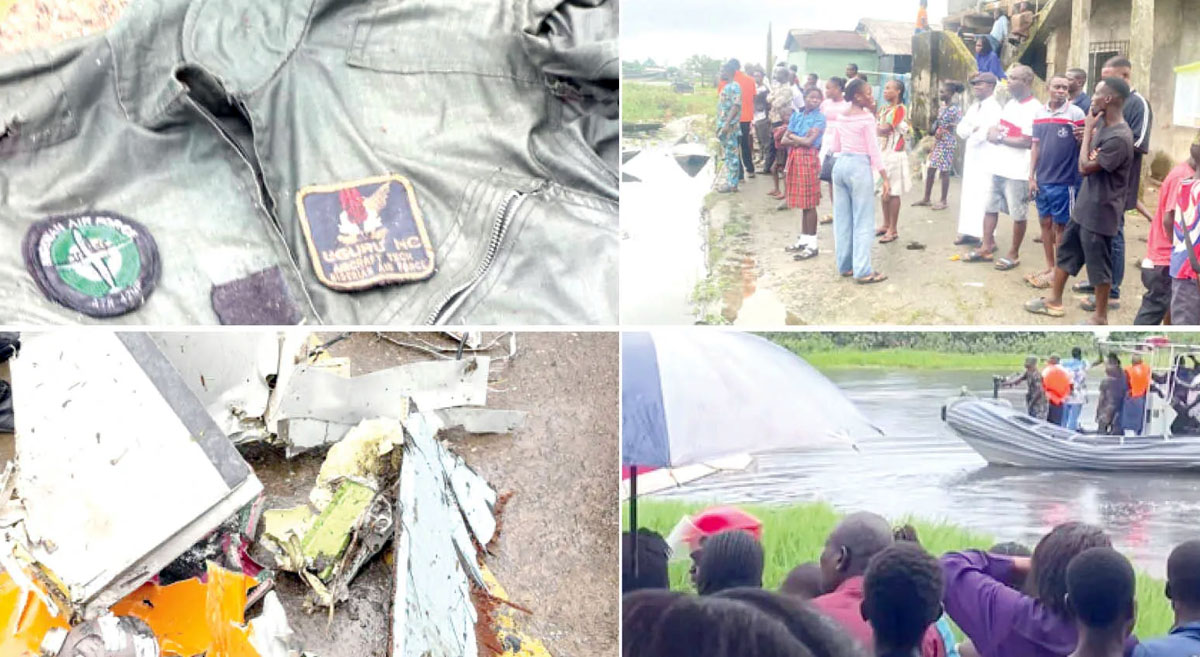
Four Nigerian Air Force (NAF) engineers killed in the Ondo aircraft crash had reportedly travelled to Abuja for documentation ahead of specialised foreign training courses.
The personnel were identified as Master Warrant Officer Matini BA, Flight Sergeant Mohammed AI, Sergeant Izibenikien SI and Sergeant Alafuka C.
According to information surrounding the tragedy, the four engineers had travelled to Abuja as part of preparations for their deployment abroad for professional courses. Their deaths came just days before they were expected to begin the specialised training.
The four were among the 25 people on board the NAF 931 ATR-42 aircraft that crashed in the Igbokoda area of Ilaje Local Government Area of Ondo State. The victims comprised five crew members and 20 passengers.
The aircraft was reportedly on a routine mission when it crashed in the riverine area of Ondo State. Search-and-rescue operations were immediately launched, but the Nigerian Air Force later confirmed that there were no survivors.
The tragedy claimed the lives of several military personnel, including Squadron Leader AP Man-Ugwueje, who was among the aircraft’s crew.
READ ALSO:
- FULL LIST: NAF Releases Names Of 25 Victims Killed In Ondo Crash
- Supreme Council For Sharia Secretary-General Nafiu Baba-Ahmed Dies
- Former NADECO Leader Ralph Obioha Dies At 80
Reports following the crash said Man-Ugwueje had recently been promoted and had married about two weeks before the tragedy.
Another victim, Flying Officer IM Adeshina, was also reportedly a relatively recent addition to the NAF and was said to have distinguished himself during his training.
The deaths have sent shockwaves through the Nigerian military, particularly because some of the personnel were reportedly preparing for further professional development when the tragedy occurred.
The Chief of the Air Staff, Air Marshal Sunday Kelvin Aneke, has ordered a comprehensive investigation into the circumstances surrounding the crash.
The Nigerian Air Force has also appealed to the public to avoid speculation and the circulation of unverified information while the investigation continues.
For the four engineers, what was expected to be the beginning of an important phase in their military careers ended in tragedy, with their planned foreign training cut short by the fatal aircraft crash.
Four NAF Engineers Died Days Before Foreign Course Deployment — Sources
metro
UCH CMD: After Decades Without Muslim, Agunbiade Demands Fair Chance

UCH CMD: After Decades Without Muslim, Agunbiade Demands Fair Chance
‘Let Merit, Not Religion, Decide Next Appointment’
IBADAN — A Muslim stakeholder, Mallam Ibrahim Agunbiade, has called for a transparent and merit-driven process in the appointment of the next Chief Medical Director (CMD) of the University College Hospital (UCH), Ibadan, saying a qualified Muslim candidate should be given a fair chance to lead the institution.
Agunbiade, in a statement on Monday, argued that the leadership history of the premier teaching hospital showed that Muslims had not occupied the position of Chief Medical Director for decades.
He said the situation deserved serious consideration as the process for selecting a successor to the incumbent CMD, Prof. Jesse Abiodun Otegbayo, gets underway.
According to him, Otegbayo, who became CMD in 2019, was reappointed for a second term in 2023.
Agunbiade said the succession of UCH chief executives had included Prof. E. O. Akande (1978–1984), Prof. A. O. K. Johnson (1984–1985), Prof. B. O. Osuntokun (1986–1990), Prof. O. O. Ajayi (1990–1998), Prof. M. O. Olatawura (1998–2003), Prof. A. O. Ilesanmi (2003–2011), Prof. T. O. Alonge (2011–2019) and Otegbayo.
He stressed that his intervention was not intended to question the professional records or achievements of the past CMDs.
Rather, he said, the issue was whether a qualified Muslim professional should continue to be excluded from the highest executive position at the institution.
“How long should a qualified section of the institution’s community wait before it sees one of its own given a genuine opportunity to lead?”
Agunbiade said the question was particularly important because UCH was a federal teaching hospital with a national mandate, serving Nigerians irrespective of religion, ethnicity or background.
‘Not Asking For Religious Favour’
The stakeholder rejected the suggestion that his position amounted to a demand for religious preference.
READ ALSO:
- Troops Take Down Zamfara Bandit Kingpins Baban Love, Mai Zamani, Three Others
- FG Gives N250m To Families Of 37 Miners Who Died In NSCDC Custody
- Tompolo’s PBAT Movement Suspends Campaign Over Ondo Military Crash
He said his argument was that merit and representation should work together, rather than treating them as opposing principles.
“The demand, therefore, is not that UCH should appoint a Muslim because he is Muslim,” he said.
“The demand is that if a Muslim candidate is professionally qualified, experienced, competent and suitable, his religion must not become an invisible barrier to his appointment.”
He noted that the advertised position carried stringent requirements, including medical registration, post-qualification experience, specialist fellowship, consultancy experience, integrity and administrative competence.
According to him, once a candidate meets the professional requirements and emerges as the best person through a credible selection process, religion should not disqualify the candidate.
‘Muslim CMD Will Serve All Nigerians’
Agunbiade also dismissed the notion that appointing a Muslim as CMD would change the character of UCH.
He said the successful candidate would remain the head of a federal institution responsible for providing healthcare to Nigerians of all faiths.
“A Muslim CMD will not turn UCH into a Muslim hospital. He will remain the Chief Medical Director of a federal institution serving every Nigerian who walks through its doors,” he said.
He argued that religious identity should not be an obstacle to professional service.
“Just as a Christian CMD can serve Muslim patients without difficulty, a Muslim CMD can serve Christian patients with the same professionalism,” he added.
‘Let Credentials Decide’
Agunbiade urged the authorities to ensure that all qualified candidates are subjected to the same standards during the selection process.
He called for candidates’ academic and professional credentials, experience, integrity, administrative competence and vision to be carefully assessed.
“Let every qualified candidate compete. Let credentials be examined. Let professional experience be assessed. Let integrity and vision determine the outcome,” he said.
He also referred to wider concerns about religious representation in the leadership of institutions linked to UCH and the University of Ibadan, saying the issue had generated concerns among Muslim stakeholders.
He, however, warned against turning the matter into a religious confrontation.
“This is not a call for religious confrontation. It is not an attack on Christians. It is not a rejection of merit. It is a call for inclusion within merit,” he said.
Agunbiade maintained that if a Muslim candidate emerged as the strongest candidate through a transparent and credible process, his faith should not count against him.
He said giving a qualified Muslim a genuine opportunity after decades without a Muslim CMD would send a powerful message about inclusion and equal opportunity in Nigeria’s public institutions.
According to him, UCH belongs to all Nigerians, and its leadership selection should reflect that principle.
UCH CMD: After Decades Without Muslim, Agunbiade Demands Fair Chance
metro
Troops Take Down Zamfara Bandit Kingpins Baban Love, Mai Zamani, Three Others
Troops Take Down Zamfara Bandit Kingpins Baban Love, Mai Zamani, Three Others
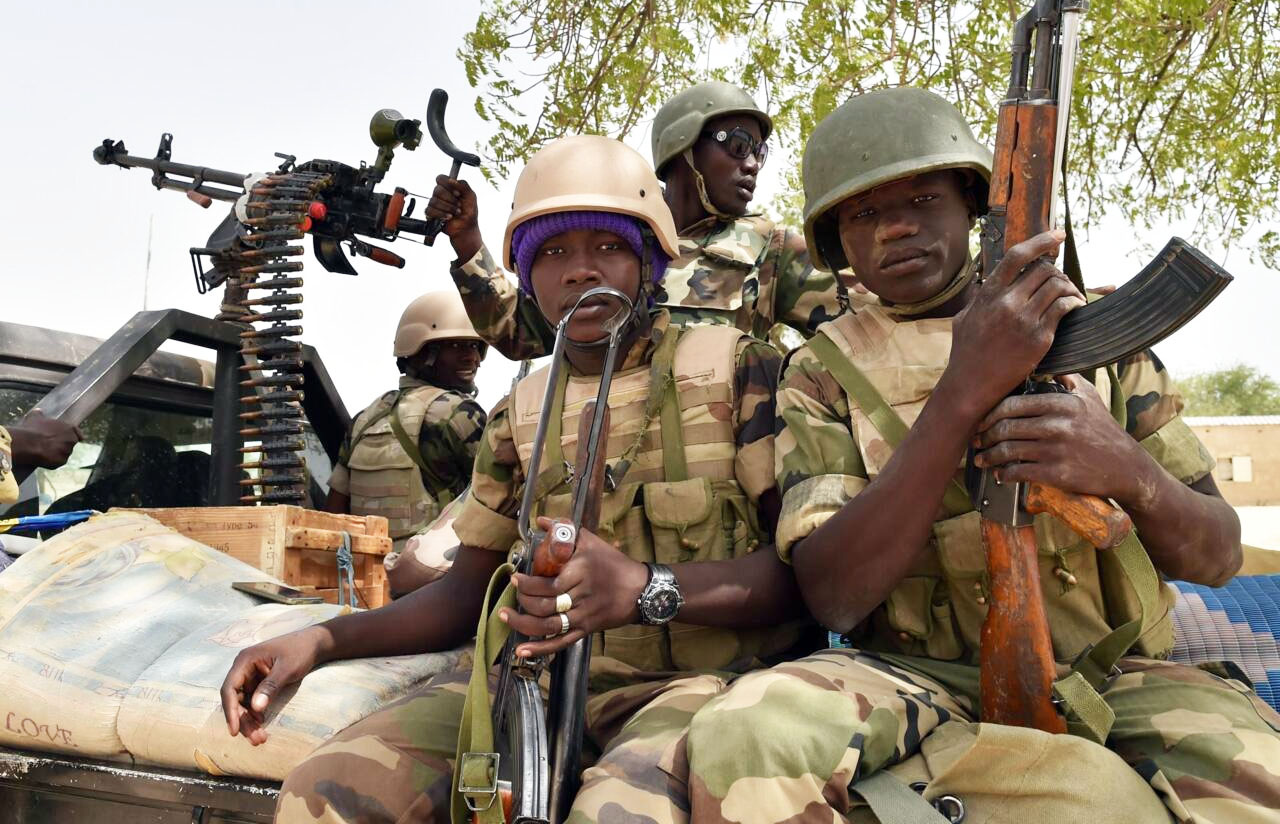
Troops of Operation FANSAN YANMA have killed at least five suspected bandits, including two notorious figures identified as Baban Love and Mai Zamani, during a gun battle in Tsafe Local Government Area of Zamfara State.
The operation reportedly took place in the western axis of Tsafe LGA, where armed groups have maintained a presence and carried out attacks on communities and travellers.
Security sources said Baban Love, who was reportedly operating around Gunja, mobilised members of his gang before they encountered the troops, leading to a fierce exchange of gunfire.
The troops eventually overpowered the armed group, killing at least five suspected bandits, according to reports on the operation.
Mai Zamani was also identified among those killed. He was reportedly the younger brother of Idi Mai Randa, another suspected bandit kingpin who was killed about five months ago.
READ ALSO:
- FG Gives N250m To Families Of 37 Miners Who Died In NSCDC Custody
- Tompolo’s PBAT Movement Suspends Campaign Over Ondo Military Crash
- FULL LIST: NAF Releases Names Of 25 Victims Killed In Ondo Crash
Residents of Kwarin Ganuwa were said to have celebrated the reported deaths of the two bandit leaders, while vehicles belonging to the group were reportedly recovered after the encounter.
Security sources said efforts were ongoing to identify the other suspected bandits killed during the operation and assess the weapons and other items recovered from the scene.
The latest operation is part of intensified military operations in Zamfara State aimed at disrupting the activities of armed groups and restricting their movement across the state’s forests and communities.
Zamfara has continued to experience attacks and abductions despite sustained military operations. Governor Dauda Lawal said on Monday that the state government was working to improve security response time, particularly in areas such as Tsafe, where notorious bandit leader Ado Alero and his gang have been active.
The governor said poor road access in some areas had affected the ability of security personnel to respond quickly to attacks, while the government was also deploying technology, including drones, to improve surveillance.
The military has yet to publicly release a detailed official statement on the reported killing of Baban Love, Mai Zamani and the other suspected bandits.
Troops Take Down Zamfara Bandit Kingpins Baban Love, Mai Zamani, Three Others
-

 metro2 days ago
‘I Thought I Was Dead’ — Hairstylist’s Daring Escape From Kidnappers After Benin-Ore Ambush
-

 metro3 days ago
Tension as Kidnappers Threaten to Kill Abducted Oyo Corps Members
-

 metro24 hours ago
Tragedy Strikes FMC: Medical Director Loses Two Daughters—A Doctor and a Pharmacist—Within 48 Hours
-

 metro1 day ago
Transporters Urge IGP Disu to Arrest Illegal Highway Tax Collectors
-

 metro2 days ago
Court Restricts Osun Accounts Over $13.9m Arbitration Award
-

 Politics1 day ago
2027: Soludo Govt Accuses Peter Obi Of Plot To Destroy APGA
-
 metro1 day ago
Army, DSS, Amotekun Kill ISWAP Commander Planning Attacks in Southern Nigeria
-

 Entertainment2 days ago
“Sometimes, I Wonder Why I Married My Husband” — Omotola