

Politics
Fubara’s return date confirmed as Rivers emergency rule winds down
Fubara’s return date confirmed as Rivers emergency rule winds down
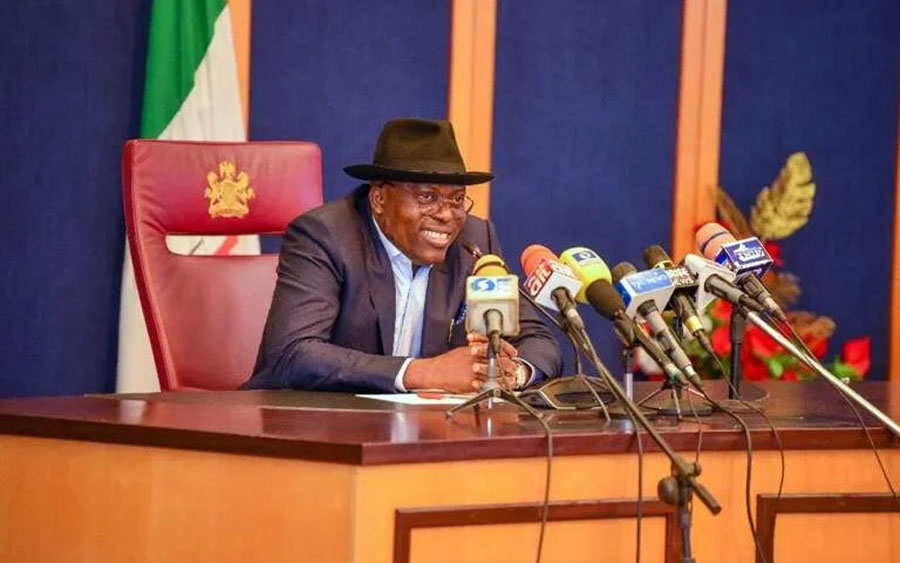
The date for the return of suspended Rivers State Governor, Siminalayi Fubara, has been confirmed, coming just as the six-month emergency rule imposed on the state draws to a close this week.
President Bola Tinubu declared the emergency rule on March 16, following political unrest between Fubara and his predecessor Nyesom Wike.
The proclamation suspended Fubara, his deputy, Prof. Ngozi Odu, and the State House of Assembly, while former Chief of Naval Staff, Vice Admiral Ibok-Ete Ibas (rtd.), was appointed as state administrator.
With Ibas now preparing to exit office, close aides of the governor disclosed that Fubara is expected back in the state before the weekend.
“As I speak with you the governor is not back. All those pictures you see on social media are old. But he may come in today (Saturday) or tomorrow (Sunday),” an aide disclosed.
Ahead of the transition, the state government has announced plans for an inter-denominational thanksgiving service to usher in the return of democratic governance. The event will take place at the Ecumenical Centre, Port Harcourt, according to a statement by the Secretary to the State Government, Dr. Ibibia Worika.
READ ALSO:
- How Saudi-France diplomatic initiative moved Palestine one step closer to statehood
- Young man loses life in fatal clash over romantic rivalry
- Dangote petrol is N65 cheaper in other countries – Importers
Meanwhile, the anticipated comeback has stirred mixed reactions. Some elders insist the governor has been politically weakened, while others argue that power has shifted decisively to his predecessor and political godfather, the Minister of the Federal Capital Territory, Nyesom Wike.
High Chief Sunny Chukumele, convener of the Coalition of Rivers State Leaders of Thought, lamented that the last six months had placed the state in what he described as a state of “capture.”
He said, “The state is captured. That is my position. We will only get back to where we were before the liberation; and now it is back to Egypt. Rivers State has been successfully captured. The future of the state would be determined by the people of the state going forward.”
Echoing similar sentiments, elder statesman Asukewe Iko-Awaji argued that both political unity and the state’s economy had been eroded by Fubara’s absence.
“The man has been away from office for six months. Some of the companies working in the state have pulled out and it will take another six months to put himself together to bring back these companies,” he noted.
But former senator and Wike ally, Olaka Wogu, insisted that the prolonged standoff had been about control of political structures rather than money.
“The fact is that the man fought for his structure and kept it. The governor is part of the structure,” he said.
Fubara’s return date confirmed as Rivers emergency rule winds down







Politics
2027: Northern Lecturers Back Tinubu, ASUU Disowns Endorsement
2027: Northern Lecturers Back Tinubu, ASUU Disowns Endorsement
More than 600 senior academics from public universities across Northern Nigeria have endorsed President Bola Ahmed Tinubu for a second term in the 2027 presidential election, triggering an immediate reaction from the Academic Staff Union of Universities, ASUU.
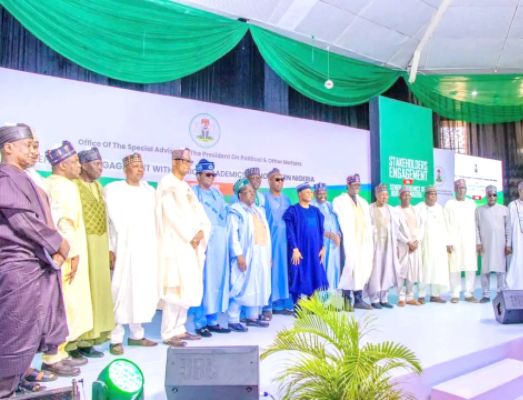
The lecturers announced their support at a stakeholders’ engagement convened by the Special Adviser to the President on Political Matters, Ibrahim Masari, in Kaduna State.
The meeting, held behind closed doors at the Umaru Musa Yar’Adua Centre, brought together senior academics and political leaders to assess the performance of the Tinubu administration and discuss the political road to 2027.
The gathering was attended by several prominent political figures, including Kaduna State Governor, Uba Sani; Zamfara State Governor, Dauda Lawal; Yobe State Governor, Mai Mala Buni; Borno State Governor, Babagana Zulum; and Gombe State Governor, Inuwa Yahaya.
Also present were the Minister of Defence, Bello Matawalle; Minister of Housing, Muttaqha Rabe Darma; and former Katsina State Governor, Aminu Bello Masari.
Although journalists were initially barred from the meeting, they were later allowed to witness the presentation of the communiqué issued at the end of the deliberations.
Lecturers declare support for Tinubu
Reading the communiqué, the Vice Chancellor of Kaduna State University, Prof Abdullahi Ibrahim Musa, said the academics had critically examined the performance of the Tinubu administration since its assumption of office in May 2023.
They assessed the economy, security, education, infrastructure and social conditions, with particular attention to the challenges confronting Northern Nigeria.
According to the academics, Tinubu inherited an economy suffering from fiscal, monetary and structural challenges, alongside insecurity, infrastructure deficits and gaps in human capital development.
They also acknowledged that some of the Federal Government’s economic reforms had imposed significant hardship on Nigerians through increased living and transportation costs and inflationary pressures.
However, they argued that the reforms had also improved government revenue and public finance.
The academics listed education financing, agriculture, infrastructure, business support, compressed natural gas, investment and the digital economy among areas where they believed the administration had recorded progress.
After their deliberations, the lecturers declared their support for Tinubu’s re-election.
“We resolved to express our support for the re-election of President Bola Ahmed Tinubu, GCFR, in the 2027 presidential election,” they stated.
‘Our support is not a blank cheque’
Despite endorsing the President, the academics warned that their support should not be interpreted as unconditional.
The lecturers urged the Federal Government to listen to Nigerians, respond to legitimate criticism and urgently address the rising cost of food and transportation, unemployment and insecurity.
“Our support should not be interpreted as a blank check,” they said.
They also called for a more comprehensive approach to tackling insecurity, combining military operations with intelligence gathering, effective policing, community engagement and the creation of economic opportunities.
The academics further demanded increased government investment in agriculture, education, healthcare, roads, electricity, irrigation and other critical infrastructure across Northern Nigeria.
ASUU distances itself
But the endorsement quickly ran into opposition from ASUU, which distanced itself from the declaration and reaffirmed its long-standing position as an apolitical union.
ASUU President, Prof Chris Piwuna, said individual members of the union were free to belong to political parties and participate in politics in their personal capacities, but stressed that such activities must not be presented as the position of ASUU.
Piwuna maintained that the union had never endorsed a political party or presidential candidate and would not do so.
He warned members against dragging the union into the controversy, insisting that ASUU remained committed to its apolitical status.
The ASUU president also described it as misleading to automatically associate political activities undertaken by lecturers, vice-chancellors or other academics with the union.
According to him, individual academics can exercise their constitutional rights, but ASUU cannot be presented as having endorsed any candidate.
‘The meeting was for mobilisation’
The controversy has been heightened by the stated objective of the Kaduna meeting.
An invitation letter for the event described it as an interactive session involving senior academics from Northern Nigeria and selected government officials.
The theme was “Consolidating the Renewed Hope Agenda: Three Years of President Bola Ahmed Tinubu’s Achievements and the Road to 2027.”
The letter said the meeting was designed not only to assess the administration’s performance in the economy, security, education, infrastructure and social welfare, but also to secure the endorsement and active support of academics for Tinubu’s re-election bid.
It reportedly stated that the purpose of the gathering was “not open-ended debate but mobilisation.”
Attendance was said to be voluntary, with the organisers encouraging academics who were favourably disposed towards the objective of the gathering to participate.
Reports also indicated that logistics and transportation arrangements were made for participants, although claims about reimbursement and the amount allegedly received by individual participants could not be independently verified.
Northern universities represented
Sources at the meeting said most public universities across the 19 northern states were represented.
Academics from the three northern geopolitical zones were reportedly given opportunities to address the gathering.
Prof Musa spoke on behalf of academics from the North-West, while the Chief Librarian of the Federal University Lafia, Prof Abdulrazaq Baba Abdulrahman, represented the North-Central zone.
A representative of the Federal College of Agriculture, Gwoza, spoke for the North-East.
Professor Mohammed Umar Sanda of the Federal University Dutsinma was also said to have attended.
However, Prof Mainasara Yakubu Kurfi of Bayero University, Kano, whose name was mentioned as one of those present, reportedly denied attending the meeting, saying he was not even aware of the gathering.
Masari urges academics to join politics
Speaking at the event, Masari urged academics to become more involved in determining the country’s political direction rather than remaining on the sidelines and merely criticising government policies.
He argued that the Tinubu administration’s achievements in the education sector should encourage academics to participate actively in the political process.
The engagement is part of wider political consultations as the Tinubu camp intensifies efforts to consolidate support ahead of the 2027 presidential election.
The latest development also comes amid a series of endorsements and political consultations involving groups across the country.
2027 battle gathers momentum
With the 2027 presidential election drawing closer, political activities are increasingly taking centre stage, with the Tinubu camp targeting influential groups and constituencies for support.
The Northern lecturers’ endorsement is therefore likely to generate further political debate, particularly because of the high-profile academic figures reportedly involved and ASUU’s swift rejection of any attempt to associate the union with the declaration.
While the academics say their endorsement followed an assessment of Tinubu’s performance, ASUU’s position makes it clear that the declaration cannot be treated as an endorsement by the union itself.
The development has opened yet another front in the emerging 2027 political battle, with Tinubu’s supporters pushing for continuity and opponents expected to scrutinise both the administration’s record and the growing campaign for his second term.
2027: Northern Lecturers Back Tinubu, ASUU Disowns Endorsement
Politics
Labour Party Disowns Arabambi Over Peter Obi Records Lawsuits
Labour Party Disowns Arabambi Over Peter Obi Records Lawsuits
The Labour Party (LP) has distanced itself from former National Publicity Secretary, Abayomi Arabambi, over lawsuits seeking access to the academic and NYSC records of Peter Obi, saying he is no longer a member of the party and did not institute the cases on its behalf.
The clarification was issued on Monday by the party’s National Publicity Secretary, Ken Eluma Asogwa, following reports describing Arabambi as an LP chieftain in connection with his legal action against the West African Examinations Council (WAEC), the University of Nigeria, Nsukka (UNN) and the National Youth Service Corps (NYSC).
Asogwa said the party had initially ignored reports about the lawsuits when they circulated on social media but decided to respond after mainstream media organisations also identified Arabambi as an LP chieftain.
According to the party, Arabambi ceased to be an LP member after he was among 25 members suspended by the party’s National Executive Council (NEC) on March 18, 2026, over alleged infractions bordering on anti-party activities.
The LP said the suspension was subsequently ratified by its National Convention on April 28, 2026. Following that ratification, the affected individuals ceased to be members of the party, the leadership said.
Asogwa added that no organ of the party had met since then to revisit or reverse the decision concerning the affected members.
READ ALSO:
- “Not as Corrupt as the World Thinks”: Reno Omokri Defends Nigeria’s Image and Safety
- FBI investigated people linked to Tinubu, not President — Omokri
- 2027: Sowore Promises ₦500,000 Minimum Wage, Free Education, 24-Hour Electricity
The Labour Party consequently urged the public and media organisations to stop presenting Arabambi as an LP chieftain or representative, stressing that he could not have instituted the cases as a member of the party.
The party also warned that if Arabambi had presented himself as a representative or chieftain of the LP, such representation was unauthorised and could amount to impersonation. It said its lawyers were reviewing the matter and could consider further legal action, including a possible petition to law-enforcement authorities.
The Labour Party, however, clarified that its statement should not be interpreted as an endorsement or rejection of the substance of Arabambi’s court cases. The party said its immediate objective was to correct the impression that he was acting on its behalf.
The controversy followed three separate suits filed at the Federal High Court in Abuja, in which Arabambi is seeking access to official records relating to certificates and other documents connected with Obi.
The suits were filed against WAEC, NYSC and UNN under the Freedom of Information Act (FOIA). The WAEC case is marked FHC/ABJ/CS/2064/2026, while the NYSC case is marked FHC/ABJ/CS/2063/2026. Both were filed on September 1, 2026. The suit against UNN, marked FHC/ABJ/CS/2144/2026, was filed on September 9.
Arabambi, through his lawyer Anderson Asemota, is asking the court to compel the institutions to release records in their custody relating to Obi’s academic and national service credentials.
The former LP spokesman has maintained that the lawsuits are not asking the court to determine whether the certificates Obi submitted to the Independent National Electoral Commission (INEC) are genuine or forged.
Rather, he says he wants access to the institutions’ underlying official records from which the status and particulars of the certificates can be established.
In the case involving UNN, the requested information relates to a Bachelor of Arts degree in Philosophy reportedly awarded to Obi in 1984.
Arabambi is also seeking records relating to an NYSC certificate and information concerning the particulars contained in the relevant records.
The legal action against WAEC followed what Arabambi described as the examination body’s refusal to provide information requested under the Freedom of Information Act. He similarly alleged that UNN and NYSC failed to provide the requested records or satisfactory reasons for withholding them.
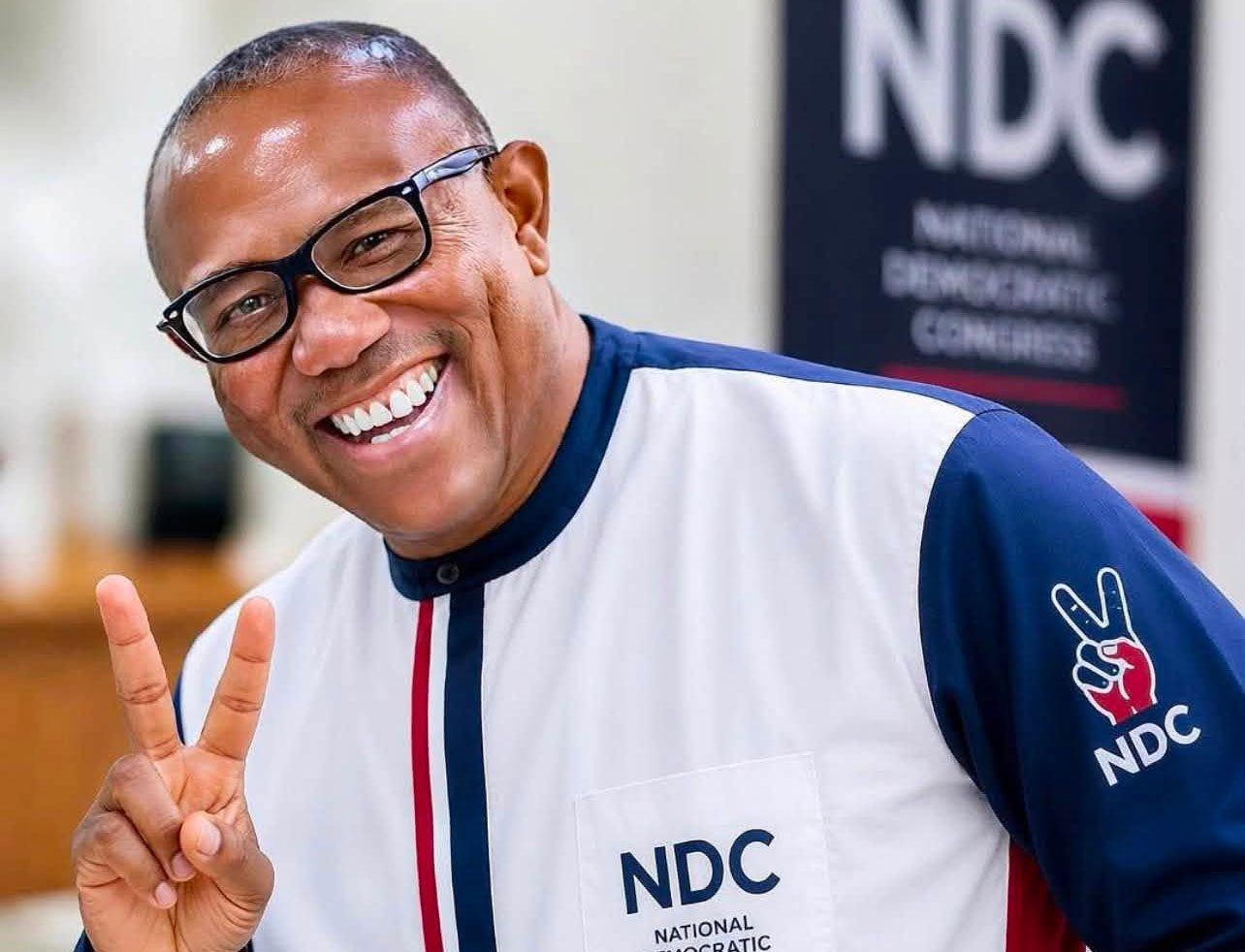
The lawsuits have generated political reactions because Obi, who was the Labour Party presidential candidate in the 2023 election, is now the presidential candidate of the Nigerian Democratic Congress (NDC) for the 2027 election.
The NDC has dismissed the lawsuits and defended Obi’s academic background. Its spokesman, Osa Director, said Obi’s academic history was verifiable and questioned the political significance of the legal action.
The NDC also challenged Arabambi to produce evidence supporting any allegation that Obi’s credentials were questionable.
For the Labour Party, however, the immediate issue is Arabambi’s membership status rather than the merits of the cases. The party has made clear that it does not recognise him as an LP member and that the lawsuits should not be regarded as actions instituted by the party.
The courts have yet to determine whether WAEC, UNN and NYSC should release the records sought by Arabambi. The Labour Party’s latest position also does not amount to a judicial finding on the authenticity or otherwise of any of Obi’s credentials.
Labour Party Disowns Arabambi Over Peter Obi Records Lawsuits
Politics
Desmond Elliot Apologises to Gbajabiamila, Seeks Return to APC
Desmond Elliot Apologises to Gbajabiamila, Seeks Return to APC
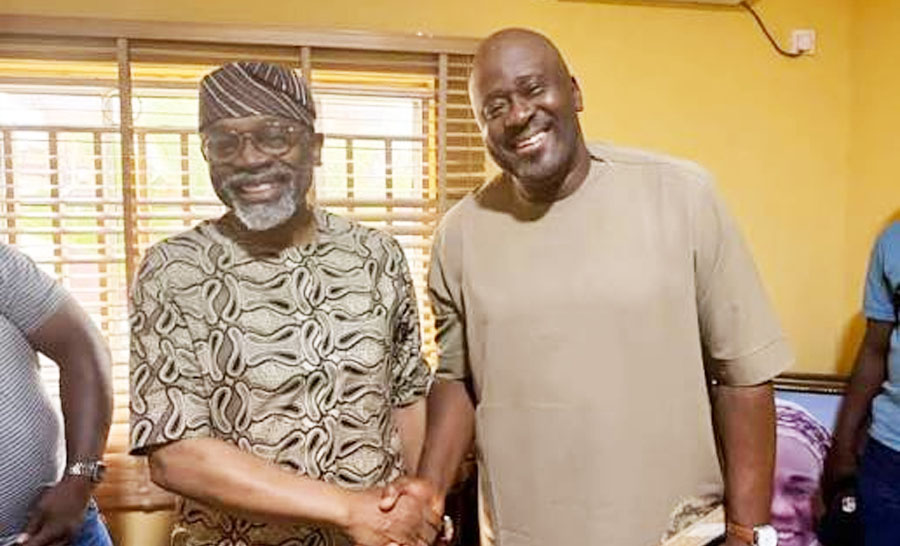
Former Lagos State House of Assembly member Desmond Elliot has publicly apologised to former Speaker of the House of Representatives and current Chief of Staff to President Bola Ahmed Tinubu, Femi Gbajabiamila, as he seeks to repair their relationship and return fully to the fold of the All Progressives Congress (APC).
Elliot, who represented Surulere Constituency I in the Lagos State House of Assembly from 2015, made the appeal amid renewed political activity ahead of the 2027 elections and after losing the APC ticket for the constituency in the party’s latest primary.
The former Nollywood actor’s latest appeal is the latest development in a political relationship that has experienced considerable strain in recent years.
Elliot had been regarded as a prominent political associate of Gbajabiamila, who represents Surulere in the broader Lagos political structure. Their relationship, however, came under pressure following political developments surrounding the Lagos State House of Assembly leadership crisis.
In his latest appeal, Elliot asked Gbajabiamila to forgive him for any offence he may have committed and expressed his desire for reconciliation.
The former lawmaker’s move comes after he failed to secure the APC nomination for Surulere Constituency I, effectively ending his bid for another term in the Lagos Assembly under the party.
Barakat Olawunmi Odunuga-Bakare emerged as the APC candidate following the party’s primary election.
The outcome marked a major setback for Elliot, who had sought to continue his legislative career after serving in the Assembly since 2015.
The political fallout between Elliot and sections of the Lagos APC leadership had previously become public during the controversy surrounding the leadership of the Lagos State House of Assembly.
READ ALSO:
- “Beyond 100%”: Governor Dauda Lawal Backs President Tinubu for 2027
- NDLEA Intercepts 44kg UK-Linked Cannabis, Drugs Hidden in Bread, Speakers
- Nwifuru Dismisses Cubana Chief Priest as ‘Attention-Seeker’
In May 2026, Elliot had also publicly apologised to Gbajabiamila, referring to him as his political mentor and acknowledging that he might have offended him.
“To err is human, to forgive is divine,” Elliot said while appealing for forgiveness.
He also denied allegations that he was involved in moves against then-Lagos Assembly Speaker Mudashiru Obasa, whose leadership had become the subject of intense political controversy.
Gbajabiamila had earlier said that he defended Elliot during the crisis and that the controversy had placed his own position as Chief of Staff to President Tinubu under pressure.
According to Gbajabiamila, allegations surrounding Elliot had contributed to a situation in which he was forced to explain his position to the President. He maintained that he had defended the former lawmaker and told Tinubu that Elliot was not part of the group behind the moves against Obasa.
The dispute therefore went beyond a personal disagreement and became intertwined with the wider political contest within the Lagos APC.
Elliot’s latest reconciliation effort comes against the backdrop of the changing political dynamics in Surulere and Lagos as political parties begin positioning themselves for the 2027 general elections.
The former lawmaker’s defeat in the APC primary also means that he will not return to the Lagos Assembly through the party’s ticket for the next legislative term.
The APC primary was described by Gbajabiamila as peaceful, fair and orderly, despite reports of tensions surrounding the contest and Elliot’s concerns about the process.
Elliot had previously obtained the APC nomination form in his bid to return to the Assembly, but he ultimately failed to secure the party’s endorsement.
Following the primary defeat, reports emerged that the former actor had returned to Nollywood, reviving his entertainment career after more than a decade in active politics.
Elliot became a household name in Nigeria through his work as an actor before entering politics. He represented Surulere Constituency I in the Lagos Assembly for three consecutive terms beginning in 2015.
His political career has been closely associated with the Lagos APC political structure, making his relationship with influential party figures particularly important to his future political ambitions.
The latest apology is therefore being viewed not only as an attempt to resolve a personal political disagreement but also as part of Elliot’s effort to rebuild relationships within the ruling party.
For the former lawmaker, reconciliation with Gbajabiamila could potentially help restore his standing within the Lagos political establishment, although his immediate political future remains uncertain following his loss at the APC primary.
The development also comes at a time when political alignments are rapidly evolving ahead of 2027, with politicians across Lagos and other parts of the country reassessing their alliances, party positions and electoral strategies.
While Elliot has expressed a desire to return to the APC fold, the extent to which the reconciliation will translate into a renewed political role remains unclear.
For now, his public appeal to Gbajabiamila marks another attempt by the former lawmaker to close a difficult chapter in their political relationship and rebuild bridges within the Lagos APC.
Desmond Elliot Apologises to Gbajabiamila, Seeks Return to APC
-

 metro3 days ago
Woman disguises as Muslim woman in Niqab to steal in Ado-Ekiti market, video sparks outrage
-

 metro3 days ago
Ondo Herbal Drink Tragedy: Survivor Vows Never to Drink Again as Death Toll Tops 30
-
 Business2 days ago
Dangote: ₦525 Refinery Shares Could Rise to ₦10,000
-

 metro3 days ago
Sokoto Cleric Stabbed Twice in Neck After Juma’at Prayer, Attacker Killed
-
 News1 day ago
SERAP Threatens Legal Action Over ₦126bn INEC Electoral Funds
-

 metro2 days ago
MURIC fires back at Peter Obi: Forget Sallah ceremony, free Nigerian Muslims
-

 metro2 days ago
Abia Police Arrest Father, Three Others Over Alleged Attempt to Sell 16-Month-Old Daughter
-
 International2 days ago
Trump Tells Supporters to ‘Cheat Like Hell’ Ahead of US Election