

Africa
Nigeria withdraws fighter jets as Benin recovers after failed coup attempt

Nigeria withdraws fighter jets as Benin recovers after failed coup attempt
Nigeria has withdrawn the fighter aircraft it deployed in the Benin Republic following Sunday’s attempted coup, after security assessments confirmed that the situation in the neighbouring country has stabilised. Security sources said the aircraft—initially dispatched from Lagos for surveillance and regional monitoring—were recalled on Sunday afternoon when updated intelligence indicated that the crisis no longer posed “immediate threat to Nigeria’s territorial security.”
The failed coup, aimed at toppling the democratic government of President Patrice Talon, began with an early morning assault on the presidential residence in Cotonou.
Mutinous soldiers, dressed in full military uniform, attempted to seize power but were repelled by loyal forces. Unable to capture the President, the rebels proceeded to take over the Office de Radiodiffusion et Télévision du Bénin (ORTB), briefly controlling the national broadcast signal.
The crisis escalated rapidly, but the Beninese National Guard responded decisively, surrounding the television station and blocking the mutineers’ escape routes.
By late Sunday, loyalist security units had secured all major government installations, restoring order across the capital city.
READ ALSO:
- Dozen Soldiers Held as Benin Govt Thwarts Coup Against President Patrice Talon
- Benin govt says coup attempt foiled as soldiers seize state TV, gunfire rocks Cotonou
- BREAKING: Soldiers Announce Coup in Benin Republic, Declare President Patrice Talon Removed
“The situation is under control. The National Guard has everything surrounded,” a senior security official said, noting that negotiations were initiated to persuade the barricaded mutineers to surrender peacefully.
President Talon, reported safe in an undisclosed location, has yet to address the nation. Meanwhile, the streets of Cotonou remained tense but calm, with no reports of widespread violence or civilian casualties.
Presidential spokesman Bayo Onanuga confirmed in a statement on X that the coup had collapsed.
“Mutineers in military uniform who attempted to overthrow President Patrice Talon’s democratic government have failed. They seized the National TV after failing to enter the presidential residence,” he wrote.
He added that Colonel Pascal Tigri, the alleged leader of the mutiny, was on the run, while several members of the group had been apprehended.
Benin’s Interior Minister Alassane Seidou also appeared on national television, confirming that the military uprising had been foiled. “Early on Sunday, 7 December 2025, a small group of soldiers launched a mutiny aimed at destabilising the state and its institutions. The armed forces remained loyal to the republic, and their response allowed them to foil the attempt,” he said.
The Beninese government has since urged citizens to resume their normal activities, assuring the public that the security situation remains firmly under control.
Nigeria withdraws fighter jets as Benin recovers after failed coup attempt












Africa
South Africa: 27 Killed, 26 Injured in Separate Mass Shootings
South Africa: 27 Killed, 26 Injured in Separate Mass Shootings
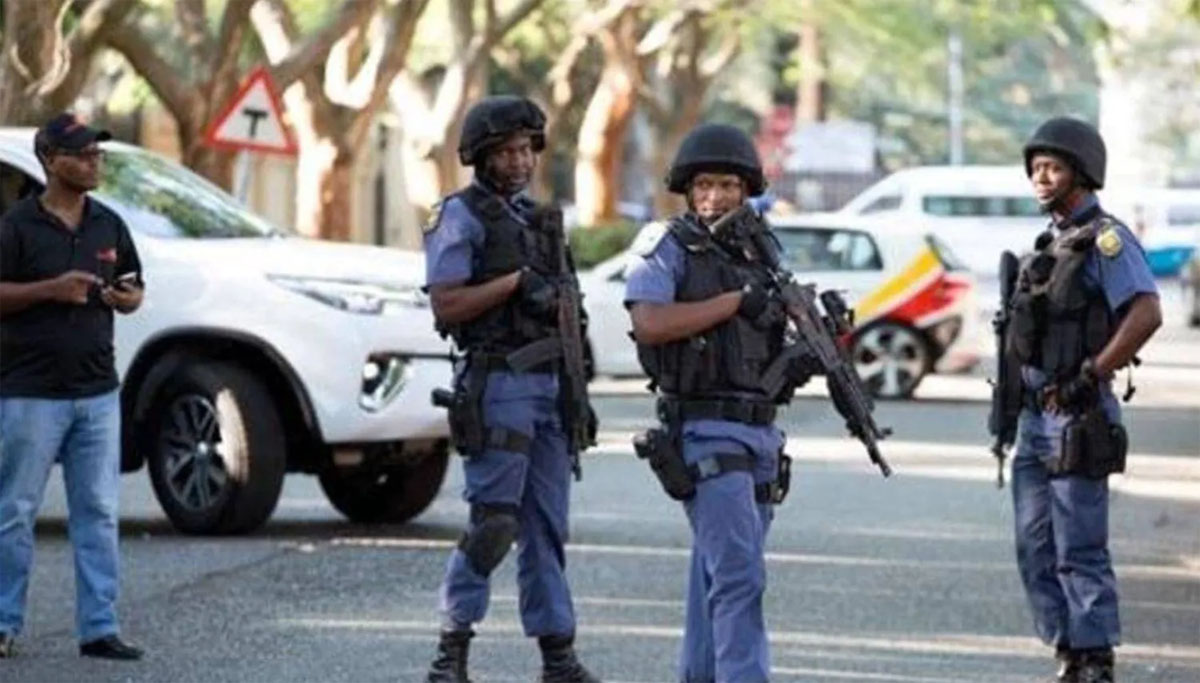
At least 27 people have been killed and 26 others injured in two separate mass shootings in South Africa, with police launching investigations and manhunts for the attackers.
The shootings occurred within hours of each other in Gauteng and Western Cape provinces, with the first attack reported at a tavern in Wedela, southwest of Johannesburg, on Saturday night, followed by another shooting at an entertainment venue in Lwandle, near Cape Town, in the early hours of Sunday.
In Wedela, police said gunmen opened fire on patrons at a tavern at about 9:30 p.m. on Saturday.
The South African Police Service (SAPS) said 17 people were killed in the attack, comprising 13 men and four women.
At least 15 people were also injured and taken to medical facilities for treatment.
According to the police, the attackers were armed with AK-47 rifles and pistols. They allegedly opened fire on people outside the tavern before entering the premises and continuing the shooting.
READ ALSO:
- Abuja Police Arrest Woman, Two Hotel Workers Over Man’s Body Dumped Under Bridge
- Bauchi Police Arrest 26-Year-Old Man Over Rape Of 50-Year-Old Woman
- 2027: Lawal Challenges Wike To Clarify Allegiance Over Rainbow Coalition
The gunmen also reportedly searched some patrons and took their mobile phones before escaping in two unidentified vehicles.
Police have launched a manhunt for the suspects, while investigations are ongoing to establish the motive for the attack and identify those responsible.
A few hours later, another shooting occurred at an entertainment venue in Lwandle, a township near Cape Town.
Police said gunmen entered the venue, which also operates as a shisanyama, a popular South African establishment serving grilled meat, at about 1:46 a.m. on Sunday and opened fire on people inside.
The attack left 10 people dead and 11 others injured.
Five victims reportedly died at the scene, while five others later died after being taken to medical facilities.
Western Cape police commissioner Lieutenant General Sizakhele Dyantyi established a multidisciplinary investigative team led by serious violent crime detectives to investigate the attack and pursue the perpetrators.
No arrests had been announced in connection with either shooting at the time of the latest police updates.
The two incidents came days after another deadly shooting in KwaMakhutha, south of Durban, where 11 people were killed and three others injured at a house party.
The KwaZulu-Natal attack occurred on Tuesday night, September 22, according to police.
Authorities said some of the victims were known to Crime Intelligence in connection with alleged illegal activities, although investigators had not established a definitive motive. Police said a possible conflict between rival groups was among the lines of inquiry.
The three shootings have renewed concerns over gun violence in South Africa, particularly deadly attacks involving groups of armed suspects.
However, authorities have not established any connection between the shootings in Wedela, Lwandle and KwaMakhutha. Investigations into the individual incidents remain ongoing.
South Africa: 27 Killed, 26 Injured in Separate Mass Shootings
Africa
South Africa: Two Women Arrested Over Alleged Rape, Kidnap of E-Hailing Driver
South Africa: Two Women Arrested Over Alleged Rape, Kidnap of E-Hailing Driver
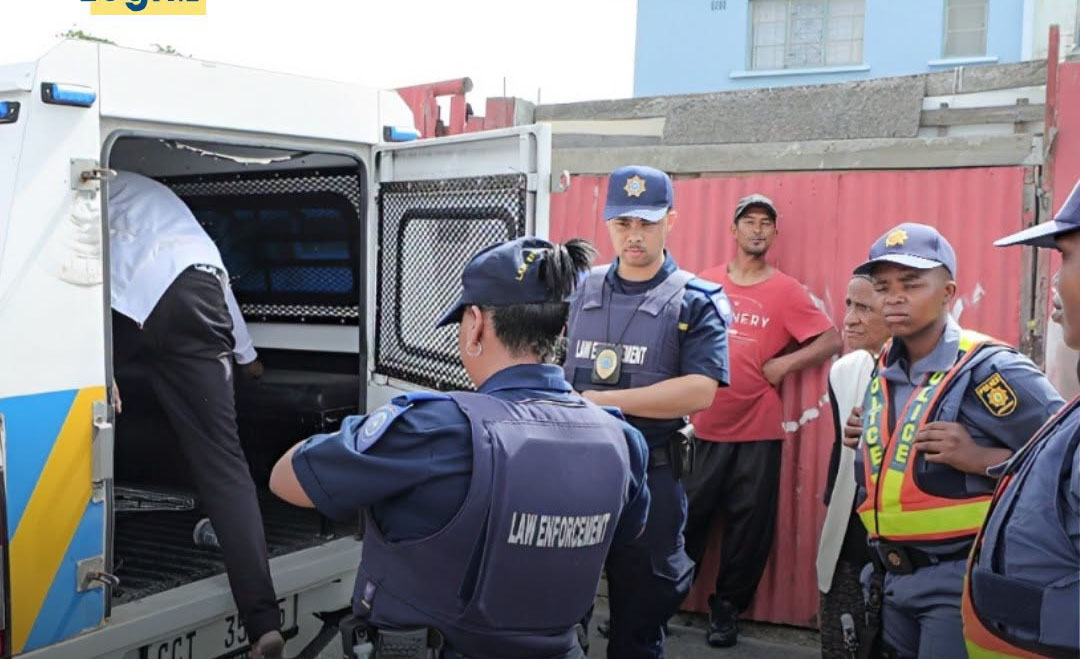
South African police have arrested five suspects, including two women and a teenager, after a 25-year-old e-hailing driver was allegedly kidnapped, sexually assaulted and held for ransom in Cape Town.
The incident occurred in the Steenberg area of Cape Town on Saturday, September 12, 2026, after the driver reportedly went to meet a woman he had previously connected with through his e-hailing business.
Police said the driver’s brother alerted authorities after the suspects allegedly contacted him and demanded R4,000 in cash for the driver’s release.
Following the report, Steenberg police launched an investigation and used a vehicle tracking device to establish the driver’s location.
The tracking information led officers to Southampton Road in Heathfield, where they found and rescued the 25-year-old driver.
According to police, the victim had met one of the female suspects about a week before the incident through his e-hailing business.
The two reportedly exchanged telephone numbers and remained in contact for several days before arranging to meet.
Police allege that when the driver went to meet the woman on Saturday, he was instead kidnapped by the group and taken to another location.
The two female suspects allegedly sexually assaulted the driver while the other suspects were involved in holding him captive.
The five suspects arrested comprise two women aged 23 and 34, two men aged 42 and 48, and a 16-year-old boy.
The teenager is the youngest of the suspects arrested in connection with the case.
The arrests followed the alleged ransom demand made to the victim’s brother. After receiving the report, police acted on information from the vehicle tracking system and were able to locate the driver and bring him to safety.
READ ALSO:
- Four-Storey Building Collapses in Enugu, Workers Trapped Inside
- 27-Year Wait Ends as Construction Begins on New Dutse Emir’s Palace
- Mother ‘sold daughter’s abuse videos for $300’: Nigeria child pornography case shocks nation
The suspects are expected to appear before the Wynberg Magistrate’s Court on Monday, September 14, 2026, where they are expected to face charges relating to the alleged kidnapping and rape.
The case has drawn attention to the safety challenges confronting e-hailing drivers, who regularly meet passengers, customers and other contacts at different locations, sometimes without knowing the people they are meeting.
The incident also highlights the fact that men can be victims of rape and sexual violence. Sexual assault can affect people of any gender, and the circumstances of an alleged attack should be treated with the same seriousness regardless of whether the victim is male or female.
However, the suspects have not been convicted of any offence. The allegations against them will be tested before the court, and they remain entitled to due process under South African law.
Police have not disclosed further details about the alleged sexual assault or indicated whether additional arrests are expected.
Investigations are continuing as authorities work to establish the full circumstances surrounding the alleged kidnapping, sexual assault and ransom demand.
The incident comes amid broader concerns about the safety of e-hailing operators in Cape Town and other parts of South Africa, with driver associations and operators repeatedly calling for stronger measures to protect drivers from attacks and criminal activities while carrying out their work.
South Africa: Two Women Arrested Over Alleged Rape, Kidnap of E-Hailing Driver
Africa
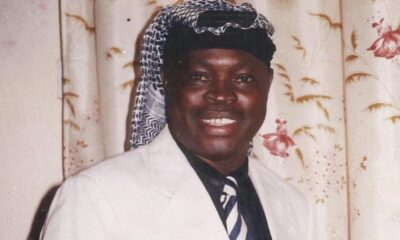
Murder of Nigerian Bishop in South Africa Sparks Outcry Over Unsolved Killings

Murder of Nigerian Bishop in South Africa Sparks Outcry Over Unsolved Killings
Family and community leaders rally for justice after 58-year-old cleric from Ekiti is assassinated in his Johannesburg residence.
To his congregation and loved ones, Nigerian clergyman Bishop Taiwo Michael Fakunle was a pillar of faith and moral guidance. But that sanctuary was violently shattered inside his Kensington home in Johannesburg when two gunmen forced their way inside and opened fire at point-blank range.
Hit more than seven times, the 58-year-old Ekiti native died at the scene, sending shockwaves across the Nigerian expatriate community and turning deep grief into a collective cry for justice.
Leading the push for accountability, the Nigerian Citizens Association South Africa (NICASA) voiced the community’s sorrow and growing frustration with violent crime.
READ ALSO:
- Jetour T2 PHEV Storms Abuja as Jetour Steps Up Nigeria Expansion
- Obi Explains Why He Won’t Step Down for Atiku in 2027
- ASUU Threatens Nationwide Strike Over Unpaid Salaries, Unimplemented Agreement
Association leaders stressed that Bishop Fakunle’s family, church, and compatriots deserve clear answers rather than empty reassurances.
Urging South African investigators to act with speed and transparency, the group warned authorities against letting the tragedy become another forgotten statistic in an endless stack of unsolved homicides.
As detectives at Jeppe Police Station proceed with the murder inquiry, community heads are calling for robust oversight from Nigerian diplomats while urging the public to exercise restraint.
Despite the intense anger surrounding the brazen attack, leaders emphasized that justice must be pursued through legitimate legal channels.
As mourners across South Africa and Nigeria remember the slain bishop, their message to investigators remains clear: the community will not look away until those responsible are brought before a judge.
Murder of Nigerian Bishop in South Africa Sparks Outcry Over Unsolved Killings
-

 metro3 days ago
$155m Left Behind, $750m Liabilities: Anambra Govt Opens Fresh Obi Files
-

 News2 days ago
Fake Agency Scandal: Gbajabiamila Says He Never Betrayed Tinubu’s Trust
-

 metro2 days ago
Woman Busted With Alleged Alcohol Hidden in Water Pack at Ogun Prison
-

 International2 days ago
Iran Claims Capture of Second US Underwater Drone in Strait of Hormuz
-
News2 days ago
Anambra Govt Demands Unreserved Apology From Peter Obi Over Debt Claims
-

 Politics2 days ago
2027: NDC State Chairmen Reject Obi-Kwankwaso Movement’s Parallel Structures
-

 Politics2 days ago
APC Sweeps Enugu LG Election, Wins All 17 Chairmanship, 260 Councillorship Seats
-

 Sports3 days ago
Man City Chairman Breaks Silence After Club Found Guilty Of 114 Charges