

metro
$1bn military helicopters: US trainers to spend two years in Nigeria, security experts hail move

The United States Government has said the implementation of its proposed sale of 12 AH-1Z Cobra attack helicopters to Nigeria will require the deployment of three of its representatives or those of the contractors to reside in the country for two years for the purposes of training and logistics.
The US Defence Security Cooperation Agency, on Thursday, said in a statement on its website titled, ‘Nigeria – AH-1Z Attack Helicopter Related FMS Acquisitions’, that the notice of the potential sale was required by law and that Congress had been notified of the possible transaction.
It said the State Department had “made a determination approving a possible foreign military sale to the Government of Nigeria of AH-1Z attack helicopter related FMS acquisitions and related equipment for an estimated cost of $997m.”
The statement named the principal contractors as Bell Helicopter, Textron, Fort Worth, TX; and General Electric Company, Lynn, MA, saying the proposed sale would better equip Nigeria to contribute to shared security objectives, promote regional stability and build interoperability with the US and other western partners.
The United States Government has said the implementation of its proposed sale of 12 AH-1Z Cobra attack helicopters to Nigeria will require the deployment of three of its representatives or those of the contractors to reside in the country for two years for the purposes of training and logistics.
The US Defence Security Cooperation Agency, on Thursday, said in a statement on its website titled, ‘Nigeria – AH-1Z Attack Helicopter Related FMS Acquisitions’, that the notice of the potential sale was required by law and that Congress had been notified of the possible transaction.
It said the State Department had “made a determination approving a possible foreign military sale to the Government of Nigeria of AH-1Z attack helicopter related FMS acquisitions and related equipment for an estimated cost of $997m.”
READ ALSO:
- Ogun landlord held for allegedly molesting teenage twin brothers
- Russia hits Kyiv missile factory after flagship sunk
- FG moves for abducted train passengers release, opens talks with abductors
The statement named the principal contractors as Bell Helicopter, Textron, Fort Worth, TX; and General Electric Company, Lynn, MA, saying the proposed sale would better equip Nigeria to contribute to shared security objectives, promote regional stability and build interoperability with the US and other western partners.
Meanwhile, the statement pointed out that the cost of the equipment could eventually reduce, depending on certain variables, adding, “The description and dollar value is for the highest estimated quantity and dollar value based on initial requirements. Actual dollar value will be lower depending on final requirements, budget authority, and signed sales agreement(s), if and when concluded.”
Security experts hail move
Some security experts, who spoke with Saturday PUNCH on Friday, hailed the proposed acquisition, saying it could be a game-changer in the onslaught against terrorists. They said it would also enhance the capability of the military to deal decisively with the bandits-turned-terrorists, especially since the authorities appeared unwilling to deploy the Super Tucano jets against them.
According to the Defense Security Cooperation Agency, the sale includes the Bell-made Cobras; 28 General Electric-made T700-401C engines (24 installed, four spares); 2,000 Advanced Precision Kill Weapon System used to convert unguided missiles into precision-guided missiles; M197 20mm machine gun; Night Vision Cueing Display; commercial variant GPS with Standard Positioning Service; communication equipment; electronic warfare systems; AN/AVS-9 Aviator’s Night Vision Imaging System and targeting and navigation systems. It also includes $25m for institutional and technical assistance to the Nigerian Armed Forces.
Reports had indicated that the US State Department approved the sale of military hardware to Nigeria after lawmakers lifted their objections over human rights concerns.
An intelligence and security risk management consultant, Kabir Adamu, noted that the nature of the threat elements in Nigeria required air capability that was ideal for urban warfare and precision-style interdiction attacks.
“These two requirements can be met by combat helicopters. This is in addition to meeting the requirement for rapid response as part of a light force capability that all modern military and security forces should have. I, therefore, welcome this acquisition and see it as a possible game-changer in the current conflict dynamics in the country,” he stated.
Adamu noted that drones would be a good addition to the military arsenal, both for intelligence gathering and the fact that there were multiple theatres of conflict the military was engaged in.
A former Director of the Department of State Services, Mike Ejiofor, said the attack choppers were good, but they must be put into effective use, especially in the North-West and North-Central, where there had been massive kidnappings and killings since the terrorists relocated from the North-East.
READ ALSO:
- Policeman shot dead in Soludo’s community, Anambra
- Nigeria limping towards disaster, says Emeka Anyaoku
- As rising food prices take toll on Nigerians, inflation hits 15.92%
He added, “Who knows when it is coming? If it’s something that is ready for delivery soon, it is fine. But the question is; where are the Tucano jets we bought earlier? However, they should help us in operating these platforms. We also need effective drones.
“The greatest challenge we have is that we can’t quickly locate them (terrorists) when they are coming; the Air Force could bomb them on their way, but that has not happened. What they have been doing is to come within an area view and tell us that a number of persons have been killed.”
The Chief Executive Officer, Agent X Security Limited, Timothy Avele, also said the choppers and drones would help in the fight against terrorism.
He said, “It’s a good move. I will advise that they should be used mainly as a quick response force immediately. They should be used especially in Kaduna, Niger Katsina, Zamfara and Sokoto states, and other emerging volatile zones. It should be noted that, for better results, long endurance, all-weather drones for 24/7 aerial surveillance and monitoring must be used to complement these helicopters and of course, human intelligence is necessary too.”
A retired US Army Captain and security consultant, Bishop Johnson, said the Nigeria Air Force must be careful with the deployment of the attack helicopters to minimise collateral damage.
He stated, “With these kinds of military packages from the United States, they are usually very specific on how this equipment, especially aircraft, should be deployed. The most important factor they usually consider is that the aircraft is not used against innocent Nigerians and is not used to commit human rights violations.
“Other than that, I think they should be deployed where necessary and where they can add value to the Nigerian Air Force to tackle the security challenges Nigeria is facing right now.”
He said the Air Force had in recent times been more careful not to kill innocent persons, noting that the deployment would normally be based on operations and intelligence received.
Another security expert, Oladele Fajana, urged the military to ensure that the rights of people were not violated and that innocent persons were not killed.
“Without getting rid of these terrorists, Nigeria will not have peace; so, if those things can be hastened and delivered to Nigeria, they should be deployed immediately, because this war is not a conventional one. The enemies are within. The security personnel alone can no longer fight this war. We need technology. If deployed, they’re going to help,” he stated.
Also, a security consultant, Mr Yemi Adeyemi, said the military would need to exercise care in the way it handles the fighter helicopters when they finally arrive in Nigeria. “The Air Force should be careful so they don’t harm innocent lives. It is a delicate matter, which is why they should always be trained and retrained on how to tackle this war,” he added.
READ ALSO:
- Four Kidnapped students of Zamfara Health College regain freedom
- Train passengers to present NIN before boarding from May – NRC
- Lady who raised false rape, kidnap alarm for arraignment
However, a Fellow of the International Institute of Professional Security and certified golden member of the International Security Association, Switzerland, Jackson Olalekan-Ojo, said all the government needed was the political will to flush out terrorists from Nigeria and not the acquisition of fighter helicopters.
He stated, “With these kinds of military packages from the United States, they are usually very specific on how this equipment, especially aircraft, should be deployed. The most important factor they usually consider is that the aircraft is not used against innocent Nigerians and is not used to commit human rights violations.
“Other than that, I think they should be deployed where necessary and where they can add value to the Nigerian Air Force to tackle the security challenges Nigeria is facing right now.”
He said the Air Force had in recent times been more careful not to kill innocent persons, noting that the deployment would normally be based on operations and intelligence received.
Another security expert, Oladele Fajana, urged the military to ensure that the rights of people were not violated and that innocent persons were not killed.
“Without getting rid of these terrorists, Nigeria will not have peace; so, if those things can be hastened and delivered to Nigeria, they should be deployed immediately, because this war is not a conventional one. The enemies are within. The security personnel alone can no longer fight this war. We need technology. If deployed, they’re going to help,” he stated.
Also, a security consultant, Mr Yemi Adeyemi, said the military would need to exercise care in the way it handles the fighter helicopters when they finally arrive in Nigeria. “The Air Force should be careful so they don’t harm innocent lives. It is a delicate matter, which is why they should always be trained and retrained on how to tackle this war,” he added.
However, a Fellow of the International Institute of Professional Security and certified golden member of the International Security Association, Switzerland, Jackson Olalekan-Ojo, said all the government needed was the political will to flush out terrorists from Nigeria and not the acquisition of fighter helicopters.
PUNCH









metro
Lagos Moves to Tackle Housing Deficit, Inaugurates 2026 World Habitat Day Committee
Lagos Moves to Tackle Housing Deficit, Inaugurates 2026 World Habitat Day Committee
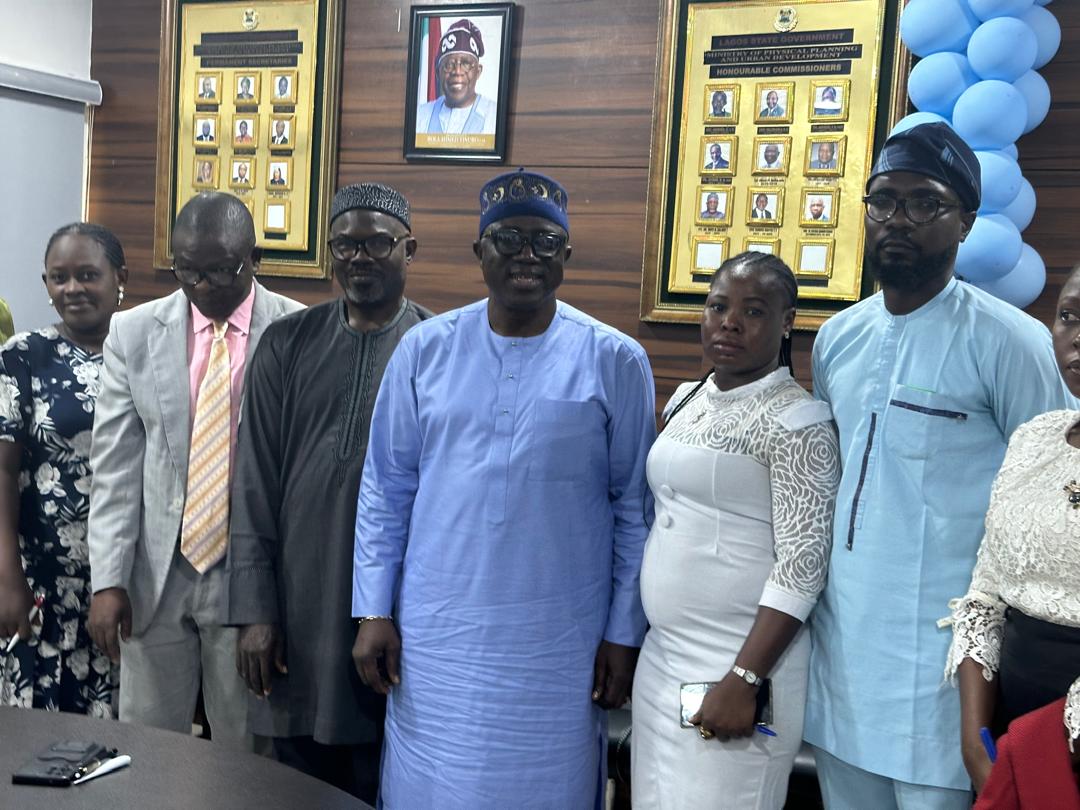
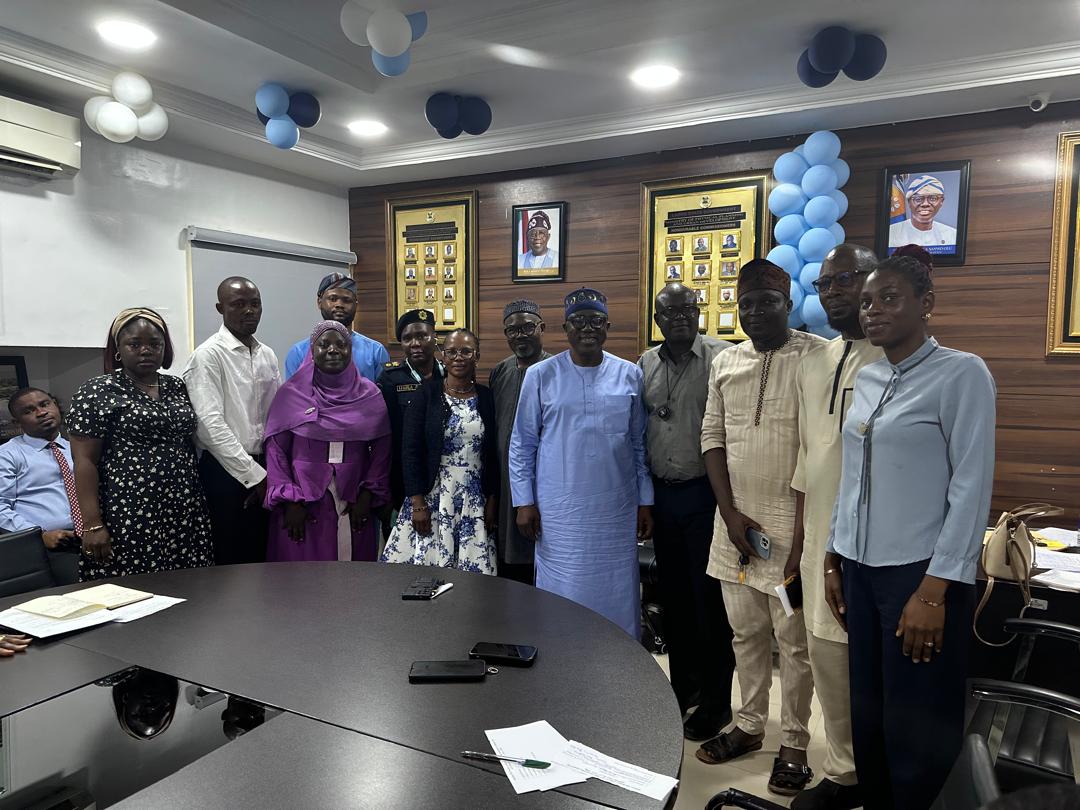
The Lagos State Government has inaugurated the planning committee for the 2026 World Habitat Day celebration, charging members to deploy their expertise and work collaboratively towards finding sustainable solutions to the state’s housing and urban development challenges.
The committee was inaugurated last Tuesday by the Permanent Secretary, Office of Physical Planning, Lagos State Ministry of Physical Planning and Urban Development, Tpl. Olayinka Adebayo Wasiu, at the Ministry’s Conference Room in Alausa, Ikeja.
Speaking at the inauguration, Wasiu described World Habitat Day as an important platform for reflecting on the state of human settlements and reaffirming the fundamental right of every individual to adequate housing.
He said the 2026 theme, “Adequate Housing for All,” was particularly relevant to Lagos, given the need for stronger and more coordinated efforts to address housing challenges and improve living conditions across the state.
The Permanent Secretary called for greater collaboration among government agencies, private sector operators, development partners and other stakeholders in the built environment, stressing that the housing challenge required a comprehensive and sustainable response.
“I want you all to bring your expertise and contribute meaningfully before, during and after the programme because Lagos is widely regarded as the pacesetter of development in Nigeria,” he said.
Wasiu further urged committee members to approach their assignments with professionalism, dedication and a strong sense of purpose, while leveraging their diverse expertise to deliver a meaningful and impactful celebration.
He said the housing deficit could no longer be addressed through fragmented interventions, noting that a holistic approach was required to bridge the existing gap.
“The housing deficit is something we have to critically and holistically address in order to bridge the existing gap,” he added.
READ ALSO:
- Lagos Moves to Tackle Housing Deficit, Inaugurates 2026 World Habitat Day Committee
- Hawk Fire in US Rages On, Burns 10,500 Acres in Nevada, Forces Mass Evacuations
- ICPC uncovers alleged fake agency claiming 2017 FEC approval after nine years
He explained that the Office of Physical Planning was responsible for coordinating the annual World Habitat Day observance in Lagos, adding that members of the 2026 planning committee were drawn from various Ministries, Departments and Agencies to promote broad representation, inclusiveness and effective coordination.
World Habitat Day is observed globally on the first Monday of October each year to draw attention to the state of human settlements and the right to adequate shelter.
The 2026 Lagos State celebration is scheduled for Monday, October 5, at the Blue Roof, LTV Complex, Agidingbi, Ikeja.
The state government reaffirmed its commitment to sustainable urban development, expanding access to adequate housing and implementing policies aimed at improving the quality of life of Lagos residents.
Lagos Moves to Tackle Housing Deficit, Inaugurates 2026 World Habitat Day Committee
metro
ICPC uncovers alleged fake agency claiming 2017 FEC approval after nine years

ICPC uncovers alleged fake agency claiming 2017 FEC approval after nine years
The Independent Corrupt Practices and Other Related Offences Commission (ICPC) has uncovered an alleged fake government agency that operated from the premises of the Office of the Secretary to the Government of the Federation (OSGF) for years while presenting itself as a properly constituted federal institution.
The organisation, identified as the National Brands Development and Made-in-Nigeria Special Project Office, allegedly claimed that it had received Federal Executive Council (FEC) approval in 2017 under the administration of former President Muhammadu Buhari.
However, the ICPC said its investigation found that the office was operating without presidential authorisation and contrary to extant laws, raising questions about how it secured office space within the OSGF complex and maintained an official-looking structure for years.
The development was disclosed by ICPC Chairman, Dr Musa Aliyu, SAN, after he briefed President Bola Ahmed Tinubu on the Commission’s investigation into the alleged fictitious Presidential Foreign Intervention Promotion Council (PFIPC) and other weaknesses in the public service.
Aliyu said the discovery of the alleged fake agency emerged from the broader investigation into how unauthorised organisations could operate within government structures.
He said the National Brands Development and Made-in-Nigeria Special Project Office had been illegally allocated office space within the OSGF premises, despite allegedly lacking the required authorisation to function as a federal agency.
The Commission identified George Buchi Nwabueze as the alleged promoter of the organisation.
According to the ICPC chairman, Nwabueze allegedly operated under several variations of his name, including George Nathan, George Nathan Nwabueze, Hon. George Buchi Nwabueze and Prince George Buchi Nwabueze.
A profile on the organisation’s website lists Nwabueze George as its “Executive Director, National Coordinator”, further linking the individual to the organisation at the centre of the ICPC investigation.
READ ALSO:
- Rivers Monarch Escapes Assassination as Gunmen Raze Palace, Several Wounded
- 2027: Over 500 Northern Muslim Clerics Endorse Tinubu for Second Term
- Messi Fined for Slapping Opponent in Heated Philadelphia Draw
The organisation had built an elaborate public profile around its activities. Its website presented the office as an initiative focused on promoting Made-in-Nigeria products, supporting local industries, developing Nigerian brands and encouraging investment in domestic manufacturing.
Its stated objectives included the revival of moribund factories through investment arrangements, support for local brands, development of a national labelling and counterfeit surveillance system, and promotion of Nigerian products through trade fairs and exhibitions.
The organisation also published what it described as a “Bill for an Act to Establish the National Brands Development and Made-in-Nigeria Promotion Commission and for Related Matters.”
The purported legislation, identified on its website as the National Brands Development and Made-in-Nigeria Promotion Commission Act, 2025, was presented as providing a legal framework for the establishment of a commission responsible for promoting Nigerian brands and local manufacturing.
However, the publication of the proposed bill does not, by itself, establish that the organisation had been legally created as a federal agency.
The organisation also claimed that its activities had a 2017 FEC approval.
According to information published on its website, the Federal Executive Council allegedly approved a “National Campaign to Sensitize Nigerians on the Patronage of Made-in-Nigeria Products” at a meeting held at the Presidential Villa in Abuja on February 1, 2017.
The organisation listed the Federal Ministry of Industry, Trade and Investment as the implementing ministry.
That claim has become one of the issues requiring verification as part of the ICPC investigation. While the organisation presents the 2017 FEC approval as part of its history, the anti-corruption agency maintains that the office was operating without the necessary presidential authorisation.
The alleged agency also established an extensive nationwide leadership structure, with national, zonal and state coordinators.
Its published structure included officials assigned to different geopolitical zones and states, creating the appearance of a federal organisation with representation across the country.
The organisation’s website also displayed official-looking green-and-white insignia bearing references to “The Presidency” and “Made in Nigeria”, further contributing to its public presentation as a government-backed initiative.
It maintained social media accounts under the handle @pmainpro on platforms including Facebook, Instagram, X and LinkedIn.
The ICPC is now investigating how the organisation was able to maintain such a structure and operate from government premises without being stopped earlier.
Aliyu also alleged that the organisation’s promoter may have had the suspected collaboration of some senior public servants within the OSGF.
The Commission is examining the role of officials who may have facilitated the organisation’s access to office accommodation and other government resources.
Following the ICPC briefing, President Tinubu ordered the immediate arrest of Nwabueze and directed the suspension of three permanent secretaries pending the outcome of the investigation.
The affected officials are M.S. Danjuma, Engr. Nadungu Gagare and Richard P. Pheelangwah.
The presidential action came amid a wider investigation into alleged fictitious government structures, following the earlier discovery of the Presidential Foreign Intervention Promotion Council (PFIPC).
The ICPC had alleged that the PFIPC was not a legitimate federal government institution despite presenting itself as one. Its alleged promoter, Adeniyi Adeyemi Matthew, is facing prosecution over allegations including forgery and impersonation.
The discovery of the National Brands Development and Made-in-Nigeria Special Project Office has now widened concerns about fraudulent government structures and weaknesses in public-service oversight.
The case has raised questions about how an organisation allegedly lacking valid presidential authorisation could obtain office accommodation within the OSGF, establish a nationwide network of coordinators and maintain an official-looking online presence.
The ICPC said it had engaged officials of the OSGF to obtain additional information on how the organisation secured its accommodation and to establish the roles allegedly played by the suspended permanent secretaries and other individuals.
The Commission said its investigation would continue and that further findings would be communicated to the appropriate authorities.
For now, the alleged 2017 FEC approval, the circumstances surrounding the organisation’s occupation of government premises and the alleged involvement of public officials remain subjects of investigation.
The allegations against Nwabueze, the suspended officials and any other persons linked to the matter have not been established by a court. All individuals involved are entitled to due process and the presumption of innocence.
ICPC uncovers alleged fake agency claiming 2017 FEC approval after nine years
metro
Rivers Monarch Escapes Assassination as Gunmen Raze Palace, Several Wounded
-

 metro2 days ago
History in Makkah: Nigerian Teen Wins Prestigious Qur’anic Contest, Breaks 46-Year Gender Barrier
-

 News2 days ago
Delta Governor Reveals ₦503,000 Monthly Salary, Says Permanent Secretaries Earn ₦900,000
-

 metro3 days ago
Former MFM Pastor Femi Jimoh Dies After Years of Detention, Legal Dispute
-
 Auto2 days ago
Dangote deploys technology to curb truck crashes, improve road safety
-
 Politics3 days ago
PBAT Door-to-Door Movement Holds Kano Rally, Strengthens APC Ties Ahead of 2027
-

 News2 days ago
Atiku’s Fuel Subsidy Plan Unrealistic, Destructive, Says Presidency
-

 Politics3 days ago
Atiku Vows to Restore Fuel Subsidy If Elected in 2027
-

 Sports2 days ago
Okocha Ignites Fresh GOAT Debate: Nigerian Legend Says Messi Is ‘Art,’ Ronaldo Is ‘Goalscorer Like Haaland’