

International
Putin’s troops unable to seize key ground in last 24 hours – UK defence chiefs

Vladimir Putin’s forces have failed to seize any “significant ground” in the battle for Severodonetsk in the last 24 hours despite attacking the Ukrainian city from three fronts, British defence chiefs said on Wednesday morning.
They stressed that Ukrainian defences were “holding” in the industrial city in the Luhansk province of the eastern Donbas region.
Fierce street by street fighting has been taking place in the city with Russian troops ourtnumbering Ukrainian soldiers.
However, there are reports that Mr Putin’s army may be running short of artillery shells for long range bombardment of Severodonetsk.
The UK defence chiefs also stressed that with the Russian president focusing his military campaign on Severodonetsk and some other parts of the Donbas, it had left his forces in the south of Ukraine vulnerable to counter-attacks
Ukrainian forces had succeeded in some offensives in the Kherson region including “regaining a foothold” on the eastern side of one river bank, they added.








International
Two Killed, Eight Injured as Attack Hits Saudi Arabia Airport
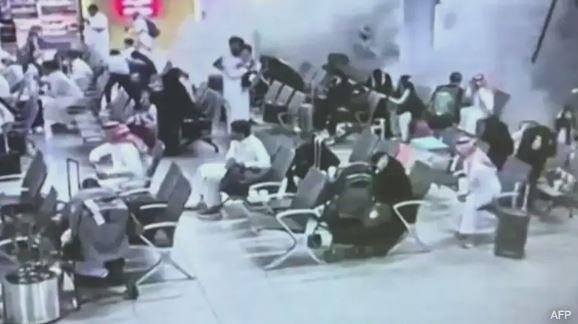
Two Killed, Eight Injured as Attack Hits Saudi Arabia Airport
An Indian national was among two people killed, while eight others sustained injuries in an attack on King Fahd International Airport in Dammam, eastern Saudi Arabia, as tensions escalate over attacks linked to Yemen’s Houthi rebels.
The Saudi General Authority of Civil Aviation confirmed the updated casualty figures on Thursday, October 22, following the attack on Wednesday night.
The fatalities were identified as a Saudi citizen and an Indian national, while the eight injured included citizens and residents of several nationalities.
According to the aviation authority, the injured comprised one Saudi national, two Indians, two Yemenis, two Bangladeshis and one Nepalese national.
Their injuries ranged from minor to serious, with some victims reportedly in critical condition. The injured were receiving medical treatment at several hospitals across the Eastern Province.
The authority said it was working with relevant security agencies to assess the damage caused by the attack and implement measures to safeguard passengers, airport workers and aviation infrastructure.
Airport operations have since resumed, with air traffic returning to normal, according to reports published on Thursday.
The Indian Embassy in Riyadh confirmed that one Indian national was among those killed, while two other Indian nationals were injured. The embassy said it was establishing contact with the affected families and seeking further information about the victims.
India also condemned attacks on civilian and energy infrastructure in Saudi Arabia, describing the incidents as unacceptable and calling for an end to the violence.
The Dammam incident comes amid an escalation of hostilities involving Yemen’s Iran-aligned Houthi movement and forces supporting Yemen’s internationally recognised government.
Saudi Arabia has faced repeated attacks targeting airports and other strategic facilities this month, raising concerns about the safety of civilians and the security of critical infrastructure.
In a separate incident on Wednesday, two people were killed when debris from an intercepted drone fell near an oil facility at Shaybah, according to Saudi Arabia’s Energy Ministry. Two other people were injured in that incident.
The ministry identified the two fatalities as a Filipino and a Nepalese national. The injured were identified as a Pakistani and an Indian national.
The incident at Shaybah reportedly caused a vehicle fire outside the facility’s perimeter but did not disrupt operations at the oil field.
Reuters also reported on Thursday that Saudi Aramco had instructed staff to evacuate its headquarters in Dhahran and work remotely, citing people familiar with the matter. The precise reason for the instruction was not immediately clear.
The developments have heightened concerns over the potential impact of the escalating conflict on Saudi Arabia’s aviation and energy sectors.
Although the latest attacks come amid an intensifying Houthi campaign against Saudi targets, details surrounding the precise method of attack on Dammam airport and the full extent of the damage remain limited.
Saudi authorities said the damage assessment and security measures were continuing.
Two Killed, Eight Injured as Attack Hits Saudi Arabia Airport
International
Trump’s White House Press Secretary Quits After Just Five Days as Credentials Storm Erupts

WASHINGTON, DC — US President Donald Trump’s new White House press secretary, Katie Zacharia, has left her position after just five days on the job, following criticism of her first press briefing and questions about her professional credentials.
Zacharia’s departure was reported on Friday, October 16, 2026, after Trump disclosed that he had advised her to reconsider remaining in the high-profile position. A White House official subsequently confirmed that she was leaving the role.
The departure came just days after Trump announced her appointment to succeed Karoline Leavitt on Friday, October 9. Zacharia began work on Monday, October 12, and held her first White House press briefing the following day, Tuesday, October 13.
The brief tenure quickly became controversial after Zacharia’s first interaction with journalists attracted criticism. The briefing lasted approximately 14 minutes, during which she took questions from only three reporters, prompting scrutiny of her performance as the administration’s principal spokesperson.
The controversy deepened on Thursday, October 15, when questions emerged about her professional credentials. During an interview with Fox News host Sean Hannity, Zacharia acknowledged that she had not passed the bar examination, despite holding a law degree from Pepperdine University.
READ ALSO:
- Imodi-Ijebu Muslim Community Bets on 20 Chiefs to Drive Education, Economic Growth
- Suspended Archbishop Ibezim Drags Anglican Primate to Court, Challenges Six-Month Leave
- Toyin Abraham Breaks Silence as Leaked Audio Sparks Fresh Nollywood Feud
In the United States, obtaining a law degree does not automatically qualify a graduate to practise as a licensed attorney. Admission to practise generally requires passing the relevant bar examination and satisfying other requirements set by the jurisdiction.
The revelation intensified scrutiny of how Zacharia’s legal background had been presented before her appointment, further complicating her early days in the White House role.
Zacharia defended her handling of the first briefing, explaining that she had limited time to prepare. She also indicated that the session was intentionally brief because Trump was expected to speak to reporters later that morning.
Trump, meanwhile, said he had encouraged her to consider whether the position was right for her, arguing that the media scrutiny surrounding the job could make it difficult to remain in the role.
The White House press secretary is responsible for communicating the president’s positions, explaining administration policies and responding to questions from journalists. The position frequently involves contentious exchanges with the media and intense public scrutiny.
Before joining the White House, Zacharia worked in communications for Trump Media, the company behind the president’s Truth Social platform. She had also held a position at the Department of Homeland Security and worked as a conservative political commentator.
Her exit leaves the Trump administration needing to determine who will handle daily press briefings and serve as its principal spokesperson. As of Friday, October 16, the White House had not publicly announced a successor.
Zacharia’s departure followed a compressed timeline: Trump announced her appointment on October 9, she began work on October 12, delivered her first briefing on October 13 and left the position on October 16. The five-day description refers to her working tenure rather than five full days from the date her appointment was announced.
Trump’s White House Press Secretary Quits After Just Five Days as Credentials Storm Erupts
International
School Turns Death Trap as Roof Collapse Claims 22 Lives
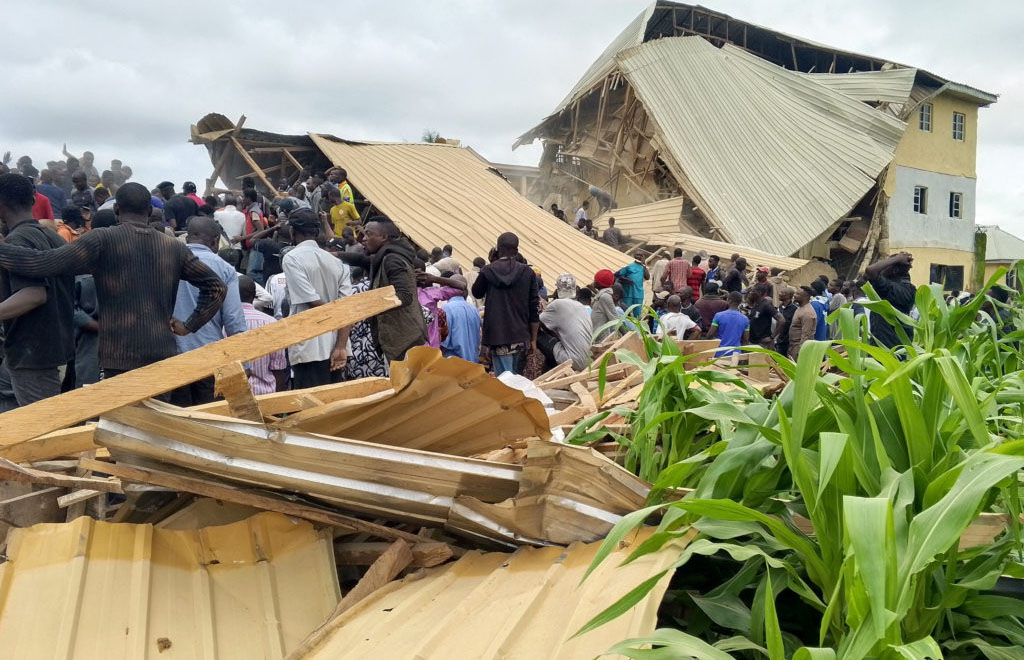
School Turns Death Trap as Roof Collapse Claims 22 Lives
At least 21 children and a teacher have been killed after the roof of a private school collapsed in Peshawar, north-western Pakistan, triggering an emergency rescue operation as authorities searched for people feared trapped beneath the rubble.
The incident occurred on Thursday, October 15, 2026, in the Dir Colony area of Peshawar, the capital of Khyber Pakhtunkhwa province. The victims were pupils attending the school when the roof gave way, according to reports citing local officials and hospital authorities.
More than 40 people were reportedly injured in the collapse, with several taken to hospital for treatment. Some of the injured were said to be in critical condition, raising concerns that the death toll could increase as rescue efforts continued.
Mohammad Asim, a spokesperson for Lady Reading Hospital, confirmed that children and a teacher were brought to the facility after the incident. Early reports said the children killed were all aged 13 or younger.
Emergency responders, including personnel from Rescue 1122, were deployed to the scene to remove debris, search for survivors and transport injured pupils to medical facilities. Rescue workers continued to check the wreckage for anyone who might still be trapped beneath the collapsed structure.
READ ALSO:
- Outrage as Residents Scoop Groundnut Oil From Lagos Tanker Crash Scene
- Shettima Attacks Atiku Over Tinubu Remarks, Questions Subsidy Plan
- 2027: We Know How to Stop Tinubu From Getting Second Term – Momodu
The cause of the collapse had not been established at the time of reporting. Authorities are expected to investigate the circumstances surrounding the incident, including the condition of the school building and whether construction and safety standards were observed.
Pakistan’s Prime Minister, Shehbaz Sharif, expressed sorrow over the loss of lives and extended condolences to the bereaved families. He also prayed for the strength of the families affected by the tragedy.
The disaster has renewed concerns about building safety and construction standards in Pakistan, where structural collapses have repeatedly caused deaths and injuries. Poor construction materials and weak enforcement of safety regulations have been cited in reports on previous incidents, although the cause of the Peshawar collapse remains unconfirmed.
In June 2026, a roof collapse at a tutoring centre in Lahore killed at least 14 children. The recurring incidents have intensified calls for stricter inspections of educational facilities and stronger enforcement of building regulations to protect pupils and school staff.
Authorities are expected to establish what caused the latest collapse and determine whether any safety breaches contributed to the tragedy.
School Turns Death Trap as Roof Collapse Claims 22 Lives
-

 Auto2 days ago
Hyundai Unveils Mufasa, Grand Creta SUVs to Strengthen Nigeria Line-up (Updated)
-

 metro2 days ago
Horror in Sokoto: Bandits Intercept Vehicle, Massacre All Passengers Returning from City
-

 Education3 days ago
NELFUND Warns Schools: Student Loans Are Voluntary, Not Compulsory
-

 metro2 days ago
Nigerian Journalist Sentenced to 4 Years Over Facebook Post Criticising Police
-

 News3 days ago
UNILORIN VC to graduates: Let this investment count
-

 metro2 days ago
Fourth Gas Leak in Six Months: Over 100 Ogun Pupils Hospitalised, Schools Shut as Parents Panic
-

 metro2 days ago
Bauchi Mosque Removes Imam After Tinubu Campaign, Rejects Proposal to Rename Mosque
-

 metro3 days ago
Ebola Scare: NSCIA Directs Imams to Intensify Awareness in Friday Sermons