

News
Impeachment: Soyinka backs lawmakers against Buhari
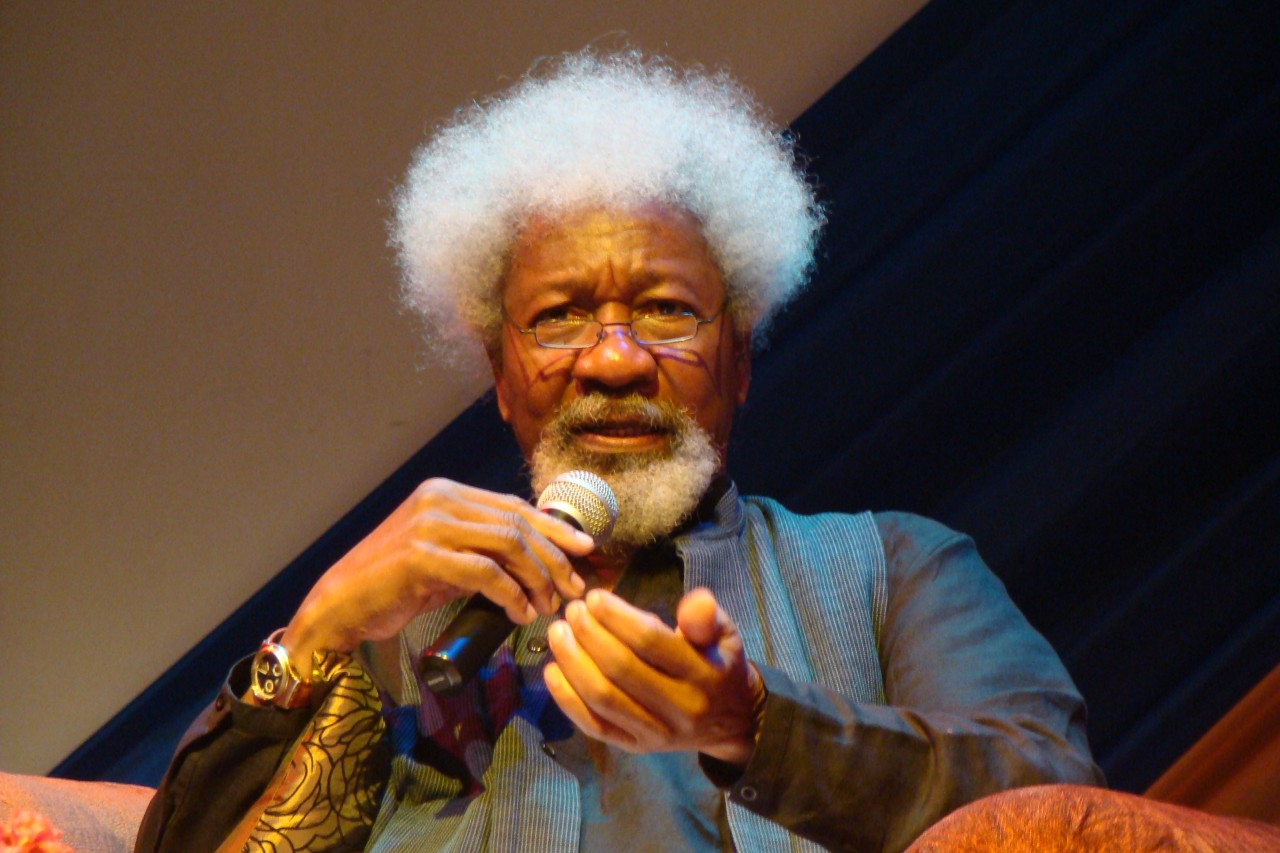
• Nobel Laureate faults President for anointing successor
Nobel Laureate, Wole Soyinka, has backed the six weeks ultimatum given to the President, Major General Muhammadu Buhari (retd.), by some federal lawmakers to find a solution to terrorism or be impeached.
Soyinka spoke on Tuesday in Abeokuta, Ogun State, during an interactive session organised to celebrate the 50th anniversary of Abeokuta Club.
The session, which had a Senior Advocate of Nigeria, Femi Falana; the Registrar of the Joint Administration and Matriculation Board, Prof. Ishaq Oloyede; a lawyer, Gbenga Adeoye; a businessman, Ogo-Oluwa Bankole; and the spokesman of the Electricity Distribution Companies, Sunday Oduntan, as panellists, had as its theme “Good governance or mis-governance: The contract called democracy.”
The PUNCH reports that senators and members of the House of Representatives elected on the platform of the Peoples Democratic Party had last week handed down the ultimatum over lingering insecurity in the country.
Soyinka, who was the session’s moderator, noted that the President should be impeached because he had breached the contract of democracy.
READ ALSO:
- High diesel cost killing business, Obasanjo warns
- British Airways suspends short-haul flights from Heathrow
- Oliver Alawuba replaces Kennedy Uzoka as UBA GMD
He said, “Democracy indicates a contract, that is why the candidate puts on a manifesto. On the basis of that manifesto, the candidate is either accepted or rejected.
“Very often, the grounds for breach of contract, I think we all agree, is mis-governance and one of the ways of breaking this kind of contract we know even before the duration of a contract is known as impeachment.
“The reason we will go by some legislators to impeach the President who is the head of government. In fact, one cleric has gone even further. He believes that the impeachment should take place not in the legislative home but in the bush with the kidnappers and he appealed to the kidnappers to quicken the process by impeaching the President and take him away and some of his aides and one or two governors.”
Soyinka, however, threw the question to the gathering whether the President should be impeached or not and majority of the people who comprised members of the club and other dignitaries raised their hands that Buhari be impeached.
He also faulted a situation where Buhari, who he said had performed abysmally to the point that lawmakers are considering impeachment, will decide who succeeds him at the end of his tenure.
He added, “In any democracy, any president, prime minister or whatever is entitled to one vote. We are not saying we should disenfranchise somebody because they are on top of governance.
“They had their right to campaign for any candidate they like but there is nothing in any constitution that I know of, in any democratic constitution, which says that the head of government should appoint his or her successor.
“I am not aware of it and this is a head of governance who is generally agreed, I believe, as having failed, having misgoverned to the point that impeachment is being considered.
“I hear the governors go to this individual, go to this failure and say to him ‘please give us your successor.’
“Many of us in this country, including governors, including chairmen of local governments, what comprehension they have of this process called democracy because what these governors are telling us is that after a failure has occupied a seat of government for eight years, that failure should give us another failure for another eight years.”
Soyinka urged the governors to stop desecrating democracy by enthroning a dynasty of failure.
Falana, in his remarks, corroborated Soyinka’s submission on the need to stop the abuse of democratic process.
He decried the imposition of leaders on Nigerians.
Oloyede, in his submission, urged Nigerians not to focus on the faults of the Federal Government but concentrate on the state governments’ involvement in the failure.








News
Jubilation in Ogun Camp as 3,050 NYSC Members Receive ₦50,000 Palliative, 500 Mattresses

Jubilation in Ogun Camp as 3,050 NYSC Members Receive ₦50,000 Palliative, 500 Mattresses
Abeokuta, Ogun State — There was widespread jubilation at the NYSC Orientation Camp in Ogun State on Wednesday following the announcement that 3,050 serving corps members will receive a one-off cash palliative of ₦50,000 to cushion the effects of the current economic hardship in the country.
The announcement, which was met with wild cheers and celebrations, comes as part of the state government’s efforts to support youths undergoing their mandatory one-year national service.
In addition to the cash disbursement, the Ogun State Government has also approved the immediate delivery of 500 mattresses to the camp to improve the living conditions of the corps members.
The news broke via a report by Pulse, detailing that the palliative is aimed at easing the financial burden on the young graduates, particularly in light of the rising cost of living and transportation across the nation.
Visuals from the camp showed corps members in their traditional white and green kits, raising their caps in excitement, a clear indication of the relief the financial support brings.
Speaking on the development, a camp official noted that the cash injection will go a long way in helping the corps members manage their daily expenses, including transportation to their Places of Primary Assignment (PPA) and personal upkeep.
The distribution of the ₦50,000 cash palliative and the provision of the 500 mattresses are expected to be rolled out in the coming days. The move has been widely commended by stakeholders who view it as a proactive step by the Ogun State Government to prioritize the welfare of youths serving in the state.
Jubilation in Ogun Camp as 3,050 NYSC Members Receive ₦50,000 Palliative, 500 Mattresses
News
UNILORIN VC to graduates: Let this investment count
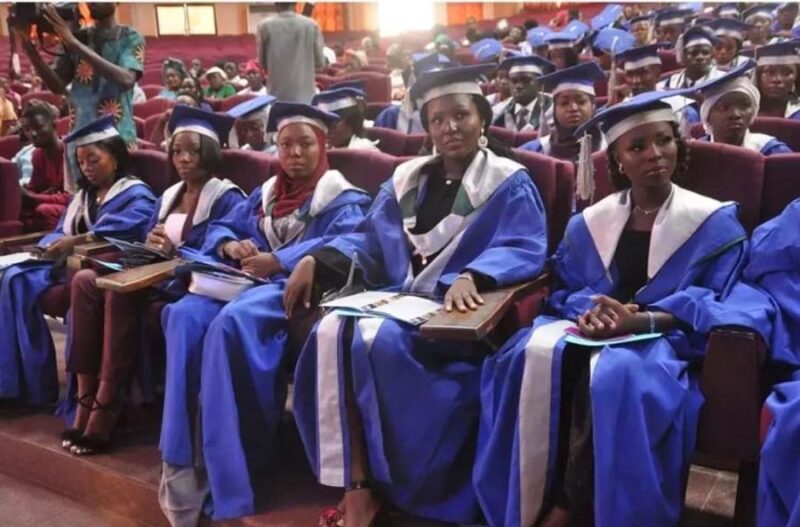
UNILORIN VC to graduates: Let this investment count
ILORIN — The Vice-Chancellor of the University of Ilorin (UNILORIN), Professor Wahab Olasupo Egbewole, SAN, has urged graduating students to justify the sacrifices made by their parents, guardians and other stakeholders by using their education, knowledge and skills to solve societal problems and contribute meaningfully to national development.
Egbewole gave the charge in his address titled “Let This Investment Count!” at the university’s 41st Convocation Ceremony, where he congratulated the graduands and challenged them to translate the opportunities provided by university education into tangible benefits for themselves and society.
The Vice-Chancellor’s message placed emphasis on the responsibilities that come with obtaining a university degree, particularly the need for graduates to demonstrate that the time, money, energy and other resources invested in their education have produced meaningful results.
He called on the graduands to appreciate the contributions of their parents and guardians, whose sacrifices had helped them reach the milestone, while also recognising the efforts of the university’s academic and non-academic staff and other stakeholders in their educational journey.
According to the message of the address, the significance of graduation goes beyond receiving certificates and celebrating academic achievements. It also marks the beginning of a new phase in which graduates are expected to apply their learning, demonstrate discipline and integrity, and contribute to the development of their communities.
The charge comes at a time when Nigerian graduates face concerns over unemployment, changing workplace requirements and the need to acquire practical competencies that complement conventional academic qualifications.
Egbewole’s appeal therefore highlights the importance of ensuring that university education produces individuals capable of creating opportunities, addressing real-life challenges and adding value to their workplaces and communities.
16,152 students to graduate
The 41st Convocation Ceremony is expected to see the university graduate a total of 16,152 students for the 2025/2026 academic session.
The figure comprises 11,213 students receiving first degrees and 4,939 candidates earning higher degrees and diplomas.
Among the undergraduate graduands, 365 earned First-Class honours, while 4,367 obtained Second-Class Upper Division degrees. Another 5,102 graduated with Second-Class Lower Division degrees, 1,006 earned Third-Class degrees and 30 obtained Pass degrees.
The graduating class also includes students from several professional programmes, including Medicine and Surgery, Nursing, Pharmacy, Optometry, Physiotherapy and Veterinary Medicine.
The scale of the graduating class underscores the responsibility confronting the university and other stakeholders in ensuring that graduates are adequately prepared for the demands of employment, entrepreneurship, professional practice and further learning.
For the graduands, the Vice-Chancellor’s message serves as a reminder that the value of their qualifications will increasingly be demonstrated through their conduct, competence, creativity and contributions beyond the university environment.
Beyond certificates, emphasis on practical skills
The university has also placed increasing emphasis on equipping students with practical skills to complement their academic qualifications.
One of the initiatives highlighted ahead of the convocation is the University of Ilorin’s U-INSPIRE programme, through which 8,320 participants successfully completed training designed to strengthen their employability, entrepreneurial capacity and readiness for the demands of the modern workplace.
The programme was developed in collaboration with industry partners to help students acquire relevant competencies beyond classroom instruction.
At the graduation ceremony for the programme’s second cohort, Egbewole urged participants to move beyond academic certificates, develop practical capabilities and turn innovative ideas into sustainable businesses.
The initiative reflects a broader recognition that graduates need more than theoretical knowledge to thrive in an increasingly competitive economy.
Practical experience, problem-solving ability, creativity and the capacity to identify and respond to emerging opportunities are becoming important complements to formal qualifications.
The university’s efforts in this area provide additional context for the Vice-Chancellor’s appeal to graduands to make their educational investment count.
Parents, guardians and stakeholders share in the investment
The address also draws attention to the role played by parents, guardians and other supporters in the education of university students.
For many Nigerian families, sponsoring a child through university involves considerable financial and personal sacrifices, including the payment of tuition-related charges, accommodation, feeding, learning materials, transportation and other expenses.
Beyond financial contributions, families often provide emotional support, encouragement and guidance throughout their children’s academic journeys.
The successful completion of a degree is therefore not only a personal achievement for the graduand but also a milestone for the families and communities that supported the process.
The Vice-Chancellor’s call places a responsibility on graduates to honour those sacrifices by making responsible decisions, upholding ethical standards and applying their knowledge in ways that benefit others.
It also reinforces the need for graduates to recognise education as an opportunity to develop their potential and contribute to society, rather than merely as a means of obtaining certificates.
UNILORIN highlights institutional progress
The convocation also provides an opportunity for the university to showcase its academic and institutional achievements during the 2025/2026 session.
Ahead of the ceremony, Egbewole highlighted several developments, including the accreditation of 11 academic programmes, the expansion of campus transportation and the strengthening of research, innovation and institutional partnerships.
The university also disclosed that it received a ₦25 million award from the Joint Admissions and Matriculation Board in recognition of its compliance with admission regulations.
In addition, the institution announced the introduction of 12 compressed natural gas-powered buses and 20 electric tricycles to improve transportation within the campus.
The university has continued to pursue its Vision 1:10:500 aspiration, which seeks to make it Nigeria’s leading university, place it among Africa’s top 10 institutions and secure a position among the world’s top 500 universities.
The vision reflects the institution’s stated ambition to strengthen academic standards, research output, innovation, partnerships and its international standing.
Egbewole has also stressed the importance of continuity, responsible management of resources and collective commitment to sustaining institutional progress.
A new responsibility for graduands
As the graduands prepare to leave the university, the message of “Let This Investment Count!” places their future contributions at the centre of the convocation celebration.
Their degrees represent years of learning and assessment, but they also carry expectations from families, employers, communities and the wider society.
For those entering the labour market, the challenge will be to demonstrate the knowledge and skills acquired through their studies. For aspiring entrepreneurs, it will be to identify opportunities, develop viable ideas and create value. Others will pursue postgraduate education, professional development or careers in public service.
Whatever paths they choose, the central challenge is to make their education relevant to the needs of society.
The university’s 41st Convocation Ceremony, which runs from October 16 to 25, 2026, celebrates the achievements of its graduating students while providing an opportunity to reflect on the responsibilities that accompany higher education.
For the graduands, the message is clear: the completion of a degree is not the end of their journey but the beginning of a new responsibility to themselves, their families and society.
The ultimate measure of the investment in their education will be what they do with the knowledge, discipline and opportunities they have acquired.
UNILORIN VC to graduates: Let this investment count
News
Mexico Clears Reno Omokri as Nigeria’s Ambassador After Eight-Month Wait

Mexico Clears Reno Omokri as Nigeria’s Ambassador After Eight-Month Wait
The Mexican government has granted diplomatic approval for Reno Omokri’s appointment as Nigeria’s ambassador to Mexico, ending an eight-month wait for the confirmation of his posting by the host country.
Omokri disclosed this in a post on his X account on Tuesday, saying José Manuel Briseño Flores, chargé d’affaires of the Embassy of Mexico in Abuja, had delivered the diplomatic approval, known as agrément, to Babagana Wakil, Director of Protocol at Nigeria’s Ministry of Foreign Affairs.
The approval covers Omokri’s appointment as Ambassador Extraordinary and Plenipotentiary to Mexico, with concurrent accreditation to Guatemala, Honduras and Nicaragua.
“ To God be the glory, the Chargé d’affaires of the Embassy of the United Mexican States in Abuja, Mr José Manuel Briseño Flores, today in Abuja delivered the agrément from the Government of the United Mexican States accepting me,” Omokri said.
The development clears a major hurdle in the process of deploying the former presidential aide and political commentator to his diplomatic assignment, following months of uncertainty over the status of his appointment.
President Bola Tinubu had in March approved the posting of 65 ambassador-designates and high commissioners to various countries as part of efforts to strengthen Nigeria’s diplomatic representation abroad.
Omokri was among those named for ambassadorial postings, with Mexico designated as his principal country of assignment.
However, his deployment could not be concluded immediately because Mexico had yet to formally accept his nomination, a necessary step in the diplomatic appointment process.
Under established diplomatic practice, a government seeking to appoint an ambassador must obtain the receiving country’s agrément before the nominee can be formally deployed. The procedure allows the host country to indicate its acceptance of the proposed envoy.
In August, the Ministry of Foreign Affairs disclosed that Mexico and Japan were among the countries that had yet to communicate formal acceptance of two outstanding ambassadorial appointments.
The ministry said it was engaging the relevant authorities in the affected countries and expressed confidence that the outstanding approvals would be secured in due course.
Mexico’s decision now resolves the uncertainty surrounding Omokri’s posting, although the completion of any remaining formalities and the commencement of his diplomatic duties may still depend on the applicable procedures.
Omokri, a former aide to ex-President Goodluck Jonathan, is known for his political commentary and frequent interventions in Nigeria’s public discourse. His appointment forms part of the Tinubu administration’s wider effort to fill key diplomatic positions and strengthen the country’s engagement with foreign governments.
With the approval secured, attention will now turn to the completion of the remaining diplomatic formalities and his eventual assumption of duty in Mexico.
-

 metro2 days ago
Army Major, Soldiers Killed in ISWAP Ambush in Yobe State
-

 metro1 day ago
‘We Don’t Know What Else to Do’ — Mother Begs for Release of Abducted Children
-
 metro1 day ago
Atiku: US Lobbying Firm Raises Alarm Over Alleged Assassination Plot
-

 metro2 days ago
Breaking: Afenifere Leader Pa Fasoranti Dies at 100
-

 metro1 day ago
Five Arraigned Over Kidnapping of 20 Prospective NYSC Members in Imo
-

 metro2 days ago
‘I Never Asked Them to Abandon Loved Ones’ — Obi Clarifies Diaspora Remarks
-

 Auto1 day ago
Beyond the Showroom: Why After-Sales Service Will Define Auto Industry Winners
-

 Auto1 day ago
No 5% Petrol Tax Plan, Oyedele Says, Amid Public Concerns