
Africa
Ethiopia, Tigray Cease Fire As Obasanjo Facilitates Talks

Ethiopia’s government and Tigray People’s Liberation Front yesterday agreed to a ceasefire after a week of peace talks in South Africa.
The cease-fire would halt a two-year civil war that has devastated much of northern Ethiopia.
According to VOA, former Nigerian President Olusegun Obasanjo, who mediated the talks led by the African Union, delivered the news Wednesday in the South African capital of Pretoria.
Obasanjo congratulated both parties for agreeing to the cessation of hostilities, disarmament as well as restoring humanitarian access to the country’s northern region.
READ ALSO:
- Immigration Nabs, Repatriates Foreigners With Voter Cards
- US University Honours Sunday Igboho With Doctoral Degree
- Bandits Gunned Down In Zamfara Market
- For father’s ‘offense’, four men gang-rape teenager in Anambra
The talks were facilitated by Mr Obasanjo, ex-Kenyan President Uhuru Kenyatta and Phumzile Mlambo-Ngcuka, former deputy president of South Africa.
Observing the process were representatives from the Intergovernmental Authority on Development (IGAD), the UN and the US.
Ethiopian Prime Minister Abiy Ahmed, said, “as we’re completing the war in the north with victory, we have to bring peace, development and ensure Ethiopia’s prosperity, so we make those forces that (cause) conflict among Ethiopians from afar feel shame.”
Daily Trust







Africa
Ghana Launches Marrify App to Let Users Verify Partner’s Marital Status Before Marriage

Ghana Launches Marrify App to Let Users Verify Partner’s Marital Status Before Marriage
Ghana has taken a significant step towards curbing deception in marriage with the launch of Marrify, a digital platform designed to help prospective couples verify their partner’s marital status before tying the knot. The app was officially unveiled in Accra on August 28, 2026, in partnership with the Ministry of Gender, Children and Social Protection (MoGCSP) and Marry Right Ghana Limited, an agency specialising in family law. The application operates as a searchable digital registry designed to bring transparency to marriage administration. It pulls legal data from several official sources, including the Registrar-General’s Department, courts, Metropolitan, Municipal and District Assemblies, and the Ghana Gazette. The platform covers records for ordinance, customary and Islamic marriages, as well as divorce records based on court rulings and judgments.
A core feature of the platform is the ability to conduct a formal check on a prospective spouse’s marital history. Users can search the platform using details including names, spouse names, towns, certificate numbers, and Gazette numbers. This helps prevent the emotional, financial and legal complications that can arise when someone enters a relationship without knowing their partner is already married. The platform cautions that records are still being uploaded and a search returning “no result” should not automatically be interpreted as proof that a person has never been married. Individuals and institutions can also submit marriage and divorce records, together with supporting documents, for verification and inclusion on the platform.
READ ALSO:
- Viral TikTok Live Catches Regina Daniels at Ned Nwoko’s House: Is There a Reconciliation?
- From University of Lagos to Canadian Dean: Nigerian Scholar Appointed Law Dean at USask
- ‘I Needed Money for Wedding’ – Police Arrest Three Over N21m Kidnap Ransom in Lagos
Marrify’s scope extends beyond individual background checks. Members of the public can also use the platform to verify whether marriage venues are duly licensed, churches are registered to conduct marriages, and pastors and imams hold the appropriate licences to legally officiate marriages. This feature closes loopholes in how marriages are solemnised across the country.
Speaking at the launch, Minister of Gender, Children and Social Protection, Dr Agnes Naa Momo Lartey, commended the initiative for promoting transparency, accountability, and public confidence in marriage administration. She emphasised that marriage extends beyond a legal union, highlighting its social, cultural and economic significance for individuals, children, families and communities. “You would not have to take a person’s word for it, even in the most trusted relationship. You can verify with this app,” she stated. Lartey further noted that the platform could help prevent individuals from entering unions based on incomplete or false information, which can contribute to disputes, fraud and emotional harm. She also described the launch as an important step towards encouraging responsible relationships and strengthening family structures, while contributing to efforts aimed at preventing gender-based violence.
The launch of Marrify addresses a significant challenge in Ghana’s marriage landscape. According to the 2021 Population and Housing Census, 80.8% of married persons in Ghana had not registered their marriages. The data showed that proportions of unregistered marriages range from 59.9% in the Greater Accra Region to a staggering 97.1% in the Northern Region. Dennis Adei Dwomoh, founder of the Marrify App and the Marriage Governance Conference, also raised concerns about marriage data management, stating that marriage and divorce records can have consequences decades later, including for inheritance, property settlements and widowhood rights. The platform brings together historical records dating as far back as 1886.
The Marrify initiative is intended to give prospective couples another way to verify a partner’s marital status before making a legal commitment. The ministry has committed to supporting innovations that strengthen the integrity of marriage administration in Ghana.
Ghana Launches Marrify App to Let Users Verify Partner’s Marital Status Before Marriage
Africa
Tinubu takes South Africa xenophobic attacks against Nigerians to AU
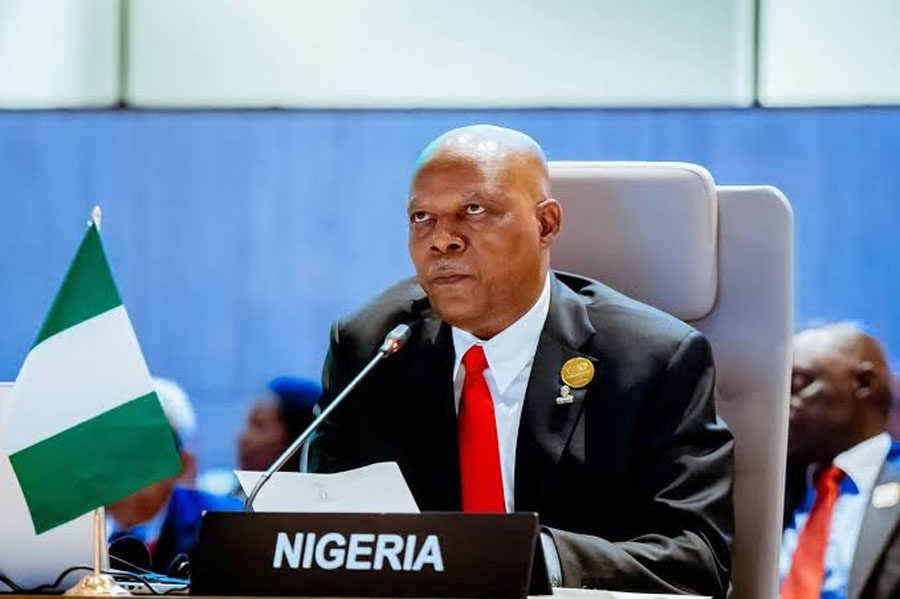
Tinubu takes South Africa xenophobic attacks against Nigerians to AU
President Bola Ahmed Tinubu has asked the African Union (AU) to take urgent action on recurring xenophobic and Afrophobic attacks targeting Africans and other foreign nationals in South Africa.
Tinubu made the demand in a message delivered by Vice President Kashim Shettima at the 21st Extraordinary Session of the Assembly of the African Union in Luanda, Angola, on Sunday.
The summit focused largely on strengthening Africa’s capacity for conflict prevention and resolution, improving early-warning mechanisms and reinforcing the principle of African ownership of the continent’s peace and security challenges.
However, Nigeria used the high-level gathering to raise concerns over the treatment of Africans and other foreign nationals in South Africa, asking the continental body to give the matter formal consideration.
“Nigeria wishes to express its concern over the recurring xenophobic and Afrophobic attacks against Africans and other nationals in South Africa,” Tinubu said in the message.
The President acknowledged South Africa’s sovereign right to enforce its immigration laws and recognised the country’s contributions to the continent.
He, however, warned that attacks against foreign nationals undermine the principles of African solidarity, unity and peaceful coexistence and require a collective response.
“While recognising South Africa’s sovereign right to enforce its immigration laws and acknowledging its contributions to the continent, Nigeria stresses that such attacks undermine African solidarity, unity and peaceful coexistence, and require urgent collective attention,” he said.
Tinubu consequently asked the AU Assembly to place the issue on the agenda of its 40th Ordinary Session, scheduled for January 2027, for consideration and appropriate action.
“It is on this note that Nigeria calls on this august Assembly to place the matter on the agenda of the upcoming 40th Ordinary Session of the AU Assembly, scheduled for January 2027, for consideration and appropriate action,” he declared.
READ ALSO:
- DSS moves to halt Sowore’s cybercrime trial until after 2027 election
- Kogi Abduction: Kidnappers Demand ₦20m Ransom for Each NYSC Member
- Deadly Ikola clash: Lagos demolishes shanties beneath high-tension lines
The latest move represents a further escalation of Nigeria’s diplomatic efforts to address xenophobic attacks in South Africa, particularly those affecting Nigerians and other African migrants.
Nigeria has previously raised concerns with South African authorities over attacks and anti-foreigner sentiments. The Nigerian government has consistently maintained that concerns over immigration enforcement should not result in violence, discrimination or attacks against African nationals.
Tinubu’s decision to take the matter before the AU effectively broadens the issue from a bilateral dispute between Nigeria and South Africa into a wider continental concern involving the safety and dignity of African citizens across national borders.
The issue is particularly significant given the longstanding political, economic and people-to-people relations between Nigeria and South Africa, two of Africa’s most influential countries.
Beyond the South Africa issue, Tinubu used the summit to call for stronger African ownership of the continent’s peace and security agenda.
Nigeria backed the adoption of the Luanda Action Plan as a roadmap for strengthening conflict prevention and resolution mechanisms across Africa.
“For Nigeria, conflict prevention remains more cost-effective and sustainable than conflict management,” Tinubu said.
He warned that fragmented peace initiatives and increasing dependence on foreign military forces, mercenaries and private defence contractors could weaken Africa’s ability to manage its own security challenges.
“The growing reliance on external actors risks weakening African institutions and the principle of African ownership,” he said.
Tinubu called on African governments to strengthen their commitment to home-grown solutions, preventive diplomacy and collective responsibility rather than relying excessively on external actors to resolve conflicts on the continent.
He also urged arms-producing and exporting countries to strengthen cooperation with African states and take steps to prevent weapons and ammunition produced within their jurisdictions from being diverted to terrorists and other non-state armed groups.
According to the President, the uncontrolled flow of weapons continues to aggravate insecurity and prolong conflicts in different parts of Africa.
He said African countries needed stronger cooperation with international partners to stop the diversion of arms into criminal and terrorist networks while simultaneously strengthening domestic mechanisms for preventing and resolving conflicts.
READ ALSO:
- Benue varsity student arrested after allegedly pouring hot water on colleague
- Anambra Police Arrest 28-Year-Old Suspected Drug Dealer, Recover ₦5.8m Illicit Consignment
- You Can’t Reopen What Is Already Open — Tunji-Ojo Fires Back at Atiku
Tinubu further noted that the AU already has established mechanisms for conflict prevention and resolution, but limited trust, inconsistent implementation and inadequate resources continue to undermine their effectiveness.
He urged member states to demonstrate stronger political commitment to the decisions of the continental body and improve coordination between the AU and Africa’s regional organisations.
The President also backed sustainable and predictable financing for AU peace operations, saying the continental body must have adequate resources to respond effectively to emerging conflicts and security crises.
He specifically supported the full operationalisation of United Nations Security Council Resolution 2719, which established a framework for financing eligible AU-led peace support operations through UN assessed contributions on a case-by-case basis.
The financing mechanism is considered important to the AU’s long-term ambition of reducing dependence on unpredictable external funding for African-led peace operations.
Tinubu said strengthening the financial and institutional capacity of the AU would enable the continent to respond more quickly to crises before they escalate into prolonged conflicts.
The Nigerian leader’s intervention came against the backdrop of a deteriorating security environment in several parts of Africa, including conflicts, terrorism, violent extremism, political instability and transnational organised crime.
The AU has repeatedly warned that the continent’s security challenges are becoming increasingly complex, requiring stronger early-warning systems, preventive diplomacy and coordinated action.
Tinubu therefore urged African leaders to renew their commitment to solidarity and shared responsibility in addressing the continent’s challenges.
“Let us therefore renew our collective commitment to solidarity, cooperation, and shared responsibility as we build the Africa we want,” he said.
The President’s call for AU action on xenophobia in South Africa is expected to keep the issue on the continental diplomatic agenda ahead of the AU’s 40th Ordinary Session in January 2027.
For Nigeria, the immediate concern remains the protection of Nigerians and other Africans living or conducting business in South Africa, while the broader objective is to ensure that immigration enforcement does not become a justification for violence or discrimination.
Tinubu’s intervention also reinforces Nigeria’s position that African countries must take collective responsibility for protecting the rights, safety and dignity of Africans wherever they live on the continent.
Tinubu takes South Africa xenophobic attacks against Nigerians to AU
Africa
Niger coup attempt: Gunfire, explosions rock Niamey as soldiers revolt
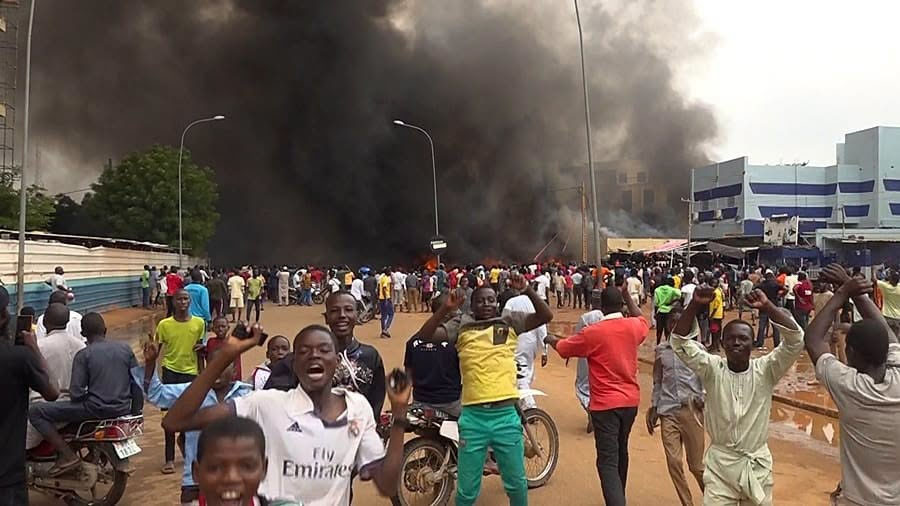
Niger coup attempt: Gunfire, explosions rock Niamey as soldiers revolt
Niger Republic was plunged into fresh tension on Saturday, August 29, 2026, after a group of soldiers reportedly launched an uprising in the capital, Niamey, attacking strategic military and government locations in what authorities described as a mutiny and sources close to the military government characterised as a failed coup attempt.
Heavy gunfire and explosions were reported around the Diori Hamani International Airport, the adjoining Base 101 military facility and areas close to the Presidential Palace, as security forces moved to contain the uprising.
Niger’s Defence Minister, General Salifou Mody, said the soldiers had broken military discipline, attempted to detain some of their colleagues at Base 101 and opened fire on sensitive locations in the capital.
According to Mody, loyal defence and security forces responded rapidly, preventing the mutiny from spreading and gradually restoring control over the affected areas.
The minister said the authorities had mobilised security personnel to contain the situation and protect key government and military installations.
However, security sources said the confrontation was more serious than an isolated disciplinary incident, with the soldiers reportedly attempting to move against the country’s leadership.
A security source cited in international reports said the mutineers attempted to enter the Presidential Palace, but were repelled by members of the presidential guard loyal to military leader General Abdourahamane Tchiani.
The reported attempt to reach the presidential compound heightened concerns that the incident could develop into a broader challenge to the military government.
READ ALSO:
- 2027: Atiku Pledges $100bn Start-up Fund, Slams Tinubu Over Cost-of-Living Crisis
- Borno: Troops kill 26 Boko Haram fighters, destroy 10 motorcycles in Kukawa
- Police Rescue Two Colombian Women Held Captive by Trafficking Syndicate in Lagos
The unrest also affected Niger’s state broadcaster, with television and radio transmissions reportedly interrupted during the early stages of the confrontation.
State broadcasting later resumed, carrying the government’s account that mutinous soldiers had attacked sensitive sites and that loyal security forces had moved to contain them.
Residents in parts of Niamey reported hearing sustained exchanges of gunfire, while security forces were deployed around strategic locations, including the airport, military installations and government facilities.
Authorities subsequently appealed to residents to remain calm and continue with their normal activities, insisting that security forces were in control of the situation.
However, reports indicated that the situation remained fluid, with some of the soldiers allegedly barricaded at Base 101 while security forces worked to fully secure the facility.
The identities of all the soldiers involved, their precise demands and the extent of their support within the armed forces had not been fully established as of Saturday.
There were also no independently verified casualty figures immediately available.
The latest incident is particularly significant because Niger has been under military rule since July 2023, when General Tchiani led the overthrow of democratically elected President Mohamed Bazoum.
Tchiani subsequently became the head of the National Council for the Safeguard of the Homeland (CNSP), the military body that has governed the country since the coup.
The new uprising represents a potentially serious internal challenge to the junta, particularly as Niger continues to face attacks from jihadist groups operating across the country’s borders with Mali, Burkina Faso and Nigeria.
Niger’s armed forces have been fighting insurgent groups linked to al-Qaeda and Islamic State in several parts of the country, with military units frequently deployed to remote and conflict-affected areas.
The security situation has been one of the central issues used by the military authorities to justify their continued hold on power.
The latest unrest also comes amid major changes in Niger’s foreign and defence relationships.
Since the 2023 coup, the military government has distanced itself from France and several Western partners while strengthening ties with Russia and deepening security cooperation with neighbouring military-led governments in Mali and Burkina Faso.
Niger, Mali and Burkina Faso have also formed the Alliance of Sahel States (AES) after breaking away from the regional Economic Community of West African States.
Despite those changes, persistent jihadist attacks have continued to pose a major challenge to the three Sahel countries.
The strategic importance of the locations targeted during Saturday’s unrest also added to the seriousness of the incident.
Base 101, located near Diori Hamani International Airport, is an important military facility and has previously been targeted by armed groups.
The airport itself has also faced security threats in 2026, highlighting the vulnerability of strategic infrastructure in the capital.
The latest confrontation therefore has implications beyond the immediate political crisis, as any prolonged instability in Niamey could affect the government’s ability to coordinate military operations against insurgent groups across the country.
The Nigerien government has maintained that loyal security forces are restoring order and has urged citizens to reject rumours and remain calm.
Meanwhile, investigations are expected to focus on the soldiers involved, their motives, their possible demands and whether other elements within the armed forces supported the attempted uprising.
While the government has so far characterised the incident as a mutiny and breach of military discipline, reports from sources close to the regime have described it as an attempted coup.
The competing descriptions reflect the political sensitivity of the incident, coming three years after the military itself seized power through a coup.
For now, Nigerien authorities say security forces remain in control of the capital as efforts continue to secure affected military facilities and determine the full circumstances surrounding the uprising.
Niger coup attempt: Gunfire, explosions rock Niamey as soldiers revolt
-

 Sports3 days ago
NFF crisis: FIFA delays approval of Normalisation Committee, plans Nigeria visit
-

 metro2 days ago
20-year-old arrested over alleged gang-rape of 19-year-old woman in Ogun
-
 metro3 days ago
Ogun Pastor Dies in Crash Hours After Allegedly Killing Wife in Domestic Dispute
-
 Entertainment3 days ago
Mama G Advises Parents: Don’t Shield Children from Life’s Struggles
-
 metro2 days ago
Presidency breaks silence on Tinubu’s US FOIA case, denies criminal trial
-
 metro2 days ago
Oyo kidnap rescue: Five security personnel, four civilians killed — DSS DG
-
 metro3 days ago
Lagos households to get 36GB monthly data as FG launches TV audience measurement
-

 News2 days ago
NAF recruitment 2026: Step-by-step guide to applying for BMTC 47/2026