

metro
Lagos govt begins probe of A’Ibom CP’s death in its hospital
Lagos govt begins probe of A’Ibom CP’s death in its hospital
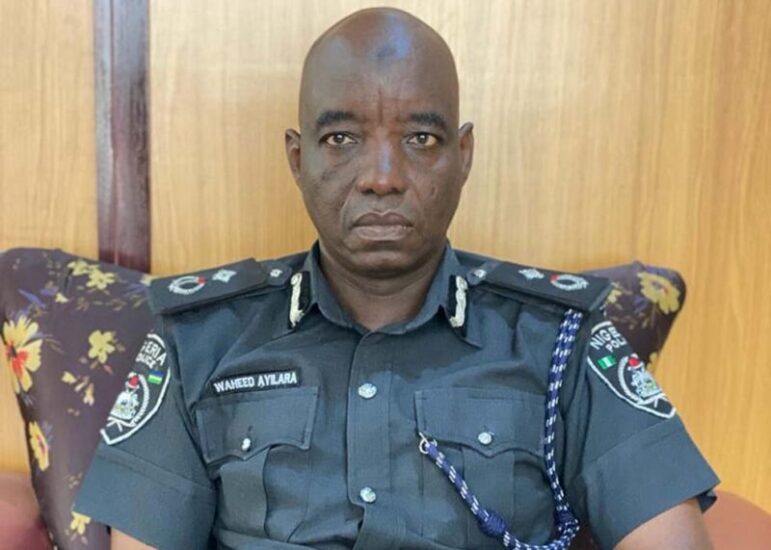
The Lagos State Government through its Ministry of Health has constituted a medical panel to investigate the circumstances that led to the death of Akwa Ibom State Commissioner of Police, Waheed Ayilara.
The Police boss died on August 29, 2024, at the Lagos State University Teaching Hospital (LASUTH) after a surgical operation.
Following allegations of impropriety levelled by family and colleagues of the deceased against medical personnel at LASUTH, the State Commissioner for Health, Prof. Akin Abayomi in a statement issued on Saturday, August 31, announced the constitution of a medical panel to review the clinical circumstances that led to the d#ath of the former police commissioner.
Abayomi said the panel has 7 days to submit its report and will be headed by the Chief Medical Director of LASUTH, Prof Adetokunbo Fabanwo.
READ ALSO:
- Bodies of two missing teenagers found in Ogun river
- Blame security agencies for inability to track kidnappers, others — NCC
- Farooq Kperogi: The 18-year-old age limit for school certificate
The statement read in part,
“In the light of the circumstances surrounding his passing, happening some hours after an apparently uneventful surgery, the Ministry of Health, following a directive from Mr Governor, has constituted a medical panel to review the clinical circumstances leading to the death of the late CP Waheed Ayilara.
This panel is headed by the Chief Medical Director of LASUTH, Prof Adetokunbo Fabanwo. It will submit a comprehensive report on the matter in 7 days.
We share the grief and understand the anxiety that this news may have caused and we assure the public that the Lagos State Government is committed to ensuring a thorough investigation.
Once again, we commiserate with the family of the late Mr Ayilara, the Police the Government, and the people of Akwa Ibom. Our thoughts and prayers are with you during this time of sorrow. May The Almighty give you the strength to go through this sorrowful time and bless the soul of Commissioner of Police Waheed Ayilara.”
Lagos govt begins probe of A’Ibom CP’s death in its hospital










metro
State Police Bill: Public Submissions Close Today as Nigeria Nears Historic Policing Reform
State Police Bill: Public Submissions Close Today as Nigeria Nears Historic Policing Reform
The Presidency has announced that the window for public submissions on the proposed National Policing Bill will close at 5 PM today, Thursday, August 13, 2026. Nigerians have until the deadline to contribute their views on the proposed legislation, a key component of the Federal Government’s efforts to establish state police across the country. The closure marks the end of an intensive public consultation period that has seen citizens, civil society organisations, and security experts weigh in on what could become one of the most transformative security reforms in Nigeria’s history.
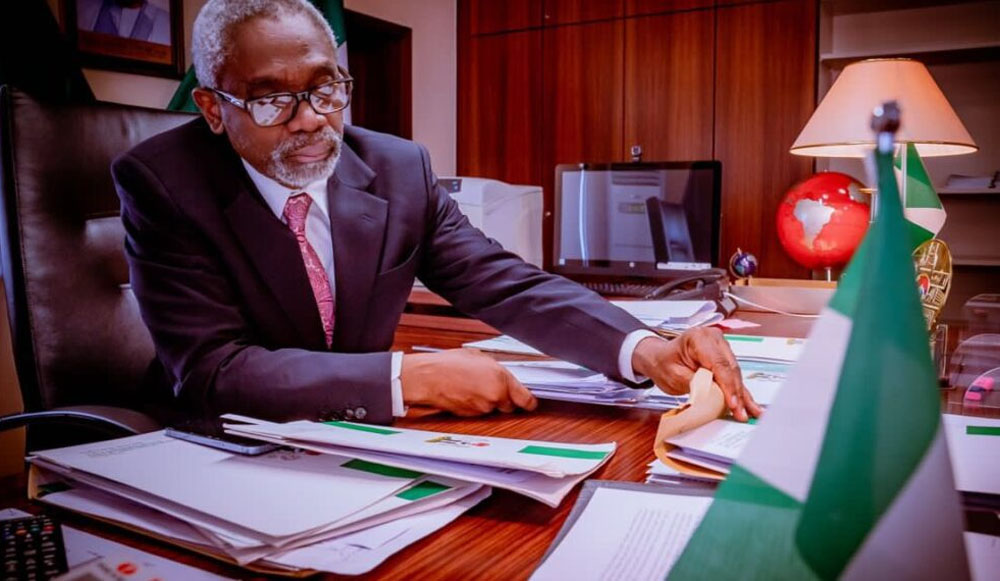
Femi Gbajabiamila, Chief of Staff to President Bola Tinubu and Chairman of the Presidential Working Group on the National Policing Bill, disclosed the deadline on Wednesday and urged citizens, professionals, and stakeholders to take advantage of the final opportunity to shape the proposed framework. The public consultation, launched on August 3 alongside the nationalpolicingbill.com platform, was deliberately opened while critical decisions were still being made, allowing professional expertise and lived experiences to influence the drafting process before the executive proposal is finalised. Gbajabiamila emphasised that this was not a mere token exercise but a genuine effort to ensure that the final bill reflects the aspirations and concerns of everyday Nigerians who would be most affected by the establishment of state police.
READ ALSO:
- INEC reprints Osun ballot papers, result sheets, includes SDP candidate
- FG to Attach 300 NYSC Corps Members to CNG Workshops for Skills Training
- Iran Had Detailed Intel on Trump’s Location Before Secret Turkey Escape
One of the most persistent fears surrounding the state police proposal has been the possibility of political interference, and Gbajabiamila addressed this head-on, acknowledging that state governors could misuse state-controlled police forces against political opponents, peaceful protesters, journalists, and minority communities. He emphasised that the proposed framework must contain strong protections against abuse and that the law must be designed in a way that makes it difficult for political officeholders to bend police operations to their will. “The concern that governors might use state police against political opponents, minority communities or dissenting voices is serious and must be answered in the design of the law,” Gbajabiamila stated. He stressed that the proposed law must make “unlawful orders easier to resist, misconduct easier to investigate, and political interference harder to hide,” while also ensuring that citizens have access to credible complaints and independent oversight mechanisms. Officers, he added, must be properly recruited, trained, equipped, and supervised to maintain professional standards across all state police services.
Despite the progress made on the proposed National Policing Bill, Gbajabiamila clarified that state police cannot be established immediately and that significant constitutional hurdles remain. Section 214 of the Nigerian Constitution currently provides for only one police force—the Nigeria Police Force—meaning a constitutional amendment is required before states can establish separate police services. Both chambers of the National Assembly have approved proposed constitutional amendments providing for a Federal Police Service and State Police Services, but the process is not yet complete. The amendments must complete remaining legislative stages in the National Assembly, then be approved by at least 24 of the 36 State Houses of Assembly, and finally receive presidential assent. Gbajabiamila explained that “the constitutional amendment creates the authority and broad architecture for federal and state policing, but it does not by itself provide the complete operating framework,” underscoring the need for complementary legislation to fill in the operational details.
The Presidential Working Group is preparing the National Policing Bill to run alongside the constitutional amendment process, and the proposed legislation would establish national minimum standards covering a wide range of operational areas. These include recruitment, vetting, and training; remuneration, pensions, and equipment; professional conduct and discipline; use of force and complaints mechanisms; independent oversight; intelligence-sharing and cooperation between federal and state police services; and sustainable funding arrangements. The draft Executive Bill is scheduled for presentation to President Bola Ahmed Tinubu on September 3, 2026, as part of a seven-week work programme running from July 27 to September 14. This timeline reflects the administration’s determination to move swiftly on the reform while ensuring that all necessary safeguards are built into the legislative framework before transmission to the National Assembly.
Gbajabiamila stressed that even after the constitutional amendment and National Policing Bill become law, state police will not automatically be established across all 36 states, as each state that chooses to establish a service will still need its own enabling law, institutions, and funding. It must also meet the national conditions for operation before its officers can begin policing, ensuring that no state rushes into establishing a police force without the necessary capacity and oversight mechanisms in place. States that are not ready or willing to establish their own police services would continue to be served by the Nigeria Police Force, guaranteeing that no citizen is left without policing coverage during the transitional period.
Gbajabiamila said the reform aims to build a policing system that is “closer, faster and better informed by local conditions,” with officers familiar with a community’s language, geography, and crime patterns better positioned to gather intelligence and respond effectively to local security challenges. However, he maintained that the new system must not sacrifice citizens’ rights, cautioning that “proximity does not guarantee justice.” He insisted that the law must protect citizens regardless of who holds office, and that it must protect opposition parties, peaceful protesters, journalists, and minority communities from potential abuses of power. The consultation will complement, rather than replace, the role of the National Assembly, which retains the power to scrutinise, amend, reject, or pass the Bill when transmitted. As the 5 PM deadline approaches, Nigerians are being reminded that their voices remain essential in shaping a reform that could redefine the relationship between citizens and the security apparatus for generations to come.
State Police Bill: Public Submissions Close Today as Nigeria Nears Historic Policing Reform
metro
Kwara police arrest suspected kidnapper while withdrawing ransom at POS
Kwara police arrest suspected kidnapper while withdrawing ransom at POS
The Kwara State Police Command has arrested a suspected member of a kidnapping syndicate operating around the Obudu/Woru axis of Ilorin East Local Government Area after tracking him to a Point-of-Sale (POS) terminal where he was allegedly attempting to withdraw ransom proceeds linked to a recent abduction.
The suspect, identified as Muhamodu Sanni, was intercepted by police operatives during an intelligence-led investigation into the abduction of three people during an armed attack on Obudu Village on July 28, 2026.
The Police Public Relations Officer, Toun Ejire-Adeyemi, disclosed the development in a statement on Wednesday, saying investigators expanded the operation beyond the scene of the attack to uncover the communication, logistics and financial channels allegedly supporting the kidnapping operation.
According to the command, intelligence gathered around the movement of the ransom payment eventually led operatives to Sanni at the POS terminal.
The police said the suspect was arrested while allegedly attempting to withdraw money connected to the ransom paid for the release of the kidnapped victims.
READ ALSO:
- Customs Intercept Explosives from Ghana, Expired Noodles in N365m Seme Border Crackdown
- Pentagon Confirms 153 Civilians Killed in US Military Operations in 2025
- Osun guber: Adeyanju petitions US, UK, Canada to sanction Fadahunsi over ‘kill accord’ comment
The command said the development demonstrated the importance of investigating the financial trail associated with kidnapping operations, rather than focusing solely on the immediate perpetrators of an abduction.
“Rather than limit operational efforts to the immediate scene of the attack, investigators widened the scope of investigation to the communication, logistics and financial channels sustaining the criminal operation,” the statement said.
Police said Sanni cooperated with investigators during interrogation and allegedly provided information about his role in the collection of the ransom.
His disclosures reportedly led investigators to other suspected members of the network, identified as Aminu and Umar.
The command said further intelligence and operational leads were being pursued as investigators work to establish the wider structure of the suspected kidnapping network and identify other people allegedly involved in the operation.
The arrest comes amid continued security concerns over kidnapping and other violent crimes in parts of Kwara State, with security agencies increasingly relying on intelligence-led operations to identify criminal networks and disrupt their sources of funding and logistical support.
The Commissioner of Police in Kwara State, CP Ojo Adekimi, assured residents that the command would continue to target criminal networks and dismantle the structures supporting their operations.
Adekimi also urged residents to support security agencies by providing timely, credible and actionable information that could assist in preventing crime, locating suspects and protecting communities.
The command said the operation was being conducted in line with the intelligence-led policing strategy of the Inspector-General of Police, IGP Olatunji Rilwan Disu.
Police said efforts were ongoing to track down other suspects allegedly linked to the kidnapping syndicate and bring them before the law.
The command also urged members of the public to remain vigilant and report suspicious activities or information that could assist ongoing investigations.
Kwara police arrest suspected kidnapper while withdrawing ransom at POS
metro
FRSC Zone RS 8 Benefits from Corps Marshal’s Repositioned Training
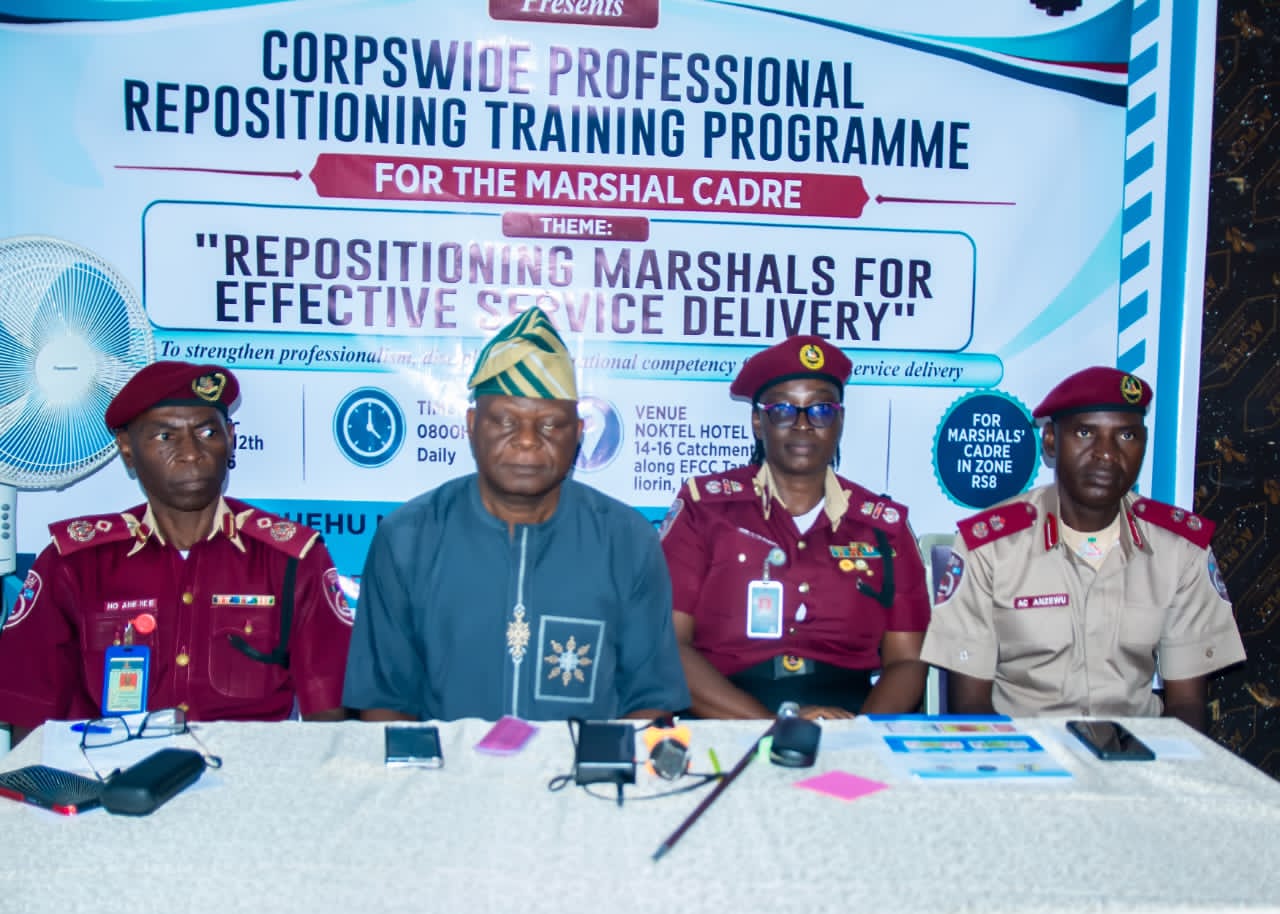
FRSC Zone RS 8 Benefits from Corps Marshal’s Repositioned Training Initiative
As part of a sweeping nationwide push to overhaul frontline operations, non-commissioned officers under the Federal Road Safety Corps (FRSC) Zone RS 8—comprising Ekiti, Kogi, and Kwara states—have undergone an intensive professional repositioning training.
The programme, hosted at the zonal headquarters in Ilorin, Kwara State, is a core component of Corps Marshal Shehu Mohammed’s broader strategy to elevate service delivery, discipline, and operational efficiency across the agency.
Retired Deputy Corps Marshal Joshua Fanola facilitated the session, while Assistant Corps Marshal Ann Oladayo, the Zonal Commanding Officer, delivered the official address.
Themed “Repositioning Marshals for Effective Service Delivery,” the training directly supports the Corps’ 2026 Corporate Strategic Goals. These goals prioritize operational excellence, institutional integrity, digital transformation, and a measurable reduction in road traffic crashes nationwide.
Building Frontline Competence
Emphasizing that Marshals are the most visible face of the agency, Corps Marshal Mohammed noted that public confidence in the FRSC hinges directly on their conduct and competence.
READ ALSO:
- Iran Had Detailed Intel on Trump’s Location Before Secret Turkey Escape
- PSG Pocket £5.2m After Super Cup Thriller, Villa Get £3.4m
- Osun poll: APC big guns storm Osogbo as police warn against inflammatory rhetoric
The curriculum covers a comprehensive range of critical areas, including:
* The FRSC Establishment Act and core operational procedures
* Advanced traffic management and emergency response protocols
* Ethical conduct, emotional intelligence, and effective public engagement
Nationwide Rollout
The capacity-building initiative is currently being rolled out in phases across all 12 FRSC zonal commands.
The initial phase successfully covered RS1HQ Kaduna and RS5HQ Benin between July 29 and 30, 2026, with subsequent phases expanding to the remaining zones.
Addressing the participants, Mohammed urged them to approach the program with commitment, stressing that the insights gained must translate into sharper patrol operations, better respect for human rights, and more proactive emergency responses.
He also instructed facilitators to keep sessions practical, interactive, and tailored to modern operational challenges.
Commending the FRSC Training Department for coordinating the initiative, Mohammed reaffirmed that continuous staff development remains a top priority of his administration.
Facilitator Joshua Fanola noted that the exercise is specifically designed to foster a more courteous, approachable, and professional demeanor among road marshals.
Participating officers expressed strong optimism that the training will significantly sharpen their competence and field effectiveness.
FRSC Zone RS 8 Benefits from Corps Marshal’s Repositioned Training Initiative
-

 News2 days ago
Trump smuggled out of Turkey in catering truck over Iran threat
-

 Education2 days ago
Nigerian Young Academy, LASU to Host 16th International Conference on Convergent Research
-
 Politics2 days ago
Keep Religion Out of Nigeria’s ‘Dirty Politics,’ Gumi Tells Jingir
-

 Education3 days ago
Nigerian Mother Gifts Son a Live Goat After Polytechnic Graduation
-
 News2 days ago
South Africa Visa Applications Double From Nigerians Despite Xenophobia Concerns – Envoy
-
 metro2 days ago
‘I Acted Out of Patriotism’ — Army Colonel Ma’aji Breaks Silence, Explains Why He Plotted Coup Against Tinubu
-

 metro2 days ago
Ex-Aiye Confraternity Leader Arrested in Lagos, Confesses to Multiple Killings in Mushin
-

 International3 days ago
Radio Caroline Fined Over False King Charles III Death Announcement