

Entertainment
Actress seeks help after six years of homelessness

Actress seeks help after six years of homelessness
Veteran Nollywood actress, Jumoke George, has revealed the heartbreaking reality of her life over the past six years, marked by health struggles, homelessness, and the disappearance of her daughter.
In an emotional interview on the TalkToB show hosted by fellow actress Abiola Adebayo, Jumoke broke down in tears as she shared how illness and financial hardship forced her out of her home and into a church, where she has secretly lived for six years.
“There are some things that are embarrassing to say but at this point, I have no choice. I want to speak out. I am working but it’s not like I get jobs every time,” she said tearfully.
“Sometimes, it could be once in three to four months. That was before I became ill. After I became ill, I couldn’t go for a set I was invited to. Someone paid me since last year, I didn’t know I would get sick, I spent the money on treatment. I had to borrow money to refund the person.
“I went to another location but I couldn’t work. They had to bring me back because of my health. I’ve done several tests. I was told to do some more which will cost about N400,000. I don’t know where to get the money from.”
Forced into the church after eviction
Jumoke disclosed that after being unable to meet her rent obligations, she was evicted from her apartment and found temporary shelter in a church.
“The house rent became high and I couldn’t afford it anymore. The landlord told me to leave, I begged but what can I do?” she said.
She explained how the church leadership provided her with a small space to stay, which she tried to keep hidden from the public out of embarrassment.
READ ALSO:
- UTME candidate who committed suicide over low score gets admission
- Sharia court sentences man to 60 strokes for stealing Ram in Kano
- How we rescued 5 kidnapped victims, prevented N150m ransom payment – Ondo Amotekun
“Daddy told me to bring my things to a place he got for me but it was too small, it couldn’t even contain my things, so I had to put my luggage with different people. The things I worked for all my life were just getting spoilt.
“I was given a small room to manage, so I didn’t let people know where I was staying, except a few people who I didn’t even take to the room.
“Everyone in the church has access to the room. I only welcomed guests in daddy’s living room downstairs where they hold events like harvest.
“So, I’ve been living in the church for about six years. This is where I put my mattress to sleep,” she said, pointing at a space on the floor inside the church.
“It’s mummy church that gives me food to eat most times. Daddy died about two years ago, mummy church has also been trying. She buys drug for me and boils herbs for me.
“I’ve been living in the church. I couldn’t speak up because it was shameful. I was embarrassed,” she added.
Daughter missing, son in debt
Adding to her emotional pain, Jumoke revealed that her daughter, Adeola, has been missing for four years.
“My first child, Adeola, has been missing. I’ve been looking for her for the past four years. Any small money I get from working was spent on looking for her.
“She was in Ibadan where she was working and living with my mother. So my mother just called me one day to say that she hasn’t seen Deola who said she was coming to meet me in Lagos. I said I haven’t seen her,” she said.
READ ALSO:
- Microsoft to sack 6,000 employees
- Mali’s military leader disbands political parties amid crackdown on opposition
- Microsoft to sack 6,000 employees
Jumoke recalled receiving a call from her daughter with a strange number, during which Adeola asked for forgiveness and explained that she had migrated with friends in search of better opportunities, only to face unforeseen difficulties.
“Then one day she called me with a strange number, I had no idea where she was calling from, she said I should forgive her. I asked to know where she was, she said I should just forgive her that she doesn’t know where her journey will lead her to.
“She said some of her friends told her that they should travel to a certain country that she didn’t mention to find greener pasture but when they got there, they met a different situation.
“Since then, I haven’t heard anything from her. I’m the one taking care of her children because I’ve not seen the father of the children since they separated when the children were younger. I don’t have his number, I don’t know his town, I don’t know where to find him. She was born in 1984, she clocked 41 on May 1, this year. If she was here, at least we’ll be managing together.”
Her son, Ife, has also taken on the financial burden of supporting her despite his limited means.
“Ife has also been assisting me. He has tried. I have put him in so much debt.
“He has borrowed a lot to transfer to me. The money he has borrowed for me is close to N2 million. I’m worried about him. Let them not sack him at work.
“His salary is small but he has been trying to take care of me. He is searching relentlessly for his sister too,” Jumoke said.
A plea for support and prayers
Jumoke, emotionally drained, concluded the interview by appealing to the public for prayers and emotional support, expressing her fear that her challenges may be spiritual.
“I am tired. I have tried my best as a believer. Even with my ill health, I have been fasting and praying. I don’t understand again, whether it is spiritual or not.
“Please pray for me, mothers in this world. Help me with your prayers. I need prayers. I have never ruined anyone life. I am tired, I can no longer bare it. No house, nothing, and a whole child is missing. Pain is not good. Please people pray for me,” she pleaded.
Jumoke’s story is a stark reminder of the silent battles many public figures face behind the scenes, and a call to society to respond with empathy, support, and action.
Actress seeks help after six years of homelessness


Entertainment
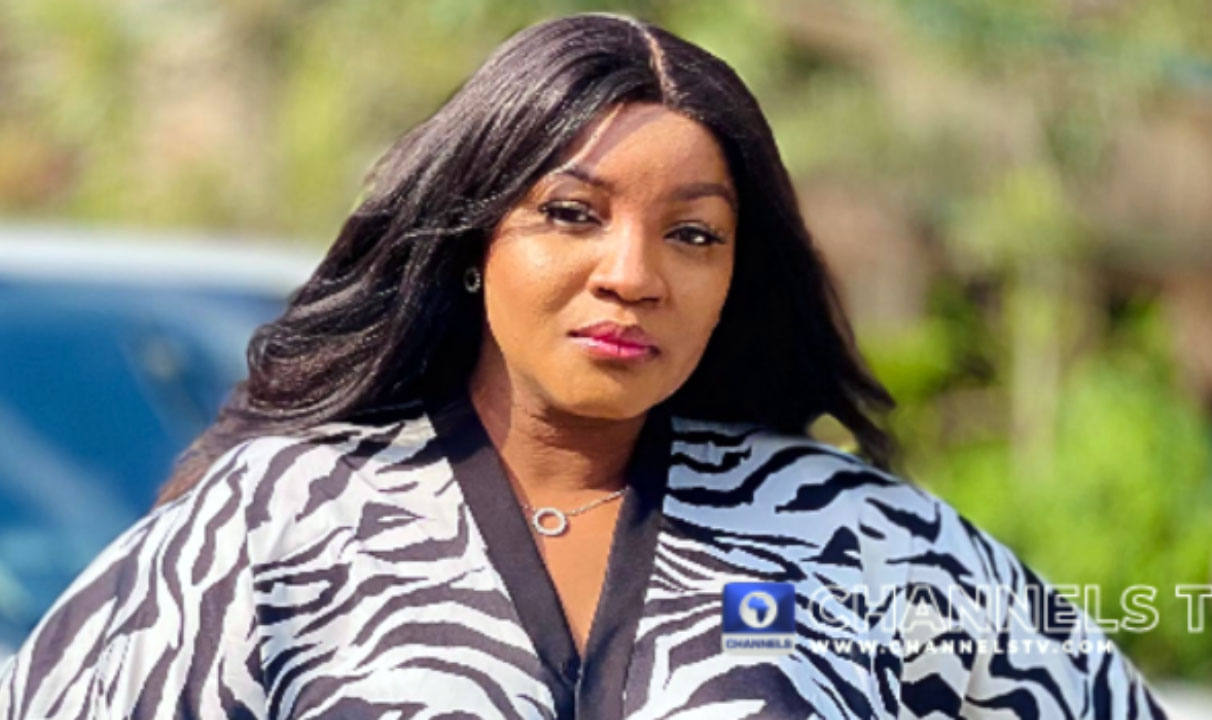
Omotola: I get Hollywood royalties but nothing from 30 years in Nollywood
Omotola: I get Hollywood royalties but nothing from 30 years in Nollywood
Veteran Nollywood actress Omotola Jalade-Ekeinde has renewed concerns about the payment structure in Nigeria’s film industry, revealing that she receives royalties and residual payments from Hollywood despite spending far less time working there, but has received no similar payments from her three-decade career in Nollywood.
Omotola said she has worked in Hollywood for about five years and continues to receive payments from her past projects, while her roughly 30 years in Nollywood have yielded no royalty payments.
“I’ve only worked in Hollywood for five years, yet I constantly receive envelopes containing my residuals and royalties. I’ve worked in Nollywood for 30 years and have never received a single envelope. Maybe they don’t know where I live,” the actress said.
Her remarks have reignited the debate over actors’ royalties, residual payments and contractual rights in Nollywood, particularly as Nigerian films increasingly generate revenue through cinemas, television, streaming platforms and international distribution.
Omotola had previously raised similar concerns in 2025, when she disclosed that she had featured in more than 310 Nollywood projects over three decades without receiving residuals.
At the time, she contrasted that experience with her Hollywood work, saying she had received monthly residual payments from two test projects completed during her relatively brief time in the American film industry.
She also shared images of payment envelopes from SAG-AFTRA, the American union representing film and television performers, to illustrate the system under which performers can receive continuing payments from qualifying uses of their work.
The actress used the comparison to call for greater structure within Nollywood’s compensation system, arguing that performers should be able to benefit financially when their work continues to generate value.
READ ALSO:
- Adeleke’s re-election faces tribunal battle as APC, PDP file petitions
- I always think I’m the best – Mbappé speaks on Ballon d’Or chances
- My husband is a secure man – Mo Bimpe claps back at critics
Residual payments are generally payments made to performers when films or television productions are reused or distributed through qualifying channels, such as television broadcasts, reruns or streaming, depending on contractual and industry arrangements.
Royalties can also arise from agreements that give performers or other rights holders a continuing share of revenue generated from the use or exploitation of their work.
Omotola’s latest comments therefore highlight a distinction between a one-time acting fee and continuing financial participation in the commercial life of a production.
Her concerns have also brought renewed attention to the structures supporting Nollywood actors and filmmakers, including contracts, copyright, rights management, distribution and revenue tracking.
The issue comes at a time when Nollywood has expanded significantly beyond the traditional home-video and cinema markets.
Nigerian films are now distributed through international streaming services and other digital platforms, giving productions longer commercial lives and access to audiences around the world.
However, Omotola’s experience has also prompted questions about whether the industry’s financial and contractual systems have developed at the same pace as its global reach.
In 2025, the Chairman of the Audio Visual Rights Society of Nigeria (AVRS), Mahmood Balogun, acknowledged the challenges surrounding residual collection in Nigeria while noting that the country was still developing the infrastructure required for effective royalty administration.
Balogun said AVRS had distributed royalties to members but explained that actors and other rights holders who are not members of relevant collecting structures may not receive such payments.
He also pointed to challenges involving copyright awareness, compliance and the collection of royalties from broadcasters, hotels and other commercial users of audiovisual content.
The debate has consequently moved beyond whether actors are paid enough for individual film appearances to the broader question of whether they can benefit from the continuing commercial use of their performances.
READ ALSO:
- After two decades, Tinubu approves Cabotage fund for Nigerian shipowners
- Hate Speech, Threats During Campaigns Attract ₦10m Fine, 12 Months Jail – INEC
- Market Fire in Indonesia Kills 11, Including Six Children
Omotola’s lengthy career makes her intervention particularly significant. She has been one of the most recognisable faces of Nollywood since emerging as a major actress in the 1990s and has featured in hundreds of productions.
She has also transitioned into filmmaking and production, giving her experience on both sides of the industry’s financial structure.
Her recent film, Mother’s Love, provided another insight into the economics of Nigerian filmmaking.
The movie reportedly grossed more than N103 million during its cinema run, but Omotola disclosed that only about N22.28 million accrued to the producers after deductions including exhibitor and distributor shares, advertising and production-related costs, as well as various taxes.
She subsequently disclosed that the amount accruing to her production company from the film was donated to Slum2School Africa, fulfilling a pledge made by her production outfit.
The disclosure offered a glimpse into the gap between a film’s headline box-office figure and the amount ultimately available to producers after industry deductions.
Omotola’s royalty concerns highlight another side of that financial equation: what happens to performers and other creatives after their initial fees have been paid and their films continue to circulate.
The actress has previously indicated that she wants royalty clauses included in her Nollywood contracts, arguing that her work should continue to provide value for her and her family.
Her position reflects a wider push among some Nigerian creatives for stronger contractual protections and clearer mechanisms for tracking revenue generated by films after their initial release.
For an industry that now has a substantial international audience, the issue of Nollywood royalties is increasingly tied to questions of professionalism, transparency and sustainability.
The growth of streaming platforms has made the subject even more important because films can remain available to viewers for years, potentially generating revenue long after their cinema or television premieres.
Whether actors receive additional compensation in such circumstances depends on the contracts governing individual productions, ownership arrangements and applicable rights-management systems.
Omotola’s comments do not necessarily represent the experience of every Nollywood performer, but they have once again placed the industry’s royalty structure at the centre of public discussion.
Her message is ultimately a call for a more organised system in which actors and other creatives can benefit from the long-term commercial value of their work.
As Nollywood continues to expand internationally, the debate over royalties, residuals, actors’ rights and film revenue is likely to remain an important part of conversations about the future of Nigeria’s entertainment industry.
For Omotola, however, the disparity remains personal: after about five years of work in Hollywood, she says she continues to receive royalty and residual payments, while three decades and hundreds of projects in Nollywood have produced none.
Omotola: I get Hollywood royalties but nothing from 30 years in Nollywood
Entertainment
My husband is a secure man – Mo Bimpe claps back at critics
My husband is a secure man – Mo Bimpe claps back at critics
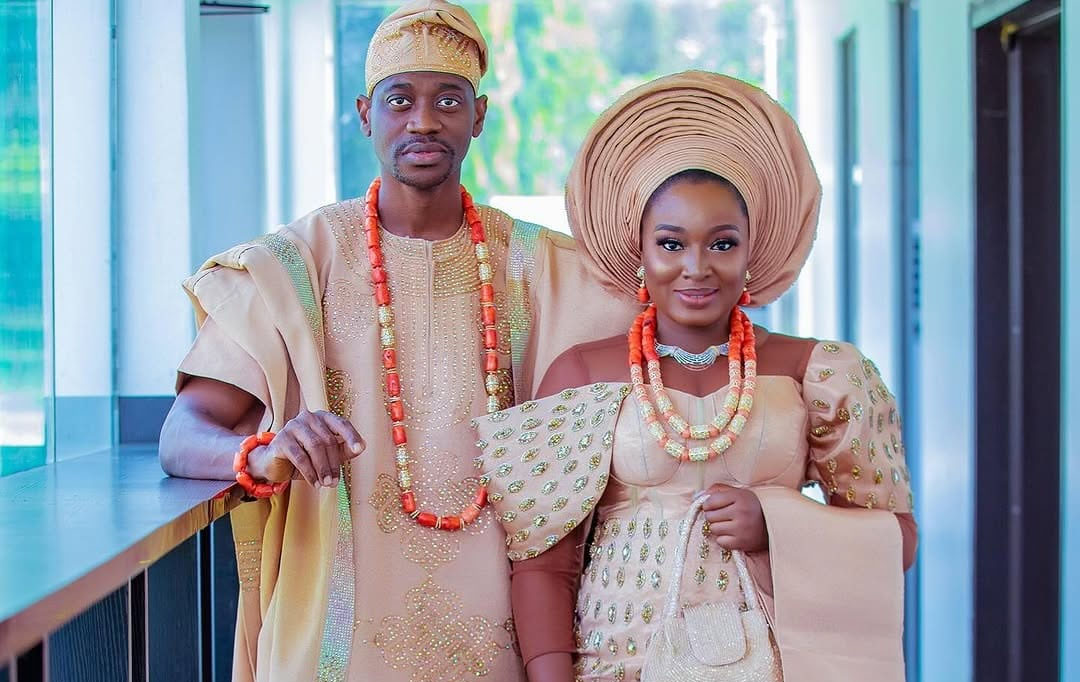
Nollywood actress Mo Bimpe has responded to social media criticism following a viral video showing her interacting with fellow actor Jide Awobona at the premiere of A Mama Deola Wedding Story in Lagos.
The video, recorded at the September 2, 2026 movie premiere, showed Mo Bimpe seated between Awobona and her husband, actor Lateef Adedimeji.
In the clip, Mo Bimpe was seen leaning towards Jide Awobona and resting on his shoulder while they appeared to look at something on her phone.
The brief interaction quickly attracted attention on social media, with some users questioning the nature of the relationship between the two actors and debating whether the moment crossed expected marital boundaries.
Some commentators also scrutinised Lateef Adedimeji’s reaction, with viewers suggesting that he appeared uncomfortable during the interaction. However, neither Lateef nor Mo Bimpe has confirmed that he was upset by the incident.
The growing online discussion eventually prompted Mo Bimpe to address the criticism.
In a statement shared on her Instagram Story on Sunday, September 6, the actress said she found it surprising that an ordinary conversation between friends had been interpreted as something suspicious.
She explained that the viral clip represented only a brief interaction and should not be used to draw conclusions about her marriage.
Mo Bimpe stressed that marriages can be built on trust, friendship, respect and confidence, rather than fear, jealousy or constant monitoring.
“Not every marriage is built on fear, insecurity, and constant monitoring. Some marriages are built on trust, friendship, respect, and confidence,” she said.
The actress further suggested that the strong reactions to the video may reflect the kind of relationships some of the critics are familiar with rather than the reality of her own marriage.
READ ALSO:
- After two decades, Tinubu approves Cabotage fund for Nigerian shipowners
- Hate Speech, Threats During Campaigns Attract ₦10m Fine, 12 Months Jail – INEC
- Market Fire in Indonesia Kills 11, Including Six Children
“The fact that so many of you found that interaction strange says more about the relationships you’re used to than it does about mine,” she added.
Mo Bimpe also rejected the suggestion that every unusual-looking interaction between a married person and a member of the opposite sex should automatically be interpreted as evidence of problems within the marriage.
“Not every marriage is toxic, there are still healthy marriages but I understand if you can’t relate,” she said.
Addressing her husband’s attitude towards her friendships, Mo Bimpe described Lateef Adedimeji as a secure partner who trusts her.
“My husband is a secure man, a brief conversation with a family friend does not threaten our marriage, or require anyone’s concern,” she stated.
The actress’s response has generated further reactions online, with some social media users praising her for defending her marriage and others continuing to discuss the boundaries that should exist between married people and their friends or colleagues.
The controversy has also reignited conversations about celebrity marriages and social media scrutiny, particularly the way short clips can be taken out of context and become subjects of widespread speculation.
Mo Bimpe and Lateef Adedimeji have been married since December 2021 and remain one of the better-known couples in the Nigerian entertainment industry.
Both actors have established careers in Nollywood, and their relationship has frequently attracted public attention.
Jide Awobona is also a colleague within the Nigerian film industry, and Mo Bimpe described him as a family friend while explaining the viral interaction.
The incident occurred during the premiere of A Mama Deola Wedding Story, a wedding-themed entertainment event that attracted several Nollywood stars and generated considerable attention on social media.
For Mo Bimpe, however, the viral video does not indicate a problem in her marriage.
Her response was aimed at making it clear that she and Lateef operate their relationship on a foundation of mutual trust and confidence, and that ordinary interactions with friends should not automatically become a source of suspicion.
The actress’s comments have therefore shifted the focus from the viral clip itself to broader discussions about trust in marriage, relationship boundaries, celebrity privacy and online criticism.
While social media users continue to debate the video, Mo Bimpe has made her position clear: she believes her marriage is secure, and she does not consider a brief conversation with a family friend a threat to her relationship with Lateef Adedimeji.
My husband is a secure man – Mo Bimpe claps back at critics
Entertainment
Veteran Actor Jude Chukwuka Reveals Eight-Year Battle With Undiagnosed Depression After Wife Left
Veteran Actor Jude Chukwuka Reveals Eight-Year Battle With Undiagnosed Depression After Wife Left
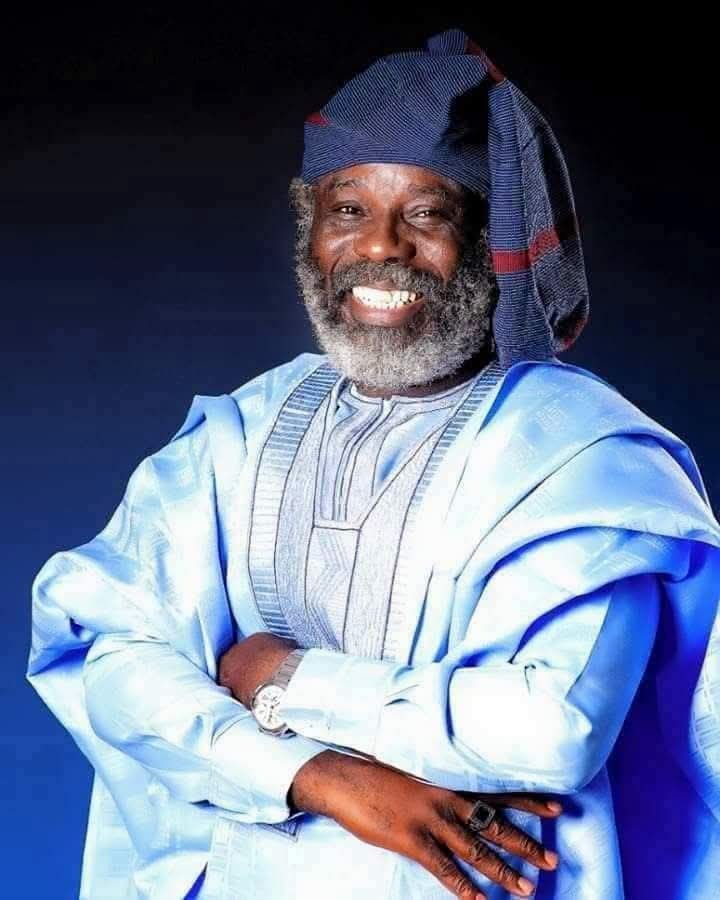
Veteran Nollywood actor, Jude Chukwuka, has opened up about a difficult chapter of his life, revealing that he unknowingly battled depression for about eight years following the collapse of his marriage.
Chukwuka made the disclosure during an interview with African A-List on Friday, September 5, 2026, while reflecting on the emotional impact of his failed marriage and how it affected his outlook on life.
The actor said he initially did not realise that the changes in his behaviour and emotions were symptoms of depression.
According to him, he simply continued with his life without understanding why he had lost interest in many things.
“My wife left me for eight years. I didn’t know I had depression,” he said. “I was just living my life like I’m not interested in all of these things for about eight years.”
Chukwuka explained that his emotional withdrawal and lack of interest persisted for years after the breakdown of his marriage, but he was unable to identify the underlying problem at the time.
The veteran actor’s revelation offers an insight into the emotional struggles that can follow the breakdown of a marriage, particularly when the affected person does not recognise the psychological effects of the experience.
Chukwuka had previously disclosed that his first marriage ended in 2011. He described his subsequent marriage as a “second chance” after experiencing heartbreak from the earlier failed relationship.
His latest revelation highlights the prolonged emotional consequences of the experience and the difficulty he faced in recognising what he was going through.
The actor’s account also underscores the importance of paying attention to prolonged emotional withdrawal, loss of interest and other significant changes in behaviour, which can sometimes be associated with depression.
Chukwuka has remained active in Nollywood over the years and is known for his appearances in numerous Nigerian films and television productions.
Veteran Actor Jude Chukwuka Reveals Eight-Year Battle With Undiagnosed Depression After Wife Left
-

 Politics3 days ago
Peter Obi, Others Challenging Tinubu Cannot Transform Nigeria — Datti Baba-Ahmed
-

 Auto2 days ago
Kaduna to Lead Govt Patronage of Local Vehicles as Sani Unveils Peugeot 5008
-

 metro1 day ago
El-Rufai Demands ₦10bn from Defence Minister Over Southern Kaduna Killings Allegation
-
 metro2 days ago
Socialite Igho ‘Tiny’ Ubiribo Dies After Penis Enlargement Surgery
-
 metro1 day ago
Catholic priest leaves priesthood, weds Kenyan woman after 12 years in Kenya
-

 metro2 days ago
Three Women Killed, 10 Injured in Multiple Crash on Lagos-Ibadan Expressway Bridge
-

 metro1 day ago
No US Case Against Tinubu, Family Enjoy Unimpeded Transit for UNGA — Ambassador Ibrahim
-

 Politics3 days ago
Demystifying the Political Monolith: Wike’s ‘See Finish’ Doctrine and Nigeria’s New Political Calculus