
Business
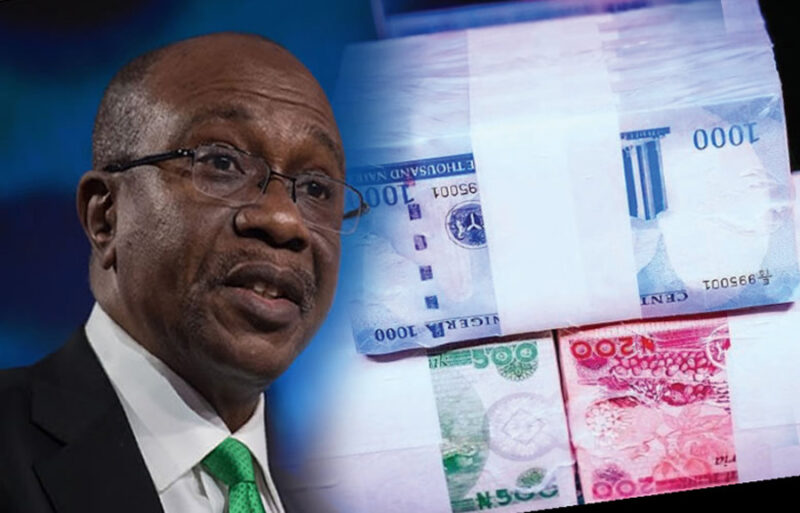
BREAKING: CBN to mop up dormant accounts, unclaimed balances in banks
BREAKING: CBN to mop up dormant accounts, unclaimed balances in banks
The Central Bank of Nigeria has said that it will mop up all dormant account balances and unclaimed balances in banks into a designated account it has created.
The apex bank said the balances will be invested in government securities and would be returned to the beneficiaries not later than ten days of notice.
This was disclosed in the Exposure draft of the Guidelines on the Management of Dormant Accounts drafted in April 2023.
The document repeals October 7, 2015, Guidelines on the Management of Dormant Accounts and Other Unclaimed Balances by Banks and Other Financial Institutions in Nigeria.
CBN said, “The Central Bank of Nigeria shall open and maintain an account earmarked for the purpose of warehousing unclaimed balances in eligible accounts. The account shall be called “Unclaimed Balances Trust Fund Pool Account”
The apex bank said eligible accounts are dormant accounts balances that have remained with the FIs for a period of 10 years and beyond.
READ ALSO:
- Nigeria to begin repayment of $800m W’Bank loan in 2027
- Ohanaeze reacts to Obi’s detention by London Immigration
- Update: Seven rescued, one missing in Lagos seven-storey building collapse
- My life in danger under Tinubu presidency, says 77-year-old Ojikutu
The eligible accounts and financial assets are: Current, Savings and Term deposits in local currency; Domiciliary accounts; Deposits towards the purchase of shares and Mutual Investments; Prepaid card accounts and wallets; Proceeds of uncleared and unpresented financial instruments belonging to customers or non-customers of FIs; Unclaimed salaries and wages, commissions, and bonuses.
Others are: Proceeds of stale local and/or foreign currency drafts not presented for payment by beneficiaries; Funds received from a correspondent bank without sufficient details as to the rightful beneficiary and/or a recall of funds made to the remitting bank to which the Nigerian bank’s account had not been debited and A judgment debt for which the judgment creditor has not claimed the amount of judgment award.
According to the CBN, Financial Institutions shall treat accounts and financial assets that have become dormant as follows:
“i. Formulate policies for the recognition and management of dormant accounts and financial assets that are consistent with this guideline and other extant regulations; ii. Establish effective controls to ensure surveillance and second-level authorization on reactivation of dormant accounts, among other measures;
“iii. Maintain a register of dormant accounts balances; iv. Transfer balances that have remained in the dormant account register for up to ten years to the ‘UBTF Pool Account; and v. Require customers seeking to reactivate dormant accounts to provide evidence of account ownership, valid means of identification, evidence of the present place of residence, and affidavit on the accuracy of the information to reactivate the account.
READ ALSO:
- Gangs of Lagos movie, a mockery of our heritage- Lagos govt
- EFCC arrests 11 suspected internet fraudsters in Borno
- FEC approves installation of baggage scanners in all railway stations
CBN said when it receives the unclaimed balances the apex bank will, “i. Open and maintain the ‘Unclaimed Balances Trust Fund Pool Account’; ii. Maintain records of the beneficiaries of the unclaimed balances warehoused in the UBTF Pool Account; iii. Invest the funds in Nigerian treasury bills (NTBs) and other securities as may be approved by the ‘Unclaimed Balances Management
Committee’;
“iv. Refund the unclaimed funds to the beneficiaries not later than ten (10) working days from the date of receipt of the request. v. Where it is imperative to extend the timeline, a notice of extension shall be communicated to the requesting FI stating reasons for the extension.”
The Central Bank said any bank or financial institution that contravenes any provision of the new guidelines would attract a penalty of not less than N2,000,000.
It added that failure to comply with CBN’s directive in respect of any infraction will attract a further penalty of N200,000 daily until the directive is complied with or as may be determined by CBN.
The Whistler










Business
Dangote Opens Refinery Investment to Nigerians With Public Share Sale Plans
Dangote Opens Refinery Investment to Nigerians With Public Share Sale Plans
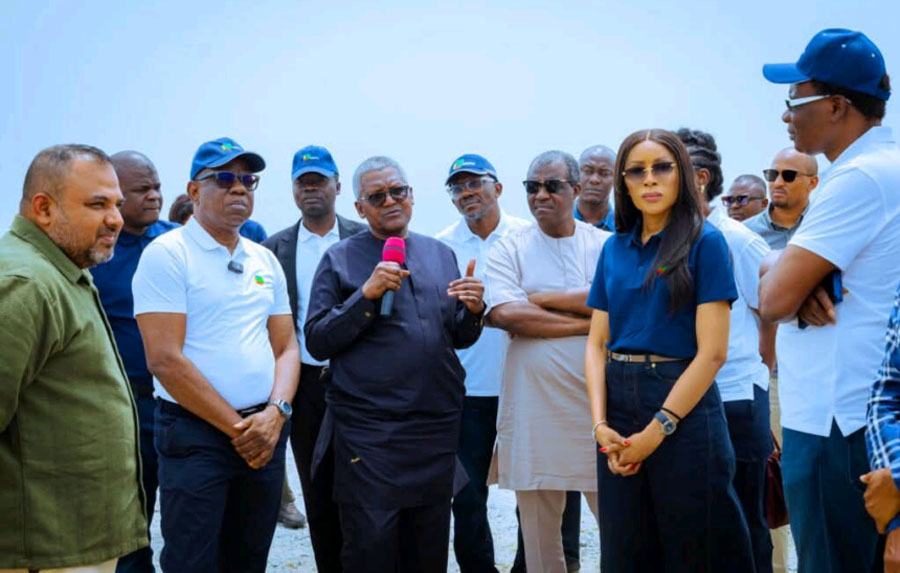
Aliko Dangote, President of the Dangote Group, has announced that ordinary Nigerians will soon be able to buy shares in the $20 billion Dangote Petroleum Refinery, a move aimed at expanding public participation in one of Africa’s largest industrial projects. The announcement was made during a guided inspection of the refinery by NNPC Limited management, led by Group CEO Bayo Ojulari, and senior officials of the company.
Dangote stated that arrangements are being finalised to allow individual investors to acquire shares within the next four to five months, giving Nigerians direct ownership in the refinery. “Individually, Nigerians too will have an opportunity… in the next maximum four or five months, they will actually be able to buy their shares,” he said.
The Nigerian National Petroleum Company (NNPC) currently holds a 7.25 % stake in the refinery on behalf of Nigerians, ensuring that public interest remains a key aspect of the project. Dangote further explained that investors will have flexibility in receiving returns, saying, “People will have a choice either to get their dividends in naira or to get their dividends in dollars because we earn dollars.”
READ ALSO:
- SERAP Urges Tinubu to Repeal ‘Unlawful’ Mass Surveillance Regulations
- Trump Imposes 15% Global Tariff Hours After Supreme Court Blocks Previous Tariffs
- APC Wins Rivers Ahoada East State Constituency II Bye‑Election
Beyond the public share offering, Dangote highlighted ongoing collaboration with NNPC to enhance operations and explore opportunities across the oil and gas value chain, including potential upstream partnerships. “Most likely… we will partner with them, maybe in some of the upstream. They, too, will partner with us here because here is not a refinery. It’s an industrial hub,” he said.
The refinery is also set to support additional industrial ventures, including the production of linear alkylbenzene (LAB), a key raw material for detergents. Dangote noted that production will be sufficient to meet demand across the African continent within 30 months, underscoring the facility’s industrial significance.
Industry analysts expect the refinery to list on the Nigerian Exchange (NGX) through a phased public offering of 5–10 % equity, similar to earlier listings of Dangote Cement and Dangote Sugar. The move is aimed at enhancing market liquidity, transparency, and public participation, while retaining majority ownership by the Dangote Group.
The public share offering represents a milestone in Nigeria’s industrial and energy sector, offering citizens an opportunity to participate in a globally competitive infrastructure project while benefiting from dividends in local and foreign currency.
Dangote Opens Refinery Investment to Nigerians With Public Share Sale Plans
Business
CBN Policies, Foreign Inflows Drive Naira to Two-Year Peak
CBN Policies, Foreign Inflows Drive Naira to Two-Year Peak
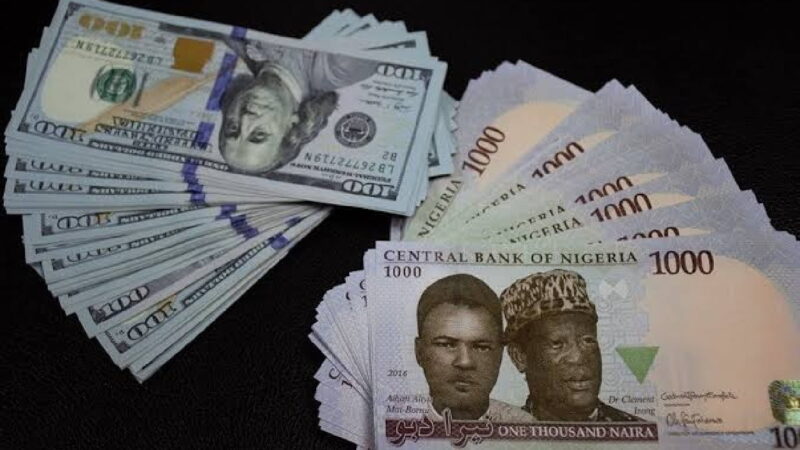
Nigeria’s naira has extended its recent rally, trading at one of its strongest levels against the U.S. dollar in nearly two years, supported by sustained foreign portfolio inflows, tighter liquidity management, and targeted policy interventions by the monetary authorities.
A macroeconomic update by CardinalStone shows that the local currency has appreciated 6.9 per cent year-to-date at the official foreign exchange market, closing at ₦1,347.78/$—its strongest performance since early 2024. The appreciation reflects improved FX liquidity and growing confidence in the official trading window.
Despite the gains, a gap persists between the official and parallel markets. However, the premium narrowed from about 5.7 per cent to roughly 3.2 per cent following renewed foreign exchange interventions by the Central Bank of Nigeria. According to CardinalStone, the compression of the spread indicates stronger liquidity conditions in the official market, reducing incentives for speculative trading and arbitrage.
As part of efforts to further stabilise the FX market, the CBN recently authorised licensed Bureau de Change (BDC) operators to access foreign exchange from approved dealers at prevailing market rates, subject to a weekly cap of $150,000 per BDC and strict Know-Your-Customer (KYC) requirements. Under the framework, operators must sell unused FX balances within 24 hours, limit cash transactions to 25 per cent of total trades, and settle transactions through licensed financial institutions.
READ ALSO:
- Edo Governor Okpebholo Names Mercy Johnson-Okojie Special Adviser
- Many Feared Dead as Suspected Lakurawa Militants Attack Kebbi Communities
- AMAC Polls Shock: Another PDP Candidate Withdraws from FCT Race, Backs APC
With 82 licensed BDCs currently operating, CardinalStone estimates that potential FX supply to the segment could rise to about $50 million monthly. Although this remains significantly below pre-pandemic levels, the renewed supply has helped ease retail FX demand pressures and compress the premium in the parallel market.
While foreign inflows have strengthened the naira, analysts caution that continued appreciation could prompt profit-taking by offshore investors. CardinalStone estimates outstanding foreign portfolio investment (FPI) exposure at between $12 billion and $14 billion, noting that Nigeria’s carry trade remains one of the most attractive across emerging and frontier markets.
The firm added that assuming many investors entered the market at around ₦1,500/$, a move toward ₦1,200–₦1,250/$ could deliver over 22 per cent FX gains on currency alone. Such gains could heighten the risk of portfolio rebalancing or exits, particularly as political and election-related uncertainties begin to build.
Ahead of the latest meeting of the Monetary Policy Committee, analysts describe the macroeconomic signals facing policymakers as mixed. Inflation has started to moderate, while short-term interest rates have converged near 22 per cent, about 500 basis points below the 27 per cent Monetary Policy Rate (MPR).
However, the CBN has signalled low tolerance for excess liquidity, intensifying Open Market Operations (OMO) issuances and keeping the Standing Deposit Facility (SDF) attractive to absorb surplus funds and prevent renewed inflationary pressure. Analysts also point to concerns around election-related liquidity, which is expected to intensify in the second half of the year, with over 75 per cent of projected 2026 liquidity expected in the first half.
Looking ahead, CardinalStone expects the CBN to hold the policy rate while adjusting the asymmetric corridor to align SDF rates with OMO yields and preserve the attractiveness of naira assets for foreign investors. Forward market indicators suggest a softer currency path later in the year, with the naira projected to trade within a ₦1,350–₦1,450/$ range in 2026, despite the recent rally.
CBN Policies, Foreign Inflows Drive Naira to Two-Year Peak
Railway
Railway track vandalism: Urgent need for laws prohibiting scrap/metal picking to protect critical assets
Railway track vandalism: Urgent need for laws prohibiting scrap/metal picking to protect critical assets
By Onyedikachi Stanley Onovo
The wanton destruction and theft of Nigeria’s railway infrastructure and other critical public assets represent one of the gravest threats to national development and security.
Across the nation—from the Warri-Itakpe line to Abuja-Kaduna, the Eastern and Western Districts, Lagos-Ibadan, and throughout the Northern network—vandals systematically dismantle tracks, steal armoured cables, and pillage essential equipment. This crisis demands an immediate and robust legislative response.
The unending menace
The vandalism is perpetrated by a network of individuals, from local miscreants (“iron condemn”) to organised merchants who purchase and export stolen materials. Security reports and countless arrests underscore the scale of the problem:
In December 2023, a private security firm arrested 13 suspects for vandalising Abuja Mass Transit Rail assets. The suspects were said to be casual workers engaged by a Chinese company working on the railways, but said to have used the opportunity to steal the materials.
On June 2024, The Cable reported that the Nigerian Army arrested 47 suspected rail track vandals in Kaduna State.
In October 2025, police arrested a suspect vandalising railway electrical installations also in Kaduna State.
Radio Nigeria in December 2025 announced the arrest of three persons in Kwara State for vandalizing and stealing Railway clips and nuts in Offa.
In May 2021, TVC reported some individuals, including one Ejike Okeke were apprehended in Enugu with stolen sleepers and tracks.
On the 30th of January 2026 the Nigerian Television Authority reported that the NSCDC, Bauchi State Command arrested five suspects and intercepted a truck carrying vandalized railway tracks.
This relentless assault has plagued successive management of the Nigerian Railway Corporation (NRC), defying conventional counter-strategies.
A transformative leadership initiative
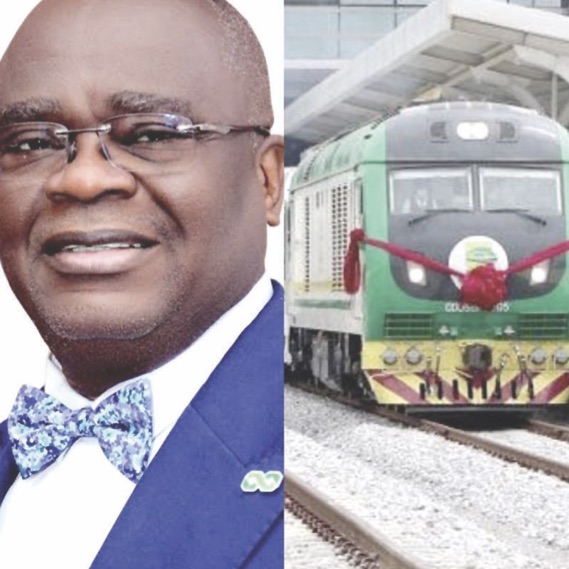
A pivotal shift began under the administration of President Bola Ahmed Tinubu with the appointment of Dr. Kayode Opeifa as Managing Director/CEO of the NRC.
Dr. Opeifa introduced a fundamental paradigm shift by redesignating what was carelessly termed “scrap” as “unserviceable critical national assets.”
This reframing has driven a transformative partnership with experts to manage these assets responsibly. The era of controversial public auctions—which often saw valuable national iron assets disappear, depriving Nigeria of materials for repurposing and industrialisation—is now over.
Today, a systematic process ensures these materials are reused or responsibly processed, with revenue reinvested into the Corporation. This home-grown solution is a commendable breakthrough that proves Nigerians can effectively solve national challenges.
The critical legislative gap: Targeting the market
While the NRC’s internal reforms are laudable, they alone cannot stem the tide. The root enabler of this vandalism is the thriving, unregulated market for stolen metal. To kill the vandal’s incentive, we must eradicate the demand.
Therefore, there is an urgent need for the National Assembly to enact legislation that:
1. Prohibits the buying and selling of any railway materials (serviceable or unserviceable) on the open market.
2. Imposes severe penalties on buyers and merchants of vandalised public assets, effectively targeting the economic drivers of this crime.
3. Mandates stringent federal regulation of all scrap metal dealers nationwide.
THE SCRAP DEALER NEXUS
The opaque operations of scrap dealers are a major concern. Their compounds are often shrouded, hiding the provenance of their materials. This unregulated space fuels not only railway vandalism but also community theft—from iron crossing bars in homes to street lamp holders.
Trailers loaded with questionable materials move freely from cities and expressways to unknown destinations. Without regulating this sector, our fight against vandalism remains superficial.
CONCLUSION
The partnership and innovation under Dr. Opeifa’s leadership at the NRC demonstrate what is possible with commitment and vision.
However, to secure our railways, power installations, and other critical assets, we must complement this institutional resolve with strong, deterrence-based law. Legislation that dismantles the market for stolen public property is not an option; it is a national imperative for Nigeria’s security and industrial future.
*Onyedikachi Stanley Onovo, Ph.D
FCAI, ANIPR
onyedikachionovo1@gmail.com excellentdikachi@yahoo.com

-

 Business1 day ago
Dangote Opens Refinery Investment to Nigerians With Public Share Sale Plans
-

 Politics3 days ago
Peter Obi Launches ‘Village Boys Movement’ to Rival Tinubu’s City Boys Ahead of 2027
-

 Education2 days ago
UTME: JAMB Clarifies Position on Hijab During Biometric Capture
-
 Politics20 hours ago
Tinubu Hails Wike as APC Dominates 2026 FCT Area Council Elections
-

 Education3 days ago
Ogun Gov Rewards Nigeria’s Best Primary School Teacher with Car, Bungalow
-
 Politics2 days ago
ADC Defeats APC to Win First Polling Unit in FCT Area Council Election
-

 Entertainment3 days ago
Tacha Condemns False Rape Allegations After Mirabel Admits Fabrication
-

 Politics1 day ago
Opposition Weakens as Another Governor Eyes APC Move