

International
Gaza: US says ceasefire plan on course, cautions Hamas against proposed changes
Gaza: US says ceasefire plan on course, cautions Hamas against proposed changes
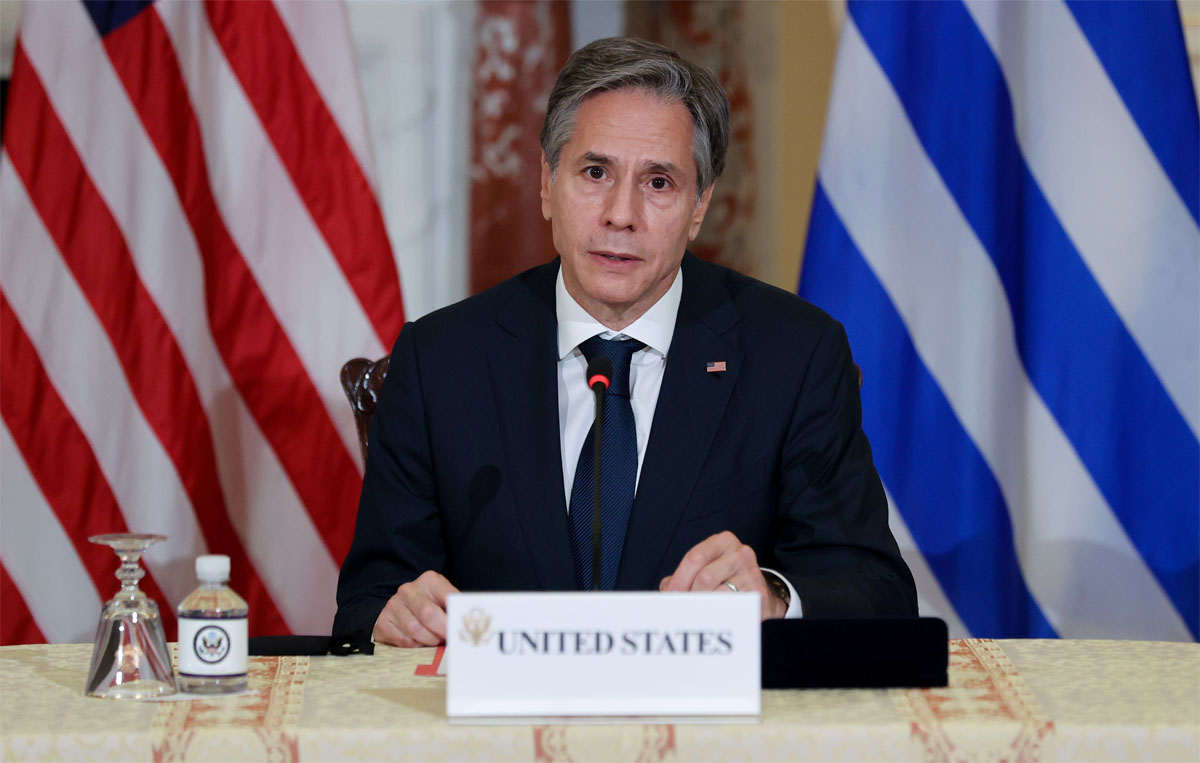
US Secretary of State Antony Blinken has told Hamas that it is “time for the haggling to stop”, after its leaders proposed “numerous changes” to a plan for a Gaza ceasefire and hostage release deal.
He told reporters in Doha that some of the changes were “workable” and others were not, but that the US and mediators Qatar and Egypt would “try to close this deal”.
Hamas said on Tuesday that it was ready to “deal positively” with the process but stressed the need for Israel to agree to a permanent ceasefire and full withdrawal from Gaza.
The Israeli government did not comment, but an anonymous official said the Palestinian armed group’s response amounted to a rejection.
Israel’s prime minister has not yet publicly endorsed the proposal, which US President Joe Biden said had been offered by the country when he outlined it 12 days ago.
But Mr Blinken said Benjamin Netanyahu had “reaffirmed his commitment” during a meeting in Jerusalem on Monday.
The UN Security Council also passed a resolution supporting the proposal that day, adding to the diplomatic pressure that Washington is exerting.
The BBC is part of the travelling press pool on the US secretary of state’s visit to Qatar – a glittering Gulf location that belies the sense of regional crisis he is attempting to solve with a diplomatic tour taking place at breakneck speed.
There was an embrace and smiles Mr Blinken met the Qatari Prime Minister and Foreign Minister Sheikh Mohammed bin Abdul Rahman Al Thani.
READ ALSO:
- Decline reinstatement, follow your grandfather’s footsteps, Nyass family urges Emir Sanusi
- S’African soldier convicted of deliberately infecting girlfriend with HIV
- HoS suspends perm sec, orders probe over alleged sexual harassment
His country is a key player in this crisis, having hosted the political offices of Hamas for more than a decade and been a conduit for negotiations with Israel.
Mr Blinken seemed exasperated as he told a joint news conference that they had been discussing the changes requested by Hamas to the US-backed ceasefire proposal.
“A deal was on the table that was virtually identical to a proposal that Hamas put forward on 6 May – a deal that the entire world is behind, that Israel has accepted, and Hamas could have answered with a single word: ‘yes’,” he said.
“Instead, Hamas waited nearly two weeks and then proposed more changes, a number of which go beyond positions that it had previously taken and accepted. As a result, the war that Hamas started… will go on, more people will suffer, Palestinians will suffer, more Israelis will suffer.”
Mr Blinken did not clarify what changes he said Hamas was demanding, nor did a brief statement issued by the group itself on Tuesday evening.
The statement did, however, reiterate a demand for what Hamas called “a complete halt of the ongoing aggression against Gaza” and the full withdrawal of Israeli forces.
A member of Hamas’s political bureau, Izzat al-Rishq, said the response was “responsible, serious and positive” and that it opened up “a wide pathway” to reach an agreement.
The Israeli prime minister’s office did not release an on-record reply.
But a statement was issued by an anonymous Israeli official, who said that Hamas had “changed all of the main and most meaningful parameters” and “rejected the proposal for a hostage release that was presented by President Biden”.
In a later statement on Wednesday, cited by Reuters news agency, Hamas said it had shown “full positivity” in its efforts to reach an agreement, adding that it had urged Mr Blinken to put “direct pressure” on Israel.
READ ALSO:
- Finland, EU shielding Simon Ekpa – Defence Chief
- APC can no longer win elections except through rigging, says ex-party National VC Salihu Lookman
- Postpone Olympics trial until after Sallah, MURIC tells AFN
Despite the setbacks, Mr Blinken said the US, along with Qatar and Egypt, would “try to close this deal”.
“I believe those gaps are bridgeable. But that doesn’t mean they will be bridged because, ultimately, Hamas has to decide.”
Sheikh Mohammed said both Hamas and Israel needed to make some concessions.
“We are witnessing a shift in this conflict in the recent period and there is a clear and firm call to end this war,” he noted.
Mr Blinken also said it was crucial to develop plans for the “day after the conflict” in Gaza as soon as possible in order to achieve an enduring end to the war.
“In the coming weeks, we will put forward proposals for key elements of a ‘day after plan’, including concrete ideas for how to manage governance, security, reconstruction,” he added.
The Israeli military launched a campaign in Gaza to destroy Hamas in response to an unprecedented attack on southern Israel on 7 October, during which about 1,200 people were killed and 251 others were taken hostage.
More than 37,200 people have been killed in Gaza since then, according to the territory’s Hamas-run health ministry.
A deal agreed in November saw Hamas release 105 of the hostages in return for a week-long ceasefire and some 240 Palestinian prisoners in Israeli jails. Israel says 116 hostages are still being held, 41 of whom are presumed dead.
Mr Biden said the new proposal involved three phases.
The first would involve an initial six-week ceasefire, when Hamas would release some of the hostages – including women, the elderly and the sick or wounded – in exchange for Israel releasing an undefined number of Palestinian prisoners. There would also be a withdrawal of Israeli forces “from all populated areas of Gaza” and a “surge” in humanitarian assistance.
The second phase would see all remaining living hostages released and the withdrawal of all Israeli forces from Gaza as part of a “permanent cessation of hostilities”, but the latter would still be subject to further negotiations.
During the third phase, the remains of any dead hostages would be returned and a major reconstruction plan for Gaza would commence.
While the White House is in effect trying to bounce the sides into progress on an agreement, Israel’s leadership remains deeply sceptical about it.
Far-right ministers are pressuring Mr Netanyahu to ignore Washington’s diplomacy and have threatened to quit his governing coalition and trigger its collapse if the US-backed proposal goes forward, seeing it as a surrender to Hamas.
The prime minister has not unequivocally voiced support for the plan, which he has acknowledged was authorised by his war cabinet.
The actual Israeli proposal – reportedly lengthier than the summary presented by Mr Biden – has not been made public and it is unclear whether it varies from what the president conveyed. It was presented to Hamas days before Mr Biden’s speech.
Gaza: US says ceasefire plan on course, cautions Hamas against proposed changes
BBC







International
$100 Crude Returns: Escalating US-Iran War Strains Global Maritime Chokepoints

World oil markets entered dangerous territory on Wednesday as Brent crude breached the symbolic $100 per barrel barrier amid mounting fears of sustained supply shocks in the Middle East. With the clash between the United States and Iran now stretching into its seventh month, commercial energy traders are growing increasingly convinced that diplomatic efforts have stalled and that physical barrels could become harder to move out of the Gulf.
Brent crude serves as the premier global benchmark because it sets the pricing baseline for roughly two-thirds of the world’s internationally traded oil contracts. Sourced from the North Sea, its light, sweet quality and direct access to deepwater marine terminals make it easy to refine and ship anywhere in the world. When Brent moves, it immediately resets the price tag for physical cargoes and national crude streams from West Africa to the Middle East, making its climb past $100 a direct trigger for broader global price shifts.
The immediate catalyst for the rally came from fresh exchanges in the Persian Gulf and surrounding transit hubs. Iran announced a retaliatory strike on a U.S. facility in Jordan following American operations against Iranian naval assets in the Strait of Hormuz. Adding to the market alarm, Iranian authorities declared commercial oil tankers near Kuwait and Bahrain to be potential targets, effectively freezing merchant shipping confidence across the waterway.
Alternative export pathways offer little immediate relief. Saudi efforts to bypass the blocked Strait of Hormuz by redirecting crude toward the Red Sea have collided with renewed military strikes by Houthi forces targeting energy installations around the Bab al-Mandab strait. With both primary and fallback shipping lanes compromised, the flow of crude faces its most severe maritime disruption in years.
Beyond the energy trade, triple-digit crude threatens to undo recent progress against global inflation. Central banks worldwide are facing renewed pressure to keep borrowing costs elevated to prevent higher transport and production bills from embedding into retail prices. The prospect of persistent inflation and high interest rates pulled down major equity indices in the United States and Europe, overshadowing selective gains in Asian tech sectors.
International
Truly Depraved Rapist Jailed for 17 Years After Violent Attack on Woman

A 24-year-old Nigerian national, Gift Oladele, dragged a young woman into woodland and violently raped her has been jailed for 17 years after a judge described his actions as “truly depraved”.
Gift Oladele carried out the attack in Wrexham, North Wales, in September last year after approaching the victim, who was 19 at the time, as she walked home from a night out.
Oladele was convicted of rape and sexual assault at Mold Crown Court in March. He was sentenced on Thursday.
How the Attack Happened
The court heard that Oladele approached the woman and her friends outside a takeaway in Wrexham city centre. He initially appeared friendly and flirtatious before offering to walk home with her.
According to prosecutor James Coutts, Oladele accompanied the woman until they reached an isolated area, where he grabbed her by the mouth and forced her into the woods.
He then carried out a violent rape.
“She described being terrified,” Coutts told the court. “She did what she thought she needed to do to get through the attack.”
Oladele threatened to find and harm the victim if she reported the rape. He also threatened to take photographs of her and post them online.
Despite the threats, the woman returned home and immediately told her parents, who contacted the police.
Oladele was arrested the following day at his cousin’s home in Wrexham. Officers said he had attempted to hide a mobile phone, which contained searches relating to sexual attacks.
The court heard that Oladele had a “fascination in forced sexual abuse and rape” and that he appeared to be acting out a fantasy shown in the videos he had searched for.
Victim Describes Lasting Trauma
In a victim impact statement, the woman told the court that she continued to wake up from nightmares in which Oladele had tracked her down.
“I’m petrified,” she said.
She also described taking medication to prevent HIV infection after the assault and suffering long-term emotional and psychological effects.
“I feel ashamed, and somehow damaged, since what he did to me,” she said.
“The emotional impact has been very significant.
“I can’t go anywhere on my own anymore.
“I feel unsafe.”
Judge Simon Mills praised the woman for her courage during and after the attack.
“You showed exceptional courage during the incident and afterwards,” he told her.
Previous Conviction and Deportation Appeal
At the time of the Wrexham attack, Oladele was already on bail over another rape allegation in Manchester dating from November 2024.
He had also been jailed in 2022 for a sexually motivated attack.
The court heard that Oladele was later due to be deported to Nigeria but successfully challenged the decision on human rights grounds.
An immigration tribunal judge described the deportation case as “finely balanced”, acknowledging the seriousness of Oladele’s previous offence and the public interest in deporting foreign criminals.
However, the tribunal also considered his ties to the United Kingdom, where he had grown up, and the consequences of relocating to Nigeria.
The Home Office made two attempts to appeal the decision, but both appeals were rejected.
Judge Calls Defendant Dangerous
During sentencing, The Judge described Oladele’s actions as “truly depraved”.
“You subjected her to a terrible violation,” he said.
“You are a dangerous offender.”
The judge said Oladele posed an exceptionally high risk of harm to young women and had shown “absolutely no remorse whatsoever”.
The Home Office described the case as horrific and said Oladele’s imprisonment was the right outcome.
The victim’s account has highlighted not only the brutality of the attack but also the lasting fear and emotional damage that sexual violence can cause long after the offender has been convicted.
International
More Than 1,000 Migrants Rescued Off West Africa in One Week

More than 1,000 migrants attempting to reach Spain’s Canary Islands have been rescued from the Atlantic Ocean after seven boats reportedly broke down during the dangerous journey from West Africa.
-

 Auto3 days ago
Kaduna to Lead Govt Patronage of Local Vehicles as Sani Unveils Peugeot 5008
-

 metro2 days ago
El-Rufai Demands ₦10bn from Defence Minister Over Southern Kaduna Killings Allegation
-

 News1 day ago
Lagos Moves to Slash Agency Fees, Curb Rent Hikes With New Tenancy Bill
-

 metro2 days ago
Oyoland Grand Chief Imam Celebrates Dr Sharafudeen Raji for Service to Islam
-

 metro2 days ago
Catholic priest leaves priesthood, weds Kenyan woman after 12 years in Kenya
-

 metro1 day ago
Osun Police Arrest Woman After Vigilante Member Dies During Sexual Encounter in Ile-Ife
-

 metro3 days ago
Socialite Igho ‘Tiny’ Ubiribo Dies After Penis Enlargement Surgery
-

 Politics1 day ago
Why Did Peter Obi Attend Seyi Makinde’s Campaign Launch? Here’s What He Said