

News
Okonjo-Iweala meets Buhari in Aso Rock

Nigeria’s candidate for the World Trade Organisation (WTO), Ngozi Okonjo-Iweala, on Monday met with President Muhammadu Buhari in Aso Rock.
The former Minister of Finance was announced as one of the two finalists in the WTO election alongside Yoo Myung-hee, the South Korean candidate.
She was accompanied to the villa by the Minister of Industry, Trade and Investment, Niyi Adebayo; the Minister of State for Foreign Affairs, Zubair Dada; and the Minister of State for Industry, Trade and Investment, Maryam Katagum.
After making it to the final stage, Okonjo-Iweala has said on her Twitter handle, “Happy to be in the final round of the @wto DG campaign. Thanks, WTO members for your continued support of my candidacy. I could not have made it without the prayers and support of all Nigerians and friends around the world. Thank you @MBuhari and all my friends. Aluta continua!”
If she wins the final vote next month, she will become the first African woman to take the role of WTO DG.







News
Federal Workers Demand N300,000 Minimum Wage as Cost of Living Bites Harder
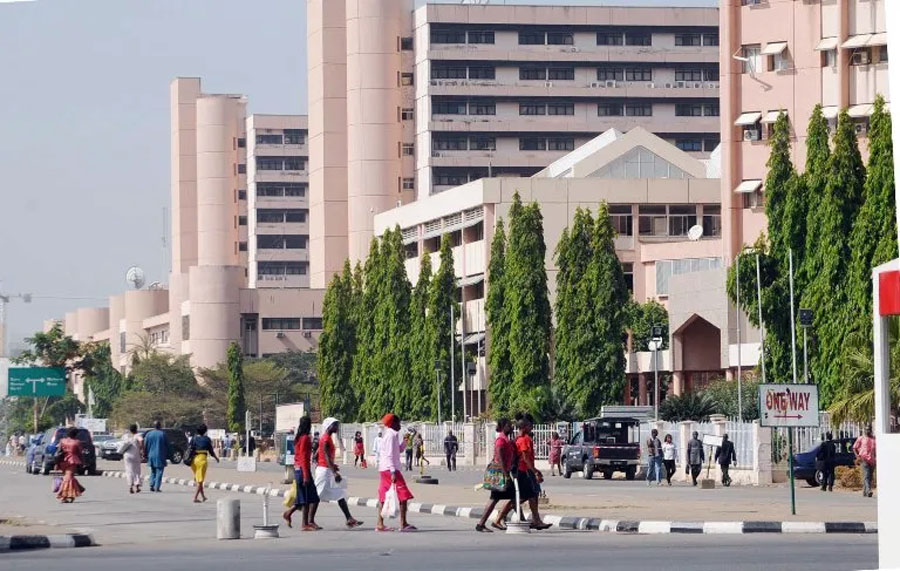
Federal Workers Demand N300,000 Minimum Wage as Cost of Living Bites Harder
The Federal Workers Forum has written to President Bola Tinubu and the National Assembly, demanding an immediate review of the salaries of federal civil servants and an increase in the minimum wage from N70,000 to N300,000. The forum argued that the current wage structure no longer reflects the economic realities confronting federal workers amid Nigeria’s escalating cost of living. The letter, dated September 2, 2026, and signed by the National Coordinator of the FWF, Andrew Emelieze, and General Secretary, Ogundele Ayodele, was addressed to the Senate President and Speaker of the House of Representatives through the Clerk of the National Assembly. President Tinubu, the Chief Justice of Nigeria, and the Head of the Civil Service of the Federation were also listed among the recipients, underscoring the urgency and high-level nature of the workers’ demands.
The forum proposed a new salary structure with a minimum of N300,000 for Level 1 Step 1 workers and a maximum of N1.5 million for Level 17 officers. The proposed structure would set salaries progressively across all grade levels, with Level 2 workers earning N330,000; Level 3, N360,000; Level 4, N390,000; Level 5, N420,000; Level 6, N450,000; and Level 7, N480,000. For senior officers, the forum proposed N510,000 for Level 8; N550,000 for Level 9; N600,000 for Level 10; N700,000 for Level 12; N750,000 for Level 13; N800,000 for Level 14; N1 million for Level 15; N1.2 million for Level 16; and N1.5 million for Level 17 officers. “We call for justice and immediate wage review now, adjust the federal minimum wage to N300,000 and a maximum wage of N1.5m for the Level 17 officers,” the forum stated. The workers said their N300,000 minimum wage proposal was based on an estimated monthly expenditure covering feeding, transportation, accommodation, family support, electricity, cooking gas, phone and data, water and other utilities. “Our projections here are fair, and we believe it can still be accommodated in the present budget based on the daily increased earnings and the excess crude oil sales earnings,” the forum said, linking their demands to the government’s improved revenue position.
READ ALSO:
- IPMAN Plans Petrol Price Review as Dangote Refinery Raises Depot Cost
- FBI Arrests Podcaster Over Alleged Threats to Kill President Trump
- Baby Among Over 80 Migrants Dead After Boat Drifts for 27 Days Near Canary Islands
The FWF said the demand was necessitated by what it described as the incomplete implementation of the N70,000 minimum wage approved in 2024, claiming that federal workers had yet to receive the full consequential adjustment and associated allowances. “It will surprise you to hear that the Federal Government has not fully implemented the new national minimum wage since July 2024. We have been in the battle for full consequential adjustment of the new minimum wage,” the group stated. According to the workers, the 2024 wage review increased the minimum wage from N30,000 to N70,000 but resulted in what they described as a flat N40,000 increase across all levels of the federal civil service. “Only N40,000 was added to the salaries of every federal worker across all levels,” the forum said. The FWF argued that the statutory three-year review period should not prevent the government from responding immediately to what it described as an emergency deterioration in workers’ purchasing power, making the case that waiting until 2027 would be catastrophic for workers already struggling to survive.
The workers complained that the rising cost of food, transportation, accommodation, electricity, cooking gas and other necessities had made the N70,000 minimum wage inadequate. “Federal workers have been enduring the situation, and everything has been frustrating and nauseating. We cannot cope again. Federal workers are dying in instalments; we are suffering in silence; our salary is too poor; it is not taking us home,” the letter stated. The FWF further alleged that some federal workers had become heavily indebted to microfinance institutions and digital loan platforms in an attempt to meet their daily needs. “Federal workers are now heavily indebted to microfinances and, most times, federal workers resort to phone loan apps to get transportation to work,” the group said. The forum also claimed that some workers had resorted to using firewood because they could no longer afford cooking gas. It argued that the worsening financial situation could affect workers’ productivity and create conditions conducive to corruption, painting a grim picture of the daily struggles facing federal civil servants.
Amid the growing pressure, the Presidency has signalled a willingness to consider a wage review. In June 2026, Chief of Staff Femi Gbajabiamila acknowledged that the N70,000 minimum wage, while a milestone in 2024, must be reassessed against today’s realities. “The N70,000 wage, which was a milestone in 2024, must be honestly reassessed against today’s realities,” Gbajabiamila said. He added that when the review process begins, “this administration will approach that endeavour not as an adversary of labour, but as a partner,” signalling a more conciliatory stance from the government compared to previous wage negotiations.
The demand for a higher minimum wage is not limited to the FWF. The Nigeria Labour Congress and the Trade Union Congress have also reopened negotiations with the Federal Government, pushing for a significantly higher wage of N500,000. NLC President Joe Ajaero, speaking at the Rights of Workers Summit in Birnin Kebbi, said the current N70,000 wage was no longer sufficient to meet workers’ basic needs. “Anything less than N500,000 cannot cater for workers. The current minimum wage is due for review, and we will soon begin negotiations with the government,” Ajaero said, raising the stakes in the wage debate and setting the stage for potentially contentious negotiations with the federal government.
While labour unions push for N500,000, some stakeholders have described the proposal as unrealistic given Nigeria’s prevailing economic conditions. The Coordinator of the Forum of Delta State NGOs suggested a more moderate range of between N250,000 and N300,000, arguing that the labour unions’ demand may be impractical. The debate highlights the tension between workers’ needs and the government’s fiscal capacity, with the FWF’s N300,000 proposal representing a middle ground between the current N70,000 wage and labour’s more ambitious N500,000 target.
Kebbi State Governor Nasir Idris has pledged to champion the unions’ demands at a meeting of the Nigeria Governors’ Forum. The governor, who noted that his administration was the first among state governments to implement a N75,000 minimum wage, assured workers that his state would implement any new national minimum wage agreed upon by the Federal Government. His commitment signals that some state governments may be willing to support a wage increase, though the fiscal implications for cash-strapped states remain a significant concern.
Federal Workers Demand N300,000 Minimum Wage as Cost of Living Bites Harder
News
Wike to Governors: Account for Subsidy Funds, Stop Hiding Behind NGF

Wike to Governors: Account for Subsidy Funds, Stop Hiding Behind NGF
FCT Minister Nyesom Wike challenges state governors to account individually for increased allocations from petrol subsidy removal, insists President Tinubu has no power to dictate sub-national spending, and takes aim at opposition figures Atiku Abubakar and Peter Obi over their policy positions.
The Minister of the Federal Capital Territory (FCT), Nyesom Wike, has issued a direct challenge to state governors across Nigeria, demanding that they publicly account for how they have spent the additional revenues received following the removal of the petrol subsidy. Speaking during a media chat with journalists in Port Harcourt, Rivers State, on Wednesday, Wike said each state government, rather than the Nigeria Governors’ Forum (NGF), should explain to its citizens how the increased funds had been used. He argued that the additional allocations to the three tiers of government had given states greater capacity to fund projects, pay salaries and pensions, and improve public services. According to him, the NGF, as an association, could not replace individual governors’ responsibility to account to their citizens.
“What you call the Nigerian Governors’ Forum is an association. I’m a governor of State A, I should be able to defend my State A,” Wike said. He added that governors were elected by the people of their respective states and should therefore answer directly to them. “Rivers State Government is accountable to the citizens of Rivers State. Anambra State Government is accountable because they have been elected by citizens of those states, not by the entire Federation of Nigeria,” he stated. Wike said governors should be able to point to projects and programmes financed with the additional revenue generated after the subsidy removal. “If Governor Diri says, ‘Look, challenge me. The money that came, see what I’ve done for Bayelsa State,’ fine,” he said, referring to Bayelsa State Governor Douye Diri.
Wike defended President Bola Tinubu’s decision to remove the petrol subsidy, saying it had increased revenues available to the federal, state and local governments. According to him, the impact of the policy should be assessed by what governments had achieved with the additional resources. “Today, the states are saying, unlike before, we can’t pay salaries, we can’t pay pensions, strikes all over the places. Are there strikes again now? They can tell you, no,” he said. He maintained that governments at all levels must remain accountable for how the additional funds were spent.
READ ALSO:
- Uber exits Nigeria after 12 years
- Ceasefire in Name Only: Over 1,300 Killed in Gaza Since October Truce
- Atiku, Obi Unite in Fresh Bid to Unseat Tinubu as 2027 Election Campaign Heats Up
Wike also responded to comments by the Nigeria Democratic Congress (NDC) presidential candidate, Peter Obi, on the management of funds from subsidy removal. According to Wike, Obi should have directed his questions to state and local governments rather than the federal government. “All he should have asked is, ‘Having removed the subsidy, what do you do with the gains?’ This is what I think a reasonable person should talk about,” Wike said. The FCT minister emphasised that President Tinubu has no constitutional authority to dictate how states and local governments spend their allocations. “Now, the government has said the gains have been shared among sub-nationals. Tinubu has no power to say, ‘State, this is what you should do with the funds that you’ve brought in from the fuel subsidy.’ He has no power to tell local governments what to do with their money. All tiers of government are independent,” Wike explained.
Wike also criticised politicians who, he said, changed their positions on major policy issues to suit political interests. “One thing you must take me on is that I am a consistent politician,” he said. He questioned politicians who had previously supported subsidy removal but later promised to restore it during election campaigns. “If a candidate says yesterday, at the moment you have your vote for me, I’m going to remove subsidy; today the candidate says, ‘No, vote for me, I’m going to bring back subsidy,’ I mean, what kind of candidate is that?” he asked. He said political candidates should clearly explain their policy positions rather than make campaign promises aimed solely at attracting votes.
Wike specifically targeted former Vice President and African Democratic Congress (ADC) presidential candidate Atiku Abubakar, who recently pledged to restore the subsidy if elected in 2027. Wike recalled that Atiku had, in 2022, advocated the removal of fuel subsidy, describing it as fraudulent. “Now, in 2026, he is not going to remove the fuel subsidy. Is he going back to the fraud, which he had alleged that fuel subsidy was?” Wike asked. He described Atiku as a “voodoo economist” who, in his view, says whatever he believes will appeal to voters. “Atiku, who is confused, who acts like a voodoo economist, Atiku will say anything just to be president,” Wike said. He argued that consistency was essential for anyone seeking to lead the country, accusing Atiku of changing his position depending on the political circumstances.
READ ALSO:
- We were offered $3m to drop Tinubu records campaign — US firm
- NDA Releases 78th Regular Combatant Course Admission List, Sets Reporting Date
- Ogogo’s N25m Surfaces After Death, Ilaro Chief Imam Returns Actor’s Money
The FCT minister also questioned how a future government would operate a petrol subsidy under Nigeria’s current petroleum industry structure. He pointed to the commercialisation of the Nigerian National Petroleum Company Limited and the emergence of private refineries, particularly the Dangote Refinery. According to Wike, NNPCL is no longer the sole importer or producer of petroleum products, making the traditional subsidy arrangement more complicated. “He is living in the past. If not, he will know that with the Petroleum Industry Act, NNPC is now fully commercialised. It has transformed the old NNPC into a limited liability company (NNPC Limited), and no longer the sole importer or producer of fuel,” he said. Wike asked whether a government led by Atiku would subsidise petrol produced by private refiners. “Will Atiku, as President (which he never be) pay subsidy on fuel produced by Dangote Refinery?” he asked. He argued that restoring fuel subsidies would reverse the market-oriented reforms introduced under the Petroleum Industry Act and could discourage investment in the petroleum sector.
The subsidy debate has resurfaced ahead of the 2027 general elections, with major opposition figures taking different positions on the policy. Atiku Abubakar said in an August 25 post on X that he remained committed to restoring the subsidy if elected. “On the question of subsidy, my position has not changed and will not change: I will restore it! A nation as blessed as ours has no business abandoning its citizens to hardship. Nigeria is rich enough to look after her own,” Atiku wrote. Peter Obi, however, has maintained his support for the removal of the subsidy, arguing that alleged mismanagement of its proceeds should not be used as justification for returning to the subsidy regime. Speaking during a panel session at the Nigerian Bar Association Annual General Conference in Port Harcourt on August 25, Obi said the removal was necessary but should have been accompanied by a clear and organised plan for deploying the resources recovered from the policy.
President Tinubu announced the end of the petrol subsidy during his inauguration on 29 May 2023, declaring “Fuel subsidy is gone.” The policy has remained one of the defining economic decisions of his administration. Tinubu has repeatedly urged state governments to ensure the increased allocations translate into tangible development. On 30 July, while receiving a delegation of traditional rulers from Oyo State, the President said states were now receiving four to five times what they previously received from the Federation Account. “The cost of operation is high. But the money that I’m pushing to the states, if you had it during your own time, or during my time, it would have been different. They are taking four to five times their money. Nobody is borrowing money to pay salaries now. Pensioners are receiving their pay,” Tinubu said.
Responding to concerns that infrastructure development in Abuja had not translated into better living conditions, Wike disagreed with the view that housing alone should be used to measure residents’ quality of life. He said investments in roads, public transportation and other public infrastructure had improved access and mobility across the Federal Capital Territory. “Why do we have to only think until everybody gets houses? That’s only when the quality of life has changed. That is wrong,” he said. Wike argued that improvements in transport, road infrastructure and other public services should also be considered indicators of better living standards.
In a related development, the Socio-Economic Rights and Accountability Project (SERAP) has called on Nigeria’s 36 state governors and the FCT Minister to publicly account for an estimated ₦14 trillion in fuel subsidy savings reportedly received through the Federation Account Allocation Committee (FAAC) since mid-2023. In separate Freedom of Information requests, the organisation urged the governors and the FCT minister to disclose full details of how the funds have been spent, including locations of projects executed, implementation status, and completion reports. SERAP’s request follows rising concerns that despite massive increases in state allocations since the removal of fuel subsidy, millions of Nigerians are yet to see improvements in public services such as healthcare, education, and social welfare. “There is a legitimate public interest for governors and the FCT minister to urgently explain how they have spent the money they have so far collected from the subsidy savings,” SERAP said in the letter. The organisation has given the governors and the FCT minister seven days to comply, warning of legal action if they fail to respond.
On his reported reconciliation with political associates, the minister said the disagreements had been resolved but declined to discuss the details. “Personal, political, everything settled,” he said. He added that he had invited the concerned political associate for talks but would not disclose what was discussed.
Wike to Governors: Account for Subsidy Funds, Stop Hiding Behind NGF
News
Ogogo’s N25m Surfaces After Death, Ilaro Chief Imam Returns Actor’s Money
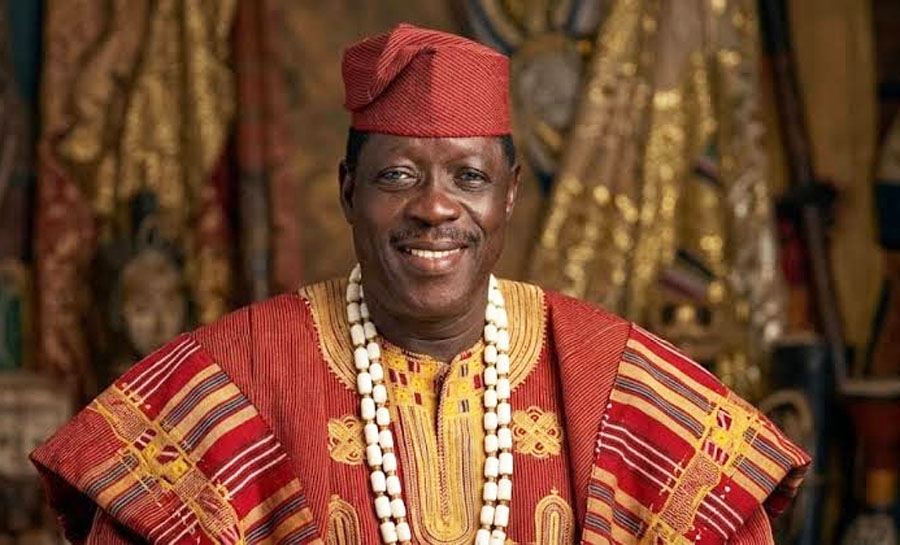
Ogogo’s N25m Surfaces After Death, Ilaro Chief Imam Returns Actor’s Money
Family confirms receipt of cash kept by late actor for house project
The death of veteran Yoruba actor, Taiwo Hassan, popularly known as Ogogo, has brought to light a startling financial revelation, with his family confirming the recovery of N25 million the late thespian had entrusted to the Chief Imam of his hometown, Ilaro, Ogun State.
The money, kept with Sheikh Muhammad Tajudeen Mustapha Adewunmi, was reportedly given to the cleric by Ogogo with a specific instruction — to ensure that the funds were used to complete a family house the actor was building in Ilaro.
The revelation came during the eighth-day Fidau prayer held in honour of the deceased, where the cleric and members of Ogogo’s family reportedly confirmed the return of the N25 million.
The development has triggered widespread commendation for Sheikh Adewunmi, with many hailing the cleric for resisting the temptation that could have accompanied being in possession of such a substantial amount belonging to a deceased person.
Rather than keeping the money or allowing uncertainty to surround its whereabouts, the cleric reportedly returned the funds to Ogogo’s family, reinforcing the confidence reposed in him by the late actor.
The Chief Imam had earlier disclosed that Ogogo entrusted the money to him while he was alive and directed him to assist with the completion of the family property in Ilaro.
READ ALSO:
- Lagos Cleric, 74, Remanded Over Alleged Defilement of 9-Year-Old Granddaughter
- 2027: Atiku vows to review NELFUND, forgive qualifying student loans
- Nollywood Actress Atinuke Kareem Dies After Brave Battle with Breast Cancer
The disclosure, as reported by BBC Yoruba, has also opened another window into the private life of the late actor, particularly his financial strength and his enduring affection for his hometown.
While Ogogo was best known to the public for his decades-long career in the Yoruba movie industry, the N25 million revelation suggests that he had also made substantial financial plans for his family and maintained a deep emotional and material connection with Ilaro.
For many of his admirers, the house project was more than a mere investment. It was seen as another testament to the actor’s attachment to his roots and his desire to leave something lasting behind for his family in the town.
The return of the money has consequently become one of the striking stories emerging from the mourning period, shifting attention briefly from Ogogo’s celebrated career to the legacy, trust and values he left behind.
The incident has equally placed Sheikh Adewunmi in the spotlight, with Nigerians and members of the Ilaro community commending what they described as an uncommon demonstration of integrity at a time when disputes over the assets of deceased persons are not uncommon.
Ogogo’s passing had earlier sent shock waves through the Yoruba film industry, with colleagues, friends, fans and admirers mourning the loss of one of its familiar faces.
But amid the grief, the recovery of the N25 million has provided the actor’s family with not only financial relief but also another remarkable chapter in the story of a man whose connection to Ilaro, according to those close to him, remained strong until his death.
Ogogo’s N25m Surfaces After Death, Ilaro Chief Imam Returns Actor’s Money
-
 metro2 days ago
Lagos Govt Warns Husbands: Forcing Sex on Wife Can Lead to Life Imprisonment
-
 Education2 days ago
JAMB, WAEC introduce one-off ₦4,000 WASSCE result verification for admission seekers
-
 metro3 days ago
Lagos pensioners tear-gassed during protest as Sowore demands justice
-

 News2 days ago
Ilorin Youth Group Demands Disbandment of Iru-Ekun Over Alleged Obstruction of Tani-Olohun’s Arrest
-

 Politics3 days ago
Gunmen kill Kano APC chairman, two others in fresh Bebeji attack
-

 Auto1 day ago
Uber exits Nigeria after 12 years
-
 Politics3 days ago
2027: Donald Duke warns divided opposition could hand Tinubu victory
-
 News2 days ago
Ogogo’s N25m Surfaces After Death, Ilaro Chief Imam Returns Actor’s Money
You must be logged in to post a comment Login