
Opinion
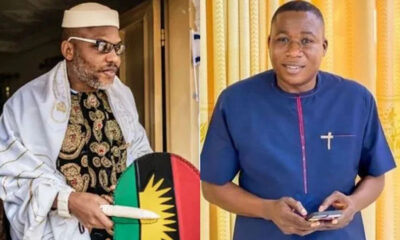
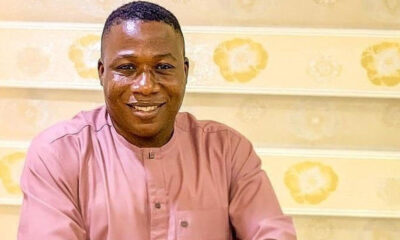
Opinion: Igboho writes President Buhari, by Tunde Odesola

(Published in The PUNCH on Monday, July 25, 2021)
Shugaban Nigeria, ya kwana uku.
Your Excellency, I do not seek to rouse the ghosts of the slain victims of Fulani Ghoulish Nomads (FGN). Before you hasten to add hate speech charge to the list of rootless allegations your rulership has levelled against me, let me quickly state, sir, that ghouls are not only located in northern Nigeria.
They’ve sprouted and taken over every inch of the land ruled by your underachieving regime, wearing the masks of terrorism, corruption, rape, banditry, ritualism and daily bloodshed – kicking Nigeria in the teeth – with no end in sight.
Aare Buhari, though the dead have long buried the dead, their ghosts won’t just rest in peace. So, the spirits of the dead continuously hover over the face of the waters, crying for justice and seeking repose, but getting neither from your bullying regime.
Before my letter reopens the bleeding wounds of the past, permit me to do a brief and formal introduction of myself, sir. My name is Sunday Adeniyi Adeyemo. I’m a 48-year-old indigene of Igboho town in the Oke-Ogun area of Oyo State.
Your Excellency, if Oke-Ogun evokes some sense of utter disdain in you, I understand. It was Oke-Ogun that caused you to storm the Oyo State Governor’s Office, Ibadan, in October 2000, in company with some prominent Fulani leaders, on the allegation that some Yoruba farmers allegedly killed 68 Fulani herdsmen in a reprisal. Do you remember the incident, Baba Yusuf?
God bless his soul, Alhaji Lamidi Adesina, the first executive Governor of Oyo State in the Fourth Republic, who hosted you and your aggrieved entourage from the Caliphate.
Before he spoke on the occasion, Lam, as the governor was popularly called, first called on the state Commissioner of Police, and the state Director, Department of State Services, both of whom told you to your face that the alleged death of 68 Fulani in the hands of Yoruba farmers was untrue.
Lam also called on his deputy, Chief Iyiola Oladokun, the Secretary to the State Government, Chief Michael Koleoso, both indigenes of Oke-Ogun, and the chairman of one of Oke-Ogun LGs, Chief Ademola Alalade, to speak. They all told the truth which indicted the Fulani in Oke-Ogun as the killers of their Yoruba neighbours.
Your Excellency, when he spoke to round off the meeting, Lam advised the Arewa Consultative Forum to seek the unity and peace of Nigeria at all times.
Baba Buhari, though I never attended a university, I’m not an illiterate. I can read and I can write, despite starting out as motorcycle repairer. Through hard work, self-improvement coupled with my belief in Ifa, I’m today an employer of labour.
Shugaban Nigeria, just like you don’t write your speeches yourself, I didn’t write this letter myself, too. Baba Zahra, mi o gbo oyinbo nla nla, walahi! I don’t understand big big grammar. But I understand justice and truth. This is why the cause I champion, which is the emancipation of the Yoruba from daily killings, victimisation and repression, is being supported by true sons and daughters of Oduduwa. The support is what produced this letter, Your Excellency.
Baba o, I am citizen Igboho, a creation of the abject Nigerian leadership. Like millions of my ilk living in the nooks and crannies of the country, I’m a product of years of government neglect.
When your government kept silent as Fulani herdsmen butchered my people day and night, I embarked on the road called self-help and employed bravery, street wisdom and defiance to rescue my people.
This was after Dr Fatai Aborode, Europe returnee, was killed in his Igangan community of Oke-Ogun by suspected Fulani herdsmen when he complained that his 400-acre cashew farm was eaten up by Fulani cows.
President Buhari, though Aborode’s murder was one death too many, your regime kept silent and did absolutely nothing to assuage the killing or assure the people of Igangan of their safety. Also, popular herbal trado-medicine practitioner, Alhaji Fatai Yusuf, aka Oko Oloyun, had over a year ago been killed along the Igbo Ora-Eruwa Road in Ibarapa, among many other deaths. Ironically, sir, hundreds of captured Boko Haram terrorists were granted pardon and rehabilitated into the society, after alleged deradicalisation.
Baba Halima, I’m not a criminal. The pervading sense of hopelessness, injustice and insecurity in the South-West was why I went to Igangan and gave the Fulani therein an ultimatum to vacate the land.
Sir, do you know that long after my seven-day ultimatum, the Emir of Muri Empire in Taraba State, Alhaji Abass Tafida, has also given a 30-day ultimatum to Fulani bandits. But he hasn’t been declared wanted.
Your Excellency, as I said early on, I may not understand big big ‘turenchi’, but I can read and I can write.
I read on Sahara Reporters website that the emir didn’t only give a 30-day ultimatum for Fulani killer herdsmen occupying Taraba forests to vacate, he also said, “From now onwards, if anyone is kidnapped from this emirate, we will go into the bush and kill any Fulani man we see.”
General Buhari, if a Yoruba or Igbo monarch had said what Emir Tafida said, the fire emanating thereof from Aso Rock would’ve burnt the crown on the head of such a monarch into ashes. But because the emir is from the North, Aso Rock looked away like a corrupt invigilator who has been bribed by cheating students.
Baba Hadiza, what have I done wrong? I’m only fighting for my people, just like you took up the cause of your people and led a delegation to Lam in October 2000.
Oga Buhari, in 2019, you also led a delegation to the UN General Assembly in New York, where, in your own very words, you advocated ‘the rights of the Palestinian people to have their own country…and live in peace in their own land’.
Having said this to the ovation of the world in 2019, President Buhari, what is the justice in your rejection of the clamour for self-determination being championed by me and my fellow comrade, Mazi Nnamdi Kanu, when southern lives are not worth a fart under your regime?
Baba Fatima, it’s natural if your health is diminished by old age, but I know your memory is still intact to remember that ex-President Goodluck Jonathan, in 2012, lamented that his government had been infiltrated by Boko Haram terrorists.
Ogagun Buhari, your own regime is no better. It’s even worse because whereas it was Jonathan’s government that was infiltrated then, it’s your cabinet that has been infiltrated by Islamic fundamentalism now.
A beloved member of your kitchen cabinet and Minister of Communications and Digital Economy, Isa Pantami, had, in a sermon years before he became minister, openly expressed views sympathetic to the notorious al-Qaeda group and Boko Haram, describing the slain al-Qaeda leader, Osama bin Laden, a worthy Muslim. Pantami also expressed happiness that infidels were being massacred.
Infidels in the eyes of the Pantamis peopling your cabinet would be no less than millions of Christians, traditional religionists and believers of other faiths in Nigeria. With such a minister in your cabinet, Mr President, what’s the guarantee that the war against terrorism isn’t a lip-service by your regime?
Only God know how many innocent Nigerians were killed by Islamic terrorists who took up arms against perceived infidels having been fired up by Pantami’s destructive sermons.
Instead of investigating Pantami to check if he had been truly deradicalised or not, the Presidency rose stoutly to his defence, and said the leopard has changed its spots.
I, Igboho, didn’t say one-hundredth of what Pantami said. Today, Pantami is a free man but I and the supporters of my cause are being hounded by your regime. Two members of my family were killed when DSS attacked my house. This nepotistic attitude is unbecoming of a father, mujin Aisha.
Your Excellency, I’ll close with the words of your forebear, Uthman Dan Fodio, “Conscience is an open…”
Thank you, sir.
Email: tundeodes2003@yahoo.com
Facebook: @tunde odesola
Twitter: @tunde_odesola
Sent from Yahoo Mail on Android









Opinion
Tinubu must address rising mass massacres now, By Farooq Kperogi

Tinubu must address rising mass massacres now, By Farooq Kperogi
Recent events show a widening pattern of killings, abductions and reprisals stretching from Borno to Zamfara, Kebbi, Niger, Kwara and elsewhere. The scale of fatalities alone demands sustained national attention. But the Bola Ahmed Tinubu government’s muted presence in the public response raises troubling questions about its priorities and its appreciation of the fierce urgency of the moment.
Start with Borno State, long regarded as the epicenter of Boko Haram’s insurgency. International media outlets reported last Friday that Boko Haram militants attacked a Nigerian military formation, killing at least eight soldiers and leaving dozens wounded. Casualty figures varied across accounts, but the deaths of eight soldiers were consistently reported.
Incidents of this nature once triggered nationwide debate and highly visible federal reaction. They now pass with limited public engagement outside specialist security coverage. That shift in attention probably reflects outrage fatigue, but it does not reduce the severity of the threat.
In the northwest and north central zones, mass casualty attacks have become distressingly frequent. Reports from Kebbi and Zamfara States describe repeated bandit raids, civilian deaths and abductions.
Again, an Associated Press dispatch from last Friday documented coordinated assaults in Kebbi resulting in at least 33 fatalities. That number alone represents a catastrophic loss for rural communities, yet the federal government hasn’t even acknowledged these tragedies much less comfort victims. This is increasingly becoming a pattern.
The Borgu region, where I am from, illustrates how violence transcends state boundaries while policy responses remain fragmented. Borgu’s communities span Kebbi, Niger and Kwara States. They share historical and cultural ties but operate under different administrative authorities.
READ ALSO:
- Armed Bandits Kill 30, Kidnap Villagers in Zamfara Attack
- Agege Council Announces Free 3kg Cooking Gas Refill for 4,000 Residents
- Tinubu Summons Aiyedatiwa Over APC Congress Violence, Monarch’s Murder
Armed groups exploit this fragmentation. Attacks in one area of the region reverberate across others and reshape daily behavior far beyond the immediate site of violence.
In Tungan Makeri, Konkoso and Pissa in Borgu Local Government Area of Niger State, news reports and police statements from this week confirmed deadly pre-dawn raids by gunmen. Initial figures indicated about 32 civilians killed across the affected settlements.
Specific breakdowns varied, with six deaths reported in Tungan Makeri and as many as 26 in Konkoso, according to local accounts cited in early coverage. These numbers represent entire families extinguished within hours. They also underscore the persistent vulnerability of communities repeatedly targeted by armed groups.
Earlier in the year, Borgu recorded another mass casualty episode at Kasuwan Daji market. Credible reporting placed the death toll at 30 or more people killed, with several others abducted. Shops were burned. Civilians were shot. Survivors described chaos, devastation and disorientation.
The recurrence of large-scale lethal attacks within the same geographic zone should have triggered an unmistakable escalation in federal visibility. That response has not been evident at the level many residents consider commensurate with the losses.
Across the Kwara axis of Borgu, the psychological impact of nearby massacres is now frighteningly noticeable. In Baruten, formerly part of the historical Borgu configuration, fear recently overwhelmed a weekly market day.
A vehicle passed through town. Someone suspected it might be transporting terrorists. The reaction was immediate and visceral. Traders and buyers fled. Goods were abandoned. People ran without coordination, and injuries followed. Some residents reportedly broke limbs in the stampede. Elderly individuals fell and required hospitalization. Many retreated indoors, remaining inside overheated rooms for hours. Goods abandoned in the market were stolen.
But no attack occurred. The vehicle posed no danger. It was the panic itself that inflicted the harm. This happened in my hometown on a Wednesday, a bustling market day that serves as both an economic outlet and a space of interaction, exchange and communal vitality.
Such reactions are not irrational. They reflect what psychologists call learned responses in environments where credible violence repeatedly erupts nearby.
In adjacent Kaiama Local Government Area of Kwara State, residents recount continual episodes of extreme brutality in the hands of bloodthirsty terrorists, the recent mass slaughters in Woro and Nuku that captured the national and international attention being the latest.
Residents across Borgu consistently describe a sense of exposure and disabling siege. In the Niger State sector, communities report repeated attacks on the same settlements. In Konkoso, for example, locals say after militants killed large numbers of villagers, the assailants returned on February 17 to burn the remaining homes. Whether every detail withstands subsequent verification, the pattern of repeated raids across the region is corroborated by multiple independent reports of killings and abductions.
READ ALSO:
- FCT Polls: S’Court, A’Court Defy Wike’s Public Holiday, Continue Judicial Activities
- Lassa Fever Deaths in Nigeria Rise to 51 After 15 Killed in Early February – NCDC
- Mob Kills Injured Motorcycle Rider After AK‑47 Rifles, Ammunition Found in Crash Scene
Governmental reaction shapes how citizens interpret both tragedy and state legitimacy. In Kwara State, the governor’s visit to sites of violence in Kaiama was widely noted by affected residents. Such gestures cannot reverse fatalities, but they acknowledge suffering and communicate presence. Insecurity is not only a military problem. It is also a political and psychological one.
In contrast, many inhabitants of Niger State’s Borgu communities express dissatisfaction with the state government’s posture following major incidents. Residents recount episodes in which official statements emphasized blame.
After the Papiri abductions, villagers say responsibility was publicly shifted toward school authorities without a gubernatorial visit to the affected location. Following reports that more than 70 people were killed in Kasuwan Daji, locals similarly describe narratives of fault attribution unaccompanied by direct engagement with survivors. These perceptions may not capture every administrative constraint, but they significantly influence public trust.
The more pressing concern, however, lies at the federal level. The cumulative death toll across Borno, Kebbi, Niger and Kwara States in just these few cited incidents exceeds any threshold that should trigger unmistakable national urgency.
Eight soldiers killed in Borno. Thirty-three civilians killed in Kebbi. Thirty-two civilians killed across Tungan Makeri, Konkoso and Pissa. Thirty or more killed in Kasuwan Daji market, with local claims of even higher figures, including over 70 fatalities. Locally reported deaths approaching 300 in Woro and Nuku. These are not sporadic disturbances. They are large-scale lethal events distributed across multiple states.
Yet the federal government’s public posture has lacked the intensity typically associated with crises of this magnitude. There has been no sustained national address centered on these specific killings. No widely visible mobilization signaling exceptional concern for Borgu’s repeated devastation. No consistent federal narrative that conveys to affected populations that their losses command the same urgency as tragedies elsewhere.
I agree that security challenges in Nigeria are undeniably complex. Intelligence failures, logistical limits and political coordination problems complicate rapid response. None of these constraints, however, justify the normalization of mass fatalities or the attenuation of federal visibility. When killings of dozens or hundreds struggle to command durable national attention, citizens inevitably question whether their suffering is fully recognized within the national hierarchy of concern.
Persistent violence also produces cumulative secondary effects. Economic activity contracts. Mobility declines. Educational continuity suffers. Residents alter movement patterns, avoid gatherings and recalibrate routine decisions around perception of threat. Fear becomes a structural condition rather than an irregular reaction.
Operation Savannah Shield, recently launched to address insecurity across parts of the north, offers an opportunity for recalibration. Its effectiveness will depend not only on tactical operations but on geographic scope. Borgu’s border communities, repeatedly affected by lethal raids and abductions, require explicit incorporation into security planning. Fragmented jurisdiction has long benefited attackers. Coordinated federal presence could begin reversing that asymmetry.
The number of people who have died unjustly in the hands of nihilistic terrorists this week alone is already staggering. A repetition of this number would signal deeper systemic failure. Preventing that outcome requires more than periodic, contingent deployments. It demands sustained federal attention, interstate coordination and a public posture that communicates unmistakable commitment to civilian safety.
It is worth recalling that even at the height of insecurity during President Goodluck Jonathan’s administration, the scale and frequency of mass killings did not approach what many communities now experience, yet Bola Tinubu, then an opposition figure, publicly urged Jonathan to resign.
Invoking resignation today, however, feels like an exercise in futility because no Nigerian elected official has ever relinquished office solely on account of failure, incompetence or public dissatisfaction. Rather than dissipate intellectual energy on an outcome with no historical precedent, a more pragmatic appeal is necessary.
The president should address the nation directly, acknowledge the severity of the crisis, and demonstrate a visibly intensified commitment to protecting lives. If the state proves unable or unwilling to guarantee basic security across vulnerable regions, then a serious national conversation must also consider whether citizens should be legally empowered to defend themselves, including through responsible firearm ownership, instead of remaining defenseless sitting ducks in the face of unremitting terrorist and bandit violence.
Tinubu must address rising mass massacres now, By Farooq Kperogi
Kperogi is a renowned Nigerian columnist and United States-based Professor of Journalism.
Opinion
Tinubu, el-Rufai and the cobra

Tinubu, el-Rufai and the cobra
Tunde Odesola
(Published in The PUNCH, on Friday, February 20, 2026)
If they were not venomous, snakes would probably garland the necks of the rich and the influential to delineate social class. With a body handwoven by its Creator, the snake is the most awesome creature, epitomising engineering fluidity among wildlife. Its fleeting mobility, intricate symmetry, stretchy sinews, delicate precision and frightening fatality define a brute created without hurry.
If the Creator, in His infinite creativity, had swapped the rabies of the dog for the venom of the snake, the faintest bark would have sent feet fleeing, sticks wielding, and alarum bells ringing. Armed with just rabies as a weapon, the snake would have been handpickable like snails after rainfall; slithering and spitting alone do not deter like venom strike. Meat and skin, snakes are attractive.
If its venom was exchanged for rabies, the snake would probably have been Man’s best friend, barking through a slit mouth and narrow throat, without a noise. Before closing production on the evening of the Sixth Day, God assessed His production line; behold all things were bright and beautiful. So, he rested on the Seventh Day.
But Man and snake are not friends; one strikes the head, the other strikes the heel. This eternal enmity results in deaths within both camps, with the human casualty dripping with grief, while snakedom is griefless – Ọ̀dájú lọmọ ejò.
On the last day of January 2026, fast-rising soprano singer, Ifunanya Nwangene, curled up in bed, enjoying a sleep in her Abuja apartment. Later, a cobra crawled into bed with her. Ifunanya probably felt the snake crawl over her arm, and she tried to move her arm away from the uninvited visitor. When the cobra sensed that the arm, which was inanimate a while ago, was slowly becoming animate, it panicked and lashed out, sinking its fangs into the songbird’s wrist. With that split-second strike, the cobra blew out Ifunanya’s candles.
In minutes, a numbing pain in the wrist woke the songster up. She saw the bite and the swelling. Frantic, she made a call to her father, uncle and friends. This must be a bad dream, Ifunanya thought. Wake up, wake up, girl! But the Nightingale was slipping away. Death has crept in right in the safety of her room.
Following Ifunanya’s death, the BBC, in a February 7, 2026, story headlined “A singer’s tragic death highlights Nigeria’s snakebite problem,” reveals the controversy that trailed Ifunanya’s death. In the report, Ifunanya’s father, Christopher Nwangene, accused the Federal Medical Centre, Jabi, Abuja, of unprofessional treatment and lacking antivenom when she was rushed to the hospital. But the hospital refuted the allegations in a clap back, insisting that it had enough antivenom in stock and that Ifunanya received good treatment. The Chief Medical Director of the FMC, Saad Ahmed, explained that Ifunanya arrived over two hours after the snakebite. Ahmed’s allegation, however, beggars belief and raises the question: why would Ifunanya’s uncle and friend separately go in search of antivenoms and, indeed, buy some, if the hospital had the antidote?
READ ALSO:
- American Woman, 64, Alleges Embassy Mocked 27-Year-Old Fiancé Before Visa Denial
- Epstein, Ex-Israeli PM Named in Alleged Profiteering From Boko Haram Crisis
- CBN Policies, Foreign Inflows Drive Naira to Two-Year Peak
A nationwide backlash left a populace lamenting the preventable loss of a special talent. Christopher said the hospital’s medical staff should not have removed the tourniquet tied to her wrist to limit the venom from spreading to other parts of her body when the hospital did not have enough antivenom. Though the use of a tourniquet is no longer advisable as treatment for snakebite because it can cause tissue damage and increase the risk of amputation, Ifunanya’s father insisted that it was better for her daughter to be amputated than to die.
In its characteristic fire brigade method, the Nigerian Senate, without setting a timeline, called on the Federal Ministry of Health and the National Agency for Food and Drug Administration and Control to ensure hospitals across the country were stocked with safe, effective and affordable antivenoms. The Senate’s hollow directive typifies the futility of an imam’s rumbling stomach when presented with a dish of pork.
The lack of direction and commitment in the Senate directive on antivenom explains the lackadaisical legislation the nation gets when issues involve the masses, while diligence and speed attend legislation on issues that directly benefit lawmakers like constituency projects, car purchase and accommodation. The energy and time deployed by the Senate leadership under High Chief Godswill Akpabio to fight the Soyoyo from Kogi State, Senator Natasha Akpoti-Uduaghan, encapsulates the NFA metaphor of my youth. In my secondary school days, unserious students were called NFA, an acronym for No Future Ambition. Can the Nigerian masses attest that their National Assembly yesterday, today or tomorrow truly has people-oriented ambition, except talk loudly, cackle heartily, defect, and look towards the Presidency for patronage?
The venom economy, when measured through anti-venom and venom-derived therapeutics, is a multi-billion-dollar, fast-growing global market with respectable profitability driven by healthcare demand, innovation, and rising global incidence of venomous encounters. Nigeria, with its multitude of youth unemployment should tap into the global-venom market, but its clueless political class will not ensure any life-changing policy to push unemployment back.
When he was Health Minister six years ago, a former Speaker of the Lagos House of Assembly, Dr Olorunnimbe Mamora, described as ‘epidemic proportions’, the 20,000 snakebites recorded annually in Nigeria. That was six years ago. Today, the Toxinological Society of Nigeria says snakebite cases in Nigeria annually have climbed up to 43,000, making the need to produce antivenoms locally a matter of national duty. The Association of Community Pharmacists of Nigeria estimates that the country spends about $12million yearly importing antivenoms. A vial of imported antivenom, according to the BBC,costs between N45,000 and N80,000, necessitating the need for local production, export and job creation. But in Mamora’s alarm lay an underlying potential for the country to partake in the multi-billion-dollar global venom market, which included participants like scorpions, spiders, wasps, ants, etc.
The BBC report states that Nigeria’s snakebite “epidemic proportions” is “compounded by a critical shortage of affordable antivenom, which needs to be stored in fridges – often impossible in areas with unreliable electricity”. However, herbal medicine produced locally by traditional medicine practitioners does not need refrigeration. A 2005 study, “Effect of Annona senegalensis rootbark extracts on (cobra) Naja nigricotlis venom in rats,” published in the peer-reviewed Journal of Ethnopharmacology, showed the relative effectiveness of the rootbark of African custard apple in treating cobra venom.
READ ALSO:
- Edo Governor Okpebholo Names Mercy Johnson-Okojie Special Adviser
- Many Feared Dead as Suspected Lakurawa Militants Attack Kebbi Communities
- AMAC Polls Shock: Another PDP Candidate Withdraws from FCT Race, Backs APC
While the nation grappled with insecurity, hunger and poverty, there came a rumble from outside Aso Rock. A little mallam, Nasir el-Rufai, sat on a huge pile of peddles, singing a Fulani song, pelting the roof of the Villa with his pebbles. Aso Rock panicked. The embers of a recent coup are still glowing. When a fly perches on the scrotal sack, caution becomes the first commandment.
I daresay the former Kaduna State governor was the most vocal vendor of the Bola Tinubu electoral commodity to the North when members of the Fulani hegemony were afraid to openly side with the presidential candidacy of Tinubu while President Muhammadu Buhari reigned. Short men and daring deeds.
When everyone was afraid of Buhari, El-Rufai showed dogmatic courage and stood by his belief. And Tinubu won. After Tinubu’s victory, el-Rufai danced to Kizz Daniel’s Buga song with Tinubu over dinner. While Tinubu was bugga-ing in owambe fashion, el-Rufai was waltzing to Buga in the Fulani stick-across-the-neck dance style. I watched the dance again today. Laugh catch me. Between Tinubu and el-Rufai, someone was scratching their nose with the head of a cobra.
Before or after the deceitful dance, Tinubu publicly begged el-Rufai to come and work in his administration, and el-Rufai said he would work on a part-time basis because he had some personal issues to attend to. When Tinubu was compiling his list of ministers, el-Rufai also submitted his cv, but his name was shockingly flagged by security agencies.
I do not know what the mallam did to offend Jagaban, but I guess the President is just uncomfortable with the personality of the former governor. He probably sees Nasir as a stormy petrel who would be uncontrollable if allowed into the cabinet. The moral question that bubbles up from the depth of virtueless politics, therefore, is: “Why enlist el-Rufai to fight your battle when you knew you were going to dump him?”
Well, Nigerian politics lacked virtue before, during, and after the days of el-Rufai as Kaduna governor. In the murky waters of politics, fish eats fish, dog eats dog, snake eats snake. Tinubu is eating today; he might be eaten tomorrow.
So, when you see El-Rufai vehemently criticise Tinubu, e get why. No bi because of God. When Tinubu abuses Abubakar Atiku, na cruise. When Peter Obi knack Tinubu apako, na content. If Atiku tear Tinubu, na paddy-paddy matter. Dem all sabi wetin dem dey do. Dem go fight, dem go settle.
Nigerians love sports, especially football. In Brazil, football employs 3.3 million people, generating about $2bn annually. In the 2023/2024 season, the Premier League generated $6.34billion. Nollywood and the Nigerian music world, without government initiative, have grown to international repute, generating millions of dollars.
So, instead of our elected politicians and public officials snaking from one party to another in almajeri fashion, there should be a concerted national effort geared towards providing the dividends of democracy to the masses. Perhaps they have forgotten what the dividends of democracy are, here they are: security, healthcare, education, employment, welfare, infrastructure, etc.
Email: tundeodes2003@yahoo.com
Facebook: @Tunde Odesola
X: @Tunde_Odesola
Tinubu, el-Rufai and the cobra
Opinion
El Rufai’s Arise News mind game with Ribadu, By Farooq Kperogi
El Rufai’s Arise News mind game with Ribadu, By Farooq Kperogi
El Rufai’s Arise News mind game with Ribadu, By Farooq Kperogi

-

 Business20 hours ago
Dangote Opens Refinery Investment to Nigerians With Public Share Sale Plans
-

 Politics3 days ago
Peter Obi Launches ‘Village Boys Movement’ to Rival Tinubu’s City Boys Ahead of 2027
-

 Education1 day ago
UTME: JAMB Clarifies Position on Hijab During Biometric Capture
-

 News3 days ago
Police to Arrest TikToker Mirabel After She Recants False Rape Claim
-

 International3 days ago
Epstein, Ex-Israeli PM Named in Alleged Profiteering From Boko Haram Crisis
-
 Politics14 hours ago
Tinubu Hails Wike as APC Dominates 2026 FCT Area Council Elections
-

 Education2 days ago
Ogun Gov Rewards Nigeria’s Best Primary School Teacher with Car, Bungalow
-

 Entertainment2 days ago
Tacha Condemns False Rape Allegations After Mirabel Admits Fabrication