

Politics
Oyo SDP gov candidate ignores exco, steps down for Makinde

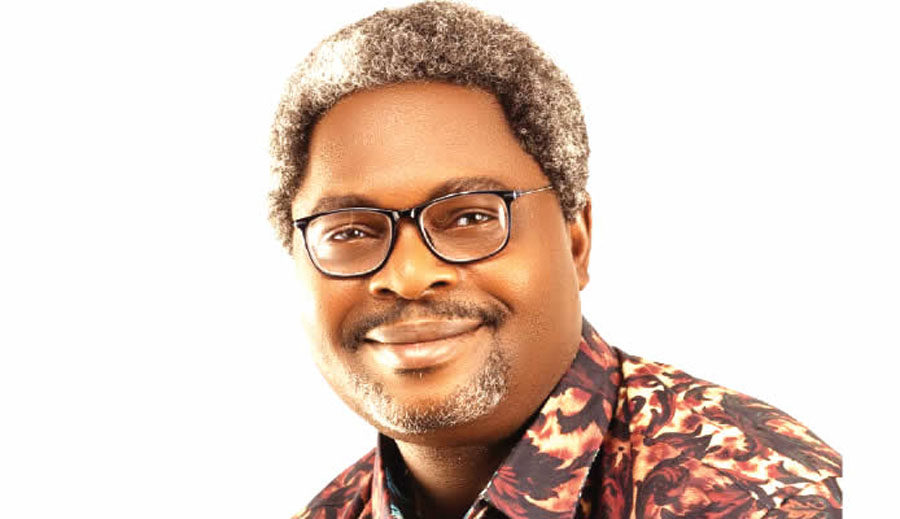
Oyo State governorship candidate for the Social Democratic Party (SDP), Michael Lana, has stepped down for Governor Seyi Makinde of the Peoples Democratic Party (PDP).
The governorship and state assembly elections will hold this Saturday March 18 across the country.
This is coming barely one week after leaders of the SDP in Oyo, including the State Executive Council and other stakeholders had declared support for the candidate of the All Progressives Congress (APC), Senator Teslim Folarin.
Speaking during a briefing in Ibadan, on Tuesday, Lana alleged that some of those at the helm of affairs in the party had sold out for a pittance and declared for the opposition without the consent of other stakeholders in the party.
He said as a result of the action, other stakeholders decided to take a decision that would be in the best interest of the neglected, aggrieved party members, the candidates and Oyo people.
He said after several consultations, the party stakeholders resolved to align with Makinde of the PDP.
Lana said, “Governor Seyi Makinde needs help from all capable hands within and outside the State to achieve his dreams for our State and we have resolved to assist him in doing this.
“We have therefore resolved to inform all our teeming supporters to vote massively for His Excellency, Engr. Seyi Makinde of the Peoples Democratic Party on Saturday 18th March 2023 and get him elected as Governor of Oyo State.”









Politics
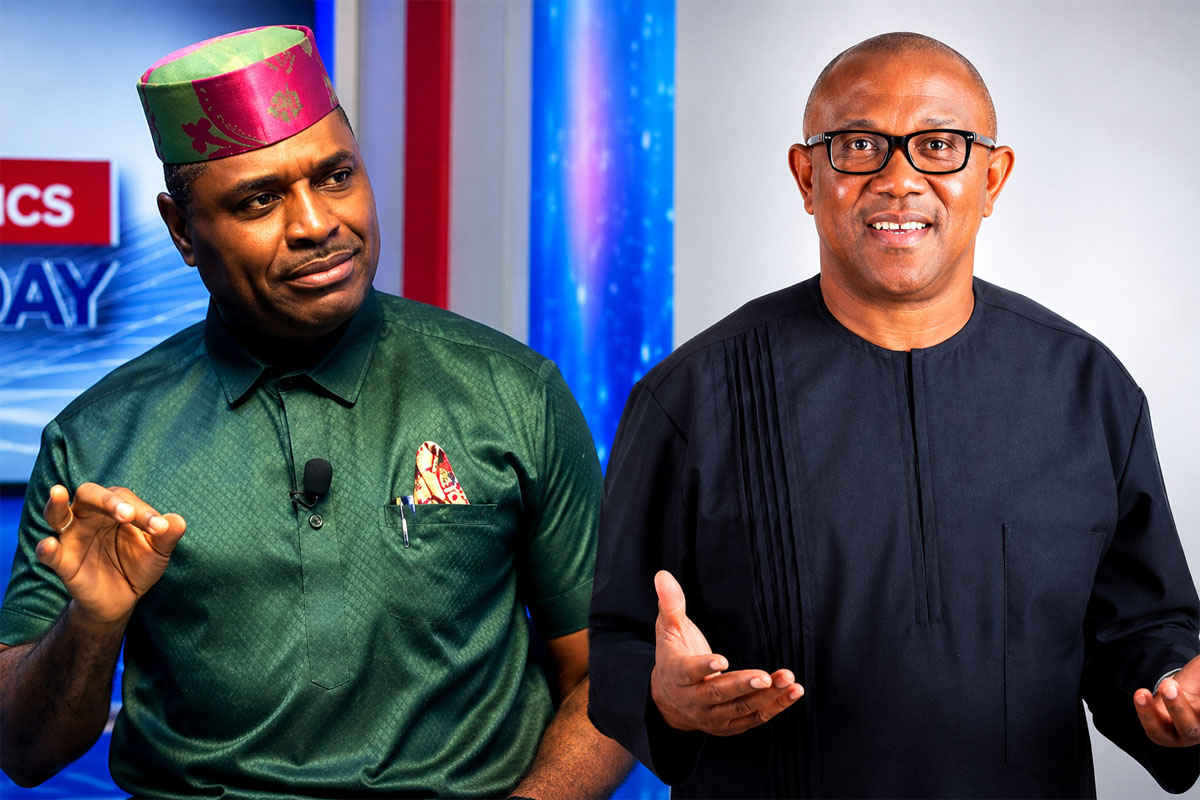
‘It’s a lie’ – Wike’s aide challenges Peter Obi’s ‘I don’t give shishi’ claim
‘It’s a lie’ – Wike’s aide challenges Peter Obi’s ‘I don’t give shishi’ claim
Senior Special Assistant on Public Communications and Social Media to the Minister of the Federal Capital Territory (FCT), Nyesom Wike, Lere Olayinka, has challenged a claim attributed to Peter Obi that he does not give money to politicians or delegates during election campaigns.
Olayinka described the claim as untrue, alleging that Obi gave money to delegates in Ekiti State when he was still a member of the Peoples Democratic Party (PDP) and seeking the party’s presidential ticket.
The FCT minister’s aide made the allegation during an interview on AIT’s Democracy Today, where he discussed political campaigns, election spending and the realities of seeking elective office in Nigeria.
Olayinka, who said he previously contested for the House of Representatives and had served as a political delegate, said he personally witnessed Obi allegedly giving money to delegates during the period when the former Anambra State governor was still in the PDP.
“They said that the candidate of the NDC, Peter Obi, does not give ‘shishi,’ it’s a lie. I was a delegate in Ekiti when he was in PDP before going to the Labour Party, he came to Ekiti and dropped money for delegates,” Olayinka said.
The allegation directly challenges the image Obi has cultivated among supporters as a politician who campaigns against excessive political spending and promotes a more frugal approach to politics and governance.
Obi left the PDP in May 2022 and subsequently joined the Labour Party, under which he contested the 2023 presidential election. He is now associated with the Nigeria Democratic Congress (NDC) ahead of the 2027 presidential election.
Olayinka argued that financial resources remain a major component of political contests, particularly during party primaries and election campaigns.
According to him, politicians require money to mobilise supporters, organise campaigns, secure party structures and compete with opponents.
He said political candidates who refuse to deploy financial resources could find themselves at a disadvantage against better-funded contenders.
READ ALSO:
- Osinbajo raises alarm over chemicals in fruits, recalls wife’s orange juice experience
- Lagos: Army rescues two kidnapped farm workers, kills suspected kidnapper
- JAMB Releases Underage UTME Results, Sets Strict Conditions for Admission
“As a politician or a businessman, if your competitor wins, what happens to you? If you are seeking a contract from somewhere and your competitor wins, what happens to you? You will lose out,” Olayinka said.
He also argued that politicians spend money because gaining political power is necessary for candidates who intend to implement their programmes after winning elections.
“You want to serve me, for instance, why do politicians spend money including the US? Don’t politicians spend money on campaigns? They spend money to seek election,” he said.
Olayinka’s comments come amid intensifying political exchanges ahead of the 2027 general election, with supporters of President Bola Tinubu and opposition politicians increasingly debating the viability, credibility and electoral strength of potential challengers.
The FCT minister’s aide has recently stepped up his criticism of Obi and other opposition figures, questioning whether some of the presidential candidates preparing for the 2027 election have sufficient political structures to win a nationwide contest.
In a recent interview with Arise News, Olayinka argued that not all of the presidential candidates preparing for the 2027 election were necessarily contesting with the expectation of winning.
He specifically questioned the electoral strength of the NDC, saying the party lacked sufficient grassroots structures in several states. He argued that a presidential candidate needs a strong organisation at the state, local government and polling-unit levels to effectively compete in a national election. (Arise News)
Olayinka also pointed to the importance of having candidates contesting other elective positions, arguing that the absence of a strong spread of governorship and legislative candidates could make it more difficult for a presidential party to establish an effective election-day structure.
His latest comments therefore form part of a broader political argument over whether Obi and the NDC can build enough nationwide structures to challenge the established political parties in 2027.
Meanwhile, the controversy involving Olayinka has extended beyond his criticism of Obi to questions about the conduct of political interviews.
A separate confrontation reportedly occurred between Olayinka and Arise News presenter Rufai Oseni during a television interview, with the exchange ending abruptly after Olayinka indicated that he would not respond to questions from the presenter.
READ ALSO:
- Delta Police Arrest Minor, Five Others Over Alleged Illicit Drug Sales
- BREAKING: OPay Warns Customers Against Viral Shutdown Message, Threatens Legal Action
- Ghana Launches Marrify App to Let Users Verify Partner’s Marital Status Before Marriage
The incident attracted reactions from commentators, including Dr Sam Amadi, Director of the Abuja School of Social and Political Thought, who called for greater professionalism from both journalists and public officials during political interviews.
Amadi argued that public officials who accept invitations to appear on television programmes should be prepared to answer legitimate questions, while journalists should also conduct interviews in a professional manner and avoid turning political discussions into personal confrontations.
He said the media should focus on obtaining useful information for the public rather than allowing interviews to degenerate into shouting matches.
Amadi also argued that the quality of political discourse ahead of the 2027 elections should extend beyond personality clashes between politicians and journalists.
According to him, issues such as Nigeria’s economy, hunger, insecurity, healthcare, health insurance and the rule of law should receive greater attention as political parties and candidates seek voters’ support.
He said political actors would respond to the issues that voters, the media and influential institutions place at the centre of public debate.
The political scientist further stressed that voters should assess presidential candidates not only on their campaign promises but also on their integrity, credibility and past conduct.
The latest exchange between Olayinka and Obi’s camp comes as political realignments ahead of 2027 continue to reshape Nigeria’s opposition landscape.
Obi’s emergence as a leading opposition figure has generated sustained debate among supporters and critics over his political record, campaign strategy, financial practices and ability to build a nationwide political structure.
For now, Olayinka’s allegation that Obi gave money to delegates in Ekiti remains a claim made by the Wike aide. No independent evidence establishing the alleged payment was presented in the reports reviewed, and Obi or his representatives have not, in the available reports, publicly responded to the specific allegation.
The dispute nevertheless highlights one of the recurring issues likely to dominate the 2027 political campaign: the role of money, political structures, grassroots mobilisation and personal credibility in determining the outcome of Nigeria’s presidential election.
‘It’s a lie’ – Wike’s aide challenges Peter Obi’s ‘I don’t give shishi’ claim
Politics
2027: Tinubu’ll ‘eat Obi like biscuits’ without coalition — Okonkwo
2027: Tinubu’ll ‘eat Obi like biscuits’ without coalition — Okonkwo
Spokesperson for the Atiku Abubakar presidential campaign, Kenneth Okonkwo, has warned that President Bola Tinubu could defeat former Anambra State Governor Peter Obi in the 2027 presidential election if the opposition fails to unite behind a common platform and candidate.
Okonkwo said an opposition coalition remains the most realistic route to defeating Tinubu, arguing that individual opposition candidates would struggle to overcome the political strength of the incumbent if they contest the election separately.
He made the remarks during an interview with Ibeju Upgrade Media, while reacting to the emerging political alignments ahead of the 2027 election and the possibility of Obi challenging Tinubu.
Okonkwo was particularly dismissive of Obi’s chances of defeating Tinubu without a wider opposition alliance, including the possibility of Obi contesting alongside former Kano State Governor Rabiu Kwankwaso.
“Coalition is the only way out,” Okonkwo said, stressing the need for opposition parties and political actors to consolidate their support instead of entering the presidential contest separately.
He argued that a divided opposition could split the votes of Nigerians seeking an alternative to the ruling All Progressives Congress (APC) and consequently give Tinubu an advantage at the polls.
Okonkwo was emphatic in his assessment of an Obi-Tinubu contest without a broader coalition.
“So, if Peter Obi goes against Tinubu alone, Tinubu will eat him like biscuits,” he said.
The former Labour Party chieftain also questioned whether Obi could secure sufficient support in northern Nigeria, particularly in Kano State, to mount a serious challenge against Tinubu without the backing of other major opposition blocs.
READ ALSO:
- No One Can Live on N70,000, Not Even a Newborn – Sowore
- Defence Minister Musa accuses El-Rufai of deliberately planning Southern Kaduna killings
- Kano Rainstorms: Nine Lives Lost, Over 4,500 Displaced
“Will Kano people accept Peter Obi? In 2023, when we had the opportunity, they did not accept him. In 2027, they will not accept him,” Okonkwo said.
His criticism also extended to Kwankwaso, whose political influence in Kano and the wider North-West has made him an important figure in discussions about opposition strategy ahead of 2027.
Kwankwaso was a major contender in the 2023 presidential election and has maintained a strong political base in Kano. His potential partnership with Obi has therefore attracted considerable attention among opposition supporters and political observers.
Okonkwo, however, dismissed the suggestion that Kwankwaso would significantly strengthen an Obi-led ticket.
“Kwankwaso has nothing to contribute to the ticket. Even in Kano, Kwankwaso has lost,” he said.
The comments come amid renewed efforts to construct a united opposition coalition capable of challenging the APC and Tinubu in the 2027 presidential election.
The debate over opposition unity has become one of the defining issues in Nigeria’s political landscape as major opposition politicians pursue different political strategies ahead of the election.
The G100 Opposition Coalition, led by former APC chieftain Salihu Lukman, has been pushing for opposition parties and political actors to work together and produce a common candidate capable of challenging the ruling party.
The coalition initiative is built around the argument that the opposition could improve its chances of defeating Tinubu by pooling its political structures, regional support bases and voters behind a single presidential candidate.
However, attempts to achieve such unity have faced significant challenges.
The major obstacle has been the presidential ambitions of leading opposition figures, including Atiku Abubakar and Peter Obi, as well as disagreements over which political platform should provide the structure for a possible coalition.
Atiku is operating under the African Democratic Congress (ADC), while Obi has emerged as the presidential candidate of the Nigeria Democratic Congress (NDC).
Kwankwaso is expected to serve as Obi’s running mate on the NDC ticket, creating a political arrangement that has further complicated the search for a single opposition candidate.
The development has effectively created competing opposition camps ahead of the 2027 election, with Atiku and Obi pursuing separate presidential platforms while coalition advocates continue efforts to bring the different blocs together.
The current situation has revived memories of the 2023 presidential election, when the opposition vote was divided among several major candidates.
Tinubu won the 2023 election with 8,794,726 votes, while Atiku received 6,984,520 votes and Obi polled 6,101,533 votes. Kwankwaso also secured more than one million votes.
READ ALSO:
- Atiku, X user clash over Almajiri crisis, street begging
- Court restrains Lizzy Anjorin from posting Priscilla Ojo’s son’s photos
- NBA controversy: VDM apologises to security agencies over ‘unknown gunmen’ remarks
The figures have frequently been used by advocates of opposition unity to argue that a united opposition could pose a stronger challenge to the APC.
However, the combined votes of opposition candidates cannot automatically be treated as a prediction of what would happen if they contested the next election on a single ticket.
Voting patterns can change significantly between elections, while factors such as geographical distribution, voter turnout, party structures, campaign organisation and candidate popularity can determine the outcome.
Nigeria’s presidential election also requires a candidate to secure the highest number of votes while meeting the constitutional requirement for a spread of support across the states.
Nevertheless, the 2023 result remains a major reference point in the debate over whether the opposition should unite behind one candidate.
Obi attracted significant support in parts of southern Nigeria and among younger and urban voters, while Atiku maintained considerable support across several northern states.
Kwankwaso, meanwhile, demonstrated substantial strength in Kano and parts of the North-West.
Supporters of an opposition coalition believe combining these different voter bases could create a formidable national political force.
But the difficulty lies in determining which candidate would lead such an alliance and how the different political interests would be accommodated.
The G100 initiative has attempted to address this problem by encouraging opposition politicians to negotiate rather than allowing individual presidential ambitions to derail the possibility of a common front.
The process, however, remains complicated by the fact that Atiku and Obi already have established political structures and presidential tickets.
The ADC has also maintained that Atiku has the capacity to defeat Tinubu, with or without a broader coalition, although the party has expressed support for cooperation among opposition forces.
This position differs from the argument advanced by Okonkwo, who insists that the opposition’s best chance lies in presenting a united front.
His comments are particularly notable because of his political history with Obi.
Okonkwo was previously associated with Obi during his Labour Party presidential campaign but later joined Atiku’s political camp and became a spokesperson for the former vice-president’s presidential campaign.
His latest remarks therefore represent a significant criticism of his former political ally as the 2027 contest begins to take shape.
Okonkwo has also previously questioned Obi’s capacity to lead Nigeria and tackle the country’s economic and developmental challenges.
His latest intervention places the issue of opposition unity at the centre of his argument, rather than focusing solely on the individual strengths of the presidential contenders.
The political calculations surrounding the 2027 election have become increasingly complicated as the major opposition camps attempt to determine whether they can work together or must compete separately.
For the APC and Tinubu, a divided opposition could potentially make the presidential contest less difficult by preventing a single challenger from consolidating votes from different regions and political constituencies.
For opposition parties, the challenge is to determine whether their combined strength would be greater under a single candidate than under separate presidential campaigns.
The question is particularly important for Obi and Atiku, whose supporters have continued to debate which of the two politicians has the stronger national appeal and greater capacity to challenge Tinubu.
The emergence of the Obi-Kwankwaso ticket has added another layer to that debate.
While supporters believe the combination could strengthen Obi’s reach into northern Nigeria, critics such as Okonkwo argue that it would not be enough to defeat the incumbent without a broader alliance.
The G100 coalition is therefore faced with the difficult task of persuading the different opposition camps to put aside competing presidential ambitions and agree on a strategy that can command nationwide support.
Whether that happens before the 2027 election remains uncertain.
For now, Atiku and Obi remain on separate political platforms, while Tinubu continues to prepare for his re-election campaign.
Okonkwo’s “eat Obi like biscuits” remark has added a colourful dimension to the increasingly intense political debate, but beneath the phrase lies a much bigger question confronting Nigeria’s opposition: whether its leading political forces can unite behind one candidate or risk dividing their support in another presidential contest.
As political negotiations continue, the eventual structure of the opposition and the choice of presidential candidates could play a major role in determining the shape of the 2027 presidential election.
2027: Tinubu’ll ‘eat Obi like biscuits’ without coalition — Okonkwo
Politics
Atiku, X user clash over Almajiri crisis, street begging
Atiku, X user clash over Almajiri crisis, street begging
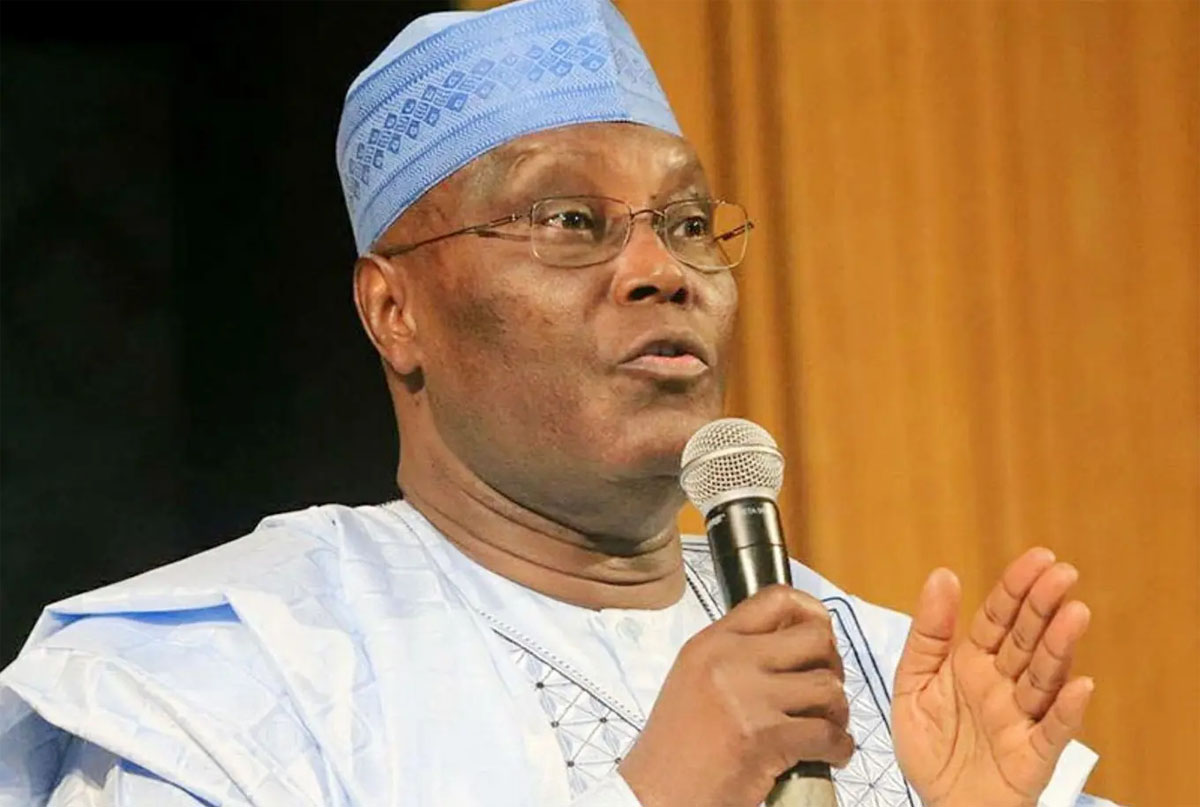
Presidential candidate of the African Democratic Congress (ADC), Atiku Abubakar, has clashed with an X user, Oluwa Bunmi, over the persistent Almajiri crisis and the continued presence of children involved in street begging in northern Nigeria.
The exchange followed a post by Bunmi on Friday in which the X user questioned Atiku’s record on the issue, particularly during his eight-year tenure as Vice President of Nigeria between 1999 and 2007.
Bunmi tagged Atiku in a post featuring children carrying begging bowls and asked whether the former vice president had ever taken steps to address the situation.
“Have you ever addressed this, sir? You were VP for 8 years, these innocent children are in your region and you couldn’t do anything to stop this calamity,” Bunmi wrote.
Responding, Atiku acknowledged the seriousness of the problem but defended his record on education and interventions for vulnerable children, pointing to initiatives associated with the American University of Nigeria (AUN) in Yola, Adamawa State.
“I understand your concern, @Oluwabunmi63697. The sight of children begging on our streets should trouble every Nigerian,” Atiku said.
The former vice president explained that he established AUN in Yola as part of his effort to contribute to education and development in the North-East.
According to Atiku, the decision to locate the institution in Yola was deliberate because he wanted to expand access to quality education in a region he believed required greater investment.
“If profit had been my primary motivation, I could easily have located the university in Abuja or Lagos, where the commercial advantages would have been greater,” he said.
“I chose Yola because I wanted to invest in my people, create opportunities, and bring world-class education closer to a region that had long needed greater access and development.”
Atiku also rejected suggestions that AUN was established as a personal or family asset.
He said he had signed a deed of gift transferring ownership of the institution to the community.
“And as I have publicly stated before, this university is not my personal property or that of my family,” he said.
READ ALSO:
- Court restrains Lizzy Anjorin from posting Priscilla Ojo’s son’s photos
- NBA controversy: VDM apologises to security agencies over ‘unknown gunmen’ remarks
- LASU: Mother allegedly assaults daughter’s roommate, student rushed to LASUTH with eye injury
“I have already signed a deed of gift transferring it to the community. AUN belongs to the community it was established to serve.”
Atiku further cited AUN’s Feed and Read programme, which he said was created to provide vulnerable Almajiri children with food while helping them acquire basic literacy and numeracy skills.
“Beyond its classrooms, AUN created the Feed and Read programme, providing vulnerable Almajiri children with daily meals while teaching them literacy and numeracy,” he said.
The programme has been documented by AUN as an initiative aimed at supporting children who are outside the formal education system.
The university has previously reported graduating cohorts of children from the programme, with the initiative designed to provide basic education and help beneficiaries transition into formal schooling.
Atiku also highlighted AUN’s Technology-Enhanced Learning for All (TELA) initiative, saying it provided educational support to more than 20,000 internally displaced children through educational radio programmes.
The programme was developed to reach children affected by displacement and insecurity, particularly those who had been unable to access conventional classrooms.
Atiku said AUN’s interventions were part of his broader belief that education should be used to create opportunities for children facing difficult circumstances.
He also referred to the university’s response to the 2014 Chibok schoolgirls’ abduction, saying AUN awarded scholarships to some of the young women who escaped captivity.
“Following the Chibok tragedy in 2014, seven years after I left office, AUN awarded scholarships to young women who had escaped Boko Haram, giving them an opportunity to rebuild their lives through education,” Atiku said.
The former vice president stressed that his commitment to education extended beyond his time in public office.
“My conviction remains simple: every child belongs in a classroom, not on the street with a begging bowl,” he said.
“Whether in government or outside it, I have always sought to turn that conviction into practical action.”
The exchange has renewed public attention on the Almajiri system, a traditional Islamic education arrangement in northern Nigeria under which children may leave their homes to study Islamic teachings under Mallams.
The Almajiri system itself is not synonymous with street begging. However, concerns have persisted over the welfare and educational conditions of some children enrolled in the system, particularly those who lack adequate food, shelter, healthcare or access to formal education.
READ ALSO:
- Sambisa Forest: Over 23 terrorists reportedly killed as Boko Haram, ISWAP clash in Borno
- NAF recruitment 2026: Step-by-step guide to applying for BMTC 47/2026
- Oyo kidnap rescue: Five security personnel, four civilians killed — DSS DG
Some children involved in the system are seen begging on streets and in public places, making the issue a major component of Nigeria’s wider out-of-school children crisis.
The problem has remained particularly pronounced in parts of northern Nigeria, where poverty, insecurity, limited access to schools and other socioeconomic challenges have contributed to difficulties in ensuring that children remain in education.
The Federal Government has attempted to address the challenge through the National Commission for Almajiri and Out-of-School Children’s Education (NCAOOSCE).
The commission is responsible for coordinating policies and programmes aimed at improving access to education for Almajiri and other out-of-school children, including efforts to integrate Qur’anic education with basic and formal education.
The commission has also reported establishing learning centres and undertaking community mobilisation efforts aimed at encouraging vulnerable children to return to education.
However, the scale of Nigeria’s out-of-school children problem means that government interventions continue to face significant challenges.
The issue has also increasingly become part of political debates ahead of elections, with politicians from northern Nigeria regularly facing questions about what their administrations have done to reduce child begging and improve access to education.
Atiku’s latest response did not provide a detailed breakdown of specific federal government policies implemented during his tenure as vice president to eliminate street begging among Almajiri children.
Instead, he pointed to education initiatives associated with AUN and interventions he has supported outside government.
That distinction has become central to the debate triggered by Bunmi’s post, with the X user focusing on Atiku’s record while in government and Atiku responding by highlighting his broader educational contributions.
The exchange also reflects the difficulty of separating the responsibilities of individual political leaders from the wider structural causes of the Almajiri and street-begging crisis.
Issues such as poverty, parental displacement, limited school infrastructure, insecurity and inadequate social protection have all contributed to the persistence of vulnerable children outside formal education.
As the country moves towards the 2027 general election, education and child welfare are expected to remain important issues in political campaigns, particularly in northern states.
Atiku, who is seeking the presidency under the ADC, is likely to face further scrutiny over his record in public office and his proposals for addressing poverty, education and youth development.
For now, his response to the X user has shifted the conversation from a direct question about his eight years as vice president to his wider record and continuing involvement in education and support for vulnerable children.
The debate has also placed the plight of children seen begging on Nigerian streets back in the public spotlight, highlighting the need for sustained policies that address both access to education and the underlying socioeconomic conditions driving children into vulnerable situations.
Atiku, X user clash over Almajiri crisis, street begging
-

 Auto3 days ago
Uber exits Nigeria after 12 years
-

 Politics3 days ago
Atiku, Obi Unite in Fresh Bid to Unseat Tinubu as 2027 Election Campaign Heats Up
-
 metro3 days ago
We were offered $3m to drop Tinubu records campaign — US firm
-
 Entertainment2 days ago
Mama G Advises Parents: Don’t Shield Children from Life’s Struggles
-

 metro1 day ago
20-year-old arrested over alleged gang-rape of 19-year-old woman in Ogun
-
 metro2 days ago
Ogun Pastor Dies in Crash Hours After Allegedly Killing Wife in Domestic Dispute
-

 Sports2 days ago
NFF crisis: FIFA delays approval of Normalisation Committee, plans Nigeria visit
-
 Politics2 days ago
Atiku Vows to Scrap NELFUND, Offers Student Debt Forgiveness if elected