

International
US strikes did not destroy Iran nuclear programme, says intelligence assessment

US strikes did not destroy Iran nuclear programme, says intelligence assessment
The US strikes on Iran’s nuclear facilities did not destroy the country’s nuclear programme and probably only set it back by months, according to an early Pentagon intelligence assessment of the attack.
The Islamic Republic’s stockpile of enriched uranium was not eliminated in Saturday’s bombings, sources familiar with the Defense Intelligence Agency evaluation told the BBC’s US partner CBS.
The White House said the “flat-out wrong” assessment was leaked by “a low-level loser in the intelligence community”.
President Donald Trump again declared the nuclear sites in Iran “completely destroyed” and accused media of “an attempt to demean one of the most successful military strikes in history”.
The US struck three nuclear facilities in Iran – Fordo, Natanz and Isfahan – with “bunker buster” bombs capable of penetrating 18m (60ft) of concrete or 61m (200ft) of earth before exploding.
But sources familiar with the Pentagon’s intelligence assessment say Iran’s centrifuges are largely “intact” and the impact was limited to aboveground structures.
Entrances to two nuclear facilities were sealed off, and some infrastructure was destroyed or damaged, but much of the facilities, which are deep underground, escaped the brunt of the blasts.
The anonymous sources told US media it is estimated the attack only set Iran back “a few months, tops”, and that any resumption of its nuclear programme may be based on how long it takes the country to dig out and make repairs.
READ ALSO:
- Iranian president declares end to war with Israel
- How to apply for 2025 civil defence, immigration, corrections, fire service jobs
- PAPADEF gives widows cash gift to mark 2025 IWD
Sources also confirmed to CBS that some of Iran’s enriched uranium stockpile was moved before the strikes, according to the intelligence assessment.
The US 30,000lb (14,000kg) Massive Ordnance Penetrator bomb was thought to be the only weapon capable of destroying Iran’s underground enrichment facilities. Tehran had always said its nuclear programme is for peaceful purposes.
In the hours that followed the Saturday strikes, Gen Dan Caine, chairman of the joint chiefs of staff, told reporters that it would take time to assess the damage to the facilities.
But he added that “all three sites sustained extremely severe damage and destruction”. Satellite images showed six fresh craters clustered around two entry points at the Fordo nuclear sites, as well as grey dust and debris.
It is unclear from the images, however, how much damage the sites sustained below the surface.
Hassan Abedini, the deputy political director of Iran’s state broadcaster, claimed the three sites targeted by the US had been evacuated a “while ago”, and that Iran “didn’t suffer a major blow because the materials had already been taken out”.
US officials, on the other hand, hailed the mission as a success, as have Israeli officials.
In a statement on Tuesday, Defence Secretary Pete Hegseth said that “based on everything we have seen – and I’ve seen it all – our bombing campaign obliterated Iran’s ability to create nuclear weapons”.
“Anyone who says the bombs were not devastating is just trying to undermine the President and the successful mission,” Hegseth said.
READ ALSO:
- PDP, LP Reps dump parties for APC
- Strikes continue in Iran, Israel despite ceasefire announcement
- Carloha lifts Lifemate’s 19th anniversary promo with Tiggo 8 Pro grand prize
US Congressman Brad Sherman, a Democratic member of the House Foreign Affairs Committee, told the BBC the Trump administration was using vague terms to declare victory – when it’s still unclear what the bombing mission accomplished.
He said the administration hasn’t said whether the strikes destroyed Iran’s ability to weaponise its uranium, its uranium-enriching centrifuges or depleted its stockpile, which he said would be enough to create nine nuclear weapons.
“When they say obliterate the programme, they’re not even saying whether it’s obliterated the centrifuges and the ability to create uranium in the future or whether it is obliterating the stockpile,” Sherman told BBC.
“All indications, including Vice-President Vance’s statement, indicate that we don’t think we got the stockpile,” he said, noting images that show trucks going to one of the facilities days before the strikes.
Prime Minister Benjamin Netanyahu said on Tuesday that since hostilities with Iran began on 13 June, Israel has been successful in curbing Iran’s nuclear ambitions, as well as destroying its missiles arsenal.
“We have removed two immediate existential threats to us – the threat of nuclear annihilation and the threat of annihilation by 20,000 ballistic missiles,” Netanyahu said in video remarks issued by his office.
A report in Saudi news outlet Al Hadath, citing an unnamed Israeli source, said that Israel believes most of Iran’s enriched uranium is buried under the rubble.
The US has 18 intelligence agencies, which sometimes produce conflicting reports based on their mission and area expertise. For example, the American intelligence community is still not in agreement over the origins of Covid-19.
It is possible future intelligence reports will include more information showing a different level of damage to the facilities.
David Albright, president of the Institute for Science and International Security and an expert on secret nuclear weapons development, said the damage Iran sustained by the US attacks will mean “it will take significant time, investment and energy” for it to restore its nuclear programme.
In a post on X, Albright added that Iran is “under intense scrutiny and observation from the United States and Israel”, and it risks further attacks if it tries to rebuild.
On Monday, Iran retaliated against the US airstrikes by launching a missile attack on Al-Udeid Air Base in Qatar, which is home to thousands of US troops.
That attack was largely intercepted, and no casualties or injuries were reported.
Since Iran’s retaliation, an Iran-Israel ceasefire – brokered by President Trump and Qatari mediators – is in place.
US strikes did not destroy Iran nuclear programme, says intelligence assessment
BBC








International
Nigeria Secures UN Human Rights Council Seat With 172 Votes
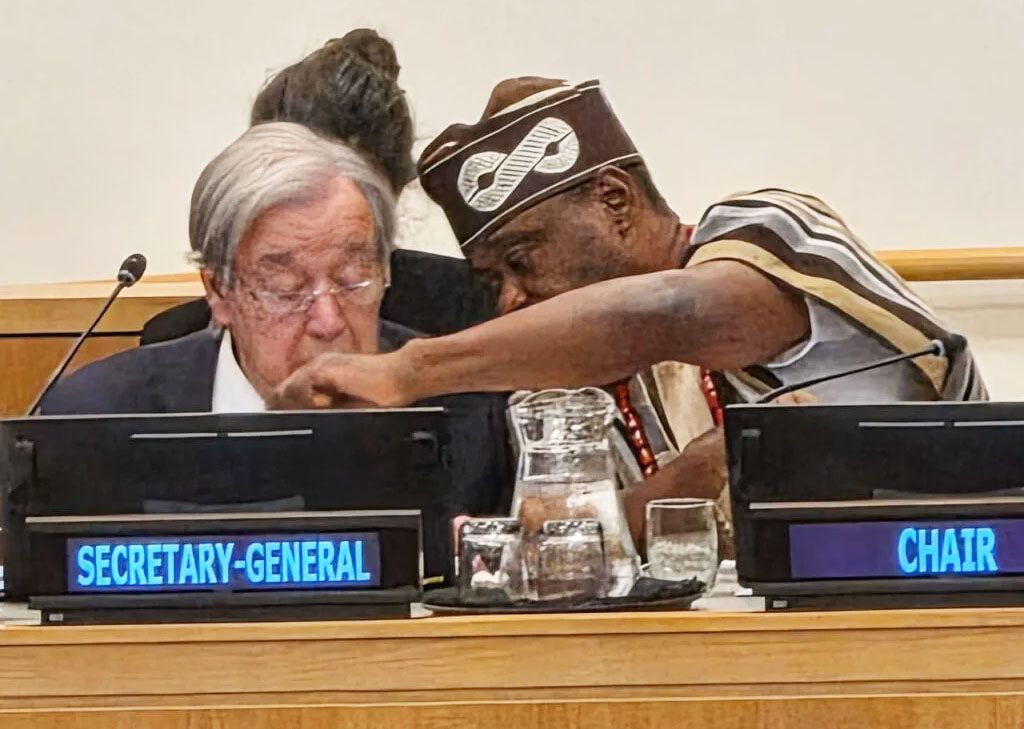
Nigeria has secured a seat on the United Nations Human Rights Council (UNHRC) after receiving 172 votes in an election by the UN General Assembly, earning the country a three-year term on the international body responsible for promoting and protecting human rights worldwide.
The election was held on Tuesday, October 13, 2026, at the United Nations headquarters in New York. Nigeria will serve on the 47-member council from January 1, 2027, to December 31, 2029.
Nigeria was among 15 countries elected to the council for the new term. The other successful candidates included Zambia, Ghana, Burundi, Brazil, the Dominican Republic, Uruguay, Germany, Ireland, Japan, Jordan, Kuwait, Nepal, Moldova and Ukraine.
Among the African candidates, Zambia received 177 votes, Ghana secured 173, Nigeria obtained 172, while Burundi received 160 votes.
The election gives Nigeria an opportunity to participate in international deliberations on human rights standards, alleged violations and measures aimed at improving the protection of fundamental freedoms across the world.
However, the process has attracted criticism from human rights organisations because the election was uncontested. Regional groups nominated exactly as many candidates as there were available seats, meaning there was no competitive ballot among rival candidates within the respective groups.
The UN Human Rights Council is an intergovernmental body based in Geneva, Switzerland. Established in 2006, it is mandated to address human rights violations, promote respect for fundamental freedoms and make recommendations to governments and the international community.
READ ALSO:
- Houthi Missile Targeting Riyadh Shot Down as Debris Injures Four, Damages 15 Homes
- Outrage as Israeli Settlers Torch Mosque, Burn Vehicle in Occupied West Bank
- Attempted Suicide: ‘If You Survive, We’ll Jail You’ – Akpabio
The council comprises 47 member states elected by the UN General Assembly through a secret ballot. Its seats are allocated among five regional groups to ensure geographical representation, and members serve staggered three-year terms.
The body examines human rights situations in individual countries, conducts its Universal Periodic Review of UN member states and considers complaints and reports concerning alleged abuses. It can also appoint independent experts, establish commissions of inquiry and authorise fact-finding missions to investigate serious allegations.
Although the council plays an important role in international human rights oversight, it does not operate as a criminal court and cannot independently impose criminal sentences on individuals accused of abuses.
Nigeria’s election comes amid continuing international scrutiny of human rights conditions in several countries, including concerns about police conduct, accountability, freedom of expression and the treatment of vulnerable groups.
The selection of countries with contested human rights records has been criticised by advocacy organisations, which argue that uncontested elections can weaken accountability and reduce pressure on candidates to demonstrate their commitment to protecting fundamental rights.
The criticism has also raised questions about how elected countries will use their positions on the council to address allegations of abuses and support international human rights standards.
For Nigeria, membership offers a platform to contribute to debates on issues such as unlawful killings, torture, discrimination, the rights of women and children, freedom of expression and the protection of civilians during armed conflicts.
The country will also be expected to participate in council sessions, consider resolutions and engage with other member states on international human rights concerns.
Nigeria’s three-year membership begins in January 2027. Its performance on the council will be watched alongside its domestic human rights record, including how authorities address allegations of misconduct and strengthen accountability and protection for citizens.
The election is therefore both a diplomatic achievement for Nigeria and an opportunity for the country to demonstrate its commitment to the principles the council was established to uphold.
Nigeria Secures UN Human Rights Council Seat With 172 Votes
International
Houthi Missile Targeting Riyadh Shot Down as Debris Injures Four, Damages 15 Homes
Houthi Missile Targeting Riyadh Shot Down as Debris Injures Four, Damages 15 Homes
Saudi Arabia’s air defences have intercepted and destroyed a Houthi ballistic missile targeting Riyadh, as debris from earlier missile interceptions injured four people and damaged about 15 residential homes in the Saudi capital.
The developments were announced on Wednesday, October 14, 2026, amid escalating attacks involving Saudi Arabia and Yemen’s Houthi armed group.
Major General Turki Al-Maliki, spokesman for the Saudi-led coalition supporting Yemen’s internationally recognised government, confirmed that a ballistic missile launched towards Riyadh had been intercepted and destroyed.
Saudi authorities subsequently lifted danger warnings issued for Riyadh and Al-Kharj Governorate through the country’s National Early Warning Platform, indicating that the immediate threat covered by those alerts had passed.
The missile interception came after loud explosions were heard over Riyadh late on Tuesday as Saudi air defences engaged incoming aerial threats.
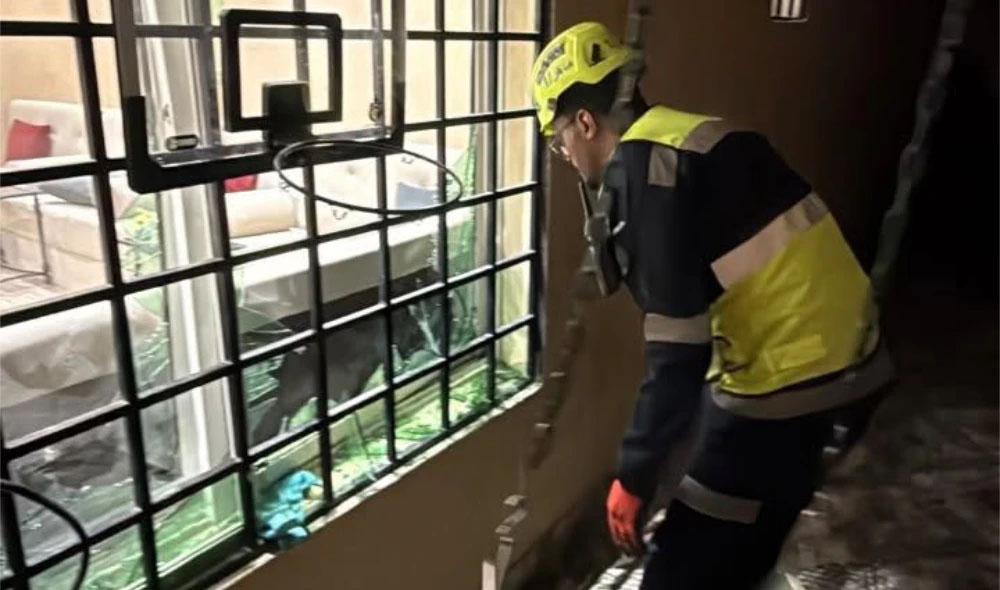
According to the Saudi Civil Defence, debris from two previously intercepted cruise missiles fell on residential areas, injuring four people and causing material damage to approximately 15 homes.
The injured comprised two women, a man and a child. Authorities said the debris caused limited damage to the affected properties, while images released by Saudi officials showed damage inside residential buildings.
READ ALSO:
- Outrage as Israeli Settlers Torch Mosque, Burn Vehicle in Occupied West Bank
- Attempted Suicide: ‘If You Survive, We’ll Jail You’ – Akpabio
- Yamal Inspires Barcelona Comeback to Sink Osimhen’s Galatasaray
Emergency services responded to the incident, and the relevant authorities implemented established safety procedures. The four injuries were attributed to falling missile fragments rather than a direct impact from the intercepted missiles.
The latest interception was part of a broader series of missile and drone attacks targeting Saudi Arabia. The Saudi-led coalition reported intercepting threats over Riyadh and other parts of the kingdom, including Dhahran and Al-Kharj.
Saudi officials also reported that three drones had been destroyed north of Riyadh on Tuesday.
In a separate incident, Saudi Arabia’s Energy Ministry confirmed that an administrative building belonging to state-owned oil giant Saudi Aramco in Dhahran, in the kingdom’s Eastern Province, was struck on Tuesday evening, causing what authorities described as a limited fire.
The ministry said there were no casualties from the fire. Reports indicated that the building was part of the Aramco headquarters complex, which houses offices associated with the company’s extensive oil and energy operations.
The Houthis have claimed attacks against Saudi strategic and energy facilities, including Aramco installations and King Khalid International Airport in Riyadh. The latest developments have raised further concerns about the security of civilian areas and critical infrastructure across the kingdom.
Saudi Arabia has vowed to respond to attacks against its territory. The Saudi Cabinet, chaired by Crown Prince Mohammed bin Salman, condemned the attacks and reaffirmed the kingdom’s commitment to protecting its security and freedom of navigation in the Red Sea and the Bab al-Mandab Strait.
The renewed confrontation has also prompted military action by the Saudi-led coalition in Yemen. On Tuesday, the coalition announced operations targeting facilities it said were being used to support Houthi attacks. It issued warnings urging civilians to stay away from designated locations.
The Houthis, who control Yemen’s capital, Sanaa, have said their attacks are retaliation for Saudi military operations against them. The conflict has intensified after years of intermittent fighting and has increased concerns about the potential impact on regional stability, energy supplies and international shipping.
The latest missile interception in Riyadh underscores the continuing threat posed by missiles and drones in the conflict. Although the ballistic missile targeting the capital was destroyed, falling debris from earlier interceptions demonstrated the risks to residents even when air defences successfully engage incoming weapons.
Saudi authorities have not reported further casualties from the latest ballistic missile interception. The situation remains tense as the kingdom continues to monitor and respond to incoming aerial threats.
Houthi Missile Targeting Riyadh Shot Down as Debris Injures Four, Damages 15 Homes
International
Outrage as Israeli Settlers Torch Mosque, Burn Vehicle in Occupied West Bank
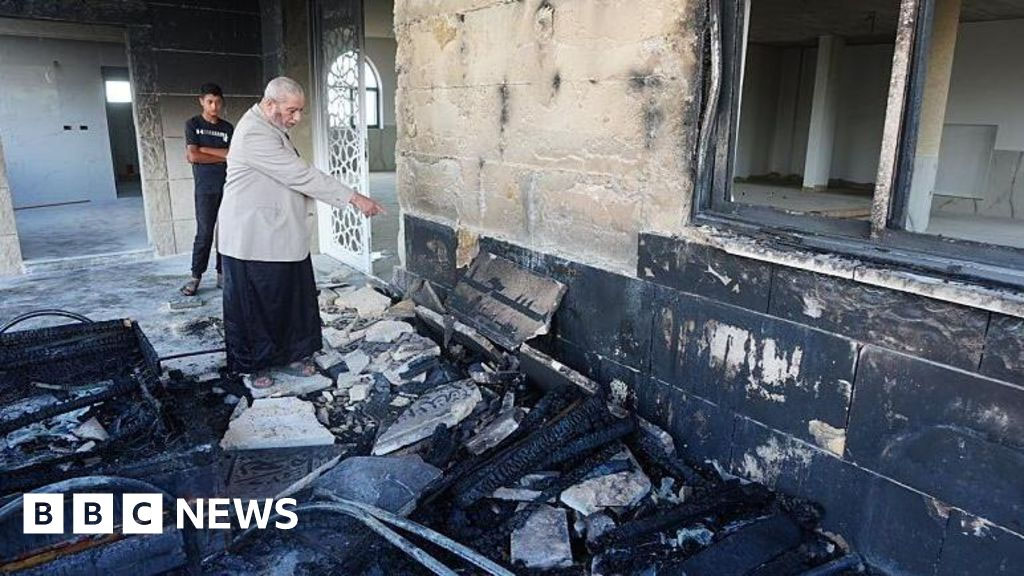
Israeli settlers have reportedly set fire to a mosque, a vehicle and an olive tree in a Palestinian village in the occupied West Bank, in an attack that has renewed concerns about violence against Palestinian communities and religious sites.
The incident occurred in the early hours of Wednesday, October 14, 2026, when a group of settlers raided Mikhmas, also spelt Mukhmas, northeast of occupied Jerusalem.
According to the Palestinian news agency WAFA, the Jerusalem Governorate reported that dozens of settlers entered the village shortly after midnight and set fire to a mosque and a nearby olive tree. A vehicle was also completely burned during the attack.
Reports from the scene showed damage to the mosque’s entrance. No injuries were reported in the initial accounts of the incident.
Mohammed Kanaan, a member of Mikhmas’ municipal council, told Anadolu Agency that the attackers set fire to a prayer room and a vehicle at about 2 a.m. local time. He said residents alerted the relevant authorities and requested the intervention of firefighting crews.
Reports also indicated that nationalist and racist slogans were spray-painted on the mosque and other buildings in the village. The extent of the damage and whether anyone had been arrested in connection with the attack were not immediately clear.
READ ALSO:
- Attempted Suicide: ‘If You Survive, We’ll Jail You’ – Akpabio
- Yamal Inspires Barcelona Comeback to Sink Osimhen’s Galatasaray
- Press Freedom: Judge Blocks Trump’s Ban on Three Major US Media Outlets
The attack adds to continuing concerns over Israeli settler violence in the occupied West Bank, where Palestinian residents have reported assaults, intimidation, property destruction and attacks on farmland.
The incident is particularly sensitive because it involved a Muslim place of worship. Religious sites and civilian property are protected under international humanitarian law, and deliberate attacks against them raise serious legal concerns.
The latest incident also comes amid the annual olive harvest, an important source of income for many Palestinian farming families. The Palestinian Colonization and Wall Resistance Commission said on Monday that it had documented 136 attacks linked to the olive harvest since the beginning of October. The reported incidents included beatings, intimidation, gunfire, theft of olives and farming equipment, and damage to trees.
The burning of the mosque in Mikhmas follows other reported arson attacks on mosques in the West Bank in recent months. In July, two mosques in the Palestinian villages of Qusra and Kour were set on fire following deadly clashes in the territory.
Reuters reported at the time that the Israeli military had confirmed evidence of arson and graffiti at the affected mosque sites and condemned attacks on religious places. The incidents prompted renewed calls for measures to prevent further attacks and hold those responsible accountable.
The wider situation in the Israeli-occupied Palestinian territory remains tense, with attacks by settlers and Israeli military operations contributing to insecurity for residents. Palestinian officials have repeatedly called for stronger protection of communities and accountability for attacks on civilians and their property.
The circumstances surrounding Wednesday’s mosque attack remain under investigation, and it was not immediately clear whether Israeli authorities had announced arrests or opened a formal inquiry.
The incident has once again highlighted concerns over the safety of Palestinian religious sites, homes and agricultural land, as calls grow for effective action against violence in the occupied West Bank.
Outrage as Israeli Settlers Torch Mosque, Burn Vehicle in Occupied West Bank
-
 metro3 days ago
₦8.7bn Erosion-Control Budget Gap Raises Questions as Anambra Gullies Expand
-
 Politics2 days ago
Obi Positioning for SGF Role Under Atiku’s ADC Ticket – Sowore
-
 metro2 days ago
How Bandits Demand ₦300m Ransom for Abducted Kaduna Couple, Baby in Viral Video
-
 metro3 days ago
Child Soldiers, Baby Factories: US Raises Alarm Over Official Complicity in Nigeria
-

 News3 days ago
Fuel Subsidy May Ease Hardship Today, But Could Cripple Nigeria’s Economy Tomorrow — FG
-

 Politics2 days ago
Okonkwo Alleges Return of Subsidy, Accuses NNPC of Plotting Trillions in ‘Lost Profit’
-

 metro3 days ago
2027 Elections: Atiku Demands Names of INEC Ballot Printers, Questions Secret Contracts
-
 metro2 days ago
How Military Air Strike Crushed ISWAP Attack Plot, Killed Over 40 Fighters in Borno