

Opinion
Farooq Kperogi : The new Pope is “black,” now what?

Farooq Kperogi : The new Pope is “black,” now what?
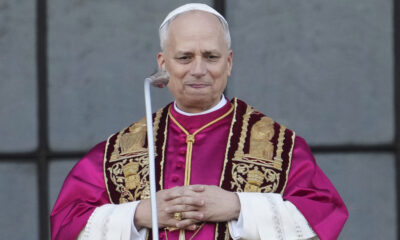
In the aftermath of Pope Francis’ death, many Africans on the continent and in the diaspora wondered if the Catholic Church would, for a change, elect a Black Pope. Well, they got one in Pope Leo XIV even if this isn’t apparent on the surface.
Although the Pope doesn’t identify as Black, he has Black African bloodline flowing in his veins through his mother.
Robert Francis Prevost, who changed his name to Leo XIV upon becoming the pope, traces maternal ancestral roots to grandparents in the state of Louisiana whose ancestry is part Black African.
According to the New York Times, “The pope’s maternal grandparents, both of whom are described as Black or mulatto in various historical records,” lived in a part of New Orleans, Louisiana’s biggest city, “that is traditionally Catholic and a melting pot of people with African, Caribbean and European roots.”
Records from the 1900 census, the New York Times reports, show that the man who gave birth to the pope’s mother, identified as Joseph Martinez, described his race as “Black” and his birthplace as “Hayti,” the older English spelling for Haiti.
Haitians trace ancestral descent from six major West African ethnic groups: Fon and Ewe from what is now Benin Republic and Togo; Yoruba from what is now Nigeria and Benin Republic; Igbo and Kongo from what is now Nigeria and Central Africa respectively; and Akan from present-day Ghana and Côte d’Ivoire.
That means there is a high likelihood that the pope has distant cousins from Nigeria. That won’t be surprising because, as I pointed out in my February 13, 2021, column titled “Surprising American Cousins Through My Mother’s Ancestry,” my own AncestryDNA record, which I initiated with my mother when she visited me from Nigeria between 2017 and 2018, matched us with several phenotypically white distant American cousins.
READ ALSO:
- Teen girl takes JAMB to court over hijab ban during UTME
- NUC grants full accreditation for all Novena University’s programmes
- #EndSARS protests: I was almost burnt alive – Desmond Elliot
“As we went through the photos of hundreds of distant cousins that AncestryDNA’s matches showed, [my mother] was struck with astonishment to find lily white people as her eight cousins,” I wrote. “She asked how that was possible. I explained to her that in the American South, where most Black people were enslaved, many slavers sexually exploited the enslaved, the consequence of which DNA results are now revealing.”
The new pope’s story is another possible explanation.
It should be noted that the pope’s maternal grandfather obviously also had European, possibly French and Spanish, ancestry in addition to his African ancestry. He was probably so light-skinned that he could pass for a white man outside the United States.
He probably chose to identify as Black only because of America’s strange “one-drop rule,” which held that a person with even the faintest scintilla of Black African blood in his/her pedigree is Black.
As Madison Grant wrote in his unbearably racist book titled The Passing of the Great Race, “The cross between a white man and an Indian is an Indian; the cross between a white man and a negro is a negro; the cross between a white man and a Hindu is a Hindu; and the cross between any of the three European races and a Jew is a Jew.”
In other words, whiteness symbolizes purity, and any other color line that touches it inevitably soils it. So, the American notion of Blackness conceives of it as an inerasable genetic stain on whiteness, so that the remotest ancestral connection with Black Africa defines one as Black.
That is why the legendary three-time heavyweight champion Muhammad Ali whose great-grandfather was an Irishman is celebrated as a Black American. That’s why former Secretary of State Colin Powell, who is probably just about 15 percent Black in his gene pool, is celebrated as a Black American success story.
It is why Mariah Carey, who would be called “bature” or “oyinbo” in Nigeria, or “muzungu” in eastern Africa, is accepted by Black America as a Black woman. And that is why it is only in America that a white woman can have Black children, but a Black woman cannot have white children.
READ ALSO:
- Mohamed Salah named FWA footballer of the year for third time
- DSS arrests 5 in Kano over murder of one-year-old girl
- US ‘to deport’ African migrants to Equatorial Guinea
This preposterous logic, this scandalously hidebound, hopelessly essentialist notion of Blackness would make most Europeans “Black” since recent DNA evidence suggests that about 75 percent of Western and Southern Europeans have vestiges of African blood in them.
In the eighteenth century, a German physician and anthropologist by the name of Johann Friedrich Blumenbach, on the basis of his flawed analysis of human skulls, taxonomized the human family into five races: Caucasian or white race, Mongolian or yellow race, Malayan or brown race, Negroid or black race, and American or red race.
This arbitrary division of the human family is often fingered as the foundation for scientific racism. It was used by eighteenth-century American judges as the intellectual and moral basis for the promulgation of so-called anti-miscegenation laws (laws that forbade interracial marriage or interracial sex) in a misguided bid to police racial boundaries.
One of the reasons interracial marriages were frowned upon by advocates of racial purism was that mixed-raced children disrupted the easy certainties of Blumenbach’s simplistic racial taxonomy.
As Yale University professor of history Glenda Gilmore once noted, interracial liaisons “resulted in mixed race progeny who slipped back and forth across the color line and defied social control.”
The pope’s maternal grandmother was Creole, who are descendants of the racial alchemy between French, Spanish, and African ancestors but who are nonetheless categorized as “Black” in the United State because of the (il)logic of the one-drop rule. Famous American musicians with Louisiana Creole heritage are Beyonce (through her mother) and Prince.
Creoles can be so light-skinned that they can pass for white. Throughout the nearly two years I lived in Louisiana, I often had difficulty telling a white person from a Black person. People I considered unambiguously white took offense when I identified them as such; they would tell me they were “Black.”
READ ALSO:
- BREAKING: JAMB releases 2025 UTME results, full guide on how to check your score
- Papal Conclave stuns gamblers: Millions lost on unexpected Pope
- How we lost 5 kids in abandoned vehicle – Grieving Nasarawa mothers
On other occasions, however, people I thought would self-identify as “Black” based on my previous encounters with seemingly white “Creoles” would take offense when I called them Black. Before I left Louisiana, I stopped guessing or discussing people’s racial identity. Yes, racial identification is that tenuous, that fluid, and that notoriously unstable in southwest Louisiana!
It was unsurprising that the pope’s mother, Mildred Martinez, identified as white. With a light-skinned Black Haitian father and a probably even more light-skinned Creole mother from New Orleans, she most certainly would look phenotypically white.
She chose to escape the chains that Blackness imposed on her and embraced whiteness. In America’s racial terminology, she would be described as having performed “passing.”
Passing is defined as a phenomenon when a phenotypically white but legally Black person (because of traces of African ancestry in them) intentionally present themselves as white to evade racial discrimination and gain access to social, economic, or legal advantages in a racially stratified society where white people occupy the upper end of the totem pole.
During the Jim Crow era in southern United States, when segregation and anti-Black laws were codified in the law books, “passing” was often a survival strategy for light-skinned Black people who could physically blend into white society. I have no doubt that that was what happened with the pope’s mother.
John Joseph Prevost, the pope’s brother, told the New York Times that they don’t discuss their mother’s Black heritage. “It was never an issue,” he said. In fact, USA Today and many American newspapers describe the pope’s mother’s heritage as “Spanish.” The African part of her rich racial tapestry is elided.
The New York Times reported on the pope’s maternal African heritage only because a Black New Orleans genealogist by the name of Jari C. Honora unearthed it with powerfully compelling documentary evidence and shared it with the paper.
Well, going by America’s peculiar logic of racial classification, the pope is “Black” because his whiteness is mediated by the invisible, imperceptible, maybe even genetically negligible, but nonetheless undeniable Black African blood coursing through his papal veins.
Farooq Kperogi is a renowned Nigerian columnist and United States-based Professor of Journalism.
Farooq Kperogi : The new Pope is “black,” now what?







Opinion
Why Atiku’s subsidy gambit rattles Tinubu, By Farooq Kperogi

Why Atiku’s subsidy gambit rattles Tinubu, By Farooq Kperogi
On Thursday, barely a day after official campaigns began for the 2027 presidential election, Atiku pledged to restore petrol subsidies if Nigerians elect him president. That pledge, more than anything he has done lately to dislodge Tinubu, is the clearest signal yet that he is prepared to wrest power from the president.
Before now, Atiku expended money, time and energy excavating Tinubu’s past, much of which Nigerians already know. Tinubu’s 1993 civil forfeiture of $460,000 to the US government in a case that grew out of a heroin-trafficking investigation has been public knowledge for years. It was Sahara Reporters that first reported it on September 15, 2008. Fresh FBI or DEA papers are unlikely to suddenly alter electoral attitudes.
The Chicago State University expedition was even less politically useful. Tinubu genuinely attended and graduated from CSU in 1979. Caleb Westberg, the university’s registrar, said so under oath. He agreed that the photocopy Tinubu submitted to INEC did not look like the 1979 samples shown to him, but CSU’s diploma templates changed over the years and the BBC found that Tinubu’s copy resembled replacement diplomas from the 1990s. Westberg also said the missing portion of the university logo could have been cut off during photocopying because American diplomas are unusually large and aren’t intended to be photocopied.
In America, diplomas are largely ceremonial documents that people frame and hang on walls. Transcripts are the official records routinely used to verify attendance and graduation. Atiku’s legal expedition ironically helped establish that Tinubu has a CSU transcript and graduated with honors.
The BBC Global Disinformation Team found no evidence for the claim that Tinubu forged the CSU diploma he submitted to INEC. The report, in fact, won “Fact-Check of the Year by a Working Journalist” at the 2024 African Fact-Checking Awards in Accra. In other words, Atiku spent enormous political energy helping to settle a question whose answer was electorally barren.
Tinubu understood this and mostly ignored the attacks. More importantly, Atiku offered little policy distance from Tinubu on the economic question that has tormented Nigerians since May 2023. He had promised during the last election to remove petrol subsidies within his first 100 days in office. On the most consequential economic policy of the Tinubu presidency, Atiku was traveling on the same ideological road.
READ ALSO:
- Tinubu’s order: EFCC lifts freeze on Osun government accounts
- IPOB Accuses UK of Hypocrisy Over Israel Stance, Demands Kanu’s Release Following UN Ruling
- Enugu ADC Chairman Found Dead Near Residence in Suspected Murder
That changed this week. Atiku asked the question millions of Nigerians have been asking: where is the money supposedly saved from subsidy removal? He then promised a new subsidy structure that would privilege locally refined petrol, give qualifying Nigerian refineries crude at preferential prices, impose a fixed annual spending ceiling, trace subsidized crude to actual domestic production and punish diversion. His formulation is that “the subsidy will follow the barrel.”
That is a more serious proposal than the Presidency’s caricature of it. And Tinubu suddenly found his voice. He personally dismissed Atiku’s pledge as a demonstration of “serious ignorance” of governance and the economy. Atiku’s previous assaults on Tinubu’s character produced studied presidential indifference. But his challenge to the economic orthodoxy that has pauperized Nigerians produced presidential irritation. That means he struck a raw nerve.
If Atiku’s proposal demonstrates ignorance, what does Tinubu’s policy demonstrate? Any honest person knows the answer: cruelty. Between ignorance and cruelty, which is more benign? You be the judge.
The anti-subsidy theology that Tinubu and his neoliberal choristers recite has always rested on a false premise. Subsidy simply means government assistance. Every functional society subsidizes something its people need for survival and economic productivity. Governments subsidize food, agriculture, housing, healthcare, transportation or energy according to the peculiarities of their societies.
For Nigeria, petrol occupies a uniquely central place because it doubles as an infrastructural substitute. People buy petrol because public electricity is unreliable. Small businesses generate their own power. Goods move mostly by road. Workers commute in vehicles powered by fuel. Farmers, artisans, traders and manufacturers absorb fuel costs and pass them on through prices.
A petrol subsidy therefore travels through the economy. Its removal travels through the economy too, only in the opposite direction. It raises transportation costs, production costs, food prices and the cost of nearly everything that depends on movement or power.
READ ALSO:
- N3.14 Trillion Spent on Electricity Subsidy in 31 Months – FG
- 100 Days in Captivity: Borno Families Beg Tinubu, Zulum to Rescue 78 Abducted Students
- Hamzat warns workers against spending over 40% of income on rent
I warned about this exactly one month before Tinubu was inaugurated. In my April 29, 2023 column titled “Six Agenda Items for Tinubu’s Success,” I warned that any policy that caused an arbitrary and unbearable increase in petrol prices without a corresponding improvement in incomes and living conditions would sink Tinubu. That warning was elementary commonsense.
The subsidy removal has since wreaked havoc on the economy, deepened poverty, killed businesses, murdered hope, hollowed out the middle class and democratized misery. Reuters now describes the aftermath of Tinubu’s reforms as the worst cost-of-living crisis in a generation. Nearly 80 percent of Nigerians in a recent voter tracker said the country was headed in the wrong direction.
The government’s answer is always the same sterile, tired, intentionally dishonest incantation: temporary pains will yield permanent gains. But we have heard that sermon before.
Ibrahim Babangida’s Structural Adjustment Program came with the same vocabulary of sacrifice, deregulation, currency devaluation, subsidy withdrawal and deferred prosperity. Nigerians were told to endure pain today for abundance tomorrow. By the time Babangida left in 1993, manufacturing had been battered, purchasing power had collapsed and social misery had spread. The promised gains vanished into the ether.
Only living people can enjoy future gains. A government that starves people in installments cannot redeem itself with a hypothetical prosperity scheduled for an undefined tomorrow.
Tinubu’s most frequently advertised dividend of subsidy removal is that states now receive more money and can pay salaries and pensions. That is useful to salary earners, pensioners and the relatives who depend on them. Every Nigerian with a functioning brain cell knows that formal salary and pension earners constitute only a small fraction of Nigeria’s population. The wellbeing of state treasuries is a poor substitute for the wellbeing of the vast majority of citizens.
What kind of economic triumph makes governors more solvent while making citizens poorer? Government has improved the liquidity of public treasuries by draining the liquidity of household economies.
Atiku has finally opened a policy flank that Tinubu cannot wave away with moral insults, ethnic mobilization or tales of macroeconomic “reform.”
Nonetheless, Atiku’s conversion deserves scrutiny. He promised in 2023 to remove the same subsidy he now wants to restore in a redesigned form. I disagreed with him then. A politician who changes his mind after observing the destructive consequences of a policy can reasonably plead that evidence changed his assumptions. Nigerians also have abundant reasons to distrust politicians who discover compassion during campaigns.
They campaign in poetry and govern in prose. Tinubu, after all, told Nigerians during the 2023 campaign that if he failed to give them electricity and returned for a second term, they should not vote for him, although he inserted an escape clause about giving “adequate reasons” for failure. Muhammadu Buhari promised a paradise of security, prosperity and integrity before power exposed the hollowness of his promises.
Atiku therefore has work to do. He must keep explaining the cost of his subsidy plan, its funding source, its legal path under the Petroleum Industry Act, its anti-corruption safeguards and the mechanisms that will ensure cheaper energy reaches households and industries. He should put these commitments in language that can be measured and used against him if he wins.
In spite of my well-justified distrust of the promises of politicians, including Atiku who supervised a ruinous privation program when he was vice president, I can’t help but concede that this is the first truly useful political argument of the 2027 campaign.
Policy contrast is finally replacing pointless and unproductive character assassination. Nigerians already know that Tinubu has a morally complicated past, but they live every day with something more immediate: the extortionate price of food, transport, electricity, medicine and survival.
Atiku has finally moved the contest from Tinubu’s old files in America to Nigerian kitchens, markets, factories and motor parks. That is where Tinubu is most vulnerable. Tinubu can survive old scandals, but the mass hunger his “reforms” have created is a more formidable opponent than impotent darts thrown at his character.
Kperogi is a renowned columnist and United States-based professor of journalism.
Opinion
Onaiyekan: Is Tinubu insensitive to Nigerians’ plight? By Bolanle BOLAWOLE
Onaiyekan: Is Tinubu insensitive to Nigerians’ plight? By Bolanle BOLAWOLE
turnpot@gmail.com 0705 263 1058
(Published in the ON THE LORD’S DAY column in the Sunday Tribune edition of Sunday, 9 August 2026).
The Catholic Bishops’ Conference of Nigeria (CBCN) recently held a closed-door meeting with President Bola Ahmed Tinubu after which one of the bishops, John Onaiyekan, Bishop Emeritus of Abuja, went public with the contents of the meeting. The public was aghast when the president was reported as saying that hunger has been in the land before he was born!
But is it a lie? It is not! Tinubu reportedly asked the church leaders to feed the people if they – the church leaders – actually knew the people were hungry! Is it not a fact that many church leaders and denominations today behave like the scribes and Pharisees of Jesus Christ’s era – whom the Lord described as “serpents and generation of vipers”! – who “bind heavy burdens and grievous to be borne, and lay them on men’s shoulders; but they themselves will not move them with one of their fingers”? As many as eight times, Jesus said unto them: “Woe unto you, scribes and Pharisees, hypocrites!” He also repeatedly called them “fools and blind guides.” (See Matthew 23: 1 – end).
How many of the Catholic bishops who confronted Tinubu with the case of hungry Nigerians do not have hungry parishioners under their watch? How many of the hungry do they feed? Are they themselves among hungry Nigerians? How many of them, having two coats, give one to the naked (Luke 3:11)? How many follow the example of the Fathers (Acts 4: 32 – 37) or the Marxian doctrine of “From each according to his ability and to each according to his need”?
Despite the hardship in the land, which the Bishops went to Tinubu to complain about, are Church leaders not demanding tithes, vows, first fruit, and all manner of offerings – love offering, sacrificial offering, seed offering, thanksgiving offering, etc. from the same suffering masses? Before our very eyes, are they not building cathedrals worth billions of Naira, driving expensive cars, flying private jets, and living life to the hilt? Are they not?
However, this is an uncomfortable truth no one wants to hear! I should know because I am involved – if you know what I mean! Without speaking for Tinubu – because I, too, have my own grievances! – this must have been what he hinted at but which, understandably, was interpreted as an act of insensitivity. But since I, too, was born, up to date, I make bold to say that notable Nigerian musicians one after the other have complained of hard times. It is as if there has never been a time when things were okay in this country – except when we look back! Better times are usually behind us. No matter how bad a government might have been, succeeding governments always appear worse! That has been the narrative!
READ ALSO:
- “Don’t Paint What Doesn’t Exist”: Kamo State Addresses Funke Akindele Speculation
- Osun 2026: Police arrest commissioner over APC rally gunshots as Adeleke alleges political intimidation
- “We Are the Victims, Not Adeleke” — APC Candidate Denies Violence Claims as Osun Election Nears
It appears to me that Tinubu loves to be audacious once in a while. Like when he made his “O lu’le” speech at Abeokuta, detailing how the then President Muhammadu Buhari contested election thrice but failed until he, Tinubu, came to the rescue. The icing on the case at the occasion was his angry reference to Gov. Dapo Abiodun, as “eleyi”, meaning “this one!” Consider as well his wandering off-script “subsidy is gone” statement in his very first speech and on his very first day as President and Commander-in-Chief!
Tinubu possesses enough knowledge of the media to guess what kind of headlines his statements can attract. In the case of the Catholic bishops, maybe he thought he was safe behind the iron curtain of confidentiality – until one of the bishops chose to tear the veil, forcing the Presidency to respond.
Presidential response to Onaiyekan
The response by Temitope Ajayi, Senior Special Assistant to President Tinubu on Media and Publicity, compelled this intervention lest we, again, throw the baby away with the bath water. Often, once we have pitched our tents for or against, we fail to see the merits in opposing advocacies – all to the chagrin of our collective good. Let’s hear from Ajayi:
“There is something fundamentally inappropriate about Cardinal John Onaiyekan granting a television interview to offer his own account and interpretation of what transpired during the private meeting between the Catholic Bishops’ Conference of Nigeria and President Bola Tinubu. It is, in my view, an abuse of clerical privilege.
“The bishops requested an audience with the president. He granted the audience graciously. They presented, as was their right, a catalogue of the country’s economic, social, and security challenges as they saw them. Except for their grudging acknowledgement of the benefits of NELFUND, they were dismissive of the other great things done by the administration. The bishops were notably acerbic in their submission, but the president listened to them patiently and responded.
“That should ordinarily have been where the matter rested. None of the issues raised by the bishops is beyond scrutiny or rebuttal. Their assessment is neither scripture nor an article of faith. It is a perspective, and perspectives can be challenged with facts and evidence.
“President Tinubu did exactly that, responding point by point to the issues they raised. On the bishops’ demand for the return of schools to their owners, the President was surprised that such an issue could be tabled before him, as it is a matter for the states to resolve, in line with our Constitution. So, he asked the bishops to take the matter to the governors and reminded them he returned mission schools in Lagos State (to their original owners) when he was (the) governor.
“The President argued that the bishops’ characterization of the country’s current condition was incomplete and, in several respects, inaccurate. He pointed to measurable progress on the economic, social, and security fronts. He did not pretend that Nigeria’s problems had disappeared. He acknowledged that significant economic and security challenges remain. His point was that the country has emerged from ‘a dark tunnel’, that his administration has laid the foundations for recovery and that the next phase is to ensure the greatest number of Nigerians feels the gains.
READ ALSO:
- FG to supply six-seater electric tricycles, charging station to Offa Polytechnic
- Jorge Messi, Father and Agent of Lionel Messi, Dies at 68 After Long Illness
- Edo Spiritualist Arrested for $1,100 Sextortion of Indian Woman – EFCC
“What the clerics often overlook in these interventions is that governing a country is fundamentally different from shepherding a church. In a democracy, every interest group, including the Catholic Church, has every right to demand more from (the) government. That is part of democratic engagement. But the president of a nation of more than 200 million people is required to make difficult choices every single day. Those choices involve competing interests, limited resources, and imperfect options…There is no president…who can wave a magic wand and make Nigeria’s accumulated problems disappear overnight.
“It is easy to compile a list of national problems. It is far more difficult to acknowledge the disasters that have been averted. Whatever anyone thinks of President Tinubu’s policies, it is impossible to ignore the fiscal crisis he inherited and the measures taken to pull the country away from the edge of a financial cliff. Even the bishops themselves should recognize that one tangible consequence has been the restoration of greater fiscal stability across many states.
“Countless civil servants and pensioners who, for years, endured unpaid salaries and pensions are now receiving them more regularly. That was certainly not the reality in many states from around 2014. Even about four years ago, 27 state governments struggled to meet even their most basic obligations. Many of those civil servants and pensioners are themselves parishioners in Catholic churches. They know, from lived experience rather than official pronouncements, that there has been real relief in the regular payment of salaries and pensions. While this does not erase the discomfort many Nigerians still face, it is wrong to dismiss or ignore those improvements casually.
“So when President Tinubu reminded the bishops of these facts during the meeting, he was not, as Cardinal Onaiyekan later suggested, being aloof or dismissive. He was presenting evidence to support his argument that the country is not standing still. A disagreement over facts should not be interpreted as arrogance. The same applies to security. The bishops declared that Nigeria is bleeding. The President thinks otherwise. President Tinubu did not deny the seriousness of the security situation. Rather, he acknowledged the challenges while outlining the gains recorded by the Armed Forces and intelligence agencies across different theatres of operation…
“Cardinal Onaiyekan’s Arise News interview also reflected a familiar error that many ideological and professional critics make. They often assume that only critics speak truth to power while everyone around a leader is either unwilling or incapable of doing so. It is an attractive narrative, but it is rarely true. What truth does anyone really need to tell President Tinubu that he does not already know? As president, he has multiple channels for feeling the pulse of the country…
“The Catholic Bishops discharged what they considered their moral obligation by presenting their concerns to the president. President Tinubu, for his part, accorded them respect by granting them an audience and responding to every issue they raised. That exchange reflected the civility expected in a constitutional democracy.
“Reciprocity should have dictated that the confidentiality and dignity of that engagement be preserved. As such, it was inappropriate for one of the participants to emerge almost immediately on national television to provide his own version of what was essentially a private conversation with the president…” That was Temitope Ajayi, SSA to the President for President Bola Ahmed Tinubu.
Obligations of confidentiality
I asked Google: Is it appropriate to divulge the specifics of a closed-door meeting without the other party’s consent or prior knowledge? Google: “No, it is generally inappropriate and a breach of professional trust to divulge the details of a closed-door meeting without the other party’s consent or prior agreement. Why it is inappropriate: Breaches trust: Closed-door meetings imply an expectation of privacy and confidentiality so participants can speak freely. Damages relationships: Revealing private discussions destroys mutual respect and makes future cooperation difficult. Distorts context: Sharing only one side of a private conversation often misleads the public or other stakeholders who were not in the room.”
Again, I asked: Was Onaiyekan mandated by the CBCN to address the media after their meeting with President Tinubu? Google: “There is no official indication or report that Cardinal John Onaiyekan was specifically mandated or designated by the CBCN to grant media interviews or brief the press following their meeting with President Bola Tinubu…”
Then I asked: Is Onaiyekan the official leader of CBCN? Google: “No, Cardinal John Onaiyekan is not the current leader of CBCN; he is the Archbishop Emeritus of Abuja and previously served as CBCN president from 2000 to 2006.” The current president of CBCN is Most Rev. Matthew Man-Oso Ndagoso, the Metropolitan Archbishop of Kaduna.
Answering another question, Google described Onaiyekan as “a forthright and consistent critic of President Bola Tinubu’s electoral legitimacy and economic policies…” Arising from the above, we can see that Onaiyekan and Tinubu are no strangers to one another but are “old customers”, so to say!
Neither here, nor there
That said, Onaiyekun enjoys freedom of speech as enshrined in our Constitution, regardless how acerbic or far from the truth those views may be. Tinubu, too, has the right of reply which his being a sitting president does not deny him. Achebe said “Let the kite perch and let the eagle perch too. If one says ‘No’ to the other, let his wing break.” China’s revolutionary leader, Mao Zedong, put it this way: “Let a hundred flowers blossom, let a hundred schools of thought contend.” Scriptures cap it all in Proverbs 11: 14 thus: “Where no counsel is, the people fall: but in the multitude of counsellors there is safety.”
Tinubu’s man described the president meeting with the bishops as a privilege; no, it wasn’t! It was their right – and the president’s duty. There is nothing “gracious” in it; it is an obligation duly discharged.
Onaiyekan, however, ought to know that closed-door meetings should be accorded the confidentiality they deserve. To break this important rule is to burn bridges and destroy trust. As journalists, we do not rush to press with information gotten from such sources; we store them to be discretely leveraged in future.
That Onaiyekan was not specifically mandated by the CBCN to speak on its behalf makes his case worse. If it was so important for the bishops to speak, why not their president?
It is not everyone that understands the nuances of Nigeria’s prebendal politics. Femi Adesina, media adviser to President Muhammadu Buhari, said they were flying with Buhari when news of Tinubu’s “O lu’le” atomic bomb dropped on Buhari at Abeokuta reached them. Who was detailed by Buhari’s kinsmen on the same flight to break the news to Buhari? Adesina! Why him? And, now, why Onaiyekan? Dirty jobs reserved for who?
* Former editor of PUNCH newspapers, Chairman of its Editorial Board and Deputy Editor-in-chief, BOLAWOLE was also the Managing Director/Editor-in-chief of The Westerner news magazine. He writes the ON THE LORD’S DAY column in the Sunday Tribune and TREASURES column in New Telegraph newspaper on Wednesdays. He is also a public affairs analyst on radio and television.
Onaiyekan: Is Tinubu insensitive to Nigerians’ plight? By Bolanle BOLAWOLE
Opinion
WHO WILL SPEAK FOR WASILAT? WHEN TRADITION BECOMES HUMILIATION, JUSTICE MUST SPEAK

WHO WILL SPEAK FOR WASILAT? WHEN TRADITION BECOMES HUMILIATION, JUSTICE MUST SPEAK
A young Nigerian lady, Wasilat, has become the centre of a disturbing controversy that should concern every defender of human rights, justice, and the rule of law.
According to her own account during a live interview on Lagelu FM, she did not film the Olóòlù masquerade itself. She said she only recorded the gathering of people and later uploaded the video to TikTok. She further stated that she was advised to remove the video, and she complied.
If her account is true, the events that followed should alarm every conscientious citizen.
She alleged that she was arrested the following day by followers of the olóòlù and later detained by the police. Images that circulated widely on social media appeared to show her publicly humiliated—made to wear a red wrapper, adorned with ritual objects, compelled to carry a live She-goat, and having her head shaved in public while being filmed. She also stated that these rituals were arranged between her mother and those involved while she was in detention not with her own consent.
Whether one believes in the spiritual significance of the Olóòlù tradition is beside the point.
The questions are:
1- Can any Nigerian be deprived of liberty, publicly humiliated, or compelled to participate in rituals against their will simply because of a traditional belief?
2- If the belief is that any woman who sees Olóòlù will automatically suffer supernatural consequences, why would human beings need to arrest, detain, and punish the alleged offender the next day?
3- If the supernatural claim is true, why was human intervention necessary?
4- If it is not true, then what justification exists for the alleged humiliation?
These are legitimate questions. They are not attacks on culture. They are questions about justice.
Nigeria is governed by law, not fear.
The Constitution guarantees the dignity of every human person. It protects personal liberty. It protects freedom of conscience. It prohibits degrading treatment.
No tradition, however ancient, should become a licence for intimidation, coercion, or public disgrace.
Culture deserves respect.
Human dignity deserves greater respect.
If Wasilat’s account is accurate, then what happened to her represents far more than a disagreement over tradition. It raises concerns about arbitrary arrest, coercion, degrading treatment, invasion of privacy, and possible violations of her constitutional rights.
Even more troubling is the public circulation of images depicting her alleged humiliation. In the digital age, such images can haunt a victim for years, affecting education, employment, mental well-being, and social acceptance.
Justice cannot remain silent.
Today it is Wasilat.
Tomorrow it could be another young woman.
The silence of good people is often the greatest ally of injustice.
This is therefore a call—not for violence, not for hatred against any cultural group—but for lawful action.
We call upon human rights organisations, the legal community, civil society organisations, women’s rights advocates, youth groups, and all lovers of justice to demand an impartial investigation into these allegations.
Let the truth be established.
If Wasilat’s rights were violated, those responsible should be held accountable in accordance with the law.
If public officials participated in or enabled unlawful conduct, they too should answer before the law.
No Nigerian should be subjected to degrading treatment in the name of culture.
No woman should be publicly humiliated because of superstition.
No citizen should lose her dignity because others choose fear over justice.
A society is judged not by how it treats the powerful, but by how it protects the vulnerable.
Justice delayed encourages injustice.
Justice denied encourages oppression.
Justice done restores confidence in both culture and the law.
Today, let us ask one simple question:
If this happened to your daughter, your sister, your wife, or your mother, would you remain silent?
If your answer is “No,” then now is the time to speak—not with anger, but with courage; not with violence, but with justice; not with vengeance, but with the unwavering conviction that every Nigerian deserves dignity, liberty, and equal protection under the law.
Justice for Wasilat is justice for every Nigerian woman.
Almudeer Ajiginni
Director, The City of knowledge /SSA to National chairman PCRC
4/8/2026.
WHO WILL SPEAK FOR WASILAT? WHEN TRADITION BECOMES HUMILIATION, JUSTICE MUST SPEAK
-
 metro3 days ago
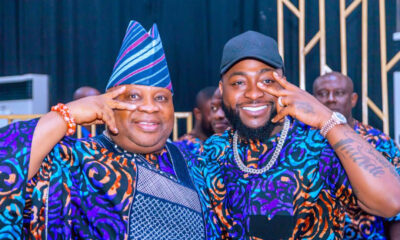
Palace Chaos: Police Say Cultists Targeted Davido, Not Gov Adeleke, in Deadly Osogbo Shooting
-
 metro3 days ago
PFIPC Scandal: Tinubu Orders Forensic Probe as ICPC Uncovers Multiple Fake Agencies
-

 News3 days ago
Tinubu orders transfer of EFCC cash recoveries, N242bn unclaimed dividends to NELFUND
-
 Politics3 days ago
Atiku Dismisses Obasanjo’s Political Clout, Says Ex-President Has ‘No Electoral Value’
-

 metro2 days ago
History in Makkah: Nigerian Teen Wins Prestigious Qur’anic Contest, Breaks 46-Year Gender Barrier
-
 metro2 days ago
Former MFM Pastor Femi Jimoh Dies After Years of Detention, Legal Dispute
-

 News2 days ago
Delta Governor Reveals ₦503,000 Monthly Salary, Says Permanent Secretaries Earn ₦900,000
-
 Politics2 days ago
PBAT Door-to-Door Movement Holds Kano Rally, Strengthens APC Ties Ahead of 2027