

Business
NNPC begins export of new crude oil grade to Spain
NNPC begins export of new crude oil grade to Spain
The Nigerian National Petroleum Company Ltd says it has commenced the exportation of a new grade of crude oil into the international market.
The NNPC Ltd aannounced this on Monday and gave the new grade as the Utapate crude oil blend.
Located offshore Akwa Ibom State, Nigeria, Utapate’s current crude oil production is at 28,000 barrels per day.
It is said to have the potential to increase its production to 50,000 barrels per day. Also, the sulphur content of the new crude is put at 0.0655 per cent
Similar to the Nembe crude oil grade, the Utapate crude oil blend is said to have a low sulphur content and low carbon footprint due to flare gas elimination, fitting perfectly into the required spec of major buyers in Europe.
The crude oil grade From Oil Mining Lease (OML) 13, fully operated by NEPL, NNPC Ltd’s upstream subsidiary, commenced operations in July 2024, as its first cargo headed for Spain.
The NNPC said Spanish oil giant, Repsol, won the tender for the initial cargo of 950,000 barrels of the new crude blend, which is comparable to the much sought after Amenam crude.
Gulf Transport and Trading, another leading crude oil dealer, has also secured the cargoes’ tenders for August and September 2024.
READ ALSO:
- Protesters mount armoured tank of security operatives in Kaduna (VIDEO)
- ‘Yemi Osinbajo’ RCCG school responds to viral video about ex-staff member pension
- Protest: Kano judiciary hunting for gun, other exhibits stolen from court
During the Argus European Crude Conference in London last year, NNPC Ltd announced the launch of Nembe crude oil, produced by the NNPC/Aiteo operated Oil Mining Lease (OML) 29 Joint Venture (JV).
This achievement signals the commitment of the NNPC Ltd to increase Nigeria’s crude oil production and grow reserves through the development of new assets.
The addition of the new crude oil grade in addition to others at the market comes at a time the country is making efforts to grow its oil production to two million barrels per day in a bid to shore up revenue.
The Chief Executive of the Nigerian Upstream Petroleum Regulatory Commission, Gbenga Komolafe, recently disclosed that the country’s average daily production stood at 1.61 million barrels per day as of July 23.
Komolafe revealed that at the House of Representatives Special Committee’s two-day public/investigative hearing on oil theft/losses.
“As of July 23, 2024, Nigeria’s average daily production stands at 1.61mbpd,” he disclosed.
This is coming barely two weeks after the commission announced that the average daily oil production for June was 1.25mbpd.
NNPC begins export of new crude oil grade to Spain











Business
Nigerians Pay N44 Extra Per Litre as Retailers Defy Falling Depot Prices – Full Report

Auto
Abuja Roars to Life as Jetour X50 Headlines Three-Day Motoring Experience

Abuja Roars to Life as Jetour X50 Headlines Three-Day Motoring Experience
Abuja is gearing up for a major motoring spectacle as Jetour Nigeria brings its fast-growing brand experience to the Federal Capital Territory, with the stylish Jetour X50 set to take centre stage in a three-day showcase of performance, technology and automotive innovation.
Scheduled for September 22 to 24, 2026, the Jetour Experience Abuja will move beyond the conventional vehicle exhibition, giving motorists and prospective buyers the opportunity to test-drive the X50, interact with automotive specialists and experience a range of entertainment and interactive activities.
The Abuja activation follows the strong reception recorded during Jetour Nigeria’s recent Lagos experience and forms part of the automaker’s strategy to deepen customer engagement while expanding its footprint across Nigeria.
Backed by an expanding authorised dealer network comprising Elizade Nigeria Limited, Mandilas Autos, Germaine Auto Centre, Kojo Motors, R.T. Briscoe, Tab Autos and New Era AutoVehicle Services, Jetour is also strengthening access to vehicle sales, after-sales support, genuine spare parts and certified technical services nationwide.
At the heart of the Abuja experience will be the Jetour X50, a compact SUV designed to combine contemporary styling, performance and a technology-rich driving environment.
Powered by a 1.5-litre turbocharged engine paired with a dual-clutch transmission, the X50 has positioned itself as a strong contender in Nigeria’s competitive compact SUV segment.
Jetour has equipped the model with a range of premium features, including a 360-degree camera, Blind Spot Detection, 10.5-inch infotainment system with Apple CarPlay and Android Auto, wireless charging and leather upholstery.
The combination of technology, comfort and performance is part of Jetour’s strategy of offering premium motoring features at competitive price points.
The Abuja event also highlights Jetour’s aggressive expansion strategy in Nigeria, following the brand’s recognition with industry accolades including Fastest Growing Auto Brand and Auto Brand of the Year.
With its expanding dealer network providing nationwide sales and after-sales support, Jetour is seeking to deepen customer engagement while making its vehicles and ownership services more accessible to motorists across the country.
As Abuja prepares to welcome the Jetour Experience, the three-day activation is expected to provide motorists with an opportunity to see, feel and drive the X50 while experiencing first-hand what is driving the brand’s growing appeal in Nigeria.
Business
Dangote Refinery Sets ₦525 Per Share for Landmark IPO
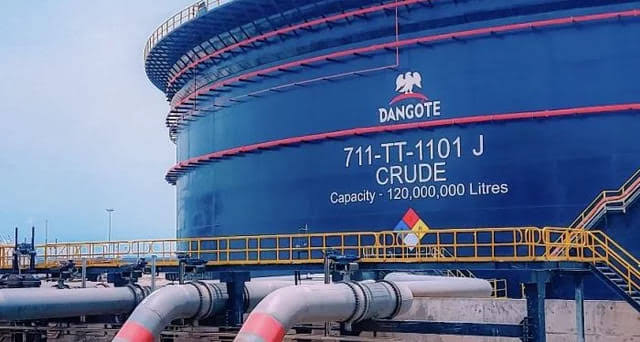
For ₦5,250, Nigerians could soon own a piece of the refinery that has reshaped the country’s fuel market.
-

 Politics3 days ago
Peter Obi, Others Challenging Tinubu Cannot Transform Nigeria — Datti Baba-Ahmed
-
 Auto2 days ago
Kaduna to Lead Govt Patronage of Local Vehicles as Sani Unveils Peugeot 5008
-

 metro1 day ago
El-Rufai Demands ₦10bn from Defence Minister Over Southern Kaduna Killings Allegation
-

 metro2 days ago
Socialite Igho ‘Tiny’ Ubiribo Dies After Penis Enlargement Surgery
-

 metro1 day ago
Catholic priest leaves priesthood, weds Kenyan woman after 12 years in Kenya
-

 metro2 days ago
Three Women Killed, 10 Injured in Multiple Crash on Lagos-Ibadan Expressway Bridge
-

 metro1 day ago
No US Case Against Tinubu, Family Enjoy Unimpeded Transit for UNGA — Ambassador Ibrahim
-

 Politics3 days ago
Demystifying the Political Monolith: Wike’s ‘See Finish’ Doctrine and Nigeria’s New Political Calculus