Nigerian accused of rape gets strange sentence of life jail with 76-year imprisonment in US
I was sentenced to three life imprisonment and 76 years jail term. The meaning is that if I come back to life after dying in this jail, I will again be kept in jail till I must have died three times. I will then serve another 76 years before I would be set from here in Dooly State Prison, Georgia, United States.”
Those were the words of Adedoja Olaniyi Bah, a native of Ilesa, Osun State, who spoke with our correspondent through his sister, Toyin Fanu, from his base in Georgia, United States of America where he is currently serving three life sentences and an additional 76 years in prison for allegedly raping a teenage girl.
But he insists that he is as clean as a hound’s tooth as the rape allegation was merely a frame-up for reasons that remained yet a mystery.
Olaniyi said: “The evidence brought by the police was contradictory. The DNA test results of the perpetrator of the crime did not match mine according to the police expert.
“Yet I was jailed as the court looked away from those inconsistent facts put forward against me because of racism.
“I can still win this case, but the American justice system is worse than Nigeria’s.
“I can make Nigeria proud if I can hire an independent lawyer to represent me at the Appeal Court.”
According to The Nation findings, Olaniyi’s journey out of the shores of Nigeria began in 2007 when he left for Tokyo, Japan in search of greener pastures. Upon his arrival in the Asian country, he started running a dancing club and recorded landmark success.
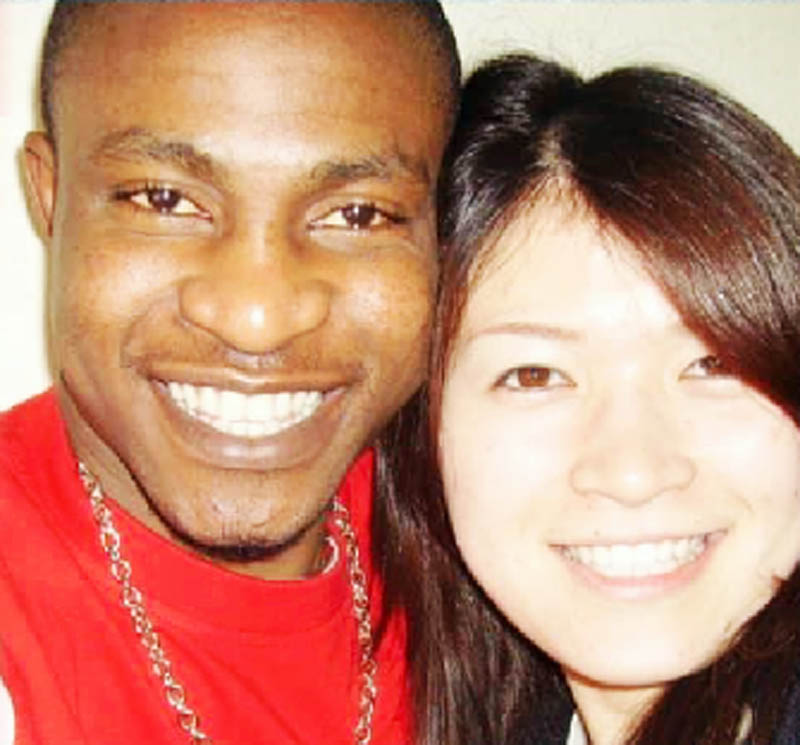
This was when he met his Japanese wife and their union was blessed with two kids. In Tokyo, he had also met a Nigerian named Atunnise Olutoye and they became friends until the latter departed Japan for the United States of America in 2009 and their interaction became limited to occasional telephone conversation.
Vacation results in Olaniyi’s imprisonment
On April 20, 2017, Olaniyi embarked on a vacation to New York, United States of America. Upon his arrival in God’s Own Country, he contacted Olutoye who had relocated from Japan to the US some years earlier. Olutoye then invited him to Georgia for reunification after they had stayed apart for eight years.
Olaniyi gladly honoured the invitation and hopped on the plane to Georgia with Olutoye’s wife picking him up at the airport and driving him to their house where a room was given him to stay in. Olutoye, a car merchant, then asked Olaniyi to venture into the business of buying and selling second-hand cars. Subsequently, Olaniyi purchased five cars with guidance from his friend.
However, in June the same year, Olutoye told Olaniyi that his mother would be coming to America on a visit and would be staying in the room occupied by Olaniyi. The development forced Olaniyi to rent an apartment at Sweetwater Creek, Austell, because he had not finished his car transaction.
On June 3, 2017, Olaniyi had an accident with one of the cars and sustained minor injuries. He informed Olutoye about it and the latter mooted an idea that they could make money with the accident from what insurance would pay for medicals and other bills. He then urged Olaniyi to claim that he (Olutoye) was also involved in the accident, and both of them started receiving treatment at AICA Ortho and Spine, a facility situated on Thornton Road.
It was learnt that Olutoye only used the opportunity of the accident to access medical attention for some issues he had had in his neck and back but did not have enough money to address.
How jealousy grew against Olaniyi
During the period, Olaniyi bought another car through through a registered and accredited dealer; an auction route Olutoye did not know about. The development was said to have infuriated Olutoye who became jealous and allegedly complained that “because my friend has money he is now buying from where I don’t know.”
It was gathered that they were both receiving treatments for four week after which Olaniyi was tired as a result of failure of the Insurance company to pay them any money over the accident. He then informed his friends that he would be going back to Tokyo as his return ticket date was near.
But Olutoye was infuriated by his decision to return to Tokyo because it would abruptly end the medical attention they were receiving together. He implored his vacation friend to tarry for a while so as to end the medical check-ups. Olaniyi rescheduled his return flight to July 30, 2017.
Arrested for alleged rape
However, before his departure date of July 30, 2017, an ill-fatebefell Olaniyi. As he was returning home from shopping, the police on routine patrol stopped him in his car at the Kruger Parking lot and searched the car without finding anything suspicious.
Olaniyi said: “They asked me to follow them to the Douglas County Sheriff Department for further questioning about the vehicle. I humbly complied and drove myself to the Douglas County Sheriff’s Department, even though there was no warrant or any charges preferred against me, except the questions about my vehicle acquisitions. On my way to the department, I informed Olutoye about what was going on.
“Upon arrival at the Sheriff’s station, I was asked how I bought the cars and made payments. I provided the dealership contact address and provided evidence of payment received from my family bank account in Tokyo and also evidence of payment from my Bank of America account to the dealership bank account.
“After no fault was found with the car purchase process, the police shifted their line of questioning and told me that a crime had occurred at the complex where I lived, saying that the closest surveillance footage around the area showed me. The officer asked me to share any information or individuals I might have seen, as that could assist in their investigation.
“I explained that I had moved to the complex less than a month ago and was not familiar with the residents or their faces. Despite my attempts to clarify this, the officer continued to press me for information. Eventually, I requested to leave but the officer threatened to charge me with rape and other sexual offences if I did not help them in the investigation.”
He noted that on the night of his arrest, samples were taken from him for a deoxyribonucleic acid (DNA) test. It was learnt that his hair, pubic hair, saliva and fingernails were scraped for the test to ensure it match the sample found on the girl they raped.
Ordeal with Douglas police
Olaniyi continued: “I was arrested and detained without any probable cause that I committed a crime. It took a week before my friend, Olutoye, appeared at the station, and that was the first and the last time he ever visited.
“After months in detention, I hired an attorney to represent me. In one of my attorney client visitations, as I was emphasising my good character, telling the attorney that this was my first time in Atlanta Georgia and I just moved into the complex, I requested that he reached out to my friend Olutoye.
“However, upon checking his records, the attorney shook his head in disappointment. Then he told me that ‘unfortunately, the Olutoye you considered your friend, has agreed to testify for the State against you, so there is no way I can contact him.’
“He then asked me, ‘Do you have anyone else who can vouch for your character?’ I replied with a no, as Olutoye was the only person I knew in Atlanta, Georgia.
“The truth is Olutoye had thousands of my money and my SUVs are in his possession, which he could have sold to secure legal services for me but he chose not to show up. I was unaware that Olutoye had become a witness for the state, and I couldn’t understand why he did so at the time.”
According to T Mobile report of Olaniyi obtained by The Nation, the Nigerian father of two was in front of AICA Ortho and Spine facility located on Thornton Road as he was on a call for five minutes 43 seconds between 6:55 pm and 7:01 pm on the day he was alleged to have raped the white teenage girl.
A 911 record obtained by Adam Kiker, a policeman who was around the area when the rape incident occurred at the park of Sweetwater creek, Austell, showed that the emergency call by Englett around 7:14 pm notified the police that “the suspect is a black male wearing a red shirt and khaki shorts.”
Exhibit F claimed that the vehicle driven by Olaniyi was allegedly used to hide the clothes which have not been found till now.
In a supporting document by Kiker, a report of surveillance cameras at the scene of the crime, he noted in the document that “the maintenance Manager, Joseph Bates, allowed me to go into the leasing office and watch surveillance video footage.
“The video showed a black male wearing a red shirt with gray sleeves and tan khaki shorts walk from the 100 building to the south side of the leasing office.”
Also, the 14-year-old victim of the rape (name withheld), in a transcripted document, corroborated the 911 report and surveillance cameras report of the cloth worn by the perpetrator of the offence.
She noted that the suspect was not armed while raping her as he only used his “strong arms” to fondle her private part before she was penetrated.
The sister of the victim, Angiethomas, corroborated the testimony of her sister that the suspect was a black male wearing a red shirt and khaki shorts.
Report of another witness named Joshua Miller noted that he saw the video surveillance and the suspect was a dark male who wore a red shirt and khaki shorts.
However, a video footage of Olaniyi presented in court showed that he wore a hoody of purple colour coated with white and red strips. The hoody was long-sleeved. He also wore a multi-coloured trousers like army camouflage.
Olaniyi also said the exact video on which his prosecution was based was never produced in court till he was sentenced to life imprisonment. Similarly, the result of the DNA test conducted by the police to prosecution expert, MS Hinkle on both Olaniyi and the victim do not match each other. She said there was no meaningful match between the virginal swap of the victim and that of Olaniyi. Hinkle noted that it is 50 per cent probable and she also said “the DNA result is inconclusive.”
The DNA expert of Olaniyi named Dr Acton disagreed with the police expert noting that there should not be anything called ‘inconclusive’ with the explanation she gave about the result.
Countering the police expert before the court, he said: “I have the defendant’s profile here and I have an evidence profile here. You can go ahead and conduct statistics on that profile.
“But if they’re not the same, that means you don’t have the evidence to do anything with it.
“In essence, if you have these alleles missing that the defendant possesses, that’s the basis for exclusion. Meaningful match statistics were not obtained.
“Well, your first step in the process is not statistics. Your first step is to have profiles from two different samples that are consistent. Then you can apply statistics.”
Police witness, Jay Hayes noted that Olaniyi committed the offence between 6:51 pm and 7:03 pm, a claim countered by Olaniyi’s call history and GPS that he was at the hospital at that particular time.
During the judgment, the judge disqualified the DNA expert employed by Olaniyi on the basis that he did not have a recommended certificate as stated by the Federal Bureau of Investigation (FBI).
This forced the expert and Olaniyi to go for Daubert Hearing which revealed that the DNA samples on the victim and Olaniyi do not match each other.
However, Olutayo testified against Olaniyi that he was not sure of his character because they had parted ways in Tokyo for more than seven years. Subsequently, the court sentenced Olaniyi to three life imprisonments and another 76 years jail term.
Olaniyi told the reporter that the case is presently at the Appeal Court but the government lawyer that is currently representing him is not tendering documents or puncturing the loopholes in the prosecution by the police.
He lamented that he had spent more than $150,000 to hire lawyers and experts in the case; a development that has left him bankrupt, hence the government that wrongfully jailed him is now the one providing a lawyer to defend him.
Olaniyi pleaded with the Nigerian government and Governor Ademola Adeleke of Osun State in his case for fair hearing in the case.
His words: “I want to appeal to the Federal Government through the Ministry of Foreign Affairs, the Minister of Justice Lateef Fagbemi, SAN, the Nigerians in Diaspora Commission and other well-meaning Nigerians to come to my aid for a fair hearing.
“This is a pure case of racism aided by my jealous friend. The American government system of prosecution and court judgment was faulty.
“My situation is a result of jealousy and racism. But it won’t last for long. I will make Nigeria proud. Shame on America’s justice system. It is worse than what we have in Nigeria.”
He added that all the cars he bought were still in his friend’s possession with the thousands of dollars in his hand.
Distraught mother pleads with Nigerian government
Olaniyi’s mother, Madam Victoria Adedoja, said her son’s case was marred by lack of proper legal representation.
The distraught mother pleaded with Nigerians to help get her son out of prison by ensuring that he is given fair hearing in the case.
While seeking help for her son’s appeal, she stated that she was not aware of her son’s predicament until she received a phone call from Olutoye, her son’s friend that invited him to the US, as well as his mother and one of Toye’s prophets, informing her about the arrest of her son and a demand for the sum of $20,000 to get her son out of the police station, which she couldn’t raise.
She said: “I was at the MFM Camp in Lagos when I got a phone call from a man who introduced himself as Olutoye Atunnise, breaking the news of my son being in detention in Atlanta.
“He spoke in a rude manner, asking me to look for money to bail him out from the police station because he committed a grievous offence. He said I should send the money to his account.
“I told him I did not have that kind of money because I am a retired teacher and a widow. But he said E lo ta nkan toba ni (go and sell his property).
“In panic, I demanded his account number in case we could raise any amount. He dropped a GTB account number 0174564903, and said if you get the money, send it to my account.”
“Racism and my son’s friend’s envy and greed contributed to his plight,” she added.
Olutoye responds to allegations
When Olutoye who is now an American citizen was contacted, he debunked the allegation that he sold Olaniyi’s car, saying: “Olaniyi was in prison when he sold all the cars he had with me, I dare him to provide the proof that I sold his car.
“It is unfortunate that he is crying that he is innocent. He should embrace his fate and start seeking forgiveness from God.
“He cannot lie that he did not rape the girl. In Fact, he chased the girl from the liaison office to a garden where he had carnal knowledge of the girl from the back.”
He continued: “There was a time Olaniyi was threatening me. What kind of audacity is that; to threaten me that he met in America? I have both Japan and America passports.
“I was shown the CCTV footage of the rape in court. He raped the girl. Olaniyi also did similar things in Tokyo. Even during his prosecution, the American government contacted Tokyo to aid the prosecution.
“Olaniyi is bisexual. He even sold his kidney for the love of money. I dare him to take a picture of his body naked. I don’t care anymore about him.
“Before this incident, I admonished him that my pastor saw a vision about him getting into trouble and that he should fast, but he never listened.
“I tried my best for him. I never testified against him in court. I was only whether I knew him and I told the court that I do know him.”
“The court was angry with him because he did not accept his fault. That is why he was sentenced to three life imprisonments and another 76 years.”
Nigerian accused of rape gets strange sentence of life jail with 76-year imprisonment in US
UNILORIN VC to graduates: Let this investment count
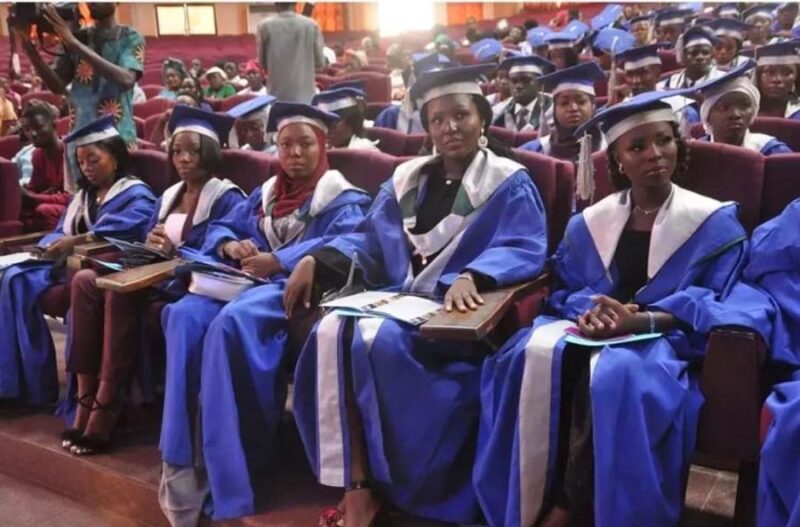
ILORIN — The Vice-Chancellor of the University of Ilorin (UNILORIN), Professor Wahab Olasupo Egbewole, SAN, has urged graduating students to justify the sacrifices made by their parents, guardians and other stakeholders by using their education, knowledge and skills to solve societal problems and contribute meaningfully to national development.
Egbewole gave the charge in his address titled “Let This Investment Count!” at the university’s 41st Convocation Ceremony, where he congratulated the graduands and challenged them to translate the opportunities provided by university education into tangible benefits for themselves and society.
The Vice-Chancellor’s message placed emphasis on the responsibilities that come with obtaining a university degree, particularly the need for graduates to demonstrate that the time, money, energy and other resources invested in their education have produced meaningful results.
He called on the graduands to appreciate the contributions of their parents and guardians, whose sacrifices had helped them reach the milestone, while also recognising the efforts of the university’s academic and non-academic staff and other stakeholders in their educational journey.
According to the message of the address, the significance of graduation goes beyond receiving certificates and celebrating academic achievements. It also marks the beginning of a new phase in which graduates are expected to apply their learning, demonstrate discipline and integrity, and contribute to the development of their communities.
The charge comes at a time when Nigerian graduates face concerns over unemployment, changing workplace requirements and the need to acquire practical competencies that complement conventional academic qualifications.
Egbewole’s appeal therefore highlights the importance of ensuring that university education produces individuals capable of creating opportunities, addressing real-life challenges and adding value to their workplaces and communities.
16,152 students to graduate
The 41st Convocation Ceremony is expected to see the university graduate a total of 16,152 students for the 2025/2026 academic session.
The figure comprises 11,213 students receiving first degrees and 4,939 candidates earning higher degrees and diplomas.
Among the undergraduate graduands, 365 earned First-Class honours, while 4,367 obtained Second-Class Upper Division degrees. Another 5,102 graduated with Second-Class Lower Division degrees, 1,006 earned Third-Class degrees and 30 obtained Pass degrees.
The graduating class also includes students from several professional programmes, including Medicine and Surgery, Nursing, Pharmacy, Optometry, Physiotherapy and Veterinary Medicine.
The scale of the graduating class underscores the responsibility confronting the university and other stakeholders in ensuring that graduates are adequately prepared for the demands of employment, entrepreneurship, professional practice and further learning.
For the graduands, the Vice-Chancellor’s message serves as a reminder that the value of their qualifications will increasingly be demonstrated through their conduct, competence, creativity and contributions beyond the university environment.
Beyond certificates, emphasis on practical skills
The university has also placed increasing emphasis on equipping students with practical skills to complement their academic qualifications.
One of the initiatives highlighted ahead of the convocation is the University of Ilorin’s U-INSPIRE programme, through which 8,320 participants successfully completed training designed to strengthen their employability, entrepreneurial capacity and readiness for the demands of the modern workplace.
The programme was developed in collaboration with industry partners to help students acquire relevant competencies beyond classroom instruction.
At the graduation ceremony for the programme’s second cohort, Egbewole urged participants to move beyond academic certificates, develop practical capabilities and turn innovative ideas into sustainable businesses.
The initiative reflects a broader recognition that graduates need more than theoretical knowledge to thrive in an increasingly competitive economy.
Practical experience, problem-solving ability, creativity and the capacity to identify and respond to emerging opportunities are becoming important complements to formal qualifications.
The university’s efforts in this area provide additional context for the Vice-Chancellor’s appeal to graduands to make their educational investment count.
Parents, guardians and stakeholders share in the investment
The address also draws attention to the role played by parents, guardians and other supporters in the education of university students.
For many Nigerian families, sponsoring a child through university involves considerable financial and personal sacrifices, including the payment of tuition-related charges, accommodation, feeding, learning materials, transportation and other expenses.
Beyond financial contributions, families often provide emotional support, encouragement and guidance throughout their children’s academic journeys.
The successful completion of a degree is therefore not only a personal achievement for the graduand but also a milestone for the families and communities that supported the process.
The Vice-Chancellor’s call places a responsibility on graduates to honour those sacrifices by making responsible decisions, upholding ethical standards and applying their knowledge in ways that benefit others.
It also reinforces the need for graduates to recognise education as an opportunity to develop their potential and contribute to society, rather than merely as a means of obtaining certificates.
UNILORIN highlights institutional progress
The convocation also provides an opportunity for the university to showcase its academic and institutional achievements during the 2025/2026 session.
Ahead of the ceremony, Egbewole highlighted several developments, including the accreditation of 11 academic programmes, the expansion of campus transportation and the strengthening of research, innovation and institutional partnerships.
The university also disclosed that it received a ₦25 million award from the Joint Admissions and Matriculation Board in recognition of its compliance with admission regulations.
In addition, the institution announced the introduction of 12 compressed natural gas-powered buses and 20 electric tricycles to improve transportation within the campus.
The university has continued to pursue its Vision 1:10:500 aspiration, which seeks to make it Nigeria’s leading university, place it among Africa’s top 10 institutions and secure a position among the world’s top 500 universities.
The vision reflects the institution’s stated ambition to strengthen academic standards, research output, innovation, partnerships and its international standing.
Egbewole has also stressed the importance of continuity, responsible management of resources and collective commitment to sustaining institutional progress.
A new responsibility for graduands
As the graduands prepare to leave the university, the message of “Let This Investment Count!” places their future contributions at the centre of the convocation celebration.
Their degrees represent years of learning and assessment, but they also carry expectations from families, employers, communities and the wider society.
For those entering the labour market, the challenge will be to demonstrate the knowledge and skills acquired through their studies. For aspiring entrepreneurs, it will be to identify opportunities, develop viable ideas and create value. Others will pursue postgraduate education, professional development or careers in public service.
Whatever paths they choose, the central challenge is to make their education relevant to the needs of society.
The university’s 41st Convocation Ceremony, which runs from October 16 to 25, 2026, celebrates the achievements of its graduating students while providing an opportunity to reflect on the responsibilities that accompany higher education.
For the graduands, the message is clear: the completion of a degree is not the end of their journey but the beginning of a new responsibility to themselves, their families and society.
The ultimate measure of the investment in their education will be what they do with the knowledge, discipline and opportunities they have acquired.
UNILORIN VC to graduates: Let this investment count
Mexico Clears Reno Omokri as Nigeria’s Ambassador After Eight-Month Wait
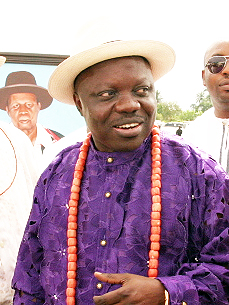
The Mexican government has granted diplomatic approval for Reno Omokri’s appointment as Nigeria’s ambassador to Mexico, ending an eight-month wait for the confirmation of his posting by the host country.
Omokri disclosed this in a post on his X account on Tuesday, saying José Manuel Briseño Flores, chargé d’affaires of the Embassy of Mexico in Abuja, had delivered the diplomatic approval, known as agrément, to Babagana Wakil, Director of Protocol at Nigeria’s Ministry of Foreign Affairs.
The approval covers Omokri’s appointment as Ambassador Extraordinary and Plenipotentiary to Mexico, with concurrent accreditation to Guatemala, Honduras and Nicaragua.
“ To God be the glory, the Chargé d’affaires of the Embassy of the United Mexican States in Abuja, Mr José Manuel Briseño Flores, today in Abuja delivered the agrément from the Government of the United Mexican States accepting me,” Omokri said.
The development clears a major hurdle in the process of deploying the former presidential aide and political commentator to his diplomatic assignment, following months of uncertainty over the status of his appointment.
President Bola Tinubu had in March approved the posting of 65 ambassador-designates and high commissioners to various countries as part of efforts to strengthen Nigeria’s diplomatic representation abroad.
Omokri was among those named for ambassadorial postings, with Mexico designated as his principal country of assignment.
However, his deployment could not be concluded immediately because Mexico had yet to formally accept his nomination, a necessary step in the diplomatic appointment process.
Under established diplomatic practice, a government seeking to appoint an ambassador must obtain the receiving country’s agrément before the nominee can be formally deployed. The procedure allows the host country to indicate its acceptance of the proposed envoy.
In August, the Ministry of Foreign Affairs disclosed that Mexico and Japan were among the countries that had yet to communicate formal acceptance of two outstanding ambassadorial appointments.
The ministry said it was engaging the relevant authorities in the affected countries and expressed confidence that the outstanding approvals would be secured in due course.
Mexico’s decision now resolves the uncertainty surrounding Omokri’s posting, although the completion of any remaining formalities and the commencement of his diplomatic duties may still depend on the applicable procedures.
Omokri, a former aide to ex-President Goodluck Jonathan, is known for his political commentary and frequent interventions in Nigeria’s public discourse. His appointment forms part of the Tinubu administration’s wider effort to fill key diplomatic positions and strengthen the country’s engagement with foreign governments.
With the approval secured, attention will now turn to the completion of the remaining diplomatic formalities and his eventual assumption of duty in Mexico.
Delta Mourns as Former Governor Uduaghan Dies After Brief Illness
A former Governor of Delta State, Dr Emmanuel Eweta Uduaghan, has died at the age of 71 after a brief illness, his family announced on Monday.
Uduaghan, who governed Delta State for eight years between 2007 and 2015, died on the morning of October 19, 2026, according to a statement issued by the family and signed by Toju Andre Uduaghan.
The family described his death as a devastating loss, saying his life and years of public service touched many people across Delta State and Nigeria.
The statement, titled “Announcement of the Passing of His Excellency, Dr Chief Emmanuel Eweta Uduaghan,” read in part, “It is with hearts weighed down by immeasurable grief and profound sorrow that we announce the passing to glory of our beloved Father, Brother, Uncle, and Patriarch.”
The family said Uduaghan was a source of strength and a respected elder whose contributions to public service and family life would remain indelible.
“He served as Commissioner for Health from 1999 to 2003, Secretary to the Delta State Government from 2003 to 2007, and Governor of Delta State from 2007 to 2015,” the statement said.
It added that throughout his years in public service, the former governor demonstrated a commitment to the human and infrastructural development of the state.
The family described his death as a profound loss not only to his relatives but also to the people of Delta State and the country at large.
While expressing gratitude to God for his life and legacy, the family prayed for the repose of his soul and for divine comfort for those mourning his death.
“We pray that Almighty God, in His infinite mercy, will grant his soul eternal rest and comfort our family, friends, associates, former colleagues, and all who mourn this painful loss,” the statement added.
The family said Uduaghan’s memory would remain alive through the lives he touched and the legacy he left behind.
“Rest well, our beloved Father, Brother, and Uncle. Your memory will forever remain in our hearts, and your legacy will endure in the lives of those you touched,” it said.
The statement concluded with a prayer for the peaceful repose of his soul.