

News
Clark calls for Lai Mohammed’s arrest, prosecution for spreading fake news against Obi

Clark calls for Lai Mohammed’s arrest, prosecution for spreading fake news against Obi
Elder statesman and leader of the Pan Niger Delta Forum (PANDEF), Edwin Clark, has called for arrest and prosecution of Minister of information and Culture, Lai Mohammed, for spreading what he called fake news against the presidential candidate of the Labour Party (LP), Peter Obi.
Clark, former federal commissioner for information and leader of Southern and Middle Belt Leaders Forum (SMBLF), described the minister’s job as image maker of government for the past eight years as disappointing claiming that rather than uniting the country as his job implies, by creating an atmosphere for Nigerians to live together as brothers and sisters of the Federal Republic of Nigeria, has instead, caused divisions in the country. The minister had on April 5 in far away Washington DC, said both Obi and his running mate, Datti Baba-Ahmed risk being prosecuted for treason over some of their utterances on the February 25 presidential election.
But Clark said the minister did not base his accusations on any report or information given by any state agency, but on mere propaganda targeted at destroying the reputation of an innocent citizen.
Baba-Ahmed had in a recent interview with a television station asked the Chief Justice of Nigeria not to swear in the President-Elect on May 29, adding that President Muhammadu Buhari will be ending democracy should he preside over the inauguration.
READ ALSO:
- 6 arrested as vigilante group raid kidnappers’ den in Nasarawa
- One cop killed as gunmen open fire on police patrol in Ikorodu
- Angry mob stones driver to death for killing two persons in Ondo
The elder statesman condemned minister’s treating the media with levity, saying under his watch, the Nigerian Broadcasting Commission (NBC) is no longer independent.
He wondered why the Minister of Information will take more than usual interest in not only scandalising and lying against Peter Obi, but using his privileged position to circulate same to the country and the entire world.
Clark called on the president to call the nation’s spokesmen to order, noting that the nation is already too tensed and those whose responsibility it is to douse the tension should not be the ones stoking the embers of fire that will flame up the country.
“I had on several occasions condemned this conduct of his attempting to suppress, gag and intimidate the press. He has used the Nigerian Broadcasting Commission (NBC), as an agent of his Ministry. The NBC is no longer the independent organisation which it used to be, treating the press as a noble profession, made up of noble practitioners. A case in point is the N5 million fine slammed on the Channels Television without even the rudiments of natural justice, in this case fair hearing, which is a basic procedure of justice to ensure fairness. Rather, slamming media houses with fines without hearing from the media houses, is the trial that has now become a constant weapon of intimidation and harassment of the press.
The statement read in part:
“Lai Mohammed did not base his information on any credible intelligence report from the state agencies, but on propaganda and falsity. Therefore, I am of the opinion that he should be charged for spreading an unhealthy information and fake news against an innocent Nigerian who is very prominent and has proven his worth in the country. Lai Mohammed used the exalted position of the office of the nation’s Ministry of Information to commit this perfidy.
READ ALSO:
- Rivers police probe officers assaulting man in viral video
- ‘Orji Kalu still has EFCC case in court,’ Ohuabunwa opposes Senate President’s ambition
- BREAKING: Suspected ‘Yahoo boy’ crushes 3 to death in Ondo
“Mr. Peter Obi, the Presidential candidate of the Labour Party in the just concluded presidential elections, has never taken the laws into his hands. He is going about his case, in the constitutionally provided way. He was the first to seek redress in court over what he felt was an unfair and unjust manner of conducting elections. It is his constitutional right to do so. Muhammadu Buhari, in the number of times he contested and failed elections, did same. We all know that at no time from the beginning of the current political season did his Excellency Peter Obi the Presidential candidate of the Labour Party make any statement that in whatever manner constituted a breach or threat to the peace and security of this country.
“The question that Lai Mohammed needs to answer is to tell Nigerians on what platform, at what time and in what manner did Peter Obi make the Supposed treasonable or seditious remarks?
“Also, Lai Mohammed’s conduct is even more damaging to theMahammed Buhari’s government.it will be recalled that President Muhammadu Buhari has stated time and again, that he will handover to a president who will emerge victorious in a free, fair and credible election.It is more disturbing and surprising when one realises that Lai Mohammed is a lawyer and ought to be in a position to give proper professional advice to the Government which he serves on, what the situation of the law is.
“I, for one, who found myself as Federal Commissioner for Information a position which he holds today after nearly 50 years. My instincts and training as a lawyer were always brought to bear in the overall interest of the country and the direct duties which I perform. This is the least of standard which we expect him to uphold in the interest of our noble profession.
“As Lai Mohammed knows well, most Nigerians are today very keen observers of what is going on in the country. We have also continued to watch and followed closely actions, inactions and utterances by the key political actors and their close associates. It is therefore totally unacceptable that a minister in charge of a sensitive government department as dissemination of Information should constitute himself to become the purveyor of false information, innuendos and even fake news.
READ ALSO:
- RCCG pastor calls Peter Obi ‘president’ during introduction + Video
- 22-yr old boy set ablaze for allegedly stealing android phone in Calabar
- Obidients are mentally weak – Keyamo
- Police arrest another Kuje prison escapee in Nasarawa
“It is clear therefore that the Minister of Information has constituted himself to become the mastermind and disseminator of fake news. This leaves us with no option than to call on the Attorney General of the nation to undertake thorough investigation of the activities of the Minister and charge him to court.
“Lai Mohammed as Information Minister and chief propagandist of President Muhammadu Buhari’s Government was cut to size and became very uncomfortable for the growing popularity of Mr. Peter Obi’s appeal to the exuberant Nigeria youths who practically demonstrated their support for Mr. Peter Obi and the obedient that came in droves to take back their country.
“The impression that gained ground at the time was that Obi was only popular on social media and not on ground, but Obi’s performance within the short time he entered the race made him the man of the moment in the presidential election. Lai Mohammed therefore in his usual characteristics carried fake news within and outside Nigeria to discredit and tarnish the reputation of Mr. Peter Obi.
“It is criminal, unpatriotic and wicked for anyone to draw the name of Mr. Peter Obi who fully participated in the 2023 Presidential Election and who has gone to court to express his dissatisfaction with the outcome of the presidential election and his popularity which has spread to all part of the country as a wildfire has no doubt caused a great embarrassment to the Federal Government. What is being alleged as a discovery of a plot to overthrown the Federal Government by DSS is malicious and untrue.
“Finally, one cannot help but note that Lai Mohammed’s actions are targeted against perceived political opponents and enemies. I wish to strongly advise Mr. President to call his spokesmen to order. The nation is already too tensed; those whose responsibility it is to douse the tension should not be the ones stoking the embers of fire that will flame up the country.”
Clark calls for Lai Mohammed’s arrest, prosecution for spreading fake news against Obi
SUN







News
INEC Under Fire as Missing Voters’ Register Sparks 2027 Election Transparency Row
INEC Under Fire as Missing Voters’ Register Sparks 2027 Election Transparency Row
The Independent National Electoral Commission (INEC) has come under scrutiny after explaining why Nigeria’s preliminary voters’ register was not uploaded to its official website during the period scheduled for public scrutiny, despite being displayed physically at registration areas across the country.
The development has triggered concerns about transparency and compliance with the Electoral Act 2026 as preparations gather momentum for the 2027 general elections.
INEC National Commissioner and Chairman of the Information and Voter Education Committee, Mohammed Haruna, reportedly explained that the register had been made available at the wards but was not uploaded to the commission’s website.
“The voter register has been published, but in the wards. It just wasn’t published on our website,” Haruna was quoted as saying by *The PUNCH*.
The explanation followed complaints that the commission’s online portal did not provide access to the preliminary register during the period designated for voters to check their registration details and raise objections where necessary.
INEC had announced that the preliminary voters’ register would be displayed nationwide from October 9 to 15, 2026, to enable registered voters to verify their details and submit claims or objections concerning errors, omissions or questionable entries.
The controversy has raised questions about whether physical display alone satisfies the legal requirements for the exercise, particularly for voters who cannot easily travel to their registration areas.
In a separate explanation reported by *Premium Times*, Haruna said the commission was receiving and compiling claims and objections arising from the physical display of the register.
According to the report, INEC planned to prepare a clean copy for publication by December 15, 2026.
However, the proposed date has not, by itself, resolved concerns about why the preliminary register was unavailable online during the stipulated period for public scrutiny.
Section 19(1) of the Electoral Act 2026 requires INEC to designate a seven-day period for public scrutiny of the voters’ register, with copies made available at registration areas and on its official website or another website established for that purpose.
The provision is designed to give registered voters and other interested persons an opportunity to identify errors, omissions and questionable entries before the register is finalised. It also provides a framework for claims and objections concerning the inclusion or omission of names and the correction of personal details.
Section 19(5) prescribes a penalty for an INEC official who fails to display or publish the register as required. The provision specifies a fine of ₦100,000, imprisonment for up to six months, or both.
The central legal question is whether displaying the register physically without making it available online during the stipulated period satisfies the requirements of the law. The controversy has therefore placed the commission’s handling of the exercise under renewed scrutiny.
Former Vice-President Atiku Abubakar has also criticised INEC over the absence of the preliminary register from its website, calling for the list to be made accessible so that voters can verify whether their names and personal details have been properly captured.
Atiku’s position is that announcing the total number of registered voters is not sufficient to enable individuals to determine whether their names appear correctly on the register. Voters need access to the detailed list to identify omissions and other discrepancies and take appropriate steps to address them.
The controversy has added to concerns among political stakeholders and election observers about the accessibility of electoral information ahead of the 2027 polls.
It comes after INEC announced that Nigeria’s national register of voters had exceeded 103 million following the completion of the three phases of the Continuous Voter Registration exercise and subsequent biometric checks.
INEC Chairman, Professor Joash Ojo Amupitan, disclosed the figure during an engagement with media executives in Abuja in early October. The registration exercise recorded more than 10.7 million new registrants across its three phases, subject to the commission’s verification processes.
Although the aggregate figure provides an indication of the size of Nigeria’s voting population, it does not enable individual voters to confirm whether their names and personal details have been correctly captured. That is why the preliminary display is an important safeguard against errors, omissions and questionable entries.
The absence of online access has practical implications for voters who live far from their registration areas or cannot easily visit INEC offices. Making the register available online would allow them to check their details more conveniently and identify corrections that may be required.
Online publication would also provide political parties, election observers and other stakeholders with an additional means of scrutinising the register and raising concerns through the appropriate procedures.
Although INEC maintains that the preliminary register was displayed physically at registration areas, questions remain about the failure to upload it to the website during the announced period and the implications for public access and electoral transparency.
With preparations for the 2027 general elections gathering momentum, the commission faces pressure to clarify the circumstances surrounding the omission and explain how affected voters will be able to exercise their rights to scrutiny and objection.
INEC’s reported plan to publish a clean copy by December 15, 2026, is expected to attract close attention from political parties, civil society organisations and the public.
However, the planned publication does not automatically settle questions about whether the earlier exercise complied with the law. The commission’s explanation, the timing of online publication and the practical access available to voters remain central to the debate over the credibility and transparency of Nigeria’s electoral process.
INEC Under Fire as Missing Voters’ Register Sparks 2027 Election Transparency Row
News
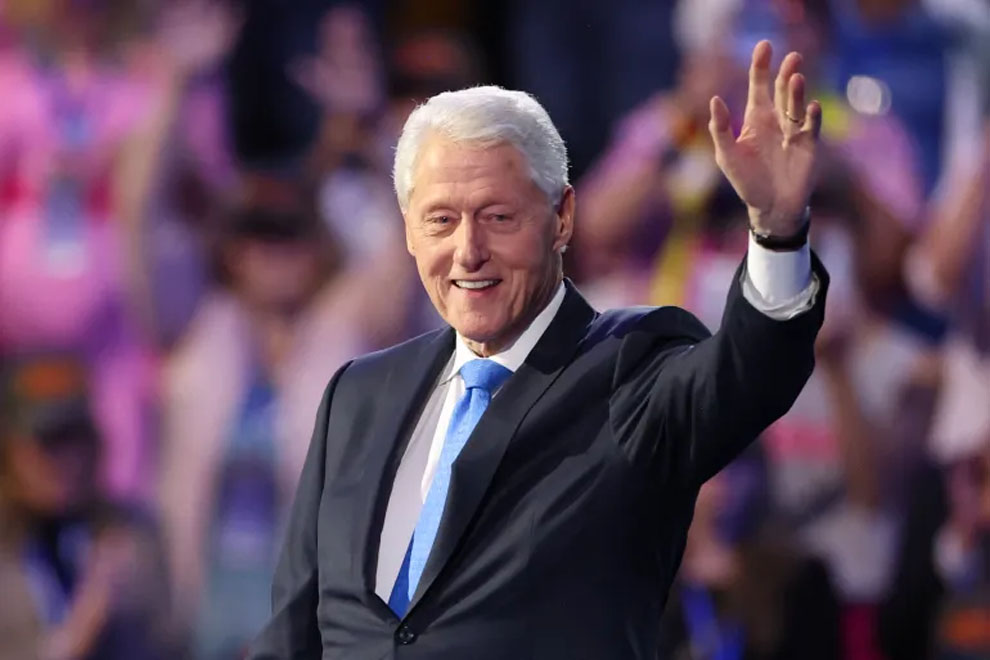
Bill Clinton condemns anti-Muslim prejudice, cites Qur’an’s message of coexistence
Bill Clinton condemns anti-Muslim prejudice, cites Qur’an’s message of coexistence
Former US president recalls daughter Chelsea’s experience reading Islamic holy book, says people should not be denigrated because of their faith
Former United States President Bill Clinton has condemned discrimination against Muslims, declaring that he is tired of people being denigrated simply because of their religious beliefs.
Clinton made the remarks on Tuesday, October 20, 2026, while speaking at an interfaith gathering at Koinonia Worship Center in Florida, where he cited a passage from the Qur’an that encourages mutual understanding among people of different backgrounds.
The former president recalled how his daughter, Chelsea Clinton, introduced him to the message after reading the Qur’an from beginning to end when she was 15 years old.
According to reports of his speech, Clinton used the experience to highlight the importance of religious tolerance, peaceful coexistence and the need to resist prejudice against people because of their faith.
“I’m tired of people denigrating Muslims for being Muslims,” Clinton said.
He argued that religious differences should not become a basis for hostility and that people should not be judged collectively on account of the actions of individuals who share their faith.
“There are bad actors in every faith because we’re all flawed human beings,” he added.
Clinton also expressed weariness with religious wars and cultural conflicts, calling attention to the need for greater understanding across religious and cultural boundaries.
READ ALSO:
- MURIC Applauds Army as Mogadishu Cantonment Mosque Reopens After Week-Long Closure
- Atiku Condemns Attack on Edo Comedian Over Refusal to Support Tinubu
- US Declares Two Nigerians Wanted Over $3.1m Medicare Fraud, Drug Offences
Recounting his daughter’s experience, Clinton said Chelsea had read the Qur’an from beginning to end at the age of 15 and subsequently drew his attention to a passage concerning humanity’s diversity and the relationship between different peoples.
The passage, identified as Qur’an 49:13, is found in Surah Al-Hujurat, which teaches that Allah created humanity from a male and a female and made people into nations and tribes so that they might know one another.
The verse further states that the most honoured in the sight of Allah is the most righteous.
Clinton paraphrased the passage as a message that people were created differently not to despise one another, but to become acquainted with and learn from one another.
His reference to the verse formed a central part of his argument against religious prejudice, emphasising that differences in faith, ethnicity and culture should encourage understanding rather than discrimination.
The Qur’anic passage is widely associated with the Islamic principle of human dignity and the recognition of diversity among peoples.
Clinton’s remarks challenged the tendency to associate the actions of individuals with entire religious communities. By observing that wrongdoing occurs among followers of different faiths, he argued against treating Muslims or members of any other religious group as collectively responsible for the misconduct of particular individuals.
His comments also drew attention to the consequences of religious and cultural divisions, which can deepen mistrust and encourage hostility between communities.
The former president’s position, as reported from the event, was that people should be assessed as individuals rather than denigrated merely because they belong to a particular religion.
The remarks have attracted attention because they place the Qur’an’s message of mutual understanding at the centre of a public discussion about anti-Muslim prejudice in the United States.
Clinton spoke at the Florida gathering against the backdrop of political controversy surrounding comments about Muslim political figures in the United States.
Reports on the event linked his remarks to the debate surrounding Abdul El-Sayed, a Muslim Democratic candidate seeking election to the United States Senate from Michigan, who has faced criticism from political opponents.
President Donald Trump has reportedly used the term “jihadist” in referring to El-Sayed, drawing attention to the use of religiously charged language in American political discourse.
Clinton’s comments, however, focused on the broader issue of denigrating Muslims because of their faith and the need to promote understanding across religious communities.
The event also featured David Jolly, the Democratic candidate for governor of Florida, whose campaign was the political context for Clinton’s appearance.
The gathering brought together religious and political issues, with the former president using the occasion to speak about inclusion, tolerance and the dangers of defining people through religious hostility.
Following the circulation of Clinton’s remarks, some social media posts attributed additional statements to him and his daughter, including claims that Chelsea described the Qur’an as a “miraculous book” and declared that all negative things said about Muslims were lies.
However, those additional statements have not been established by the available reports of Clinton’s speech.
What is supported by the reported remarks is that Clinton recalled Chelsea’s reading of the Qur’an, cited the message of Surah Al-Hujurat 49:13 and condemned the denigration of Muslims because of their religious identity.
The distinction is important because a genuine statement can be accompanied by unverified additions as it spreads across social media.
Clinton’s documented message remains a call for religious tolerance and mutual understanding, rather than evidence that every statement contained in the viral version was made by him or his daughter.
The passage Clinton cited, Qur’an 49:13, states in part that Allah made humanity into nations and tribes so that people may know one another. The verse places human diversity within a moral framework in which righteousness, rather than ethnic or social identity, determines a person’s standing before Allah.
For Muslims, the passage is a reminder that differences among peoples should not automatically become grounds for contempt or discrimination.
Clinton’s decision to invoke the verse in condemning anti-Muslim prejudice has therefore brought renewed attention to its message of recognition and coexistence.
His remarks also underscore the importance of verifying quotations attributed to public figures, particularly when religious issues and politically sensitive debates are involved.
Bill Clinton condemns anti-Muslim prejudice, cites Qur’an’s message of coexistence
Source: Al Jazeera, Siasat and other published reports on Clinton’s October 20, 2026, remarks at Koinonia Worship Center, Florida.
News
41 Days in Bandits’ Den: Five Islamic Clerics Still Held After Tinubu Re-Election Prayer Trip
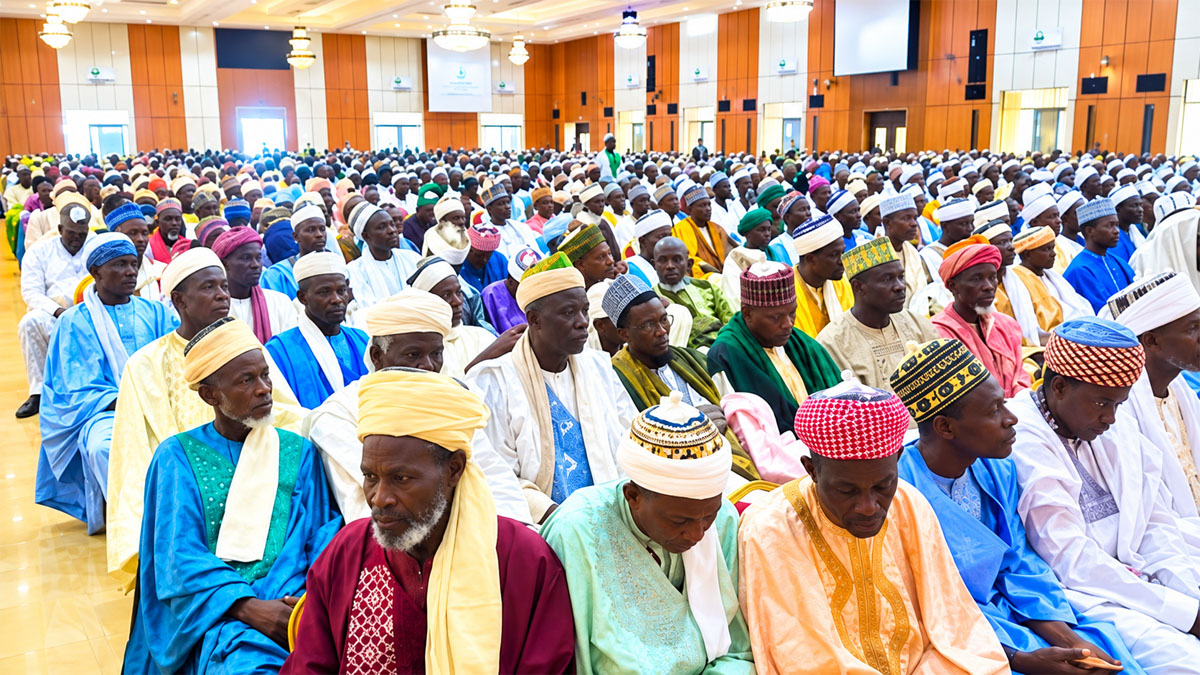
Five Islamic clerics abducted by suspected bandits in Zamfara State have remained in captivity for 41 days, renewing concerns over their safety and the persistent threat of kidnapping in Nigeria’s North-West.
The continued detention of the clerics was disclosed on Friday by conflict reporter Bakatsine, who appealed to Nigerians to continue praying for their safe return.
In an update shared on social media on October 23, 2026, Bakatsine said the Islamic scholars were still in the hands of their abductors and expressed hope that they would reunite with their families.
The clerics were reportedly abducted on September 12, 2026, while travelling towards Talata Mafara Local Government Area for a special prayer gathering organised in connection with President Bola Tinubu’s 2027 re-election bid.
The gathering was associated with Senator Abdul’aziz Abubakar Yari, a former Zamfara State governor and the Director-General of Tinubu’s re-election campaign council.
Reports identified the five clerics as Imam Yahuza, Magawata Abdullahi, Malam Shehu Dakko, Imam Bala Fagon and Na’ibi Tasi’u. They were said to have travelled from communities in Bakura and Talata Mafara local government areas to attend the gathering.
READ ALSO:
- Saudi Executions: Truth Behind Viral Kissing Claim
- MURIC petitions Oyo police over 2019 murder of Muslim cleric in Fiditi
- NEC Targets Cheaper Fares, Food Prices in 90-Day Plan to Ease Nigerians’ Hardship
However, the Nigerian Army clarified shortly after the incident that the clerics were not abducted at Yari’s residence, contrary to some initial reports. According to the military, intelligence indicated that the victims were seized while travelling from the Sububu Forest axis in Bakura towards Talata Mafara.
The Zamfara State Police Command also confirmed the incident, stating that armed men had intercepted the clerics’ vehicle along the Dakko–Damri feeder road in Bakura Local Government Area and that efforts were underway to rescue them.
There were initial reports that six Islamic clerics had been abducted, although the latest reports identifying those still in captivity named five victims.
Reports following the abduction indicated that the kidnappers demanded a ransom of ₦100 million from the victims’ families before the amount was reportedly reduced to ₦30 million during negotiations. However, there has been no confirmed public update on the progress of the negotiations or whether the demand has been met.
As of Friday, October 23, there was no confirmed information that the clerics had been released. Their current whereabouts and condition also remained unclear.
The prolonged captivity has heightened concerns over the security situation in Zamfara State, where armed groups have continued to abduct travellers and residents for ransom.
The incident has also drawn attention to the risks faced by people travelling between rural communities in the state, despite security operations aimed at curbing banditry.
Families of kidnapped victims and residents of affected communities have repeatedly called for stronger security measures and more effective rescue operations to prevent further abductions and secure the release of those still being held.
Bakatsine’s latest appeal has renewed calls for continued public concern over the fate of the five clerics as their families await news of their safe return.
41 Days in Bandits’ Den: Five Islamic Clerics Still Held After Tinubu Re-Election Prayer Trip
-
 News2 days ago
EFCC Opens Recruitment for Nigerians, Sets Age Limits for Four Job Categories
-
 News2 days ago
41 Days in Bandits’ Den: Five Islamic Clerics Still Held After Tinubu Re-Election Prayer Trip
-
 Politics2 days ago
2027: Remi, Seyi Tinubu Reportedly Differ Over APC Youth Mobilisation
-
 Politics2 days ago
Igbo Presidency: Soludo Tells South-East to Back Tinubu for Future Power Shift
-
 Politics1 day ago
2027: APGA Chairman Says South-East Must Back Tinubu to Secure Igbo Presidency
-
 metro2 days ago
Police Arrest Suspect Eight Months After Retired Teacher’s Killing in Ogun
-

 Entertainment1 day ago
Tope Alabi Threatens Pastor With Lawsuit Over Toluwanisings’ Death Claims
-

 Sports2 days ago
Kane Beats Yamal to Win Major Football Award Ahead of Ballon d’Or Ceremony