

Opinion
Jakande buries them in shame
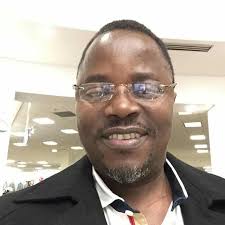
By Tunde Odesola
(Published in The PUNCH on Monday, February 15, 2021)
History, like Ekiti’s Ikogosi springs of warm and cold fountains, embodies profundities. Either for good or bad reasons, history always cascades down the confluence of discovery, depth and truth, meandering into the past.
Whenever history repeats itself for good, cymbals accompany resounding ovations – like the joy of a soccer cup game win. But, oftentimes when history catches man on the wrong foot, grief trails destruction – like the outstanding incompetence of the retired Major General Muhammadu Buhari’s regime in securing lives and property.
Buhari’s colossal inability to deliver on any of his electoral promises reads like the devil’s scripture.
Eagle-eyed, silent and deadpan, history is the unblinking secret camera watching and recording events, not for God, but for man and the future called posterity, in the global village called humanity.
While un-smart nations writhe in pain as history rewrites unpalatable events, smart nations write in joy, historic accomplishments of epic proportions, on the glorious sands of time.
Giant in size but dwarf in reasoning, the Peoples Democratic Party-led Federal Government, in the first decade of the millennium, yanked History off primary and secondary schools curricula as a core subject even as the Buhari regime that has promised to restore it as a core subject since 2017, has yet to fully do so.
It’s scandalous that multi-billion-dollar security funds could develop wings and disappear while the self-acclaimed ruling Africa’s largest party was unmindful of the wisdom in the saying that a people without history are on the path to extinction.
That the PDP could even toy with the idea of expunging History from school curricula was a corroboration of the fact that successive national governments since 1999 didn’t have an understanding of citizenship rights and education.
If Nigerian leaders made citizens’ welfare the cornerstone of service, they would know that History is yesterday’s searchlight, beamed on today for man to understand the present and prepare for the future.
For the sake of the up-and-coming Nigerian generation which has been denied the knowledge of History by subsequent governments, I shall embark on a journey to Katsina in a history-driven vehicle.
While in Katsina, I shall teleport to the tomb of former Nigerian President, Alhaji Umaru Yar’Adua, at the Dan Marina Cemetery, Katsina, to pay obsequies to the memory of a true Nigerian nationalist who wasn’t an emotionless, tight-lipped nepotistic bigot. At the Dan Marina Cemetery, I shall compare and contrast the achievements of Yar’Adua with those of Buhari in order for Nigerians to see who the patriot is among the two Fulani sons.
I will also visit the Ilupeju residence of the first civilian Governor of Lagos State, Alhaji Lateef Kayode Jakande, who passed on to eternal glory last week at 91, and compare him with the civilian governors that had led the state of aquatic splendor after him.
I decided to embark on this route of historical juxtaposition in order to be fair enough to Buhari, whose awful spokespersons, always make the life patron of Meyeti Allah cattle breeders look like the victim, who’s doing all in his power to make life better for an ungrateful Nigerian nation.
Being a former university lecturer, Yar’Adua appeared more cerebral than Buhari. Yar’Adua addressed journalists freely and neither engaged in characteristic verbal miscues nor relied solely on prepared speech before addressing some local and international audiences.
Yar’Adua was the one and only Nigerian president till date, who publicly declared his nearly N1bn assets and liabilities, completely unlike Buhari, who vowed to publicly declare his assets while campaigning for votes, but reneged when he got to power.
Despite coming from an illustrious family and being younger to Buhari, Yar’Adua didn’t foist his Fulani ethic nationality over other nationalities even as he granted amnesty to Niger Delta militants, reflecting true nationalism.
Not one to be beclouded by political vindictiveness, Yar’Adua taught former President Olusegun Obasanjo some lesson in leadership fairness when he released the N10bn allocation accruable to Lagos State, but which Obasanjo had seized and refused to release despite a Supreme Court ruling.
Appointments by Yar’Adua into the leaderships of the Armed Forces, executive cabinet and government parastatals weren’t tilted in favour of the North just as he matched his word up with action, implementing the N18,000 minimum wage promised to the electorate.
A Master’s degree holder in Analytical Chemistry from the Ahmadu Bello University, Yar’Adua, who was the Matawalle of Katsina, didn’t open fire on innocent protesters while he was president for three years.
Also, he didn’t turn Aso Rock into a barracks for warring family members, wife, children and security aides.
The Nigerian leader, who died at 58, was in firm control of his household as there was no reported case of infighting among family members, yet he didn’t claim to champion any War Against Indiscipline.
Yar’Adua wasn’t a pretender, who owned choice properties, and yet wanted Nigerians to see him as Spartan and frugal. Also, he didn’t indulge his children by laying at their feet the fleet of presidential jets for running errands and photoshopping trips.
On the watch of the great Katsina General, Nigeria is not Golgotha. It’s an abattoir littered with skulls, limbs and blood of insecurity. It’s the hell where death snacks on the slow-moving chameleon and snaps up the reckless frog jumping about dangerously. It’s the riddle of the caring father that turns the gun on his harmless children who complained at the Lekki tollgate, threatening to squish more children in a promised second-coming blitzkrieg.
On Jakande’s 90th birthday in 2019, I wrote a tribute, “Lateef Jakande and the Lathieves,” in my PUNCH newspaper column on July 29, 2019.
The article read in part, “Baba Kekere, as he was popularly called, was elected on the platform of the Unity Party of Nigeria on October 1, 1979 and just five months after his inauguration, he built 11,729 schools, whereas a latter-day democrat cuddled the list of his cabinet members for six months!
“Visionary and incorruptible, Jakande saw tomorrow and was prepared to carry his people along with him into it. Jakande embarked on the construction of a metro line before the mallam led khaki boys to strike and terminate the monumental project. Jakande was subsequently probed and cleared of corruption charges.
“He changed the lives of his people through genuine developmental strides, establishing the Lagos State University, Radio Lagos and Television, Lagos State Secretariat, Alausa, numerous housing estates, genuine free education and opening up Ikotun, Ajah and Jakande never named any of his landmark achievements after himself.
“He only wanted to live in the minds of his people forever. His children attended the public schools he built. His wife, Abimbola, neither operated as First Lady nor spent taxpayers’ money on personal whims called pet projects. While in power, LKJ never traveled out for medical check-ups or vacations.
“For him, no state assignment was so urgent to make him fly a helicopter though Lagos was rich enough to buy 10 copters. He never needed to buy bulletproof SUVs nor built a mansion on the island. Jakande lived among the people in Ilepeju with Oshodi as his next-door neighbor.
“Born in the Epetedo area of Lagos State on July 23, 1929 to parents who hailed from Omu Aran in Kwara State, Jakande rose through the dint of discipline, hard work, commitment and perseverance to become the Editor of Tribune newspaper and later founded the Nigerian Institute of Journalism, the Newspapers Proprietors Association of Nigeria and the Nigerian Guild of Editors.
“He never had a university education but he had the love of his people at his heart.
Since Lagos fell on the laps of self-acclaimed democrats in 1999, all the billions of dollars they expended on infrastructure cannot match the achievements Jakande produced in four years with little resources.
LKJ’s achievements litter the landscape. Where are their achievements? If you ask me, na who I go ask?
Adieu, Baba Kekere!
This column goes on a four-week break – starting from next week. All work and no vacation… Cheers!
Email: tundeodes2003@yahoo.com
Facebook: @tunde odesola
Twitter: @tunde_odesola





Opinion
Osun election: Àtàọ́ja should stop running joro-jara-joro
Osun election: Àtàọ́ja should stop running joro-jara-joro
Tunde Odesola
(Published in the PUNCH, on Friday, July 24, 2026)
It’s midmorning in Àtàọ́ja’s palace. The sun beamed a friendly smile, quite different from the furious furnace it was preparing for the afternoon. As gently as the breeze caressed the trees in the palace, two pigeons landed on silent feet in the courtyard. They were on a joint mission. To scavenge. Looking right and left, up and down, beaks at work, wings at the ready, the bouncy birds pecked food in the palace soil. For the male and female pigeons, danger lies not in flying; it lies in walking. Sycophancy walks naked on the palace grounds.
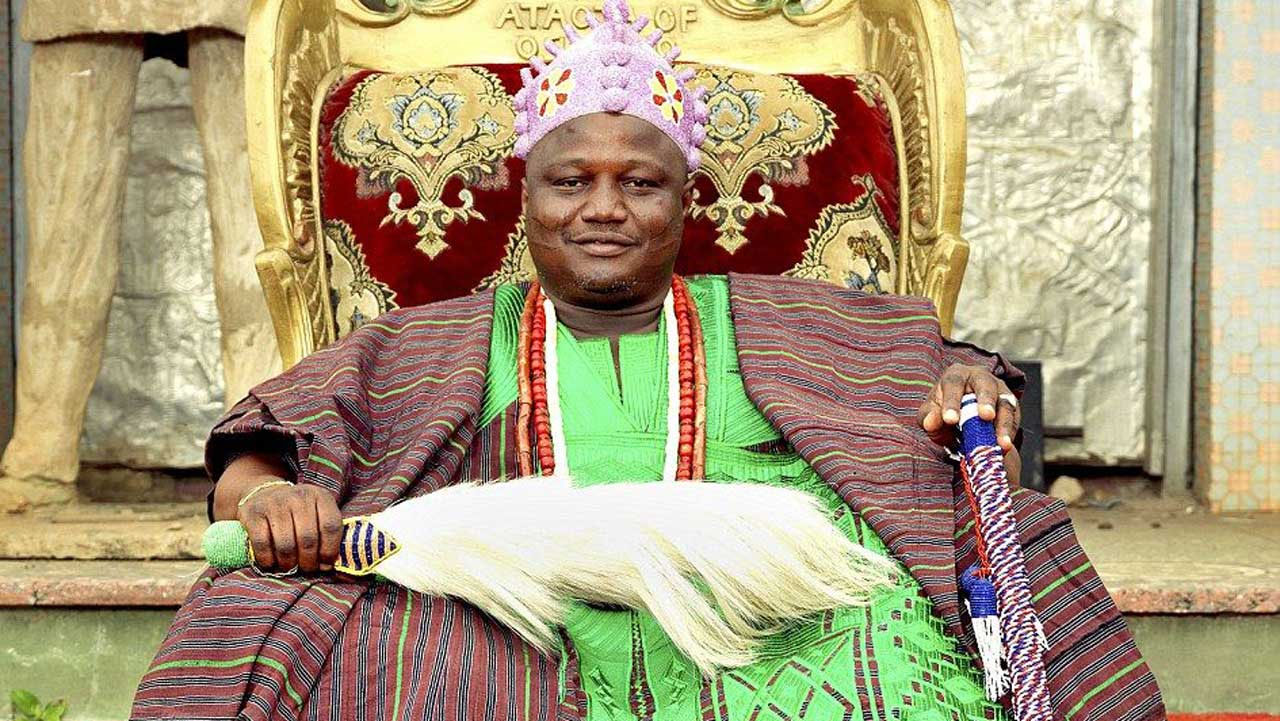
Even the king’s kààakí was caught unawares. It couldn’t herald what was about to happen because everything occurred at a dizzying speed. The Àtàọ́ja, Oba Jimoh Olanipekun, ran out from the inner recess of the palace, his agbada òfì billowing in the Osogbo wind; kira-kita, kira-kita, the king bolted like Usain Bolt. Where is the king running to?
In his breakneck flight, Àtàọ́ja Osogbo forgot to wear his neck beads! I-m-a-g-i-n-e! But he luckily remembered to wear his cap. I suspect it was ancestral forefathers known as ‘àwọn alálẹ̀’ who reminded him to wear his shoes. Otherwise, the king might have appeared out of sorts at the state government event he was fleeing to.
Thankfully, when Àtàọ́ja Olanipekun reached his destination, he still had some breath in his lungs. He sat down, resplendent in white and blue agbada, clenched the microphone and confessed in Yoruba, “Ẹ̀ ri pé ń ò kólẹ̀kẹ̀ ọ́rùn? Mo sáré dé hin ni. Tí a bà á wá, wọ́n á ní, ‘Háà, kò mọ̀ le bọ́ta mọ́!’ Gbogbo ohun tí wọ́n ń sọ là ń gbọ́.”
I’ll translate the king’s speech in English: “Can’t you see that I am not wearing my royal beads? (It is because) I ran to this event. Because if I did not come, they would say, ‘Ha! He cannot come out again!’ We hear everything that they (opposition) are saying. I will not stop eulogising Adeleke Jackson Nurudeen for his excellent performance in Osun State.”
Unfortunately, Olanipekun thinks that by singing himself hoarse on the praise of ebullient Governor Ademola Adeleke, he is giving the re-election bid of the Asiwaju of Ede a boost. No, he is not. If he was, the apex socio-cultural association of Osogbo sons and daughters, the Osogbo Progressive Union, would not openly criticise him for publicly canvassing support for Adeleke and attacking the opposition on many occasions.
The penis of the bird does not dangle outside; it is tucked inside the bird, says a Yoruba proverb. This proverb preaches decorum. If the king had been decorous like other Osun kings, who, though, have their favourites among the governorship candidates, but who have kept their support within the ambit of decency, the OPU wouldn’t have embarrassed him with a public disclaimer.
The Timi of Ede, Oba Muniru Adesola Lawal, had been an exemplar in his support for Adeleke, who hails from his domain. The Timi had been regal: zero aggression, zero hate words, zero campaign against other parties. Oba Timi has shown emotional intelligence while fully supporting Adeleke, his son. That is how to be a father to all subjects. Of course, if Timi was blindfolded at the polling booth on election day, his royal thumb would still locate Accord Party on the ballot, whereas some carricachop from another land is claiming to know Ọ̀ṣọ́ more than Ọ̀ṣọ́’s mother.
READ ALSO:
- Dollar to Naira Exchange Rate Today: Naira Holds Steady as Fuel Importer Demand Mounts
- Senate Bill Requiring Social Media Offices in Nigeria Gains Stakeholder Support at Public Hearing
- Army Declares Soldier Wanted Over Alleged Sale of Military Uniforms to Terrorists
It’s undignifying for the elderly to run helter-skelter, says a Yoruba proverb distilled in these words, “Gbàmí, gbàmí ò ye àgbà.” Another proverb that cautions against kùrùkẹrẹ movement says, “Ẹní wọ bàtà ẹsẹ̀ òsì méjì, ó níbití ó ń lọ.”
The importance of royal objects such as crown, beads and staff is interrogated in the seminal work, “Yoruba: Nine Centuries of African Art and Thought,” written by Henry J. Drewal et al, and published by The Centre for African Art, New York, in 1989. Similarly, the royal totems – crown, beads and staff – are also a subject of scholarship in Rowland Abiodun’s “Yoruba Art and Language: Seeking the African in African Art,” published by Cambridge University Press in 2014.
Drewal and Abiodun aver that in Yoruba thought, the crown, beads and staff are sacred totems that signify divine authority, spiritual protection, leadership, ancestral continuity, and the king’s covenant with the people and the gods.
In both books, the crown is regarded as a sacred emblem containing the spiritual essence that connects the present with the past. Royal beads signify dignity and prestige, abundance and prosperity, and spiritual energy. The staff is an instrument of authority, justice, fairness, and protection.
Joro-jara-joro is an onomatopoeic word that means helter-skelter. Onomatopoeic words are words that sound like their meanings. Examples: buzz, hiss, slap, sleep, twinkle, jab, splash, tear, bang, etc. Joro-jara-joro was amplified by Afrobeat creator Fela Anikulapo-Kuti in his 1976 song, “Zombie”, which mocks Nigerian soldiers’ blind allegiance to dictatorship.
In “Zombie”, Fela caricatures Nigerian soldiers as unthinking brutes whose sole skill is to chaotically rove joro-jara-joro against the masses, like zombies on the mission to “go and kill, go and quench, go and die”. Fela sings, “Zombie way na one way; joro-jara-joro/No break no jam, no sense; Na joro-jara-joro….”
There would have been no reason to write this article because I had made my intention clear enough in an earlier article entitled, “Governor Adeleke and a tale of three Àtàọ́jas,” published in The PUNCH on Friday, July 17, 2026. My preoccupation in the article was to call the attention of the monarch to some of his unkingly utterances. My intention wasn’t political. But an insinuation, especially from some irritating ‘e-rats’ and ‘data boys’, who attempted to paint my intervention in political colours, made this sequel inevitable.
In line with their zombie mentality, a particular ‘e-rat’ along with his fellow ‘data boys’ accused me of meddlesomeness and maintained that it lies within the rights of the Àtàọ́ja to express support for any candidate of his choice.
Clearly, the accusation of meddlesomeness was borne out of dripping ignorance. If not, an enlightened mind would see that the actions of the Àtàọ́ja diminish his traditional stool that represents the Yoruba worldview of unity, morality, justice, fairness and equity. The allegation that the Àtàọ́ja had the right to support any candidate of his choice is valid to the extent that such a right must not violate the principles of fair play, rule of law and decency.
By openly calling the opposition names in a viral video, did the Àtàọ́ja adhere to the principles of fairness and tolerance? By his vitriolic speeches, was he not stoking the embers of strife? If I could be provided with the evidence of one Osun traditional ruler who had been as politically intolerant as the Àtàọ́ja, against the ruling party, I shall tender an apology in my next article.
In one of the bad-taste videos, the Àtàọ́ja arrogantly disclosed how he rejected wise counsel by a concerned citizen, who told him the danger in his public support for Adeleke over other candidates. His words, “One of my people asked me why I am so audacious to the extent of overly supporting one candidate (Adeleke) over others; what if he doesn’t win?”
The king answered the worried citizen. Àtàọ́ja opened his mouth and played god, declaring with finality: “He will win.” Olanipekun’s divisive posture is most unbecoming of an ọba, whose palace should be an abode to seek conflict resolution by his subjects, including politicians. Àtàọ́ja should not be the epicentre of conflict.
In the recent past, I have ventilated my views on the actions of the Ooni of Ife, Oba of Lagos, Apetu of Ipetumodu, Alapomu of Apomu, Oluwo of Iwo, and Emir of Ilorin, among other traditional rulers. I strongly believe that it behoves the citizen to hold traditional rulers to the highest standards because the traditional institution embodies the ethos and pathos of a race.
For ‘e-rats’ and ‘data boys’, whose stock-in-trade is abuse, there is a lesson in the conduct of a member of the House of Representatives, Bamidele Salam. Salam is my friend of over 20 years. Though we have had moments of sharp disagreement, emotions never boiled over to name-calling.
One day, BS, that’s Salam’s nickname, saw my Facebook post on Governor Adeleke. In the post, I advised the governor against excessive dancing and to shear off some personalities who were following him about like houseflies following the wound on a dog’s ears. In the Facebook post about three years ago, I cautioned that the image of the governor dancing to the faintest of drumbeats amid a retinue of hangers-on was not good.
As soon as BS saw the post, he reached out to me on the phone and said, “Ọ̀rẹ́, ọ̀rọ̀ ò rí bẹ́yẹn o. Your post does not reflect the great work Adeleke is doing in Osun…” I smiled from the other end of the phone because Bamidele was pushing Adeleke’s narrative while ignoring the kernel of my Facebook post. When I insisted on the need for the governor to do better in regard to dancing, Bamidele said every man was a work in progress, including me. Bamidele’s example is how to engage intelligently; a lesson government and opposition ‘e-rats’ and ‘data boys’ should learn.
The demarcation between a ruling party and an opposition party is nebulous. Practically speaking, ideological philosophies among Nigeria’s political parties are nonexistent. This is why Àtàọ́ja should be careful in his untraditional support for Adeleke. The Adeleke he sees in the Accord Party today could be in the All Progressives Congress tomorrow. Olanipekun should not burn the bridge of friendship today because he might need to use the bridge tomorrow.
This is the lesson Àtàọ́ja Olanipekun should see in his recent visit to President Bola Tinubu in Abuja. When politicians do their thing, a respectable ọba should maintain a dignified distance. He should not be in the fray.
Are you shocked that Kabiyesi Olanipekun was in Aso Rock a few days ago? Yes, he was. As a guest of President Bola Tinubu. This is the story of how the monarch used one stone to kill two birds. Àtàọ́ja’s daughter was graduating from the Law School in Abuja. An influential Osun State indigene, worried by the king’s intolerant posture against the Osun All Progressives Congress, had arranged for the king to meet with the President. It took some time for the king to meet the President.
During their meeting, the President expressed worry over Àtàọ́ja’s political remarks against the APC in Osun, urging him to allow for a level playing field. I gathered that Àtàọ́ja told the President that he was sold on the Adeleke ticket. Personally, I do not fault Àtàọ́ja’s position – supporting a candidate of his choice; it’s his brickbat approach that is reproachable.
If Tinubu could open his doors to Olanipekun and sit down to dialogue with him, who says there cannot be a dialogue between Tinubu and Adeleke? And if a dialogue occurs between the two and an agreement is struck, would the king not feel uneasy relating with his ‘enemies’ in the APC? The king should always spare a thought for the flip side of things. That is what the wise do.
“Àgbàlagbà kìí ṣe lángbá, lángbá,” is a cautionary proverb for reckless elders. The pit of animosity must not be dug too deep because the digger might fall into it. A word is enough for the wise.
Kabiyesi Àtàọ́ja, kara o le o.
///
Email: tundeodes2003@yahoo.com
Facebook: @Tunde Odesola
X: @Tunde_Odesola
Osun election: Àtàọ́ja should stop running joro-jara-joro
Opinion
UI, UCH and the Question of Inclusive Leadership
UI, UCH and the Question of Inclusive Leadership
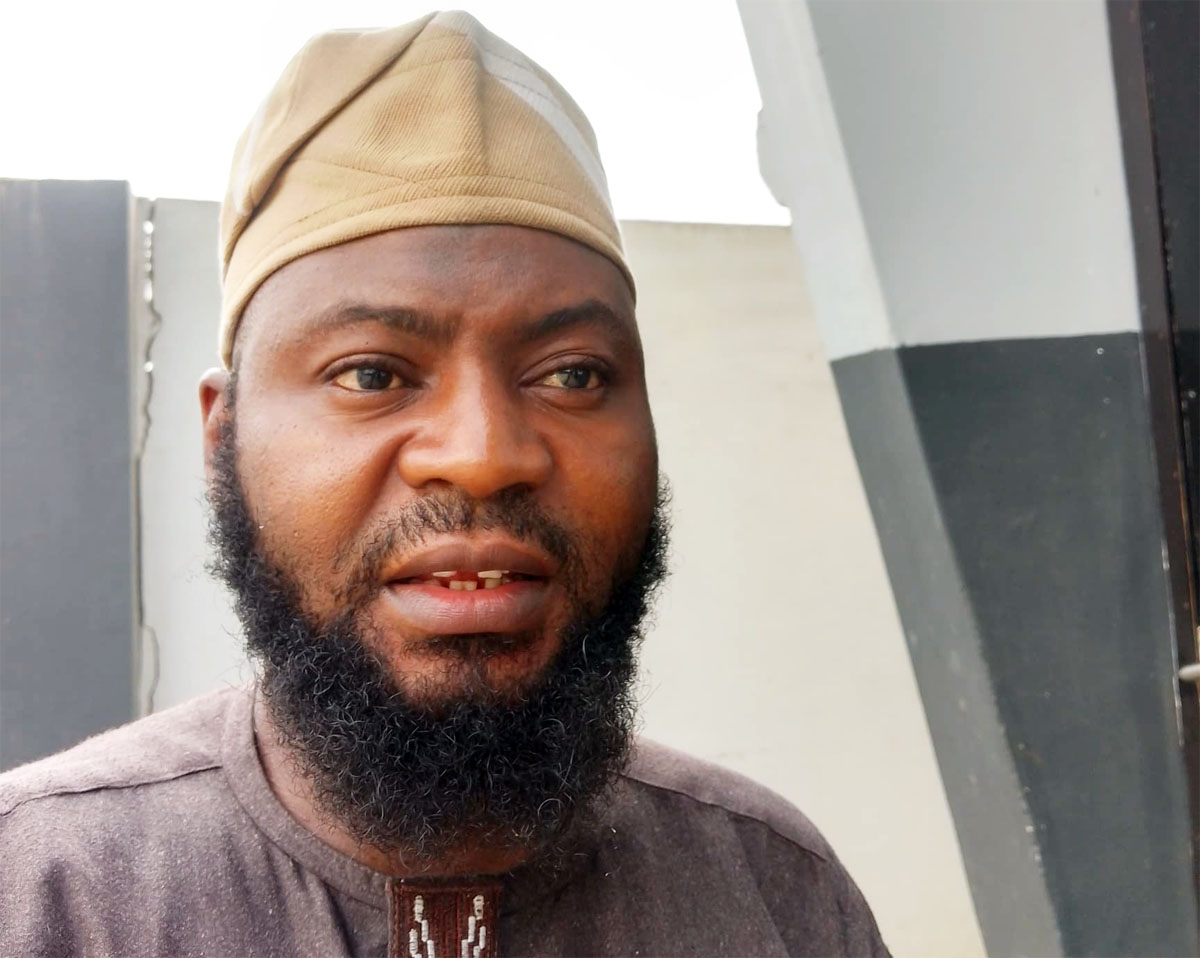
By Mallam Ibrahim Agunbiade
agunbiadeib@gmail.com
July 23, 2026
The appointment of Professor Peter Olamakinde Olapegba as the 14th substantive Vice-Chancellor of the University of Ibadan (UI), effective November 1, 2026, is deserving of congratulations. I wish him a successful tenure as he takes on the responsibility of leading Nigeria’s premier university.
The reported competitive process through which he emerged—following the assessment of eight candidates and the shortlisting of five for the final stage—is commendable, provided it was conducted transparently and strictly on merit.
However, this development also raises an important question that deserves honest and constructive discussion: When will a qualified Muslim have the opportunity to emerge as Vice-Chancellor of the University of Ibadan?
This question is not directed at Professor Olapegba or his Christian faith. If he emerged as the best candidate through a fair and transparent process, then he deserves the support of all Nigerians. My concern is whether qualified Nigerians of different faiths enjoy equal opportunities to compete for the highest leadership positions in our national institutions.
The same question applies to the University College Hospital (UCH), Ibadan, where a change in leadership is expected in the coming months. It is therefore time for stakeholders to begin constructive conversations about the appointment of the next Chief Medical Director (CMD).
READ ALSO:
- How to apply for FG’s YouthCred loan and qualify for up to ₦2 million
- Ondo Speaker given Sunday deadline to resign or face impeachment
- Trump praises Tinubu’s anti-terror efforts as Presidency cites security progress
I believe that qualified and competent Muslim professionals should be encouraged and given a fair opportunity to compete for the position. If the best candidate happens to be a Muslim, there should be no hesitation in appointing that individual. Equally, if the best candidate is a Christian or belongs to another faith, the same principle of merit should apply.
This is not a call for religious quotas or preferential treatment. Rather, it is a call for a level playing field.
A Muslim should not be appointed simply because he is a Muslim, just as a Christian should not be appointed simply because he is a Christian. Leadership must be based on competence, integrity, experience, and the capacity to deliver.
However, merit can only be meaningful when every qualified candidate has a genuine opportunity to compete without bias or discrimination.
The University of Ibadan and UCH are national institutions that belong to all Nigerians. Their leadership should therefore reflect the principles of fairness, inclusiveness, equal opportunity, and merit.
As Professor Olapegba prepares to assume office, I congratulate him once again and wish him a successful tenure. At the same time, I believe this is the right moment to ask whether our leadership selection processes truly provide equal opportunities for all qualified Nigerians.
As the succession process at UCH approaches, I urge stakeholders to ensure that no qualified candidate is excluded—consciously or unconsciously—because of religious identity. Let the process be transparent, competitive, and firmly anchored on merit.
I am not asking for a Muslim to be appointed simply because he is a Muslim. I am asking that no qualified Muslim should be denied the opportunity to lead simply because of his religious identity.
The same principle should apply to every Nigerian, regardless of faith or background.
Let merit prevail. Let competence prevail. Let fairness prevail.
UI, UCH and the Question of Inclusive Leadership
Opinion
Case for replicating the Oyo kidnap-rescue template nationwide, By Farooq Kperogi

Case for replicating the Oyo kidnap-rescue template nationwide, By Farooq Kperogi
Case for replicating the Oyo kidnap-rescue template nationwide, By Farooq Kperogi
Kperogi is a renowned columnist and United States-based professor of journalism
-
 Politics2 days ago
Presidency, Obasanjo attack Atiku over US lobbying, reopen decades-old loyalty dispute
-

 Opinion2 days ago
Osun election: Àtàọ́ja should stop running joro-jara-joro
-
 Business2 days ago
Dollar to Naira Exchange Rate Today: Naira Holds Steady as Fuel Importer Demand Mounts
-

 Entertainment2 days ago
“Don’t Let Me Die”: Veteran Nollywood Actress Ngozi Nwosu Begs for ₦30m Surgery Fund
-
 Politics2 days ago
Atiku denies Obasanjo’s N5m bribery claim, links accusation to 2027 presidential race
-

 metro3 days ago
Trackers, Profiling as FG Unveils Special Guards to Secure Coastal Highway
-

 metro2 days ago
Igboho Launches Iru Ekun Security Network in Kwara, Vows to Reclaim Forests from Bandits
-
 Education2 days ago
Oluwo Urges Youths to Pair Degrees with Skills, Commends Westland University’s Excellence
You must be logged in to post a comment Login